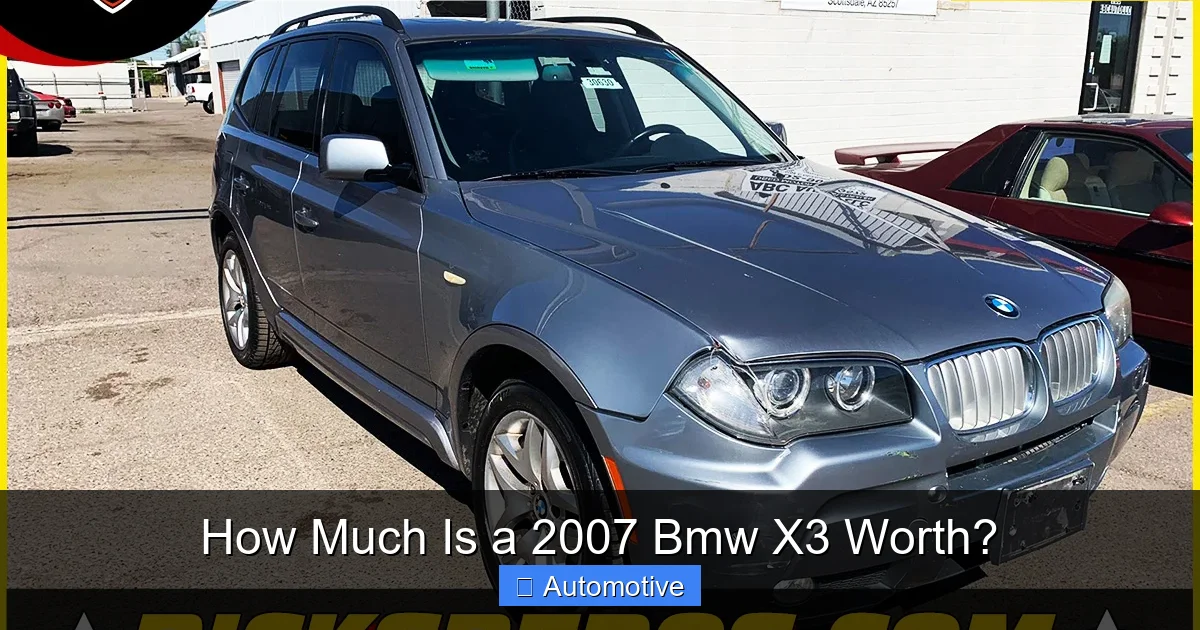
How Much Is a 2007 Bmw X3 Worth?

Contents
- 1 Key Takeaways
- 2 📑 Table of Contents
- 3 Understanding the 2007 BMW X3: A Quick Overview
- 4 Current Market Value: What’s a 2007 BMW X3 Really Worth?
- 5 Common Problems and Repair Costs
- 6 How to Determine the True Value of a Specific 2007 BMW X3
- 7 Tips for Buying a 2007 BMW X3
- 8 Selling Your 2007 BMW X3: Maximizing Value
- 9 Is the 2007 BMW X3 Worth It?
- 10 Final Thoughts
- 11 Frequently Asked Questions



The 2007 BMW X3 typically ranges from $3,500 to $8,500 depending on mileage, condition, and location. While not the most reliable BMW model, well-maintained examples can still offer a smooth ride and premium feel for budget-conscious buyers.
So, you’re curious about how much a 2007 BMW X3 is worth? You’re not alone. This compact luxury SUV from BMW has been a popular choice for drivers who want a blend of performance, style, and practicality—without the massive price tag of newer models. But let’s be real: the 2007 X3 isn’t exactly a modern marvel. It’s over 15 years old, and like many vehicles from that era, it comes with its fair share of quirks and potential pitfalls. Still, if you’re on a budget but crave that BMW badge and driving dynamics, the 2007 X3 might just be worth a look.
But before you start browsing listings or scheduling test drives, it’s smart to understand what you’re really getting into. The value of a 2007 BMW X3 isn’t just about the sticker price—it’s about what you’ll pay in the long run, including maintenance, repairs, and depreciation. This guide will walk you through everything you need to know: from average market prices and key factors that affect value, to common problems and smart buying tips. Whether you’re planning to buy, sell, or just curious, we’ve got you covered.
Let’s dive in and figure out exactly how much a 2007 BMW X3 is worth in today’s market—and whether it’s a smart move for you.
Key Takeaways
- Market Value Range: Most 2007 BMW X3s sell between $3,500 and $8,500, with lower-mileage, well-cared-for models at the higher end.
- Mileage Matters: Vehicles under 100,000 miles command higher prices; those over 150,000 may need costly repairs soon.
- Condition Is Crucial: A clean interior, no rust, and full service history can increase value by $1,000 or more.
- Common Issues to Watch: Timing chain, VANOS system, and cooling system failures are frequent and expensive to fix.
- Private vs. Dealer Pricing: Private sellers usually offer better deals than dealerships, but lack warranties.
- Location Affects Price: X3s in mild climates with less road salt sell for more than those in snowy or coastal areas.
- Negotiation Tips: Use repair estimates and market comparisons to negotiate 10–15% off the asking price.
📑 Table of Contents
- Understanding the 2007 BMW X3: A Quick Overview
- Current Market Value: What’s a 2007 BMW X3 Really Worth?
- Common Problems and Repair Costs
- How to Determine the True Value of a Specific 2007 BMW X3
- Tips for Buying a 2007 BMW X3
- Selling Your 2007 BMW X3: Maximizing Value
- Is the 2007 BMW X3 Worth It?
- Final Thoughts
Understanding the 2007 BMW X3: A Quick Overview
The 2007 BMW X3 was part of the first generation of the X3 lineup, which debuted in 2004. Built on the same platform as the E46 3 Series, the X3 offered a sportier alternative to other compact SUVs of the time, like the Acura RDX or Lexus RX 300. It came standard with all-wheel drive (AWD), a hallmark of BMW’s “xDrive” system, and was available in two main trims: the base X3 3.0i and the slightly more powerful X3 3.0si.
The 3.0i model packed a 3.0-liter inline-6 engine producing 225 horsepower, while the 3.0si bumped that up to 255 horsepower. Both engines were paired with a 6-speed automatic transmission, and the driving experience was praised for its responsive steering and balanced handling. Inside, you’d find a driver-focused cockpit with high-quality materials for the era—leather seats, wood trim, and a premium sound system were common options.
But here’s the catch: while the 2007 X3 looked and felt like a luxury vehicle, it didn’t always live up to BMW’s reputation for reliability. Many owners reported mechanical issues over time, especially as the miles piled up. That’s why understanding the current market value isn’t just about checking a price guide—it’s about knowing what condition the car is in and what hidden costs might be lurking.
Why the 2007 Model Year Matters
The 2007 model year is particularly important because it was one of the last years before BMW made significant updates to the X3 platform. In 2007, the X3 still used the older E83 chassis, which had been around since 2004. This means it shares many components with earlier models, some of which are now well-documented for their weaknesses.
For example, the timing chain tensioner on the 3.0-liter engine is a known failure point. If it fails, it can cause the timing chain to skip, leading to catastrophic engine damage. Similarly, the VANOS system—BMW’s variable valve timing technology—can develop oil leaks or solenoid issues, affecting performance and fuel economy.
On the plus side, the 2007 model did receive some minor updates over earlier years, including improved interior materials and better sound insulation. It also came with standard safety features like stability control, anti-lock brakes, and multiple airbags, which were impressive for the time.
So while the 2007 X3 isn’t the most advanced or reliable SUV on the road today, it still offers a lot of value if you know what to look for. And that starts with understanding how much it’s actually worth.
Current Market Value: What’s a 2007 BMW X3 Really Worth?
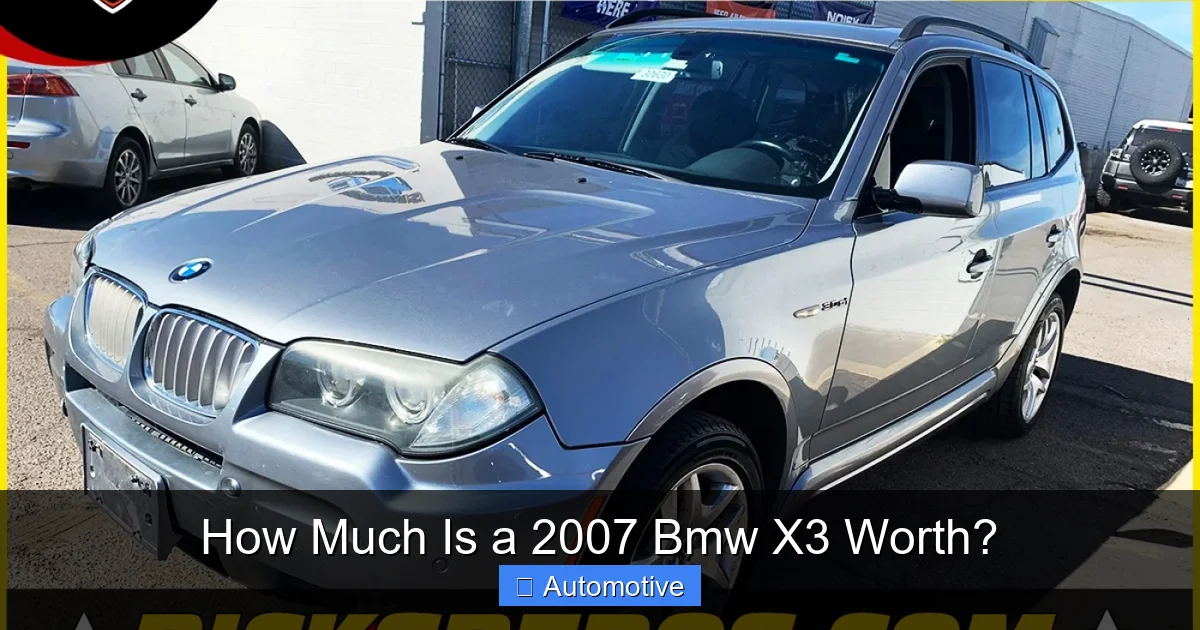
Visual guide about How Much Is a 2007 Bmw X3 Worth?
Image source: ricksrepos.com
Now for the big question: how much is a 2007 BMW X3 worth in 2024? The short answer is that most models sell between $3,500 and $8,500, depending on several key factors. But let’s break that down a bit more.
According to data from Kelley Blue Book (KBB), Edmunds, and recent sales on platforms like Autotrader and Cars.com, the average private-party sale price for a 2007 BMW X3 with around 120,000 miles is about $5,500. Dealerships typically ask $1,000 to $2,000 more, but they often include limited warranties or certified pre-owned programs—though these are rare for such an old vehicle.
Here’s a quick breakdown of how mileage affects value:
– Under 80,000 miles: $7,000–$8,500
– 80,000–120,000 miles: $5,000–$7,000
– 120,000–150,000 miles: $3,500–$5,500
– Over 150,000 miles: $2,500–$4,000 (if in good condition)
Keep in mind that these are general estimates. A well-maintained X3 with 140,000 miles and a full service history might sell for $6,000, while a neglected one with 90,000 miles and a check engine light could go for under $4,000.
Factors That Influence Price
Several variables can push the price of a 2007 BMW X3 up or down. Let’s look at the most important ones.
1. Mileage: This is the biggest factor. Lower mileage generally means less wear and tear, but it’s not the whole story. A car with 60,000 miles that’s been driven mostly on highways might be in better shape than one with 100,000 miles of city driving.
2. Condition: A clean interior, no dents or rust, and a well-kept engine bay can add significant value. Buyers are willing to pay more for a car that looks and feels cared for.
3. Service History: A vehicle with documented maintenance—especially major services like timing chain replacements or transmission fluid changes—is more valuable. It shows the owner took care of the car.
4. Location: Prices vary by region. In warmer, drier climates like Arizona or California, X3s tend to have less rust and corrosion, so they sell for more. In snowy areas like the Northeast or Midwest, road salt can cause frame and underbody damage, lowering value.
5. Trim and Options: The 3.0si trim with leather seats, sunroof, navigation, and premium audio will command a higher price than a base 3.0i with cloth seats and basic features.
6. Market Demand: Right now, there’s moderate demand for older luxury SUVs. Buyers are looking for affordable entry points into premium brands, but they’re also wary of high repair costs. This keeps prices in a narrow range.
Private Sale vs. Dealership: Which Is Better?
If you’re buying, you’ll usually get a better deal from a private seller. They don’t have overhead costs, so they can price the car lower. You might find a 2007 X3 for $4,500 from an individual, while a dealer might ask $6,000 for the same car.
But there are trade-offs. Private sellers don’t offer warranties, and you’re buying “as-is.” That means if something breaks the day after you drive it off, it’s on you. Dealerships, on the other hand, may offer a 30-day or 1,000-mile warranty, and they’re more likely to fix minor issues before sale.
If you go the private route, always get a pre-purchase inspection (PPI) from a trusted BMW mechanic. It could save you thousands in unexpected repairs.
Common Problems and Repair Costs
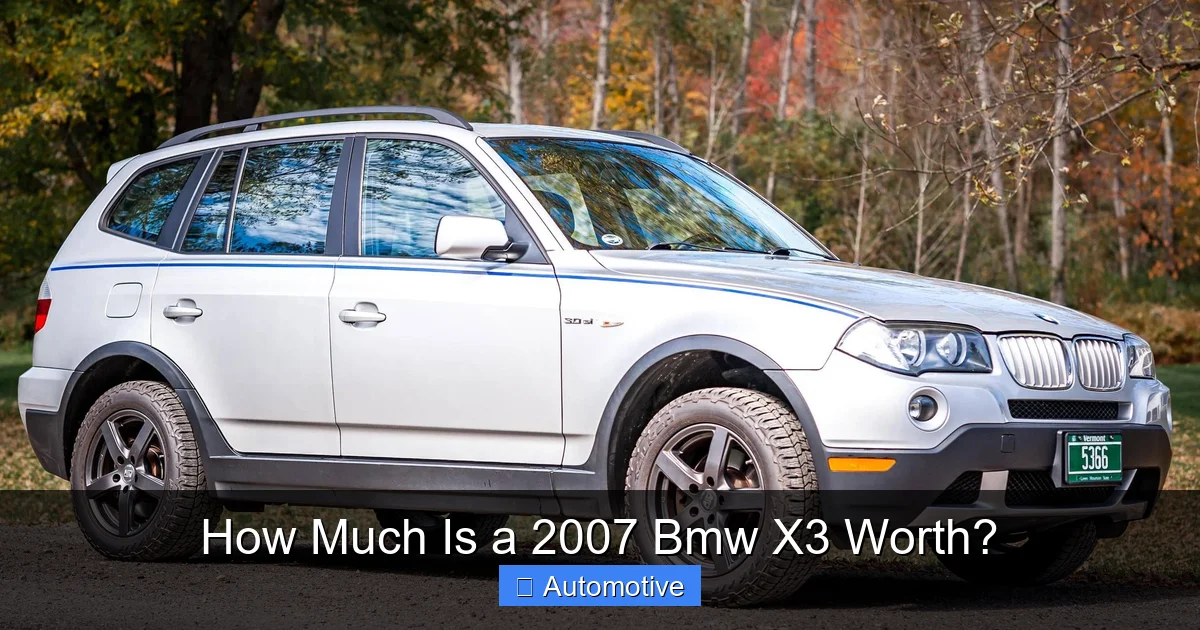
Visual guide about How Much Is a 2007 Bmw X3 Worth?
Image source: media.carsandbids.com
Let’s be honest: the 2007 BMW X3 isn’t known for bulletproof reliability. While it’s not a lemon, it does have a few well-documented issues that can affect its value and your wallet. Knowing these problems can help you avoid a money pit—or negotiate a better price.
Timing Chain and Tensioner Failure
This is the big one. The timing chain in the 3.0-liter engine can stretch or the tensioner can fail, especially after 100,000 miles. If the chain slips, it can cause the valves to collide with the pistons, destroying the engine. Repair costs can range from $3,000 to $5,000 if the engine needs to be replaced.
Tip: Ask if the timing chain has been replaced. If not, factor in the cost when negotiating. Some owners replace it preventively around 100,000 miles.
VANOS System Issues
The VANOS system controls valve timing for better performance and fuel economy. Over time, the solenoids can clog or the seals can leak, causing rough idling, loss of power, or a check engine light. Repairs typically cost $500–$1,200.
Cooling System Failures
BMW’s cooling systems are notorious for failing on older models. The water pump, thermostat, and radiator can all develop leaks or stop working. A failing water pump might cost $800–$1,200 to replace, including labor.
Electrical Gremlins
Older BMWs are prone to electrical issues—faulty window regulators, malfunctioning iDrive systems, or dead batteries. These aren’t usually expensive to fix individually, but they add up and can be frustrating.
Suspension and Steering Wear
With age and mileage, suspension components like control arms, bushings, and shocks wear out. This can lead to a rough ride or poor handling. A full suspension refresh can cost $1,500–$2,500.
Transmission Problems
While the 6-speed automatic is generally reliable, some X3s experience rough shifting or delayed engagement. Transmission fluid should be changed every 50,000 miles. A flush costs around $200; a full rebuild can exceed $3,000.
Rust and Corrosion
Check the wheel wells, undercarriage, and door sills for rust. In snowy regions, salt can eat away at the frame. Surface rust is manageable, but structural rust can make the car unsafe and nearly impossible to sell.
How to Determine the True Value of a Specific 2007 BMW X3
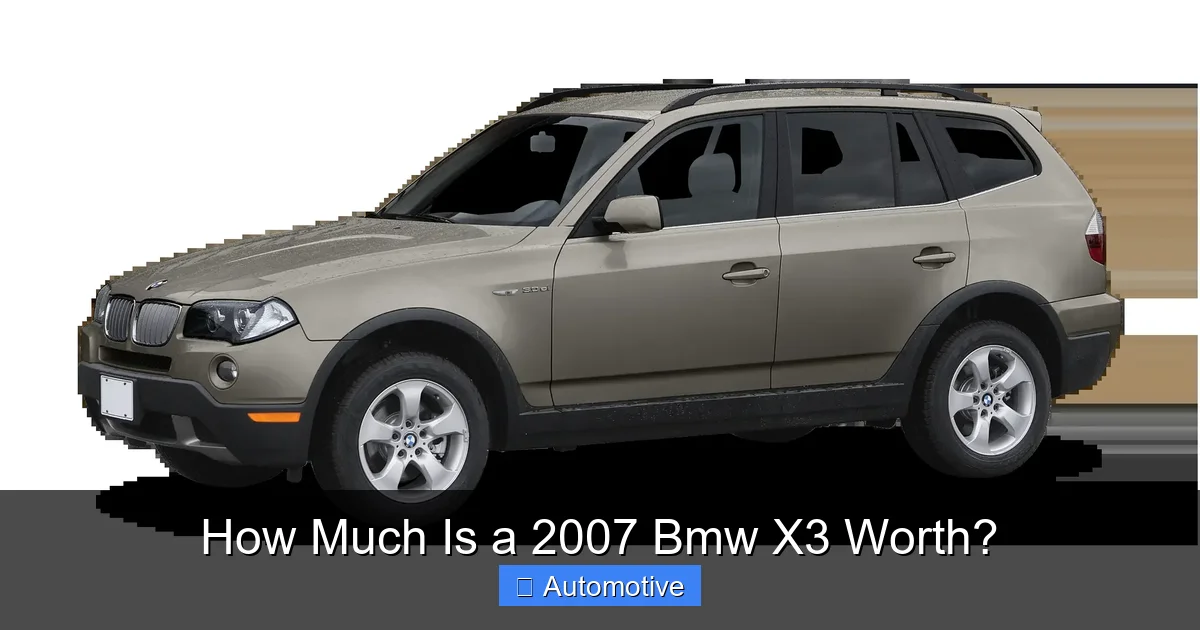
Visual guide about How Much Is a 2007 Bmw X3 Worth?
Image source: platform.cstatic-images.com
So, you’ve found a 2007 BMW X3 you like. How do you know if the asking price is fair? Here’s a step-by-step approach to evaluating its true worth.
Step 1: Check Online Valuation Tools
Start with KBB, Edmunds, or NADA Guides. Enter the VIN, mileage, condition, and options to get an estimated value. These tools give you a baseline, but they don’t account for specific issues or local market conditions.
Step 2: Compare Similar Listings
Search Autotrader, Cars.com, or Facebook Marketplace for 2007 X3s in your area. Look at cars with similar mileage, trim, and condition. Note the prices and how long they’ve been listed. If a car has been on the market for months, the seller may be overpriced.
Step 3: Inspect the Vehicle History Report
Use services like Carfax or AutoCheck to get a vehicle history report. Look for:
– Accident history
– Number of previous owners
– Service records
– Title status (clean, salvage, rebuilt)
A clean title with one or two owners and regular maintenance is a good sign.
Step 4: Get a Pre-Purchase Inspection (PPI)
This is non-negotiable. A PPI by a BMW specialist can uncover hidden problems and give you leverage in negotiations. Most inspections cost $100–$150 and take about an hour.
Step 5: Factor in Repair Costs
If the PPI reveals issues—like a worn timing chain or leaking VANOS—use the repair estimates to negotiate. For example, if the car needs a $1,200 repair, you can reasonably ask for $1,000–$1,500 off the price.
Step 6: Consider Resale Value
Even if you’re buying to keep, think about future resale. A well-maintained X3 with low mileage and no major issues will hold its value better than one with a patchy history.
Tips for Buying a 2007 BMW X3
If you’ve decided the 2007 X3 fits your budget and lifestyle, here are some smart tips to make the process smoother.
Set a Realistic Budget
Don’t just budget for the purchase price. Include:
– Sales tax and registration
– Insurance (older BMWs can be expensive to insure)
– Immediate repairs or maintenance
– A “rainy day” fund for unexpected issues
A good rule of thumb: set aside 10–15% of the purchase price for repairs.
Look for a Well-Maintained Example
Avoid cars with missing service records, aftermarket modifications, or signs of neglect (like a dirty engine bay or worn interior). A car that’s been babied will save you money in the long run.
Test Drive Thoroughly
Pay attention to:
– Engine noise (listen for rattling, especially at startup)
– Transmission smoothness
– Braking and steering feel
– Suspension noise over bumps
– Electrical functions (windows, locks, lights)
If anything feels off, walk away.
Negotiate Based on Facts
Use your research to back up your offer. Say something like, “I found three similar X3s in the area priced $1,000 lower, and this one needs a timing chain replacement. I’d like to offer $4,500.”
Most sellers expect negotiation, especially on older cars.
Consider a Certified Pre-Owned (CPO) Option
While rare for a 2007 model, some independent dealers offer CPO-like programs with inspections and limited warranties. These can provide peace of mind, though they cost more.
Selling Your 2007 BMW X3: Maximizing Value
If you’re selling, you want to get the best price possible. Here’s how to do it.
Clean and Detail the Car
First impressions matter. Wash, wax, vacuum, and clean the interior. Remove personal items and fix minor cosmetic issues like scuffed trim or burnt-out bulbs. A $200 detail can increase perceived value by $500 or more.
Gather Service Records
Compile all maintenance receipts, especially for major services. This builds trust and shows the car has been cared for.
Address Minor Repairs
Fix small issues like a broken cup holder, cracked dashboard, or faulty sensor. These cost little but make a big difference in buyer confidence.
Price It Right
Use your research to set a competitive price. Overpricing leads to long listing times; underpricing leaves money on the table. Aim for the middle of the market range.
Advertise Effectively
Take high-quality photos in good lighting. Write a detailed description highlighting low mileage, recent repairs, and premium features. List on multiple platforms: Facebook Marketplace, Craigslist, Autotrader, and BMW forums.
Be Honest About Issues
Disclose any known problems upfront. It builds trust and reduces the chance of disputes later.
Is the 2007 BMW X3 Worth It?
So, after all this, is the 2007 BMW X3 a good buy? The answer depends on your priorities.
If you want a stylish, fun-to-drive SUV with BMW prestige and don’t mind potential repair costs, it can be a great value. A well-maintained example with under 100,000 miles can still offer years of reliable service—especially if you stay on top of maintenance.
But if you’re looking for a trouble-free, low-maintenance vehicle, you might want to consider a more reliable alternative, like a Toyota RAV4 or Honda CR-V from the same era. They won’t have the BMW badge, but they’ll likely cost less to own.
Ultimately, the 2007 BMW X3 is a classic case of “you get what you pay for.” It’s not the cheapest SUV to maintain, but for the right buyer, it offers a compelling mix of luxury, performance, and affordability.
Final Thoughts
The 2007 BMW X3 occupies a unique space in the used car market. It’s old enough to be affordable, but still young enough to offer a modern driving experience. Its value hinges on condition, mileage, and how well it’s been maintained.
While it’s not the most reliable BMW ever made, it’s far from a lost cause. With proper care and attention to known issues, a 2007 X3 can still be a rewarding vehicle to own. Just go in with your eyes open, do your homework, and don’t skip the pre-purchase inspection.
Whether you’re buying or selling, understanding how much a 2007 BMW X3 is worth is the first step toward a smart decision. And now, you’ve got the knowledge to make it.
Frequently Asked Questions
What is the average price of a 2007 BMW X3?
The average price ranges from $3,500 to $8,500, depending on mileage, condition, and location. Well-maintained models with lower mileage tend to sell at the higher end of this range.
Is the 2007 BMW X3 reliable?
The 2007 X3 has some known reliability issues, especially with the timing chain, VANOS system, and cooling components. However, with regular maintenance, many owners report trouble-free driving for over 150,000 miles.
How many miles can a 2007 BMW X3 last?
With proper care, a 2007 BMW X3 can last 150,000 to 200,000 miles or more. Key to longevity is timely maintenance, especially of the timing chain and cooling system.
What should I look for when buying a 2007 BMW X3?
Check the service history, inspect for rust, listen for engine noise, and get a pre-purchase inspection. Pay special attention to the timing chain, VANOS system, and suspension components.
Are parts expensive for a 2007 BMW X3?
Yes, BMW parts and labor tend to be more expensive than average. However, many components are shared with other BMW models, and aftermarket parts can help reduce costs.
Can I negotiate the price of a 2007 BMW X3?
Absolutely. Use comparable listings, repair estimates, and the car’s condition to negotiate. Most sellers expect some haggling, especially on older vehicles.