
How Much Can a Dodge Journey Tow

The Dodge Journey has a maximum towing capacity of 2,500 pounds when properly equipped, making it suitable for small trailers, pop-up campers, and lightweight boats. While not a heavy-duty hauler, it offers practical towing for everyday adventures with the right setup and precautions.
If you’re considering the Dodge Journey for your next family road trip or weekend adventure, you might be wondering: *How much can a Dodge Journey tow?* It’s a fair question—especially if you’re planning to bring along a small camper, a couple of jet skis, or a utility trailer loaded with gear. The Dodge Journey has long been praised for its spacious interior, affordable price point, and family-friendly features. But when it comes to towing, it’s not designed to compete with full-size trucks or heavy-duty SUVs. Instead, it occupies a sweet spot for drivers who need modest towing power without sacrificing passenger comfort or fuel efficiency during daily driving.
So, what’s the real answer? The Dodge Journey can tow up to **2,500 pounds** when properly equipped. That number might not sound impressive compared to larger vehicles, but it’s more than enough for many common towing needs. Whether you’re hauling a small pop-up camper to the lake, transporting a motorcycle to a rally, or pulling a trailer full of landscaping materials, the Journey can handle it—provided you follow the right setup and safety guidelines. In this guide, we’ll break down everything you need to know about the Dodge Journey’s towing capabilities, including engine options, required equipment, real-world examples, and tips to tow safely and efficiently.
Let’s dive in and explore just how much this versatile SUV can pull—and whether it’s the right fit for your towing needs.
Key Takeaways
- Maximum Towing Capacity: The Dodge Journey can tow up to 2,500 pounds when equipped with the available towing package and the 3.6L V6 engine.
- Engine Matters: Only the 3.6L Pentastar V6 engine supports towing; the base 2.4L four-cylinder engine is not rated for towing.
- Towing Package Required: To reach the 2,500-pound limit, you must have the factory-installed towing package, which includes a transmission cooler, wiring harness, and hitch receiver.
- Real-World Use Cases: Ideal for small pop-up campers, jet skis, utility trailers, and lightweight boats—perfect for weekend getaways.
- Safety First: Always distribute weight evenly, use trailer brakes if required, and avoid exceeding the vehicle’s gross combined weight rating (GCWR).
- Fuel Efficiency Drop: Towing reduces fuel economy significantly—expect 15–20% lower MPG when hauling near capacity.
- Check Owner’s Manual: Always consult your specific model year’s manual, as towing specs can vary slightly between trims and production years.
📑 Table of Contents
- Understanding the Dodge Journey’s Towing Capacity
- Engine Options and Their Towing Impact
- Required Towing Equipment and Packages
- Real-World Towing Examples and Use Cases
- Safety Tips for Towing with a Dodge Journey
- Comparing the Dodge Journey to Similar SUVs
- Final Thoughts: Is the Dodge Journey Right for Your Towing Needs?
Understanding the Dodge Journey’s Towing Capacity
When it comes to towing, not all vehicles are created equal—and the Dodge Journey is no exception. Its towing capacity depends heavily on the engine under the hood, the trim level, and whether it’s equipped with the proper towing package. The key takeaway? **Only the 3.6L V6 engine version of the Dodge Journey is rated for towing**, and even then, only when the optional towing package is installed.
The base model of the Dodge Journey comes with a 2.4L four-cylinder engine that produces around 173 horsepower. While this engine is fuel-efficient and adequate for daily commuting, it’s not designed to handle the stress of towing. Dodge does not provide a towing rating for this engine, meaning it should not be used to pull any trailer, no matter how light. Attempting to do so could lead to overheating, transmission damage, or even safety hazards on the road.
On the other hand, the 3.6L Pentastar V6 engine—available on higher trims like the SXT, Crossroad, and R/T—delivers 283 horsepower and 260 lb-ft of torque. This extra power is what enables the Journey to tow up to 2,500 pounds. But here’s the catch: you can’t just rely on the engine alone. To reach that maximum capacity, the vehicle must also be equipped with the **factory-installed towing package**. This package includes essential components like a heavy-duty radiator, transmission cooler, 4-pin wiring harness, and a Class II or Class III hitch receiver (depending on the model year). Without these upgrades, the towing capacity drops significantly—or may not be supported at all.
It’s also important to note that towing capacity can vary slightly between model years. For example, earlier models (2009–2012) may have slightly different ratings or package availability compared to later years (2016–2020). Always check your owner’s manual or contact a Dodge dealer to confirm the exact towing specs for your specific vehicle. In general, though, the 2,500-pound limit holds true for most V6-equipped Journeys with the towing package.
Engine Options and Their Towing Impact
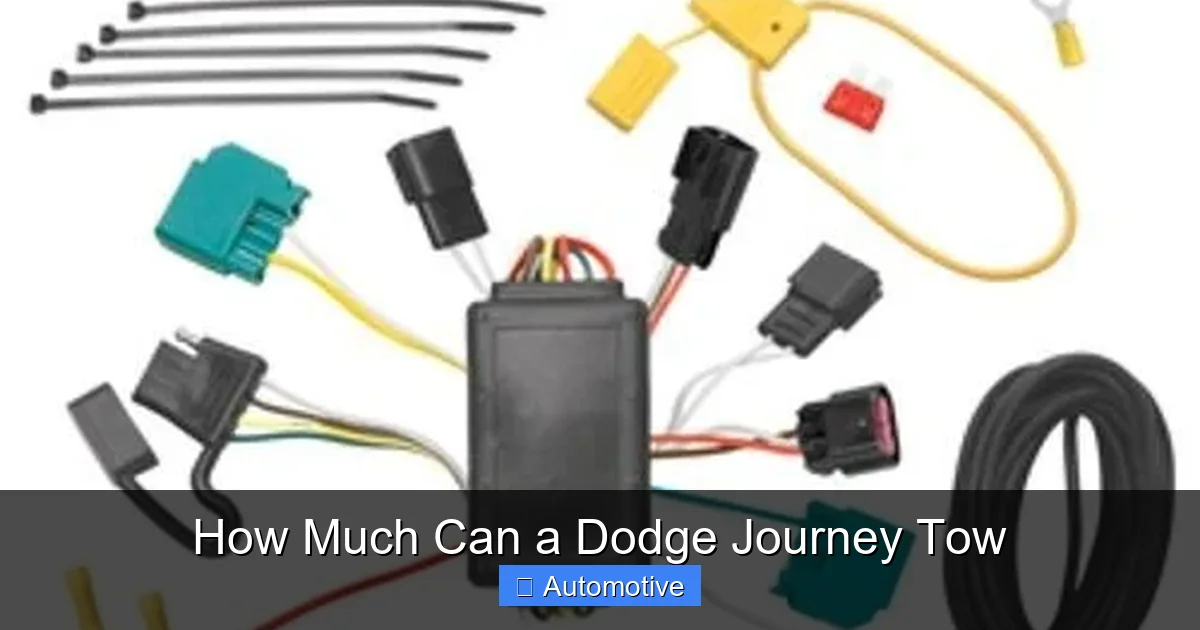
Visual guide about How Much Can a Dodge Journey Tow
Image source: 2040-parts.com
The engine is the heart of any vehicle—and when it comes to towing, it’s the most critical factor. The Dodge Journey has offered two main engine options throughout its production run: the 2.4L inline-4 and the 3.6L V6. Understanding the differences between these engines is essential if you plan to use your Journey for towing.
The 2.4L Four-Cylinder Engine: Not for Towing
The base 2.4L engine is designed for efficiency, not power. It delivers 173 horsepower and 166 lb-ft of torque, which is fine for city driving and light highway use. However, it lacks the low-end torque and cooling capacity needed for safe towing. Dodge explicitly states that this engine is **not rated for towing**, and attempting to pull a trailer—even a lightweight one—can cause serious mechanical issues. The transmission may overheat, the engine could struggle on inclines, and braking performance may be compromised due to the added weight. In short, if your Journey has the four-cylinder engine, it’s best to leave the trailer at home.
The 3.6L V6 Engine: The Towing Workhorse
The 3.6L Pentastar V6 is where the Journey starts to earn its towing stripes. With 283 horsepower and 260 lb-ft of torque, this engine provides the muscle needed to pull a small trailer up hills and maintain highway speeds with confidence. It’s the same engine used in other Chrysler Group vehicles like the Jeep Grand Cherokee and Dodge Charger, proving its reliability and performance. When paired with the proper towing package, the V6 allows the Journey to reach its maximum towing capacity of 2,500 pounds.
One advantage of the V6 is its smooth power delivery and better cooling system, which helps prevent overheating during extended towing. The engine also works well with the Journey’s six-speed automatic transmission, which includes a tow/haul mode. This mode adjusts shift points to keep the engine in its optimal power range, reducing strain and improving control when pulling a load.
Fuel Economy Considerations
While the V6 engine enables towing, it comes at a cost: fuel efficiency. The 2.4L engine averages around 21–25 MPG combined, while the V6 drops to about 17–22 MPG. When towing, that number can fall even further—by 15% to 20%—depending on the load, terrain, and driving conditions. For example, towing a 2,000-pound pop-up camper up a mountain pass could reduce your mileage to under 15 MPG. Keep this in mind when planning long trips, as fuel costs can add up quickly.
Required Towing Equipment and Packages
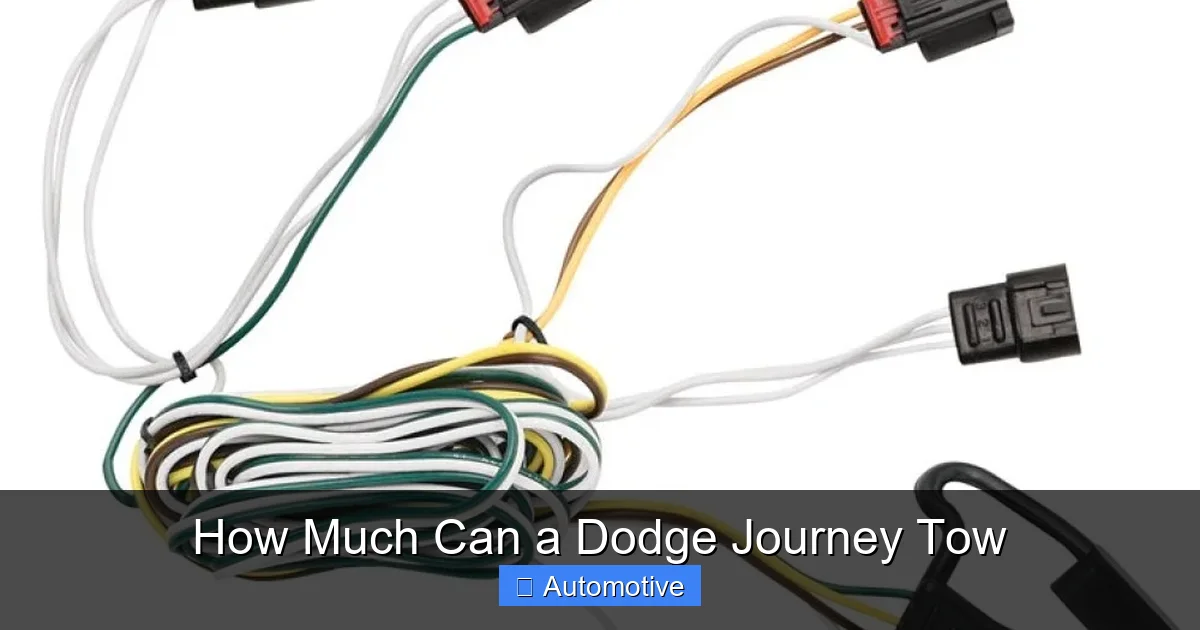
Visual guide about How Much Can a Dodge Journey Tow
Image source: trailerjacks.com
You can’t just hook up a trailer and hit the road—towing safely requires the right equipment. The Dodge Journey’s towing capability isn’t just about the engine; it’s also about the supporting hardware that ensures everything works together smoothly and safely.
The Factory Towing Package
To legally and safely tow up to 2,500 pounds, your Dodge Journey must be equipped with the **factory-installed towing package**. This package is not standard on all trims and must be selected at the time of purchase or added by a dealer. It includes several key components:
– **Class II or Class III Hitch Receiver:** This is the physical connection point for your trailer. A Class II hitch typically supports up to 3,500 pounds, while a Class III can handle up to 5,000 pounds. The Journey uses a Class II hitch, which is sufficient for its 2,500-pound limit.
– **Transmission Cooler:** Towing puts extra stress on the transmission, especially in hot weather or hilly terrain. The cooler helps maintain optimal fluid temperatures and prevents overheating.
– **Heavy-Duty Radiator:** This improves engine cooling, which is crucial when the engine is working harder to pull a load.
– **4-Pin Wiring Harness:** This allows the trailer’s brake lights, turn signals, and running lights to sync with the Journey’s electrical system. Some models may include a 7-pin connector for trailers with electric brakes.
– **Tow/Haul Mode:** Available on V6 models, this feature adjusts transmission shift patterns to improve performance and control when towing.
Without this package, your Journey may not have the necessary cooling, electrical, or structural support for safe towing. Even if you install an aftermarket hitch, the lack of a transmission cooler or proper wiring could lead to mechanical failure or unsafe driving conditions.
Aftermarket Upgrades: What You Can (and Can’t) Add
Some owners consider adding aftermarket parts to enhance towing performance. While certain upgrades are helpful, others may not be compatible or necessary. For example:
– **Aftermarket Hitches:** You can install a Class III hitch on a Journey, but it won’t increase the vehicle’s towing capacity. The limit is set by the engine, cooling system, and frame strength—not just the hitch.
– **Brake Controllers:** If your trailer has electric brakes (required for loads over 1,500 pounds in many states), you’ll need a brake controller. These can be installed separately and are highly recommended for safety.
– **Weight Distribution Hitches:** These help balance the load and improve stability, especially with larger trailers. They’re useful but not required for lighter loads.
Always consult a certified mechanic or towing specialist before making modifications. Improper installations can void warranties or create safety risks.
Real-World Towing Examples and Use Cases
Now that we’ve covered the specs, let’s talk about what the Dodge Journey can actually tow in real life. The 2,500-pound limit opens the door to a variety of practical and fun applications—perfect for families, outdoor enthusiasts, and weekend warriors.
Pop-Up Campers and Small Travel Trailers
One of the most common uses for the Journey’s towing capability is hauling a pop-up camper. These lightweight trailers typically weigh between 1,500 and 2,500 pounds when loaded, making them a great match for the Journey’s capacity. Popular models like the Jayco Jay Series, Forest River R-Pod, or Airstream Basecamp fall well within this range. With a pop-up camper, you can enjoy weekend camping trips without needing a full-size truck or SUV.
Jet Skis and Small Boats
Planning a day at the lake? The Journey can easily tow a trailer with two jet skis or a small aluminum fishing boat. Most single jet ski trailers weigh under 1,000 pounds, leaving plenty of margin for fuel, gear, and passengers. Even a 14-foot aluminum boat with a small outboard motor usually weighs less than 2,000 pounds fully loaded.
Utility and Cargo Trailers
Need to move furniture, landscaping materials, or camping gear? A standard 5×8 utility trailer weighs around 600 pounds empty and can carry up to 2,000 pounds of cargo. That means you can tow a fully loaded trailer and still stay under the Journey’s limit. This makes it ideal for DIY projects, yard work, or moving days.
Motorcycles and ATVs
Motorcycle trailers are another great fit. A single motorcycle with a trailer typically weighs under 1,000 pounds, so you could even tow two bikes if the combined weight stays below 2,500 pounds. ATVs are a bit heavier, but a single ATV with a trailer is usually manageable—just be sure to weigh everything before hitting the road.
What the Journey Can’t Tow
While the Journey is versatile, it’s not built for heavy-duty hauling. It cannot safely tow large travel trailers, full-size boats, or multiple ATVs. For example, a 25-foot travel trailer can weigh 5,000 pounds or more—far exceeding the Journey’s capacity. Attempting to tow such a load could damage the vehicle and create a dangerous situation on the road.
Safety Tips for Towing with a Dodge Journey
Towing safely is just as important as knowing your vehicle’s limits. Even with a 2,500-pound capacity, improper towing can lead to accidents, breakdowns, or costly repairs. Here are some essential safety tips to keep in mind.
Know Your Weight Limits
Always weigh your trailer and cargo before towing. Use a public scale or portable trailer scale to get an accurate reading. Remember, the 2,500-pound limit includes the trailer, cargo, fuel, and any passengers or items in the vehicle. Don’t forget to check your vehicle’s **gross combined weight rating (GCWR)**, which is typically around 7,500 pounds for the Journey. This is the maximum total weight of the vehicle, trailer, and everything in them.
Distribute Weight Properly
Improper weight distribution can cause swaying, fishtailing, or loss of control. Follow the 60/40 rule: 60% of the trailer’s weight should be on the front half (near the hitch), and 40% on the rear. Use a weight distribution hitch if needed, and avoid overloading the rear of the trailer.
Use Trailer Brakes
In most states, trailers over 1,500 pounds must have brakes. If your trailer has electric brakes, install a brake controller in your Journey. This allows you to adjust braking force and improves stopping power, especially on downhill grades.
Check Tire Pressure and Condition
Underinflated or worn tires on either the vehicle or trailer can lead to blowouts. Check tire pressure before every trip and inspect for cracks, bulges, or uneven wear. Trailer tires often have different pressure requirements than vehicle tires—follow the manufacturer’s recommendations.
Practice Safe Driving Habits
Towing changes how your vehicle handles. Allow extra distance for braking, take turns wider, and avoid sudden maneuvers. Use your mirrors frequently and consider installing extended towing mirrors for better visibility. Drive at moderate speeds, especially in windy or hilly conditions.
Perform Regular Maintenance
Towing puts extra strain on your vehicle. Before a long trip, check the engine oil, transmission fluid, coolant, and brake fluid. Inspect the hitch, wiring, and lights. After towing, clean off dirt and salt (if driving in winter conditions) to prevent corrosion.
Comparing the Dodge Journey to Similar SUVs
How does the Dodge Journey stack up against other midsize SUVs when it comes to towing? Let’s take a quick look at a few competitors.
– **Honda Pilot:** Can tow up to 5,000 pounds with the V6 and towing package—more than double the Journey’s capacity.
– **Toyota Highlander:** Offers up to 5,000 pounds of towing with the V6 engine, making it a better choice for heavier loads.
– **Ford Edge:** Maxes out at 3,500 pounds with the turbocharged engine and towing package.
– **Hyundai Santa Fe:** Can tow up to 3,500 pounds with the turbo engine.
As you can see, the Journey is on the lower end of the towing spectrum. It’s not designed for heavy hauling, but it holds its own among compact and midsize SUVs that prioritize passenger space and fuel efficiency over raw power. If you only need to tow occasionally and your loads are light, the Journey is a solid, affordable option.
Final Thoughts: Is the Dodge Journey Right for Your Towing Needs?
The Dodge Journey may not be the most powerful SUV on the market, but it offers a practical towing solution for drivers with modest needs. With a maximum capacity of 2,500 pounds—when properly equipped with the V6 engine and towing package—it can handle small campers, boats, trailers, and recreational gear with ease. It’s ideal for families who want a comfortable, spacious vehicle for daily use but still need the flexibility to tow occasionally.
However, if you frequently tow heavy loads or plan to pull large trailers, you may want to consider a more capable SUV or truck. The Journey shines in its niche: affordable, family-friendly transportation with just enough towing power for weekend adventures.
Ultimately, the key to safe and successful towing is understanding your vehicle’s limits and preparing accordingly. Check your engine, confirm your equipment, weigh your load, and drive with caution. With the right setup, the Dodge Journey can be a reliable partner for your next road trip—whether you’re heading to the mountains, the beach, or just the local hardware store.
Frequently Asked Questions
Can a Dodge Journey with a 2.4L engine tow a trailer?
No, the 2.4L four-cylinder engine is not rated for towing. Dodge does not provide a towing capacity for this engine, and attempting to tow could damage the vehicle or create safety risks.
What is the maximum towing capacity of a Dodge Journey?
The maximum towing capacity is 2,500 pounds, but only when the vehicle is equipped with the 3.6L V6 engine and the factory-installed towing package.
Do I need a special package to tow with a Dodge Journey?
Yes, you must have the factory towing package, which includes a transmission cooler, hitch receiver, wiring harness, and heavy-duty radiator. Without it, towing is not recommended.
Can I install an aftermarket hitch to increase towing capacity?
You can install an aftermarket hitch, but it won’t increase the vehicle’s towing capacity. The limit is determined by the engine, cooling system, and frame—not the hitch itself.
What types of trailers can a Dodge Journey tow?
The Journey can tow small pop-up campers, jet ski trailers, utility trailers, and lightweight boats—typically anything under 2,500 pounds when properly loaded.
Does towing reduce fuel economy in a Dodge Journey?
Yes, towing can reduce fuel economy by 15% to 20%, especially when hauling near the maximum capacity or driving in hilly terrain. Plan for increased fuel costs on long trips.