
How Much Is a 2004 Toyota Tundra Worth?

The value of a 2004 Toyota Tundra depends on trim, mileage, condition, and location. Well-maintained models with low mileage can fetch up to $8,000–$10,000, while average examples range from $4,000–$6,500. Always check service history and market demand before buying or selling.
[FEATURED_IMAGE_PLACEOLDER]
If you’re in the market for a full-size pickup from the early 2000s, the 2004 Toyota Tundra is a name that likely pops up—and for good reason. Known for its rugged reliability, straightforward design, and Toyota’s legendary build quality, the 2004 Tundra remains a favorite among truck enthusiasts, rural drivers, and anyone who values durability over flash. But how much is a 2004 Toyota Tundra worth today?
The short answer? It depends. A lot. While you might see listings ranging from $3,000 to over $10,000, the actual value hinges on several key factors: trim level, engine size, mileage, overall condition, maintenance history, and even where you live. Unlike newer trucks packed with tech and safety features, the 2004 Tundra wins points for simplicity, ease of repair, and long-term dependability. That said, it’s not immune to depreciation—but it holds its value better than many domestic rivals from the same era.
In this guide, we’ll break down everything you need to know to accurately assess how much a 2004 Toyota Tundra is worth. Whether you’re buying, selling, or just curious, understanding the nuances of pricing will help you make a smart decision. We’ll explore trim differences, mechanical considerations, regional pricing trends, and practical tips for evaluating a used Tundra. By the end, you’ll have a clear picture of what to expect—and how to get the best deal.
Key Takeaways
- Trim and engine type matter: The 2004 Tundra came in SR5 and Limited trims with either a 3.4L V6 or 4.7L V8—V8 models typically command higher prices.
- Mileage is a major factor: Trucks under 100,000 miles hold significantly more value than those over 150,000 miles.
- Condition and maintenance history are critical: A clean Carfax report and documented service records can increase resale value by 15–20%.
- Geographic location affects pricing: Rust-free trucks from the South or West Coast often sell for more than those from snowy, salt-heavy regions.
- Market demand fluctuates: Full-size trucks remain popular, especially among DIYers and off-road enthusiasts, which helps sustain Tundra values.
- Aftermarket modifications can hurt or help: tasteful upgrades like lift kits or new tires may add value, but excessive mods can scare off buyers.
- Use multiple pricing tools: Cross-reference Kelley Blue Book (KBB), Edmunds, and local listings to get an accurate estimate.
📑 Table of Contents
Understanding the 2004 Toyota Tundra: A Quick Overview
Before diving into pricing, it helps to understand what makes the 2004 Toyota Tundra unique. This was the second model year of the first-generation Tundra, which debuted in 2000 as Toyota’s answer to American full-size pickups like the Ford F-150 and Chevrolet Silverado. While not quite as large as its U.S. competitors, the Tundra offered a compelling mix of Toyota reliability and truck capability.
The 2004 model year brought minor updates, including improved interior materials, updated trim options, and enhanced safety features like optional side airbags. It was available in two main cab styles: the standard Regular Cab and the more popular Access Cab (extended cab with rear-hinged doors). Bed lengths included a 6.5-foot standard bed and an 8-foot long bed, giving buyers flexibility for work or recreation.
Under the hood, buyers had two engine choices. The base model came with a 3.4-liter V6 producing 190 horsepower—adequate for light-duty tasks but underpowered for heavy towing. The real star was the optional 4.7-liter V8, delivering 245 horsepower and 315 lb-ft of torque. This engine made the Tundra a true workhorse, capable of towing up to 7,100 pounds when properly equipped. Most buyers today seek out the V8, and it significantly impacts resale value.
Trim levels included the base SR5 and the more upscale Limited. The SR5 offered practical features like power windows, air conditioning, and cruise control, while the Limited added leather seats, a premium sound system, and chrome accents. Four-wheel drive was available on both trims, and many off-road enthusiasts appreciate the Tundra’s robust frame and available locking rear differential.
One of the Tundra’s biggest selling points is its reputation for longevity. With proper maintenance, these trucks often surpass 200,000 miles—and many owners report hitting 300,000 or more. This durability keeps demand steady, especially among buyers who want a no-nonsense truck that won’t leave them stranded.
Factors That Influence the Value of a 2004 Toyota Tundra
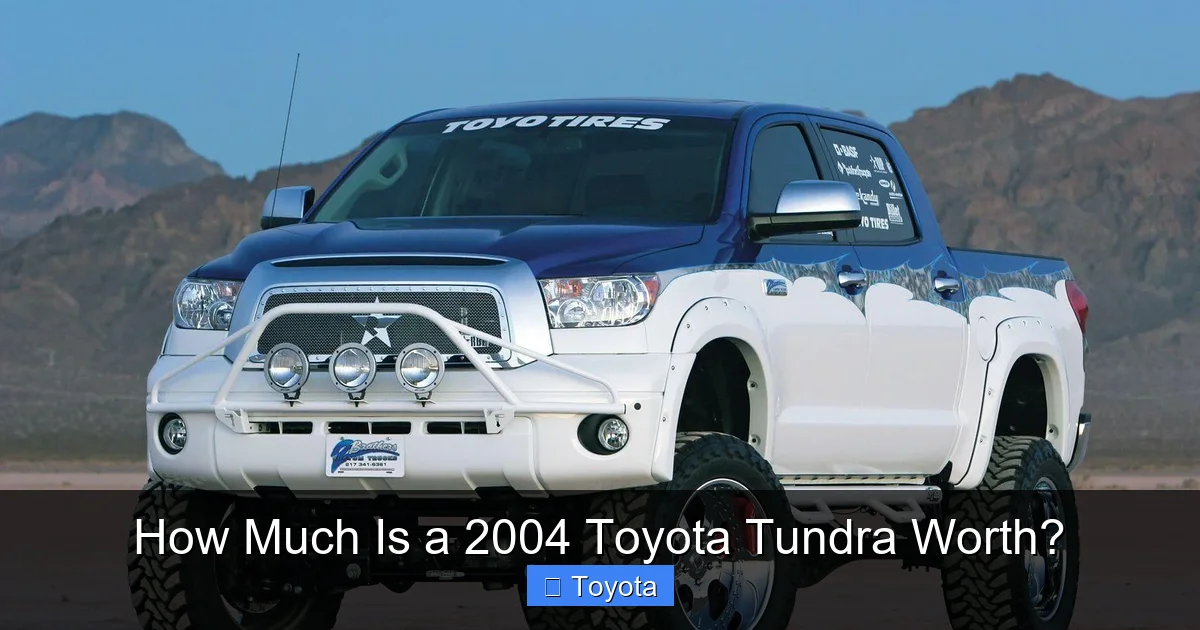
Visual guide about How Much Is a 2004 Toyota Tundra Worth?
Image source: wallpapercave.com
When determining how much a 2004 Toyota Tundra is worth, several variables come into play. No two trucks are exactly alike, even if they share the same model year and trim. Here’s a detailed look at the top factors that affect pricing.
Trim Level and Engine Type
The trim and engine are the first things buyers look at—and they directly impact value. The 2004 Tundra was offered in two main trims: SR5 and Limited. The SR5 is the more common and affordable option, typically priced lower due to its utilitarian focus. The Limited, with its upgraded interior and exterior styling, commands a premium, especially if it’s well-maintained.
But the real differentiator is the engine. The 3.4L V6 is fine for city driving and light hauling, but it lacks the power and towing capacity that many truck buyers want. As a result, V6 models tend to sell for significantly less—often $1,000 to $2,000 below comparable V8s. The 4.7L V8, on the other hand, is highly sought after. It’s smoother, more powerful, and better suited for towing trailers, boats, or campers. If you’re shopping for a 2004 Tundra, prioritize the V8 unless you’re on a tight budget and only need basic transportation.
Mileage and Overall Condition
Mileage is one of the most straightforward indicators of a truck’s value. As a general rule, lower mileage means higher value—but it’s not the only factor. A 2004 Tundra with 80,000 miles in excellent condition will outsell one with 60,000 miles that’s been neglected.
Most 2004 Tundras on the market today have between 120,000 and 180,000 miles. Trucks under 100,000 miles are rare and can fetch $7,000–$10,000, especially if they’re V8 models with clean histories. Average examples with 120,000–150,000 miles typically range from $4,500 to $6,500. Anything over 180,000 miles will likely sell for $3,000–$4,500, unless it’s exceptionally well-maintained or has desirable modifications.
Condition matters just as much as mileage. A truck with a clean exterior, intact interior, and no major mechanical issues will always be worth more. Look for signs of rust, especially on the frame, wheel wells, and undercarriage. Rust can drastically reduce value and lead to costly repairs. Similarly, a cracked dashboard, torn seats, or malfunctioning electronics can lower the price—even if the engine runs perfectly.
Maintenance and Service History
A well-documented service history can boost a Tundra’s value by 15% or more. Buyers want proof that the truck has been cared for—regular oil changes, timing belt replacements (if applicable), brake jobs, and transmission services. The 4.7L V8, in particular, benefits from timely maintenance, as it uses a timing belt that should be replaced every 90,000–100,000 miles.
Ask for maintenance records, receipts, and a recent inspection report. A pre-purchase inspection (PPI) by a trusted mechanic is highly recommended, especially if you’re buying privately. This can uncover hidden issues like worn suspension components, leaking seals, or engine wear. If the seller can’t provide records, consider it a red flag—even if the truck looks good on the surface.
Geographic Location and Climate
Where a truck has been driven plays a surprising role in its value. Trucks from the Southern or Western U.S.—especially states like Arizona, Texas, or California—tend to have less rust and corrosion because they’re not exposed to road salt and harsh winters. These “rust-free” Tundras often sell for $500–$1,500 more than identical models from the Northeast or Midwest.
For example, a 2004 Tundra from Florida with 130,000 miles might list for $6,200, while the same truck from Michigan with similar mileage could be priced at $4,800 due to rust concerns. If you’re buying from a snowy region, inspect the undercarriage carefully. Surface rust can be treated, but structural rust is a serious problem.
Aftermarket Modifications
Modifications can be a double-edged sword. On one hand, tasteful upgrades like a leveling kit, all-terrain tires, or a bed liner can make a Tundra more appealing to off-road or work-oriented buyers. On the other hand, excessive modifications—like a massive lift, oversized tires, or a loud exhaust—can scare off conservative buyers and reduce resale value.
If you’re selling, consider whether your mods add real value. A well-installed lift kit with quality suspension components might attract enthusiasts, but a cheap body lift with poor alignment will hurt the price. Similarly, aftermarket stereos or lighting can be nice, but they’re easy to remove—and many buyers prefer stock electronics for reliability.
2004 Toyota Tundra Pricing Guide: What to Expect

Visual guide about How Much Is a 2004 Toyota Tundra Worth?
Image source: toyotadirect.com
Now that we’ve covered the key factors, let’s look at realistic price ranges based on current market data. Keep in mind that prices can vary by region, season, and demand, so use these as a starting point.
Low-Mileage, Excellent Condition (Under 100,000 miles)
These are the cream of the crop. A 2004 Tundra with under 100,000 miles, especially a V8 model in pristine condition, can command top dollar. Expect to pay $7,500–$10,000 for a well-maintained example with clean history, minimal wear, and no major repairs needed. Limited trims with leather and 4WD will be on the higher end of this range.
For example, a 2004 Tundra Limited 4WD with 85,000 miles, full service records, and a clean Carfax might list for $9,200. These trucks are rare and often sell quickly, especially in areas with high truck demand.
Average Condition (100,000–150,000 miles)
This is where most 2004 Tundras fall. Trucks in this range typically sell for $4,000–$6,500, depending on trim, engine, and condition. A V8 SR5 with 130,000 miles and minor cosmetic flaws might go for $5,200, while a V6 with similar mileage could be priced around $4,000.
Buyers in this range should expect some wear and tear—maybe a small dent, faded paint, or a worn driver’s seat. Mechanical issues are less common if the truck has been maintained, but it’s still wise to get a PPI.
High-Mileage or Project Trucks (Over 150,000 miles)
Trucks with over 150,000 miles are often priced as “project” or “as-is” vehicles. These can range from $2,500 to $4,500, depending on condition. Some may need repairs—like a new transmission, suspension work, or rust repair—while others are still reliable daily drivers.
For example, a 2004 Tundra with 190,000 miles, a rebuilt title, and a slipping transmission might sell for $3,000. But a well-cared-for V8 with 170,000 miles and no major issues could still fetch $4,200, especially if it’s from a dry climate.
Regional Pricing Examples
To give you a real-world sense, here are sample prices from different regions (as of 2024):
– **Southern California:** 2004 Tundra SR5 V8, 120k miles, clean title – $6,800
– **Texas:** 2004 Tundra Limited 4WD, 110k miles, rust-free – $7,500
– **Ohio:** 2004 Tundra SR5 V6, 140k miles, minor rust – $4,200
– **Arizona:** 2004 Tundra SR5 V8, 95k miles, excellent condition – $8,900
These examples show how location and condition can shift prices significantly.
How to Accurately Value a 2004 Toyota Tundra

Visual guide about How Much Is a 2004 Toyota Tundra Worth?
Image source: toyotafiringorder.com
If you’re buying or selling, you’ll want to get the most accurate valuation possible. Here’s how to do it.
Use Multiple Pricing Tools
Don’t rely on just one source. Start with Kelley Blue Book (KBB), Edmunds, and NADA Guides. Each uses slightly different algorithms, so comparing them gives you a better range. For private sales, KBB’s “Private Party” value is usually the most realistic.
For example, KBB might list a 2004 Tundra SR5 V8 at $5,800 (private party), while Edmunds suggests $6,100. NADA might show $6,400 for retail. Take the average and adjust based on your truck’s specifics.
Check Local Listings
Online marketplaces like Craigslist, Facebook Marketplace, and Autotrader are goldmines for real-world pricing. Search for similar trucks in your area—same year, trim, mileage, and condition. Note the asking prices, but also consider how long they’ve been listed. A truck priced at $6,500 that’s been up for three months might be overpriced.
Factor in Recent Sales
Websites like Cars.com and CarGurus show recent sale prices (not just listings), which are more reliable indicators of market value. If three similar Tundras sold for $5,200, $5,500, and $5,800 in the past month, that’s a strong signal of current demand.
Adjust for Unique Features
If your Tundra has desirable features—like 4WD, a towing package, or a rare color—add $300–$800 to the base value. Conversely, if it has a salvage title, frame damage, or major mechanical issues, subtract $1,000–$2,500.
Common Issues to Watch For
Even the most reliable trucks have weaknesses. The 2004 Tundra is generally solid, but it’s not perfect. Here are some common problems to watch for.
Timing Belt and Water Pump
The 4.7L V8 uses a timing belt, not a chain. It should be replaced every 90,000–100,000 miles. If it fails, it can destroy the engine. Ask if the belt has been changed—and when. If not, budget $800–$1,200 for the job.
Suspension and Steering Components
With age and mileage, ball joints, control arms, and tie rods wear out. Listen for clunking noises when turning or going over bumps. A suspension inspection is a must for high-mileage trucks.
Transmission Issues
The 4-speed automatic transmission is generally reliable, but some units develop shifting problems or slipping. Test drive the truck and pay attention to how it shifts—especially under load.
Rust and Corrosion
As mentioned, rust is a major concern in snowy regions. Inspect the frame, cab mounts, and bed supports. Surface rust can be treated, but structural rust is a dealbreaker.
Tips for Buyers and Sellers
Whether you’re buying or selling, these tips will help you get the best outcome.
For Buyers
– Always get a pre-purchase inspection.
– Test drive on highways and rough roads.
– Check for oil leaks, unusual noises, and warning lights.
– Negotiate based on condition, not just mileage.
For Sellers
– Clean the truck inside and out—first impressions matter.
– Gather all service records and receipts.
– Fix minor issues (e.g., burnt-out bulbs, cracked windshield).
– Price competitively based on local market data.
Conclusion
So, how much is a 2004 Toyota Tundra worth? The answer isn’t one-size-fits-all, but with the right information, you can make a confident decision. A well-maintained V8 model with low mileage can be worth $8,000 or more, while average trucks fall in the $4,000–$6,500 range. High-mileage or damaged examples may go for under $4,000.
What makes the 2004 Tundra special is its blend of Toyota reliability, straightforward mechanics, and enduring popularity. It’s not the flashiest truck on the road, but it’s one of the most dependable. Whether you’re using it for work, weekend adventures, or daily driving, it’s a solid choice—if you buy smart.
Remember to evaluate trim, engine, mileage, condition, and location. Use multiple pricing tools, inspect thoroughly, and don’t rush the process. With patience and due diligence, you’ll find a Tundra that fits your needs—and your budget.
Frequently Asked Questions
What is the average price of a 2004 Toyota Tundra?
The average price ranges from $4,000 to $6,500, depending on trim, engine, mileage, and condition. V8 models with lower mileage and clean histories tend to be on the higher end.
Is the 2004 Toyota Tundra a reliable truck?
Yes, the 2004 Tundra is known for its reliability, especially with proper maintenance. Many owners report driving them well over 200,000 miles without major issues.
Should I buy a 2004 Tundra with over 150,000 miles?
It depends on the condition and maintenance history. A well-cared-for high-mileage Tundra can still be a great buy, but get a pre-purchase inspection to check for wear and potential repairs.
Does the 2004 Tundra have a timing belt or chain?
The 4.7L V8 engine uses a timing belt, which should be replaced every 90,000–100,000 miles. The 3.4L V6 also uses a belt, not a chain.
What’s the difference between the SR5 and Limited trim?
The SR5 is the base trim with practical features, while the Limited adds luxury touches like leather seats, premium audio, and chrome accents. Limited models typically sell for more.
Can a 2004 Toyota Tundra tow a trailer?
Yes, especially the V8 model. When properly equipped, it can tow up to 7,100 pounds, making it suitable for boats, campers, and small trailers.
