
How Much Is a 2001 Ford F150 4×4 Worth

The value of a 2001 Ford F150 4×4 ranges from $2,000 to $8,000+ in 2024, heavily dependent on condition, mileage, trim, and regional demand. A well-maintained, low-mileage example with the popular 5.4L Triton V8 and a clean title will command the highest prices. Factors like rust, mechanical issues, and aftermarket modifications can drastically reduce worth. Always check recent sold listings on Kelley Blue Book (KBB) and NADA Guides for your specific zip code to get the most accurate estimate before buying or selling.
So, you’re eyeing that trusty 2001 Ford F150 4×4 in the driveway or on the lot. It’s the truck that built America, a symbol of capability that’s seen a million job sites, tailgates, and family road trips. But in 2024, what is this early-2000s workhorse actually worth? It’s a fantastic question, and the answer isn’t a single number. It’s a story written in miles, rust spots, maintenance receipts, and the simple law of supply and demand. This guide will walk you through every single factor that determines the 2001 Ford F150 4×4 worth, giving you the knowledge to buy with confidence or sell for top dollar.
First, let’s set the stage. The 2001 model year sits in the middle of the tenth-generation F150 (1997-2004). This generation was a massive overhaul from the previous boxy model, introducing the more aerodynamic “PN-96” styling that defined Ford trucks for years. It was a period of immense popularity and robust sales. That means there are a lot of them out there. That high supply can keep prices in check for average examples, but it also means pristine, well-cared-for trucks stand out and hold their value remarkably well. The 4×4 configuration was, and still is, a hugely popular option, creating a strong baseline of demand that supports its value.
Key Takeaways
- Condition is King: The single biggest factor. A rust-free, mechanically sound truck with a clean interior is worth exponentially more than a neglected one.
- 4×4 Premium: The four-wheel-drive system adds a significant value premium over 2WD models, often $1,000-$2,500 more, especially in regions with harsh winters or rural needs.
- Engine Matters: The 5.4L 3-valve Triton V8 is the most desirable and valuable. The 4.6L V8 is capable but less sought after. The 5.4L 2-valve has known spark plug issues that hurt value if not repaired.
- Trim Level Impacts Price: XLT and Lariat trims with added features (power windows/locks, cloth or leather seats, tilt/cruise) are worth more than the base XL work truck model.
- Mileage is a Critical Metric: While these trucks can last 300,000+ miles, high mileage (250,000+) will lower value unless the service history is impeccable and the truck is exceptionally clean.
- Regional Demand Fluctuates: Values are higher in the Midwest, Northeast, and mountainous states where 4×4 is a necessity. They can be lower in the Sun Belt where 2WD is often sufficient.
- History & Documentation: A complete service record, single owner history, and a clean title (no salvage/flood damage) are invaluable for maximizing your sale price.
📑 Table of Contents
The Core Value Drivers: What Truly Determines Price
When you start comparing listings, you’ll see prices all over the map. A 2001 F150 4×4 listed for $1,500 next to one for $9,000. The difference isn’t magic; it’s a combination of tangible factors. Understanding these is your first step to mastering its value.
1. Mechanical Heart: The Engine
Under the hood of your 2001 F150 4×4, you’ll find one of three gasoline V8 engines. This is the starting point for any valuation.
- 5.4L 3-Valve Triton V8: This is the king. With 300 horsepower and 365 lb-ft of torque, it’s the most powerful and refined engine available for this year. It’s also the most sought-after by buyers and therefore the most valuable. Trucks with this engine in good condition are at the top of the price pyramid.
- 5.4L 2-Valve Triton V8: This engine (260 hp, 350 lb-ft) is solid and reliable, but it has a well-documented reputation for spark plug issues. The plugs can break off during removal, leading to a costly repair ($1,500-$3,000). If this repair hasn’t been documented, it will scare off knowledgeable buyers and depress the price significantly.
- 4.6L V8: The smallest and least powerful of the trio (231 hp, 293 lb-ft). It’s a competent, reliable engine, but in a heavy-duty truck like the F150, it feels underpowered, especially with 4×4. It commands the lowest price in the lineup.
Pro Tip: Always verify which engine is installed. The VIN number (17th digit) will tell you. This is non-negotiable information for an accurate appraisal.
2. The Transmission: A Silent Value Factor
The standard transmission for most 2001 F150 4x4s was the 4-speed automatic (4R75E). It’s generally robust but has a known weakness: the output shaft seal can leak, and at high mileage, internal wear can cause slipping or harsh shifts. A transmission that shifts smoothly with no slipping or leaks is a huge plus. A rebuilt or replacement transmission history should be disclosed and can either justify a higher price (if documented) or signal past problems (if not). A manual transmission was extremely rare in 4×4 models and would be a curiosity that might attract a specific buyer but doesn’t inherently add major value.
3. The 4×4 System: More Than Just a Button
The value of the 4×4 system itself is clear. But its condition is critical. The system includes a transfer case, front differential, and front axle shafts. Does it engage smoothly? Any weird noises (clunks, grinding) when shifting into 4 High or 4 Low? Leaks from the transfer case or front differential are red flags. A functioning, quiet 4×4 system is expected. A broken or noisy one is a deal-breaker that can subtract $1,000 or more from the value. If the truck has aftermarket lift kits or larger tires, inspect the CV axles and front-end components for excessive wear, as these modifications increase stress.
Condition: The Ultimate Price Decider
We can’t say this enough: a 2001 Ford F150 4×4 is only worth what someone will pay for its current state. “Condition” is a blanket term, so let’s break it down into inspectable categories.
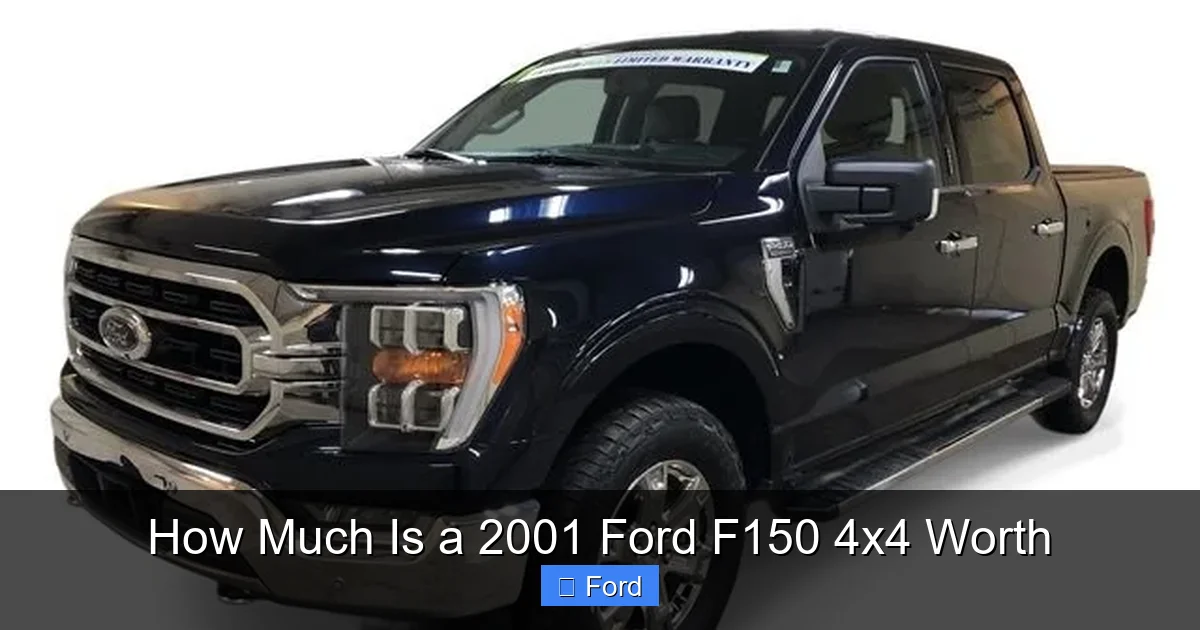
Visual guide about How Much Is a 2001 Ford F150 4×4 Worth
Image source: vehicle-images.dealerinspire.com
Body & Rust: The Cancer of Old Trucks
Rust is public enemy number one for these trucks. Check these critical areas with a critical eye:
- Frame Rails: Surface rust is common. Deep, flaking rust that compromises the structural integrity is a major problem that severely hurts value and safety.
- Fender Wells & Cab Corners: These are classic rust traps. Look for bubbling paint, holes, or large patches of missing metal.
- Bed & Tailgate: The inside of the bed, especially around the wheel wells and the tailgate hinge area, is prone to rot from water and debris.
- Rockers & Doors: Check the bottom of the doors and the rocker panels. Rust here often means it’s traveled from within the door.
A truck with minimal to no rust in these areas is a rare gem and will sell quickly at a premium. A truck with significant structural rust is a parts truck or a project, worth a fraction of a clean one. For comparison, a truck like the 2001 Nissan Frontier, while a capable competitor, may have different rust-prone areas, but the principle is identical: rust kills value.
Interior & Electronics
The cabin tells the story of how the truck was treated. Is the headliner sagging? Are the cloth seats torn, stained, or do they have that permanent “old car smell”? Is the dashboard cracked? Do all the power windows, locks, and the tilt steering work? Does the HVAC system blow hot and cold? A complete, functioning, and clean interior is worth thousands more than a gutted, smelly, or electrically chaotic one. Test every switch and gauge.
Mechanical Health & Maintenance History
This is where you separate the weekend warrior from the seasoned mechanic. A pre-purchase inspection by a trusted shop is the best $150 you’ll ever spend. They’ll check:
- Engine compression and for any diagnostic trouble codes.
- Transmission health.
- Suspension components (ball joints, tie rods, shocks/struts). These trucks often need all four shocks replaced around this age/mileage.
- Brake system condition.
- Cooling system (water pump, thermostat, radiator).
Paperwork is power. A stack of oil change receipts, timing belt/water pump service records (if applicable to the engine), and major component replacements adds immense credibility and value. No history? The buyer will assume the worst and price accordingly.
Trim Levels & Options: From Work Truck to Luxury Hauler
The 2001 F150 came in several trims. Your starting point is the XL, the bare-bones work truck. Vinyl seats, manual everything, and the most basic audio. These are common and start at the bottom of the price range for a given condition.
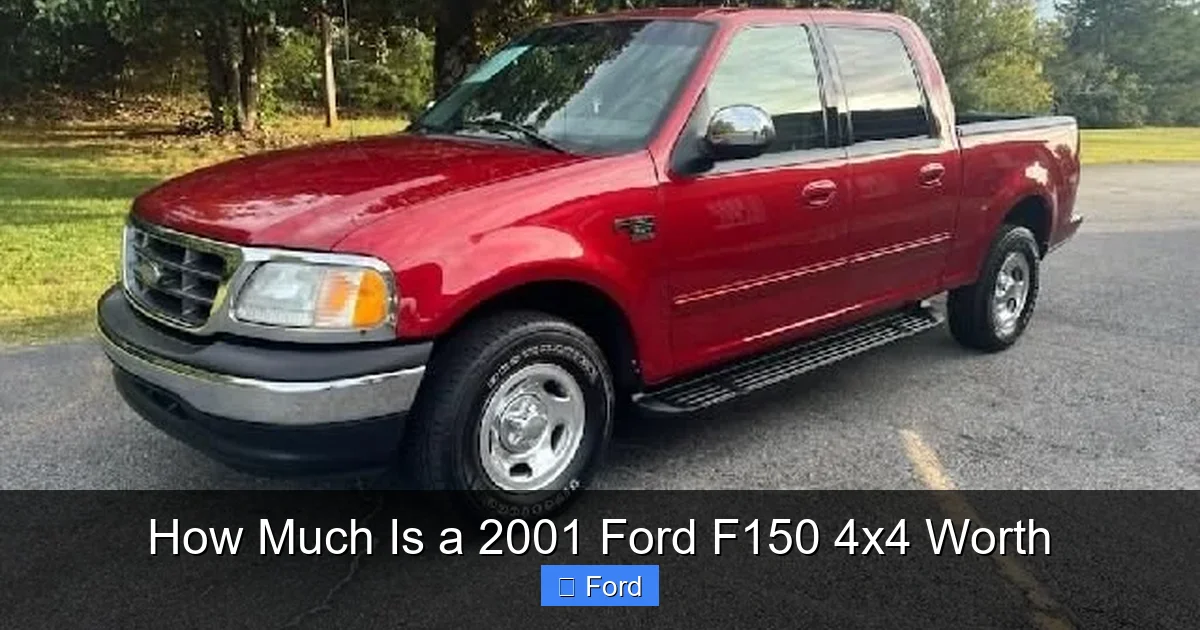
Visual guide about How Much Is a 2001 Ford F150 4×4 Worth
Image source: cdn.dealeraccelerate.com
The XLT is the sweet spot for value and desirability. It typically adds cloth seats, power windows/locks, tilt steering, cruise control, an upgraded audio system, and often alloy wheels. A clean XLT is the most common “good” truck on the market and sets the standard for pricing.
The top-of-the-line Lariat adds leather seats (or premium cloth), automatic climate control, a premium sound system, and sometimes woodgrain trim. It commands a noticeable premium over the XLT.
Special Packages: Look for the Eddie Bauer edition (unique two-tone paint, special badging, premium interior) and the FX4 off-road package (skid plates, off-road tuned suspension, unique wheels). These are highly desirable to specific buyers and can add $500-$1,500 to the value over a similarly equipped standard 4×4.
Market Realities: Where and How to Find True Value
You can’t determine value in a vacuum. You must understand the market you’re in.
Visual guide about How Much Is a 2001 Ford F150 4×4 Worth
Image source: electrek.co
Tools of the Trade: KBB, NADA, and Sold Listings
Start with the official guides. Kelley Blue Book (KBB) and NADA Guides are the industry standards. Input your exact truck: 2001, Ford, F150, 4×4, specific trim, engine, mileage, and your zip code. They will give you a “Trade-In” value (what a dealer will give you), a “Private Party” range (what you’ll likely sell for), and a “Suggested Retail” value (what a dealer will ask). Private Party is your most relevant figure.
But here’s the critical step: go to Facebook Marketplace, Craigslist, and eBay Motors. Don’t just look at asking prices; sort by “Sold Items” or “Completed Listings” on eBay. This shows you what people actually paid. Find trucks as close to yours as possible in condition, mileage, and location. This is the real-world data that trumps any guidebook. A truck might be “listed” at $6,000, but if similar ones are selling for $4,500, that’s your market.
Regional Nuances
A 2001 Ford F150 4×4 in Minneapolis, Minnesota, in January is a necessity. Demand is high, and prices reflect that. The exact same truck in Phoenix, Arizona, is a lifestyle choice. Demand is more moderate, and prices may be lower. Always adjust your expectations based on your local climate and economy. If you’re in a 4×4-mandatory region, your truck is inherently more valuable.
Selling or Buying: Actionable Strategies
For Sellers: Maximize Your Return
You want top dollar. Here’s the playbook:
- Clean It Obsessively: A professional-grade detail inside and out costs $150-$300 and can add $1,000 to your sale price. Remove all personal items. Clean every nook.
- Fix the Obvious: Replace any burned-out bulbs, fix minor oil leaks, top off all fluids, install a new set of wiper blades. Address any “check engine” lights. A truck that runs and looks perfect commands trust.
- Gather Your Paperwork: Have the title, registration, and any service records ready. A binder with history is a powerful selling tool.
- Take Excellent Photos: Shoot in good daylight. Get wide shots of all four sides, close-ups of the engine, interior, bed, and any areas of concern (like a repaired spot). Be honest.
- Price It Right: Use the “Sold Listings” research. Price it at the top of the realistic private-party range if it’s in excellent condition. If it has issues, price it below market and describe them honestly. Overpricing kills interest.
For Buyers: Avoid Overpaying
- Do Your Homework First: Know your target price range from the sold listings before you even test drive.
- Inspect Ruthlessly: Use the condition checklist above. Bring a magnet to check for bondo. Check for mismatched paint. Look under the truck.
- Always Get a Pre-Purchase Inspection (PPI): Never buy without one. It’s your insurance policy. If the seller refuses, walk away. The PPI will reveal hidden issues that justify a lower offer or cause you to walk.
- Negotiate with Facts: “The PPI showed the rear main seal is leaking and the transfer case output shaft seal is weeping. The average sold price for a truck in this condition is $X, so I’m offering $Y.” This is how you win.
- Be Patient: There are many 2001 F150 4x4s. Don’t fall in love with the first one. If the deal isn’t right, another will come along.
The Bottom Line: A Dependable Truck with a Varied Price Tag
So, how much is a 2001 Ford F150 4×4 worth? It’s worth the price of a reliable, rust-free, well-maintained example with the 5.4L engine and a decent feature set in your area. That could be $5,000-$7,000. It’s worth half that or less if it’s a rusty, high-mileage, 4.6L XL with a sketchy transmission and no history.
These trucks are at that beautiful age where they are affordable, mechanically repairable, and still capable of doing real work. They are not collector’s items (except for pristine, low-mileage examples), but they are utilitarian assets. Their value is purely functional: how much useful, dependable transportation can you get for your money? If you buy a good one and maintain it, you’ll get years of service. If you buy a neglected one, you’ll spend its value in repairs.
Ultimately, the 2001 Ford F150 4×4 worth is a negotiation between its tangible condition and the intangible desire of a buyer who needs a simple, tough truck. Arm yourself with the knowledge in this guide, check those sold listings, and you’ll find the number that’s right for you. And if you’re looking at a newer model to compare, you might research how much a 2007 Ford F150 is worth to see how the market values the next generation’s upgrades.
Frequently Asked Questions
What is the biggest value killer for a 2001 Ford F150 4×4?
Unaddressed, severe structural rust is the single largest value killer. It compromises safety and longevity, making a truck nearly unsellable at any reasonable price to a knowledgeable buyer. Major engine or transmission failure is a close second.
Are there any common, expensive problems I should look for?
Yes. For the 5.4L 2-valve engine, verify if the spark plugs have been removed correctly to avoid breakage. For all models, listen for timing chain rattle on cold starts (a sign of a failing tensioner). Also, check for transmission slips and leaks from the transfer case or rear main seal on the engine. These can all be costly fixes.
How much does a good set of tires and a lift kit affect the value?
It’s a double-edged sword. A new set of high-quality all-terrain or mud-terrain tires can add $500-$1,000 in perceived value. A well-done, moderate lift kit (3-4 inches) with quality components can also add value to the right buyer. However, a poorly executed “body lift” or cheap, worn-out oversized tires will scare away most buyers and likely decrease value. Modifications are highly subjective.
Should I buy a truck with over 200,000 miles?
It depends entirely on condition and maintenance history. These trucks are capable of exceeding 300,000 miles. A 200,000-mile truck with a complete service record, no rust, and a smooth-running engine can be a better buy than a 150,000-mile truck with no history and rust. The mileage itself is less important than what that mileage represents in terms of care.
What’s the best way to sell my 2001 F150 4×4 quickly?
Price it 5-10% below the average sold price in your area for a comparable truck. This attracts immediate attention. Ensure it’s exceptionally clean inside and out. Take clear, honest photos. List it on Facebook Marketplace (most active for these trucks) and Craigslist. Be responsive to inquiries and ready to show it. A clean, well-priced truck will sell in days, not weeks.
Is a salvage title always a deal-breaker?
For most private buyers, yes. A salvage title means the truck was declared a total loss by an insurance company, usually for major damage or flood loss. It drastically reduces value (often by 40-60%) and makes financing and insurance difficult. It can be a project for an expert, but for a daily driver, it’s a significant risk and a major value deterrent.
