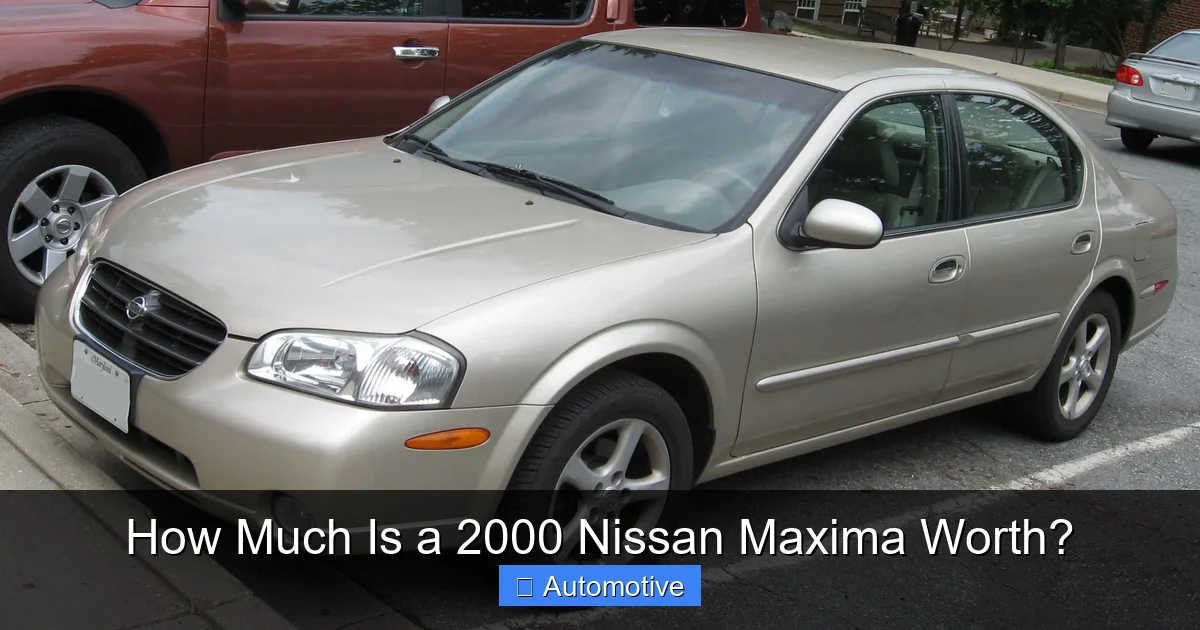
How Much Is a 2000 Nissan Maxima Worth?

Contents
- 1 Key Takeaways
- 2 📑 Table of Contents
- 3 Understanding the 2000 Nissan Maxima’s Market Value
- 4 Factors That Affect the Value of a 2000 Nissan Maxima
- 5 Common Issues That Can Lower Value
- 6 Tips for Buying a 2000 Nissan Maxima
- 7 Selling Your 2000 Nissan Maxima: Maximizing Value
- 8 Conclusion
- 9 Frequently Asked Questions

Carburetor Cleaner

Car Shampoo Concentrate

Interior Cleaner Spray

Car Jump Starter
The 2000 Nissan Maxima typically sells for $1,500 to $3,500 depending on condition, mileage, and location. Well-maintained models with lower mileage can fetch higher prices, while high-mileage or damaged cars may go for under $1,000.
[FEATURED_IMAGE_PLACEHolder]
If you’re wondering, “How much is a 2000 Nissan Maxima worth?” you’re not alone. This sleek, mid-size sedan from the early 2000s still turns heads on the road—and for good reason. Known for its smooth V6 engine, comfortable ride, and surprisingly sporty handling, the 2000 Maxima was a standout in its class. While it may not have the flash of a luxury brand, it offered a compelling mix of performance, reliability, and value that many drivers still appreciate today.
But times have changed. The automotive market has evolved, and so has the value of older vehicles like the 2000 Maxima. Whether you’re looking to buy one as a daily driver, restore it as a project car, or sell your own, understanding its current worth is essential. The answer isn’t a single number—it depends on a variety of factors, from mileage and condition to trim level and where you live. In this guide, we’ll break down everything you need to know to determine a fair price for a 2000 Nissan Maxima in today’s market.
So, let’s dive in. We’ll explore average pricing, what affects value, how to assess condition, and tips for buying or selling. By the end, you’ll have a clear picture of how much a 2000 Nissan Maxima is really worth—and whether it’s a smart investment for you.
Key Takeaways
- Market Value Range: Most 2000 Nissan Maxima models are priced between $1,500 and $3,500, with exceptional examples reaching up to $4,500.
- Mileage Matters: Lower mileage (under 100,000 miles) significantly increases value, while cars over 150,000 miles drop in price.
- Condition Is Key: A well-maintained interior, clean exterior, and full service history can boost resale value by 20–30%.
- Trim and Features: The SE and GLE trims with sunroofs, leather seats, and premium audio systems command higher prices than base models.
- Geographic Influence: Prices vary by region—urban areas and states with mild climates often see higher demand and better pricing.
- Selling Platforms: Private sales typically yield 10–15% more than trade-ins or dealership offers.
- Common Issues to Check: Watch for transmission problems, oil consumption, and suspension wear—these can drastically affect value.
📑 Table of Contents
Understanding the 2000 Nissan Maxima’s Market Value
When it comes to pricing a used car from the year 2000, it’s easy to assume that all models are basically the same—old, outdated, and cheap. But the 2000 Nissan Maxima defies that stereotype. While it’s true that most cars from this era have depreciated significantly, the Maxima holds a special place among enthusiasts and practical buyers alike. Its 3.0-liter VQ30DE V6 engine delivers 222 horsepower, which was impressive for a family sedan at the time. Paired with a smooth 4-speed automatic transmission (or a rare 5-speed manual in some models), it offered a driving experience that rivaled more expensive European sedans.
So, what’s it worth today? According to data from Kelley Blue Book (KBB), Edmunds, and recent private sale listings, the average price for a 2000 Nissan Maxima ranges from $1,500 to $3,500. That’s a wide range, and it reflects the huge variation in condition, mileage, and features. A well-kept, low-mileage example with a clean title and full maintenance records might sell for $3,500 or even approach $4,500 in ideal circumstances. On the other hand, a high-mileage car with mechanical issues, body damage, or a salvage title could go for as little as $800–$1,200.
It’s also important to note that the Maxima’s value isn’t just about age—it’s about how it’s been treated over the past two decades. A car that’s been garage-kept, regularly serviced, and driven gently will always be worth more than one that’s been neglected or used as a daily commuter for 200,000 miles. This is why understanding the factors that influence value is so crucial.
Average Pricing by Condition
Let’s break down the typical price ranges based on condition:
– **Excellent Condition (Low Mileage, Full Records):** $3,000–$4,500
These are rare finds—cars with under 100,000 miles, no accidents, and a documented service history. They often have upgraded features like leather interiors, sunroofs, and premium sound systems.
– **Good Condition (Moderate Mileage, Minor Wear):** $2,000–$3,000
This is the sweet spot for most buyers. The car has 100,000–150,000 miles, some minor cosmetic flaws, but runs well and has been reasonably maintained.
– **Fair Condition (High Mileage, Some Issues):** $1,200–$2,000
These Maxima models have over 150,000 miles and may need repairs—like new brakes, suspension work, or transmission service. They’re still drivable but require investment.
– **Poor Condition (Major Damage or Mechanical Problems):** $500–$1,200
Salvage titles, engine or transmission failure, or significant rust can drop the value dramatically. These are usually project cars or parts donors.
Keep in mind that these are general estimates. Prices can vary based on location, demand, and the seller’s motivation. For example, a Maxima in a snowy state with rust issues might sell for less than one in a dry, southern climate.
How to Check Current Market Prices
If you want to get a precise estimate for a specific 2000 Maxima, start by using online valuation tools. Websites like Kelley Blue Book (KBB), Edmunds, and NADA Guides allow you to input the VIN, mileage, trim, and condition to get a personalized estimate. These tools consider recent sales data and regional trends, giving you a more accurate picture than a simple average.
You can also browse real-world listings on platforms like Craigslist, Facebook Marketplace, Autotrader, and Cars.com. Look for similar models in your area—same year, similar mileage, and condition—and note the asking prices. This gives you a sense of what buyers are actually willing to pay. Just be cautious of overpriced listings or scams. If a deal seems too good to be true, it probably is.
Another smart move is to check completed sales on eBay Motors. This shows you what people actually paid, not just what sellers are asking. It’s a great way to see the true market value.
Factors That Affect the Value of a 2000 Nissan Maxima

Visual guide about How Much Is a 2000 Nissan Maxima Worth?
Image source: momentcar.com
Now that we’ve covered the average price range, let’s dig into the factors that determine where a specific Maxima falls on that scale. Understanding these elements will help you assess whether a car is priced fairly—or if you’re getting a bargain (or overpaying).
Mileage: The Biggest Price Driver
Mileage is one of the most important factors in determining a car’s value—and the 2000 Maxima is no exception. On average, these cars have around 150,000 miles today, but some are much lower, and others are well over 200,000.
Here’s how mileage typically affects pricing:
– **Under 100,000 miles:** These are considered low-mileage for a 2000 model and can command top dollar. Expect to pay $3,000–$4,500 for a well-maintained example.
– **100,000–150,000 miles:** This is the average range. Cars in this bracket usually sell for $2,000–$3,000, depending on condition.
– **150,000–200,000 miles:** Value drops to $1,200–$2,000. At this point, major components like the transmission or engine may need attention.
– **Over 200,000 miles:** These cars are often sold for $500–$1,200, especially if they’re still running. They’re best suited for project builds or parts.
Keep in mind that mileage isn’t everything. A car with 180,000 miles that’s been well-maintained can be a better buy than one with 120,000 miles that’s been neglected. Always check the service history.
Vehicle Condition: Inside and Out
The physical and mechanical condition of the Maxima plays a huge role in its value. A car that looks good and drives well will always be worth more than one that’s beat up or unreliable.
Start with the exterior. Look for rust, especially around the wheel wells, rocker panels, and under the doors. Rust is a major red flag—it can indicate long-term neglect and lead to expensive repairs. Also check for dents, scratches, and paint fading. While minor cosmetic issues can be fixed, extensive body damage will lower the value.
Next, inspect the interior. Are the seats torn? Is the dashboard cracked? Does the AC work? A clean, intact interior suggests the car was cared for. Features like leather seats, power windows, and a sunroof add value, especially if they’re in working order.
Under the hood, check for leaks, worn belts, and corrosion. A clean engine bay with no oil stains is a good sign. Also, listen to the engine when it starts—does it run smoothly, or is there knocking or hesitation?
Finally, take it for a test drive. Pay attention to how the transmission shifts, how the suspension feels over bumps, and whether the brakes are responsive. Any unusual noises or vibrations could indicate hidden problems.
Trim Level and Options
The 2000 Nissan Maxima came in three main trims: the base model, the SE, and the GLE. Each offered different features, and that affects value.
– **Base Model:** The most basic version, with cloth seats, manual windows, and a standard sound system. These are the least valuable, often selling for $1,500–$2,500.
– **SE Trim:** Adds sportier styling, 16-inch alloy wheels, a rear spoiler, and upgraded suspension. It’s popular with driving enthusiasts and can fetch $2,000–$3,000.
– **GLE Trim:** The luxury version, with leather seats, a sunroof, premium Bose audio, and power everything. These are the most desirable and can sell for $2,500–$4,000 in good condition.
Additional options like a manual transmission (rare and sought after), navigation (uncommon for the time), or a factory-installed security system can also increase value.
Title Status and Accident History
A clean title is essential for maximum value. Cars with salvage, rebuilt, or flood-damaged titles are worth significantly less—often 30–50% less than a clean-title equivalent. These titles indicate the car was declared a total loss by an insurance company, usually due to severe damage.
Always run a vehicle history report using services like Carfax or AutoCheck. These reports show accidents, title issues, service records, and odometer readings. A clean report adds confidence and value. If the report shows multiple owners, frequent repairs, or gaps in maintenance, that’s a red flag.
Geographic Location and Climate
Where the car is located can impact its price. In states with mild climates—like California, Arizona, or Texas—cars tend to have less rust and wear, so they hold their value better. In contrast, cars from snowy or coastal areas may have rust from road salt or moisture, which lowers their worth.
Urban areas with higher demand for reliable used cars may also see slightly higher prices. For example, a 2000 Maxima in Los Angeles might sell for $2,800, while the same car in rural Montana might go for $2,000.
Common Issues That Can Lower Value
Visual guide about How Much Is a 2000 Nissan Maxima Worth?
Image source: momentcar.com
Even the best-maintained 2000 Maxima can have problems. Knowing what to look for can save you from a money pit—and help you negotiate a fair price.
Transmission Problems
One of the most common issues with the 2000 Maxima is transmission failure. The 4-speed automatic (RE4R01A) is known to wear out around 120,000–150,000 miles, especially if it hasn’t been serviced regularly. Symptoms include slipping, delayed shifting, or a burning smell.
A transmission rebuild can cost $1,500–$3,000, which is a huge chunk of the car’s value. If the seller says the transmission was “just serviced,” ask for receipts. If it’s original and hasn’t been rebuilt, factor in the repair cost when negotiating.
Oil Consumption and Engine Wear
The VQ30DE engine is generally reliable, but some models are known to consume oil—sometimes a quart every 1,000 miles. This isn’t always a deal-breaker, but it can indicate worn piston rings or valve seals. Check the oil level and condition regularly. Blue smoke from the exhaust on startup is a warning sign.
Suspension and Steering Wear
After 20+ years, suspension components like struts, ball joints, and control arms wear out. This leads to a rough ride, poor handling, and uneven tire wear. Replacing these parts can cost $500–$1,000. Listen for clunking noises when driving over bumps.
Electrical and Sensor Issues
Older cars often develop electrical gremlins. The 2000 Maxima may have issues with the mass airflow sensor, oxygen sensors, or the infamous “check engine” light. These are usually fixable, but they add to the cost of ownership.
Rust and Body Damage
As mentioned earlier, rust is a major concern. Check underneath the car, especially in areas prone to corrosion. Also look for signs of previous repairs—mismatched paint, uneven panels, or overspray—which could indicate hidden damage.
Tips for Buying a 2000 Nissan Maxima

Visual guide about How Much Is a 2000 Nissan Maxima Worth?
Image source: assets.oldcarsdata.com
If you’re in the market for a 2000 Maxima, here are some practical tips to help you get the best deal.
Set a Budget and Stick to It
Decide how much you’re willing to spend—not just on the purchase, but on potential repairs. A $2,500 car might need $1,000 in fixes, so budget accordingly.
Get a Pre-Purchase Inspection
Always have a trusted mechanic inspect the car before buying. They can spot issues you might miss and give you an honest assessment of its condition. This inspection usually costs $100–$150 but can save you thousands.
Negotiate Based on Condition
Use any flaws—high mileage, needed repairs, cosmetic damage—as leverage to negotiate a lower price. For example, if the transmission is original and nearing failure, ask for $500–$1,000 off.
Buy from a Private Seller When Possible
Private sellers often price their cars lower than dealerships and may be more flexible on price. Just be sure to meet in a safe location and verify the seller’s identity.
Check for Recalls and Service Campaigns
Nissan issued several recalls for the 2000 Maxima, including issues with the airbags and fuel system. Check the NHTSA website to see if the car has any open recalls that need attention.
Selling Your 2000 Nissan Maxima: Maximizing Value
If you’re selling your Maxima, here’s how to get the best price.
Clean and Detail the Car
First impressions matter. Wash, wax, and vacuum the interior. Fix minor scratches, replace burnt-out bulbs, and top off fluids. A clean car looks cared for and can increase offers by 10–15%.
Gather Maintenance Records
Having a folder with oil change receipts, repair invoices, and inspection reports shows buyers the car was well-maintained. This builds trust and justifies a higher price.
Take High-Quality Photos
Use good lighting and take pictures from multiple angles—exterior, interior, engine bay, and undercarriage. Highlight any upgrades or special features.
Price It Right
Research similar listings and price your car competitively. If you’re asking $3,000, make sure it’s in excellent condition with low mileage. Overpricing leads to long listing times.
Use Multiple Platforms
List on Craigslist, Facebook Marketplace, Autotrader, and local classifieds. The more visibility, the better your chances of a quick sale.
Conclusion
So, how much is a 2000 Nissan Maxima worth? The answer depends on a mix of factors—mileage, condition, trim, location, and history. On average, you can expect to pay between $1,500 and $3,500 for a decent example, with exceptional models reaching up to $4,500. While it’s not a high-value classic, the Maxima remains a solid, reliable sedan with a loyal following.
Whether you’re buying or selling, doing your homework is key. Check the market, inspect the car thoroughly, and don’t rush into a decision. With the right knowledge, you can find a great deal—or get a fair price for your own Maxima.
And who knows? That 2000 Maxima might just be the perfect blend of performance, comfort, and value for your next daily driver.
Frequently Asked Questions
What is the average mileage on a 2000 Nissan Maxima?
The average mileage for a 2000 Nissan Maxima is around 150,000 miles. However, some well-maintained models have under 100,000 miles, while others exceed 200,000. Mileage significantly affects the car’s value.
Is the 2000 Nissan Maxima reliable?
Yes, the 2000 Maxima is generally reliable, especially with regular maintenance. The VQ30DE V6 engine is durable, but watch for transmission wear and oil consumption as the car ages.
Can a 2000 Nissan Maxima be a good project car?
Absolutely. With a strong engine and sporty handling, the Maxima is a popular choice for restorations or performance upgrades. Just factor in potential repair costs before starting.
Why do some 2000 Maxima models sell for over $4,000?
Low-mileage examples with full service records, rare options (like a manual transmission), and excellent condition can command premium prices, especially among enthusiasts.
Should I buy a 2000 Maxima with high mileage?
It depends on condition and price. A high-mileage Maxima can still be a good buy if it’s been well-maintained and priced below $2,000. Always get a pre-purchase inspection.
How much does it cost to maintain a 2000 Nissan Maxima?
Routine maintenance (oil changes, brakes, tires) costs around $500–$800 per year. Major repairs like transmission work can add $1,500–$3,000, so budget accordingly.