
How Much Is a 1989 Ford F-150 Worth

The value of a 1989 Ford F-150 can range from as little as $1,500 for a project truck to over $25,000 for a pristine, fully loaded example. Key determinants are the truck’s specific configuration, engine, drivetrain, overall condition, and originality. The market for these eighth-generation trucks remains strong due to their iconic status, simplicity, and loyal following. Understanding these variables is crucial for both buyers and sellers to arrive at a fair price.
So, you’ve got your eye on a classic American icon. A 1989 Ford F-150. That square, no-nonsense body. The solid front axle on the 4×4 models. The feeling that this truck was built to do a job and last forever. It’s a fantastic piece of automotive history. But before you dive in with your wallet—or put your own up for sale—the big question looms: how much is a 1989 Ford F-150 worth? The answer, like the truck itself, is wonderfully straightforward and yet surprisingly complex. Let’s pop the hood and break down everything that determines the price tag on these beloved eighth-generation trucks.
Key Takeaways
- Condition is King: The single biggest factor is the truck’s physical and mechanical state. Rust-free, well-maintained examples command premiums far beyond running but worn-out project trucks.
- Configuration Drives Price: A long-bed, regular-cab, 2WD base model is worth significantly less than a short-bed, extended-cab, 4×4 with the top 5.8L V8 and luxury amenities.
- Originality Sells: Trucks with their original engine, transmission, and interior, and without questionable modifications, are more desirable and valuable to collectors and enthusiasts.
- Engine Choice Matters: The fuel-injected 5.8L (“351W”) V8 is the most sought-after engine. The carbureted 5.0L (“302”) and 4.9L inline-6 are reliable but generally less valuable. The rare 7.5L (“460”) big-block V8 is a niche premium.
- Market Fluctuations: Values have steadily climbed over the past decade due to nostalgia and the truck’s status as a “last of the simple” American pickup. They are not speculative investments but hold value well relative to other 30+ year-old vehicles.
- Documentation Adds Value: A clean title, maintenance records, and original build sheet (if available) provide proof of history and care, increasing buyer confidence and final sale price.
- Location Influences Price: Trucks from dry, rust-free states (Southwest, Southeast) typically sell for more than identical models from the “Salt Belt” (Northeast, Midwest) where corrosion is a major issue.
📑 Table of Contents
- The 1989 F-150: A Pillar of Simplicity in a Complex World
- The Value Decoder Ring: Key Factors That Determine Price
- Pricing by Configuration: Real-World Examples
- Where to Find (and Sell) Your 1989 F-150: Market Insights
- Maximizing Value: The Buyer’s and Seller’s Checklist
- The Restoration vs. Driver Decision: A Critical Financial Crossroads
- Conclusion: Finding Your Number
The 1989 F-150: A Pillar of Simplicity in a Complex World
To understand the value, you first need to appreciate what you’re looking at. The 1987-1991 F-150 (often called the “Eighth Generation”) represents the final chapter of Ford’s very traditional, body-on-frame, rugged-as-nails pickup design before the aerodynamic wave of the 1990s hit. For 1989, it was a mature, refined model within that generation. It was the truck that said, “I don’t need a computer to tell me how to shift,” and “My bumpers are made of actual steel.” This raw, mechanical simplicity is a huge part of its enduring appeal and value foundation. Unlike many of its contemporaries from the 1980s that have vanished into scrapyards, the F-150’s legendary durability means thousands are still on the road, and thousands more are waiting in barns and backyards for a second chance. This survival rate creates a robust market, but it also means prices are finely tuned to every little detail.
Why These Trucks Hold Their Value
While a 2007 F-150 might be worth more in absolute dollars due to its newer age and modern features, the classic truck’s value proposition is different. It’s about character, ease of repair, and a direct connection to the road. Every part is understandable. You can fix almost anything with a basic set of tools and a Haynes manual. This “user-friendly” mechanic appeal, combined with its status as a cultural icon from the late ’80s, means it depreciates very slowly after reaching a certain floor. It’s not a luxury sedan that plummets in value; it’s a tool that becomes a classic. You can see this resilience when comparing it to other vehicles from the era; while a family sedan might be worth a few hundred dollars, a clean F-150 from the same year is often worth ten times that. This inherent value retention is the starting point for any price discussion.
The Value Decoder Ring: Key Factors That Determine Price
Think of a 1989 F-150’s price as a recipe. The base ingredient is “being a running F-150.” But the final dish’s flavor—and cost—comes from a precise blend of specific ingredients. Let’s identify them.

Visual guide about How Much Is a 1989 Ford F-150 Worth
Image source: cdn.dealeraccelerate.com
1. The Powertrain: What’s Under the Hood (and Under the Truck)
This is your first major price divider. Ford offered several engines and drivetrain setups in ’89.
- The 5.8L V8 (351Windsor): This is the king. The fuel-injected 351 was the top engine option, providing excellent torque and reliability. Any F-150 with this engine, especially mated to an automatic transmission, starts at a higher baseline. It’s the most desirable engine for towing, hauling, and just plain old V8 rumble.
- The 5.0L V8 (302): Also fuel-injected in ’89, this is a fantastic, proven engine. Very common and very reliable. It’s a step down in value from the 351 but a step up from the six-cylinder.
- The 4.9L Inline-6: The workhorse. Unkillable, torquey, and simple. It’s the engine of the base-model work trucks. While beloved for its indestructibility, it commands a lower price than any V8 in the current classic truck market.
- The 7.5L V8 (460): A big-block beast, usually found in F-250 and F-350 models, but some were in F-150s. Rare and powerful, it attracts a specific buyer and can add a premium, but its thirst for fuel limits its universal appeal.
The transmission is next. An automatic is generally preferred and adds value over a manual, simply because it’s what most people want for a casual driver. On the drivetrain, 4×4 is the golden ticket. A two-wheel-drive F-150 is a capable truck, but a 4×4 with a manual transfer case is in a completely different league for desirability and price. The solid front axle, higher ride height, and off-road capability make it the holy grail for many buyers. A clean 4×4 can easily be 30-50% more valuable than its 2WD sibling with otherwise identical features.
2. The Body Style: Cab, Bed, and Flareside
Your choice of cab and bed length dramatically affects utility and, therefore, value.
- Regular Cab (2-door): The most common. Value is standard.
- SuperCab (Extended Cab): Has small rear jump seats. More versatile, more desirable, and more valuable. This is a major plus.
- Crew Cab (4-door): Extremely rare for 1989 F-150s. If you find one, it’s a unicorn and commands a very significant premium.
Bed length is a classic utility vs. maneuverability trade-off:
- 6.75′ Bed (Short Bed): On a regular cab, it’s the sportier, more “personal use” look. On a SuperCab, it’s very proportional and highly sought-after.
- 8′ Bed (Long Bed): The pure work truck. More cargo capacity. Often slightly less valuable than the short bed on the same cab configuration due to its less “cool” image, but indispensable for some buyers.
Finally, there’s the Flareside (also called “Styleside” by Ford). This is the classic, rectangular bed with outward-flared rear fenders. The alternative was the Stepside (with the bed sides flush with the rear tires). The Flareside is by far more common and iconic. A Stepside is a novelty and can be worth more to the right buyer, but its market is smaller.
3. The Trim Level: From XL to XLT Lariat
Ford offered several trim levels that bundled features. In order from base to luxury:
- XL: The work truck. Vinyl seats, basic radio, minimal creature comforts. Value is based purely on mechanicals and body.
- XLT: The popular middle ground. Adds cloth seats, better carpet, more sound insulation, and often a nicer gauge cluster. This is the sweet spot for value; it has desirable features without the extreme premium of the top trim.
- XLT Lariat: The luxury model. Leather or plush cloth seats, woodgrain dash, air conditioning, and often alloy wheels. A well-equipped Lariat in good condition can command a price that overlaps with a more basic but pristine 4×4.
Key optional features that add significant value include: Air Conditioning (a huge plus, especially in warmer climates), Factory Slotted Wheels or Alloy Wheows, a tilt steering wheel, and a AM/FM/cassette stereo with premium sound. These features, when original and working, tell a story of a truck that was well-optioned from the start and were expensive new, so they retain value.
4. The Condition Spectrum: From Barn Find to Concours
This is the most critical and nuanced factor. A “1989 F-150” is not a single price. It’s a spectrum. We can break it down into rough tiers:
- Parts Truck / Project ($500 – $3,000): Non-running, severe rust, major body damage, missing parts. Value is in its usable components (engine, transmission, axles, body panels). For a buyer with mechanical skills and a workshop, it’s a source of parts or a long-term rebuild.
- Driver / Fair Condition ($3,000 – $8,000): Runs and drives, but has significant issues. This could be moderate rust (especially in cab corners, rocker panels, and frame), worn interior, dents, and deferred maintenance. It’s a usable truck for someone who doesn’t mind imperfections. The engine and trans should be sound.
- Good Condition ($8,000 – $15,000): The most common “sellable” truck. No major rust, mechanically sound, presentable interior (may have wear but not shredded), decent paint (original is fine, no major peeling). It should be reliable for daily or weekly use with normal maintenance. This is where most private-party sales happen.
- Excellent / Restored Condition ($15,000 – $25,000+): Here, we’re talking about a truck that is better than new. This means: rust-free, straight body; a fresh, high-quality paint job in original color; a completely redone or mint-condition original interior; all mechanical systems rebuilt or in perfect working order; and all original or correct NOS (New Old Stock) parts. It has been cared for or restored with passion and budget. Documentation of the work is key.
- Concours / Show Truck ($25,000+): A flawless, museum-quality example. Perfectly straight panels, laser-straight gaps, showroom-new interior, a numbers-matching drivetrain, and every single nut and bolt either restored or replaced with a correct period part. These are rare and bought by serious collectors.
Pricing by Configuration: Real-World Examples
Let’s make this concrete with some hypothetical but realistic price points based on current market trends (as of late 2023/early 2024). Remember, these are estimates. Actual sale prices vary by region, season, and demand.

Visual guide about How Much Is a 1989 Ford F-150 Worth
Image source: cdn.dealeraccelerate.com
- Example 1 (Entry-Level): 1989 F-150 XL, 4.9L Inline-6, 2WD, Regular Cab, Long Bed, with moderate rust and a tired interior. Estimate: $2,500 – $4,500. It’s a parts hauler or a first project.
- Example 2 (Solid Driver): 1989 F-150 XLT, 5.0L V8, 4×4, SuperCab, 6.75′ Bed, with factory A/C, minimal rust, good running condition. Estimate: $12,000 – $17,000. This is a highly desirable, usable classic. This is the truck many people are searching for.
- Example 3 (Premium Example): 1989 F-150 XLT Lariat, 5.8L V8, 4×4, Regular Cab, Short Bed, Flareside, with factory A/C, alloy wheels, and a well-preserved interior. Rust-free. Estimate: $18,000 – $24,000. The combination of the top engine, 4×4, luxury trim, and short-bed Flareside style hits multiple value drivers.
- Example 4 (Rare Bird): 1989 F-150 (likely an F-150 badge on a heavier-duty chassis), 7.5L V8, 4×4, Crew Cab, well-maintained. Estimate: $22,000 – $30,000+. The crew cab alone makes it extraordinary. The big-block V8 seals the deal for a niche but enthusiastic buyer.
Notice the pattern? The base price for a running, non-rusty 4×4 V8 SuperCab starts to creep into the mid-teens. Every desirable feature stacks on top of that. To get a truly accurate value for a specific truck, you must assess it against all these factors simultaneously.
Where to Find (and Sell) Your 1989 F-150: Market Insights
The market for these trucks is not monolithic. It exists in several places, each with its own pricing dynamics.
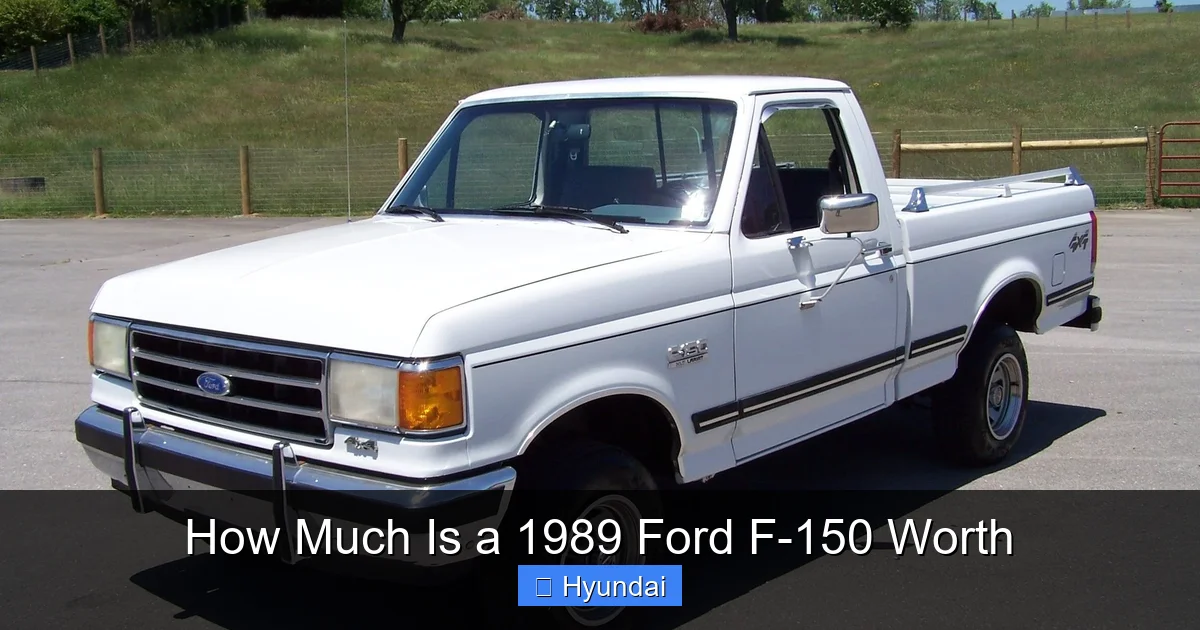
Visual guide about How Much Is a 1989 Ford F-150 Worth
Image source: cdn.dealeraccelerate.com
Online Marketplaces (Facebook Marketplace, Craigslist, eBay)
This is the primary market. Prices here are all over the map. You’ll see “dreamer” listings with prices 50% above market and “motivated seller” deals below. The key is to look at sold listings, not just active ones. On Facebook and Craigslist, you can filter by “Sold Items” or use tools like sold price databases to see what people actually paid. eBay’s “Sold Listings” filter is invaluable. Be patient. The best deals often go to the most knowledgeable and quickest responder.
Specialty Auctions (Mecum, Barrett-Jackson)
You’ll occasionally see pristine, highly customized, or exceptionally original F-150s at these big-money auctions. These sales set the absolute ceiling for the market and can create buzz that trickles down. However, they are not representative of the average truck’s value. A $40,000 sale at Mecum is for a flawless, celebrity-owned, or radically restomodded truck. It doesn’t mean your good driver is worth $40,000.
Classic Truck Forums and Clubs
This is where the true enthusiasts live. On forums like Ford-Trucks.com or specific F-150 groups, you’ll find the most nuanced discussion about values, parts, and condition. Members often have a very realistic sense of what a truck is worth and are less likely to have inflated expectations. Selling here can get you a serious, knowledgeable buyer, but the audience is smaller than Facebook.
Maximizing Value: The Buyer’s and Seller’s Checklist
Whether you’re buying or selling, you can navigate this market successfully with a systematic approach.
For the Buyer: Inspect Like a Pro
Before you write a check, you must verify the condition. The biggest value killer is rust. Get underneath and poke at the frame, especially near the rear axle, front suspension mounts, and along the rocker panels. Use a magnet to check for bondo (it shouldn’t stick). Open all doors and the tailgate; check the jambs and under the seals for rot. Look at the cab corners—they are notorious rust traps. A rust-free truck in a northern state is worth its weight in gold. Next, verify it runs and drives well. Does the transmission shift smoothly? Any slipping? Does the 4×4 engage without grinding? Check for smoke from the exhaust (blue = oil burn, white = coolant leak). A simple test drive on different road surfaces can reveal suspension issues. Finally, ask for history. Any receipts? How many owners? A documented history is worth thousands in peace of mind.
For the Seller: Document and Present
If you want top dollar, you must prove your truck’s quality. Take 100+ high-quality photos. Get shots of the VIN tag, engine, undercarriage, rust spots (be honest!), interior wear points, and any receipts. A clean, organized photo album builds trust. Compile all paperwork. Title, old registrations, maintenance records. Even a simple list of recent work (new brakes, tune-up, tires) adds credibility. Be brutally honest in your description. Mention any flaws. Buyers appreciate honesty and will trust you more. A truck sold with “minor surface rust” when it has holes in the frame will lead to disputes and wasted time. Finally, price it correctly. Use sold comps. It’s better to price slightly above your minimum and be willing to negotiate than to price too high and have no inquiries. A fairly priced, well-presented truck will sell quickly.
The Restoration vs. Driver Decision: A Critical Financial Crossroads
This is the biggest calculation a prospective owner faces. You’ve found a driver-quality truck for $12,000. Or you’ve found a project for $4,000 with a straight body but a seized engine. What’s the smarter play?
The buyer of the $12,000 driver gets immediate, reliable enjoyment. The total cost is predictable. They own a classic truck today. The downside is they have a truck worth $12,000.
The buyer of the $4,000 project faces an unknown financial abyss. A simple engine rebuild could be $3,000 in parts and labor. A full paint job? $5,000+. Rust repair? The sky is the limit. It’s very easy to put $15,000 into a $4,000 truck and still have a vehicle worth only $18,000. The reward is a perfect, personalized truck with no hidden issues and all new wear items. The risk is financial ruin and a multi-year time sink.
Rule of Thumb: Unless you are a professional restorer with a parts stash and a shop, buying a clean, running, driver-quality truck is almost always the better financial decision. You get a usable classic immediately and avoid the massive hidden costs of restoration. The project market is for experts and those with a specific vision that justifies the cost. For everyone else, the premium for a finished truck is cheaper than the cost of finishing one.
Conclusion: Finding Your Number
So, how much is a 1989 Ford F-150 worth? The final answer lives at the intersection of all these factors. It’s a number forged in the crucible of engine size, cab configuration, drivetrain, trim, and—above all—condition. The market is healthy, informed, and active. For a solid, desirable truck (4×4, V8, SuperCab, low rust), you are looking at a starting point in the low-to-mid teens. For the absolute best examples, the sky is the limit, but those are rare. For the average buyer, the sweet spot—the truck that offers the best blend of value, usability, and enjoyment—sits in that $10,000 to $20,000 range. Your mission, should you choose to accept it, is to inspect relentlessly, know the comps, and find the truck that matches your budget and your dream. That square, rugged, honest-to-goodness Ford will be worth every penny you pay for the right one.
Frequently Asked Questions
Is a 1989 Ford F-150 a good investment?
Think of it as a “value retention” purchase, not a speculative investment. These trucks have bottomed out in value and are now slowly climbing due to nostalgia and scarcity. A well-maintained example will likely hold its value or appreciate modestly over time, but you shouldn’t buy one expecting to double your money in five years. Buy it to drive and enjoy.
What is the most desirable 1989 F-150 configuration?
The consensus “sweet spot” is a 4×4, 5.8L V8, SuperCab (extended cab), short bed (6.75′), XLT or Lariat trim, with factory air conditioning and minimal rust. This combination offers maximum utility, the best engine, desirable passenger space, and a sportier look, hitting all the value drivers for the broadest buyer pool.
How much does rust affect the value?
It is the single biggest value killer. A truck with significant structural rust (frame, cab corners, rockers) can be worth 30-50% less than an identical rust-free truck. Surface rust can be repaired, but hole-through rust is a deal-breaker for most buyers unless the price reflects a major, expensive repair bill.
Should I buy a truck with a modified engine or suspension?
Generally, no. Modifications (especially engine swaps, lift kits, or huge tires) severely limit your buyer pool. Most classic truck buyers want originality or very mild, reversible upgrades. A modified truck is worth less than a stock one in similar condition because it’s a niche item and raises questions about the quality of the work and the treatment of the original parts.
What paperwork do I need to get the best price?
A clean, non-salvage title is non-negotiable. Beyond that, any history is gold: the original window sticker (if you can find it), a title from the first owner, a stack of maintenance receipts, and documentation of any major work (engine rebuild, rust repair, paint job). This proof of care builds immense buyer confidence and justifies a premium.
Are automatic or manual transmissions more valuable?
In today’s market, the automatic transmission is more desirable and adds value. The vast majority of buyers want a classic truck for casual driving and towing, and an automatic is preferred. A clean manual truck will still sell, but typically for a few thousand dollars less than an identical automatic. The exception is for pure off-road enthusiasts who specifically seek a manual for its control and durability.
