
How Much Does It Cost to Wrap a Dodge Challenger?

Wrapping your Dodge Challenger is a stylish and cost-effective way to transform its look without a paint job. Depending on materials, coverage, and labor, expect to pay between $2,500 and $5,500 for a high-quality wrap.
Key Takeaways
- Full wraps cost $2,500–$5,500: This includes premium vinyl and professional installation on your Dodge Challenger.
- Partial wraps are cheaper ($800–$2,000): Ideal for hoods, roofs, or stripes if you want a subtle upgrade.
- Vinyl quality matters: Cast vinyl lasts longer and looks better than calendered vinyl—choose wisely.
- Labor costs vary by region: Urban areas and specialty shops charge more due to higher demand and expertise.
- Color and finish affect price: Gloss, matte, satin, chrome, or color-shift wraps come at different price points.
- Maintenance is low but important: Regular washing and avoiding automatic car washes help your wrap last 5–7 years.
- DIY kits are risky: While cheaper ($200–$600), they often lead to bubbles, peeling, and wasted money.
📑 Table of Contents
- How Much Does It Cost to Wrap a Dodge Challenger?
- Why Wrap Your Dodge Challenger?
- Factors That Affect the Cost of a Challenger Wrap
- Average Cost Breakdown for a Dodge Challenger Wrap
- DIY vs. Professional Wrap: Should You Do It Yourself?
- How Long Does a Wrap Last?
- Is Wrapping Your Challenger Worth It?
- Conclusion
How Much Does It Cost to Wrap a Dodge Challenger?
So, you’ve got a Dodge Challenger—maybe it’s a sleek SXT, a roaring R/T, or a fire-breathing Hellcat. It’s already a head-turner, but you’re thinking about giving it a fresh new look without dropping thousands on a custom paint job. That’s where vinyl wrapping comes in.
Wrapping your Challenger is one of the smartest, most stylish upgrades you can make. It changes the color, adds texture, and protects your original paint—all without permanent changes. But how much does it actually cost to wrap a Dodge Challenger?
The short answer? Expect to spend between $2,500 and $5,500 for a full professional wrap. But that number can go lower or higher depending on what you want. Are you going full coverage or just a roof wrap? Do you want glossy black or a wild color-shifting chrome? Are you doing it yourself or hiring a pro?
In this guide, we’ll break down every factor that affects the cost of wrapping your Challenger. From materials and labor to design choices and maintenance, we’ll help you make an informed decision. Whether you’re on a budget or ready to splurge, you’ll know exactly what to expect—and how to get the best value for your money.
Why Wrap Your Dodge Challenger?
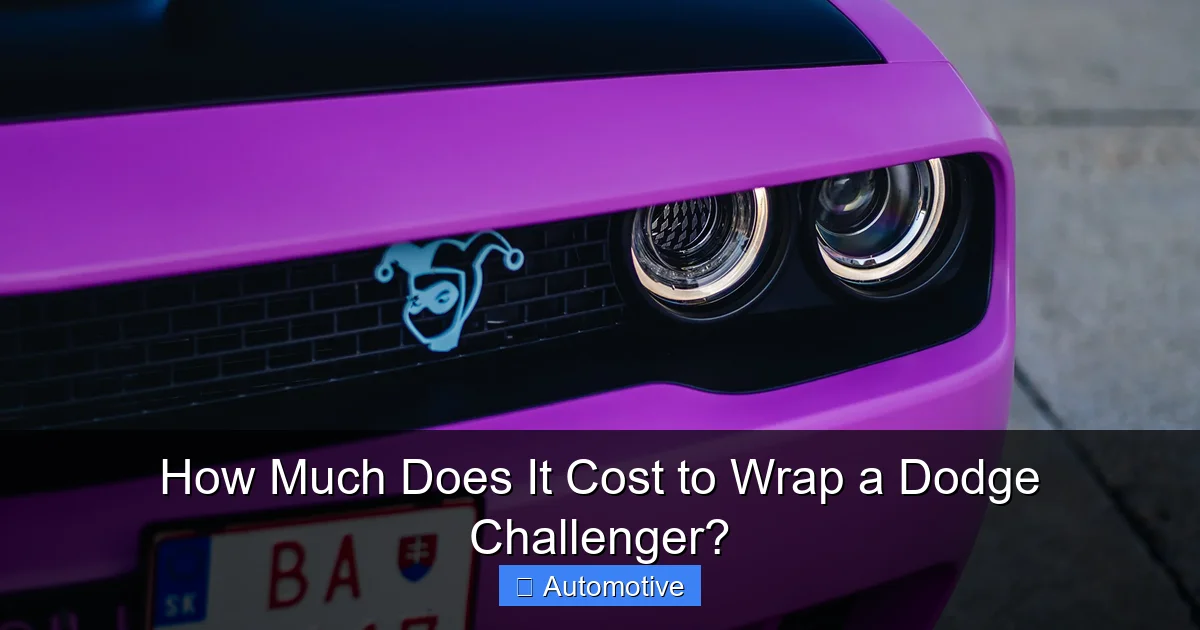
Visual guide about How Much Does It Cost to Wrap a Dodge Challenger?
Image source: wrapstyle.com
Before we dive into costs, let’s talk about why so many Challenger owners choose vinyl wraps over paint.
First, it’s reversible. Unlike a paint job, a wrap can be removed (by a professional) without damaging the original finish. That means you can switch colors every few years or return to stock if you sell the car.
Second, it’s protective. A high-quality wrap acts like a shield against UV rays, minor scratches, rock chips, and road debris. Your factory paint stays pristine underneath.
Third, it’s customizable. Want a matte black Hellcat that looks like it rolled out of a spy movie? Done. How about a glossy red with white racing stripes? Easy. You can even go for textures like carbon fiber, brushed metal, or even holographic finishes.
And finally, it’s cost-effective. A full custom paint job can run $5,000 to $15,000 or more, especially if you want high-end finishes or intricate designs. A wrap gives you that custom look for a fraction of the price.
Real-World Example: Jake’s Challenger Transformation
Take Jake, a 32-year-old mechanic from Texas. He owned a 2020 Challenger R/T in white and wanted something bolder. He considered painting it matte gray but didn’t want to lose the resale value or risk paint flaws.
Instead, he spent $3,200 on a full matte gunmetal gray wrap from a local shop. The job took three days, and the result? “It looks like a completely different car,” he said. “People stop me at gas stations asking if it’s a special edition.”
Jake also added a gloss black hood stripe for $250 extra. Total cost: $3,450. He plans to keep it for five years, then remove the wrap and sell the car with original paint intact.
Factors That Affect the Cost of a Challenger Wrap
Visual guide about How Much Does It Cost to Wrap a Dodge Challenger?
Image source: tffn.net
Now, let’s get into the nitty-gritty. The cost to wrap a Dodge Challenger isn’t a one-size-fits-all number. Several key factors influence the final price. Understanding these will help you budget and avoid surprises.
1. Type of Wrap: Full vs. Partial
The biggest cost driver is how much of the car you’re wrapping.
A full wrap covers the entire exterior—hood, roof, doors, fenders, bumpers, mirrors, and even trim pieces. This is the most dramatic transformation and typically costs between $2,500 and $5,500.
A partial wrap covers only specific areas. Common options include:
– Roof wrap ($400–$800)
– Hood wrap ($500–$1,000)
– Side stripes or racing stripes ($300–$700)
– Mirror caps ($150–$300)
Partial wraps are great if you want a subtle accent or are on a tight budget. For example, wrapping just the roof and mirrors in gloss black can give your Challenger a stealthy, modern look for under $1,000.
2. Vinyl Material Quality
Not all vinyl is created equal. The type of material you choose affects both price and durability.
Cast vinyl is the gold standard. It’s thinner, more flexible, and conforms better to curves and complex surfaces—like the Challenger’s aggressive body lines. It also lasts longer (5–7 years) and resists fading. Expect to pay a premium for cast vinyl, often 20–30% more than cheaper alternatives.
Calendered vinyl is thicker and less expensive, but it’s more prone to shrinking, cracking, and peeling over time. It’s better suited for flat surfaces and short-term use. Most professionals avoid it for full wraps.
Brands like 3M, Avery Dennison, and KPMF offer high-quality cast vinyl. A 3M 1080 or Avery Supreme Wrapping Film can cost $800–$1,200 just for the material on a full wrap.
3. Finish and Color Options
The finish you choose impacts both aesthetics and cost.
– Gloss finishes are classic and shiny, reflecting light like paint. They’re popular and usually mid-range in price.
– Matte finishes give a modern, stealthy look. They’re slightly more expensive due to specialized application techniques.
– Satin finishes offer a soft sheen between gloss and matte. They’re great for a refined, understated look.
– Chrome and metallic finishes are premium options. Chrome wraps, especially, are tricky to install and can cost $1,000–$2,000 extra.
– Color-shift or iridescent vinyl changes color depending on the angle of light. These are the most expensive, often adding $1,500–$3,000 to the total.
For example, a matte black wrap might cost $3,000, while a color-shifting purple-to-blue wrap could push the total to $5,000 or more.
4. Labor and Installation Complexity
Labor is where most of your money goes—and for good reason. Wrapping a car isn’t just slapping on vinyl. It requires skill, patience, and the right tools.
The Dodge Challenger has complex curves, deep recesses, and tight panel gaps. A professional installer must carefully stretch, heat, and mold the vinyl to avoid wrinkles, bubbles, or lifting edges.
Labor costs vary by region and shop reputation. In cities like Los Angeles, New York, or Miami, expect to pay $150–$250 per hour. A full wrap can take 20–40 hours, so labor alone can be $3,000–$6,000 in high-end shops.
However, many shops offer flat-rate pricing. A reputable installer might charge $3,500 for a full wrap, including materials and labor.
5. Shop Reputation and Location
Where you get your wrap done matters—a lot.
Independent shops often offer competitive pricing and personalized service. A local wrap specialist might charge $2,800 for a full wrap using 3M vinyl.
Franchises or high-end detailing studios charge more but offer warranties, better customer service, and proven track records. Brands like WrapZone or local certified 3M installers may charge $4,500–$5,500.
Mobile wrap services are convenient but can be risky. While they come to you, they may lack the controlled environment of a shop, increasing the chance of dust or debris getting under the vinyl.
Always check reviews, ask for portfolios, and request a detailed quote before committing.
Average Cost Breakdown for a Dodge Challenger Wrap
Visual guide about How Much Does It Cost to Wrap a Dodge Challenger?
Image source: lihpao.com
Let’s put it all together with a realistic cost breakdown.
Full Wrap (Mid-Range Example)
– Vinyl (3M 1080 Gloss Black): $900
– Labor (25 hours at $140/hour): $3,500
– Trim removal/reinstallation: $200
– **Total: $4,600**
Partial Wrap (Roof + Hood + Stripes)
– Vinyl (Avery Satin Gray): $400
– Labor (10 hours at $140/hour): $1,400
– Design and cutting: $150
– **Total: $1,950**
Budget DIY Kit (Not Recommended for Full Wrap)
– Vinyl kit (generic calendered): $300
– Tools (squeegee, heat gun, knife): $100
– **Total: $400** (but high risk of failure)
As you can see, going professional is worth the investment. A poorly done wrap can peel, bubble, or trap moisture, leading to paint damage and costly repairs.
DIY vs. Professional Wrap: Should You Do It Yourself?
You might be tempted to save money with a DIY wrap kit. After all, YouTube makes it look easy, right?
But here’s the truth: wrapping a car like the Challenger is extremely difficult. It’s not just about sticking vinyl on—it’s about precision, patience, and experience.
Why DIY Wraps Often Fail
– Bubbles and wrinkles: Air gets trapped during application, creating unsightly bumps.
– Stretching and tearing: Vinyl can overstretch on curves, leading to thin spots or tears.
– Edge lifting: Without proper heat and sealing, edges lift over time, especially in heat or rain.
– Paint damage: Removing a DIY wrap can leave adhesive residue or even pull off clear coat.
We’ve seen cases where a $400 DIY wrap led to $1,200 in paint correction and a professional re-wrap. That’s $1,600 total—more than just hiring a pro from the start.
When DIY Makes Sense
DIY is only advisable for small, flat areas—like mirror caps or a small hood stripe. Even then, practice on a junk panel first.
If you’re set on DIY, invest in high-quality cast vinyl (not the cheap stuff), use a proper heat gun, and work in a clean, dust-free garage. But for a full wrap? Leave it to the pros.
How Long Does a Wrap Last?
A well-installed wrap on your Challenger can last 5 to 7 years, sometimes longer with proper care.
Factors that affect longevity:
– Sun exposure: UV rays break down vinyl over time. Garaging your car helps.
– Washing habits: Hand washing is best. Avoid automatic car washes with brushes.
– Climate: Extreme heat or cold can cause expansion and contraction, leading to lifting.
– Vinyl quality: Premium cast vinyl lasts longer than budget options.
Most professional shops offer a 3–5 year warranty on materials and labor. If your wrap starts peeling or fading within that time, they’ll fix it for free.
Maintenance Tips to Extend Wrap Life
– Wash your car every 2–3 weeks with pH-neutral soap.
– Use a microfiber mitt and soft towel—no abrasive sponges.
– Avoid parking under trees (sap and bird droppings eat into vinyl).
– Wax? No. Wax can damage the vinyl. Use a wrap-specific sealant instead.
– Inspect edges regularly and re-heat any lifting spots with a heat gun.
Is Wrapping Your Challenger Worth It?
Absolutely—if you do it right.
Wrapping your Dodge Challenger gives you a custom look, protects your paint, and adds value if you ever sell it (especially if the original color is rare or damaged).
It’s also a great way to personalize your ride without permanent changes. Want to match your wrap to your favorite sports team? Go for it. Feeling bold? Try a chrome finish for a week.
And let’s be honest—there’s nothing quite like driving a Challenger that turns heads at every stoplight.
Final Thoughts
The cost to wrap a Dodge Challenger ranges from $800 for a simple stripe to $5,500 for a full color-shifting masterpiece. But for most owners, a full wrap in a premium finish falls between $3,000 and $4,500.
That’s a lot of money—but consider it an investment in style, protection, and peace of mind. You’re not just changing the color; you’re transforming your car’s identity.
So, shop around, get multiple quotes, and choose a reputable installer. Your Challenger deserves the best.
Conclusion
Wrapping your Dodge Challenger is one of the most rewarding upgrades you can make. It’s affordable compared to paint, fully reversible, and endlessly customizable. Whether you want a sleek matte black, a bold racing stripe, or a futuristic chrome finish, a vinyl wrap can make it happen.
The cost to wrap a Dodge Challenger depends on coverage, materials, finish, and labor—but with proper planning, you can get a stunning result within your budget. Avoid DIY for full wraps, invest in quality vinyl, and maintain it properly to enjoy your new look for years.
So go ahead—give your Challenger the makeover it deserves. The road is waiting.
Frequently Asked Questions
How much does it cost to wrap a Dodge Challenger?
The cost to wrap a Dodge Challenger ranges from $2,500 to $5,500 for a full professional wrap. Partial wraps start around $800 and go up to $2,000 depending on the areas covered.
Is it cheaper to wrap or paint a Challenger?
Wrapping is significantly cheaper than a high-quality custom paint job. A full wrap costs $2,500–$5,500, while a custom paint job can range from $5,000 to $15,000 or more.
How long does a vinyl wrap last on a Challenger?
A professionally installed vinyl wrap can last 5 to 7 years with proper care. Factors like sun exposure, washing habits, and vinyl quality affect longevity.
Can I wash my wrapped Challenger in an automatic car wash?
It’s not recommended. Automatic car washes with brushes can scratch or lift the vinyl. Hand washing with a soft mitt and pH-neutral soap is the safest method.
Can I remove a wrap myself?
It’s possible, but not advised. Improper removal can damage the paint. Always have a professional remove the wrap to avoid adhesive residue or clear coat damage.
Does a wrap void my Challenger’s warranty?
No, a vinyl wrap does not void your factory warranty. It’s a non-permanent modification and doesn’t affect mechanical components. However, always check with your dealer if unsure.
