
How Much Does It Cost to Replace a Toyota Hybrid Battery

Replacing a Toyota hybrid battery is a significant expense, typically ranging from $2,000 to $5,000+ depending on your model. Factors like vehicle year, battery type, and labor rates greatly influence the final cost. Understanding your options—from new to refurbished batteries—can help you make a smart decision and avoid unexpected costs.
So, that dreaded dashboard warning light finally came on. Your Toyota hybrid is telling you its high-voltage battery, the heart of its fuel-sipping system, may be nearing the end of its life. Your stomach sinks. You know this isn’t like replacing a regular 12V car battery. You’ve heard whispers, rumors, and maybe a few horror stories about the cost. How much does it actually cost to replace a Toyota hybrid battery? The short answer is: it depends. But don’t worry. We’re going to break down every single factor, from the Prius to the Grand Highlander Hybrid, so you know exactly what to expect and how to navigate this major repair with confidence.
First, take a breath. A failing hybrid battery doesn’t always mean instant, catastrophic failure. Often, you’ll notice subtle signs first: a drop in fuel economy, the gasoline engine running more often, weaker acceleration, or that tell-tale hybrid system warning light. Your Toyota is still drivable, but it’s operating in a limited, less efficient mode. This gives you time to research, budget, and make an informed choice. Replacing this battery is one of the most expensive repairs you’ll face on a hybrid, but it’s also the one that can restore your vehicle to like-new efficiency and reliability for another decade. Let’s dive into the dollars and cents.
Key Takeaways
- Costs vary widely by model: A Prius battery may cost $2,000-$3,500, while a Highlander or Avalon hybrid can reach $4,000-$6,000+.
- New vs. refurbished matters: New dealer batteries are priciest; refurbished or remanufactured units offer 30-50% savings with decent warranties.
- Labor is a major cost driver: Complex models requiring more disassembly (like some Lexus hybrids) increase shop time and final bills.
- Warranties provide peace of mind: Most new hybrid batteries come with 8-year/100,000-mile warranties; check your eligibility before paying out-of-pocket.
- Maintenance extends battery life: Gentle driving, avoiding extreme temperatures, and regular hybrid system checks can delay replacement for 10-15 years.
- Get multiple quotes: Always compare dealer, independent hybrid specialist, and mobile mechanic estimates for the best value.
- Tax incentives may apply: Some states offer rebates for hybrid component replacements; research local programs to offset costs.
📑 Table of Contents
- Understanding Your Toyota Hybrid Battery System
- Average Replacement Costs: The Big Picture
- Key Factors That Influence Your Final Bill
- Smart Ways to Save Money on Your Replacement
- What to Expect During the Replacement Process
- Long-Term Maintenance to Protect Your Investment
- Conclusion: Knowledge is Your Best Tool
Understanding Your Toyota Hybrid Battery System
Before we talk numbers, it’s crucial to understand what you’re paying for. Your Toyota hybrid uses two distinct battery systems:
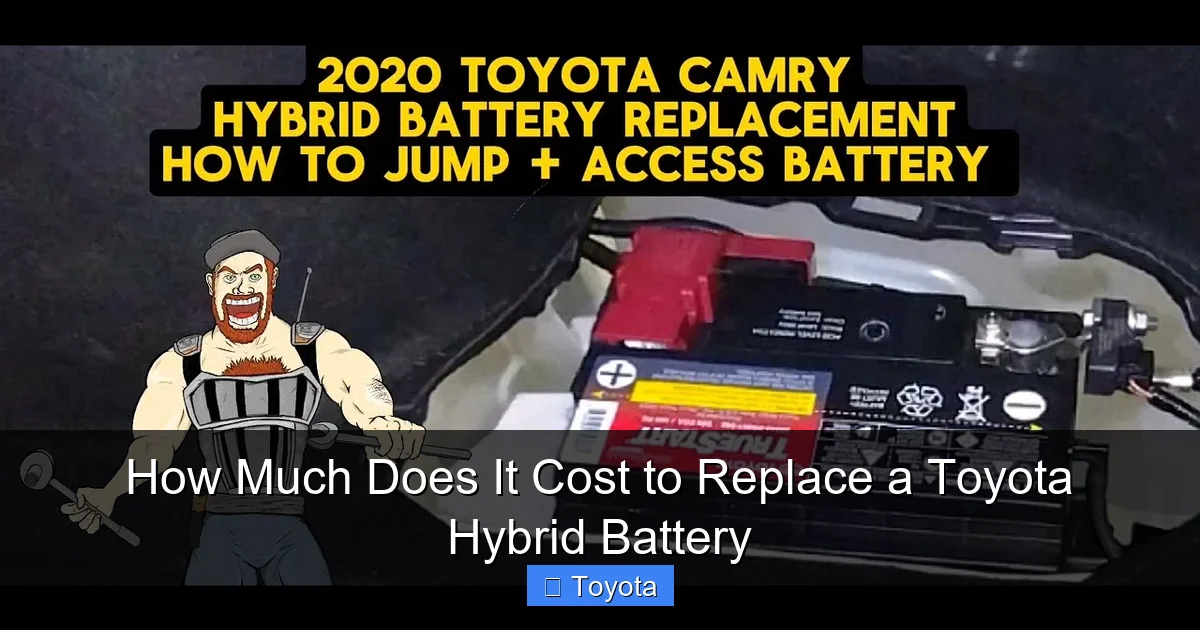
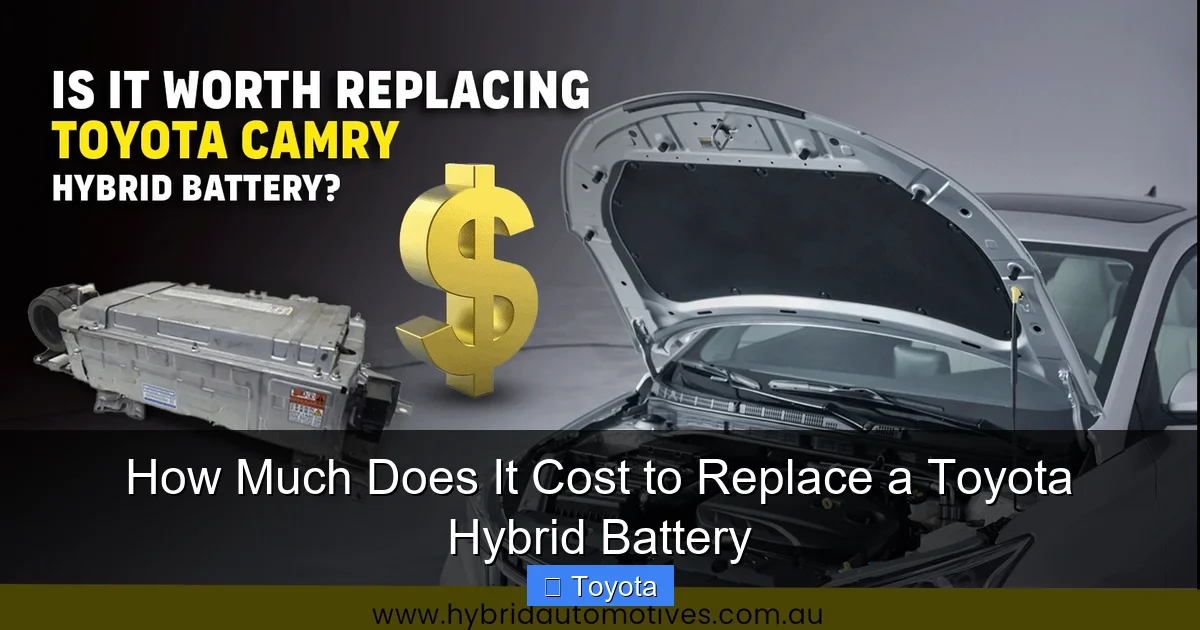
- The High-Voltage (HV) Traction Battery: This is the big, expensive one. It’s a nickel-metal hydride (NiMH) or lithium-ion (Li-ion) pack, usually located under the rear seat or in the trunk. It powers the electric motor(s) for low-speed driving and assists the gasoline engine. This is the battery we’re discussing when we talk about replacement cost.
- The 12-Volt Auxiliary Battery: This is a standard car battery, typically found in the engine bay. It powers your lights, radio, and starter motor. It’s cheap to replace ($100-$250) and often gets confused with the hybrid battery. Some hybrids, like certain Lexus models, also have a separate auxiliary battery for electronics. If you’re dealing with a no-start condition but the hybrid system light is off, you might just need a 12V battery. For comparison, replacing the auxiliary battery on a luxury brand like a Mercedes Benz involves different costs and procedures, highlighting that not all “car batteries” are created equal.
The HV battery pack itself isn’t a single unit; it’s composed of many individual cells grouped into modules. Failure can occur in one cell, one module, or the entire pack’s cooling system. A full pack replacement is the most common (and costly) solution, but sometimes a specialist can rebuild or replace just the faulty modules for less.
The Lifespan of a Toyota Hybrid Battery
Toyota builds these batteries to last. The warranty is 8 years or 100,000 miles (in some states, it’s 10 years/150,000 miles). With proper care, many last 12-15 years or 150,000-200,000 miles. Factors that shorten life include:
- Extreme temperatures: Constant operation in very hot or cold climates accelerates degradation.
- Deep cycling: Frequently running the battery to near-empty (though the system prevents this) stresses cells.
- High mileage: Simple wear and tear over hundreds of thousands of charge/discharge cycles.
- Faulty cooling system: The battery’s air or liquid coolant system can fail, leading to overheating.
When your battery’s “State of Health” drops below a certain threshold (often around 60-70% of original capacity), the car’s computer will trigger a warning and limit functionality.
Average Replacement Costs: The Big Picture
Now, the numbers you’ve been waiting for. For a complete, dealer-installed replacement of the high-voltage traction battery, you’re looking at a national average range of $2,000 to $5,500+. For most common Toyota hybrids (Prius, Camry, RAV4), the typical range is $2,500 to $4,500 for parts and labor. However, your specific cost can land at either end of that spectrum or even beyond it. Here’s why:

Visual guide about How Much Does It Cost to Replace a Toyota Hybrid Battery
Image source: i.ytimg.com
Cost Breakdown by Popular Toyota Hybrid Models
While we can’t list every single model year, here are realistic 2024 price ranges for complete battery pack replacement at a dealership or reputable independent shop. These are estimates; always get a firm quote.
- Toyota Prius (Most Models, 2004-2023): $2,200 – $3,800. The Prius uses a relatively smaller, more common battery pack. Prices have come down as these vehicles are so plentiful. A refurbished unit can often be found for $1,400 – $2,200.
- Toyota Camry Hybrid (2007-2023): $2,800 – $4,200. The Camry hybrid battery is larger than the Prius’s. For a detailed look at Camry-specific costs, including model year variances, our dedicated guide on how much a Toyota Camry hybrid battery costs provides even deeper insight.
- Toyota RAV4 Hybrid (2016-2023): $3,000 – $4,500. As a larger SUV, the RAV4 hybrid has a more powerful battery pack to support its size and all-wheel-drive system.
- Toyota Highlander Hybrid (2005-2023): $3,500 – $5,500+. The three-row Highlander has one of the largest and most complex hybrid battery packs in the Toyota lineup, pushing costs to the higher end.
- Toyota Avalon Hybrid (2013-2018): $3,200 – $4,800. Similar in size to the Camry but with a slightly different battery configuration.
- Toyota Corolla Hybrid (2019-2023): $2,500 – $4,000. A newer model with a battery design closely related to the Prius.
- Toyota Sienna Hybrid (2021-2023): $4,000 – $6,000+. The minivan’s hybrid system is powerful and the battery pack is substantial, making it one of the costliest Toyota hybrids to service.
New OEM vs. Remanufactured vs. Used: The Price Spectrum
Where you source the battery itself creates the biggest price swing.
- New OEM (Dealer) Battery: This is the factory-fresh, direct-from-Toyota part. It comes with a full new-car warranty (typically 8-year/100k mile). Cost: 100% of the part price. This is the most expensive but most reliable long-term option. Expect to pay $2,000 – $4,500+ for the part alone, depending on the model.
- Remanufactured/Refurbished Battery: This is a used battery pack that has been professionally disassembled. All bad cells/modules are replaced, the pack is tested, and it’s reassembled with new thermal interface material and sometimes a new case. It carries a significant warranty (often 1-3 years/12k-36k miles). Cost: 50-70% of a new OEM battery. This is the sweet spot for most consumers seeking a balance of cost and reliability. A good remanufacturer will have a rigorous process.
- Used (Salvage) Battery: Pulled from a donor vehicle at a junkyard. No testing, no warranty (maybe 30 days from the yard). High risk, as you don’t know its history or remaining life. Cost: 30-50% of new. Not recommended unless you’re a skilled DIYer on a razor-thin budget and accept the risk of failure.
- Aftermarket New Battery: Some third-party manufacturers produce new hybrid batteries. Quality varies wildly. Research is critical. Warranty might be shorter (e.g., 5 years/60k miles). Cost can be 80-90% of OEM.
Key Factors That Influence Your Final Bill
Two identical Toyota Priuses, same year, might get quotes that differ by $1,000. Here’s what creates that variance:
Visual guide about How Much Does It Cost to Replace a Toyota Hybrid Battery
Image source: i.ytimg.com
1. Your Specific Model, Year, and Location
As seen above, a Sienna battery costs more than a Prius battery. Within a model, newer generations sometimes have different (often more expensive) battery tech. Your geographic location dramatically affects labor rates. An hourly shop rate in California or New York can be $150-$200/hr, while in the Midwest it might be $90-$120/hr. This can add $200-$600 to the final labor cost for the same job.
2. Labor Complexity and Time
This is huge. Replacing a Prius battery is relatively straightforward: remove rear seat, unbolt the pack, swap it, reassemble. Labor time: 2-4 hours. Replacing a battery in a Highlander or Sienna often involves removing rear seat cushions, interior trim panels, and sometimes even parts of the rear suspension or exhaust to access the pack. Labor time: 5-8+ hours. More time equals more money. Always ask for an estimated labor hours when getting a quote.
3. The “While You’re In There” Factor
A good mechanic will inspect related components. The hybrid battery’s cooling fan, air filter, and coolant lines are often accessed during the job. If the fan is noisy or the filter is clogged (a common issue), they’ll recommend replacement. This adds $100-$300 in parts and labor but prevents future problems. It’s usually wise to address these.
4. Shop Type: Dealer vs. Independent vs. Mobile
- Toyota Dealer: Highest parts cost (OEM), highest labor rate, but factory-trained technicians and full OEM warranty on the part. Best for newer cars under warranty or if you want absolute peace of mind.
- Independent Hybrid Specialist: Often the best value. They focus solely on hybrids, have lower overhead, and may use high-quality remanufactured batteries with excellent warranties. Labor rates are lower. This is the recommended path for most out-of-warranty repairs.
- Mobile Mechanic: Some will come to your home/office. Convenience is high, but they may not have the specialized diagnostic tools or lifting equipment for larger battery packs. Best for smaller sedans like the Prius or Corolla hybrid. Get references.
5. Core Charge and Old Battery Core
When you buy a new or remanufactured hybrid battery, there’s almost always a “core charge” (e.g., $200-$500). This is a deposit you pay upfront. When you return your old, defective battery pack to the parts supplier, you get the core charge refunded. Do not skip this step. You must return the old core to avoid losing that deposit. The shop usually handles this transaction.
Smart Ways to Save Money on Your Replacement
Feeling sticker shock? Don’t panic yet. There are several strategies to reduce the financial blow.
Visual guide about How Much Does It Cost to Replace a Toyota Hybrid Battery
Image source: hybridautomotives.com.au
1. Verify the Diagnosis – It Might Not Be the Battery
Before you spend a dime, get a second opinion. A weak 12V auxiliary battery or a faulty hybrid system sensor can trigger the same warning light. A proper diagnosis with a Toyota-specific scan tool that reads the battery’s cell voltages and health is essential. A reputable shop will show you the data. If the battery’s state of charge is fine but a cell is bad, you might only need a module replacement, not the whole pack.
2. Explore Remanufactured Options Aggressively
This is your #1 money-saving tool. Find 2-3 established hybrid battery remanufacturers (many operate nationally). Get quotes for your specific VIN. Compare their warranties (length, what’s covered, prorated vs. full replacement). A 3-year/unlimited mileage warranty is excellent. Read reviews. A good remanufactured battery with a solid warranty is often a smarter buy than a new OEM battery for a 10-year-old car.
3. Check for Recalls and Extended Warranties
Sometimes Toyota issues recalls or extended service campaigns for hybrid batteries on specific model years. Check the NHTSA website or call a dealer with your VIN. Also, check if you have an extended warranty through the dealer or a third party that covers hybrid components. If your car is still under the original 8-year/100k-mile battery warranty, the replacement should be free (aside from any core charge refundable deposit).
4. DIY – Only for the Extremely Handy and Knowledgeable
The actual physical swap, while heavy (the pack weighs 50-100 lbs), is not the hardest part. The danger is the high voltage (over 200V). You must follow Toyota’s service manual procedure for disabling the high-voltage system, which involves removing a service plug and waiting for the system to discharge. One mistake can cause severe injury or death. If you are a certified hybrid technician, buying a remanufactured core and doing it yourself can save $800-$1,500 in labor. For everyone else, this is not a DIY project.
5. Consider the Long-Term Value of Your Car
Do the math. If your 2012 Prius is worth $8,000 and a new battery is $3,500, you’re investing nearly 44% of the car’s value. Is it worth it? If the car is in good shape and you plan to keep it for 5+ more years, probably yes. If it has 200,000 miles and other issues are cropping up, it might be time to start shopping for a newer used hybrid. The battery replacement cost should be evaluated against the car’s total value.
What to Expect During the Replacement Process
Knowing the steps helps you ask the right questions and feel in control.
Step 1: Diagnosis and Quote
The shop connects a scan tool, reads hybrid battery data (block voltages, state of charge, history), and confirms failure. They’ll then provide a parts and labor quote. Ask: “Is this a new OEM, remanufactured, or used part? What is the warranty? What is the core charge? What is the estimated labor time?”
Step 2: Scheduling and Preparation
This is not a 30-minute job. Plan to be without your car for at least a full day, sometimes two. The shop will need to order the specific battery for your VIN. Before dropping it off, remove all personal items from the trunk and rear seat, as they will be removed to access the battery.
Step 3: The Replacement
The technician will:
- Disconnect the 12V battery.
- Follow Toyota’s high-voltage safety procedure (removing service plug, waiting for discharge).
- Disconnect the high-voltage cables from the battery pack.
- Disconnect the cooling fan/ducting and any mounting bolts.
- Carefully lift out the old, heavy battery pack using a lift or team lift.
- Install the new/refurbished pack, reconnect everything, and reinstall interior.
- Reconnect the 12V battery and perform the high-voltage system start-up sequence.
- Clear any trouble codes and perform a road test to verify hybrid system operation and fuel economy.
A proper shop will also reset the battery’s “life” meter if applicable and may perform a hybrid system ECU update if available.
Step 4: Final Payment and Core Return
Review the invoice. Ensure it lists the exact part number and whether it’s new or remanufactured. You’ll pay the full amount minus the core charge deposit. The shop will handle returning the old core to the supplier to get your deposit refunded. You should receive a receipt for the core return. Keep all paperwork for your warranty.
Long-Term Maintenance to Protect Your Investment
You just spent thousands. Let’s make sure it lasts 150,000 miles this time.
Drive Gently and Predictably
Aggressive acceleration and braking force the battery to work harder and generate more heat. Smooth driving keeps the battery in its optimal charge/discharge range and temperature zone. Use the “Eco” mode if your Toyota has one.
Mind the Cooling System
The hybrid battery is cooled by cabin air (Prius) or a dedicated coolant loop (RAV4, Highlander). Have the cabin air filter for the battery cooling system inspected and replaced every 15,000-30,000 miles (it’s often a separate filter from the main cabin filter). On liquid-cooled systems, the coolant should be replaced per Toyota’s maintenance schedule (often every 100,000 miles). A clogged filter or old coolant is a leading cause of premature battery failure.
Regular Hybrid System Checks
During routine oil changes, ask your technician to scan for any hybrid-related trouble codes, even if no light is on. Catching a minor issue (like a failing fan or a weak cell) early can prevent total pack failure. Some independent hybrid shops offer affordable “battery health check” services.
Park in Shade or Garage
Extreme heat is the enemy. While the system is designed to manage temperature, parking in direct sunlight all day in Arizona summers adds unnecessary thermal stress. A garage or shaded spot is ideal.
Conclusion: Knowledge is Your Best Tool
The cost to replace a Toyota hybrid battery is significant, but it’s a known quantity with clear variables. You now know that a Prius will likely cost $2,200-$3,800, while a Sienna could be $4,000-$6,000. You know that remanufactured batteries offer the best value, that labor complexity is a huge driver, and that verifying the diagnosis is step zero. You understand the importance of warranties and core charges.
Your action plan is simple: 1) Get a proper diagnosis with data. 2) Get 3 quotes from a dealer, a hybrid specialist, and possibly a reputable mobile mechanic. 3) Ask specifically about remanufactured options and their warranty. 4) Check for recalls or extended warranties. 5) Consider the long-term value of your vehicle. By following these steps, you transform an intimidating, expensive repair into a manageable, informed decision. Your Toyota hybrid is a marvel of engineering, and with the right battery choice and a good technician, it will continue to deliver exceptional fuel economy and reliability for many miles to come.
Frequently Asked Questions
How much does a Toyota hybrid battery cost on average?
The average cost for a complete replacement, including parts and labor, ranges from $2,500 to $4,500 for most common models like the Prius, Camry, and RAV4 hybrids. Larger models like the Highlander or Sienna can exceed $5,000. The final price depends heavily on your specific model year and whether you choose new, remanufactured, or used parts.
How long does a Toyota hybrid battery typically last?
Toyota hybrid batteries are designed for longevity, with an original warranty of 8 years or 100,000 miles (10 years/150,000 miles in some states). With proper care and maintenance, many last 12-15 years or 150,000-200,000 miles before capacity drops to a level requiring replacement.
Can I replace the Toyota hybrid battery myself to save money?
While the physical swap is possible, it is extremely dangerous and not recommended for anyone without professional hybrid vehicle training. The high-voltage system (over 200 volts) can cause severe injury or death if not properly disabled following Toyota’s exact safety procedures. This job is best left to certified technicians.
What are the common signs of a failing Toyota hybrid battery?
Signs include: a noticeable drop in fuel economy, the gasoline engine running more frequently and at higher RPMs, reduced acceleration power, a persistent “Check Hybrid System” warning light, or an inability to start in EV mode alone. Sometimes, the 12V auxiliary battery may also need replacement if the car won’t start at all.
Does car insurance cover hybrid battery replacement?
Standard collision or comprehensive insurance only covers damage from a covered peril (like an accident or theft). It does not cover mechanical wear and tear. A failed hybrid battery due to age or use is considered a maintenance issue and is not covered by insurance. However, if the battery is stolen or damaged in an accident, then it would be covered under your policy’s terms.
Are remanufactured hybrid batteries reliable?
Yes, when purchased from a reputable remanufacturer. The process involves completely disassembling a used core, testing and replacing all bad cells/modules, updating firmware, and rigorously testing the final pack. Look for companies with strong warranties (e.g., 3 years/unlimited mileage) and positive reviews. A good remanufactured battery is a cost-effective and reliable alternative to a new OEM unit.