How Much Does a Ford F-150 Windshield Cost?

Contents
- 1 Key Takeaways
- 2 📑 Table of Contents
- 3 The Core Factors Driving Your F-150 Windshield Cost
- 4 OEM vs. Aftermarket Windshields for Your F-150
- 5 The Full Replacement Process: What to Expect on the Day Of
- 6 Navigating Insurance and Windshield Claims
- 7 Protecting Your New Investment and Avoiding Future Costs
- 8 Conclusion: Making the Right Call for Your Truck
- 9 Frequently Asked Questions


The cost to replace a Ford F-150 windshield typically ranges from $200 to over $1,000, depending heavily on your truck’s model year, features like rain sensors and cameras, and whether you choose OEM or aftermarket glass. Factors such as advanced driver-assistance systems (ADAS) recalibration and your geographic location significantly impact the final price. Always get multiple quotes and verify a shop’s certification for ADAS calibration to ensure safety and preserve your truck’s functionality.
So, you’ve got a crack or a chip in your Ford F-150’s windshield. It’s a frustrating moment for any truck owner. Your F-150 is your workhorse, your adventure mobile, and its windshield is a critical safety component. The first question that pops into your head is usually, “How much is this going to cost me?” The answer isn’t simple. It’s not like buying a gallon of milk. The price of a Ford F-150 windshield replacement is a puzzle with many pieces—the truck’s specific year, the technology packed into the glass, where you live, and who you hire to do the job. This guide will walk you through every single factor that influences the cost, break down real price ranges you can expect, and give you the insider knowledge to make a smart, safe, and cost-effective decision. We’ll talk about the silent cost of sensor recalibration, the real difference between OEM and aftermarket glass, and how to navigate insurance like a pro.
Think of your F-150’s windshield as more than just a window. It’s a structural part of the cab, supporting the roof in a rollover. It’s the mounting point for your rearview mirror and, in modern trucks, a high-tech hub for cameras and sensors. Replacing it isn’t just about popping out the old and popping in the new. It’s a precise, safety-critical procedure. Getting a cheap quote from a mobile tech at a gas station might seem like a win until your new windshield leaks during a rainstorm or your collision warning system stops working because the camera wasn’t recalibrated. Understanding the “why” behind the price will protect you from cutting corners that could cost you far more in the long run—in safety, money, and hassle.
Key Takeaways
- Cost varies widely: A basic windshield for an older F-150 might cost $200-$400, while a new model with multiple sensors and cameras can push the total (parts + labor + calibration) to $800-$1,500+.
- OEM vs. Aftermarket matters: OEM (Original Equipment Manufacturer) glass is identical to what came from the factory and is often required for warranty and ADAS accuracy, but it costs 20-50% more than quality aftermarket alternatives.
- ADAS recalibration is non-negotiable: If your F-150 has a front-facing camera (for pre-collision assist, lane-keeping, etc.), the windshield replacement MUST include a professional recalibration, adding $100-$300 to the bill.
- Insurance often helps: Comprehensive coverage typically covers windshield replacement due to road debris, but you may have a deductible. Some states have specific glass coverage with $0 deductibles.
- Professional installation is critical: Improper installation can lead to leaks, wind noise, and catastrophic failure in an accident. Always use a shop certified by the Auto Glass Safety Council (AGSC) or similar.
- Don’t ignore chips: A small chip can often be repaired for $50-$100. Waiting can turn it into a crack that requires full replacement, costing much more.
- Extra features add cost: Windshields with embedded antennas, heated wiper parks, or acoustic dampening layers are more expensive than basic glass.
📑 Table of Contents
- The Core Factors Driving Your F-150 Windshield Cost
- OEM vs. Aftermarket Windshields for Your F-150
- The Full Replacement Process: What to Expect on the Day Of
- Navigating Insurance and Windshield Claims
- Protecting Your New Investment and Avoiding Future Costs
- Conclusion: Making the Right Call for Your Truck
The Core Factors Driving Your F-150 Windshield Cost
Let’s slice this onion. The total bill you see is the sum of several distinct parts. Understanding these components helps you decode a quote and spot a good deal from a risky one.
1. The Glass Itself: Base Price and Technology
The raw cost of the glass pane is the starting point. For a base-model 2015 F-150 with no frills, a simple piece of laminated glass might cost a shop $80-$150. But your truck is likely not base-model. Modern F-150s, especially from 2015 onward, are loaded with tech. The windshield is a mosaic of integrated components:
- Rain and Light Sensors: Usually located behind the rearview mirror. A windshield with the sensor “window” already molded in is required. This adds $20-$50 to the glass cost.
- Heated Wiper Park: A thin heating element at the bottom where the wipers rest to melt ice and snow. This is a specific, more expensive part.
- Acoustic Properties: Some F-150s have an acoustic laminate layer to reduce road noise. This specialized glass costs more.
- Antennas: Embedded radio, GPS, and OnStar antennas are printed onto the glass. A replacement must have the exact same antenna pattern.
- Shaded Tint: A band of tint at the top (often called a “shade band”) is common. Matching the original OEM shade is important for visibility and aesthetics.
The more of these features your truck has, the more expensive the specific windshield part will be. This is where OEM parts become a minefield. Ford’s part number for your exact VIN’s windshield is the only guaranteed match. Aftermarket manufacturers (like Pilkington, Saint-Gobain, Fuyao) make excellent “direct fit” glass, but you must confirm it includes all the necessary sensor cutouts and antenna locations for your specific sub-model and year.
2. The Labor: Skill, Time, and Tools
This is where many DIY attempts and cut-rate shops fail. Replacing an F-150 windshield is not a simple task. The cab is large, the glass is big and heavy, and the moldings and interior trim are complex. A professional technician uses specialized tools—long, flexible suction cups, padded pry bars, and sometimes even a hydraulic lift—to remove the old urethane seal without damaging the cab’s paint or the new glass. The process involves:
- Carefully removing interior components (A-pillar covers, visor, rearview mirror, sometimes headliner).
- Cutting through the old, cured urethane adhesive that bonds the glass to the frame. This requires a sharp, precise tool to avoid damaging the pinch weld (the metal frame).
- Cleaning the frame meticulously. Any old adhesive residue or debris compromises the new seal.
- Applying new, high-quality urethane adhesive in a continuous, uniform bead. The type and amount are critical for structural integrity and water sealing.
- Positioning the heavy new windshield perfectly and holding it until the adhesive sets.
- Reassembling all interior trim, often with new clips (which can break).
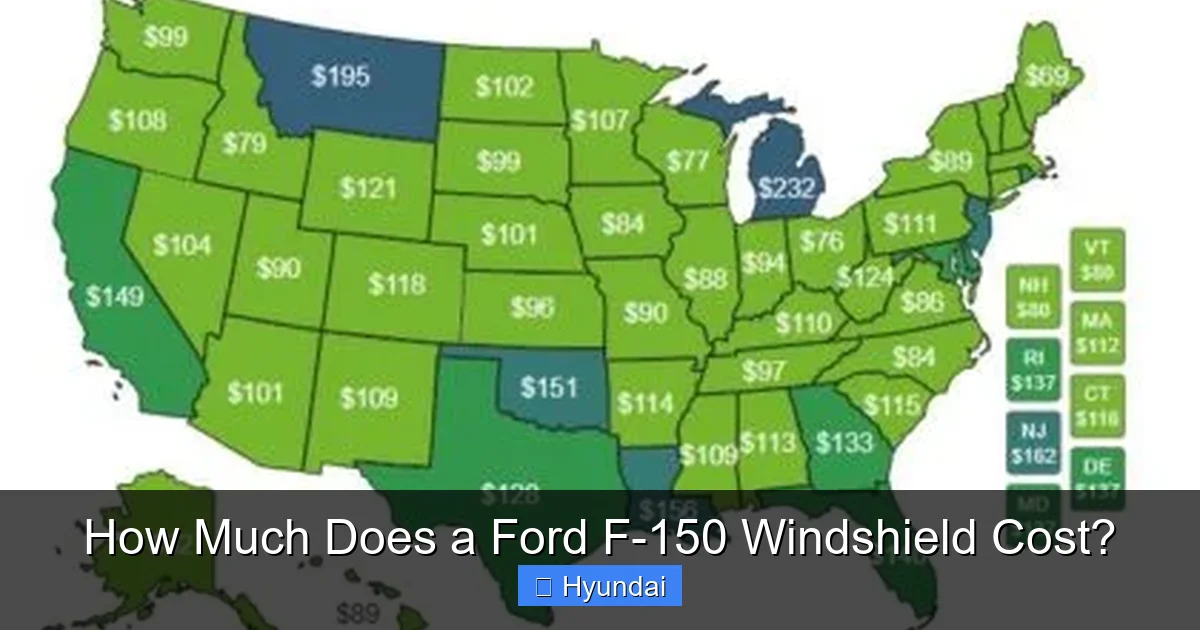
Labor time can range from 1.5 hours for a simple, older model to 3+ hours for a newer truck with complex trim and ADAS cameras. Shop rates vary from $75/hour in rural areas to $150+/hour at dealer or high-end specialty shops. Labor is easily a $150-$450 portion of your bill.
3. The ADAS Calibration: The Hidden Cost You Can’t Skip
This is the most critical and often overlooked cost for F-150s built from approximately 2015 onward. If your truck has a front-facing camera (look for a small lens behind the rearview mirror, usually near the center of the windshield), that camera is calibrated to the exact position and angle of the original windshield. Moving the windshield even a millimeter throws off this calibration.
- What happens if you skip it? Your pre-collision warning, automatic emergency braking, lane-keeping assist, and adaptive cruise control (if equipped) will not work correctly. They may give false alerts or, worse, fail to activate when needed. This is a major safety hazard.
- How is it done? It requires a specialized, expensive scan tool and a precise target board placed a specific distance in front of the truck. The truck’s computer “learns” the new windshield’s position. This is not something a standard auto glass tech can do without the proper equipment and training.
- The Cost: This adds a flat fee of $100 to $300 to your total. Some shops bundle it; others list it separately. Never accept a quote that does not explicitly include ADAS calibration for a truck that has a front camera. Ask to see the calibration report after the job is done.
4. Your Location and Shop Type
Geography matters. Labor rates and cost of living are higher in major metropolitan areas (NYC, San Francisco, Boston) compared to the Midwest or South. Shop type drastically affects price:
- Ford Dealership: Highest price. They use 100% OEM Ford glass, factory-trained technicians, and have the official Ford calibration tools. You’re paying for the badge and a single source of responsibility. Expect the top-tier price.
- Specialty Auto Glass Shop: Often the best value. Reputable shops (like those certified by the Auto Glass Safety Council) use high-quality aftermarket glass that meets or exceeds DOT standards and have the necessary ADAS calibration equipment. They can be 30-50% cheaper than the dealer.
- Mobile Repair Service: Convenient, but variable quality. A good mobile tech with a proper vehicle-mounted setup can do an excellent job. However, many mobile services cut corners on calibration (outsourcing it or skipping it) or use lower-grade urethane. Vet them carefully.
- General Auto Repair Shop: May not have the specific auto glass expertise or ADAS tools. Proceed with caution and ask very specific questions about their glass source and calibration process.
OEM vs. Aftermarket Windshields for Your F-150
This is the great debate, and the answer isn’t “one is always better.” It’s about your truck, your budget, and your priorities.

Visual guide about How Much Does a Ford F-150 Windshield Cost?
Image source: mychoice.ca
Understanding the Labels
OEM (Original Equipment Manufacturer): This is glass made by the same company that supplied Ford’s factory line. It will have the Ford logo etched in the corner and, most importantly, will be an exact match for the part number Ford assigned to your VIN. It comes with a factory warranty (often 12 months/unlimited miles). It is the guaranteed, no-surprises option.
Aftermarket / OEE (Original Equipment Equivalent): This is glass made by third-party companies (the big ones are Pilkington, Saint-Gobain, PPG, Fuyao, Guardian). They reverse-engineer the OEM part and produce a “direct fit” version. Quality varies widely. Top-tier aftermarket glass is excellent, often using the same suppliers as OEM. Lower-tier glass may have slight variations in thickness, curvature, or optical distortion.
The Pros and Cons Showdown
| Factor | OEM Glass | Aftermarket Glass |
|---|---|---|
| Fit & Finish | Guaranteed perfect match. Seals, moldings, and sensor cutouts are exact. | Usually excellent with top brands, but can have minor fit issues. Always verify sensor hole alignment. |
| Optical Quality | Zero distortion, meets Ford’s strict standards. | DOT-certified glass must be safe, but some lower brands can have “wave” or distortion at the edges. |
| ADAS Calibration | No compatibility issues. Calibration will be successful. | Generally fine, but in rare cases, a sensor cutout that is 1-2mm off can cause calibration failure. A good shop will test this. |
| Warranty | Strong, comprehensive factory warranty (often covers material defects for longer). | Shop warranty (typically 1 year/12k miles on parts and labor). Varies by shop and glass brand. |
| Cost | $$$-$$$$ (Highest) | $$-$$$ (Typically 20-50% less than OEM) |
| Resale Value | May be preferred by some meticulous buyers, but rarely a major factor. | For a work truck like an F-150, almost never a factor unless the glass is visibly poor quality. |
Our Practical Recommendation for F-150 Owners
For most F-150 owners, a high-quality aftermarket windshield from a reputable brand (Pilkington, Saint-Gobain) installed by a certified shop with proven ADAS calibration capability is the smartest financial choice. You save significant money without sacrificing safety or function. The key is the shop’s expertise, not just the glass brand.
Choose OEM if:
- Your F-150 is still under the original factory warranty and you want to avoid any potential (though unlikely) warranty dispute.
- You lease the truck and want to avoid any questions at turn-in.
- You have a high-end trim like a Limited or Platinum and want to maintain “all-OEM” provenance.
- You’ve had a bad experience with aftermarket glass fitment on this specific truck before.
For a work truck that sees daily use and hauling, the aftermarket route is perfectly acceptable and widely used. Always ask the shop for the specific glass brand and part number they will use, and look it up online for reviews and fitment discussions from other F-150 owners.
The Full Replacement Process: What to Expect on the Day Of
Knowing the steps helps you know what a professional job looks like. Here’s the typical workflow for a proper F-150 windshield replacement.
Visual guide about How Much Does a Ford F-150 Windshield Cost?
Image source: quoteinspector.com
Step 1: The Pre-Job Inspection and Quote
A good tech will inspect your truck thoroughly. They’ll check:
- The VIN to confirm the exact windshield specification.
- The condition of the pinch weld (the metal frame). Rust or damage here requires repair, adding cost.
- The presence and type of ADAS sensors (camera, rain sensor, etc.).
- The condition of the moldings and interior clips. Broken clips need replacement (~$2-$5 each).
- Any pre-existing leaks or damage.
They should provide a written, itemized quote covering: glass part, labor, urethane/adhesive, any necessary clips or moldings, and the ADAS calibration fee.
Step 2: Removal (The “Cut-Out”)
The technician will protect your truck’s interior and paint with padded covers. Using a specialized tool (often a cold knife or a power tool with a ceramic blade), they will cut through the old urethane bead. This is a critical step; gouging the pinch weld compromises the structural integrity of the entire roof. The old glass is then carefully lifted out using heavy suction cups.
Step 3: Preparation
The frame is scraped clean of all old urethane. It is then wiped down with a specific automotive glass cleaner and primer to ensure the new adhesive bonds perfectly. This is a dusty, precise job. The new windshield is also cleaned on the mounting surface.
Step 4: Installation
A fresh, continuous bead of high-quality urethane adhesive (like 3M or Sika) is applied. The new windshield, which is heavy and awkward, is aligned and set into place. The tech will use alignment tools to ensure it’s seated correctly and evenly. They will apply gentle, even pressure as specified by the adhesive manufacturer’s cure time.
Step 5: Reassembly and ADAS Calibration
Interior trim, A-pillar covers, the mirror, and visor are reinstalled. The technician will then perform the ADAS calibration. This is a computer-driven process that can take 15-45 minutes. They will print or provide you with a calibration report. Do not let them skip this.
Step 6: Safety Wait Time and Final Check
The urethane needs time to cure fully to its strength. This “safe drive-away time” is provided by the adhesive manufacturer and can range from 30 minutes to 3+ hours depending on temperature and humidity. The technician will tell you how long you must wait before driving. They should also do a final water spray test (if possible) and check for any wind noise before you leave.
This is where you can save a lot of money, but you need to know the rules.

Visual guide about How Much Does a Ford F-150 Windshield Cost?
Image source: agsglassexport.com
Comprehensive Coverage is Key
Windshield damage from road debris (rocks, gravel, hail) is covered under the “comprehensive” portion of your auto insurance policy (not collision). If you have a deductible (say, $500), you would pay that amount, and your insurance pays the rest. However, many states have “glass coverage” or “full glass coverage” laws.
State-Specific Glass Laws
States like Florida, Kentucky, Massachusetts, New York, and South Carolina have laws that waive the deductible for windshield repairs or replacements under comprehensive coverage. In these states, you can often get a new windshield with $0 out-of-pocket cost if you use an insurance-approved shop. This is a huge benefit. Check your state’s specific regulations.
The Insurance Claim Process
- File the Claim: Call your insurance agent or use their app/website. Report the damage. They will give you a claim number.
- Choose Your Shop: You have the right to choose any repair shop. Insurance companies often have “preferred” networks that offer discounted rates, but you are not forced to use them. Using a preferred shop can sometimes streamline the process, but you can always choose a shop you trust (like a dealer or a specialized glass shop).
- The Adjuster: For a simple windshield, an adjuster may not even need to see the truck. They often rely on the shop’s estimate. If there is additional damage (like a dented roof from a large object), they may want to inspect it.
- Payment: The shop will bill the insurance company directly. You are only responsible for your deductible, if applicable.
Pro Tip: When you call your insurance, ask: “Do I have full glass coverage with a $0 deductible in my state?” and “What is my comprehensive deductible?” This tells you immediately if you’ll owe anything.
Protecting Your New Investment and Avoiding Future Costs
You’ve just spent good money on a new windshield. Let’s make it last.
The Chip Repair Window
The most common cause of replacement is a small chip that was ignored. If a chip is smaller than a quarter and not in the driver’s direct line of sight (the “critical vision area”), it can often be repaired by injecting a clear resin into the damage. This stops it from spreading and restores most of the structural integrity. Get chips repaired immediately. It costs $50-$100 and can add years to your windshield’s life. Many insurance policies will pay for chip repairs with $0 deductible, even in states without full glass coverage.
Maintenance Habits That Matter
- Wiper Blades: Worn wipers don’t clean; they scrape. Replace them every 6-12 months. Use the correct size for your F-150.
- Windshield Washer Fluid: Use real washer fluid, not water, especially in winter. Water can freeze and crack the glass or damage seals.
- Sun Shade: In extreme heat, a sun shade can reduce thermal stress on the glass.
- Park Smart: If possible, park away from trees (falling branches) and construction sites (falling tools/materials).
- Following Distance: Increase your distance from trucks on gravel roads. This is the #1 cause of stone chips.
When to Choose Replacement Over Repair
Repair is not always possible. Replace the windshield if:
- The crack is longer than 6 inches or runs to the edge of the glass.
- The damage is in the driver’s direct line of sight (the area swept by the wipers).
- The chip is deep and has multiple cracks (a “star break” or “bullseye”).
- The windshield has multiple chips or cracks in close proximity.
- The glass is severely pitted or scratched from sand/dust over time.
Safety is the priority. A compromised windshield can fail in a collision or rollover, and it can also interfere with the proper operation of your airbags (the passenger airbag deploys upward against the windshield).
Conclusion: Making the Right Call for Your Truck
So, how much does a Ford F-150 windshield cost? The real answer is: it depends on your specific truck. For an older, base-model F-150 without ADAS, you might get out the door for $250-$450. For a 2021+ Lariat, King Ranch, or Platinum with a full suite of cameras and sensors, you should budget $800 to $1,500+. The biggest variable is almost always the ADAS calibration requirement—it’s a non-negotiable, professional service that adds a significant flat fee.
Your best strategy is to get 3 detailed, written quotes from reputable shops. Ask each one: “Is the quote inclusive of all parts, labor, urethane, new clips, and the full ADAS calibration with a report?” Compare the glass brand they propose (ask for the part number) and their warranty. Don’t be swayed solely by the lowest price; the cheapest quote often skips calibration or uses inferior adhesive. Your F-150’s windshield is a pillar of its safety system. Investing in a proper replacement from a qualified technician is an investment in your safety, your truck’s structural integrity, and the long-term reliability of its high-tech driver aids. A well-done replacement will be silent, watertight, and invisible in its function—which is exactly what you want.
Frequently Asked Questions
Can I replace my Ford F-150 windshield myself to save money?
We strongly advise against DIY replacement. The process requires specialized tools, heavy glass handling, and precise urethane application. Incorrect installation can lead to fatal roof crush in a rollover, dangerous leaks, and wind noise. Most importantly, you will not be able to perform the required ADAS calibration yourself, rendering your safety systems inoperative. The risks and potential costs far outweigh any savings.
How long does a Ford F-150 windshield replacement take?
The actual removal and installation usually takes 1 to 2.5 hours, depending on the model year and trim. However, you must factor in the ADAS calibration time, which adds another 30 to 60 minutes. The total time at the shop is typically 2 to 4 hours. You must also adhere to the “safe drive-away time” for the urethane adhesive to cure properly, which can range from 30 minutes to 3 hours before you can drive the truck safely.
Will my rain-sensing wipers and auto-dimming mirror still work after replacement?
Yes, but only if the new windshield has the correct, pre-cut openings for these sensors and the technician reconnects the wiring harnesses properly. This is why using the correct part number is crucial. The ADAS calibration process also ensures the camera (which often works with the rain sensor) is aligned and functional. Always confirm with the shop that your specific sensor features are addressed in their quote and process.
My insurance has a $500 deductible. Is it worth filing a claim for a windshield?
It depends on your state and the total cost. If you live in a state with full glass coverage (FL, KY, MA, NY, SC), your deductible is waived for windshield claims, so always file. In other states, if your total replacement cost is $600 and your deductible is $500, you’d only save $100 by filing, which may not be worth a potential premium increase. For a $1,200 job, filing makes more sense. Always call your insurer first to ask about your specific policy and potential rate impact.
What’s the difference between “dealer glass” and glass from a professional auto glass shop?
“Dealer glass” is 100% OEM, sourced through Ford, with the Ford logo. It is the most expensive option. A professional auto glass shop will typically use a high-quality aftermarket glass from a major manufacturer (like Pilkington) that is a direct fit. The optical quality and durability are very similar, but the aftermarket part lacks the Ford logo and may have a slightly different warranty. The key is the shop’s certification and their ability to perform ADAS calibration correctly, not necessarily the logo on the glass corner.
How can I tell if my F-150 needs ADAS calibration?
Look for a small, rectangular camera module mounted on the inside of the windshield, directly behind the rearview mirror. If your truck has features like Pre-Collision Assist with Automatic Emergency Braking, Lane-Keeping System, Adaptive Cruise Control, or Automatic High-Beam Headlamps, it has a forward-facing camera that requires calibration after windshield replacement. Any 2015 or newer F-150 is very likely to have this system. When getting a quote, explicitly ask, “Does my VIN require ADAS calibration, and is that included in this price?”