How Much Does a Electric Car Battery Weigh
how much does a electric car battery weigh is an essential topic that provides valuable insights and practical knowledge for anyone interested in learning more about this subject.
“`html
In This Article
- 1 Key Takeaways
- 2 📑 Table of Contents
- 3 How Much Does an Electric Car Battery Weigh
- 4 Why Battery Weight Matters in Electric Vehicles
- 5 Breaking Down Battery Weight by EV Model
- 6 What Determines the Weight of an EV Battery?
- 7 How Battery Weight Affects Everyday Driving
- 8 Comparing Battery Weights Across Popular EVs
- 9 Final Thoughts: Is Battery Weight a Dealbreaker?
- 10 Frequently Asked Questions
- 10.1 How much does an electric car battery weigh on average?
- 10.2 Why does the weight of an electric car battery matter?
- 10.3 Which electric car has the heaviest battery?
- 10.4 Does battery weight affect an electric car’s range?
- 10.5 How does battery chemistry impact the weight of an electric car battery?
- 10.6 Can the weight of an electric car battery be reduced?
Key Takeaways
- Electric car batteries weigh 500–1,200 lbs, depending on vehicle size and range.
- Battery weight impacts vehicle efficiency and handling, requiring strong chassis support.
- Larger batteries increase range but add significant mass, affecting energy use.
- Tesla and EV leaders optimize weight with advanced battery chemistry and design.
- Know battery weight when towing or driving on steep terrain to avoid strain.
- Recycling programs exist for heavy batteries, reducing environmental impact.
📑 Table of Contents
- How Much Does an Electric Car Battery Weigh
- Why Battery Weight Matters in Electric Vehicles
- Breaking Down Battery Weight by EV Model
- What Determines the Weight of an EV Battery?
- How Battery Weight Affects Everyday Driving
- Comparing Battery Weights Across Popular EVs
- Final Thoughts: Is Battery Weight a Dealbreaker?
How Much Does an Electric Car Battery Weigh
Imagine you’re standing next to a brand-new electric vehicle (EV) at a dealership, marveling at its sleek design and silent hum. You’re excited about going green, saving on gas, and enjoying the latest tech—but then a question pops into your mind: How much does the battery actually weigh? It’s not just a random curiosity. The weight of an electric car battery plays a huge role in everything from performance and range to safety and handling. And honestly, it’s one of those details that doesn’t get talked about enough—until you’re the one trying to park, charge, or even tow the car.
I remember the first time I helped a friend move their Tesla Model 3. We were loading it onto a trailer, and I was shocked by how heavy it felt—especially compared to a gas-powered sedan of similar size. “Is it the battery?” I asked. “Yep,” they said with a shrug. “That thing’s like a small elephant under the floor.” That moment stuck with me. It made me realize just how much of an EV’s identity is tied to its battery—not just in terms of power, but in physical mass. And as someone who’s driven everything from a tiny Nissan Leaf to a hulking Rivian R1T, I can tell you: the battery weight changes everything.
So, how much does an electric car battery weigh? Well, the short answer is: it depends. But on average, most EV batteries tip the scales between 600 and 1,200 pounds. Some are lighter, some are heavier. And while that might not sound like a lot compared to, say, a refrigerator or a motorcycle, in the world of cars, that’s a significant chunk of weight—especially when it’s packed into the floor of the vehicle. In this post, we’ll dive deep into what determines battery weight, how it compares across popular models, and why it matters more than you might think. Whether you’re shopping for your first EV or just curious about the tech, this guide will give you the real, practical insights you need.
Why Battery Weight Matters in Electric Vehicles
At first glance, battery weight might seem like a minor detail—just another spec in a long list of numbers. But in reality, it’s one of the most important factors shaping how an electric car drives, performs, and even ages over time. Think of it this way: in a gasoline car, the engine and fuel tank are relatively compact and centralized. But in an EV, the battery is often spread across the entire floor of the vehicle, acting like a giant, heavy platform. This design has both advantages and trade-offs, and understanding them starts with knowing why weight matters.

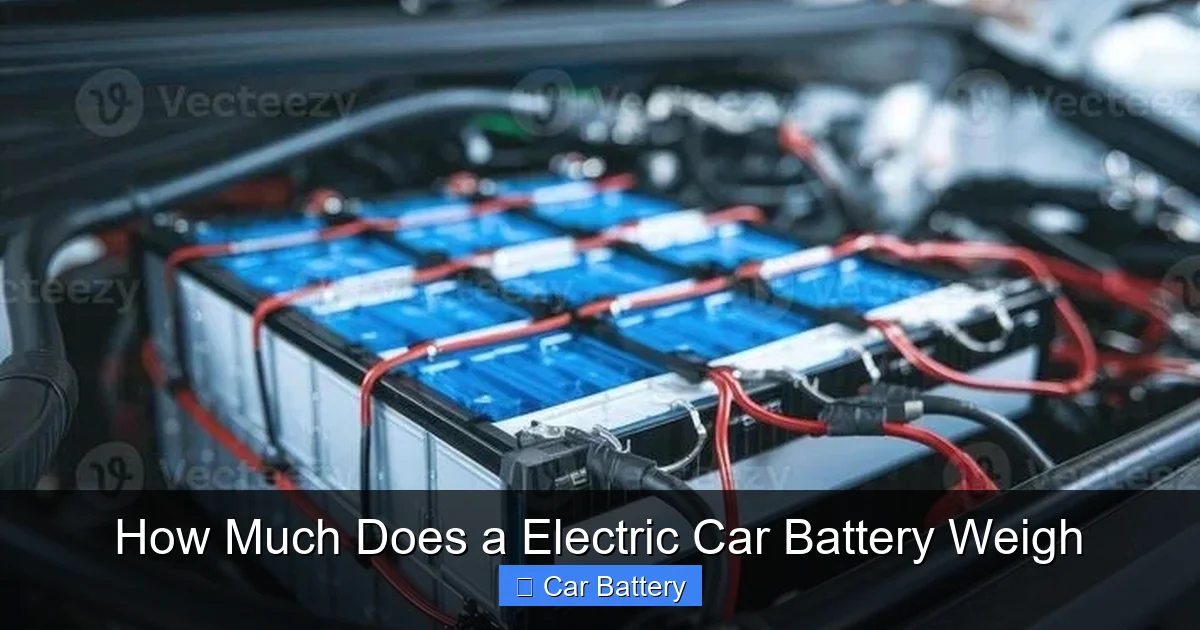
Visual guide about How Much Does a Electric Car Battery Weigh
Image source: compressorlab.com
Impact on Vehicle Performance and Handling
Let’s talk about driving feel. A heavier car doesn’t always mean a worse ride—in fact, in some cases, it can improve it. Because EV batteries are mounted low and flat, they lower the car’s center of gravity. This means better stability, especially when cornering or driving on winding roads. I’ve driven a Porsche Taycan and a Ford Mustang Mach-E back-to-back, and the difference in grip and confidence was noticeable. The Taycan, with its dense battery pack, felt planted and responsive, almost like it was hugging the road.
But there’s a flip side. Extra weight means more inertia. That translates to longer braking distances and more wear on brake pads and tires—even though many EVs use regenerative braking to help offset this. Acceleration can also be affected. While electric motors deliver instant torque, a heavier battery can slow down 0-60 mph times, especially in smaller or less powerful models. For example, the base Nissan Leaf accelerates slower than the Leaf Plus, partly because the larger battery adds over 200 pounds.
Effect on Range and Efficiency
Here’s a paradox: the battery gives the car its range, but its own weight can reduce it. Every extra pound requires more energy to move, which means the car has to work harder to maintain speed, especially at highway speeds or on inclines. This is known as rolling resistance, and it’s a big deal for efficiency.
For instance, the Tesla Model S Plaid has a massive 100 kWh battery that weighs around 1,200 pounds. It’s incredibly fast—0-60 in under 2 seconds—but that performance comes at a cost. The heavy battery means the car uses more energy per mile than a lighter EV like the Hyundai Kona Electric, which has a 64 kWh battery weighing about 800 pounds. So while the Model S has a longer range on paper, real-world efficiency can vary based on driving style and conditions.
Manufacturers are constantly working to reduce this trade-off. One way is by using more energy-dense battery chemistries, like lithium nickel manganese cobalt oxide (NMC), which store more power in less space and weight. Another is through lightweight materials in the car’s body, such as aluminum or carbon fiber, to offset the battery’s mass.
Safety and Structural Considerations
You might think a heavier car is safer in a crash—and in some ways, it is. The low, distributed weight of an EV battery can improve crash stability and reduce the risk of rollovers. Many EVs also use the battery pack as a structural component, reinforcing the chassis and improving rigidity. This is why cars like the Rivian R1T and Lucid Air have such high safety ratings.
But there are risks too. A heavy battery means more force in a collision, which can increase the impact on other vehicles or pedestrians. There’s also the issue of battery integrity. If the pack is damaged in a crash, it can lead to thermal runaway—a dangerous chain reaction that causes overheating or fire. That’s why automakers invest heavily in battery shielding, cooling systems, and crash protection zones.
And let’s not forget about maintenance. If a battery needs to be replaced—whether due to damage or degradation—it’s not like swapping out a traditional car battery. Weighing up to 1,200 pounds, it often requires specialized equipment and trained technicians. This isn’t something you can do in your garage with a wrench and a weekend.
Breaking Down Battery Weight by EV Model
Now that we know why battery weight matters, let’s get into the numbers. Not all electric cars are created equal when it comes to battery mass. The weight depends on several factors: battery capacity (measured in kilowatt-hours, or kWh), chemistry, design, and the overall size of the vehicle. To give you a clearer picture, let’s look at some of the most popular EVs on the market and how their batteries stack up.
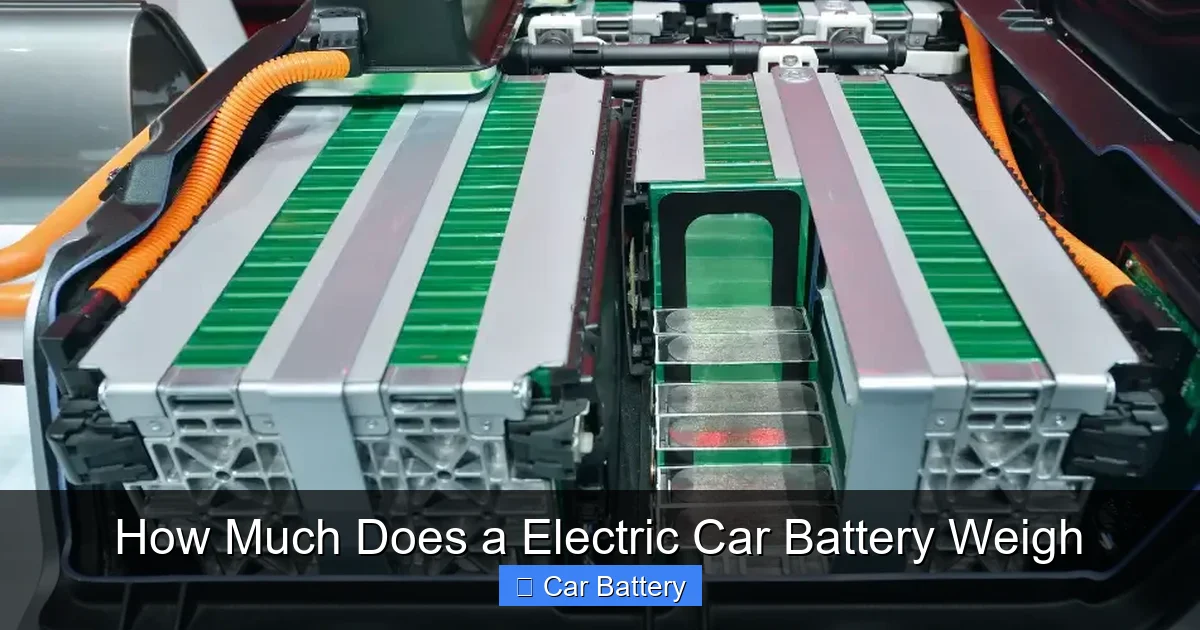
Visual guide about How Much Does a Electric Car Battery Weigh
Image source: imagizer.imageshack.com
Compact and Mid-Size EVs
Starting with smaller, more affordable models, we see a range of battery weights that reflect their intended use. The Nissan Leaf, one of the earliest mass-market EVs, comes in two main versions. The standard Leaf has a 40 kWh battery that weighs approximately 660 pounds. The Leaf Plus, with its 62 kWh battery, bumps that up to around 880 pounds. That’s a significant increase for about 50% more range—showing how battery size directly impacts weight.
The Chevrolet Bolt EV uses a 65 kWh battery that weighs about 900 pounds. Despite being a compact hatchback, it carries a hefty battery, which contributes to its solid driving feel but also limits cargo space slightly. Similarly, the Hyundai Kona Electric has a 64 kWh battery weighing roughly 800 pounds. These numbers show that even in smaller cars, the battery is a major component—often accounting for 15–20% of the total vehicle weight.
Luxury and Performance EVs
When we move up to luxury and high-performance models, the numbers get even more impressive. The Tesla Model 3 Long Range has a 75 kWh battery that weighs around 1,050 pounds. That’s heavier than many motorcycle engines. The Model S, Tesla’s flagship sedan, uses a 100 kWh battery that can weigh up to 1,200 pounds—about the same as a full-sized refrigerator. And the Model X, with its larger frame and dual motors, has a similar battery weight, but the added mass affects its efficiency more due to the SUV’s size.
The Porsche Taycan is another standout. Its 93.4 kWh battery weighs approximately 1,200 pounds, but Porsche uses advanced cooling and lightweight materials to keep the car nimble. The Audi e-tron GT, which shares much of its platform with the Taycan, has a similar battery weight and performance profile.
Electric SUVs and Trucks
Now for the heavyweights. Electric SUVs and trucks are where battery weight really starts to show its impact. The Ford Mustang Mach-E Extended Range has an 88 kWh battery weighing about 1,100 pounds. The Hyundai Ioniq 5 and Kia EV6, both built on the same platform, use a 77.4 kWh battery that weighs around 1,000 pounds.
But the real giants are the electric trucks. The Rivian R1T has a 135 kWh battery that weighs a staggering 1,800 pounds—nearly a full ton. That’s more than some compact cars weigh entirely. The Ford F-150 Lightning offers multiple battery options, with the largest being a 131 kWh pack weighing about 1,700 pounds. And the GM Hummer EV takes it to another level: its 200+ kWh Ultium battery weighs over 2,200 pounds—heavier than a small Smart car.
These numbers highlight a key trend: as vehicles get larger and more powerful, their batteries grow not just in capacity, but in physical mass. And while that enables longer range and higher performance, it also introduces new challenges in handling, efficiency, and infrastructure.
What Determines the Weight of an EV Battery?
So why do some batteries weigh more than others? It’s not just about size. Several key factors influence how heavy an electric car battery is, from the materials used to the way it’s engineered. Understanding these can help you make smarter decisions when comparing models or considering upgrades.
Visual guide about How Much Does a Electric Car Battery Weigh
Image source: rxmechanic.com
Battery Chemistry and Cell Type
The most important factor is battery chemistry. Different lithium-ion formulations have different energy densities—meaning how much power they can store per pound. For example, lithium nickel manganese cobalt oxide (NMC) batteries, used in many Teslas and Hyundai/Kia models, offer high energy density and are relatively lightweight for their capacity. In contrast, lithium iron phosphate (LFP) batteries, used in base Model 3s and some BYD vehicles, are heavier but more stable and longer-lasting.
There’s also the cell format. Most EVs use either pouch cells (flexible, flat packs), cylindrical cells (like AA batteries, used by Tesla), or prismatic cells (rectangular blocks). Cylindrical cells are efficient and easy to cool, but they require more structural support, which adds weight. Pouch cells are lighter but can be less durable. The choice affects not just weight, but also safety, cost, and manufacturing complexity.
Battery Capacity and Pack Design
It might seem obvious, but the bigger the battery, the heavier it is. A 40 kWh pack will almost always weigh less than a 100 kWh one. But the relationship isn’t perfectly linear. Engineers use clever pack designs to maximize space and minimize weight. For example, Tesla’s 4680 battery cells are larger and more efficient, reducing the number of components needed and saving weight.
Thermal management systems also play a role. Batteries need to stay cool to perform well and last long. Most EVs use liquid cooling, which requires coolant lines, pumps, and heat exchangers—all of which add mass. Some cheaper models use air cooling, which is lighter but less effective, especially in hot climates or during fast charging.
Structural Integration and Materials
Modern EVs often integrate the battery pack into the vehicle’s structure, a design known as a “skateboard platform.” This reduces the need for extra framing and can actually save weight overall. But the battery casing itself must be strong enough to protect the cells from impacts, moisture, and vibration. Many manufacturers use aluminum or composite materials for the enclosure, which are lighter than steel but still add to the total weight.
And let’s not forget the wiring, sensors, and battery management systems (BMS). These components monitor temperature, voltage, and state of charge, ensuring safe operation. While individually small, they add up—especially in larger packs with hundreds of cells.
How Battery Weight Affects Everyday Driving
Okay, so we’ve covered the tech and the numbers. But what does all this mean for you, the driver? How does a heavy battery actually impact your daily experience behind the wheel? The answer is: more than you might think. From charging to parking, battery weight shapes how you interact with your EV.
Charging and Range Anxiety
A heavier battery can reduce efficiency, which means you might not get the full range advertised. For example, driving at high speeds, climbing hills, or using climate control all increase energy use. In a lighter EV like the Mini Electric (with a 32.6 kWh battery weighing about 500 pounds), these factors have less impact. But in a heavy truck like the Hummer EV, even a short trip can drain the battery faster than expected.
Charging speed is also affected. Larger, heavier batteries often support faster charging, but they also generate more heat. If the thermal management system can’t keep up, the car may slow down charging to protect the battery. This is why some EVs charge quickly at first, then taper off as the battery fills.
Parking, Towing, and Maintenance
Let’s talk practicalities. A heavier car is harder to park in tight spaces, especially if you’re used to a compact gas car. It also puts more stress on suspension and tires, which may need to be replaced more often. And if you ever need to tow your EV—say, after a breakdown—the weight can be a major issue. Most tow trucks aren’t designed for vehicles over 5,000 pounds, and many EVs, especially SUVs and trucks, exceed that.
Maintenance is another consideration. While EVs have fewer moving parts than gas cars, the battery is a complex system that requires professional care. If a cell fails or the pack degrades, replacement can cost thousands—and the process isn’t DIY-friendly. You’ll need a certified technician with the right tools to handle a 1,000-pound battery safely.
Environmental and Economic Impact
Finally, there’s the bigger picture. Heavier batteries require more raw materials—like lithium, cobalt, and nickel—which have environmental and ethical concerns tied to mining. They also increase the carbon footprint of manufacturing. While EVs still have a lower lifetime emissions than gas cars, the battery’s weight and production process are important factors in the overall sustainability equation.
On the flip side, the long-term savings on fuel and maintenance can offset these impacts. And as battery technology improves, we’re seeing lighter, more efficient designs emerge—like solid-state batteries, which promise higher energy density and lower weight in the future.
Comparing Battery Weights Across Popular EVs
To make sense of all these numbers, here’s a quick reference table comparing the battery weight, capacity, and vehicle type for some of the most popular electric cars on the market. This can help you see how weight scales with size and performance.
| Vehicle Model | Battery Capacity (kWh) | Approx. Battery Weight (lbs) | Vehicle Type |
|---|---|---|---|
| Nissan Leaf (40 kWh) | 40 | 660 | Compact Hatchback |
| Chevrolet Bolt EV | 65 | 900 | Compact Hatchback |
| Hyundai Kona Electric | 64 | 800 | Compact SUV |
| Tesla Model 3 (75 kWh) | 75 | 1,050 | Mid-Size Sedan |
| Ford Mustang Mach-E (88 kWh) | 88 | 1,100 | Mid-Size SUV |
| Tesla Model S (100 kWh) | 100 | 1,200 | Full-Size Sedan |
| Rivian R1T (135 kWh) | 135 | 1,800 | Electric Pickup |
| GM Hummer EV (200+ kWh) | 200+ | 2,200+ | Electric SUV/Truck |
This table shows a clear trend: as battery capacity increases, so does weight—but not always at the same rate. The Hummer EV, for example, has more than double the capacity of the Model S but nearly double the weight. This reflects differences in chemistry, cooling systems, and structural design.
Final Thoughts: Is Battery Weight a Dealbreaker?
So, after all this, should battery weight be a major factor in your EV decision? The short answer is: yes, but not in the way you might think. You don’t need to avoid heavy batteries outright—many of the best-performing, longest-range EVs have them. But you should be aware of the trade-offs.
If you prioritize efficiency, city driving, and lower running costs, a lighter battery in a compact EV might be ideal. But if you need long range, towing capacity, or high performance, a heavier battery is often necessary—and worth the extra mass.
The good news is that battery technology is evolving rapidly. New chemistries, solid-state designs, and smarter engineering are all helping to reduce weight while increasing power. In the next 5–10 years, we could see EVs with the range of a Hummer but the weight of a Leaf.
Until then, understanding battery weight helps you make a smarter, more informed choice. It’s not just about how far you can go—it’s about how the car feels, drives, and fits into your life. And now, when you’re standing next to that shiny new EV, you’ll know exactly what that hum beneath the floor really means.
“`
Frequently Asked Questions
How much does an electric car battery weigh on average?
The average electric car battery weighs between 500 and 1,000 pounds (227 to 454 kg), depending on the vehicle model and battery capacity. Larger batteries with longer ranges tend to be heavier due to more cells and materials.
Why does the weight of an electric car battery matter?
The weight of an electric car battery affects the vehicle’s handling, efficiency, and overall performance. Heavier batteries can reduce acceleration and increase energy consumption, impacting driving dynamics.
Which electric car has the heaviest battery?
The GMC Hummer EV has one of the heaviest electric car batteries, weighing around 2,900 pounds (1,315 kg). Its massive battery pack supports its high power output and extended range.
Does battery weight affect an electric car’s range?
Yes, battery weight can influence range—heavier batteries require more energy to move, potentially reducing efficiency. However, larger batteries also store more energy, which can offset the added weight.
How does battery chemistry impact the weight of an electric car battery?
Different battery chemistries, like lithium-ion or solid-state, affect weight due to varying energy densities. Lithium-ion batteries are common and relatively heavy, while newer technologies aim to reduce weight without sacrificing capacity.
Can the weight of an electric car battery be reduced?
Yes, manufacturers are working to reduce the weight of electric car batteries through advanced materials and improved energy density. Innovations like silicon anodes and solid-state batteries may lead to lighter, more efficient packs in the future.