
How Much Can You Make as a Car Salesman?

How much can you make as a car salesman? Earnings vary widely based on experience, location, dealership type, and sales performance. While entry-level roles may start around $30,000, top performers can earn over $100,000 annually through commissions and bonuses.
So, you’re thinking about becoming a car salesman—or maybe you’re already in the game and wondering if you’re earning what you’re worth. It’s a fair question. The automotive sales industry is often misunderstood. Some people imagine flashy lifestyles and big paychecks, while others assume it’s a low-paying, high-pressure job. The truth? It’s somewhere in between—and it depends a lot on you.
How much can you make as a car salesman? That’s the million-dollar question (sometimes literally). The answer isn’t one-size-fits-all. Your income hinges on a mix of factors: where you work, what kind of cars you sell, how good you are at closing deals, and even the time of year. But one thing is clear—car sales can be a lucrative career if you’re skilled, persistent, and willing to put in the work.
Let’s break it down. Most car salespeople don’t earn a traditional salary like office workers. Instead, they operate on a commission-based model. That means your paycheck grows with every car you sell. Sounds great, right? Well, it can be—but it also means your income can fluctuate month to month. One month you might sell 15 cars and feel like a rockstar. The next, you might struggle to move five and wonder if you should’ve gone to college. It’s a rollercoaster, but for the right person, it’s an exciting and rewarding ride.
Key Takeaways
- Base salary vs. commission: Most car salespeople earn a low base pay with the majority of income coming from commissions on each vehicle sold.
- Experience matters: New salespeople typically earn less, but top performers with years of experience can make six figures.
- Dealership type impacts pay: Luxury and high-volume dealerships often offer higher earning potential than smaller or economy-focused lots.
- Location plays a role: Salespeople in urban areas or regions with higher car prices tend to earn more due to larger ticket sizes.
- Bonuses and incentives: Many dealerships offer monthly or quarterly bonuses for hitting sales targets, boosting overall income.
- Upselling adds income: Selling add-ons like warranties, maintenance plans, and accessories increases commission earnings.
- Career growth opportunities: Successful salespeople can advance to sales manager or general manager roles with significantly higher pay.
📑 Table of Contents
Understanding Car Salesman Compensation
When people ask, “How much can you make as a car salesman?” they’re usually curious about the numbers. But before we dive into dollar amounts, it’s important to understand how car salespeople actually get paid. Unlike jobs with fixed hourly wages or annual salaries, car sales compensation is mostly performance-based. This means your income is directly tied to how many vehicles you sell and how much profit the dealership makes on each sale.
Most dealerships use a commission structure that rewards salespeople based on a percentage of the gross profit from each vehicle. For example, if a car sells for $30,000 and the dealership’s gross profit is $3,000, the salesperson might earn 20% to 30% of that profit—so $600 to $900 per car. Some dealerships use a “flat rate” commission, where you earn a set amount per vehicle, like $300 or $500, regardless of the profit margin. Others use a tiered system, where your commission percentage increases as you sell more cars in a month.
In addition to commissions, many salespeople receive a small base salary or draw against commission. A “draw” means you get a guaranteed minimum payment each week or month, which is later deducted from your total commissions. If your commissions exceed the draw, you get the difference. If not, you essentially “owe” the dealership the shortfall—though this is usually carried over to the next pay period. This system helps protect both the employee and the employer during slow months.
Bonuses are another key part of the compensation package. Dealerships often offer incentives for hitting monthly sales goals, selling specific models, or achieving high customer satisfaction scores. For example, a salesperson might earn a $1,000 bonus for selling 12 cars in a month or an extra $200 for every certified pre-owned vehicle moved. Some dealerships also run contests with prizes like trips, electronics, or even cash rewards.
It’s also worth noting that many salespeople earn additional income through “backend” products—add-ons like extended warranties, paint protection, fabric coatings, and maintenance plans. These items have high profit margins, and salespeople typically earn a percentage of the sale. For instance, selling a $2,000 extended warranty might net you $400 to $600 in commission. This is where top earners really separate themselves—they don’t just sell cars; they sell the whole package.
Average Salary and Income Ranges

Visual guide about How Much Can You Make as a Car Salesman?
Image source: free-template.co
Now, let’s get to the numbers. How much can you actually expect to make as a car salesman? According to data from the U.S. Bureau of Labor Statistics (BLS), the median annual wage for wholesale and manufacturing sales representatives—including those in automotive—was around $65,000 as of 2023. However, this figure includes a wide range of roles and doesn’t always reflect the full picture for dealership-based car salespeople.
A more accurate benchmark comes from industry surveys and job sites like Glassdoor, Indeed, and Payscale. These sources suggest that the average car salesman earns between $40,000 and $70,000 per year. But again, this is an average—meaning half earn more, and half earn less. Entry-level salespeople or those working at smaller dealerships might start closer to $30,000, especially if they’re on a low base salary or draw.
On the higher end, top-performing car salespeople can easily exceed $100,000 annually. In luxury markets like Los Angeles, New York, or Miami, where high-end vehicles like BMWs, Mercedes-Benzes, and Teslas dominate the lots, commissions can be significantly higher. Selling a single $80,000 SUV with a 25% commission on a $10,000 profit could earn you $2,500—just for one car. Multiply that by 10 or 15 sales a month, and you’re looking at a very comfortable income.
Let’s look at a real-world example. Imagine a salesperson working at a high-volume Toyota dealership in Dallas. They sell 12 cars in a month. Each car has an average gross profit of $2,500, and they earn 25% commission. That’s $625 per car, totaling $7,500 in commissions. Add a $1,500 monthly draw and a $1,000 bonus for hitting their goal, and their total monthly income is $10,000—or $120,000 annually. Not bad for a job that doesn’t require a college degree.
Of course, not every month is that successful. Sales tend to spike during holiday weekends, end-of-year clearance events, and tax refund season. Conversely, winter months and periods of economic uncertainty can slow things down. That’s why many experienced salespeople budget carefully, saving during strong months to cover slower ones.
It’s also important to consider benefits. While some dealerships offer health insurance, retirement plans, and paid time off, others—especially smaller independent lots—may not. These perks can significantly impact your overall compensation package. A job with a lower base pay but solid benefits might be more valuable than one with higher commissions but no insurance.
Factors That Influence Earnings
Visual guide about How Much Can You Make as a Car Salesman?
Image source: d25zcttzf44i59.cloudfront.net
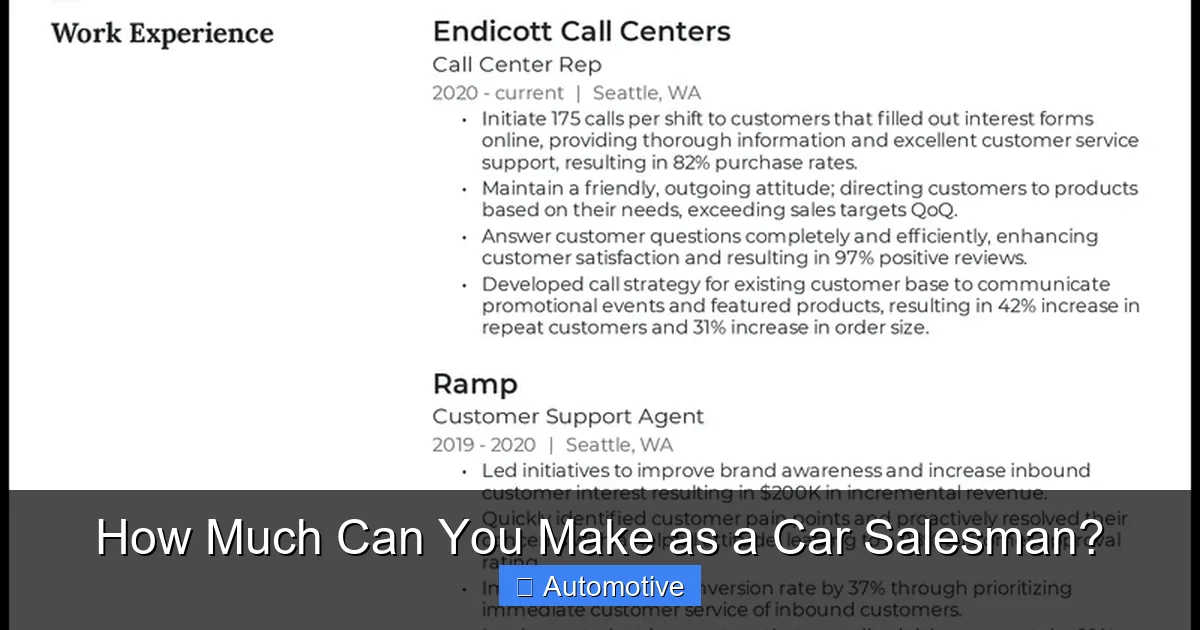
So, what determines how much you can make as a car salesman? It’s not just about how hard you work—though that definitely helps. Several key factors influence your earning potential, and understanding them can help you make smarter career decisions.
Experience and Skill Level
Like most sales roles, experience plays a huge role in income. New car salespeople often start with lower commissions or smaller draws while they learn the ropes. They might spend weeks shadowing veterans, studying product specs, and practicing customer interactions. During this time, their earnings are typically modest—maybe $2,000 to $3,000 per month.
But as they gain confidence and refine their sales techniques, their numbers improve. Within a year, a motivated salesperson can double or even triple their income. Top performers develop strong relationships with customers, master the art of negotiation, and know how to close deals efficiently. They also learn which customers are serious buyers versus tire-kickers, saving time and increasing their close rate.
Skill matters too. Some people are naturally charismatic and persuasive—they walk onto the lot and customers gravitate toward them. Others develop these traits over time through training and practice. Either way, the ability to listen, build trust, and address concerns is critical. A great car salesman doesn’t just sell a vehicle; they solve a problem. Whether it’s finding a fuel-efficient car for a growing family or a rugged truck for a weekend adventurer, they match the right product to the right person.
Dealership Type and Brand
Not all dealerships are created equal—and neither are their pay structures. Luxury brands like Lexus, Porsche, and Cadillac typically offer higher commissions because their vehicles have larger profit margins. Selling a $70,000 luxury sedan can earn you significantly more than selling a $25,000 compact car, even if the commission percentage is the same.
High-volume dealerships—those that sell hundreds of cars per month—also tend to pay better. They have more inventory, more foot traffic, and more opportunities for salespeople to close deals. Brands like Ford, Chevrolet, and Honda often have strong national advertising and loyal customer bases, which can drive consistent sales.
On the flip side, smaller independent dealerships or those specializing in used cars may offer lower commissions but could provide more flexibility or a less competitive environment. Some salespeople prefer these settings because they can build long-term relationships with customers and avoid the high-pressure culture of big franchises.
Geographic Location
Where you work makes a big difference. Car salespeople in major metropolitan areas or regions with high costs of living often earn more due to higher vehicle prices and greater demand. For example, a salesman in San Francisco might sell more electric vehicles and luxury cars, leading to bigger commissions. In contrast, someone in a rural town might sell mostly trucks and economy cars with lower profit margins.
State and local taxes also affect take-home pay. A $70,000 income in Texas (no state income tax) goes further than the same amount in California or New York, where taxes are higher. Additionally, some states have stronger consumer protection laws that can impact sales tactics and commission structures.
Time of Year and Market Conditions
The automotive industry is seasonal. Sales typically peak in the spring and summer, when people are more likely to shop for cars. End-of-year model clearances in September and October are also busy times. Holidays like Memorial Day, Fourth of July, and Black Friday often feature special promotions that drive traffic to dealerships.
Economic conditions also play a role. During periods of low interest rates and strong consumer confidence, people are more likely to buy cars. But in times of recession or high inflation, sales can slow dramatically. Supply chain issues—like those seen during the pandemic—can limit inventory and reduce sales opportunities, even if demand is high.
Tips to Maximize Your Earnings
Visual guide about How Much Can You Make as a Car Salesman?
Image source: d25zcttzf44i59.cloudfront.net
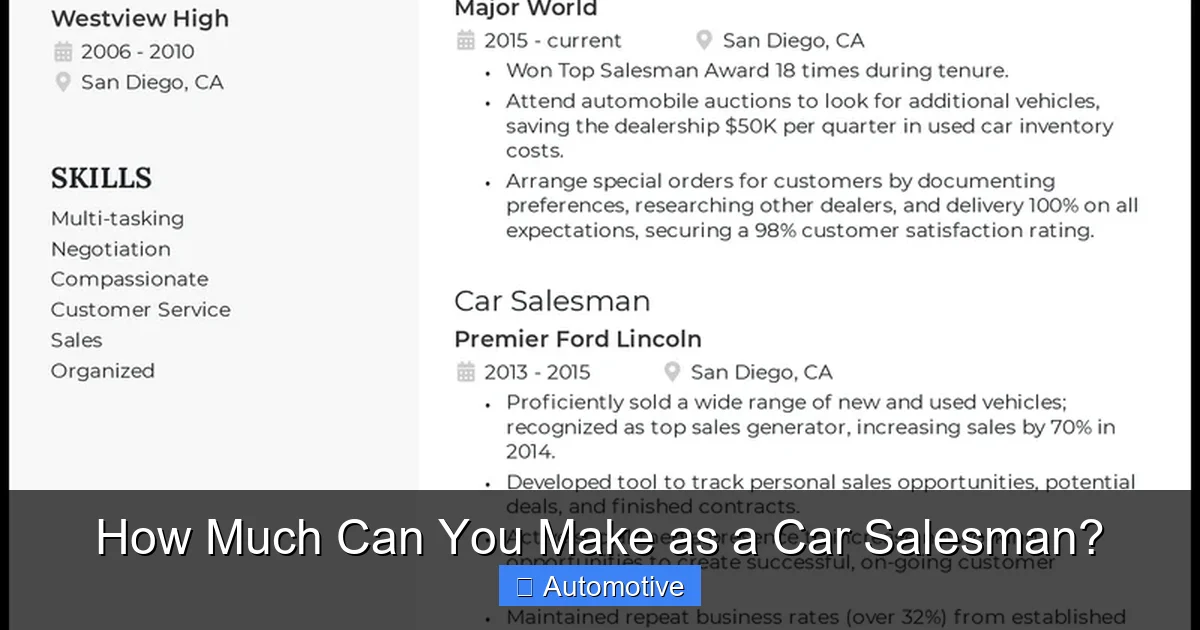
If you’re serious about making a great living as a car salesman, it’s not enough to just show up and hope for the best. You need a strategy. Here are some proven tips to help you maximize your income and build a sustainable career.
Master the Art of Upselling
One of the easiest ways to boost your commission is by selling add-ons. Extended warranties, maintenance plans, tire protection, and paint sealants all have high profit margins. A customer buying a $30,000 car might be willing to spend an extra $2,000 on peace of mind. If you earn 20% commission on that, that’s $400 extra—just for one sale.
The key is to present these products as value-added solutions, not pushy sales tactics. Explain how an extended warranty can save them thousands in repair costs down the road. Highlight how a maintenance plan keeps their car running smoothly with no surprise bills. When customers see the benefit, they’re more likely to say yes.
Build Strong Customer Relationships
Repeat business and referrals are gold in car sales. A customer who trusts you is more likely to come back for their next vehicle and recommend you to friends and family. Follow up after the sale, send thank-you notes, and stay in touch during service visits. Over time, this builds a loyal client base that can generate steady income.
Some top salespeople keep detailed notes on their customers—preferences, family details, past purchases—so they can personalize future interactions. This level of care sets you apart from the average salesman and increases your chances of closing future deals.
Stay Informed and Keep Learning
The automotive industry evolves quickly. New models, technology features, and financing options are constantly changing. Top earners stay ahead by attending manufacturer training sessions, reading industry news, and learning about competitor vehicles. The more you know, the more confident you’ll be—and the more customers will trust your recommendations.
Consider getting certified in areas like hybrid/electric vehicles or certified pre-owned programs. These credentials can make you more valuable to the dealership and open up additional sales opportunities.
Work Smart, Not Just Hard
Selling cars isn’t just about putting in long hours. It’s about working efficiently. Focus on high-quality leads—people who are ready to buy, not just browsing. Use CRM tools to track customer interactions and follow up at the right time. Prioritize your time so you’re not wasting energy on unlikely buyers.
Also, learn to say no to time-wasters. If a customer is clearly not serious or is trying to lowball you, it’s okay to politely move on. Your time is valuable, and every minute spent on a non-buyer is a minute you could’ve spent closing a real deal.
Set Goals and Track Progress
Top performers are goal-oriented. Set monthly sales targets, income goals, and personal development objectives. Track your progress weekly and adjust your strategy as needed. Celebrate wins, learn from losses, and keep pushing forward.
Many successful salespeople use visual aids like charts or apps to monitor their performance. Seeing your progress can be incredibly motivating, especially during slow periods.
Career Advancement Opportunities
While many people think of car sales as a dead-end job, it can actually be a launching pad for a long and rewarding career in the automotive industry. With experience and proven results, you can move into higher-paying roles with more responsibility.
One common path is becoming a sales manager. Sales managers oversee a team of salespeople, set goals, and help close deals. They typically earn a salary plus bonuses based on team performance. According to industry data, sales managers can make anywhere from $60,000 to $120,000 or more, depending on the dealership size and location.
Another option is general manager (GM), the top role at a dealership. GMs are responsible for overall operations, including sales, service, finance, and staffing. They earn a base salary plus a percentage of the dealership’s profits. Top GMs at successful dealerships can make $200,000 or more annually.
Some salespeople transition into finance and insurance (F&I) roles, where they help customers secure loans and purchase protection products. F&I managers often earn high commissions and can make $100,000+ with experience.
Others use their sales skills to move into related fields like automotive marketing, fleet sales, or manufacturer representation. The communication, negotiation, and customer service skills you develop as a car salesman are valuable in many industries.
Challenges and Realities of the Job
Let’s be honest—car sales isn’t for everyone. It’s a high-pressure job with unpredictable income, long hours, and constant rejection. You’ll deal with difficult customers, tough negotiations, and the stress of meeting monthly quotas. Some days, you’ll leave work feeling drained and discouraged.
There’s also the issue of job security. Unlike salaried positions, your income isn’t guaranteed. If sales slow down or the dealership struggles, you could see a significant drop in pay. In extreme cases, dealerships may lay off staff or close altogether.
Additionally, the industry is changing. Online car-buying platforms like Carvana and Vroom are disrupting traditional dealership models. Some customers now prefer to shop from home, which reduces foot traffic and makes it harder for salespeople to build relationships.
Despite these challenges, many people thrive in car sales. They enjoy the fast pace, the thrill of closing a deal, and the freedom of earning based on performance. If you’re self-motivated, resilient, and customer-focused, it can be a fulfilling and profitable career.
Conclusion
So, how much can you make as a car salesman? The answer is: it depends—but the potential is real. While entry-level earnings might start around $30,000, top performers can earn $100,000 or more through commissions, bonuses, and add-on sales. Your income will vary based on experience, location, dealership type, and your ability to connect with customers.
The key to success is treating car sales like a business. Set goals, build relationships, keep learning, and always focus on providing value. It’s not just about selling cars—it’s about solving problems and helping people find the right vehicle for their needs.
If you’re willing to put in the work, car sales can offer financial rewards, career growth, and the satisfaction of a job well done. Whether you’re just starting out or looking to take your career to the next level, the road to success is paved with persistence, skill, and a positive attitude.
Frequently Asked Questions
Do car salesmen get paid hourly or on commission?
Most car salespeople are paid primarily on commission, meaning they earn a percentage of the profit from each vehicle sold. Some dealerships offer a small base salary or draw against commission, but the majority of income comes from performance-based pay.
Can you make six figures as a car salesman?
Yes, top-performing car salespeople can earn over $100,000 per year, especially at high-volume or luxury dealerships. This typically requires consistent sales, strong upselling skills, and experience in a competitive market.
Is car sales a stable career?
Car sales can be financially rewarding but comes with income variability. Earnings depend on market conditions, seasonality, and individual performance. While not as stable as salaried jobs, it offers high earning potential for skilled and motivated individuals.
Do you need a degree to become a car salesman?
No, a college degree is not required to become a car salesman. Most dealerships provide on-the-job training. Success depends more on communication skills, product knowledge, and the ability to build customer relationships.
How do car salespeople earn extra money?
Salespeople can boost income by selling add-ons like extended warranties, maintenance plans, and protection packages. They may also earn bonuses for hitting sales targets or achieving high customer satisfaction scores.
What’s the best type of dealership to work at for higher pay?
Luxury and high-volume dealerships typically offer higher earning potential due to larger vehicle profits and more sales opportunities. Brands like BMW, Mercedes-Benz, and Toyota often pay better commissions than smaller or economy-focused lots.