
How Much Are Subaru Catalytic Converters Worth for Scrap

Subaru catalytic converters can be worth anywhere from $50 to over $500 for scrap, depending on the model, year, and precious metal content. Understanding what drives their value helps you get the most cash when recycling or selling damaged units.
If you’ve ever looked under your Subaru and spotted that bulky metal canister near the exhaust manifold, you’ve seen the catalytic converter. It’s not just a piece of emissions equipment—it’s a hidden treasure chest for scrap metal dealers. But how much are Subaru catalytic converters actually worth for scrap? The answer isn’t one-size-fits-all. Depending on your Subaru’s make, model, year, and even engine type, that converter could be worth as little as $50 or as much as $600 or more when sold for recycling.
Catalytic converters are essential for reducing harmful emissions, but they’re also packed with precious metals like platinum, palladium, and rhodium. These metals act as catalysts to convert toxic gases into less harmful substances. Because these materials are expensive and increasingly scarce, scrap yards and recycling centers pay top dollar for used converters—especially from popular, high-volume vehicles like Subarus. Whether you’re scrapping an old Forester, replacing a stolen WRX cat, or cleaning out a junked Outback, knowing the potential value of your catalytic converter can help you make smarter financial decisions.
In this guide, we’ll break down everything you need to know about the scrap value of Subaru catalytic converters. From understanding what makes one converter more valuable than another to tips on where and how to sell, we’ll cover it all. You’ll learn how to identify high-value models, avoid common pitfalls, and maximize your return—whether you’re dealing with one unit or a whole fleet of Subarus.
Key Takeaways
- Subaru catalytic converters vary widely in scrap value based on engine size, model year, and converter type (OEM vs. aftermarket).
- Precious metals like platinum, palladium, and rhodium are the primary drivers of scrap value—higher content means higher payout.
- Newer Subarus (2010–2023) often have more valuable cats due to stricter emissions standards and increased precious metal loading.
- Location matters—urban scrap yards and specialized recyclers typically offer better prices than rural or general junkyards.
- Damaged or stolen converters can still hold value if the honeycomb structure is intact and identifiable.
- Always verify a recycler’s credentials to avoid lowball offers or legal issues related to stolen parts.
- Selling in bulk or as part of a full vehicle may yield higher overall returns than individual unit sales.
📑 Table of Contents
- What Determines the Scrap Value of a Subaru Catalytic Converter?
- High-Value Subaru Models and Their Converter Worth
- How to Identify a High-Value Subaru Catalytic Converter
- Where to Sell Subaru Catalytic Converters for Scrap
- Legal and Ethical Considerations When Selling Scrap Converters
- Tips to Maximize Your Scrap Converter Payout
- Conclusion
What Determines the Scrap Value of a Subaru Catalytic Converter?
The scrap value of a Subaru catalytic converter isn’t random. It’s based on a combination of physical, chemical, and market factors. At the core of it all are the precious metals inside the converter’s honeycomb structure. These metals—platinum, palladium, and rhodium—are rare, expensive, and essential for the converter’s function. The more of these metals a converter contains, the higher its scrap value.
But it’s not just about metal content. The type of converter also plays a big role. Subaru vehicles typically use one of two types: OEM (Original Equipment Manufacturer) converters installed at the factory, or aftermarket replacements. OEM converters are generally more valuable because they’re designed to meet strict emissions standards and often contain higher concentrations of precious metals. Aftermarket units, while functional, may use less expensive materials or thinner coatings, reducing their scrap worth.
Another key factor is the engine size and configuration. Subaru’s boxer engines—especially the turbocharged variants found in models like the WRX, STI, and Legacy GT—often require larger or dual catalytic converters. These systems tend to have more catalyst material, increasing their metal content and, by extension, their scrap value. For example, a 2015 WRX with a 2.0L turbo engine might have a converter worth $300–$450, while a naturally aspirated 2.5L engine in a base Impreza might only fetch $80–$150.
The year of the vehicle also matters. Older Subarus (pre-2000) often have lower metal loading because emissions regulations were less strict. As environmental standards tightened—especially after the 2000s and again post-2010—manufacturers increased the amount of precious metals used in converters. This means a 2020 Forester is likely to have a more valuable cat than a 1998 Outback, even if both have similar engine sizes.
Finally, market demand and global metal prices fluctuate. Palladium, for instance, has seen dramatic price spikes in recent years due to supply constraints and increased demand from the automotive industry. When palladium prices rise, so does the value of catalytic converters containing it—including many Subaru models. Keeping an eye on metal market trends can help you time your sale for maximum profit.
High-Value Subaru Models and Their Converter Worth
Visual guide about How Much Are Subaru Catalytic Converters Worth for Scrap
Image source: bmwinsights.com
Not all Subarus are created equal when it comes to catalytic converter scrap value. Some models consistently rank higher due to their engine specs, emissions systems, and popularity among thieves and recyclers. If you own one of these vehicles, your converter could be worth significantly more than average.
One of the most valuable Subarus on the scrap market is the **WRX and WRX STI**. These performance-oriented models come equipped with turbocharged engines that require robust emissions control. The 2.0L and 2.5L turbo engines in WRX models typically use high-flow, high-metal-content converters. A 2015–2021 WRX catalytic converter can fetch between $350 and $500 at a reputable recycler, especially if it’s an OEM unit. The STI, with its more aggressive tuning and larger exhaust system, often has even higher metal loading, pushing values toward the $450–$600 range.
The **Subaru Legacy GT and Outback XT** are also strong contenders. These turbocharged variants of Subaru’s mainstream sedans and wagons use similar engines to the WRX, meaning their converters contain comparable levels of platinum, palladium, and rhodium. A 2005–2009 Legacy GT converter might be worth $250–$400, depending on condition and location.
Even some naturally aspirated models can be valuable. The **Subaru Forester XT** (2004–2013) and **Impreza WRX** (2002–2007) fall into this category. While not as high-performing as the STI, these models still use turbocharged engines and high-quality emissions systems. Their converters often contain enough precious metals to justify a $200–$350 scrap value.
On the lower end, base models like the **Impreza 2.0i**, **Legacy 2.5i**, and **Crosstrek 2.0** typically have smaller, less complex catalytic converters. These units may only be worth $50–$150 for scrap, especially if they’re aftermarket replacements. However, even these lower-value converters can add up if you’re scrapping multiple vehicles or selling in bulk.
It’s also worth noting that **hybrid and newer direct-injection Subarus**, such as the 2020+ Crosstrek Hybrid or the 2022+ Forester with the FA24 engine, are starting to appear on the high-value radar. These models use advanced emissions systems with higher catalyst loading to meet stringent EPA standards. As these vehicles age and enter the scrap stream, their converters are expected to command premium prices.
How to Identify a High-Value Subaru Catalytic Converter
Visual guide about How Much Are Subaru Catalytic Converters Worth for Scrap
Image source: autoemc.net
Knowing which Subaru models have valuable converters is one thing—being able to identify them is another. If you’re planning to sell a catalytic converter for scrap, you’ll need to assess its type, condition, and potential worth. Here’s how to do it like a pro.
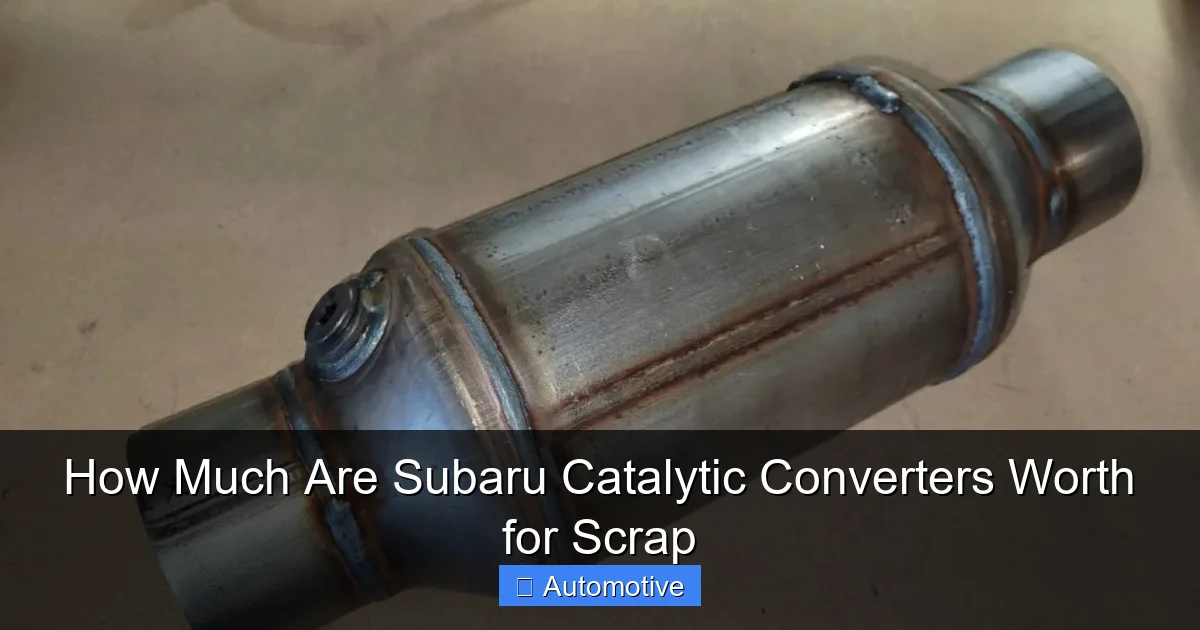
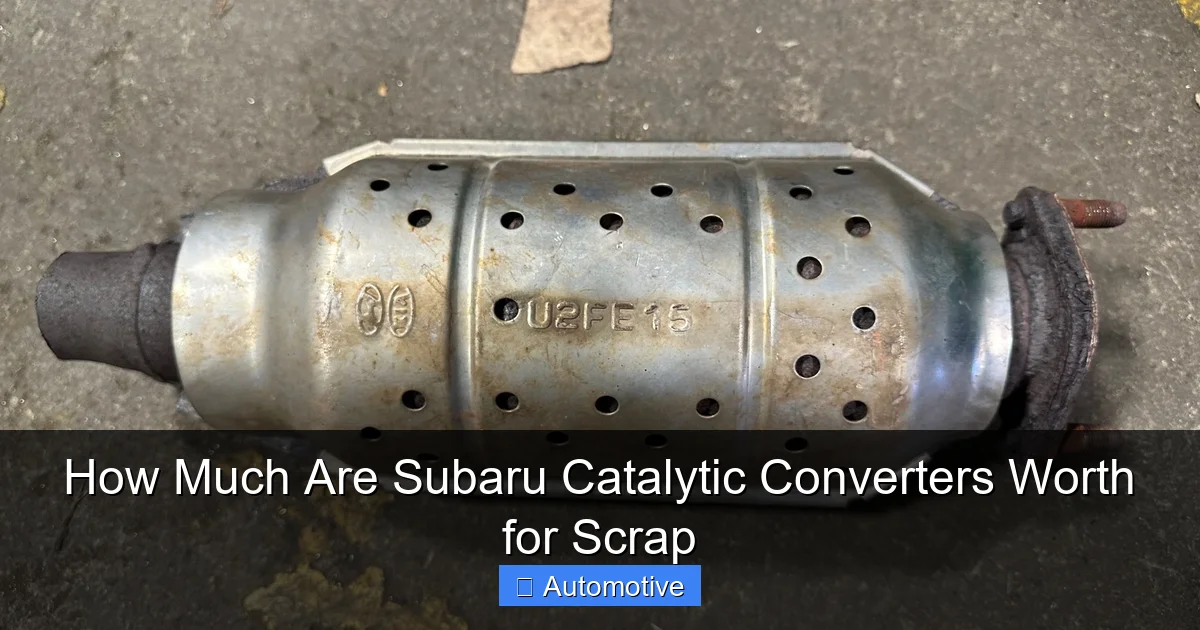
Start by locating the converter under your vehicle. It’s usually a rounded or oval metal canister mounted between the engine and the muffler, often near the front passenger side. Once you’ve found it, look for the **stamp or etching** on the casing. Most OEM Subaru converters have a manufacturer code, part number, or serial number stamped into the metal. This information is crucial for recyclers, as it helps them determine the exact model and metal content.
Common OEM manufacturers for Subaru catalytic converters include **Denso**, **Bosal**, and **MagnaFlow**. Denso, in particular, is known for high-quality, high-metal-content units. If your converter has a Denso stamp, it’s likely to be more valuable. Aftermarket brands like **Walker**, **Magnaflow**, and **Eastern Catalytic** are also common, but they typically contain less precious metal and are worth less at scrap.
Next, assess the **condition** of the converter. A converter that’s intact, uncut, and free of major dents or corrosion is more valuable than one that’s damaged or partially removed. The honeycomb structure inside must be preserved for recyclers to extract the metals efficiently. If the converter has been cut open or the internal substrate is broken, its value drops significantly—sometimes by 50% or more.
You can also use **online lookup tools** to estimate value. Websites like Converter King, CatClamp, and local scrap yard databases allow you to enter the part number or vehicle details to get a rough price range. These tools aren’t always 100% accurate, but they give you a solid starting point for negotiations.
Another tip: **check for dual converters**. Some Subaru models, especially turbocharged ones, have two catalytic converters—one close to the engine (pre-cat) and one further back (main cat). The pre-cat is usually smaller but often contains a higher concentration of precious metals because it handles the hottest, most toxic exhaust gases. If your vehicle has dual cats, both should be removed and sold separately for maximum value.
Finally, **don’t forget the heat shield**. While not valuable on its own, a converter with an intact heat shield is easier to handle and less likely to be damaged during removal. Some recyclers may offer a small bonus for units that are clean, labeled, and ready to process.
Where to Sell Subaru Catalytic Converters for Scrap
Visual guide about How Much Are Subaru Catalytic Converters Worth for Scrap
Image source: rrcats.com
Once you’ve identified your converter and estimated its value, the next step is finding the right buyer. Not all scrap yards or recyclers offer the same prices, and some may even try to lowball you if they think you don’t know the market. Here’s where to go—and what to avoid—when selling your Subaru catalytic converter.
The best place to start is a **specialized catalytic converter recycler**. These companies focus exclusively on processing converters and have the equipment to accurately test and extract precious metals. They typically pay more than general scrap yards because they understand the true value of the materials. Look for recyclers with certifications like ISO 14001 or membership in industry groups like the Automotive Recyclers Association (ARA). Examples include **PMR Catalytic Recycling**, **Converter Solutions**, and **Catalytic Converter Buyers**.
Local **automotive scrap yards** can also be good options, especially if they have a dedicated converter division. Call ahead and ask if they test converters on-site or send them to a refinery. Yards that do their own testing often pay more because they can verify metal content instantly. Avoid yards that offer a flat rate per pound—this usually means they’re undervaluing your converter.
**Online buyers** are another growing option. Companies like **CatClamp**, **Converter Guy**, and **Scrap Catalytic** allow you to mail in your converter for evaluation. They’ll send a prepaid shipping label, inspect the unit, and pay you via check or PayPal. This is convenient if you don’t have local recyclers, but be aware of shipping risks and potential delays.
Avoid selling to **unlicensed or cash-only buyers**, especially if the converter was recently stolen. In many states, it’s illegal to sell a catalytic converter without proper documentation, and buying stolen parts is a felony. Always ask for a receipt and ensure the buyer is licensed. Some states even require sellers to provide a vehicle title or registration to prove ownership.
Location also plays a role. **Urban areas** with high vehicle density—like Los Angeles, Chicago, or Atlanta—tend to have more competitive scrap markets. You may get $50–$100 more per converter in these regions than in rural areas. If you’re in a small town, consider driving to a nearby city or using an online service to get a better price.
Finally, **timing matters**. Metal prices fluctuate daily. If palladium or rhodium prices are high, wait a few days or weeks to sell. Many recyclers update their prices weekly based on market conditions. A little patience can mean an extra $50–$100 in your pocket.
Legal and Ethical Considerations When Selling Scrap Converters
Selling a catalytic converter isn’t as simple as handing over a piece of metal. There are legal and ethical considerations that every seller should understand—especially with the rise in catalytic converter thefts across the U.S. and Canada.
First, **ownership verification** is critical. In many states, you must prove you legally own the vehicle the converter came from. This usually means providing a copy of your vehicle registration or title. Some recyclers will also require a signed affidavit stating that the converter was removed from a legally owned vehicle. This helps prevent the sale of stolen parts, which is a growing problem.
Second, **know your state’s laws**. Regulations vary widely. For example, California requires all catalytic converter sales to be documented and reported to the Department of Justice. Texas mandates that recyclers verify the seller’s identity and vehicle ownership. In New York, it’s illegal to sell a converter without a valid VIN and proof of ownership. Violating these laws can result in fines or even criminal charges.
Third, **avoid cash-only transactions with unknown buyers**. While it’s tempting to take quick cash, unlicensed buyers may be purchasing stolen converters. If you’re caught selling a stolen part—even unknowingly—you could face legal trouble. Always use traceable payment methods and keep records of the sale.
Ethically, it’s also important to **ensure your converter is being recycled responsibly**. Some scrap yards melt down converters in ways that release toxic fumes or fail to recover all the precious metals. Look for recyclers that follow environmental best practices and have third-party certifications. This not only protects the planet but also ensures you’re supporting a legitimate, high-paying operation.
Finally, if your converter was **stolen**, report it to the police before selling a replacement. Many insurance companies require a police report to process claims, and some recyclers won’t buy converters from vehicles with recent theft reports unless you can prove ownership of the new part.
Tips to Maximize Your Scrap Converter Payout
Getting the most money for your Subaru catalytic converter takes more than just finding a buyer. With a few smart strategies, you can boost your payout significantly.
First, **sell when metal prices are high**. Palladium and rhodium prices can swing by 10–20% in a single month. Use free online tools like Kitco or Metals Daily to track prices. If palladium is trading above $2,000 per ounce, it’s a good time to sell.
Second, **clean the converter before selling**. Remove dirt, oil, and rust from the exterior. A clean unit is easier to inspect and more likely to be accepted without deductions. Use a wire brush and degreaser, but avoid damaging the casing.
Third, **sell in bulk**. If you’re scrapping multiple Subarus or have several converters from different vehicles, ask for a volume discount. Some recyclers offer 10–15% more per unit when you sell five or more at once.
Fourth, **remove the converter carefully**. Use proper tools and techniques to avoid damaging the honeycomb inside. A broken substrate can reduce value by 30% or more. If you’re not confident, hire a mechanic to do the removal.
Fifth, **negotiate**. Don’t accept the first offer. Get quotes from three different recyclers and use them to leverage a better price. Most will match or beat a competitor’s offer to win your business.
Finally, **keep records**. Save receipts, photos, and documentation of the sale. This protects you legally and helps if you need to prove ownership later.
Conclusion
So, how much are Subaru catalytic converters worth for scrap? The answer depends on your vehicle, the converter type, and market conditions—but the potential is real. From $50 for a basic Impreza to over $600 for a high-performance STI, these unassuming parts can deliver surprising returns when sold wisely.
Understanding what drives value—precious metal content, OEM quality, engine type, and market trends—empowers you to make informed decisions. Whether you’re scrapping an old car, replacing a stolen converter, or simply curious about your vehicle’s hidden worth, knowing how to assess and sell your catalytic converter can put extra cash in your pocket.
Just remember: legality, ethics, and safety matter. Always verify ownership, choose reputable recyclers, and avoid quick-cash schemes. With the right approach, your Subaru’s catalytic converter isn’t just a piece of emissions equipment—it’s a valuable asset waiting to be unlocked.
Frequently Asked Questions
How much is a 2018 Subaru Outback catalytic converter worth for scrap?
A 2018 Subaru Outback with a 2.5L engine typically has a catalytic converter worth between $150 and $250 for scrap, depending on the OEM manufacturer and metal content. If it’s a turbocharged XT model, the value could rise to $300–$400.
Can I sell a stolen catalytic converter for scrap?
No, selling a stolen catalytic converter is illegal in most states. You must prove ownership of the vehicle it came from, and many recyclers will refuse to buy converters reported as stolen.
Do aftermarket catalytic converters have scrap value?
Yes, but they’re usually worth less than OEM units. Aftermarket converters often contain lower concentrations of precious metals, so expect 20–40% less in scrap value compared to factory-installed parts.
How do I know if my Subaru catalytic converter is valuable?
Check the stamp on the converter for the manufacturer and part number. Use online lookup tools or contact a recycler to get an estimate. Turbocharged models and newer vehicles (2010+) tend to be more valuable.
Can I remove and sell my own catalytic converter?
Yes, but you must legally own the vehicle and follow state regulations. Some states require documentation, and improper removal can damage the converter, reducing its value.
Why are Subaru catalytic converters targeted by thieves?
Subaru converters contain high levels of precious metals, especially in turbocharged models. Their popularity and relatively easy access make them prime targets for theft, particularly in urban areas.