
How Many Miles Can a 2005 Toyota Corolla Go on a Full Tank?

The 2005 Toyota Corolla, with its 13.2-gallon fuel tank and EPA-rated fuel economy of up to 32 mpg highway / 26 mpg combined, can typically travel between 300 to 400 miles on a full tank under mixed driving. However, your actual range depends heavily on driving habits, maintenance, terrain, and climate. To get the most miles, focus on smooth driving, proper tire inflation, and regular engine tune-ups. Understanding these variables helps you plan trips and avoid the stress of running low on fuel.
Key Takeaways
- Tank Capacity: The 2005 Corolla has a 13.2-gallon fuel tank, including a small reserve.
- Estimated Range: Expect roughly 300-400 miles per full tank based on EPA combined estimates of 26-32 MPG.
- MPG is a Variable: Your real-world miles per gallon can swing by 5-10 MPG based on driving style, traffic, and vehicle condition.
- The Gas Light is Your Warning: The low-fuel indicator typically illuminates with 1-2 gallons remaining, giving you 30-60 miles of buffer.
- Maintenance is Key: A well-maintained engine, clean air filter, and correct tire pressure are critical for achieving the manufacturer’s MPG claims.
- Calculate Your Own: Track your fill-ups and mileage for 3-5 tanks to establish your personal, accurate “miles per tank” figure.
📑 Table of Contents
- Introduction: The Eternal Question of Range
- Understanding the 2005 Corolla’s Fuel Tank Capacity
- Real-World Fuel Economy: What MPG Can You Actually Expect?
- Calculating Your Personal “Miles Per Tank”
- Critical Factors That Change Your Daily Range
- How to Maximize Your 2005 Corolla’s Fuel Range
- The Low-Fuel Light: Your Final Warning System
- Putting It All Together: Your Action Plan
Introduction: The Eternal Question of Range
You’re planning a road trip, or maybe you’re just thinking about your weekly commute. A simple, practical question pops into your head: “Just how far can my trusty 2005 Toyota Corolla actually go on a single tank of gas?” It’s more than just curiosity—it’s about planning, budgeting, and peace of mind. That little fuel gauge needle creeping toward ‘E’ can spark a mini-crisis if you’re unsure of your car’s true capabilities.
The 2005 Corolla is legendary for its reliability and efficiency. It’s the kind of car you buy when you want low costs and high dependability. But its age means its original EPA ratings are just a starting point. Years of wear, changing driving patterns, and even the type of gas you use all play a role. This guide will dive deep beyond the window sticker. We’ll explore the hard facts about its tank size, break down realistic fuel economy expectations, and give you the tools to calculate your car’s unique range. By the end, you’ll know exactly how many miles you can confidently expect from your full tank, and more importantly, how to squeeze every last drop out of it.
Understanding the 2005 Corolla’s Fuel Tank Capacity
Before we can talk about miles, we must talk about gallons. The foundation of your range calculation is the size of the container—your fuel tank. For the 2005 model year, the Toyota Corolla came with a consistent fuel tank capacity across most trims.

Visual guide about How Many Miles Can a 2005 Toyota Corolla Go on a Full Tank?
Image source: vehiclerides.com
The Official Number: 13.2 Gallons
The 2005 Toyota Corolla’s fuel tank holds 13.2 U.S. gallons of gasoline. This figure is for the standard models equipped with the 1.8-liter 1ZZ-FE engine. It’s a fairly typical size for a compact sedan of that era, designed to balance range with weight and space efficiency. To put it in perspective, that’s about 50 liters of fuel.
It’s important to understand that this is the total capacity. However, you will almost never be able to put a full 13.2 gallons in when your gauge reads ‘E.’ This is due to two factors: the fuel pump’s need to stay submerged in gasoline for cooling, and the intentional design of a small “unusable” reserve at the very bottom of the tank. When you fill up from the low-fuel light, you’re typically only adding 12 to 12.5 gallons, not the full 13.2.
Comparing Capacity to Modern and Other Models
How does this stack up? Today’s Corolla has a slightly smaller tank, around 13.2 gallons as well, but with significantly better MPG, resulting in a longer actual range. Compared to its larger sibling, the Toyota Camry, the Corolla’s tank is about a gallon smaller. The Camry’s tank is often 15-16 gallons. The minivan-focused Toyota Sienna, while having a much larger tank (around 19 gallons), gets worse MPG, so the range difference isn’t as dramatic as the tank size suggests. For the 2005 Corolla, the 13.2-gallon tank is a known, fixed quantity—your job is to maximize the miles you get from each of those gallons.
Real-World Fuel Economy: What MPG Can You Actually Expect?
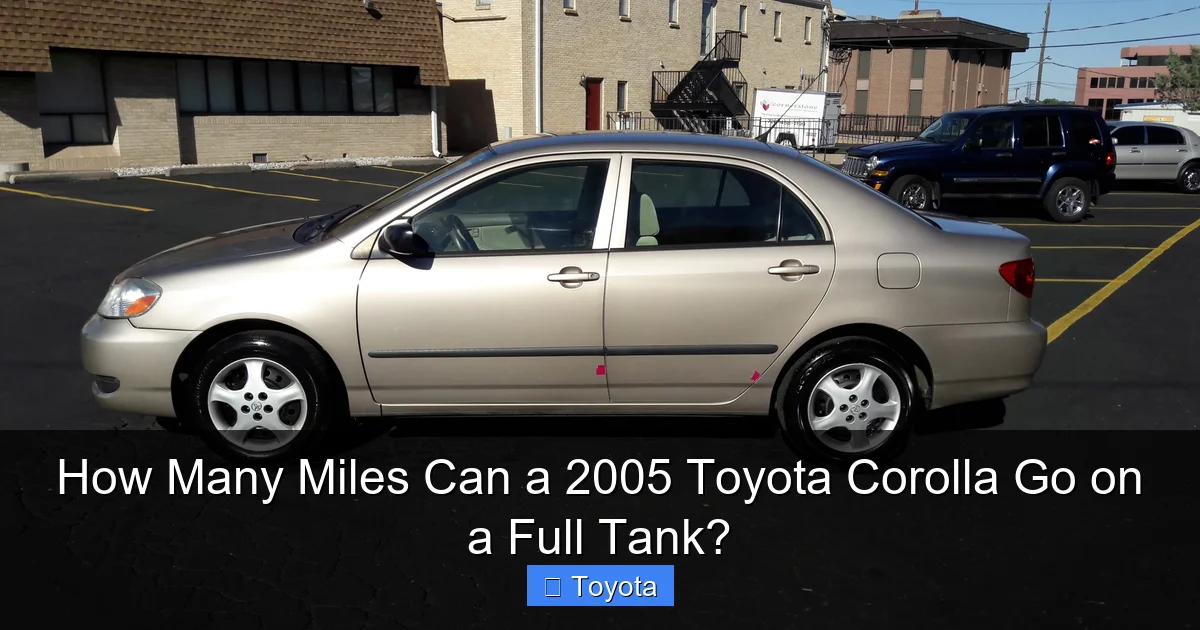
This is the heart of the matter. The Environmental Protection Agency (EPA) gave the 2005 Corolla with the 1ZZ-FE engine and automatic transmission a rating of 26 mpg city / 32 mpg highway / 28 mpg combined. The manual transmission version was slightly better, rated at 28 city / 35 highway / 31 combined. But these are laboratory estimates from nearly 20 years ago. Your real-world results will vary, often significantly.
Visual guide about How Many Miles Can a 2005 Toyota Corolla Go on a Full Tank?
Image source: uniqautos.weebly.com
The Highway vs. City Divide
The gap between highway and city mileage is substantial, often 6-8 MPG. Why? City driving is a series of stops and starts. You accelerate from a dead stop repeatedly, which is incredibly inefficient. You idle at lights. You’re constantly using the brakes, turning kinetic energy into wasted heat. Highway driving, at a steady 60-65 mph, allows the engine to run in its optimal power band with minimal aerodynamic drag (at reasonable speeds). If your commute is 90% highway, you might see 32-35 MPG on a regular basis. If it’s stop-and-go city traffic, 22-25 MPG might be your reality.
Factors That Drag Down Your MPG
- Aggressive Driving: Fast acceleration, speeding, and hard braking can reduce your fuel economy by 15-30% in city driving. That 26 MPG can plummet to 18-22 MPG.
- Vehicle Load & Roof Racks: Carrying heavy cargo or passengers reduces efficiency. A roof rack or carrier adds significant aerodynamic drag, especially at highway speeds, potentially costing 2-5 MPG.
- Tire Pressure: Under-inflated tires increase rolling resistance. For every 1 PSI below the recommended pressure, you can lose about 0.2% MPG. It adds up quickly.
- Engine Health & Maintenance: A clogged air filter, old spark plugs, dirty fuel injectors, or failing oxygen sensors can wreak havoc on fuel mixture and efficiency. A car that’s overdue for a tune-up will drink more fuel.
- Climate & Accessories: Using the air conditioning compressor puts an extra load on the engine, reducing MPG by 1-3 in city driving. Cold winter weather means longer engine warm-up times and denser air, both reducing efficiency until the engine is fully heated.
- Fuel Quality: While the Corolla is designed for regular 87-octane gasoline, consistently poor-quality fuel with lower energy content or more detergents can slightly affect performance and economy.
So, a well-maintained 2005 Corolla on a long highway cruise might achieve 33-35 MPG. A poorly maintained one in heavy city traffic might struggle to get 22 MPG. The “average” owner likely sees somewhere in the 24-28 MPG combined range.
Calculating Your Personal “Miles Per Tank”
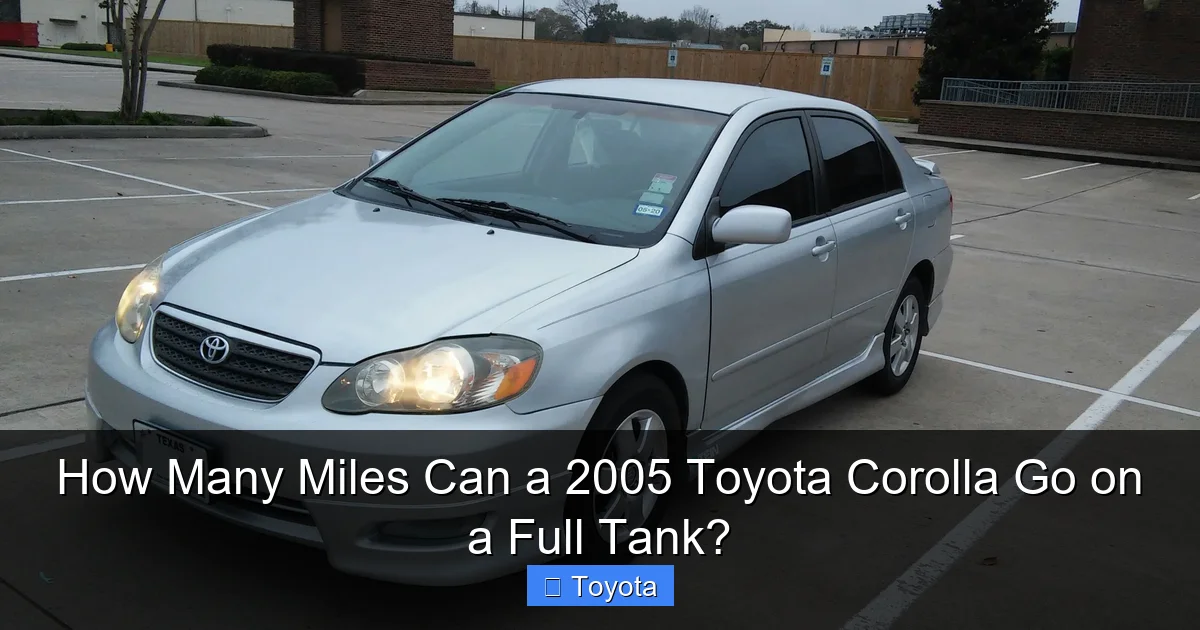
Now for the math. The formula is beautifully simple: Miles Per Tank = Fuel Tank Capacity (gal) x Your Average MPG. But since you can’t perfectly empty the tank and you don’t have a single MPG number, we need a practical approach.
Visual guide about How Many Miles Can a 2005 Toyota Corolla Go on a Full Tank?
Image source: ryno-post-images.s3.amazonaws.com
Step 1: Find Your True Average MPG
The best method is the “full-tank method.” Next time you fill up:
- Fill the tank completely until the pump clicks off. Note the odometer reading (or reset the trip meter).
- Drive normally until you need to fill up again. Try to go as long as possible, but don’t run it dry.
- Fill the tank completely again. Note how many gallons it took and the new odometer/trip meter reading.
- Miles Driven ÷ Gallons Used = Your MPG for that tank.
Do this for 3-5 tanks and average the results. That is your number. It accounts for your specific driving mix, car condition, and local terrain.
Step 2: Apply It to the 13.2-Gallon Tank
Let’s run some scenarios based on realistic MPG ranges for a 2005 Corolla:
- Conservative City Estimate (22 MPG): 13.2 gal x 22 MPG = 290.4 miles. This is a worst-case daily-driver scenario in heavy traffic.
- Mixed Driving (26 MPG): 13.2 gal x 26 MPG = 343.2 miles. A solid, realistic average for many owners.
- Highway-Cruising (34 MPG): 13.2 gal x 34 MPG = 448.8 miles. Achievable on long, open-road trips with gentle driving.
Therefore, a safe, confident planning number for most 2005 Corolla owners is approximately 320-380 miles on a full tank. You should plan your refueling stops around the 300-mile mark to be safe, leaving a buffer for unexpected traffic or detours. Remember, you’ll likely only put about 12.5 usable gallons in when refueling from empty, so subtract about 30-50 miles from these calculations for your real-world “from-empty” range. This is why understanding how far you can drive after the gas light comes on is a crucial piece of knowledge for every Corolla driver.
Critical Factors That Change Your Daily Range
Your calculated 350-mile range isn’t set in stone. It’s a living number that changes with conditions. Understanding these variables helps you adapt and manage expectations.
Driving Style: The Single Biggest Influence
Your right foot is your most powerful fuel-saving tool. Gentle acceleration and early, gentle braking are the holy grails of efficiency. Using cruise control on flat highways helps maintain a constant speed. “Jack-rabbit” starts and riding the brakes are the fastest way to watch your MPG nosedive. Think of it this way: every time you press the accelerator to overcome the inertia of a full stop, you’re using a burst of fuel that could have powered you for another mile at a steady speed.
Seasonal and Geographic Impacts
Winter is tough on fuel economy. Cold engines run richer (more fuel) until warmed up. Winter-blend gasoline has less energy content per gallon. You’re also more likely to use the heater and defroster, which add engine load. Mountainous or hilly terrain forces constant acceleration and engine braking, dramatically reducing MPG compared to flatland driving. A trip through the Rockies will give you far fewer miles per tank than the same drive across Kansas.
The Role of Vehicle Health and Upkeep
A neglected car is a thirsty car. A proper oil change interval is fundamental. Old, thickened oil increases internal friction. A dirty air filter chokes the engine, forcing it to work harder and inject more fuel. Worn spark plugs cause incomplete combustion, wasting fuel. Faulty sensors like the oxygen (O2) sensor give the computer bad data, leading to a poor fuel-air mixture. Investing in routine maintenance isn’t just about preventing breakdowns; it’s a direct investment in more miles per gallon and more miles per tank.
How to Maximize Your 2005 Corolla’s Fuel Range
You can’t change the tank size, but you can absolutely influence the MPG. Here is a practical, actionable checklist to stretch your fuel dollar and add precious miles to every tank.
Driving Habits That Pay Off
- Observe the Speed Limit: Aerodynamic drag increases exponentially with speed. Driving 65 mph instead of 75 mph can improve MPG by 10-15%.
- Use Cruise Control: On flat, open highways, it’s your best friend for maintaining a constant, efficient speed.
- Plan and Combine Trips: Multiple short trips with a cold engine are inefficient. Combine errands into one longer trip where the engine stays warm.
- Reduce Idling: If you’re stopped for more than 60 seconds (except in traffic), turn the engine off. Modern engines use very little fuel on start-up.
- Travel Light: Remove unnecessary items from the trunk. Every 100 lbs of extra cargo can reduce MPG by about 1-2%.
Maintenance Must-Dos for Efficiency
- Maintain Tire Pressure: Check pressures monthly and inflate to the placard on the driver’s door jamb (typically 30-32 PSI). This is the easiest, cheapest efficiency gain.
- Stick to the Service Schedule: Don’t skip oil changes, air filter replacements, and spark plug changes. Use the recommended oil viscosity (likely 5W-30).
- Fix Check Engine Lights Immediately: A lit check engine light often indicates a problem that directly hurts fuel economy, like a faulty oxygen sensor or a loose gas cap.
- Use Recommended Fuel: Use Top Tier™ detergent gasoline when available. It helps keep fuel injectors and intake valves clean, preserving performance and economy.
Smart Pre-Trip Planning
Before a long journey, give your Corolla a quick check-up. Verify tire pressure. Ensure the air filter is clean. Fill up with fresh gas. A well-prepared car will deliver its best possible range. Also, know your route. Using a GPS or app to avoid traffic jams and choose the most direct, flat route can save gallons over a trip with constant stop-and-go.
The Low-Fuel Light: Your Final Warning System
When that amber gas pump icon illuminates on your dashboard, it’s not a suggestion—it’s your car’s cry for help. But how much help do you have left? This is critical knowledge for avoiding a stressful, costly, and potentially dangerous situation.
How It Works and The Reserve Fuel
The low-fuel warning light is triggered by a sensor in the fuel tank. Its purpose is to alert you with enough reserve to find a gas station comfortably. In the 2005 Corolla, the light typically comes on when there is approximately 1.0 to 1.5 gallons of fuel remaining in the tank. This “reserve” is separate from the unusable sediment-trapping volume at the very bottom.
Estimating Your “After Light” Range
This is where your personal MPG calculation becomes vital. A safe, conservative estimate is:
Remaining Miles = Gallons in Reserve x Your Average MPG
- Using 1.2 gallons reserve and a 26 MPG average: 1.2 x 26 = 31 miles.
- Using 1.5 gallons reserve and a 32 MPG highway average: 1.5 x 32 = 48 miles.
General Rule: You should have 30-50 miles of driving range after the light comes on in a properly functioning 2005 Corolla. However, this is a maximum estimate for ideal conditions. If you’re in city traffic, on hills, or your car is not running well, that reserve will disappear much faster. The smart move is to treat the light as a “please fuel within the next 20-30 miles” alert and find a station promptly. Pushing it to the absolute limit risks running the fuel pump dry (which is expensive to replace) or sucking up sediment from the tank bottom, which can clog your fuel filter and injectors. For more specific details on your Corolla’s warning system, you can consult resources on how many miles when the gas light comes on in a Toyota Corolla.
Putting It All Together: Your Action Plan
So, what’s the final answer? How many miles can a 2005 Toyota Corolla go on a full tank? The number is a range, not a single figure. Based on its 13.2-gallon tank and real-world MPG, you can expect:
- Lower Bound (Poor Conditions): ~290 miles (22 MPG mixed)
- Realistic Average: ~320-380 miles (24-29 MPG mixed)
- Upper Bound (Ideal Highway): ~400-450 miles (30-34+ MPG)
Your personal number sits somewhere in this spectrum. The only way to know for sure is to calculate it yourself using the full-tank method. Once you have your baseline, you can use the maintenance and driving tips above to push that number higher. Remember, the goal isn’t just to know the number—it’s to own it. Owning your range means no more gas-light anxiety. It means confident trip planning and a deeper understanding of your reliable machine. The 2005 Corolla may be a veteran, but with care, it can still deliver impressive, cost-effective range for years to come.
Frequently Asked Questions
Is it safe to drive after the gas light comes on in a 2005 Corolla?
Yes, but only for a limited distance. You typically have 1-1.5 gallons of reserve fuel, providing roughly 30-50 miles of range. Driving beyond this risks damaging the fuel pump and clogging the fuel system with sediment from the tank bottom. It’s best to find a gas station within 20-30 miles of the light illuminating.
Does using premium gas improve the range or performance of a 2005 Corolla?
No. The 2005 Corolla’s 1ZZ-FE engine is designed for regular 87-octane gasoline. Using premium offers no performance or fuel economy benefit and is an unnecessary expense. Always use the fuel grade specified in your owner’s manual.
How does carrying a roof cargo carrier affect my miles per tank?
Significantly. A roof rack or carrier creates substantial aerodynamic drag, especially at highway speeds. This can reduce your fuel economy by 5-10% or more. For a Corolla that normally gets 30 MPG, that could mean a loss of 1.5-3 MPG, reducing your total range by 20-40 miles per tank. Remove it when not in use.
Can a dirty air filter really impact my fuel range?
Absolutely. A clogged air filter restricts airflow to the engine, forcing it to work harder and burn more fuel to produce the same power. Replacing a severely dirty filter can improve MPG by up to 10%. It’s a simple, inexpensive maintenance item that directly protects your fuel economy.
Why is my actual MPG lower than the EPA estimates, even with gentle driving?
EPA tests are performed on new, perfectly maintained vehicles under controlled conditions. Your 2005 Corolla has 18+ years of wear. Age-related factors like slightly worn engine components, aging sensors, higher rolling resistance from older tires, and accumulated deposits in the fuel system all contribute to lower real-world MPG compared to a brand-new car’s lab numbers.
Should I use the “reserve” fuel after the gas light comes on to calculate my tank range?
No, you should not. The reserve fuel is a safety margin, not part of your usable “full tank” range for regular trip planning. Your reliable, day-to-day range is based on the ~12-12.5 gallons you can consistently fill the tank with from a low-fuel state. Planning trips based on the full 13.2-gallon capacity plus reserve will likely leave you stranded. Calculate your range using the typical fill-up amount.
