
How Many Miles Can a Toyota Sienna Go on Empty?

The Toyota Sienna can typically go 30 to 50 miles after the low fuel warning light comes on, depending on driving conditions and model year. However, running your minivan on empty is risky and can damage the fuel pump and engine over time.
Have you ever been driving your Toyota Sienna, maybe shuttling kids to soccer practice or heading out on a family road trip, when that little orange fuel light suddenly pops on? Your first thought might be, “How much longer can I go before I need to stop for gas?” It’s a common question—and a smart one. After all, nobody wants to be stranded on the side of the highway with three kids, a cooler full of snacks, and no gas station in sight.
The Toyota Sienna is one of the most reliable and family-friendly minivans on the market. Known for its spacious interior, smooth ride, and excellent safety ratings, it’s a favorite among parents and long-distance travelers alike. But like any vehicle, it has its limits—especially when it comes to fuel. Understanding how far your Sienna can go on empty isn’t just about convenience; it’s about protecting your vehicle and ensuring you don’t end up in an emergency situation.
So, how many miles can a Toyota Sienna go on empty? The short answer is: usually between 30 and 50 miles after the low fuel warning light comes on. But that number isn’t set in stone. It depends on several factors, including your driving habits, the model year of your Sienna, road conditions, and even the weather. In this guide, we’ll dive deep into what determines your Sienna’s range on fumes, why you should avoid pushing it to the limit, and how to keep your minivan running smoothly for years to come.
Key Takeaways
- Estimated Range on Empty: Most Toyota Sienna models can travel between 30 and 50 miles after the fuel light activates, but this varies based on terrain, speed, and load.
- Fuel Tank Capacity: The Sienna has a 18.5- to 19.7-gallon fuel tank, depending on the model year and trim, giving it a total range of 400–500 miles when full.
- Don’t Rely on Reserve Fuel: The “empty” warning is a safety buffer—not an invitation to keep driving. Consistently running low can harm your vehicle.
- Fuel Pump Risks: Driving on fumes can cause the fuel pump to overheat and fail prematurely, leading to costly repairs.
- Eco Mode Helps: Using Eco Mode and smooth driving techniques can extend your range slightly when fuel is low.
- Plan Ahead: Always refuel when the tank hits ¼ full to avoid breakdowns and protect your Sienna’s engine system.
- Model Year Matters: Newer Siennas (2021+) are hybrids with better fuel efficiency, potentially offering a slightly longer reserve range than older gas-only models.
📑 Table of Contents
Understanding the Toyota Sienna’s Fuel System
To truly grasp how far your Sienna can go on empty, it helps to understand how its fuel system works. The Toyota Sienna is equipped with a fuel tank that holds between 18.5 and 19.7 gallons of gasoline, depending on the model year and trim level. For example, the 2020 Sienna LE has an 18.5-gallon tank, while the 2023 Sienna XSE hybrid comes with a slightly larger 19.7-gallon capacity.
When you fill up, the fuel pump draws gasoline from the tank and sends it to the engine. The fuel pump is submerged in fuel, which helps keep it cool and lubricated. This is a critical design feature—because if the fuel level drops too low, the pump can overheat and wear out prematurely.
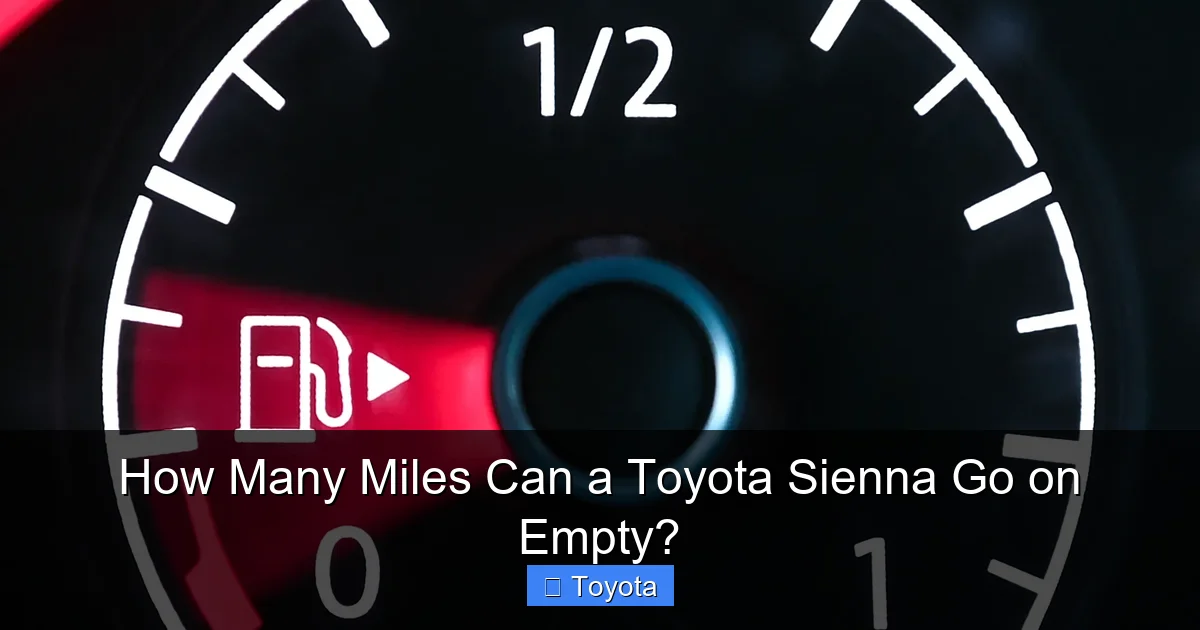
The low fuel warning light typically comes on when there are about 2 to 3 gallons of fuel left in the tank. This isn’t random; it’s a built-in safety buffer designed to give you enough time to find a gas station without risking damage to your vehicle. Toyota engineers this buffer with real-world driving in mind, so you’re not left guessing when you should refuel.
How the Fuel Gauge and Warning Light Work
Your Sienna’s fuel gauge gives you a visual estimate of how much fuel remains. It’s not perfectly precise—especially as the tank nears empty—but it’s a reliable indicator when used correctly. The low fuel warning light usually activates when the fuel level drops to around 10–15% of the tank’s capacity.
For a 19-gallon tank, that means the light comes on when there’s roughly 1.9 to 2.8 gallons left. At that point, your Sienna still has some range, but it’s not meant to be driven indefinitely. Think of the warning light as a friendly nudge: “Hey, it’s time to find gas soon.”
It’s also worth noting that the fuel gauge can be affected by factors like driving uphill, carrying heavy loads, or idling for long periods. These conditions increase fuel consumption, which means your actual range on empty might be shorter than average.
Hybrid vs. Gas-Only Models: What’s the Difference?
One major change in the Toyota Sienna lineup came in 2021, when Toyota made the switch to a standard hybrid powertrain across all trims. Prior to that, the Sienna was powered by a traditional V6 gasoline engine. This shift has a big impact on fuel efficiency—and, by extension, how far you can go on empty.
The 2021 and newer Sienna models are equipped with a 2.5-liter four-cylinder hybrid engine that delivers an impressive 36 miles per gallon (mpg) in the city and 36 mpg on the highway, according to EPA estimates. That’s a significant improvement over the older V6 models, which averaged around 19 mpg city and 27 mpg highway.
Because hybrid Siennas are more fuel-efficient, they can potentially go a bit farther on the same amount of reserve fuel. For example, if a 2020 Sienna gets about 23 mpg combined and has 2.5 gallons left, it could go roughly 57 miles. A 2023 hybrid Sienna, with 36 mpg combined, could theoretically go about 90 miles on the same amount of fuel—but only under ideal conditions.
However, real-world driving rarely matches EPA estimates. Traffic, weather, and driving style all play a role. So while the hybrid model offers better efficiency, you shouldn’t assume you’ll get double the range on empty.
Estimating How Far Your Sienna Can Go on Empty

Visual guide about How Many Miles Can a Toyota Sienna Go on Empty?
Image source: eduautos.com
Now let’s get to the heart of the question: how many miles can a Toyota Sienna go on empty? As mentioned earlier, the typical range after the low fuel light comes on is between 30 and 50 miles. But let’s break that down with some real math.
Assume your Sienna has 2.5 gallons of fuel remaining when the warning light activates. If your average fuel economy is around 25 mpg (a reasonable estimate for mixed driving), then:
2.5 gallons × 25 mpg = 62.5 miles
That sounds promising, right? But here’s the catch: fuel efficiency drops when you’re running low. Why? Because the fuel pump has to work harder to pull fuel from the bottom of the tank, and the engine may not run as efficiently. Plus, if you’re driving in stop-and-go traffic, uphill, or with a full load of passengers and luggage, your mileage will decrease.
In practice, most drivers report getting between 30 and 50 miles after the light comes on. Some have pushed it to 60 miles under ideal conditions—flat roads, light traffic, and steady speeds—but that’s the exception, not the rule.
Real-World Examples from Sienna Owners
To give you a better sense of what to expect, let’s look at some real-world experiences from Toyota Sienna owners:
– **Sarah from Ohio:** “My 2022 Sienna hybrid had the low fuel light come on during a road trip. I was about 40 miles from the next gas station, and I made it with just a few miles to spare. I was nervous the whole way, but it worked out.”
– **Mike from Texas:** “I have a 2018 Sienna, and I once drove about 45 miles after the light came on. I was on the highway, driving at a steady 65 mph, and the terrain was flat. But I wouldn’t do it again—it’s just not worth the risk.”
– **Linda from California:** “I learned the hard way. My 2019 Sienna sputtered and died about 25 miles after the light came on. I was in heavy traffic, and the engine was under strain. I had to call a tow truck, and it cost me $150.”
These stories highlight an important point: your experience may vary. While some drivers get lucky, others aren’t so fortunate. The safest approach is to treat the low fuel warning as a signal to refuel—not a challenge to see how far you can go.
Factors That Affect Your Range on Empty
Several variables can influence how far your Sienna can travel after the fuel light comes on. Here are the most important ones:
– **Driving Conditions:** Highway driving at a steady speed is more fuel-efficient than city driving with frequent stops and starts. If you’re stuck in traffic or driving uphill, your range will shrink.
– **Vehicle Load:** A fully loaded Sienna with passengers, luggage, and roof cargo will consume more fuel than an empty one. Every extra pound adds up.
– **Weather:** Cold weather can reduce fuel efficiency by up to 15%, especially during short trips when the engine doesn’t reach optimal temperature. Winter also means using heaters and defrosters, which draw power.
– **Tire Pressure:** Underinflated tires increase rolling resistance, which lowers fuel economy. Check your tire pressure regularly, especially before long trips.
– **Driving Style:** Aggressive driving—rapid acceleration, hard braking, and high speeds—burns fuel faster. Smooth, gradual driving helps conserve gas.
– **Air Conditioning Use:** Running the A/C puts extra load on the engine, reducing efficiency. On hot days, this can cut your range by 10% or more.
By understanding these factors, you can make smarter decisions about when to refuel and how to maximize your Sienna’s range—without risking a breakdown.
The Risks of Driving on Empty
Visual guide about How Many Miles Can a Toyota Sienna Go on Empty?
Image source: motorbiscuit.com
While it might be tempting to push your Sienna to its limits, driving on empty comes with serious risks. It’s not just about running out of gas—it’s about the long-term damage you could be doing to your vehicle.
Fuel Pump Damage
The most common consequence of running your Sienna on fumes is damage to the fuel pump. As mentioned earlier, the fuel pump is submerged in gasoline, which keeps it cool and lubricated. When the fuel level drops too low, the pump is exposed to air, causing it to overheat.
Over time, this can lead to premature wear, reduced performance, and eventual failure. Replacing a fuel pump isn’t cheap—expect to pay between $500 and $1,000, including parts and labor. And that’s not counting the cost of towing if your Sienna breaks down on the road.
Sediment and Debris in the Fuel System
Fuel tanks aren’t perfectly clean. Over time, dirt, rust, and other debris can settle at the bottom. When you drive on empty, the fuel pump may suck up this sediment, which can clog fuel filters, injectors, and even damage the engine.
This is especially true for older Siennas or vehicles that haven’t been maintained regularly. A clogged fuel filter can reduce engine performance, cause rough idling, and lead to costly repairs.
Engine Stalling and Safety Hazards
Running out of gas doesn’t just leave you stranded—it can also be dangerous. If your Sienna stalls in traffic, you could be at risk of a collision. On highways, pulling over safely can be difficult, especially at night or in bad weather.
Additionally, modern vehicles like the Sienna rely on electronic systems that require consistent fuel pressure. A sudden loss of fuel can cause the engine to shut down abruptly, disabling power steering and brakes, which makes the vehicle harder to control.
Voiding Your Warranty
While Toyota doesn’t explicitly void warranties for driving on empty, consistently running your Sienna with very low fuel could be considered neglect. If a mechanic determines that fuel pump failure was caused by low fuel levels, Toyota may deny warranty coverage for the repair.
It’s always better to follow the manufacturer’s recommendations and keep your fuel level above ¼ tank whenever possible.
Tips to Maximize Your Sienna’s Range (Safely)
Visual guide about How Many Miles Can a Toyota Sienna Go on Empty?
Image source: i.ytimg.com
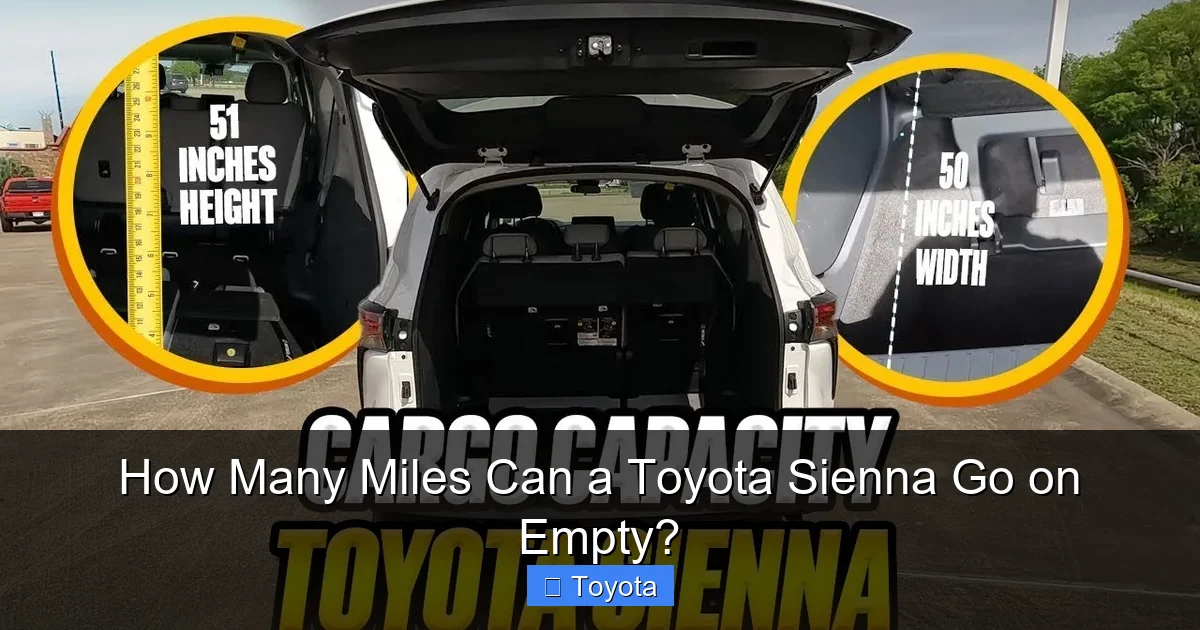
If you find yourself with a low fuel warning light and no gas station in sight, there are ways to stretch your remaining fuel—without risking damage to your vehicle.
Use Eco Mode
Most Toyota Siennas come equipped with an Eco Mode button. When activated, it adjusts the throttle response, air conditioning, and other systems to improve fuel efficiency. This can help you squeeze a few extra miles out of your remaining fuel.
To use it, simply press the Eco button on the dashboard. You’ll notice the accelerator feels less responsive, but that’s by design—it encourages smoother, more efficient driving.
Drive Smoothly and Avoid Idling
Aggressive driving burns fuel fast. Instead, accelerate gradually, maintain a steady speed, and anticipate stops to avoid hard braking. Use cruise control on the highway to maintain consistent speed and reduce fuel consumption.
Also, avoid idling for long periods. If you’re waiting for someone or stuck in traffic, consider turning off the engine if it’s safe to do so. Idling wastes fuel and offers no benefit.
Reduce Weight and Drag
The heavier your Sienna, the more fuel it uses. Remove unnecessary items from the cabin and trunk, especially heavy ones like sports equipment or tools. If you have a roof rack or cargo box, take it off when not in use—it creates wind resistance and lowers efficiency.
Keep Tires Properly Inflated
Underinflated tires increase rolling resistance, which means your engine has to work harder. Check your tire pressure monthly and before long trips. The recommended pressure for your Sienna is usually listed on a sticker inside the driver’s door jamb.
Plan Your Route
If you’re low on fuel, use your GPS or smartphone app to find the nearest gas station. Some apps, like Waze or Google Maps, show real-time fuel prices and station locations. Planning ahead can save you time, stress, and money.
When to Refuel: Best Practices for Sienna Owners
The best way to avoid the stress of a low fuel warning is to refuel before it happens. Here are some simple guidelines to follow:
– **Refuel at ¼ Tank:** Make it a habit to stop for gas when your fuel gauge hits the ¼ mark. This gives you plenty of buffer and reduces the risk of running out.
– **Fill Up Before Long Trips:** Always start a road trip with a full tank. This ensures you have maximum range and peace of mind.
– **Monitor Fuel Economy:** Use your Sienna’s trip computer to track your average mpg. If you notice a sudden drop, it could indicate a problem with the fuel system or tires.
– **Keep a Fuel Log:** For frequent travelers, keeping a simple log of fill-ups and mileage can help you predict when you’ll need gas next.
By following these habits, you’ll protect your Sienna’s fuel system, save money on repairs, and avoid the hassle of being stranded.
Conclusion: Don’t Test Your Luck
So, how many miles can a Toyota Sienna go on empty? The answer is: usually 30 to 50 miles after the low fuel warning light comes on. But that doesn’t mean you should try to hit that limit. The risks—fuel pump damage, engine stalling, and costly repairs—far outweigh the convenience of skipping a gas stop.
Your Toyota Sienna is built to be reliable, efficient, and safe. Treat it well by refueling early, driving smart, and maintaining it regularly. That way, you’ll enjoy smooth rides, fewer breakdowns, and a vehicle that lasts for hundreds of thousands of miles.
Remember: the low fuel light is a warning, not a challenge. When it comes on, start looking for a gas station—don’t wait until it’s too late. Your Sienna, your passengers, and your wallet will thank you.
Frequently Asked Questions
How many miles can a Toyota Sienna go on empty?
Most Toyota Sienna models can travel between 30 and 50 miles after the low fuel warning light comes on. This range depends on driving conditions, vehicle load, and model year.
Is it bad to drive a Toyota Sienna on empty?
Yes, driving on empty can damage the fuel pump, clog the fuel system with debris, and increase the risk of engine stalling. It’s best to refuel when the tank reaches ¼ full.
Does the hybrid Sienna go farther on empty than the gas model?
The hybrid Sienna is more fuel-efficient, so it may go slightly farther on the same amount of reserve fuel. However, real-world conditions often reduce this advantage.
What happens if my Sienna runs out of gas?
If your Sienna runs out of gas, the engine will stall, and you may need to be towed. It can also cause damage to the fuel pump and other components.
Can I use Eco Mode to extend my range on empty?
Yes, Eco Mode helps improve fuel efficiency by adjusting throttle response and climate control. It can help you get a few extra miles when fuel is low.
How often should I refuel my Toyota Sienna?
To protect your vehicle, refuel when the fuel gauge reaches ¼ tank. This prevents running low and reduces the risk of fuel system damage.