
How Many Fuel Pumps Does a Dodge Charger Have?

Contents
- 1 Key Takeaways
- 2 📑 Table of Contents
- 3 Understanding the Dodge Charger Fuel System
- 4 How Many Fuel Pumps Does a Dodge Charger Have? Model Breakdown
- 5 How the Dual Fuel Pump System Works
- 6 Symptoms of Fuel Pump Failure in a Dodge Charger
- 7 Maintaining and Upgrading Your Charger’s Fuel Pumps
- 8 Conclusion: Know Your Charger’s Fuel System
- 9 Frequently Asked Questions




The Dodge Charger typically has two fuel pumps: a primary low-pressure pump in the fuel tank and a high-pressure pump on the engine. This dual-pump system ensures consistent fuel delivery, especially in performance models like the SRT and Hellcat. Understanding this setup helps maintain optimal engine performance and fuel efficiency.
If you’re a proud Dodge Charger owner—or thinking about becoming one—you’ve probably wondered about the inner workings of this iconic American muscle car. One question that often pops up among enthusiasts and mechanics alike is: *How many fuel pumps does a Dodge Charger have?* It’s not just a technical curiosity. Understanding your Charger’s fuel delivery system can help you maintain performance, diagnose issues early, and even upgrade for more power.
The short answer? Most modern Dodge Chargers—especially those with V8 engines like the R/T, Scat Pack, SRT, and Hellcat—are equipped with **two fuel pumps**. But the full story is a bit more nuanced. Depending on the model year, engine type, and trim level, your Charger might have one or two pumps. And knowing the difference can save you time, money, and headaches down the road.
In this guide, we’ll dive deep into the fuel system of the Dodge Charger. We’ll explain how the pumps work, why Dodge uses a dual-pump setup in many models, and what you should know if you’re troubleshooting or upgrading. Whether you’re driving a 2011 Charger SE with a V6 or a 2023 Hellcat Redeye, this article will give you the knowledge you need to keep your ride running strong.
So, buckle up. Let’s pop the hood and get into the nitty-gritty of fuel delivery in one of America’s favorite performance sedans.
Key Takeaways
- Most Dodge Chargers have two fuel pumps: a low-pressure in-tank pump and a high-pressure engine-mounted pump, especially in V8 and performance variants.
- The dual-pump system supports high engine demand: It ensures adequate fuel flow under acceleration and high-load conditions.
- Older or base models may use a single pump: Four-cylinder and early V6 Chargers often rely on a single in-tank fuel pump.
- Fuel pump failure symptoms include rough idle and power loss: Recognizing these signs early can prevent engine damage.
- Regular maintenance extends pump life: Using quality fuel and replacing filters helps both pumps operate efficiently.
- Upgrading fuel pumps boosts performance: Enthusiasts often upgrade for higher horsepower builds or forced induction.
- Diagnosis requires professional tools: Testing fuel pressure and pump operation should be done with proper equipment.
📑 Table of Contents
Understanding the Dodge Charger Fuel System
Before we answer how many fuel pumps a Dodge Charger has, it helps to understand how the fuel system works as a whole. The fuel system’s job is simple: deliver the right amount of fuel, at the right pressure, to the engine’s fuel injectors. But achieving that simplicity requires a complex network of components working in harmony.
At the heart of this system are the fuel pumps. Their role is to move fuel from the tank to the engine. But not all engines need the same fuel pressure. A base-model Charger with a 3.6L V6 doesn’t demand the same fuel flow as a supercharged 6.2L Hellcat V8. That’s where the number and type of fuel pumps come into play.
Modern fuel-injected engines require high-pressure fuel to ensure precise atomization and efficient combustion. In older vehicles, a single electric fuel pump in the tank was often enough. But as engines became more powerful and fuel injection systems more advanced, automakers like Dodge had to evolve their designs.
Enter the dual-pump system. This setup uses two pumps working in tandem: one to lift fuel from the tank and another to boost it to the high pressures needed for direct injection or high-performance port injection. This not only improves performance but also enhances reliability. If one pump struggles, the other can help compensate—at least temporarily.
So, while the basic principle remains the same across all Chargers, the execution varies. Let’s break it down by engine type and model year to see exactly how many fuel pumps your Charger might have.
How Many Fuel Pumps Does a Dodge Charger Have? Model Breakdown

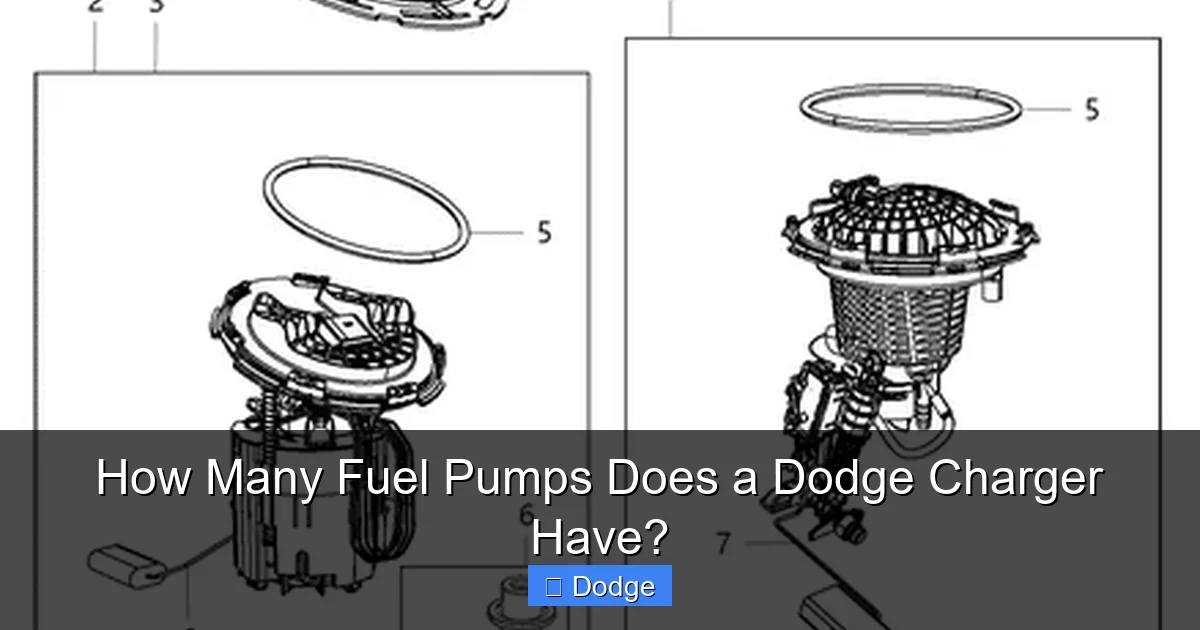
Visual guide about How Many Fuel Pumps Does a Dodge Charger Have?
Image source: d3dscwommfg45d.cloudfront.net
Now for the main event: how many fuel pumps does a Dodge Charger actually have? The answer depends on the engine and model year. Let’s go through the most common configurations.
V6 and Base V8 Models (Single Pump)
If you’re driving a Dodge Charger with a 3.6L Pentastar V6 engine—like the SE, SXT, or GT trims—you likely have a **single fuel pump**. This pump is located inside the fuel tank and is responsible for delivering fuel to the engine at the required pressure.
These models use a traditional port fuel injection system, which doesn’t require extremely high fuel pressure. The in-tank pump is usually a turbine-style electric pump that runs continuously when the ignition is on. It’s designed to be quiet, efficient, and durable under normal driving conditions.
For example, the 2015 Charger SXT with the 3.6L V6 uses a single 58 psi (pounds per square inch) fuel pump. This is sufficient for the engine’s output, which ranges from 292 to 300 horsepower depending on the year. Since there’s no supercharger or high-pressure direct injection, there’s no need for a second pump.
Similarly, early V8 models—like the 2006–2010 Charger with the 5.7L HEMI—also used a single in-tank pump. These engines produced around 340–360 horsepower and relied on port injection, so a single pump was adequate.
High-Performance V8 and Supercharged Models (Dual Pumps)
Here’s where things get interesting. Starting around 2012, Dodge began equipping its higher-performance Chargers with a **dual fuel pump system**. This includes models like the R/T, Scat Pack, SRT 392, and especially the Hellcat and Redeye variants.
These vehicles use a combination of two pumps:
1. **Low-Pressure In-Tank Pump**: This pump draws fuel from the tank and sends it to the high-pressure pump. It typically operates at around 50–60 psi.
2. **High-Pressure Engine-Mounted Pump**: Located on or near the engine, this pump boosts fuel pressure to 1,000 psi or more, depending on the application. It’s essential for direct injection systems and high-horsepower engines.
For instance, the 2015–2023 Dodge Charger SRT Hellcat uses a dual-pump system to feed its supercharged 6.2L HEMI V8, which produces over 700 horsepower. The high-pressure pump ensures that fuel injectors receive enough fuel during wide-open throttle runs, preventing lean conditions that could damage the engine.
Even non-supercharged high-output V8s, like the 6.4L Scat Pack engine (485 hp), often use a dual-pump setup. While they don’t have direct injection, the increased fuel demand under load makes the second pump beneficial for consistent performance.
Model Year Variations
It’s important to note that Dodge has refined its fuel system over the years. Earlier Chargers (pre-2011) almost universally used a single pump, regardless of engine size. But as performance demands grew, so did the complexity of the fuel system.
For example:
– **2006–2010 Charger (5.7L HEMI)**: Single in-tank pump.
– **2012–2014 Charger R/T (5.7L HEMI)**: Some models began using a dual-pump system, especially with the introduction of the 6.4L engine.
– **2015–2023 Charger (6.4L and 6.2L Supercharged)**: Standard dual-pump setup.
– **2023 Charger SRT Hellcat Redeye**: Dual pumps with upgraded high-pressure components for 797 hp.
Always check your owner’s manual or consult a Dodge service manual for your specific model and year. But as a general rule: if your Charger has a V8—especially a 6.4L or supercharged engine—it likely has two fuel pumps.
How the Dual Fuel Pump System Works
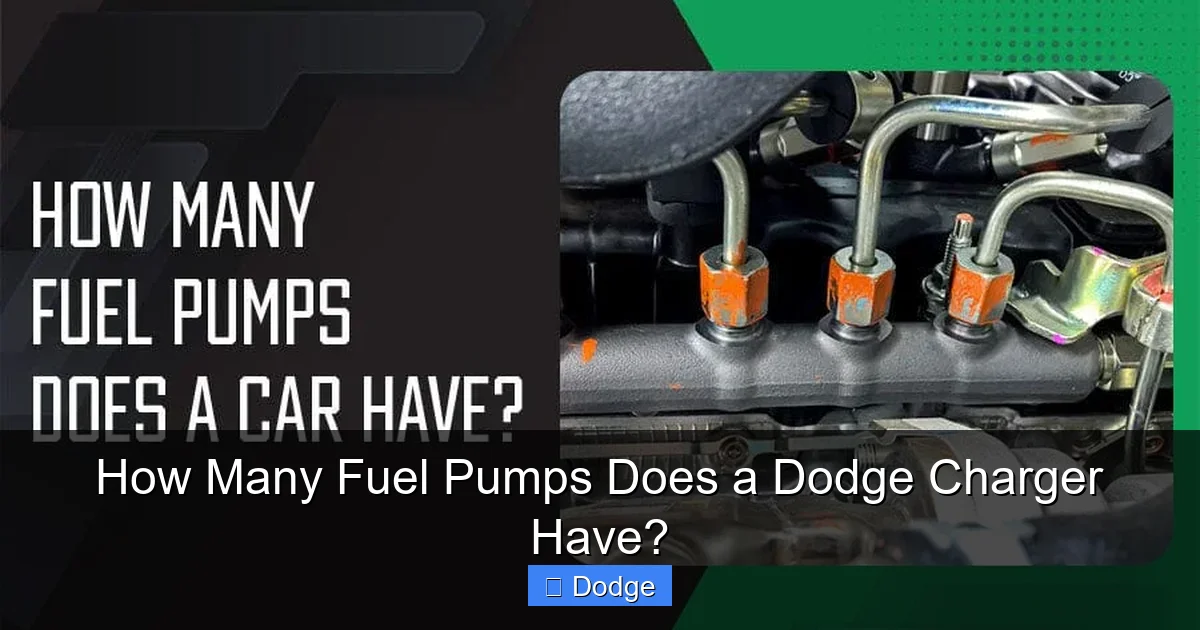
Visual guide about How Many Fuel Pumps Does a Dodge Charger Have?
Image source: goldfarbinc.com
Now that we know many Chargers have two pumps, let’s explore how they work together. The dual-pump system isn’t just about redundancy—it’s about precision and performance.
Step-by-Step Fuel Delivery Process
Here’s what happens when you turn the key and fire up your Charger:
1. **Ignition On**: When you turn the key to the “on” position (before starting), the fuel pump relay activates the in-tank pump for a few seconds. This primes the system and builds initial pressure.
2. **Low-Pressure Pump Engages**: The in-tank pump begins drawing fuel from the tank and sending it through the fuel filter to the high-pressure pump. This pump maintains a steady baseline pressure, usually around 55–60 psi.
3. **High-Pressure Pump Activation**: Once the engine starts, the high-pressure pump—driven by the engine’s camshaft—kicks in. It compresses the fuel to much higher pressures, often exceeding 1,000 psi in direct injection systems.
4. **Fuel Injection**: The high-pressure fuel is delivered to the injectors, which spray it into the combustion chambers at the exact moment needed for optimal combustion.
5. **Return System**: Excess fuel is routed back to the tank via a return line, helping to cool the system and maintain pressure.
This process happens in milliseconds and repeats thousands of times per minute. The dual-pump system ensures that fuel is always available, even under extreme conditions like hard acceleration or high-speed driving.
Why Two Pumps Are Better for Performance
You might wonder: why not just use one big pump? The answer lies in efficiency and control.
A single pump would need to generate extremely high pressure from the tank, which would generate excessive heat and wear. By splitting the job, each pump operates within its optimal range. The low-pressure pump handles volume and delivery, while the high-pressure pump focuses on compression.
This also allows for better fuel management. The engine control unit (ECU) can monitor fuel pressure at multiple points and adjust pump speed or injector timing as needed. In a Hellcat, for example, the ECU can increase high-pressure pump output during a launch to prevent fuel starvation.
Additionally, the dual-pump system improves cold-start performance. The high-pressure pump can build pressure quickly, ensuring the engine starts smoothly even in cold weather.
Symptoms of Fuel Pump Failure in a Dodge Charger
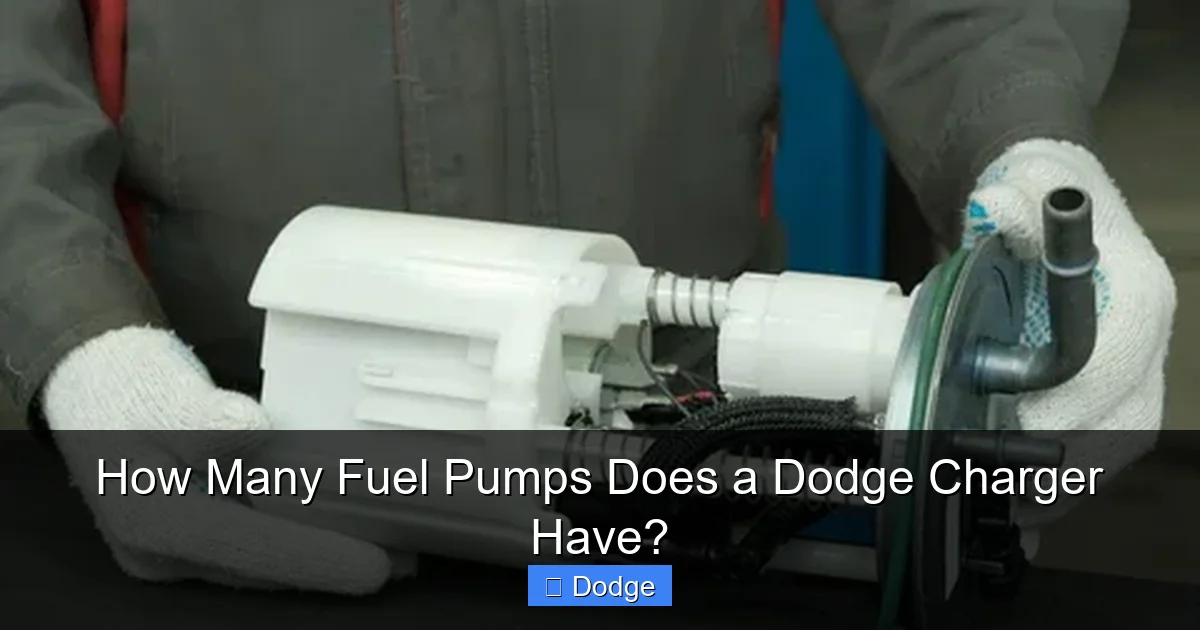
Visual guide about How Many Fuel Pumps Does a Dodge Charger Have?
Image source: cdn.shopify.com
Even the most reliable systems can fail. Knowing the signs of fuel pump trouble can help you catch problems early and avoid costly repairs.
Common Symptoms of a Failing Fuel Pump
Whether you have one or two pumps, the symptoms of failure are often similar:
– **Rough Idle or Stalling**: If the pump can’t maintain pressure, the engine may run unevenly or die at stoplights.
– **Loss of Power Under Load**: Hesitation or sputtering during acceleration is a classic sign of inadequate fuel delivery.
– **Hard Starting**: The engine may crank longer than usual before starting, especially when warm.
– **Engine Misfires**: Lean fuel mixtures can cause misfires, triggering the check engine light.
– **Whining Noise from the Fuel Tank**: A failing in-tank pump often makes a high-pitched whine or hum.
– **Reduced Fuel Economy**: A struggling pump may overwork, reducing efficiency.
In dual-pump systems, failure can be more complex. For example, if the low-pressure pump fails, the high-pressure pump may not receive enough fuel to operate. Conversely, a failed high-pressure pump can cause the engine to run rich or not start at all.
Diagnosing Fuel Pump Issues
Don’t jump to conclusions if you notice these symptoms. Other issues—like a clogged fuel filter, bad fuel injectors, or a faulty fuel pressure sensor—can mimic pump failure.
The best way to diagnose a fuel pump problem is with a **fuel pressure test**. A mechanic can connect a gauge to the fuel rail and measure pressure at idle, under load, and during acceleration. Normal pressure varies by model, but here are some general guidelines:
– **V6 Models**: 55–65 psi
– **5.7L V8**: 58–62 psi
– **6.4L and Supercharged V8**: 60–65 psi (low side), 1,000+ psi (high side)
If pressure is low or inconsistent, the pump(s) may need replacement. Always check the fuel filter and electrical connections first—these are common culprits and easier to fix.
Maintaining and Upgrading Your Charger’s Fuel Pumps
Keeping your fuel pumps in top shape doesn’t require a mechanic’s degree—just a little know-how and regular care.
Routine Maintenance Tips
– **Use Quality Fuel**: Always fill up with Top Tier gasoline. It contains detergents that keep injectors and pumps clean.
– **Replace the Fuel Filter**: Most Chargers have a replaceable fuel filter (usually every 30,000–60,000 miles). A clogged filter forces the pump to work harder.
– **Avoid Running on Empty**: Letting your fuel level drop below 1/4 tank can cause the pump to overheat and wear out prematurely.
– **Listen for Unusual Noises**: A whining or grinding sound from the rear of the car could indicate pump trouble.
Upgrading for Performance
If you’re modifying your Charger—adding a supercharger, turbo, or high-flow injectors—you may need to upgrade your fuel pumps.
For example:
– **Single-Pump Upgrades**: V6 owners can install a higher-flow in-tank pump (like a Walbro 255 LPH) for mild power increases.
– **Dual-Pump Upgrades**: Hellcat and Scat Pack owners often upgrade both pumps for builds over 800 hp. Popular options include dual Walbro 450 LPH pumps or dedicated high-pressure pumps from companies like JMS or Fuelab.
– **Fuel System Management**: Upgraded pumps should be paired with a fuel pressure regulator and ECU tuning to ensure proper fuel delivery.
Always consult a performance shop or tuner before making modifications. Running too much fuel can be just as harmful as too little.
Conclusion: Know Your Charger’s Fuel System
So, how many fuel pumps does a Dodge Charger have? The answer isn’t one-size-fits-all. Base models with V6 engines typically use a single in-tank pump, while high-performance V8 and supercharged variants rely on a dual-pump system for optimal power and reliability.
Understanding this difference helps you maintain your Charger more effectively, diagnose issues faster, and make smarter upgrades. Whether you’re cruising in a Charger SXT or tearing up the track in a Hellcat, your fuel pumps are working hard to keep you moving.
By following routine maintenance, using quality fuel, and paying attention to warning signs, you can extend the life of your pumps and keep your Charger running at its best. And if you’re ever in doubt, don’t hesitate to consult a certified Dodge technician.
After all, your Charger isn’t just a car—it’s a performance machine. And like any machine, it deserves the right care.
Frequently Asked Questions
Does every Dodge Charger have two fuel pumps?
No, not every Charger has two fuel pumps. Base models with V6 engines typically use a single in-tank pump, while high-performance V8 and supercharged models often have a dual-pump system.
Can I drive my Charger if one fuel pump fails?
Driving with a failed pump is not recommended. It can cause engine damage, stalling, or unsafe driving conditions. Have it inspected and repaired immediately.
How often should I replace the fuel pump in my Charger?
Fuel pumps can last 100,000 miles or more with proper care. Replace them only if they fail or during major engine modifications that require higher fuel flow.
What happens if the high-pressure pump fails in a Hellcat?
A failed high-pressure pump can prevent the engine from starting or cause severe power loss. The ECU may also trigger a limp mode to protect the engine.
Can I upgrade my Charger’s fuel pumps myself?
While possible, upgrading fuel pumps—especially in dual-pump systems—requires mechanical skill and tuning knowledge. It’s best done by a professional.
Is it safe to run aftermarket fuel pumps in a Dodge Charger?
Yes, as long as they’re compatible and properly installed. Use reputable brands and ensure your fuel system and ECU are tuned to handle the increased flow.


