
How Many Catalytic Converters Are in a Toyota 4runner?

The number of catalytic converters in a Toyota 4Runner depends on the model year, engine size, and emissions standards. Most modern 4Runners have two or more catalytic converters to meet strict environmental regulations. Understanding your vehicle’s setup helps with maintenance, repairs, and compliance.
Key Takeaways
- Most Toyota 4Runners have two catalytic converters: one before the engine (pre-cat) and one after (main cat), especially in V6 and V8 models.
- Older models (pre-2003) may have only one catalytic converter: typically located under the vehicle near the exhaust manifold.
- V8-powered 4Runners often have four catalytic converters: two per bank in dual exhaust systems, common in 2003–2009 models.
- Emissions regulations drive the number of cats: stricter laws in the U.S. and California led to more converters in newer models.
- Catalytic converter theft is a growing concern: 4Runners are prime targets due to their high ground clearance and valuable precious metals.
- Replacing a catalytic converter can be expensive: costs range from $1,000 to $3,000+ depending on the model and labor.
- Regular maintenance helps prevent failure: avoid short trips, use quality fuel, and fix engine issues promptly to extend converter life.
📑 Table of Contents
- How Many Catalytic Converters Are in a Toyota 4Runner?
- Understanding Catalytic Converters: Why They Matter
- How Many Catalytic Converters in a Toyota 4Runner by Model Year
- Why Does the Number of Catalytic Converters Vary?
- Signs of a Failing Catalytic Converter in Your 4Runner
- Replacing a Catalytic Converter: What to Expect
- Catalytic Converter Theft: A Growing Threat to 4Runner Owners
- Conclusion: Know Your 4Runner’s Emissions System
How Many Catalytic Converters Are in a Toyota 4Runner?
If you own or are considering buying a Toyota 4Runner, you might be wondering: how many catalytic converters does it actually have? It’s not just a technical detail—it affects your vehicle’s performance, emissions compliance, maintenance costs, and even its vulnerability to theft. The answer isn’t one-size-fits-all. The number of catalytic converters in a Toyota 4Runner varies significantly based on the model year, engine configuration, and even the region where it was sold.
Catalytic converters are essential components of your vehicle’s exhaust system. They reduce harmful emissions by converting toxic gases like carbon monoxide, nitrogen oxides, and hydrocarbons into less harmful substances like carbon dioxide and water vapor. As environmental regulations have tightened over the decades, automakers like Toyota have had to adapt by installing more sophisticated and numerous emissions control systems. The 4Runner, known for its rugged off-road capability and long-lasting reliability, has evolved alongside these changes.
In this guide, we’ll break down exactly how many catalytic converters you can expect in different Toyota 4Runner models, why the number varies, and what it means for you as an owner. Whether you’re troubleshooting a check engine light, planning a repair, or just curious about your SUV’s emissions system, this article will give you the full picture.
Understanding Catalytic Converters: Why They Matter
Visual guide about How Many Catalytic Converters Are in a Toyota 4runner?
Image source: vehiclefreak.com
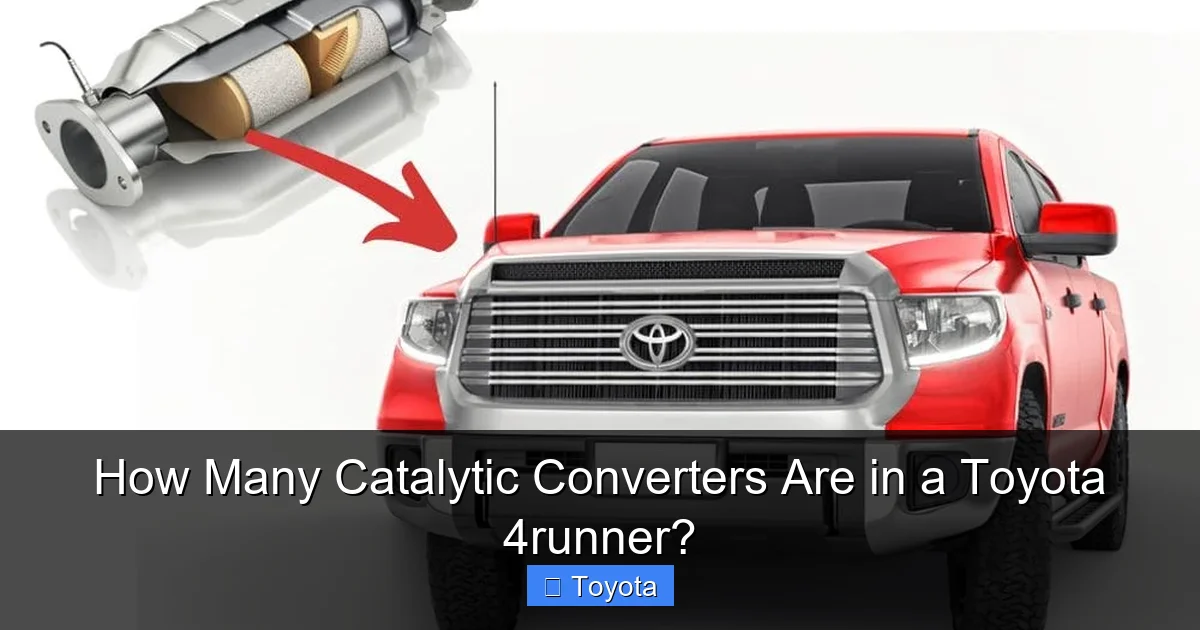
Before diving into the specifics of the 4Runner, it helps to understand what catalytic converters do and why they’re so important. Think of them as the lungs of your vehicle’s exhaust system. Just like lungs filter air, catalytic converters filter harmful pollutants before they exit the tailpipe.
There are two main types of catalytic converters: two-way and three-way. Two-way converters, used in older vehicles, primarily handle carbon monoxide and hydrocarbons. Three-way converters, standard in modern cars, also reduce nitrogen oxides—making them far more effective at cleaning exhaust.
Inside each converter is a ceramic honeycomb structure coated with precious metals like platinum, palladium, and rhodium. These metals act as catalysts, sparking chemical reactions that transform pollutants into safer gases. Because these metals are valuable, catalytic converters have become prime targets for thieves—especially on vehicles like the 4Runner that sit high off the ground and are easy to access.
The number of catalytic converters in a vehicle depends on several factors: engine size, number of exhaust banks, emissions standards, and whether the vehicle uses a dual exhaust system. For example, a V6 engine typically has two exhaust manifolds (one per bank), which may each feed into their own catalytic converter. A V8, with four exhaust manifolds, often has even more.
In the case of the Toyota 4Runner, the story gets more interesting because the SUV has used different engines over its long production history—from inline-fours to V6s and even V8s. Each change brought new emissions challenges and solutions.
How Many Catalytic Converters in a Toyota 4Runner by Model Year
Visual guide about How Many Catalytic Converters Are in a Toyota 4runner?
Image source: i0.wp.com
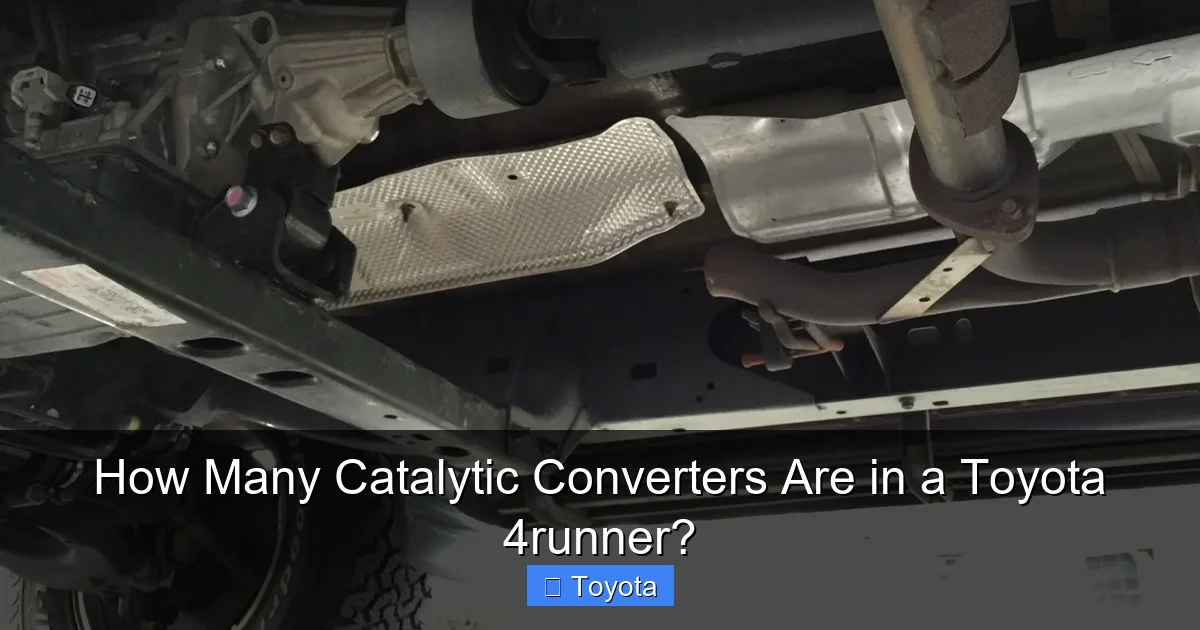
Now let’s get into the nitty-gritty: how many catalytic converters does your specific 4Runner have? The answer depends heavily on the generation and engine type. Here’s a breakdown by major model years and engine configurations.
First Generation (1984–1989): One or Two Converters
The earliest 4Runners were based on the compact Toyota pickup and came with either a 2.4L inline-four or a 3.0L V6 engine. These models were simpler in design and emissions control.
Most first-gen 4Runners had just one catalytic converter, typically located under the vehicle near the transmission. However, some later models in this generation, especially those sold in California or other strict emissions states, may have had a second converter or a more advanced two-way system.
Because emissions standards were less strict in the 1980s, Toyota didn’t need multiple converters to meet regulations. These early systems were effective for their time but would fail modern emissions tests.
Second Generation (1990–1995): One to Two Converters
The second-generation 4Runner introduced more refined engines, including the 2.4L 22R-E inline-four and the 3.0L 3VZ-E V6. Emissions standards were tightening, especially in California, which began requiring more advanced systems.
Most second-gen 4Runners still had one main catalytic converter, but some V6 models—particularly those with dual exhaust or sold in California—featured a second converter or a pre-catalytic converter near the engine (often called a “pre-cat” or “manifold converter”).
These pre-cats were designed to start working quickly after startup, reducing cold-start emissions. While not universal, they became more common as Toyota worked to meet stricter regulations.
Third Generation (1996–2002): Two Catalytic Converters Standard
The third-generation 4Runner marked a major shift. Toyota introduced the 3.4L 5VZ-FE V6 engine, which became the standard powerplant. This engine had two exhaust manifolds—one on each side of the V6 block—and each typically fed into its own catalytic converter.
As a result, most third-gen 4Runners have two catalytic converters: one on the driver’s side and one on the passenger side, located just after the exhaust manifolds. These are often referred to as “manifold converters” or “pre-cats” because they’re mounted close to the engine.
Some models also have a third converter further back in the exhaust system, near the muffler. This “main” or “underbody” converter provides additional cleaning and helps meet federal and state emissions standards.
So, depending on the exact model and emissions package, a third-gen 4Runner could have two or three catalytic converters. California and other CARB-compliant models are more likely to have three.
Fourth Generation (2003–2009): Up to Four Catalytic Converters
The fourth-generation 4Runner brought a major change: the introduction of the 4.7L 2UZ-FE V8 engine. This powerful engine came with a dual exhaust system—meaning two separate exhaust pipes, one for each bank of cylinders.
Each bank has its own exhaust manifold and catalytic converter. So, right away, that’s two converters near the engine. But Toyota didn’t stop there. Many V8 4Runners also have a second set of catalytic converters further downstream—one in each exhaust pipe before the muffler.
That means some fourth-gen 4Runners, especially V8 models, can have up to four catalytic converters: two pre-cats and two main cats. This setup ensures maximum emissions reduction and compliance with strict 2000s-era regulations.
Even the 4.0L V6 models in this generation typically have two catalytic converters—one per bank—though they don’t usually have the downstream secondary converters unless they’re CARB-compliant.
Fifth Generation (2010–Present): Two to Four Converters
The current-generation 4Runner continues to use the 4.0L V6 engine (1GR-FE), which has two exhaust banks. Like previous V6 models, it typically has two catalytic converters mounted near the engine.
However, due to even stricter emissions standards—especially in states like California—many fifth-gen 4Runners also include additional underbody converters. Some models have a total of four: two pre-cats and two main cats.
Toyota has also refined the design over the years. For example, some newer 4Runners use “close-coupled” converters that are mounted directly to the exhaust manifold for faster light-off (activation) during cold starts. This improves emissions performance and fuel efficiency.
Additionally, the 4Runner’s high ground clearance and popularity in rural and off-road areas make it a frequent target for catalytic converter theft. Thieves can slide underneath and cut out the converters in minutes, especially if they’re not protected.
Why Does the Number of Catalytic Converters Vary?
Visual guide about How Many Catalytic Converters Are in a Toyota 4runner?
Image source: mufflerexpress.com
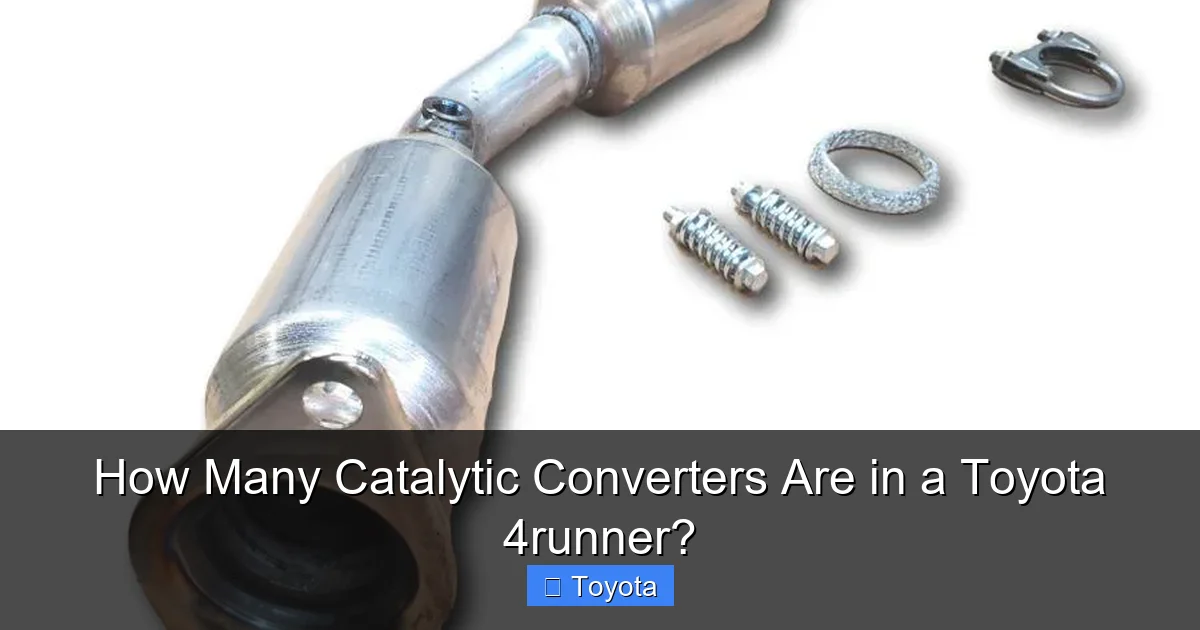
So why do some 4Runners have one, two, three, or even four catalytic converters? The answer lies in a combination of engineering, regulation, and market demands.
Emissions Regulations Drive Design
The biggest factor is emissions standards. In the U.S., the Environmental Protection Agency (EPA) sets federal limits on vehicle emissions, but states like California can set even stricter rules through the California Air Resources Board (CARB).
As these standards have become more stringent—especially with the introduction of Tier 2 and Tier 3 emissions standards in the 2000s—automakers have had to install more advanced and numerous emissions control systems.
For example, a 4Runner sold in California in 2005 had to meet CARB’s LEV-II (Low Emission Vehicle II) standards, which required significantly lower emissions than a federal-only model. To comply, Toyota added more catalytic converters and improved their efficiency.
Engine Configuration Matters
The number of cylinders and exhaust banks directly affects how many converters are needed. A V6 engine has two banks of cylinders, so it naturally has two exhaust manifolds. Each manifold can feed into its own catalytic converter, doubling the number compared to an inline-four.
A V8 engine, with four exhaust manifolds (two per bank in a dual exhaust setup), can require even more converters. That’s why V8 4Runners often have four catalytic converters—two per side.
Dual Exhaust Systems Increase Converter Count
Vehicles with dual exhaust systems—like the V8 4Runner—have two separate exhaust paths. Each path typically includes its own catalytic converter(s). This not only improves emissions but also enhances performance and sound.
Even some V6 models with dual exhaust may have two converters, though they’re less common than in V8s.
Pre-Cats vs. Main Cats: Two Stages of Cleaning
Modern vehicles often use a two-stage catalytic system:
– **Pre-catalytic converters (pre-cats):** Mounted close to the engine, these start working quickly after startup to reduce cold-start emissions. They handle the initial wave of pollutants.
– **Main catalytic converters:** Located further downstream, these provide additional cleaning and ensure emissions stay within legal limits under all driving conditions.
Using both types allows for more efficient and thorough emissions control. It’s why many 4Runners have at least two converters—even if they’re not immediately obvious.
Signs of a Failing Catalytic Converter in Your 4Runner
Knowing how many catalytic converters your 4Runner has is useful, but it’s even more important to recognize when one might be failing. A malfunctioning converter can hurt performance, increase emissions, and trigger the check engine light.
Common Symptoms of Catalytic Converter Problems
– **Check Engine Light:** The most common sign. Your 4Runner’s onboard computer monitors converter efficiency. If it detects a drop in performance, it will trigger a trouble code (like P0420 or P0430).
– **Reduced Engine Performance:** A clogged converter can restrict exhaust flow, causing sluggish acceleration, poor fuel economy, and even engine stalling.
– **Rotten Egg Smell:** A sulfur or rotten egg odor from the exhaust usually indicates a failing converter. The catalyst isn’t processing hydrogen sulfide properly.
– **Excessive Heat Under the Vehicle:** Catalytic converters get very hot when working. If one is clogged, it may overheat and cause visible glowing or damage to nearby components.
– **Failed Emissions Test:** If your 4Runner fails a smog check, a faulty catalytic converter is often the culprit—especially in states with strict emissions laws.
What Causes Catalytic Converter Failure?
Several factors can shorten the life of your catalytic converters:
– **Engine Misfires:** Unburned fuel entering the exhaust can overheat and melt the catalyst.
– **Oil or Coolant Leaks:** Burning oil or coolant contaminates the catalyst, reducing its effectiveness.
– **Short Trips:** Frequent short drives don’t allow the converter to reach optimal operating temperature, leading to buildup and inefficiency.
– **Poor Fuel Quality:** Low-quality or contaminated fuel can damage the catalyst over time.
– **Physical Damage:** Off-roading or driving over rough terrain can crack or crush the converter’s internal structure.
How to Extend the Life of Your Catalytic Converters
– **Fix engine problems promptly:** Address misfires, leaks, or sensor issues as soon as they arise.
– **Use high-quality fuel:** Stick to top-tier gasoline to minimize deposits.
– **Avoid short trips when possible:** Let the engine run long enough to warm up the converter.
– **Regular maintenance:** Follow Toyota’s recommended service schedule, including spark plug and oxygen sensor replacements.
– **Protect against theft:** Park in well-lit areas, install a catalytic converter shield, or etch your VIN on the converter.
Replacing a Catalytic Converter: What to Expect
If your 4Runner’s catalytic converter fails, replacement is often necessary—especially if you live in an emissions-testing state. But it’s not cheap.
Cost of Replacement
The cost to replace a catalytic converter in a Toyota 4Runner varies widely:
– **OEM (Original Equipment Manufacturer) converter:** $1,500–$3,500+
– **Aftermarket converter:** $800–$2,000
– **Labor:** $100–$300 (depending on shop rates and accessibility)
V8 models with four converters can cost significantly more, especially if multiple units need replacement.
OEM vs. Aftermarket: Which to Choose?
– **OEM converters** are made by Toyota and guaranteed to meet emissions standards. They’re the best choice for CARB-compliant vehicles and come with a warranty.
– **Aftermarket converters** are cheaper but vary in quality. Look for EPA- or CARB-compliant units from reputable brands like MagnaFlow, Walker, or Bosal.
Note: In California and other CARB states, only CARB-compliant aftermarket converters are legal for replacement.
Can You Drive with a Bad Catalytic Converter?
Technically, yes—but it’s not recommended. Driving with a failed converter can:
– Trigger the check engine light
– Reduce fuel efficiency
– Damage other components (like oxygen sensors)
– Cause your vehicle to fail emissions tests
– In extreme cases, lead to engine damage from backpressure
If you suspect a problem, get it diagnosed quickly.
Catalytic Converter Theft: A Growing Threat to 4Runner Owners
One of the biggest concerns for 4Runner owners today isn’t mechanical failure—it’s theft. Catalytic converters contain precious metals like platinum, palladium, and rhodium, which can be worth hundreds of dollars per unit when scrapped.
Why Are 4Runners Targeted?
– **High ground clearance:** Makes it easy for thieves to slide underneath and cut out the converter.
– **Popular and common:** More 4Runners on the road mean more opportunities.
– **Valuable converters:** V6 and V8 models have multiple converters, increasing the payout.
How to Protect Your 4Runner
– **Install a catalytic converter shield:** Metal plates that bolt over the converter, making it harder to access.
– **Etch your VIN:** Makes the converter traceable and less attractive to thieves.
– **Park smart:** Choose well-lit, secure areas or garages.
– **Use motion-sensor lights or alarms:** Deter thieves with visible security measures.
– **Consider insurance:** Some comprehensive auto policies cover catalytic converter theft.
Conclusion: Know Your 4Runner’s Emissions System
So, how many catalytic converters are in a Toyota 4Runner? The answer depends on your model year, engine, and emissions package. Most modern 4Runners have two to four converters, with V8 models often featuring four. Older models may have just one.
Understanding your vehicle’s setup helps you maintain it properly, recognize problems early, and protect against theft. Whether you’re troubleshooting a check engine light or planning a repair, knowing the role and location of your catalytic converters is key.
The 4Runner’s reputation for durability and off-road capability is well-earned—but its emissions system is just as important as its suspension or drivetrain. By staying informed and proactive, you can keep your 4Runner running clean, efficient, and legally compliant for years to come.
Frequently Asked Questions
How many catalytic converters does a 2005 Toyota 4Runner V8 have?
A 2005 Toyota 4Runner with the 4.7L V8 engine typically has four catalytic converters: two pre-cats near the engine (one per bank) and two main cats further downstream in the dual exhaust system.
Can a Toyota 4Runner run with a bad catalytic converter?
Yes, but it’s not recommended. A failed converter can reduce performance, hurt fuel economy, and cause the check engine light to stay on. It may also lead to engine damage if left unaddressed.
Why do some 4Runners have more catalytic converters than others?
The number depends on engine type, emissions standards, and whether the vehicle has a dual exhaust system. V8 models and CARB-compliant vehicles usually have more converters to meet stricter regulations.
How much does it cost to replace a catalytic converter on a 4Runner?
Replacement costs range from $800 to $3,500+, depending on whether you use OEM or aftermarket parts, how many converters need replacing, and labor rates in your area.
Are catalytic converters on 4Runners easy to steal?
Yes, due to the vehicle’s high ground clearance. Thieves can quickly slide underneath and cut them out. Installing a shield or etching your VIN can help deter theft.
What causes catalytic converters to fail in a Toyota 4Runner?
Common causes include engine misfires, oil or coolant leaks, short trips that prevent proper heating, and physical damage from off-roading or road debris.