How Long to Leave a Battery Charger on Car
Knowing how long to leave a battery charger on your car is essential for battery health and safety. Charging too little won’t restore power, while overcharging can damage the battery or even cause hazards. This guide breaks down ideal charging times, charger types, and expert tips to keep your car battery in top shape.
In This Article
- 1 Key Takeaways
- 2 📑 Table of Contents
- 3 How Long to Leave a Battery Charger on Car: A Complete Guide
- 4 Understanding Car Batteries and Charging Basics
- 5 Types of Battery Chargers and Their Impact on Charging Time
- 6 How Long to Leave a Battery Charger on Car: General Guidelines
- 7 Best Practices for Safe and Effective Charging
- 8 Special Considerations for Different Situations
- 9 When to Replace Instead of Recharge
- 10 Conclusion
- 11 Frequently Asked Questions
- 11.1 How long should I leave a battery charger on a completely dead car battery?
- 11.2 Can I leave a battery charger on overnight?
- 11.3 Is it safe to charge a car battery while it’s still in the car?
- 11.4 How do I know if my battery charger is working?
- 11.5 Can overcharging a car battery cause it to explode?
- 11.6 Should I charge my car battery at 2 amps or 10 amps?
Key Takeaways
- Charging time depends on battery size and charger amperage: A 12V car battery typically takes 4 to 12 hours to fully charge, depending on its capacity and the charger’s output.
- Use a smart charger for automatic shutoff: These chargers detect when the battery is full and stop charging, preventing overcharging and extending battery life.
- Never leave a trickle charger on indefinitely: Even low-amp chargers can overcharge if left connected too long—monitor or use a timer.
- Check battery voltage before and after charging: A fully charged battery reads 12.6V or higher; below 12.4V means it needs more time.
- Avoid fast charging unless necessary: High-amp chargers can heat up the battery and reduce its lifespan if used frequently.
- Charge in a well-ventilated area: Batteries release gases during charging, so proper airflow reduces the risk of explosion.
- Regular maintenance prevents deep discharges: Keeping your battery charged between uses reduces the need for long charging sessions.
📑 Table of Contents
- How Long to Leave a Battery Charger on Car: A Complete Guide
- Understanding Car Batteries and Charging Basics
- Types of Battery Chargers and Their Impact on Charging Time
- How Long to Leave a Battery Charger on Car: General Guidelines
- Best Practices for Safe and Effective Charging
- Special Considerations for Different Situations
- When to Replace Instead of Recharge
- Conclusion
How Long to Leave a Battery Charger on Car: A Complete Guide
You’re ready to hit the road, but your car won’t start. The dashboard lights flicker weakly, and the engine cranks slowly—classic signs of a dead or weak battery. You grab your battery charger, hook it up, and now you’re wondering: How long should I leave this thing on? It’s a common question, and the answer isn’t always straightforward. Charging your car battery the right way can mean the difference between a quick fix and a costly replacement.
Leaving a battery charger on for too short a time might not fully recharge your battery, leaving you stranded again. On the other hand, leaving it on too long—especially with the wrong type of charger—can lead to overcharging, overheating, and even battery damage. The good news? With a little knowledge and the right tools, you can charge your car battery safely and effectively. This guide will walk you through everything you need to know about how long to leave a battery charger on your car, from understanding charger types to recognizing when your battery is truly full.
Understanding Car Batteries and Charging Basics
How Car Batteries Work
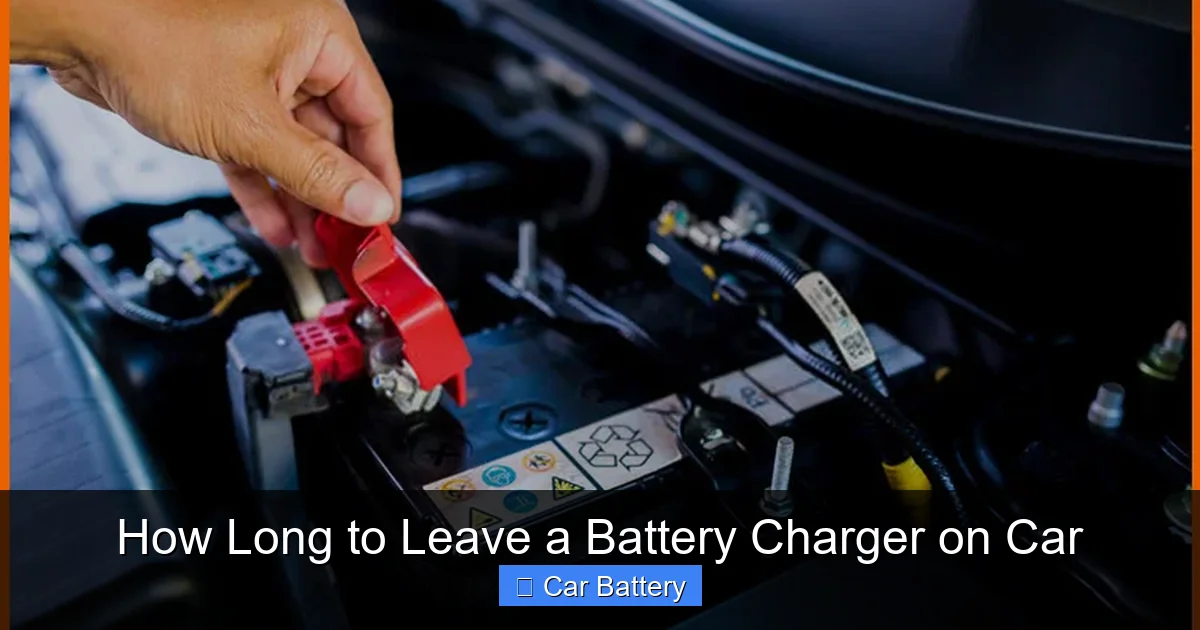
Your car’s battery is a rechargeable lead-acid unit that stores electrical energy and delivers it to start the engine and power accessories when the engine is off. Most modern cars use a 12-volt battery, which consists of six cells, each producing about 2.1 volts. When you turn the key, the battery sends a burst of power to the starter motor, which cranks the engine. Once the engine runs, the alternator takes over, recharging the battery and powering the electrical system.
Visual guide about How Long to Leave a Battery Charger on Car
Image source: autocarelabs.com
Over time, batteries lose their ability to hold a charge due to sulfation (a buildup of lead sulfate crystals), extreme temperatures, or simply age. A healthy battery should maintain a voltage of 12.6 volts or higher when fully charged and at rest (not being used or charged). If the voltage drops below 12.4 volts, the battery is partially discharged. Below 12.0 volts, it’s considered deeply discharged and may struggle to start your car.
Why Charging Matters
Charging your car battery restores the chemical energy needed to produce electricity. But not all charging is created equal. The time it takes—and the method you use—can affect both the battery’s performance and its lifespan. A slow, steady charge is generally better for battery health than a quick, high-powered jolt. That’s why understanding how long to leave a battery charger on your car is so important.
For example, if your battery is only slightly drained (say, from leaving the lights on overnight), a few hours on a low-amp charger might be enough. But if the battery is completely dead, it could take 8 to 12 hours or more to fully recharge. Rushing the process with a high-amp charger might get you back on the road faster, but it can also cause excessive heat and damage the internal plates.
Types of Battery Chargers and Their Impact on Charging Time
Trickle Chargers
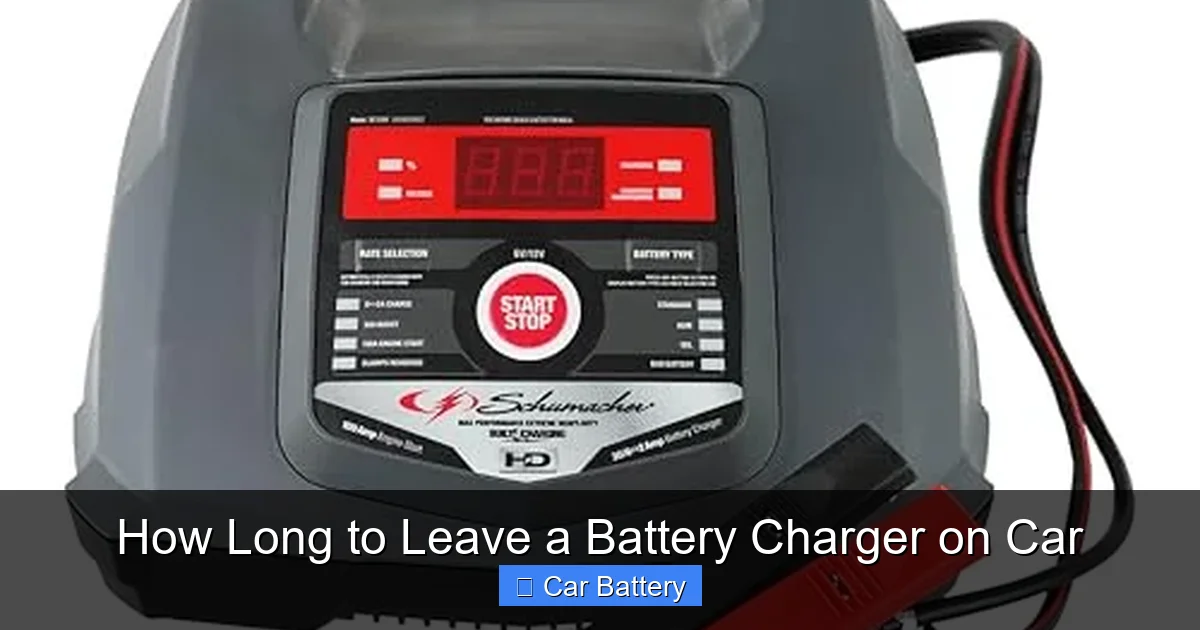
Trickle chargers deliver a low, steady current—usually between 1 and 3 amps—over a long period. They’re ideal for maintaining a battery’s charge during storage or for slowly recharging a deeply discharged battery. Because they charge so slowly, trickle chargers are less likely to overheat the battery, making them safer for extended use.
Visual guide about How Long to Leave a Battery Charger on Car
Image source: m.media-amazon.com
However, the downside is time. A typical 12V car battery with a capacity of 48 amp-hours (Ah) could take 16 to 24 hours to fully charge on a 2-amp trickle charger. That’s why many people use trickle chargers overnight or over a weekend. Just remember: even though they’re slow, you shouldn’t leave a trickle charger connected indefinitely. Some models don’t have automatic shutoff, so they can overcharge if left on too long.
Smart Chargers (Automatic Chargers)
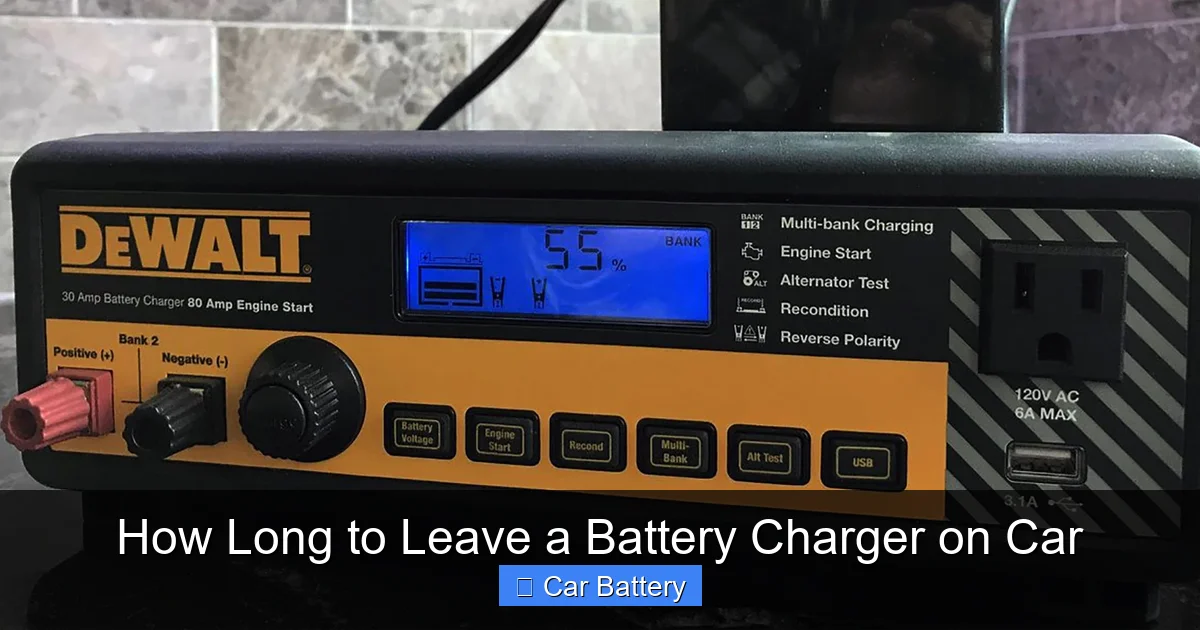
Smart chargers are the gold standard for home use. These devices use microprocessors to monitor the battery’s voltage, temperature, and charge level. They automatically adjust the charging rate and switch to a maintenance or “float” mode once the battery is full. This prevents overcharging and extends battery life.
Most smart chargers can fully recharge a dead car battery in 4 to 8 hours, depending on the battery’s condition and the charger’s output. For example, a 10-amp smart charger might take 5 hours to charge a 50Ah battery from 0% to 100%. The best part? You can safely leave a smart charger connected for days or even weeks without worrying about damage. It’s perfect for seasonal vehicles like motorcycles, boats, or classic cars.
Fast Chargers (High-Amp Chargers)
Fast chargers deliver high current—often 20 amps or more—to recharge a battery quickly. They’re useful in emergencies when you need to get your car running ASAP. However, they generate a lot of heat and can stress the battery if used improperly.
For instance, a 40-amp charger might bring a dead battery to 80% charge in under an hour. But continuing to charge at that rate can cause the electrolyte to boil, warp the plates, and shorten the battery’s life. That’s why fast chargers should only be used for short bursts and never left unattended. Most experts recommend using fast chargers only when necessary and switching to a lower amp setting or disconnecting once the battery reaches about 70–80% charge.
Maintainers and Float Chargers
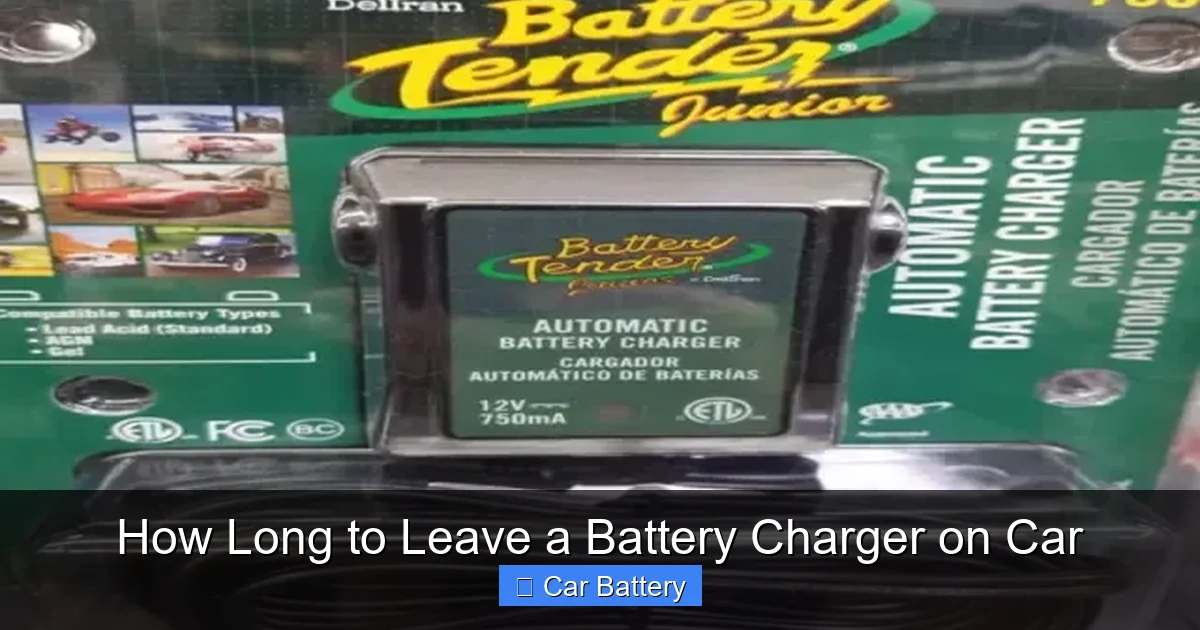
Maintainers (also called float chargers) are designed to keep a battery at full charge without overcharging. They deliver a very low current—usually less than 1 amp—and are ideal for vehicles that sit unused for long periods. These chargers are often used on RVs, lawnmowers, or winter cars.
Because they’re so gentle, maintainers can be left connected indefinitely. They’re essentially “set it and forget it” devices. However, they’re not meant to recharge a deeply dead battery. If your battery is below 12.0 volts, you’ll need a regular charger first to bring it back up, then switch to a maintainer for long-term storage.
How Long to Leave a Battery Charger on Car: General Guidelines
Estimating Charging Time Based on Amperage
The time it takes to charge your car battery depends on two main factors: the battery’s capacity (measured in amp-hours) and the charger’s output (measured in amps). A simple formula can help you estimate charging time:
Visual guide about How Long to Leave a Battery Charger on Car
Image source: ourhometools.com
Charging Time (hours) = Battery Capacity (Ah) ÷ Charger Amperage (A)
For example, a 48Ah battery charged with a 4-amp charger would take about 12 hours (48 ÷ 4 = 12). But this is a rough estimate. In reality, charging isn’t 100% efficient—some energy is lost as heat, and the charging rate slows as the battery fills up. So, you might need to add 10–20% more time.
Here’s a quick reference chart:
- 2-amp charger: 24–48 hours for a full charge
- 4-amp charger: 12–24 hours
- 6-amp charger: 8–16 hours
- 10-amp charger: 5–10 hours
- 20-amp charger: 2.5–5 hours (use with caution)
Signs Your Battery Is Fully Charged
You don’t always need a timer to know when charging is done. Here are some signs your battery is ready:
- Voltage reading: Use a multimeter to check the battery voltage. A fully charged 12V battery should read 12.6V or higher when the engine is off and the battery has rested for a few hours.
- Charger indicator: Most smart chargers have LED lights or digital displays that show charging progress. A green light or “100%” message usually means it’s done.
- No more bubbling: If you can see the battery cells (in non-sealed batteries), charging causes mild bubbling. When the bubbling stops, the battery is likely full.
- Stable voltage: If the voltage stops rising and holds steady for an hour, charging is complete.
Always disconnect the charger once the battery is fully charged—unless you’re using a smart charger with automatic shutoff.
What Happens If You Overcharge?
Overcharging occurs when a battery continues to receive current after it’s fully charged. This can cause several problems:
- Electrolyte loss: Excess current breaks down water in the electrolyte into hydrogen and oxygen gas, which escapes. This lowers the fluid level and can expose the plates.
- Overheating: Overcharging generates heat, which can warp the internal plates and damage the battery casing.
- Reduced lifespan: Repeated overcharging accelerates sulfation and shortens the battery’s life.
- Safety risks: In extreme cases, overcharging can cause the battery to swell, leak, or even explode.
That’s why using a smart charger or setting a timer is so important—especially with older or non-automatic chargers.
Best Practices for Safe and Effective Charging
Pre-Charging Checklist
Before you plug in the charger, take a few minutes to prepare:
- Turn off the engine and all electronics: Remove the keys and ensure lights, radio, and accessories are off.
- Clean the battery terminals: Use a wire brush to remove corrosion (white or green powder) from the terminals. Dirty connections can reduce charging efficiency.
- Check the electrolyte level (if applicable): For non-sealed batteries, make sure the fluid covers the plates. Add distilled water if needed—never overfill.
- Ensure proper ventilation: Charge in a well-ventilated area to disperse any hydrogen gas produced during charging.
- Wear safety gear: Use gloves and safety glasses to protect against acid and sparks.
Connecting the Charger Correctly
Always connect the charger in the right order:
- Attach the red (positive) clamp to the positive terminal (+) on the battery.
- Attach the black (negative) clamp to the negative terminal (−) or a grounded metal part of the car (like the engine block) if the terminal is hard to reach.
- Plug in the charger and turn it on.
- When charging is complete, reverse the order: unplug the charger first, then remove the black clamp, then the red clamp.
Reversing the order can cause sparks near the battery, which is dangerous if hydrogen gas is present.
Monitoring the Charging Process
Even with a smart charger, it’s wise to check in periodically:
- Check the charger’s display or lights every few hours.
- Feel the battery case—if it’s hot to the touch, disconnect immediately.
- Listen for unusual sounds like loud bubbling or hissing.
- If using a non-smart charger, set a timer based on your estimated charging time.
For long charging sessions (overnight or longer), consider using a charger with a built-in timer or a smart plug that you can control remotely.
Special Considerations for Different Situations
Charging a Completely Dead Battery
A deeply discharged battery (below 10.5V) may not accept a charge immediately. In some cases, the charger might not even detect it. To revive a dead battery:
- Use a charger with a “reconditioning” or “desulfation” mode, which applies a low current to break down sulfate crystals.
- Try a slow charge (2–4 amps) for 12–24 hours.
- If the battery doesn’t respond after 24 hours, it may be too damaged to save.
Note: Some modern cars with advanced electronics may not allow a deeply dead battery to be recharged safely. In these cases, a professional jump-start or battery replacement may be needed.
Charging in Cold Weather
Cold temperatures slow down chemical reactions in the battery, making it harder to charge. In winter, you may need to charge longer or use a charger with a cold-weather mode. Keep the battery warm if possible—store the car in a garage or use a battery blanket.
Charging a Maintenance-Free or AGM Battery
Many modern cars use sealed, maintenance-free, or Absorbent Glass Mat (AGM) batteries. These require special care:
- Use a charger designed for AGM or sealed batteries—standard chargers may overcharge them.
- AGM batteries charge faster but are more sensitive to voltage spikes.
- Never open the caps on a sealed battery—they’re not designed to be refilled.
When to Replace Instead of Recharge
Sometimes, no amount of charging will bring a battery back to life. Here are signs it’s time for a replacement:
- The battery is more than 3–5 years old.
- It fails to hold a charge even after a full 24-hour charge.
- It swells, leaks, or smells like rotten eggs (sulfur).
- The car still won’t start after a proper charge.
- A load test at an auto shop shows weak performance.
Replacing a worn-out battery is cheaper and safer than repeatedly trying to revive a failing one.
Conclusion
Knowing how long to leave a battery charger on your car doesn’t have to be complicated. With the right charger and a basic understanding of your battery’s needs, you can keep it charged safely and extend its life. As a general rule, allow 4 to 12 hours for a full charge, depending on the charger’s amperage and the battery’s condition. Always use a smart charger when possible, monitor the process, and never leave a non-automatic charger connected indefinitely.
Regular maintenance—like cleaning terminals, checking voltage, and avoiding deep discharges—can reduce the need for long charging sessions. And when in doubt, consult your vehicle’s manual or a professional. A little care goes a long way in keeping your car reliable and your battery healthy for years to come.
Frequently Asked Questions
How long should I leave a battery charger on a completely dead car battery?
A completely dead battery may take 12 to 24 hours to fully recharge, depending on the charger’s amperage. Use a low-amp (2–4A) charger for safety, and consider a smart charger with a reconditioning mode to revive deeply discharged batteries.
Can I leave a battery charger on overnight?
Yes, but only if you’re using a smart charger with automatic shutoff. Non-smart chargers should not be left unattended overnight, as they can overcharge and damage the battery.
Is it safe to charge a car battery while it’s still in the car?
Yes, it’s generally safe to charge a battery while it’s installed, as long as you disconnect any accessories, turn off the engine, and follow proper connection procedures. Ensure good ventilation to avoid gas buildup.
How do I know if my battery charger is working?
Check the charger’s display or indicator lights. You can also use a multimeter to measure the battery voltage before and after charging. If the voltage increases over time, the charger is working.
Can overcharging a car battery cause it to explode?
Yes, overcharging can cause excessive heat and gas buildup, especially in older or damaged batteries. This can lead to swelling, leaking, or in rare cases, explosion. Always use a smart charger and monitor the process.
Should I charge my car battery at 2 amps or 10 amps?
Use 2 amps for slow, safe charging—ideal for maintenance or deeply discharged batteries. Use 10 amps for faster charging, but only for short periods and with caution to avoid overheating.