How Long Is the Cargo Space in a Subaru Forester

Contents
- 1 Key Takeaways
- 2 📑 Table of Contents
- 3 Understanding Cargo Space: Volume vs. Usable Dimensions
- 4 Cargo Space by Model Year and Trim Level
- 5 How to Maximize Cargo Space: Tips and Tricks
- 6 Real-World Examples: What Can You Fit?
- 7 Comparing the Forester to Competitors
- 8 Maintenance and Care for Your Cargo Area
- 9 Conclusion: Is the Forester Right for Your Cargo Needs?
- 10 Frequently Asked Questions


The Subaru Forester offers generous cargo space, ranging from 26.9 to 76.1 cubic feet depending on seat configuration. With thoughtful design and flexible seating, it’s perfect for families, outdoor enthusiasts, and daily commuters alike.
If you’re considering a Subaru Forester—or already own one—you’ve probably asked yourself: *How long is the cargo space in a Subaru Forester?* It’s a fair question. Whether you’re packing for a weekend camping trip, loading up groceries, or hauling sports equipment, knowing exactly how much room you have (and how to use it) can make all the difference.
The good news? The Subaru Forester is designed with practicality in mind. It’s not just about raw cubic footage—it’s about smart design, accessibility, and flexibility. From its wide-opening rear hatch to its nearly flat-folding rear seats, every detail is crafted to help you maximize space without sacrificing comfort or safety. And while “cargo space” is often measured in cubic feet, the real story lies in the usable dimensions: length, width, height, and how those measurements translate into real-life scenarios.
In this guide, we’ll dive deep into the cargo capabilities of the Subaru Forester. We’ll break down the exact measurements, explain how different seating configurations affect space, and share practical tips for making the most of every inch. Whether you’re comparing trims, planning a road trip, or just trying to figure out if your new couch will fit, this article has you covered.
Key Takeaways
- Cargo volume varies by model year and trim: Newer models (2023–2024) offer up to 76.1 cubic feet with rear seats folded, while older versions may have slightly less.
- Rear seats fold nearly flat: The 60/40 split-folding rear seats allow for customizable cargo configurations, ideal for hauling gear or luggage.
- Underfloor storage adds hidden space: A hidden compartment beneath the cargo floor provides secure storage for valuables or emergency supplies.
- Roof rails expand carrying capacity: Factory-installed roof rails support crossbars and cargo boxes, increasing total storage beyond the cabin.
- Easy access with wide-opening tailgate: The large rear hatch and low load floor make loading heavy or bulky items simple and safe.
- Interior dimensions matter more than volume alone: Height, width, and length of the cargo area affect real-world usability for items like bikes, strollers, or furniture.
- Compare trims for optimal space: Higher trims like Limited or Touring often include additional features like power liftgates and cargo covers that enhance convenience.
📑 Table of Contents
- Understanding Cargo Space: Volume vs. Usable Dimensions
- Cargo Space by Model Year and Trim Level
- How to Maximize Cargo Space: Tips and Tricks
- Real-World Examples: What Can You Fit?
- Comparing the Forester to Competitors
- Maintenance and Care for Your Cargo Area
- Conclusion: Is the Forester Right for Your Cargo Needs?
Understanding Cargo Space: Volume vs. Usable Dimensions
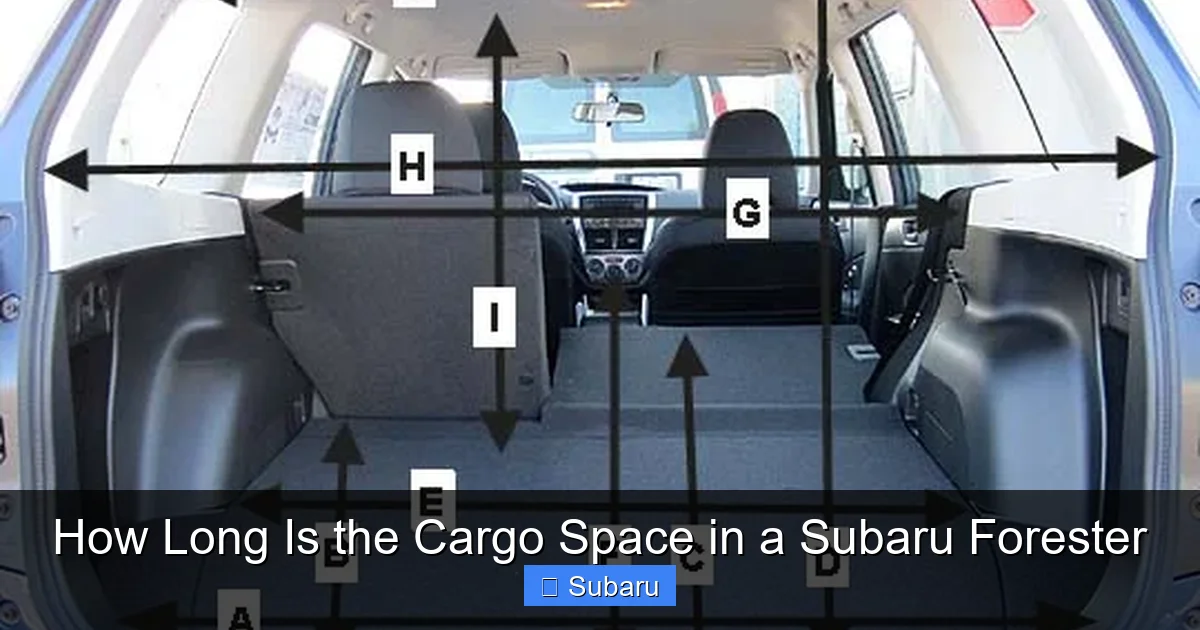
When people ask, “How long is the cargo space in a Subaru Forester?” they’re often thinking in terms of linear feet—how long a box, bike, or piece of furniture can fit from the back of the rear seats to the tailgate. But cargo space isn’t just about length. It’s a combination of volume (measured in cubic feet), height, width, and depth.
Subaru officially reports cargo volume in two key configurations:
– **Behind the rear seats:** Approximately 26.9 to 35.4 cubic feet (depending on model year and trim).
– **With rear seats folded:** Up to 76.1 cubic feet in recent models (2023–2024).
But volume alone doesn’t tell the whole story. A cargo area might have high volume but narrow width, making it hard to fit wide items. Or it might be long but low, limiting vertical stacking. That’s why understanding the actual dimensions—length, width, and height—is crucial.
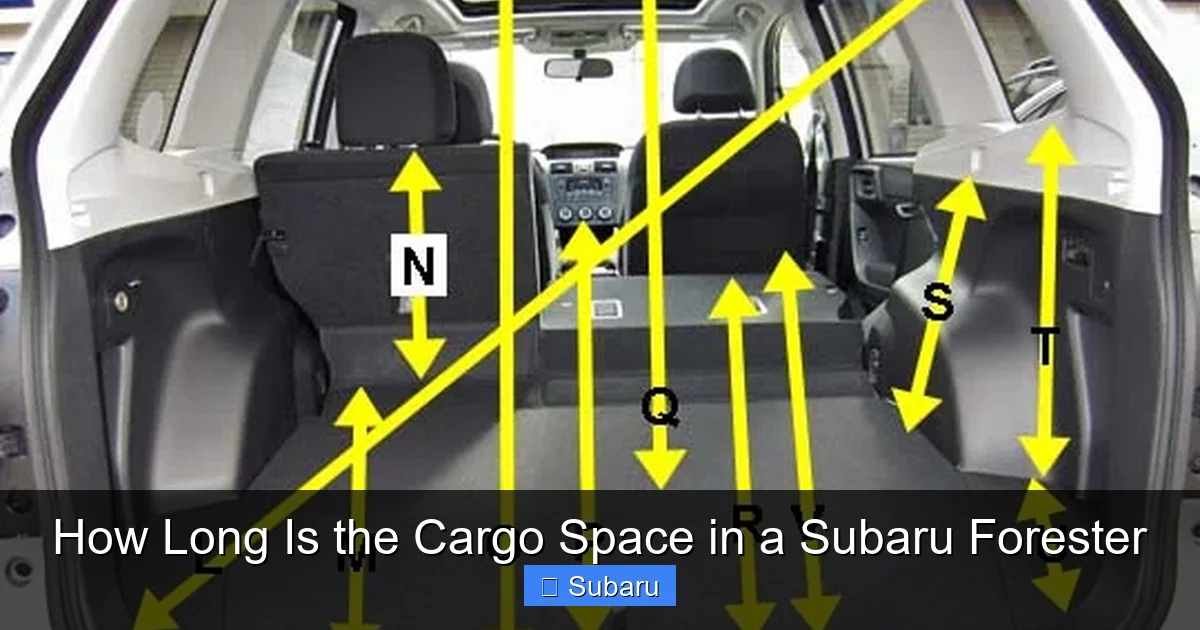
For example, the cargo floor length (from the back of the rear seats to the tailgate) in a 2024 Forester is about **43 inches** with the rear seats up. When you fold the 60/40 split rear seats down, that length increases significantly—up to **72 inches** or more, depending on how far forward the front seats are positioned.
Width is another important factor. The Forester’s cargo area measures roughly **42 inches** at its widest point (between the wheel wells), and about **50 inches** at the tailgate opening. This means you can easily fit items like a standard bicycle (which is typically 68–72 inches long) diagonally, or lay two golf bags side by side.
Height matters too. With the rear seats up, you get about **30 inches** of vertical space. That’s enough to stack several suitcases or store tall items like a folding table or a small cooler. When the seats are folded, the height remains similar, but the open floor plan allows for taller cargo like a mini-fridge or a stack of storage bins.
So while the Forester may not have the longest cargo floor in its class, its balanced dimensions—combined with Subaru’s thoughtful design—make it highly functional for everyday use and weekend adventures.
Cargo Space by Model Year and Trim Level
Visual guide about How Long Is the Cargo Space in a Subaru Forester
Image source: cars101.com
One of the most common misconceptions about the Subaru Forester is that all models have the same cargo capacity. In reality, cargo space can vary slightly depending on the model year and trim level. Subaru has made incremental improvements over the years, especially in interior design and materials, which can affect usable space.
Let’s break it down by recent generations:
2014–2018 Subaru Forester (Third Generation)
This generation introduced a major redesign and increased overall interior space. Cargo volume behind the rear seats was approximately **34.4 cubic feet**, and up to **74.2 cubic feet** with the rear seats folded. The cargo floor length was around **42 inches** with seats up and up to **70 inches** when folded. This was a significant upgrade from earlier models and helped establish the Forester as a top choice for families and outdoor enthusiasts.
2019–2024 Subaru Forester (Fourth Generation)
The current generation brought even more refinement. Cargo volume behind the rear seats increased slightly to **35.4 cubic feet**, and maximum volume with seats folded reached **76.1 cubic feet**—the highest in the model’s history. The cargo floor length remained similar at **43 inches** with seats up, but the improved seat-folding mechanism allows for a flatter, more usable surface when folded.
Trim levels also play a role. Base models like the Forester Base or Premium come with standard cargo features, while higher trims like the Limited, Touring, or Wilderness add conveniences that indirectly enhance cargo usability:
– **Power liftgate (available on Limited and above):** Makes opening and closing the tailgate easier, especially when your hands are full.
– **Cargo cover (standard on most trims):** Keeps items out of sight and protects them from sunlight.
– **Underfloor storage (standard):** A hidden compartment under the cargo floor adds about 2–3 cubic feet of secure space—perfect for tools, first-aid kits, or valuables.
– **Roof rails (standard on all trims):** Allow you to add crossbars and cargo boxes, effectively doubling your carrying capacity for long trips.
The **Forester Wilderness** trim, designed for off-road adventures, includes additional cargo-friendly features like all-weather floor mats, a more durable cargo area lining, and enhanced roof rails rated for heavier loads. While its cargo volume is nearly identical to other trims, these extras make it better suited for rugged use.
So, if you’re shopping for a used Forester, keep in mind that newer models (2019 and later) offer slightly more cargo space and better ergonomics. But even older models hold up well in terms of practicality.
How to Maximize Cargo Space: Tips and Tricks
Visual guide about How Long Is the Cargo Space in a Subaru Forester
Image source: thesupercars.org
Knowing how long the cargo space is in a Subaru Forester is one thing—using it effectively is another. With a few smart strategies, you can pack more, stay organized, and protect your belongings.
Fold the Rear Seats Strategically
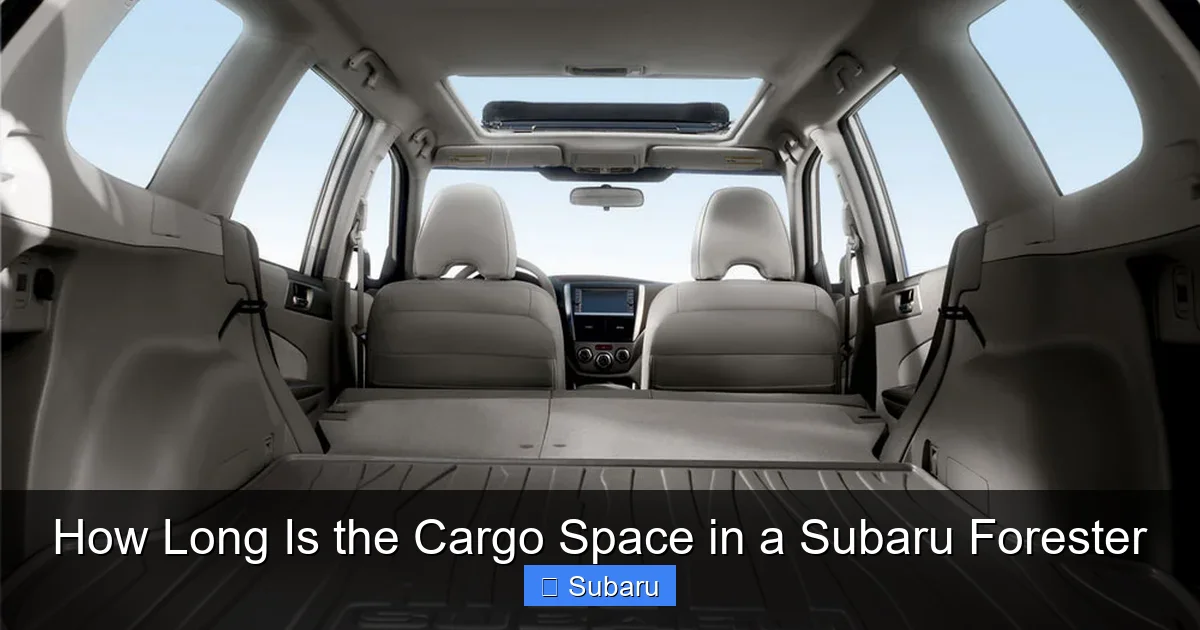
The Forester’s 60/40 split-folding rear seats let you customize your cargo area. Need to carry a long item like a surfboard or a piece of lumber? Fold down just one side (the 40% section) and keep the other side up for a passenger. This flexibility is rare in compact SUVs and makes the Forester ideal for mixed-use trips.
To fold the seats:
1. Pull the release lever located on the side of each rear seat cushion.
2. Push the seatback forward until it lies flat.
3. Ensure the headrests are removed or folded down to maximize flatness.
Pro tip: If you frequently carry long items, consider removing the rear headrests entirely. They can interfere with a truly flat load floor.
Use the Underfloor Storage
Tucked beneath the cargo floor is a hidden compartment—often overlooked but incredibly useful. It’s perfect for storing:
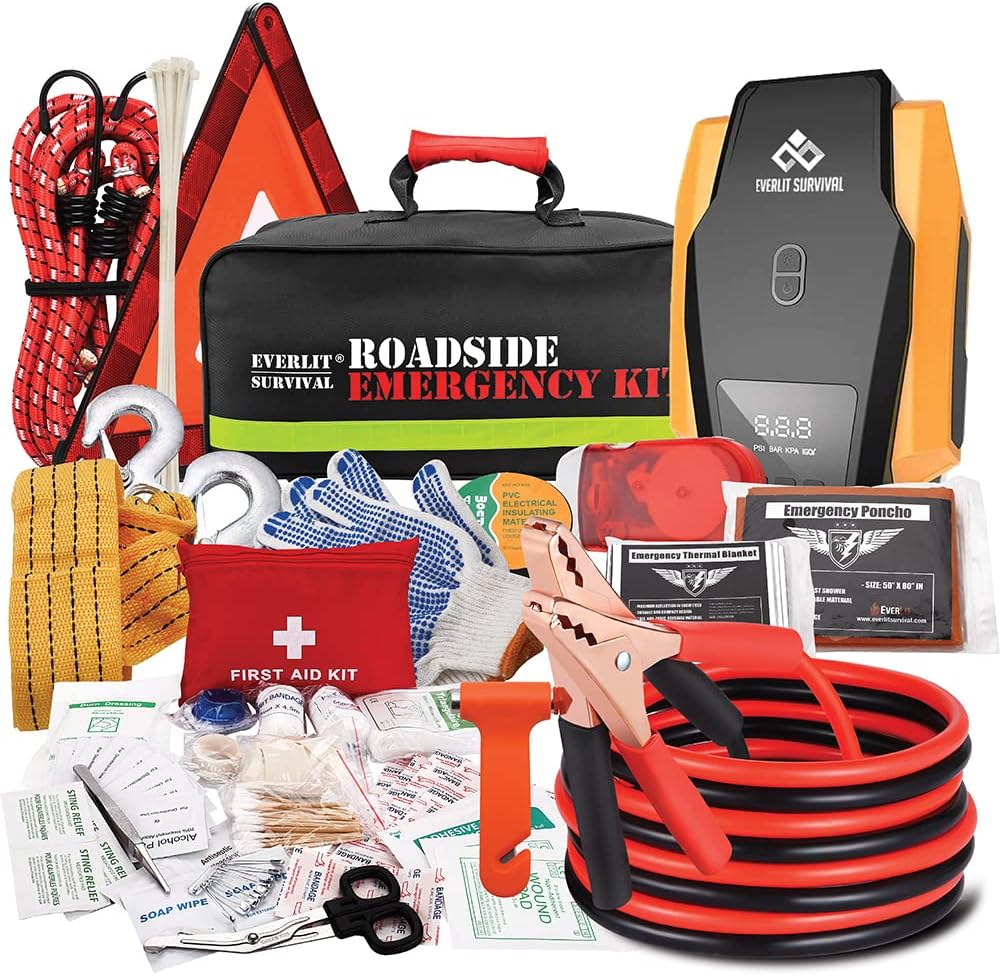
– Jumper cables
– Ice scrapers
– Flashlights
– Small toolkits
– Emergency snacks
This space keeps essentials out of sight and protected from dirt or moisture. Some models even include a removable tray for better organization.
Install a Cargo Barrier or Net
If you’re carrying loose items like groceries or sports gear, a cargo barrier or net can prevent them from sliding into the cabin during sudden stops. Subaru offers OEM cargo nets and barriers that attach to the rear seat anchors. Third-party options are also widely available and often more affordable.
Utilize Roof Storage
When the cabin is full, the roof becomes your best friend. The Forester’s roof rails support crossbars and a variety of cargo carriers:
– **Roof boxes:** Add 10–18 cubic feet of weatherproof storage.
– **Bike racks:** Carry up to 4 bikes (depending on the rack).
– **Kayak or ski racks:** Ideal for outdoor adventures.
Just remember: Roof cargo affects fuel economy and vehicle height. Always check clearance when driving under low bridges or into garages.
Pack Smart with Organizers
Use collapsible storage bins or cargo organizers to group similar items. Label them if needed—this makes unloading faster and reduces clutter. Soft-sided bags are great for clothes or linens, while hard bins work better for tools or electronics.
Adjust Front Seats for Extra Length
If you’re carrying something long like a ladder or a rolled-up rug, slide the front seats forward slightly. This can add an extra 2–3 inches of cargo floor length—enough to make a big difference.
Real-World Examples: What Can You Fit?
Visual guide about How Long Is the Cargo Space in a Subaru Forester
Image source: ozroamer.com.au
Let’s put the numbers into practice. Here’s what you can realistically fit in a Subaru Forester, based on its cargo dimensions:
Family Road Trip
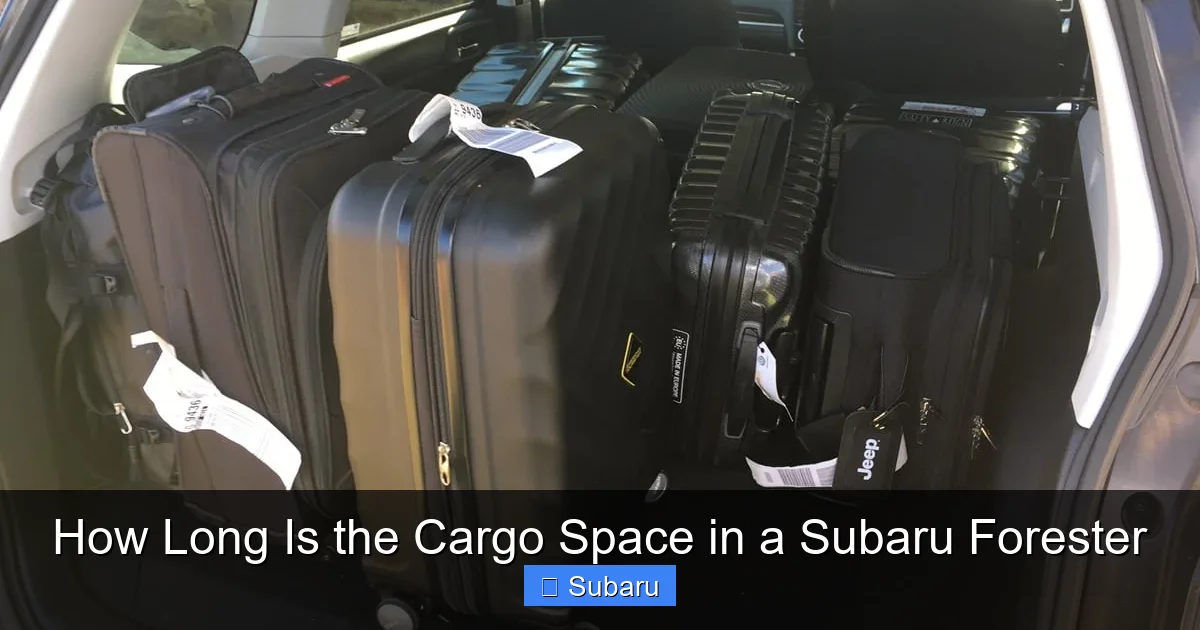
– 4 large suitcases (28” each)
– 2 carry-on bags
– Cooler with drinks and snacks
– Diaper bag and stroller (folded)
– Pet carrier (medium-sized dog)
With the rear seats up, there’s plenty of room. If you need more space, fold one side of the rear seat to accommodate the stroller or cooler.
Weekend Camping Gear
– Tent (packed)
– Sleeping bags (2–4)
– Camping chairs (4)
– Portable grill
– Cooler
– Backpacks
Fold the rear seats down for a flat loading area. Use the underfloor storage for matches, flashlights, and first-aid supplies.
Moving Day (Small Loads)
– Small couch ( loveseat size)
– Coffee table
– Boxes of books or clothes
– Microwave or small appliance
The Forester can’t replace a moving truck, but it’s perfect for local moves or transporting furniture from IKEA. Just remove the headrests and fold the seats flat.
Outdoor Adventures
– Mountain bike (front wheel removed)
– Kayak (on roof)
– Hiking gear
– Cooler with food
– Camping stove
Use a bike rack on the roof or fold the rear seats to lay the bike flat inside. The wide tailgate makes loading easy.
Everyday Errands
– Groceries (4–5 bags)
– Laundry basket
– Pet food bags
– Office supplies
The low load floor and wide opening make unloading quick and safe—no heavy lifting required.
Comparing the Forester to Competitors
So how does the Subaru Forester stack up against rivals like the Honda CR-V, Toyota RAV4, and Mazda CX-5?
Let’s look at cargo space (with rear seats folded):
– **Subaru Forester:** 76.1 cu ft
– **Honda CR-V:** 75.8 cu ft
– **Toyota RAV4:** 69.8 cu ft
– **Mazda CX-5:** 59.6 cu ft
The Forester and CR-V are nearly tied for top spot, with the RAV4 close behind. The CX-5, while stylish and fun to drive, sacrifices cargo space for a more car-like feel.
But volume isn’t everything. The Forester wins in several practical areas:
– **Wider cargo opening:** Easier to load bulky items.
– **Lower load floor:** Reduces strain when lifting heavy objects.
– **Standard roof rails:** The RAV4 and CX-5 often require upgrades for roof racks.
– **Better visibility:** Large windows and a high seating position make it easier to see while backing up or parking.
In real-world use, the Forester’s combination of space, accessibility, and standard features gives it an edge for families and active lifestyles.
Maintenance and Care for Your Cargo Area
To keep your Forester’s cargo space in top condition—and ensure it lasts for years—follow these simple maintenance tips:
Protect the Floor
Spills, dirt, and moisture can damage the carpet. Use all-weather floor mats (especially in winter or rainy climates). Subaru offers custom-fit rubber mats that cover the entire cargo area, including the sides.
Clean Regularly
Vacuum the cargo area monthly to remove crumbs, dirt, and pet hair. For spills, blot (don’t rub) with a damp cloth and mild cleaner. Avoid harsh chemicals that can fade or damage the carpet.
Check the Underfloor Compartment
Make sure the latch and hinges are functioning properly. Clean out debris and ensure the compartment is dry to prevent mold or rust.
Inspect the Tailgate
The tailgate hinges and struts should move smoothly. If the tailgate sags or won’t stay open, have it checked—this can affect loading safety.
Secure Loose Items
Always tie down heavy or loose cargo. Unsecured items can become dangerous projectiles in a crash.
With proper care, your Forester’s cargo area will remain functional and clean for the life of the vehicle.
Conclusion: Is the Forester Right for Your Cargo Needs?
So, how long is the cargo space in a Subaru Forester? The answer depends on how you configure it—but in any setup, it’s impressively versatile. With up to 76.1 cubic feet of space, a nearly flat load floor, and smart design features, the Forester delivers more than just numbers. It offers real-world usability for families, adventurers, and everyday drivers.
Whether you’re hauling luggage, gear, or furniture, the Forester’s balanced dimensions, easy access, and flexible seating make it one of the most practical compact SUVs on the market. Add in standard all-wheel drive, excellent safety ratings, and Subaru’s reputation for reliability, and it’s clear why the Forester remains a top choice.
If you value space, safety, and simplicity, the Subaru Forester is more than up to the task. Measure your needs, test-drive one, and see for yourself how much you can fit—and how easily you can get it there.
Frequently Asked Questions
How long is the cargo floor in a Subaru Forester with the rear seats up?
The cargo floor length from the back of the rear seats to the tailgate is approximately 43 inches in the 2024 Subaru Forester. This provides enough space for groceries, small furniture, or luggage without folding the seats.
Can you fit a queen-size mattress in a Subaru Forester?
Yes, a queen-size mattress (60” x 80”) can fit in a Forester with the rear seats folded, though it may need to be angled diagonally. The wide tailgate and flat load floor make loading easier.
Does the cargo space change between Forester trims?
The actual cargo volume is nearly identical across trims, but higher trims like Limited and Touring offer features like power liftgates and cargo covers that improve convenience and usability.
How much weight can the Subaru Forester’s cargo area hold?
The cargo floor is rated for up to 150–200 pounds of evenly distributed weight. For heavier items, use the roof rails (rated for 150–200 lbs dynamic load) with a proper cargo box or rack.
Is there hidden storage in the Forester’s cargo area?
Yes, all Forester models include underfloor storage beneath the cargo floor. It’s perfect for stowing emergency kits, tools, or valuables out of sight.
Can you sleep in the back of a Subaru Forester?
Yes, with the rear seats folded, the flat floor and ample length (up to 72 inches) make it possible to sleep comfortably—ideal for road trips or camping. Add a sleeping pad for extra comfort.