How Long Does a Transmission Last in a Toyota Sienna?

Contents
- 1 Key Takeaways
- 2 📑 Table of Contents
- 3 Introduction: The Heart of Your Hauler
- 4 Understanding the Numbers: What “Typical” Lifespan Looks Like
- 5 Generation Breakdown: It’s Not All Created Equal
- 6 The Golden Rule: Maintenance That Actually Matters
- 7 Warning Signs: Listen to Your Van
- 8 Repair vs. Replace: Facing the Music
- 9 Your Action Plan for Maximum Longevity
- 10 Conclusion: Peace of Mind Through Proactive Care
- 11 Frequently Asked Questions


The Toyota Sienna’s transmission typically lasts between 150,000 to 300,000 miles with proper maintenance. Key factors include driving habits, regular fluid changes, and the specific model generation. Newer Siennas with the 8-speed automatic are generally more robust than older 5-speed models. Proactive care is the single biggest factor in achieving high-mileage reliability.
Key Takeaways
- Average Lifespan: A well-maintained Sienna transmission can reliably last 200,000+ miles, with many reaching 250,000-300,000 miles.
- Generation Matters: Models from 2004-2010 (5-speed) have more reported issues than 2011-2020 (6-speed) and 2021+ (8-speed) models.
- Fluid is Critical: Regular transmission fluid changes (every 60,000-100,000 miles) are the #1 most important maintenance task for longevity.
- Driving Style Impacts Life: Frequent heavy towing, aggressive acceleration, and extreme heat significantly shorten transmission life.
- Watch for Early Warning Signs: Slipping, harsh shifts, delayed engagement, or fluid leaks require immediate diagnosis to prevent catastrophic failure.
- Cost of Replacement is High: A remanufactured or new transmission for a Sienna can cost $3,500-$5,500+ in parts and labor.
- Maintenance Records Boost Value: A documented history of fluid changes and service greatly improves long-term reliability and resale value.
📑 Table of Contents
- Introduction: The Heart of Your Hauler
- Understanding the Numbers: What “Typical” Lifespan Looks Like
- Generation Breakdown: It’s Not All Created Equal
- The Golden Rule: Maintenance That Actually Matters
- Warning Signs: Listen to Your Van
- Repair vs. Replace: Facing the Music
- Your Action Plan for Maximum Longevity
- Conclusion: Peace of Mind Through Proactive Care
Introduction: The Heart of Your Hauler
Your Toyota Sienna is a family workhorse. It’s the trusted vehicle that hauls kids to soccer practice, groceries from the store, and maybe even a trailer on vacation. At the core of all that reliable hauling is its transmission—a complex mechanical symphony that turns engine power into motion. So, the big question on every minivan owner’s mind is: how long does a transmission last in a Toyota Sienna?
The answer isn’t a simple number. It’s a story of engineering, maintenance, and luck. For many owners, a Sienna’s transmission is a bulletproof component that outlasts the rest of the van. For others, it becomes a costly, premature failure. This guide will dive deep into the realities of Sienna transmission longevity. We’ll break down the numbers by generation, explore the critical maintenance that makes the difference, highlight common failure points, and give you a clear action plan to keep your minivan moving for the long haul.
Understanding the Numbers: What “Typical” Lifespan Looks Like
When we talk about transmission lifespan, we’re usually discussing mileage. For the Toyota Sienna, industry mechanics and owner forums paint a consistent picture. With ideal care and a bit of fortune, you can expect a transmission to last between 150,000 and 300,000 miles. The median, or most common outcome, sits around 200,000 miles.
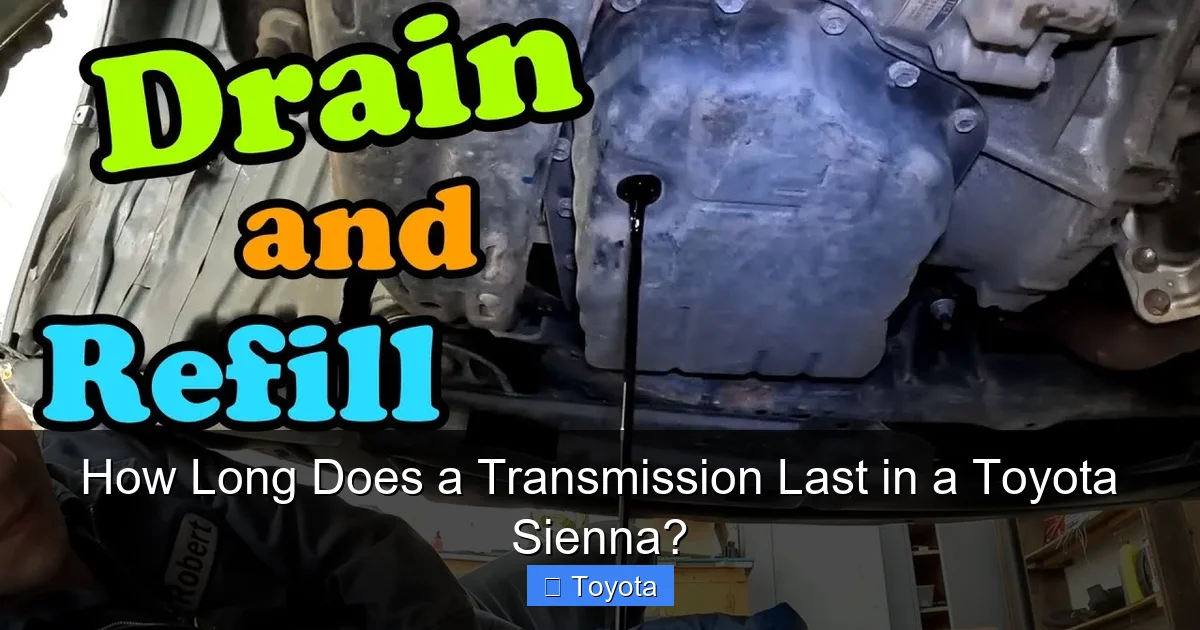
Visual guide about How Long Does a Transmission Last in a Toyota Sienna?
Image source: i.ytimg.com
It’s crucial to understand this is a bell curve. Some transmissions fail before 100,000 miles due to defects or severe neglect. Others, particularly in earlier, simpler models, sail past 300,000 miles with only basic fluid changes. Your goal is to be on the far right of that curve. Achieving that requires understanding what separates a 150k-mile failure from a 300k-mile success.
The 150,000-Mile Benchmark
150,000 miles is often considered the minimum reliable benchmark for a modern, well-cared-for automatic transmission. If your Sienna’s transmission shows signs of trouble before this point, it’s considered premature and likely points to a specific defect, severe abuse, or a major lapse in maintenance like never changing the fluid.
Chasing 200,000+ Miles
Reaching the 200,000-mile milestone is a testament to consistent upkeep. This includes:
- Timely Fluid & Filter Changes: This is non-negotiable. We’ll detail the exact intervals later.
- Gentle Driving Habits: Avoiding constant full-throttle acceleration and heavy loads when possible.
- Prompt Attention to Minor Issues: Fixing small leaks or addressing early shift quality changes before they cause chain-reaction damage.
Owners who achieve this milestone often report their Sienna’s transmission felt solid until the very end, with a gradual increase in shift firmness or a final, sudden failure. This contrasts with transmissions that give multiple, escalating warnings.
Generation Breakdown: It’s Not All Created Equal
The Toyota Sienna has gone through several major redesigns, each with a different transmission. Your van’s model year is the single biggest predictor of its transmission’s inherent strength and known weak points.
Visual guide about How Long Does a Transmission Last in a Toyota Sienna?
Image source: i.ytimg.com
First Generation (1998-2003): The Overlooked Workhorse
These early models used the A540E (V6) and A540H (AWD) 4-speed automatics. They are famously robust and simple. Failures are rare before 200,000 miles. Their main weakness is age-related seal and gasket leaks, not internal wear. Parts availability is becoming an issue, but the core design is tough.
Second Generation (2004-2010): The Problem Child Era
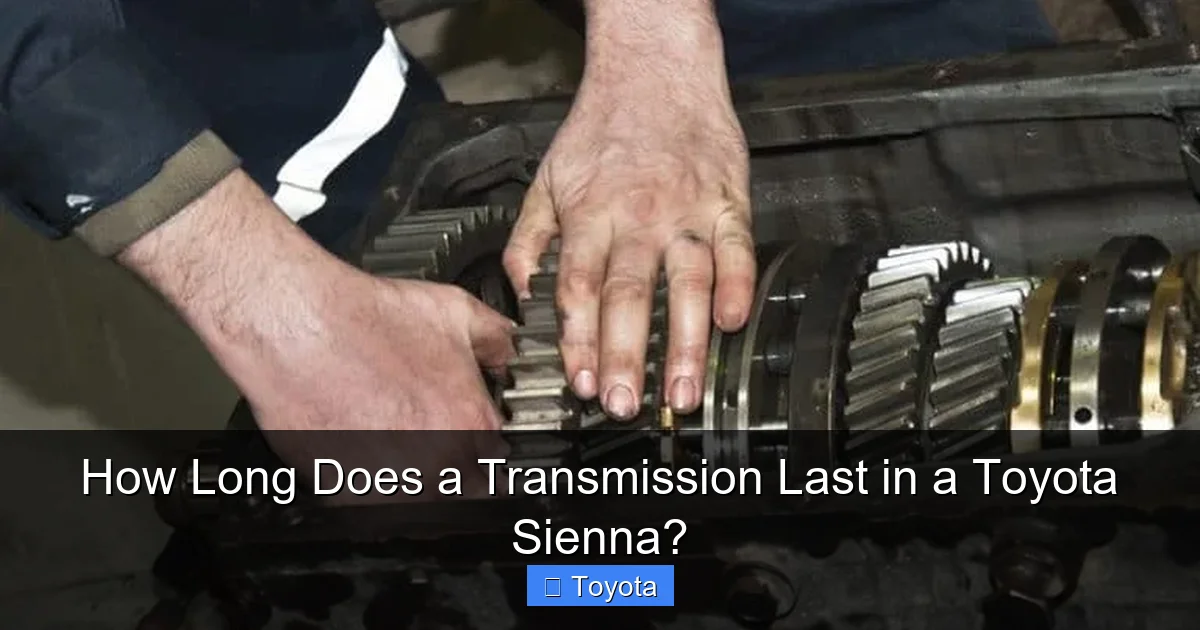
This generation introduced the U660E 6-speed automatic (in most markets). This transmission has a notorious reputation. Common failures include:
- Solenoid Pack Failures: Causing erratic shifts, harsh engagement, or “limp mode.”
- Internal Clutch Wear: Leading to slipping, especially in 2nd and 3rd gears.
- Valve Body Issues: Contaminated fluid or worn bores cause pressure problems.
Many 2004-2010 Siennas will require a transmission rebuild or replacement between 120,000 and 180,000 miles. This is the generation where proactive maintenance is most critical but also where factory defects played a significant role. For comparison, the similar-era Honda Civic transmission of this period also had its own set of well-documented issues, showing that complex 6-speeds were a industry-wide challenge in the mid-2000s.
Third Generation (2011-2020): The Vast Improvement
For 2011, Toyota introduced the U760E (front-wheel drive) and UA660E (AWD) 6-speed automatics. This was a major redesign. The internal clutch packs were strengthened, solenoid design was improved, and the valve body was more robust. While not immune to failure, these transmissions are significantly more durable than their predecessors. With regular fluid changes, 250,000+ miles is a realistic target. The shift logic was also refined for smoother operation.
Fourth Generation (2021-Present): The Hybrid-First Design
The current Sienna is a hybrid-only lineup. It uses an e-CVT (electronically controlled continuously variable transmission) paired with two electric motors. This is a fundamentally different, simpler system with far fewer moving parts and no traditional torque converter clutch wear. There are virtually no reports of internal transmission failure in these models. Their longevity potential is extremely high, likely exceeding 300,000 miles, with the main concerns being battery system longevity and software updates.
The Golden Rule: Maintenance That Actually Matters
You cannot control the design of your transmission. You can, however, control how you maintain it. This is where you separate the 150k-mile failures from the 300k-mile champions.
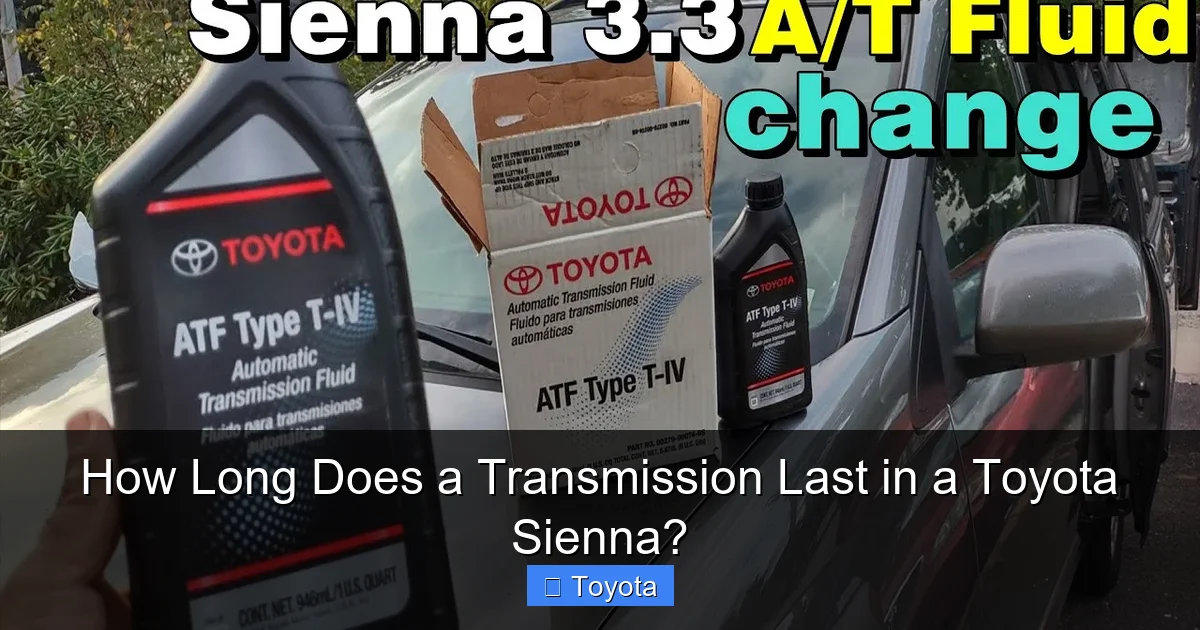
Visual guide about How Long Does a Transmission Last in a Toyota Sienna?
Image source: keytransmissionandgears.com
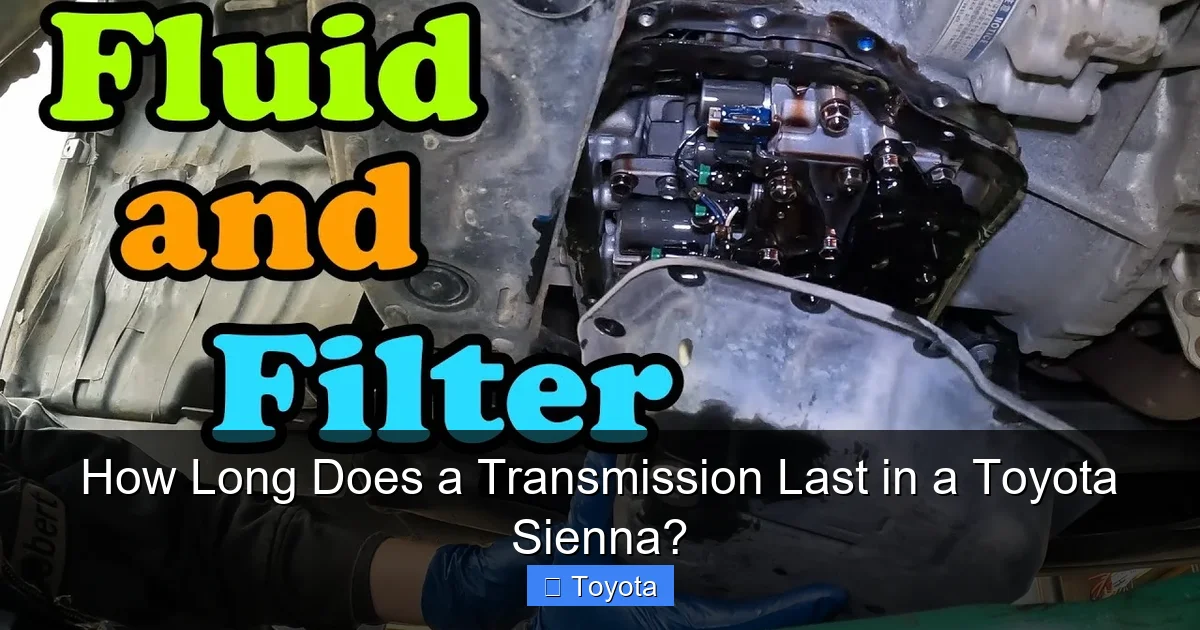
Transmission Fluid & Filter: The Lifeblood
Transmission fluid does three jobs: lubricate, cool, and transmit hydraulic pressure. It degrades. It gets contaminated with clutch material and carbon. Heat accelerates this process.
- Severe Service Interval: For the 2nd and 3rd gen Siennas (2004-2020), Toyota’s “severe” service schedule (which most family driving qualifies as) recommends a fluid and filter change every 60,000 miles. This is the gold standard.
- Absolute Maximum: Never exceed 100,000 miles between changes. At this point, the fluid’s lubricating and protective properties are severely diminished.
- The “Lifetime” Fluid Myth: Some manufacturer literature calls for “lifetime” fluid. This is a legal term meaning “lifetime of the warranty,” not the car. Treat it as 100,000 miles max. Flushing a neglected system can be risky; a controlled drain and fill or a professional machine exchange is best.
Pro Tip: Check the fluid monthly. It should be bright red and smell slightly sweet. If it’s dark brown/black, smells burnt, or has metal shavings, it’s overdue. This simple check is your earliest warning system.
Cooling System: The Unsung Hero
Your Sienna’s transmission has a dedicated cooler, usually built into the radiator. If this cooler becomes clogged with debris or develops internal leaks (mixing ATF and coolant), your transmission runs hot. Heat kills transmissions. Ensure your cooling system is flushed per schedule and that there is no mayonnaise-like substance (emulsified ATF/coolant mix) in the dipstick or radiator cap.
Driving Habits: You Are the Variable
Your foot and your loads matter.
- Cold Warm-Up: Drive gently for the first 5-10 minutes on cold mornings. This allows fluid to circulate and reach operating temperature before being put under load.
- Don’t Beat On It: The Sienna is a heavy van. Constantly launching it from a stop or racing to merge puts extreme shock load on the transmission’s clutch packs.
- Towing: While the Sienna is rated to tow, constant max-weight towing, especially in hot weather or mountainous terrain, is a transmission’s worst nightmare. Use a supplemental transmission cooler if you tow regularly.
For general vehicle health, understanding the service schedule for other components is key. For instance, knowing how long a Toyota alternator lasts helps you plan for electrical system maintenance that supports all vehicle systems, including the transmission’s control solenoids.
Warning Signs: Listen to Your Van
Transmissions rarely fail without warning. Catching these symptoms early can mean the difference between a $500 solenoid replacement and a $4,000 rebuild.
Drivability Symptoms
- Slipping: Engine RPMs surge (like you’re in neutral) when accelerating, but the van doesn’t speed up accordingly. Often feels like a loss of power.
- Harsh or Delayed Shifts: Shifts feel like a bang or a pronounced shove. There’s a long, noticeable pause (1-2 seconds) when shifting from Park to Drive or Drive to Reverse.
- Failure to Shift: The transmission stays stuck in one gear (often 2nd or 3rd) and won’t upshift. This is “limp mode,” a fail-safe triggered by a sensor or solenoid fault.
- Noises: A new whining, humming, or clunking sound that changes with engine speed or gear changes. A constant whine in neutral or park that goes away in drive/reverse often points to a pump or bearing issue.
Physical & Fluid Signs
- Leaks: Red or reddish-brown fluid under the van. The pan gasket, input/output shaft seals, and cooler lines are common leak points. Low fluid level is a guaranteed path to destruction.
- Fluid Condition: As mentioned, dark, burnt-smelling fluid is a red flag. The presence of a strong burnt odor usually indicates internal clutch material has burned due to slippage.
- Check Engine Light: Modern transmissions have numerous solenoids and sensors. A fault code (like P0700, P0750 series) is often the first electronic sign of a problem.
Action: At the first sign of any of these, stop driving aggressively. Check fluid level and condition immediately. Have a reputable transmission shop perform a diagnostic scan and a road test. Do not ignore it.
Repair vs. Replace: Facing the Music
If your Sienna’s transmission is diagnosed as failed, you face three main options. Costs are for the popular 2004-2010 models; newer and hybrid models will differ.
1. Used/ Salvage Transmission
Installing a low-mileage unit from a junkyard. Cost: $1,500 – $2,500 (installed). This is the cheapest option but a gamble. You don’t know the history. Does it have the same known weak points? Was it maintained? It could last 10 years or 10,000 miles. Often comes with a short, 12-month warranty.
2. Rebuilt Transmission
Your old core is sent to a rebuilder who replaces worn parts (clutches, seals, bands) and upgrades known weak components (e.g., aftermarket solenoid packs for the U660E). Quality varies wildly by shop. Cost: $3,000 – $4,500 (installed). A good rebuild with a solid warranty (2-3 years/unlimited miles) is the best value for a problematic 2nd-gen Sienna.
3. Remanufactured Transmission
A factory-like process where the transmission is completely disassembled, all wear parts are replaced with new, and it’s reassembled to OEM specs. Often includes updated design corrections. Cost: $4,000 – $6,000+ (installed). This is the most reliable option, often with a nationwide warranty. It’s essentially a “new” transmission.
The Hybrid (e-CVT) Consideration
For 2021+ models, failure of the e-CVT gearset itself is exceedingly rare. More common issues are with the hybrid battery or motor control modules, which are separate and often less expensive to address than a traditional transmission rebuild.
Key Question: Is the repair worth the value of the van? A $4,000 repair on a $5,000 van rarely makes financial sense unless it has deep personal value. For a 2015 Sienna worth $12,000, it’s a clear yes.
Your Action Plan for Maximum Longevity
So, what do you do today, next week, and next year to ensure your Sienna’s transmission lives a long life?
- Find Your Maintenance History. If you bought it used, try to get records. When was the last fluid change? If you don’t know, assume it’s never been done and plan for it immediately.
- Change the Fluid & Filter. This is your #1 priority. Use Toyota WS fluid (or the exact specification for your year). For the 2nd gen (2004-2010), consider a high-quality aftermarket solenoid pack upgrade at the same time if you’re over 150,000 miles.
- Install an Auxiliary Cooler. If you tow, live in a hot climate, or just want peace of mind, a small aftermarket transmission cooler in front of the AC condenser can lower operating temperatures by 20-40 degrees, dramatically extending fluid and component life.
- Modify Your Driving. Practice gentle, progressive acceleration. Allow the van to slow down naturally instead of riding the brakes in city traffic. Don’t use the gear selector to “engine brake” on long downgrades; use the brakes.
- Perform Regular Checks. Once a month, with the van warmed up and on level ground, check the dipstick. Note level, color, and smell. Top off with the correct fluid if slightly low. Investigate any leak immediately.
- Address Issues Immediately. That occasional harsh shift or slight slip will not fix itself. It will get worse and more expensive. Get a professional diagnosis at the first hint of trouble.
This systematic approach to care is what defines long-term reliability. It’s the same philosophy that applies to other major components. For example, understanding how long a Toyota serpentine belt lasts and replacing it on schedule prevents a breakdown that could leave you stranded and potentially cause secondary damage to the water pump and alternator, systems that keep your transmission cool and charged.
Conclusion: Peace of Mind Through Proactive Care
The question how long does a transmission last in a Toyota Sienna? has a definitive answer: it lasts exactly as long as you help it last. The engineering, especially from 2011 onward, is sound. The U760E and e-CVT are capable of extraordinary mileage. The Achilles’ heel is, and always has been, neglect.
For owners of the 2004-2010 models, diligent maintenance is not just a recommendation; it’s a necessity to overcome a flawed design. For everyone else, it’s the key to unlocking the true, legendary reliability the Sienna is capable of. Treat your transmission to clean, cool fluid at the recommended intervals. Drive with consideration. Heed its warnings. Do this, and your Sienna’s transmission will likely outlast your need for the vehicle itself, providing countless miles of dependable, worry-free family transport. The investment in a $200 fluid service every few years is infinitesimal compared to the $4,000+ cost of a rebuild and the immense hassle of a major failure. Take control of your van’s longevity starting today.
Frequently Asked Questions
What is the single most important thing I can do to make my Sienna’s transmission last?
Perform transmission fluid and filter changes at the recommended severe service interval of every 60,000 miles (or at least every 100,000 miles). This keeps the fluid clean, cool, and effective at lubricating and creating hydraulic pressure.
Are the transmissions in the hybrid Sienna (2021+) more reliable?
Yes, the e-CVT in the hybrid Sienna is fundamentally simpler with fewer wear parts than a traditional automatic. There are no clutch packs to wear out in the same way, and failures of the gearset itself are extremely rare, making it potentially the longest-lasting transmission in Sienna history.
Is a transmission flush a good idea for my high-mileage Sienna?
It depends. For a neglected transmission, a power flush can dislodge sludge and cause immediate failure. For a well-maintained transmission on schedule, a professional machine exchange (which replaces nearly all fluid) is excellent. For an unknown history, a series of 3-4 drain-and-fills over time is the safest method to refresh the fluid.
My 2007 Sienna shifts harshly. Is it doomed?
Not necessarily. Harsh shifts in the 2004-2010 models are a classic symptom of a failing solenoid pack or contaminated valve body. This is a common and often repairable issue that does not always require a full transmission rebuild. Have a specialist diagnose it immediately.
How much does it cost to replace a transmission in a Toyota Sienna?
For the problematic 2004-2010 models, a remanufactured transmission with a good warranty typically costs $4,000-$5,500 installed. A rebuilt unit from a reputable shop may be $3,000-$4,500. A used unit is $1,500-$2,500 but is a gamble. For newer models, costs are similar or slightly higher.
Does towing a trailer destroy my Sienna’s transmission?
Not if done correctly and within the vehicle’s rated capacity. However, towing is severe service. It dramatically increases heat and stress. You must use a weight-distributing hitch, ensure your brakes are in perfect shape, and strongly consider adding an auxiliary transmission cooler. Never exceed the max tow rating.