
Can a Mazda Cx-5 Tow a Camper?

Yes, a Mazda CX-5 can tow a camper, but with strict weight limits. For the 2026 model, the maximum towing capacity is 3,500 lbs when properly equipped. This means you must select a very lightweight camper, typically a teardrop or small fiberglass model, and ensure your specific CX-5 has the required factory-installed towing package. Always verify your exact model’s specifications and never exceed the Gross Combined Weight Rating (GCWR).
Key Takeaways
- The 2026 Mazda CX-5 has a maximum towing capacity of 3,500 lbs. This is only achievable with the factory-installed towing package; models without it are not rated for towing.
- You must account for all weight, not just the camper. The 3,500 lb limit includes the camper’s weight, its cargo (water, propane, gear), and the tongue weight pressing down on the CX-5’s hitch.
- Only certain ultra-lightweight campers are suitable. Look for teardrop trailers, small fiberglass campers, or lightweight pop-ups with a dry weight well under 2,500 lbs to stay safely within limits.
- A proper weight-distributing hitch is often required. For campers approaching the towing limit, a weight-distributing hitch with sway control is essential for safe handling and to protect the CX-5’s suspension.
- Your CX-5’s engine and transmission are up to the task. The standard 2.5L turbocharged engine provides sufficient power and torque for lightweight trailers, but expect reduced acceleration and fuel economy.
- Towing significantly impacts driving dynamics and fuel economy. Be prepared for longer stopping distances, decreased passing ability, and a potential 30-50% drop in MPG when towing.
- Check your owner’s manual for definitive limits and requirements. Mazda’s specifications, including GCWR and tongue weight max, are the final authority for your specific vehicle.
📑 Table of Contents
- So, Can Your Mazda CX-5 Actually Tow a Camper?
- Understanding Your CX-5’s Towing Capacity: The Hard Numbers
- Choosing a Camper That Fits: It’s All About the Weight
- The Essential Towing Setup: Hitch, Brakes, and Sway Control
- Driving with a Camper: Skills and Expectations
- Is There a Better Mazda for Towing a Camper?
- Maintenance and Long-Term Considerations
- The Bottom Line: Adventure Within Limits
So, Can Your Mazda CX-5 Actually Tow a Camper?
Let’s be honest: the idea of hitting the open road with a cozy little home on wheels is incredibly appealing. You dream of remote campsites, waking up to nature, and the freedom of a spontaneous adventure. If you own a Mazda CX-5, that sleek, fun-to-drive SUV is your daily chariot. But can it double as your adventure hauler? The question “Can a Mazda CX-5 tow a camper?” is a common one for crossover SUV owners who want to dip their toes into the world of RVing without buying a giant truck.
The short answer is yes, but with very important and specific caveats. The 2026 Mazda CX-5 is not a heavy-duty tow vehicle by any stretch. However, with the right factory equipment and an extremely careful selection of camper, it can become a capable and enjoyable road-trip companion for one or two people. This guide will walk you through everything you need to know—from decoding your CX-5’s tow rating to finding the perfect featherweight camper and mastering the art of safe towing. We’re focusing on the 2026 model year, but the core principles apply to recent model years as well.
Understanding Your CX-5’s Towing Capacity: The Hard Numbers
Before you even start browsing campers, you need to become best friends with your vehicle’s specifications. Towing capacity isn’t a random number; it’s a carefully engineered limit based on the strength of your engine, transmission, cooling system, frame, and brakes. For the 2026 Mazda CX-5, the maximum towing capacity is 3,500 pounds. But here’s the critical part: this number only applies if your CX-5 is equipped with the factory-installed towing package.
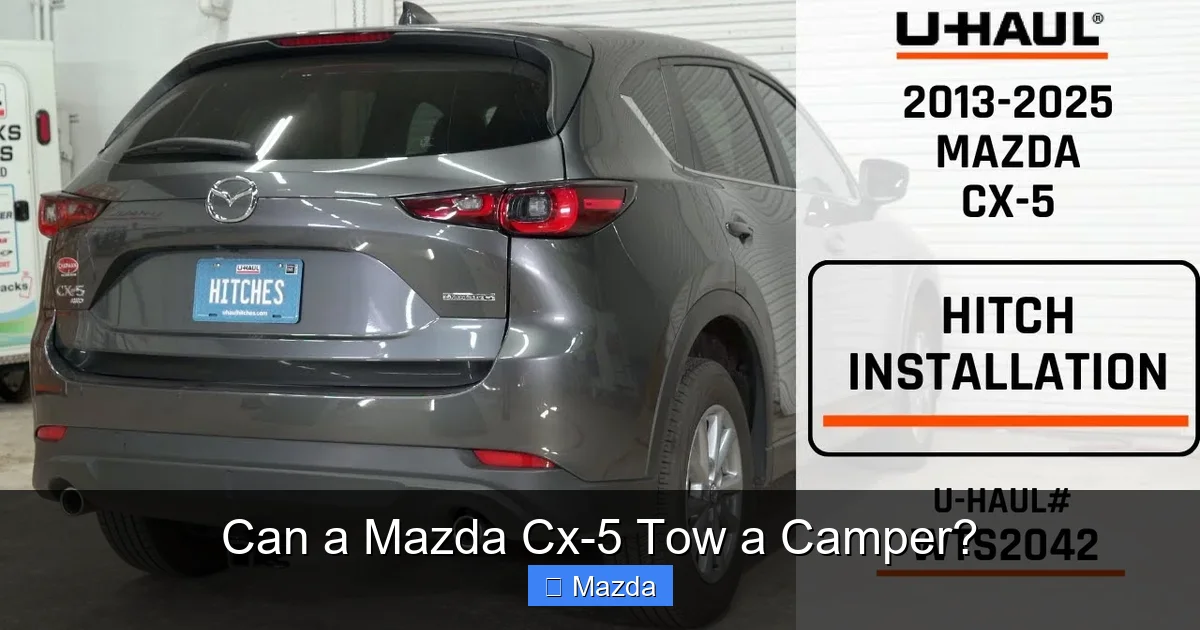
Visual guide about Can a Mazda Cx-5 Tow a Camper?
Image source: i.ytimg.com
The Non-Negotiable Towing Package
If you bought your CX-5 off the lot and it doesn’t have a hitch bolted to the frame, it’s almost certainly not rated to tow anything. Mazda does not recommend aftermarket hitches for towing on models not factory-prepared. The towing package typically includes:
- A heavy-duty radiator and cooling system
- A transmission cooler
- A reinforced rear suspension
- A factory-installed hitch receiver
- Pre-wiring for a trailer brake controller
You can verify if your vehicle has this package by checking the window sticker (Monroney label) for a “Towing Package” option, consulting your owner’s manual, or looking for the hitch and wiring harness. If you’re unsure, a call to your Mazda dealer with your VIN will give you a definitive answer. For a deep dive into the specific capacities and how they vary by trim and drivetrain, our detailed guide on how much a Mazda CX-5 can tow breaks it down further.
Gross Combined Weight Rating (GCWR) is Your Ultimate Limit
The 3,500 lb number is your Maximum Trailer Weight. But there’s another, even more important number: the Gross Combined Weight Rating (GCWR). This is the maximum allowable total weight of your loaded CX-5 plus the loaded trailer. For a 2026 CX-5, the GCWR typically falls around 6,000 – 6,300 lbs, depending on the engine and drivetrain. This means if your loaded CX-5 (with passengers, fuel, and cargo) weighs 4,000 lbs, your maximum trailer weight drops to just 2,000-2,300 lbs. You must calculate both numbers to stay within both limits.
Choosing a Camper That Fits: It’s All About the Weight
This is the make-or-break step. A “camper” can mean anything from a 10,000 lb fifth-wheel to a 900 lb teardrop. For your CX-5, we are firmly in the “ultra-lightweight” category. Your target should be a camper with a dry weight (unloaded weight) of 2,000 lbs or less. This gives you a crucial safety margin for your own gear, water, propane, and the inevitable “I might need this” items.
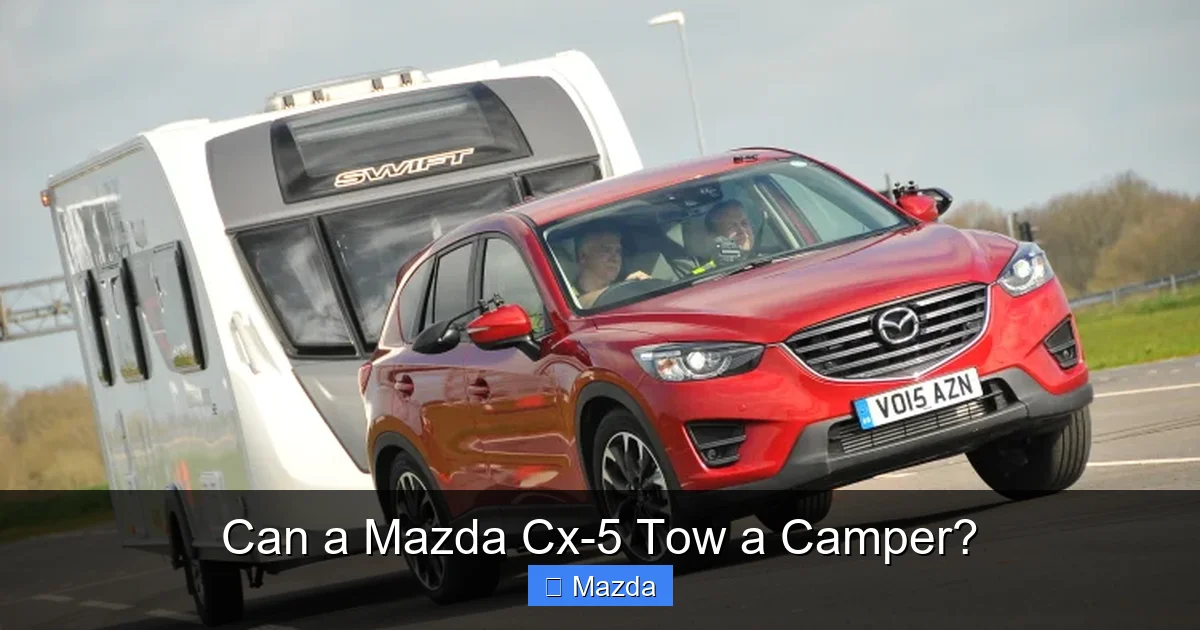
Visual guide about Can a Mazda Cx-5 Tow a Camper?
Image source: thetowcarawards.com
Camper Types That Are Realistic for a CX-5
Your best bets are:
- Teardrop Trailers: The classic choice for small tow vehicles. Brands like Little Guy, Teardrops by T@B, or Barefoot Caravans offer models often between 800 and 1,800 lbs. They are aerodynamic, simple, and have a cozy sleeping area for two with a galley in the rear.
- Small Fiberglass Campers: Companies like Scamp, Casita, or Oliver (though Oliver can be heavier) build durable, lightweight travel trailers. A Scamp 16′ standard layout can come in under 2,000 lbs dry.
- Lightweight Pop-Up Truck Campers: If you have a truck, this is an option, but for an SUV, it’s less relevant.
- A-Frame Campers: Hard-sided, pop-top campers like those from Jayco or ALiner. Some of the smallest models can be under 2,500 lbs, so you must verify the specific floorplan’s weight meticulously.
Forget about standard “family” travel trailers, most pop-ups, and anything with a slide-out. Their weights quickly exceed 3,000 lbs even before you add a single can of soda. Always, always get the manufacturer’s published UVW (Unloaded Vehicle Weight) and then add 200-400 lbs for your personal gear, full propane tanks, and a full fresh water tank (water weighs 8.3 lbs per gallon).
A Real-World Example: The Scamp 16′
Let’s take a Scamp 16-foot travel trailer as a practical example. The standard “Layout 1” has a dry weight of approximately 1,700 lbs. Add 100 lbs of propane, 30 gallons of water (250 lbs), and your camping gear (150 lbs), and your total trailer weight is around 2,200 lbs. This is safely within the CX-5’s 3,500 lb max, leaving plenty of room for tongue weight and ensuring you’re well under the GCWR for a typical loaded CX-5. This is the kind of math you must do for any camper you consider.
The Essential Towing Setup: Hitch, Brakes, and Sway Control
Assuming you’ve found a camper with a compliant weight, you now need the right hardware. The factory hitch on a towing-packaged CX-5 is likely a 2″ receiver. This is standard and good. But what you put on it matters immensely.
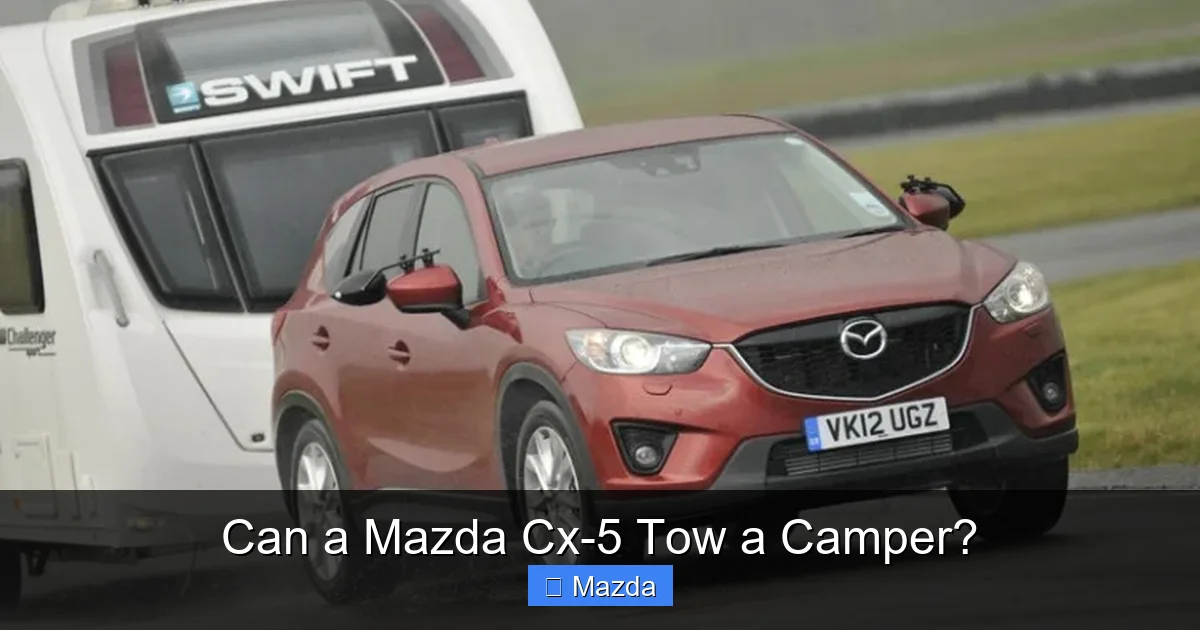
Visual guide about Can a Mazda Cx-5 Tow a Camper?
Image source: thetowcarawards.com
Hitch: Weight-Distributing is Highly Recommended
A simple “ball mount” or ” bumper pull” hitch is common, but for any trailer over 2,000 lbs, especially on a crossover SUV, a weight-distributing hitch (WDH) is strongly advised. A WDH uses spring bars to distribute the trailer’s tongue weight across both the front and rear axles of the CX-5. This prevents the rear from sagging, keeps the front wheels firmly planted (maintaining steering and braking control), and creates a much more stable, level ride. Brands like Equalizer, BlueOx, or Reese make excellent systems. Ensure the WDH system you choose is rated for your specific trailer weight and has a tongue weight capacity that matches.
Brake Controller: Absolutely Mandatory
If your camper has electric brakes—and any trailer over 1,500 lbs should—you must have a trailer brake controller installed in your CX-5. The factory towing package will have the wiring pre-installed, making this a simple plug-and-play installation for a compatible controller like a Tekonsha Prodigy or Reese Brakebuddy. The brake controller activates the trailer’s brakes in sync with your vehicle’s brakes. Without it, you are relying solely on your CX-5’s brakes to stop thousands of extra pounds, which is dangerous and will lead to severe brake wear and potential failure. This is non-negotiable for safety.
Sway Control: Your Best Friend on the Highway
Crosswinds, passing semis, and uneven roads can cause trailer sway—a dangerous, side-to-side motion. A weight-distributing hitch often includes built-in sway control (like friction bars or dual-cam systems). For extra peace of mind, especially with a lightweight but boxy camper, consider an add-on sway control device like a Friction Sway Control or a Dual-Cam Sway Control. It’s a relatively inexpensive investment that can prevent a major incident.
Driving with a Camper: Skills and Expectations
Driving a CX-5 with a trailer is a completely different experience than driving it alone. It’s not difficult, but it requires adjustment and constant awareness.
Before You Go: The Pre-Trip Checklist
Every single time you hook up, perform this ritual:
- Hitch Connection: Ensure the coupler is fully locked and the safety chains are crossed and attached with proper slack.
- Breakaway Switch: Connect the trailer’s breakaway cable to your vehicle. This is a last-ditch safety device that applies the trailer brakes if it becomes disconnected.
- Lights: Test all trailer lights (brakes, running lights, turn signals) with a helper or a built-in tester.
- Load Check: Verify your cargo is evenly distributed, with heavy items low and centered. Ensure your tongue weight is 10-15% of the total trailer weight.
- Mirrors: You will need extended-side mirrors. The CX-5’s standard mirrors won’t cut it. Get a good set of clip-on or towing-specific mirrors.
On the Road: Technique is Everything
Your driving style must change:
- Acceleration & Passing: Plan far ahead. The turbocharged 2.5L engine will work hard. Merging onto highways and passing will require much more time and distance. Downshift on upgrades to keep the RPMs up.
- Braking: Start braking earlier and more gently. The brake controller should be set so the trailer brakes engage just before the CX-5’s brakes. Practice in an empty parking lot.
- Turning: Take corners wider. The trailer will cut the corner (“off-tracking”), so you must swing wide to avoid clipping curbs or obstacles.
- Sway: If you feel sway, do not hit the brakes. Gently apply the brake controller, ease off the accelerator, and steer straight. If equipped, a sway control device will help dampen it quickly.
Expect your fuel economy to plummet. A CX-5 that gets 28 MPG highway might drop to 15-20 MPG when towing. Plan fuel stops accordingly. For more on how different models compare, you might look at how a Mazda CX-50 tows, which offers slightly higher capacities and a more rugged orientation.
Is There a Better Mazda for Towing a Camper?
If your heart is set on a Mazda but the CX-5’s 3,500 lb limit feels too restrictive, you have two other options in the 2026 lineup that offer significantly more grunt.
- Mazda CX-50: This is the CX-5’s more adventure-focused sibling. It shares a similar platform but has a more robust standard suspension and, in its Turbo Premium Plus trim, offers a towing capacity of 3,500 lbs as well. However, its more rugged character and available accessories make it feel more at home with a trailer. Some markets may see slightly higher ratings due to different certification.
- Mazda CX-90: This is the answer if you want to tow a larger, more comfortable camper. The three-row CX-90, especially with the turbocharged 3.3L inline-six engine, is rated to tow up to 5,000 lbs. This opens the door to larger, more feature-packed travel trailers and even small fifth-wheels. The CX-90 is a fundamentally different, more capable machine for towing.
If your primary goal is serious towing, the CX-90 is Mazda’s flagship solution. The CX-5 is for the minimalist adventurer who prioritizes a lightweight, simple setup. For context, many of Mazda’s competitors in the compact SUV space, like certain Subaru models, have similar or slightly lower capacities. You can read about how a Subaru Forester tows a camper to see a direct comparison.
Maintenance and Long-Term Considerations
Towing puts additional stress on your vehicle. To keep your CX-5 healthy and reliable for years of adventures, you need to be more diligent with maintenance.
- Transmission Fluid: Check it more frequently. Towing generates more heat. Consider more frequent fluid changes if you tow regularly, even if Mazda’s interval is long.
- Cooling System: Ensure the coolant level is correct and the system is in good shape. The factory towing package’s extra cooler is a huge help, but a clogged radiator or weak thermostat can still lead to overheating.
- Brakes: Inspect pads and rotors more often. Towing dramatically increases brake wear.
- Tires: Maintain proper tire pressure on both the CX-5 and the trailer. Under-inflated tires create excess heat and are a leading cause of blowouts. Check pressures when cold before every trip.
- Driveline: Listen for unusual noises from the differential or wheel bearings. Have them inspected at your regular service intervals.
Think of towing as a marathon, not a sprint. Keep your speeds moderate, avoid jackrabbit starts, and let your vehicle cool down for a minute after a long, steep climb before turning off the engine. This helps prevent heat soak in the transmission and turbocharger.
The Bottom Line: Adventure Within Limits
The 2026 Mazda CX-5 can absolutely be a platform for memorable camping trips. It is a capable, stable, and relatively efficient tow vehicle for the right trailer. The key is respect for the limits. By choosing a camper that is genuinely lightweight (aim for 2,000 lbs dry or less), installing the proper weight-distributing hitch and brake controller, and adjusting your driving habits, you can safely and enjoyably explore the country.
This setup is perfect for the solo adventurer or couple who wants a simple, cozy nest and values the CX-5’s fantastic driving dynamics when not towing. If your family is growing or you desire more space and amenities, you will quickly outgrow the CX-5’s envelope and should seriously consider a Mazda CX-90 or a dedicated tow vehicle from another brand. But for the dream of a minimalist, agile road trip? Your CX-5 is up to the task. Just do your homework, weigh everything, and hit the road with confidence.
Frequently Asked Questions
What is the exact towing capacity of a 2026 Mazda CX-5?
The maximum towing capacity for a 2026 Mazda CX-5 with the factory-installed towing package is 3,500 pounds. This rating is for the trailer’s Gross Trailer Weight (GTW). Models without the towing package are not rated for towing.
Can I install an aftermarket hitch on a CX-5 that doesn’t have the towing package?
While aftermarket hitches are available, Mazda does not recommend or warrant towing with a vehicle that was not factory-equipped with the complete towing package. The package includes critical upgrades to the cooling system, transmission, and suspension that an aftermarket hitch alone does not provide. Doing so could be unsafe and void warranties related to drivetrain components.
What is the difference between Maximum Trailer Weight and Gross Combined Weight Rating (GCWR)?
Maximum Trailer Weight (3,500 lbs) is the heaviest trailer the CX-5 can pull. GCWR is the maximum total weight of the loaded CX-5 plus the loaded trailer. You must stay under both limits. For example, if your loaded CX-5 weighs 4,200 lbs and your GCWR is 6,200 lbs, your trailer’s loaded weight cannot exceed 2,000 lbs, which is lower than the 3,500 lb max trailer weight.
Do I need a brake controller if my camper has electric brakes?
Yes, absolutely. A trailer brake controller is mandatory for safe towing with any trailer that has electric brakes. It must be installed in your CX-5’s cabin and synchronized with the trailer’s brake system. The factory towing package includes the wiring, making installation straightforward for a compatible controller.
What is tongue weight and why does it matter?
Tongue weight is the downward force the trailer exerts on the hitch. It should be 10-15% of the trailer’s total loaded weight. Too little tongue weight can cause trailer sway. Too much can overload the CX-5’s rear axle, causing the front to lift and reducing steering and braking control. A weight-distributing hitch helps manage proper tongue weight.
What is the lightest camper I should consider for a CX-5?
Look for campers with a dry (unloaded) weight under 2,000 lbs. Excellent options include teardrop trailers (e.g., Little Guy, T@B), small fiberglass travel trailers (e.g., Scamp 16′), or minimal A-frame campers. Always add 300-500 lbs for your gear, water, and propane to the dry weight to find your real-world loaded weight.
