
How Long Does a Toyota Corolla Automatic Transmission Last

A well-maintained Toyota Corolla automatic transmission can reliably last between 150,000 to 200,000 miles, with many owners reporting even higher mileage. Its longevity is primarily dependent on consistent fluid maintenance, gentle driving habits, and adherence to the factory service schedule. Neglecting transmission fluid changes or engaging in severe driving conditions can significantly shorten its lifespan, potentially leading to costly repairs.
Key Takeaways
- Proper Fluid Maintenance is Non-Negotiable: Regular transmission fluid and filter changes, typically every 30,000 to 60,000 miles, are the single most important factor in ensuring a long transmission life.
- Driving Habits Directly Impact Longevity: Aggressive acceleration, frequent towing, and consistent stop-and-go traffic generate excessive heat and wear, drastically reducing transmission lifespan.
- Model Year and Generation Matter: Newer Corollas (2014+) with more advanced Aisin transmissions and refined engineering often exhibit greater durability than older models.
- Listen for Early Warning Signs: Symptoms like delayed engagement, harsh shifting, whining noises, or fluid leaks are early indicators of potential failure and should be addressed immediately.
- Real-World Mileage Varies Widely: While 150k-200k miles is common, examples of 250k+ mile transmissions exist, usually from owners with impeccable maintenance records and ideal driving conditions.
- Preventive Beats Reactive: Investing in regular diagnostics and minor repairs is exponentially cheaper than a full transmission replacement or rebuild, which can cost $3,000-$5,000+.
- Climate Plays a Surprising Role: Extremely hot climates accelerate fluid breakdown, while very cold climates can cause harder shifts until fluid warms, both contributing to long-term wear.
📑 Table of Contents
- Introduction: The Heart of Your Daily Driver
- Factors That Dictate Transmission Longevity
- Typical Transmission Lifespan: What the Data Shows
- Warning Signs: Don’t Ignore These Symptoms
- Maintenance Best Practices for Maximum Longevity
- Real-World Owner Experiences: What the Data Says
- Conclusion: Your Actions Define the Outcome
Introduction: The Heart of Your Daily Driver
When you slide behind the wheel of your Toyota Corolla, you’re trusting a complex piece of engineering to get you from point A to point B smoothly and reliably. At the core of that trust, if you own an automatic, is the transmission. It’s the silent workhorse that translates engine power into motion. So, the big question on every Corolla owner’s mind is: just how long does a Toyota Corolla automatic transmission last? The answer isn’t a simple number, but a story of engineering, maintenance, and your personal driving story.
Toyota has built its reputation on longevity, and the Corolla is the flagship of that promise. The automatic transmission, specifically the electronically controlled Aisin units used in most modern Corollas, is known for its robust design. However, “lasting a long time” isn’t a guarantee; it’s a reward. It’s the result of a partnership between Toyota’s manufacturing quality and your ownership habits. This guide will dive deep into the factors that dictate that lifespan, give you realistic mileage expectations, highlight the warning signs you should never ignore, and provide a clear, actionable maintenance plan to help your Corolla’s transmission outlast the car’s body.
Factors That Dictate Transmission Longevity
Think of your transmission’s lifespan as a seesaw. On one side, you have its inherent engineering quality. On the other, the stress you put it under. The balance between these two determines whether you’re celebrating 200,000 miles or facing a rebuild at 80,000. Let’s break down the key factors on both sides.
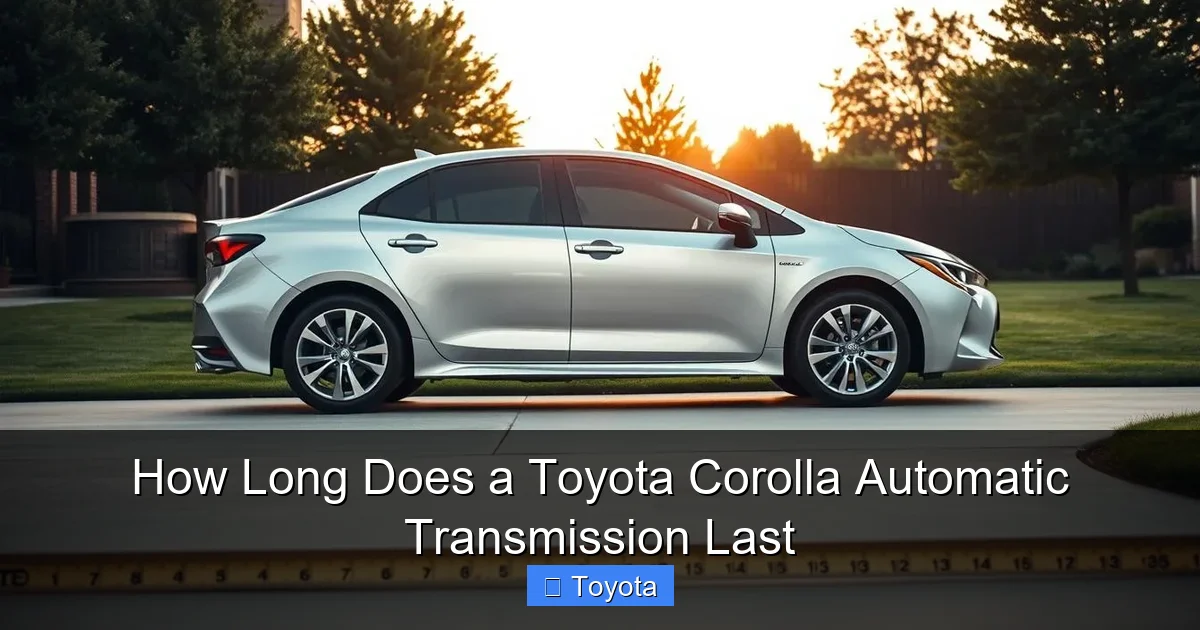
Visual guide about How Long Does a Toyota Corolla Automatic Transmission Last
Image source: vehiclerides.com
Engineering and Design: A Solid Foundation
Since the early 2000s, Toyota has almost exclusively used transmissions from its subsidiary, Aisin AW. These are not generic, off-the-shelf units. They are specifically engineered and calibrated for Toyota engines. The Corolla’s automatic, often a 4-speed (in older models) or a continuously variable transmission (CVT) in newer ones (from 2014 onward in North America), is designed for efficiency and smoothness, not high-performance racing. This design philosophy prioritizes durability under normal loads. The internal components—gearsets, clutch packs, torque converter—are built with precise tolerances and quality materials. This engineering foundation gives it a massive head start toward a long life.
The Crucial Role of Driving Habits and Conditions
This is the side of the seesaw you control. Your daily driving style is the most significant variable.
- Severe Driving: This isn’t just about speeding. It includes constant jackrabbit starts, slamming the gas pedal to merge on highways, and using your Corolla to frequently tow small trailers or carry heavy loads beyond its rated capacity. These actions cause the transmission to work harder, generate more heat, and wear clutch packs faster.
- Climate and Terrain: Living in a consistently hot climate like Arizona or Florida breaks down transmission fluid more quickly. Fluid loses its lubricating and cooling properties faster, leading to premature wear. Conversely, extremely cold climates can cause fluid to thicken, leading to jerky shifts until it warms up, which also adds stress. Hilly, mountainous terrain forces the transmission to shift more often and work harder on inclines.
- Stop-and-Go Traffic: While the Corolla is a city car, constant idling in traffic with frequent low-speed shifts (like in a major metro area) prevents the transmission from reaching its optimal operating temperature and can lead to fluid aeration and increased wear.
Model Year and Transmission Type Evolution
You cannot talk about longevity without specifying the generation. Pre-2014 Corollas in the U.S. mostly used proven, durable 4-speed automatic transmissions (like the A245E). These are mechanically simpler, with a long history of reliability. Post-2014, Toyota switched to a CVT (Continuously Variable Transmission) for most models to meet fuel economy targets. The early years of this CVT (specifically the K313 model) had some concerns regarding belt wear and pulley durability under severe use, but Toyota made significant internal updates around 2018-2019. A well-maintained modern CVT can be very durable, but its long-term (250k+ mile) reputation is still being proven compared to the iron-clad 4-speed units. Always check for specific technical service bulletins (TSBs) for your model year.
Typical Transmission Lifespan: What the Data Shows
So, with all that context, what’s the real-world number? Industry mechanics and long-term owner surveys point to a general consensus.
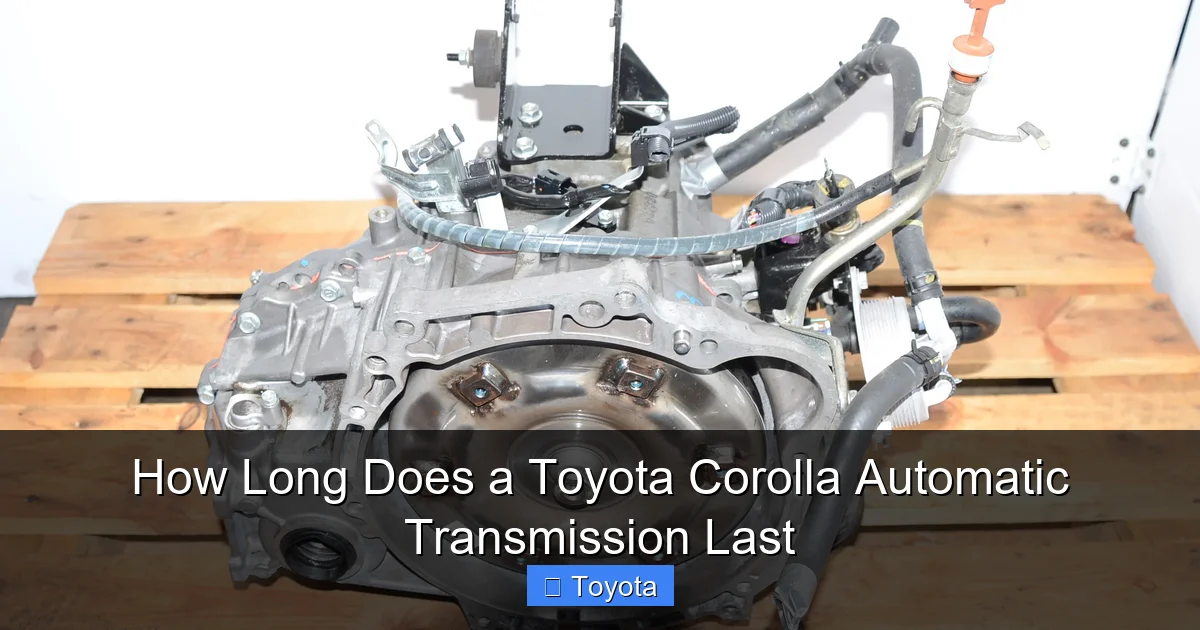
Visual guide about How Long Does a Toyota Corolla Automatic Transmission Last
Image source: jdmwestside.com
The 150,000 to 200,000 Mile Benchmark
For a Toyota Corolla automatic transmission that receives all recommended maintenance on time and is driven under normal conditions, hitting 150,000 to 200,000 miles is not just possible, it’s probable. This range is considered the reliable service life. Many owners regularly report their transmissions functioning perfectly at 180,000 miles, especially in the bulletproof 4-speed models. This benchmark assumes strict adherence to fluid change intervals.
Beyond 200,000 Miles: Is It Possible?
Absolutely. The upper echelon of Corolla ownership—the 250,000 to 300,000+ mile club—is populated by vehicles with obsessive maintenance schedules. Owners who change their transmission fluid every 30,000 miles (even if the manual says 60,000), who address small leaks immediately, and who avoid severe driving habits often see their transmission outlast the engine, body, and interior. These are not flukes; they are the direct result of minimizing the stress factors discussed earlier. Online forums are full of tales from Texas and California owners with 280,000-mile Corollas on their original transmissions.
The Early Failure Scenario: When Things Go Wrong
The other end of the spectrum is failure before 100,000 miles. This is almost always traceable to one of two causes: neglected maintenance or a manufacturing defect. A transmission that has never had its fluid changed will have fluid that is burnt, full of metal shavings, and has lost all its protective properties. This leads to rapid internal wear. In rare cases, a faulty solenoid, a bad torque converter, or an internal component defect from the factory can cause premature failure. These are often covered under extended warranties or can be the subject of a class-action lawsuit, as seen with some early Nissan CVTs (though Toyota’s have been more robust).
Warning Signs: Don’t Ignore These Symptoms
Your transmission will give you warnings before it fails completely. Catching these early can mean the difference between a $500 fluid change and a $4,000 rebuild. Be alert for:
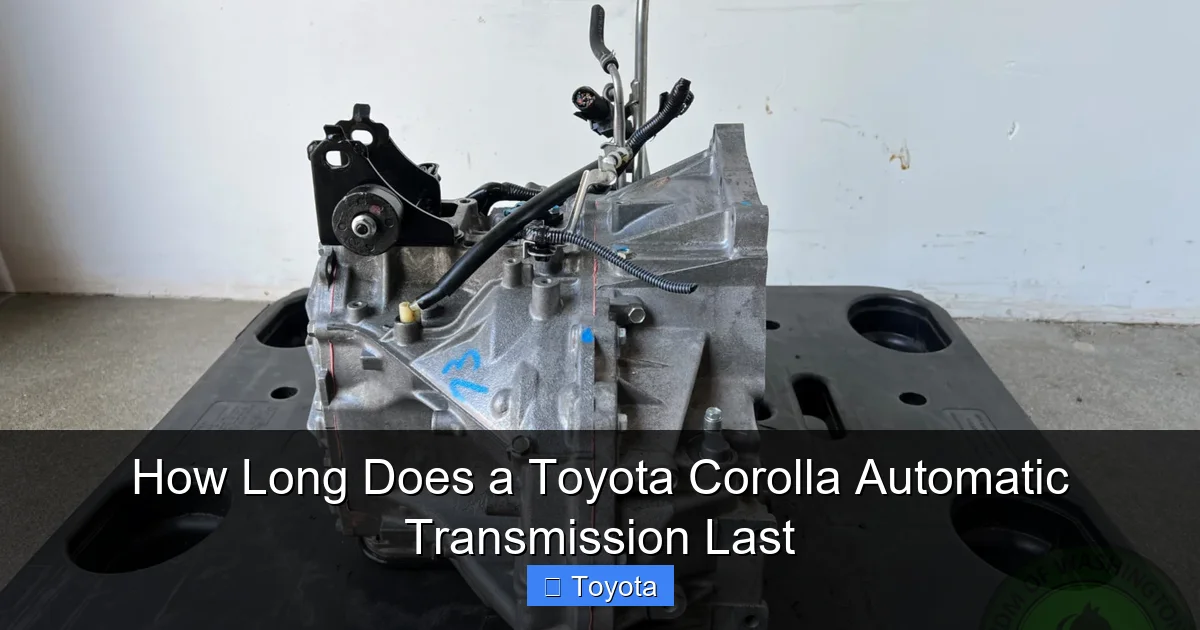
Visual guide about How Long Does a Toyota Corolla Automatic Transmission Last
Image source: jdmofwa.com
Performance and Shift Changes
- Delayed Engagement: You put the car in Drive or Reverse, and there’s a noticeable 2-3 second pause before it moves. This is a classic sign of worn clutch packs or low fluid pressure.
- Harsh, Jarring Shifts: Shifts that feel like a hard kick or a clunk, especially between 1st and 2nd gear, indicate the transmission’s computer is commanding a shift but the mechanical components are struggling to execute it smoothly.
- Failure to Shift: The transmission gets “stuck” in one gear and won’t upshift or downshift. This is often a solenoid or sensor issue but can indicate deeper internal damage.
- Slipping: The engine RPMs surge (e.g., from 2,000 to 3,500) but the car doesn’t accelerate proportionally. You feel like the car is in neutral for a second. This is a critical warning of clutch pack wear.
Noises and Physical Evidence
- Unusual Noises: A constant whining, humming, or grinding noise that changes with engine speed (not road speed) often points to bearing failure or gear wear inside the transmission.
- Fluid Leaks: Check your parking spot. Red or pinkish fluid (transmission fluid) is a clear sign of a seal or gasket failure. Low fluid level is a direct path to destruction. You can also check the dipstick (if equipped) for fluid condition; it should be bright red and smell slightly sweet, not burnt and dark brown/black.
- Check Engine Light: Modern transmissions have numerous sensors. A malfunction can trigger a diagnostic trouble code (DTC) and illuminate your check engine light. A simple scan can reveal issues like solenoid problems or turbine speed sensor failures.
Maintenance Best Practices for Maximum Longevity
This is the playbook. Following these steps gives your Corolla’s automatic transmission the best possible chance to reach 200,000+ miles. It’s not complicated, but it requires consistency.
Transmission Fluid & Filter: The #1 Priority
This cannot be overstated. Transmission fluid does three critical jobs: it lubricates, it cools, and it transmits hydraulic pressure to shift gears. Over time, it degrades, gets contaminated with clutch material, and loses viscosity.
- Service Interval: Toyota’s “lifetime” fluid claim is controversial and often interpreted as “lifetime of the warranty.” For maximum longevity, ignore this. Change the fluid and filter every 30,000 to 50,000 miles. If you do mostly highway driving, you might stretch to 60,000. If you do a lot of city driving or live in a hot climate, stick to 30,000-40,000. For CVTs, some experts recommend even more frequent changes, like every 30,000 miles.
- Type of Fluid: This is critical. Using the wrong fluid can destroy your transmission. For older 4-speed Corollas, it’s typically Toyota Type T-IV. For newer CVTs, it’s Toyota CVT Fluid FE or equivalent. Always consult your owner’s manual. When in doubt, have a dealership or reputable shop use genuine Toyota fluid. The $30-$50 you save on aftermarket fluid is not worth a $4,000 transmission.
- The “Pan Drop” vs. “Flush” Debate: A simple drain and fill (pan drop) replaces about 1/3 to 1/2 of the fluid. A true flush (using a machine) can replace nearly 100%. For high-mileage transmissions that have never had a service, a flush can sometimes dislodge clogged debris and cause issues. A safe, recommended approach for a neglected transmission is to do 3 consecutive drain-and-fills at short intervals (e.g., every 5,000 miles) to gradually refresh the fluid.
Driving Techniques That Reduce Wear
How you drive is half the battle. Adopt these habits:
- Warm Up Gently: In cold weather, drive the first 5-10 minutes at low RPMs (under 3,000) to allow fluid to warm up and circulate properly.
- Avoid “Creeping”: In heavy traffic, don’t ride the gas pedal while holding the brake to slowly move forward. This keeps the transmission under load at low speeds, generating excessive heat. Instead, leave a larger gap and roll forward without throttle when traffic moves.
- Use the “S” or “L” Gear Wisely: For normal driving, keep it in “D.” Use “S” (sport) for engine braking on long downhill grades to prevent brake fade. Use “L” (low) only for very steep hills or when you need maximum engine braking. Don’t use these gears for normal driving; it forces the transmission to hold lower gears longer than necessary, increasing wear.
- Don’t Rock the Car: If stuck in snow or mud, rocking back and forth (“Drive, Reverse, Drive, Reverse”) is incredibly hard on transmission components and axles. Call for a tow or try to dig out instead.
- Let it Stop Completely: Always come to a full stop before shifting from Drive to Reverse (or vice-versa). Shifting while moving places immense shock on the parking pawl and internal clutches.
Related System Maintenance
The transmission doesn’t exist in a vacuum. Its health is tied to other systems. A failing Toyota alternator can cause voltage spikes that damage sensitive transmission solenoids. A worn serpentine belt can slip and cause the alternator and power steering pump to malfunction, indirectly affecting drivability and sensor readings. Keeping the entire engine bay in good shape supports transmission health. Similarly, regular engine oil changes prevent sludge and varnish from eventually making its way into the transmission via the throttle body and intake in some designs (though less common in modern cars).
Real-World Owner Experiences: What the Data Says
Numbers from mechanics and manufacturer specs are one thing. The stories from the road are another. Let’s look at some patterns from owner forums like Corolla Forum and Reddit’s r/toyota.
The 4-Speed Era (Pre-2014): The Unkillable Workhorse
Owners of 2009-2013 Corollas routinely report 200,000+ mile transmissions with nothing more than fluid changes every 30,000-40,000 miles. The A245E and similar 4-speed automatics are mechanically robust, with relatively low internal pressures and simple gear designs. Failures before 150,000 miles are exceedingly rare and almost always linked to a lack of maintenance or a catastrophic external event (like a severe accident). This generation sets the gold standard for Corolla automatic transmission reliability.
The Early CVT Years (2014-2017): A Mixed Bag
The switch to the CVT (K313) brought a noticeable dip in real-world longevity reports for a few years. Owners of 2014-2017 models began reporting premature belt wear, pulley damage, and shuddering at low speeds, often around 80,000-120,000 miles. Some required complete CVT replacements under warranty. Toyota responded with updated software calibrations and internal hardware revisions. This period serves as a cautionary tale about new technology and the importance of staying informed about TSBs for your specific VIN.
The Refined CVT (2018-Present): Regaining Trust
From the 2018 model year onward, the reports have shifted dramatically positive. The updated CVT (often the K313 with modifications or a newer variant) shows much better durability. Owners are now regularly hitting 150,000+ miles without issue, provided they follow the more aggressive maintenance schedule (fluid every 30,000 miles). The early shudder issues are largely resolved. The modern CVT, when cared for, appears to be meeting Toyota’s durability goals, though its long-term (250k+ mile) track record is still being written by the early adopters of this refined design.
Conclusion: Your Actions Define the Outcome
So, how long does a Toyota Corolla automatic transmission last? The engineering answer is 150,000 to 200,000 miles. The realistic answer for you is: as long as you decide to make it last.
Toyota provides an incredibly durable platform. The Aisin transmission is a high-quality unit. But it is not indestructible or maintenance-free. Its longevity is a direct reflection of your ownership diligence. If you treat your Corolla with respect—adhering to fluid change schedules, driving smoothly, addressing small problems immediately, and keeping related systems healthy—you will almost certainly see your transmission live a long, healthy life that matches the car’s overall legendary reliability. You will become one of those owners telling stories of your 250,000-mile Corolla.
On the other hand, if you treat it as an appliance, neglect service, and drive it hard, you will likely face a major transmission repair somewhere between 80,000 and 120,000 miles. The choice, and the outcome, is in your hands and your maintenance logbook. Invest in the small, regular costs of care to avoid the massive, unexpected cost of replacement. That is the ultimate secret to making any Toyota Corolla automatic transmission last.
Frequently Asked Questions
What is the most important maintenance for a Corolla automatic transmission?
The single most critical maintenance task is regularly changing the transmission fluid and filter. Adhering to a 30,000-50,000 mile interval, rather than relying on “lifetime” fluid claims, is the best way to prevent premature wear and failure.
How much does it cost to replace a Toyota Corolla transmission?
A full replacement with a new or remanufactured unit typically costs between $3,500 and $5,500 including labor. A rebuild can range from $2,500 to $4,000. These costs highlight why preventive fluid maintenance is so economically smart.
Is the CVT in newer Corollas as reliable as the old 4-speed?
The early CVTs (2014-2017) had more reported issues. The updated CVTs from 2018 onward have demonstrated significantly improved reliability and are now considered much more durable when maintained properly with frequent fluid changes. However, the long-term (250k+ mile) reputation of the modern CVT is still being established compared to the proven 4-speed.
Will towing a small trailer destroy my Corolla’s transmission?
Occasional light-duty towing within your Corolla’s rated capacity (check your manual) is generally fine. However, frequent towing, especially in hot weather or hilly terrain, generates extreme heat and stress that the Corolla’s transmission isn’t heavily engineered for, drastically increasing wear and the risk of failure.
Can I use any ATF in my Corolla’s transmission?
Absolutely not. Using incorrect fluid is a surefire way to cause damage. You must use the exact specification listed in your owner’s manual—typically Toyota Type T-IV for older models or Toyota CVT Fluid FE for newer CVTs. When in doubt, use genuine Toyota fluid.
What’s the difference between a transmission flush and a drain-and-fill?
A simple drain-and-fill (pan drop) only replaces about 1/3 of the total fluid, as most remains in the torque converter and valve body. A machine flush attempts to replace nearly 100% of the old fluid. For high-mileage or neglected transmissions, a flush can sometimes cause problems, so a series of drain-and-fills is often the safer, recommended service method.
