
How Fast Can a Cop Car Go?

Police cars are built for speed, pursuit, and reliability. Most modern cop cars can reach top speeds between 130 and 155 mph, depending on the model and engine configuration. However, actual pursuit speeds are often lower due to safety, training, and department policies.
Key Takeaways
- Top speeds vary by model: Police vehicles like the Ford Police Interceptor and Dodge Charger Pursuit can reach 130–155 mph, with some high-performance models exceeding that.
- Engine and drivetrain matter: V8 engines and all-wheel drive systems give cop cars the power and traction needed for rapid acceleration and high-speed stability.
- Pursuit policies limit speed: Most departments cap chase speeds at 90–100 mph for officer and public safety, even if the car can go faster.
- Modifications enhance performance: Cop cars are upgraded with heavy-duty suspensions, brakes, cooling systems, and tires to handle high-speed demands.
- Training is critical: Officers undergo rigorous pursuit driving training to safely manage high-speed situations.
- Technology aids control: Advanced systems like stability control, radar, and GPS help officers maintain control during chases.
- Not all cop cars are fast: Some departments use hybrids or smaller sedans for patrol, prioritizing fuel efficiency over top speed.
📑 Table of Contents
How Fast Can a Cop Car Go?
Have you ever been driving down the highway and seen a police cruiser with its lights flashing, speeding past you like a blur? It’s easy to wonder—just how fast can a cop car go? The answer isn’t as simple as you might think. While police vehicles are designed to keep up with traffic and respond quickly to emergencies, their top speeds depend on a mix of engineering, department policies, and real-world conditions.
Police cars are not your average sedans. They’re built for performance, durability, and safety under extreme conditions. From high-speed pursuits to rapid response to emergencies, these vehicles must be ready for anything. But speed isn’t just about horsepower—it’s about control, stability, and responsibility. Officers are trained to balance speed with safety, and departments set strict guidelines to protect everyone on the road.
In this article, we’ll explore the top speeds of modern police vehicles, the technology and modifications that make them fast, and the real-world limits that keep high-speed chases in check. Whether you’re a car enthusiast, a curious driver, or just someone who’s ever wondered what’s under the hood of a patrol car, you’ll find the answers here.
Top Speeds of Modern Police Vehicles
Visual guide about How Fast Can a Cop Car Go?
Image source: images.carexpert.com.au
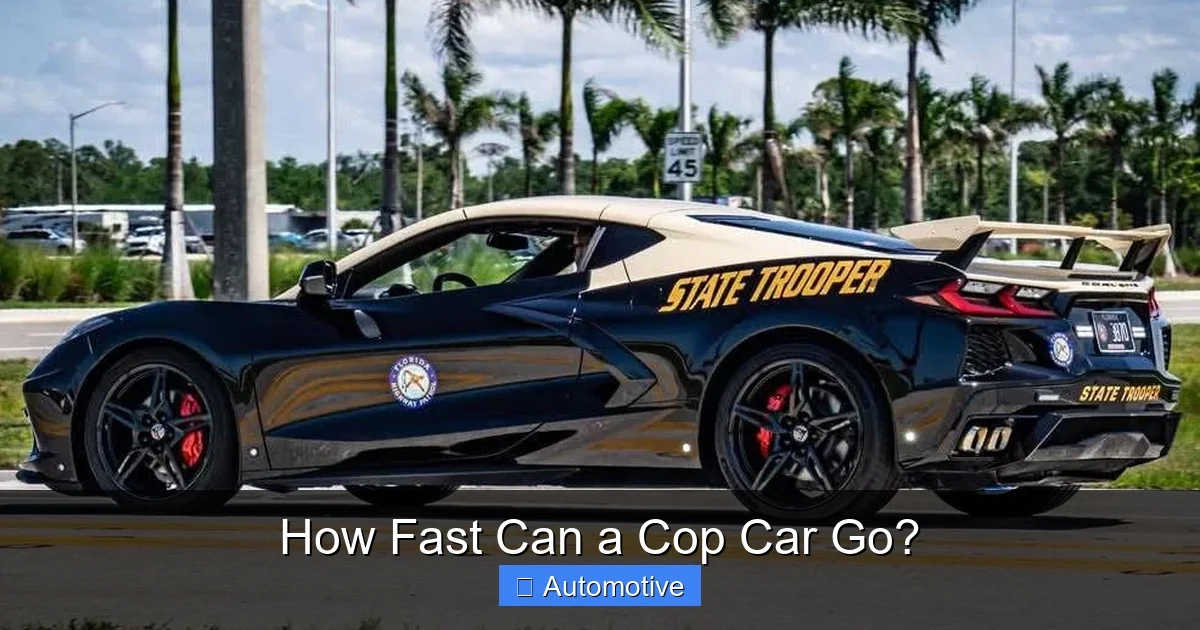
So, what’s the actual top speed of a cop car? It varies widely depending on the make, model, and engine. Most modern police cruisers are based on high-performance versions of popular sedans and SUVs, modified specifically for law enforcement use.
One of the most common police vehicles in the U.S. is the Ford Police Interceptor Utility (based on the Ford Explorer). This SUV comes with a 3.3L hybrid engine or a 2.7L or 3.0L EcoBoost V6. The top speed of the Ford Police Interceptor Utility typically ranges from 130 to 140 mph. That’s fast enough to catch most speeding drivers, but not quite supercar territory.
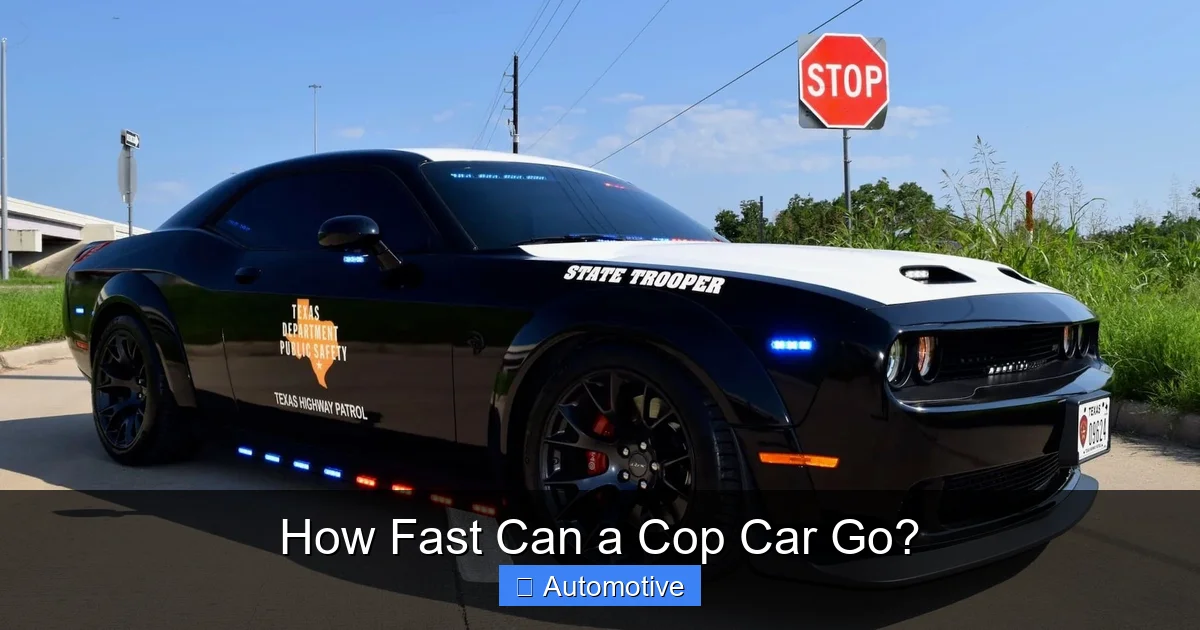
Then there’s the Dodge Charger Pursuit, a favorite among many police departments. With a 5.7L or 6.4L HEMI V8 engine, this rear-wheel-drive sedan can reach speeds of up to 150 mph. Some departments even opt for the high-output 6.4L engine, which pushes the top speed closer to 155 mph. That’s seriously quick—especially for a full-size sedan.
Chevrolet also offers the Tahoe PPV (Police Pursuit Vehicle), which uses a 5.3L V8 engine. Its top speed is around 130 mph, making it a solid performer for highway patrols and rural departments.
But what about smaller or more fuel-efficient models? Some agencies are turning to hybrids like the Ford Police Responder Hybrid Sedan, based on the Fusion Hybrid. While it’s not built for speed—topping out around 110 mph—it’s excellent for city patrols where fuel economy and low emissions matter more than raw power.
Real-World Performance vs. Manufacturer Claims
It’s important to note that manufacturer top speeds are often measured under ideal conditions—flat roads, no wind, optimal temperature, and a fully tuned engine. In the real world, police cars rarely reach those speeds. Why? Because roads aren’t perfect, weather changes, and traffic gets in the way.
Plus, police vehicles are often loaded with equipment—radar systems, radios, computers, lights, and weapons—which adds weight and can reduce acceleration and top speed. A fully equipped patrol car might weigh 400–600 pounds more than a stock version, which impacts performance.
Another factor is tire wear. Police cars are driven hard, with frequent hard braking, rapid acceleration, and long hours of idling. Tires degrade faster than on civilian vehicles, and worn tires can’t grip the road as well at high speeds.
So while a Dodge Charger Pursuit might be capable of 155 mph on a test track, in real life, it’s more likely to max out around 140–145 mph during a pursuit—especially if the officer is navigating curves, hills, or traffic.
What Makes Police Cars So Fast?

Visual guide about How Fast Can a Cop Car Go?
Image source: i.ytimg.com
You might be wondering: what turns a regular sedan into a high-speed police cruiser? The answer lies in a combination of powerful engines, performance upgrades, and specialized modifications.
Engine Power and Drivetrain
At the heart of every fast cop car is a strong engine. Most police vehicles use V6 or V8 engines that deliver high horsepower and torque. For example, the Dodge Charger Pursuit’s 6.4L HEMI V8 produces around 485 horsepower—more than many sports cars. That kind of power allows the car to go from 0 to 60 mph in under 5 seconds, which is crucial when responding to emergencies or catching up to a suspect.
But power isn’t everything. The drivetrain matters too. Many police cars use rear-wheel drive (RWD) for better handling and acceleration, especially in high-speed chases. However, some newer models, like the Ford Police Interceptor Utility, use all-wheel drive (AWD) for improved traction in rain, snow, or rough terrain. AWD helps maintain control when speeding through curves or accelerating quickly from a stop.
Heavy-Duty Suspension and Brakes
Speed without control is dangerous. That’s why police cars are equipped with heavy-duty suspension systems designed to handle high-speed maneuvers. These suspensions are stiffer than those in civilian vehicles, reducing body roll during sharp turns and helping the car stay planted on the road.
Braking is just as important. Police cars need to stop quickly and safely, even after driving at high speeds. That’s why they come with upgraded brake systems—larger rotors, high-performance brake pads, and sometimes even performance calipers. These components can withstand repeated hard braking without fading, which is essential during pursuits.
Enhanced Cooling Systems
High-speed driving generates a lot of heat. Police cars are modified with enhanced cooling systems to prevent overheating. This includes larger radiators, auxiliary oil coolers, and transmission coolers. These upgrades ensure the engine and transmission stay within safe temperature ranges, even during long chases or extended idling.
Performance Tires and Wheels
Tires are the only part of the car that touches the road, so they’re critical for speed and safety. Police cars use high-performance, all-season tires with reinforced sidewalls and aggressive tread patterns. These tires provide better grip during acceleration, braking, and cornering.
Many police vehicles also come with 18- or 20-inch alloy wheels, which are lighter and stronger than standard steel wheels. Lighter wheels improve handling and acceleration, while stronger construction helps withstand potholes and rough roads.
Electrical and Communication Upgrades
While not directly related to speed, electrical systems play a role in performance. Police cars have upgraded alternators and battery systems to power all the extra equipment—lights, sirens, radios, computers, and radar. A stronger electrical system ensures that all systems work reliably, even under heavy load.
Some departments also install performance tuning modules that optimize engine output for police use. These modules can adjust fuel delivery, ignition timing, and throttle response to improve acceleration and top speed.
Police Pursuit Policies and Speed Limits
Visual guide about How Fast Can a Cop Car Go?
Image source: cimg1.ibsrv.net
Even though police cars can go very fast, officers don’t always drive at top speed. In fact, most departments have strict pursuit policies that limit how fast officers can go during a chase.
Why Speed Limits Exist in Pursuits
High-speed chases are dangerous—not just for the suspect, but for officers, other drivers, and pedestrians. According to the National Highway Traffic Safety Administration (NHTSA), hundreds of people are killed each year in police pursuits, including innocent bystanders.
Because of these risks, many police departments set speed caps during chases. For example, some agencies limit pursuit speeds to 90 or 100 mph, even if the car can go faster. Others use a “risk assessment” model, where officers evaluate road conditions, traffic, weather, and the severity of the crime before deciding whether to continue the chase.
In urban areas, pursuits are often called off quickly to avoid endangering civilians. In rural areas, where roads are less crowded, officers may be allowed to go faster—but still within safe limits.
Training and Decision-Making
Officers don’t just rely on speed—they rely on training. Most departments require officers to complete pursuit driving courses, where they learn how to handle high-speed maneuvers, maintain control, and make quick decisions.
These courses teach skills like threshold braking, cornering techniques, and how to use sirens and lights effectively. Officers also learn when to stop a pursuit, such as when the risk to public safety outweighs the need to catch a suspect.
Some departments use simulation software to train officers in virtual high-speed scenarios, helping them prepare for real-life situations without the danger.
Technology That Helps Control Speed
Modern police cars are equipped with technology that helps officers manage speed and safety. For example, many vehicles have stability control systems that automatically adjust braking and engine power to prevent skidding or rollovers.
Some departments use GPS tracking and real-time communication systems to monitor pursuit speeds and locations. Supervisors can remotely track a chase and advise officers on whether to continue or disengage.
Radar and lidar systems also help officers monitor their own speed and the speed of other vehicles, ensuring they stay within safe limits.
Famous High-Speed Police Chases
Throughout history, there have been some legendary high-speed chases that showcase just how fast police cars can go—and the risks involved.
The 1994 O.J. Simpson Chase
One of the most famous police pursuits in history was the 1994 low-speed chase involving O.J. Simpson. While not a high-speed event—Simpson was driving a white Ford Bronco at around 35 mph—it captured national attention and highlighted the challenges of managing pursuits in the media age.
Modern High-Speed Examples
More recently, there have been high-speed chases where police vehicles reached impressive speeds. In 2018, a suspect in California led police on a chase that reached speeds over 150 mph on the freeway. Officers in Dodge Chargers and Ford Interceptors kept up, using their performance capabilities to maintain visual contact until the suspect was safely stopped.
In another case, a police officer in Texas used a Ford Police Interceptor Utility to chase a stolen vehicle at speeds exceeding 130 mph. The officer relied on training, vehicle performance, and communication with dispatch to safely end the pursuit.
These examples show that while police cars are fast, the real hero is often the officer’s training and judgment—not just the car’s top speed.
Are All Police Cars Built for Speed?
Not every police vehicle is designed for high-speed chases. In fact, many departments use a mix of vehicles depending on their needs.
City Patrols and Fuel Efficiency
In urban areas, police departments often prioritize fuel efficiency, maneuverability, and low operating costs. That’s why you’ll see hybrids like the Ford Police Responder Hybrid or even electric vehicles like the Tesla Model 3 being tested for patrol use.
These vehicles may not be as fast as a V8-powered Charger, but they’re excellent for stop-and-go traffic, reducing emissions, and saving on fuel. Their top speeds are lower—around 110–120 mph—but that’s more than enough for city driving.
Specialized Vehicles
Some police units use specialized vehicles that aren’t built for speed at all. For example, K-9 units may use modified SUVs with extra space for dogs. Motorcycle units are common in cities for traffic enforcement and crowd control. And some departments use off-road vehicles for rural or wilderness patrols.
Even within the same department, you might see a mix of high-speed pursuit vehicles and slower, more practical patrol cars. The key is matching the right vehicle to the job.
Future of Police Vehicles
The future of police cars may include more electric and hybrid models. As battery technology improves, electric police vehicles could offer instant torque, quiet operation, and zero emissions—while still delivering impressive performance.
Some prototypes, like the Ford Mustang Mach-E Police Vehicle, have already been tested and show promise. With over 480 horsepower and all-wheel drive, the Mach-E could reach speeds over 120 mph—making it a viable option for modern policing.
Conclusion: Speed with Responsibility
So, how fast can a cop car go? The short answer is: fast—often over 150 mph for high-performance models. But speed is only part of the story. Police vehicles are engineered for power, control, and reliability, with upgrades that go far beyond what you’d find in a regular car.
However, the real limit isn’t the car—it’s the officer’s training, department policies, and commitment to public safety. High-speed chases are a last resort, and officers are taught to balance speed with responsibility.
Whether it’s a Dodge Charger roaring down the highway or a hybrid sedan quietly patrolling a neighborhood, police cars are built to serve and protect. And while their top speeds are impressive, it’s the people behind the wheel who make the real difference.
Frequently Asked Questions
What is the fastest police car in the U.S.?
The Dodge Charger Pursuit with the 6.4L HEMI V8 engine is one of the fastest, capable of reaching speeds up to 155 mph. It’s widely used by highway patrols and urban departments for its power and performance.
Can police cars exceed 150 mph?
Yes, some high-performance police vehicles like the Dodge Charger Pursuit can exceed 150 mph. However, most departments limit pursuit speeds to under 100 mph for safety reasons.
Do all police departments use fast cars?
No. Many departments use hybrids or smaller vehicles for city patrols, prioritizing fuel efficiency and maneuverability over top speed. The choice depends on the department’s needs and budget.
How do police cars handle high-speed chases safely?
Police cars are equipped with heavy-duty brakes, suspension, and tires, and officers undergo rigorous pursuit training. Technology like stability control and GPS also helps maintain safety during chases.
Are police cars faster than sports cars?
Not usually. While police cars are fast, most sports cars like the Chevrolet Corvette or Porsche 911 have higher top speeds and better acceleration. Police vehicles prioritize durability and control over pure speed.
Why don’t police cars always drive at top speed during chases?
High-speed chases pose serious risks to public safety. Departments have policies that limit speed based on road conditions, traffic, and the severity of the crime. Officer training emphasizes safety over speed.
