
How Far Can an Electric Car Go?

Wondering how far an electric car can go? Modern EVs now offer ranges from 150 to over 500 miles per charge, with real-world performance influenced by driving habits, weather, and terrain. With fast-charging networks expanding, long-distance EV travel is more practical than ever.
Key Takeaways
- EV range varies widely: Most new electric cars offer 200–400 miles per charge, with some luxury models exceeding 500 miles.
- Real-world range differs from EPA estimates: Cold weather, high speeds, and aggressive driving can reduce range by 20–40%.
- Battery size matters: Larger batteries (measured in kWh) generally provide longer range, but weight and efficiency also play key roles.
- Charging infrastructure is growing: Fast chargers can replenish 80% of a battery in 20–40 minutes, making long trips feasible.
- Driving style impacts efficiency: Smooth acceleration, regenerative braking, and moderate speeds help maximize range.
- Future EVs will go even farther: Advances in battery tech, like solid-state batteries, promise 600+ mile ranges in the coming years.
- Range anxiety is fading: With better batteries and more chargers, most drivers find EVs suitable for daily use and road trips.
📑 Table of Contents
How Far Can an Electric Car Go?
Imagine this: You’re planning a weekend getaway, maybe a drive up the coast or a trip to the mountains. You’ve got your bags packed, your playlist ready, and your electric car charged up. But then a question pops into your head—how far can an electric car actually go before it needs a recharge?
It’s a fair question, and one that’s on the minds of millions as electric vehicles (EVs) become more common on our roads. The short answer? It depends. But the good news is that today’s EVs can go a lot farther than many people realize. From daily commutes to cross-country adventures, electric cars are proving they’re more than capable of keeping up with our lifestyles.
In this guide, we’ll break down everything you need to know about electric car range—what it means, how it’s measured, what affects it, and how to make the most of every mile. Whether you’re considering your first EV or just curious about how far these silent, efficient machines can take you, you’re in the right place.
Understanding Electric Car Range
Visual guide about How Far Can an Electric Car Go?
Image source: applegarth.co.uk
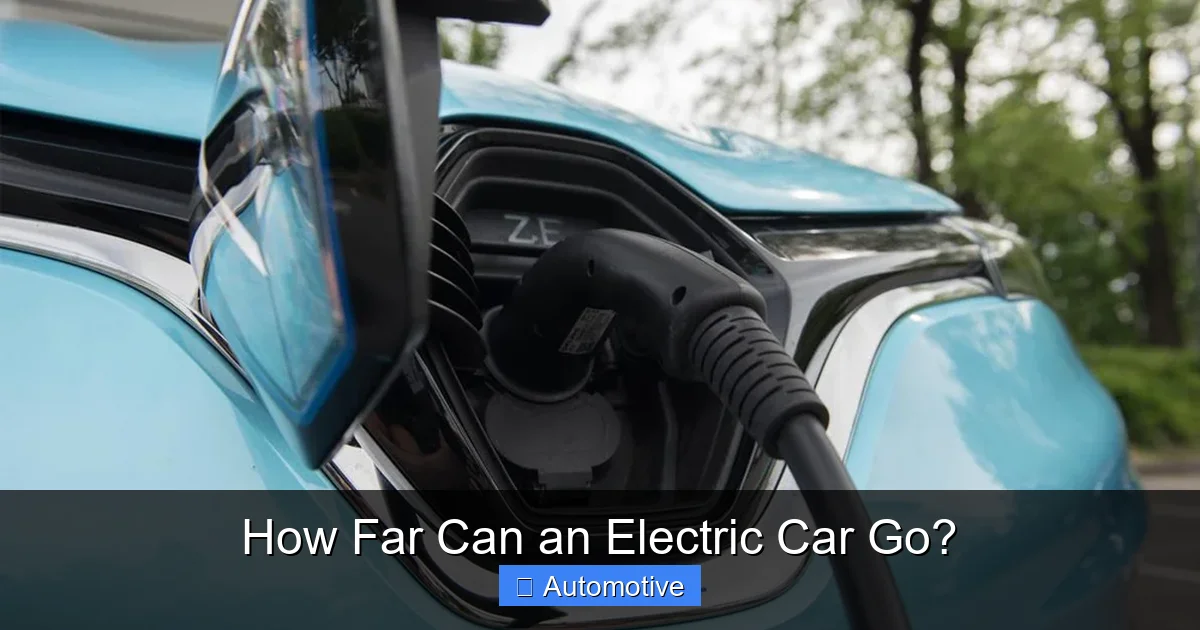
So, what exactly do we mean when we talk about “range” in an electric car? Simply put, it’s the distance an EV can travel on a single full charge. Think of it like the fuel gauge in a gas-powered car—but instead of gallons, we’re talking about kilowatt-hours (kWh) of stored energy in the battery.
Range is one of the most important factors when choosing an electric vehicle. It tells you how far you can go before needing to plug in. For many drivers, especially those with longer commutes or who enjoy road trips, a higher range means less stress and more freedom.
But here’s the thing: range isn’t a fixed number. It changes based on a variety of factors—some within your control, others not. That’s why automakers provide an official range estimate, usually from the Environmental Protection Agency (EPA), but your real-world experience might differ.
How Is EV Range Measured?
In the U.S., the EPA tests electric vehicles under controlled conditions to estimate their range. These tests simulate city driving, highway driving, and a mix of both, using standardized procedures. The result is a combined MPGe (miles per gallon equivalent) and an estimated range in miles.
For example, the Tesla Model 3 Long Range has an EPA-estimated range of 358 miles. That means, under ideal test conditions, it can travel nearly 360 miles on a full charge. But again, real life isn’t a test lab.
Other countries use different testing standards. In Europe, the WLTP (Worldwide Harmonized Light Vehicles Test Procedure) is common, and it tends to give slightly higher range numbers than the EPA. Meanwhile, China uses its own CLTC standard, which can be even more optimistic.
So why the differences? Because each test cycle varies in speed, acceleration, and environmental conditions. The EPA’s test is generally considered more realistic for U.S. drivers, but it’s still just an estimate.
Real-World vs. EPA Range
Let’s be honest—most of us don’t drive like we’re in a lab. We speed up, slow down, blast the AC, and drive in all kinds of weather. All of that affects how far an electric car can go.
In real-world conditions, many EVs achieve 80–90% of their EPA range. Some drivers even exceed it with efficient driving habits. But in cold weather, that number can drop significantly—sometimes by 30% or more.
For instance, a study by Recurrent Auto found that the average EV loses about 20% of its range in temperatures below 20°F. That’s because cold weather reduces battery efficiency and increases the need for cabin heating, which draws power from the battery.
On the flip side, moderate climates and smooth driving can help you get closer to—or even beat—the EPA estimate. So while the official number is a great starting point, your actual range will depend on how and where you drive.
Top Electric Cars and Their Ranges
Visual guide about How Far Can an Electric Car Go?
Image source: cdn.magzter.com
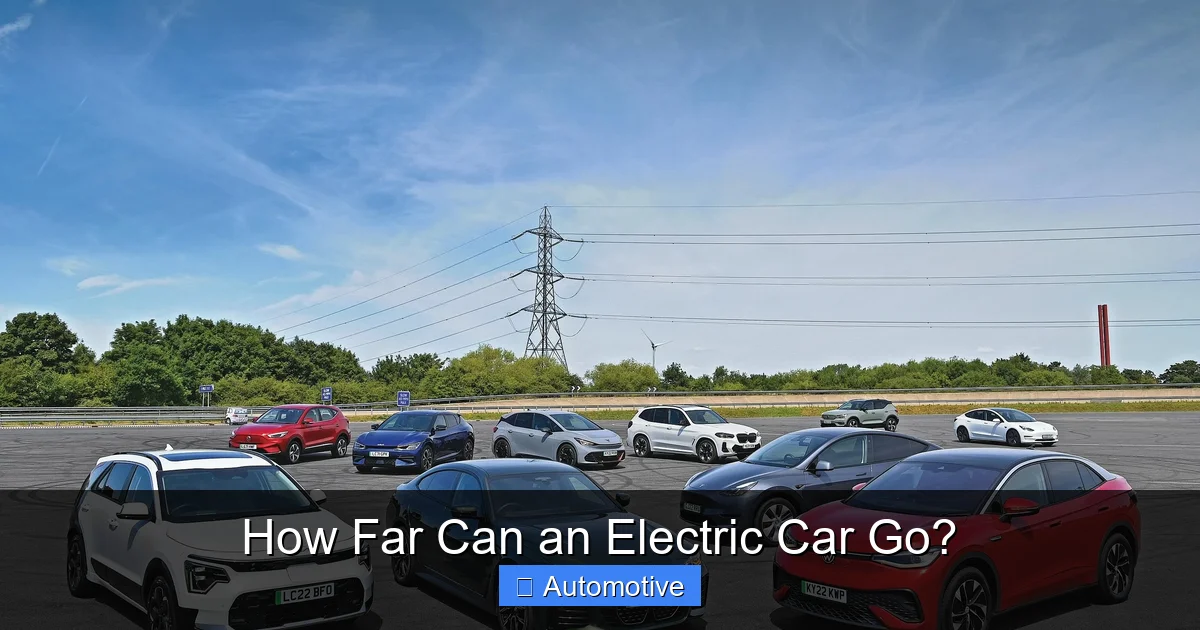
Now that we understand how range works, let’s look at some of the best-performing EVs on the market today. These models are leading the charge (pun intended) when it comes to how far an electric car can go.
Longest-Range EVs in 2024
As of 2024, several electric cars offer ranges that rival or exceed traditional gas-powered vehicles. Here are some of the top contenders:
– Tesla Model S: With an EPA-estimated range of up to 405 miles, the Model S remains one of the longest-range EVs available. Its large 100 kWh battery and aerodynamic design help it go the distance.
– Lucid Air Grand Touring: This luxury sedan pushes the envelope with a staggering 516-mile range, thanks to its ultra-efficient powertrain and cutting-edge battery technology.
– Mercedes-Benz EQS: The EQS 450+ offers up to 350 miles of range, combining luxury with impressive efficiency. Its sleek design reduces drag, helping it slice through the air with ease.
– Hyundai Ioniq 6: This stylish sedan delivers up to 361 miles of range, making it one of the most efficient EVs on the market. Its low drag coefficient and lightweight construction are key to its success.
– Ford Mustang Mach-E Extended Range: With up to 314 miles of range, this SUV proves that electric doesn’t have to mean sacrificing space or performance.
These numbers show just how far electric car technology has come. Just a decade ago, most EVs struggled to break 100 miles per charge. Today, many can easily handle a full week of commuting—or a long weekend trip—without needing a recharge.
Budget-Friendly EVs with Solid Range
You don’t need to spend six figures to get a long-range electric car. Several affordable models offer impressive mileage for the price:
– Chevrolet Bolt EV: With a range of 259 miles, the Bolt is a great option for city drivers and commuters. It’s compact, efficient, and priced under $30,000.
– Nissan Leaf Plus: Offering up to 226 miles, the Leaf Plus is a reliable choice for those new to EVs. It’s been around for years and has a proven track record.
– Kia Niro EV: This compact SUV delivers up to 253 miles of range and comes with a spacious interior and modern tech features.
These models prove that you don’t need a luxury badge to enjoy the benefits of electric driving. For many people, a range of 200–250 miles is more than enough for daily use.
Factors That Affect Electric Car Range
Visual guide about How Far Can an Electric Car Go?
Image source: bestelectricbikes.com
So, how far can an electric car go? The answer isn’t just about the car—it’s also about how you use it. Several factors can influence your EV’s real-world range, some of which you can control, and others you can’t.
Weather and Climate
Temperature is one of the biggest factors affecting EV range. Cold weather is especially challenging. When temperatures drop, the chemical reactions inside the battery slow down, reducing its ability to deliver power. At the same time, drivers often use cabin heaters, which draw energy from the battery instead of a traditional engine’s waste heat.
In freezing conditions, range can drop by 20–40%. Preconditioning your car—warming it up while it’s still plugged in—can help reduce this loss. Some EVs, like Teslas and Hyundai models, have heat pump systems that are more efficient than traditional resistive heaters.
Hot weather can also impact range, though usually less severely. Running the air conditioning uses battery power, and extreme heat can reduce battery efficiency. Parking in the shade or using a sunshade can help keep the cabin cooler and reduce AC use.
Driving Habits and Speed
How you drive has a big impact on how far an electric car can go. Aggressive acceleration, high speeds, and frequent braking all reduce efficiency.
Highway driving, in particular, can cut into range. Most EVs are most efficient at speeds between 45–60 mph. Once you hit 70 mph or more, aerodynamic drag increases significantly, forcing the motor to work harder.
Smooth, steady driving—also known as “eco-driving”—can help you maximize range. Using regenerative braking to slow down instead of the brake pedal also helps recapture energy and extend your mileage.
Terrain and Elevation
Hills and mountains can be tough on EV range. Going uphill requires more power, which drains the battery faster. While regenerative braking helps recover some energy on the way down, it rarely makes up for the extra energy used climbing.
If you live in a hilly area or plan to drive through mountains, expect your range to be lower than on flat terrain. Planning your route to include charging stops can help ease range anxiety.
Vehicle Load and Accessories
The more weight you carry, the more energy your EV needs to move. Roof racks, heavy luggage, and even passengers can reduce range.
Using accessories like heated seats, heated steering wheels, and infotainment systems also draws power from the battery. While these features are nice to have, using them sparingly can help you go farther on a single charge.
Battery Health and Age
Over time, all batteries degrade. Most EV batteries are designed to retain 80–90% of their original capacity after 8–10 years or 100,000 miles. As the battery ages, its ability to hold a charge decreases, which can reduce range.
However, modern EVs are built with advanced battery management systems that help slow degradation. Keeping your battery between 20% and 80% charge most of the time—and avoiding frequent fast charging—can help prolong its life.
How to Maximize Your Electric Car’s Range
Now that you know what affects range, let’s talk about how to get the most out of every charge. With a few smart habits, you can stretch your EV’s mileage and reduce the need for frequent charging.
Drive Efficiently
The way you drive has a huge impact on efficiency. Here are some tips:
– Accelerate gently: Avoid rapid starts. Smooth acceleration uses less energy.
– Maintain a steady speed: Use cruise control on the highway to avoid unnecessary speed changes.
– Anticipate traffic: Look ahead and slow down gradually instead of braking hard.
– Use regenerative braking: Let the car slow itself down when possible, which recaptures energy.
These habits not only save energy but also make for a smoother, more comfortable ride.
Precondition Your Vehicle
Preconditioning means heating or cooling your car while it’s still plugged in. This warms up the battery and cabin using grid power instead of battery power, preserving your range.
Most EVs allow you to schedule preconditioning through a smartphone app. Set it to start 15–30 minutes before you leave, and you’ll step into a comfortable car without draining the battery.
Use Eco Mode
Many electric cars come with an “Eco” or “Efficiency” mode. This setting limits acceleration, reduces climate control usage, and optimizes energy use. While it might feel a bit slower, it can significantly extend your range.
Reduce Weight and Drag
Take off roof racks when not in use. They create wind resistance, which reduces efficiency. Also, avoid carrying unnecessary items in the trunk. Every extra pound requires more energy to move.
Plan Your Route
Use navigation apps that factor in charging stations and elevation changes. Apps like A Better Routeplanner (ABRP) or built-in systems like Tesla’s Trip Planner can help you find the most efficient path and locate chargers along the way.
Keep Tires Properly Inflated
Underinflated tires increase rolling resistance, which reduces range. Check your tire pressure regularly and keep it at the recommended level. Many EVs have tire pressure monitoring systems to help you stay on top of it.
Charging and Long-Distance Travel
One of the biggest concerns about electric cars is whether they can handle long trips. The good news? With today’s technology and growing charging networks, it’s easier than ever to travel far in an EV.
Fast Charging Networks
Fast chargers, also known as DC fast chargers, can recharge an EV battery from 10% to 80% in 20–40 minutes. Networks like Tesla Superchargers, Electrify America, and EVgo are expanding rapidly across the U.S.
Tesla’s Supercharger network is particularly robust, with over 1,800 stations in North America. Electrify America has over 800 stations and is adding more every year. These networks make it possible to drive from coast to coast in an electric car.
Planning a Road Trip
Long-distance EV travel requires a bit more planning than driving a gas car, but it’s not difficult. Here’s how to do it:
1. Map your route: Use an EV trip planner to find charging stations along your path.
2. Charge strategically: Aim to charge when you stop for meals or rest breaks.
3. Allow extra time: Charging takes longer than filling up with gas, so build in buffer time.
4. Carry a portable charger: A Level 2 portable charger can be a lifesaver in remote areas.
With a little preparation, you can enjoy the quiet, smooth ride of an EV on your next road trip—without running out of juice.
Home Charging for Daily Use
For most drivers, home charging is the most convenient and cost-effective option. A Level 2 charger (240V) can fully recharge most EVs overnight. Even a standard 120V outlet (Level 1) can add 3–5 miles of range per hour, which is enough for short commutes.
Installing a home charger is a smart investment. It gives you the freedom to start each day with a full “tank” and reduces reliance on public stations.
The Future of Electric Car Range
So, how far can an electric car go today? As we’ve seen, the answer is anywhere from 150 to over 500 miles, depending on the model and conditions. But the future looks even brighter.
Advances in Battery Technology
Researchers are working on next-generation batteries that could dramatically increase range. Solid-state batteries, for example, promise higher energy density, faster charging, and longer lifespans. Companies like Toyota, QuantumScape, and Solid Power are making progress, with some expecting commercial availability by 2026–2028.
These batteries could enable EVs with 600–1,000 mile ranges—enough to cross entire states on a single charge.
Lighter Materials and Better Aerodynamics
Automakers are also focusing on reducing vehicle weight and improving aerodynamics. Lighter materials like carbon fiber and aluminum, combined with sleeker designs, help EVs go farther with less energy.
The Lucid Air, for example, has one of the lowest drag coefficients of any production car, which contributes to its record-breaking range.
Vehicle-to-Grid and Solar Integration
Future EVs may also integrate solar panels or vehicle-to-grid (V2G) technology, allowing them to generate or share energy. While solar roofs won’t fully charge a car, they could add 10–20 miles of range per day—enough for many commuters.
V2G systems let EVs feed power back into the grid during peak demand, turning your car into a mobile energy storage unit.
Conclusion
So, how far can an electric car go? The answer is clearer than ever: farther than most people think. With ranges now exceeding 300 miles on many models—and some pushing past 500—EVs are more than capable of handling daily commutes, weekend trips, and even cross-country adventures.
While real-world range can vary due to weather, driving habits, and terrain, smart practices like efficient driving, preconditioning, and route planning can help you get the most out of every charge. And with fast-charging networks expanding rapidly, “range anxiety” is becoming a thing of the past.
As battery technology continues to improve, we can expect even longer ranges, faster charging, and more affordable options. The future of electric driving isn’t just about going farther—it’s about going smarter, cleaner, and more efficiently.
Whether you’re ready to make the switch or just curious, one thing is certain: the electric car revolution is here, and it’s taking us farther than we ever imagined.
Frequently Asked Questions
How far can an electric car go on a single charge?
Most new electric cars offer a range of 200–400 miles per charge, with some high-end models exceeding 500 miles. Real-world range may vary based on driving conditions and habits.
Does cold weather reduce EV range?
Yes, cold weather can reduce EV range by 20–40% due to reduced battery efficiency and increased use of cabin heating. Preconditioning the car while plugged in can help minimize this effect.
Can I take an electric car on a long road trip?
Absolutely. With fast-charging networks like Tesla Superchargers and Electrify America, long-distance EV travel is practical. Planning your route and charging stops in advance makes it even easier.
How long does it take to charge an electric car?
Charging time depends on the charger type. Level 1 (120V) adds 3–5 miles per hour, Level 2 (240V) adds 20–30 miles per hour, and DC fast chargers can add 150–200 miles in 20–30 minutes.
Do electric cars lose range over time?
Yes, like all batteries, EV batteries degrade slowly over time. Most retain 80–90% of their capacity after 8–10 years. Proper charging habits can help slow this process.
What’s the most efficient way to drive an EV?
Drive smoothly, avoid high speeds, use regenerative braking, and maintain a steady pace. Using eco mode and preconditioning also help maximize range.