
How Far Can a Toyota Prius Hybrid Go on a Full Tank?

The Toyota Prius hybrid typically travels between 500 and 600 miles on a full tank, thanks to its impressive fuel economy of up to 56 MPG combined. However, real-world range can vary significantly based on driving conditions, habits, and vehicle maintenance. Understanding these factors helps you get the most out of every fill-up.
Ever found yourself on a long road trip, watching the fuel gauge dip, and wondering, “How much farther can I actually go?” For Toyota Prius owners, that question is especially interesting. The Prius is famous for its stellar fuel economy, but how does that translate into real-world distance between gas stations? The short answer is: quite far. On a full tank, a modern Toyota Prius hybrid can typically cover somewhere between 500 and 600 miles. But that number isn’t set in stone. It’s a living, breathing figure that changes with your driving style, the weather, the road, and even how much stuff you’ve got packed in the trunk. This article is your complete guide to understanding the true range of a Toyota Prius. We’ll break down the numbers, explore the science behind the hybrid system, and give you practical, actionable tips to squeeze every last mile out of that fill-up.
Key Takeaways
- Tank Size & MPG Rule: The Prius’s range is a simple calculation: its 11.4-gallon fuel tank multiplied by its real-world miles-per-gallon (MPG) figure.
- EPA vs. Reality: While EPA estimates provide a baseline (up to 57 MPG city/56 MPG highway for recent models), actual range often differs due to driver behavior and environment.
- Your Driving Style is Key: Aggressive acceleration, high speeds, and excessive idling can reduce your effective range by 15-30% compared to gentle, eco-conscious driving.
- Maintenance Matters: Proper tire inflation, regular oil changes, and a healthy 12-volt battery are crucial for the hybrid system to operate at peak efficiency and maximize range.
- Model Year Variations: Newer Prius generations (like the 2023 model) often have slightly larger tanks and more efficient powertrains, affecting total achievable miles.
- The Hybrid System is Your Co-Pilot: The Prius’s computer constantly optimizes between electric and gas power. Understanding how to work with it—using EV mode in town—extends your range.
- Plan for the Long Haul: For trips near the upper limit of your estimated range, using navigation to find fuel stations and maintaining steady speeds ensures you avoid anxiety.
📑 Table of Contents
- The Prius Fuel System: More Than Just a Gas Tank
- EPA Estimates vs. The Real World: Bridging the Gap
- Factors That Influence Your Actual Prius Range
- Maximizing Your Miles Per Gallon: Practical Eco-Driving Tips
- Comparing Prius Generations and Models
- Practical Tips for Long-Distance Driving and Range Anxiety
- Conclusion: Embracing Efficient Freedom
The Prius Fuel System: More Than Just a Gas Tank
To understand range, you first need to understand the machine. The Toyota Prius is a full hybrid, meaning it can run on its gasoline engine, its electric motor(s), or a clever combination of both. This dual-power source is the secret to its efficiency. But the gasoline engine still needs fuel, and that fuel lives in a physical tank under the rear seat.
Tank Size: The Fixed Variable
The starting point for any range calculation is the size of the fuel tank. For most recent model years (2023, 2022, 2021, etc.), the Toyota Prius is equipped with an 11.4-gallon (approximately 43-liter) fuel tank. Earlier models (like the 2010-2015 generations) had a slightly smaller 10.8-gallon tank. This tank is your fixed container. You can’t change it (without serious modification), so it sets the absolute upper limit for your gasoline-based range. The electric motor doesn’t add “fuel” in the traditional sense; it uses energy recaptured from braking and the gas engine, which is stored in the high-voltage battery. That’s why we calculate range primarily from the gasoline tank’s capacity and the car’s fuel consumption.
The Hybrid Powertrain: The Efficiency Engine
The magic happens in how the Prius uses that gasoline. The Atkinson-cycle gasoline engine is designed for efficiency, not raw power. It’s paired with one or two electric motor-generators (depending on the model year) and a planetary gearset that acts as an electronic continuously variable transmission (e-CVT). The car’s computer brain is constantly analyzing your speed, acceleration request, and battery charge to decide the most efficient power blend. At low speeds, it might use just the electric motor, using zero gasoline. On the highway, it might rely more on the efficient gas engine. During deceleration, it converts kinetic energy back into electricity. This constant optimization is why the Prius can achieve such high MPG numbers, directly impacting how many miles you can travel on that 11.4 gallons.
EPA Estimates vs. The Real World: Bridging the Gap
The Environmental Protection Agency (EPA) puts every new car through standardized tests to determine its official fuel economy ratings. For the 2023 Toyota Prius, the EPA estimates are impressive: up to 57 MPG in the city and 56 MPG on the highway, with a combined rating of 56 or 57 MPG depending on the trim. If you did the math on that—11.4 gallons x 57 MPG—you’d get a theoretical maximum range of about 650 miles. But you’ll rarely, if ever, see that number on your dashboard. The EPA tests are conducted in controlled laboratory conditions with specific temperatures, no wind, and a very predictable driving cycle. Real life is messier.
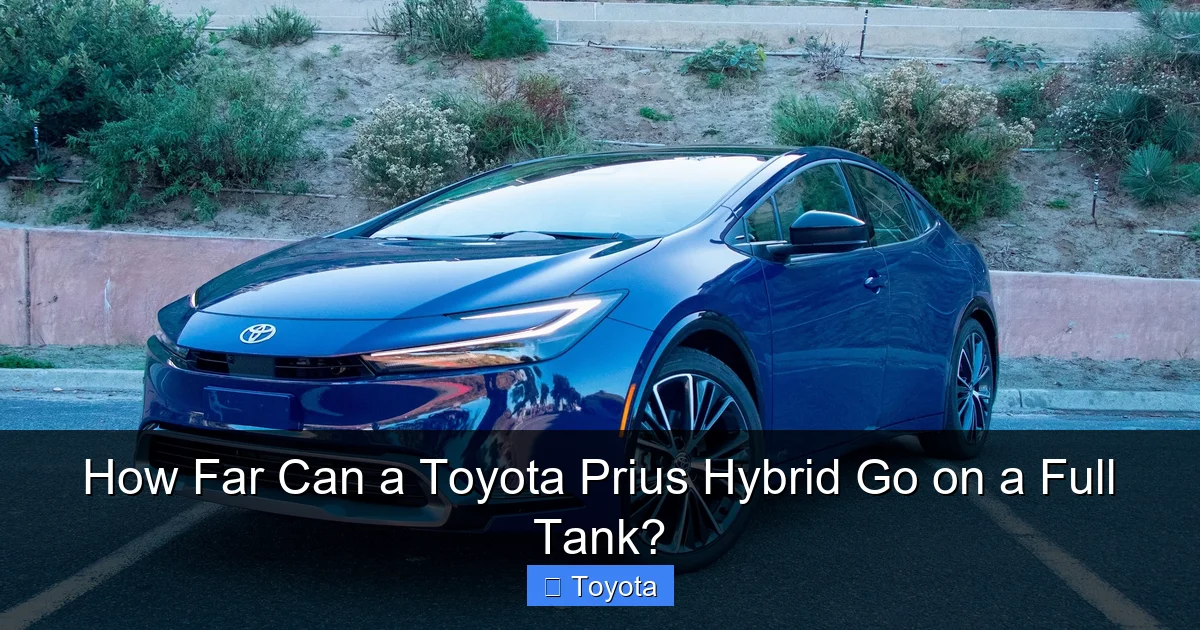
Visual guide about How Far Can a Toyota Prius Hybrid Go on a Full Tank?
Image source: wallpapercave.com
Why Your Actual MPG Will Differ
Several factors create the “MPG gap” between the window sticker and your daily drive. First, driving style is huge. The EPA cycle involves very gentle acceleration and braking. If you drive with a lead foot, you’re burning more fuel. Second, speed matters. Aerodynamic drag increases exponentially with speed. Driving 75 mph on the highway will yield far worse MPG than driving 65 mph, even if both are “highway” driving. Third, climate control use is a major drain. Running the air conditioning in summer or the heater in winter puts a significant load on the engine (and battery), reducing efficiency. Finally, terrain and traffic. Stop-and-go city traffic is actually where the Prius shines, thanks to its electric motor and regenerative braking. But constant hills and mountains require more engine work. So, while the EPA gives you a benchmark, your real-world combined MPG will likely settle in the 45-52 MPG range for most drivers in moderate climates. That translates to a more realistic range of roughly 500 to 600 miles per tank.
Factors That Influence Your Actual Prius Range
Let’s get specific. What exactly pushes your range up or down? Think of these as the levers you can (and sometimes can’t) pull.

Visual guide about How Far Can a Toyota Prius Hybrid Go on a Full Tank?
Image source: rav4hub.com
Driving Conditions: City vs. Highway
This is the biggest variable. In dense city traffic with lots of stops, the Prius excels. It can drive on electric power alone at low speeds (under ~25 mph), and every brake application recharges the battery. You might see 60 MPG or more in ideal urban conditions. On a steady, flat highway at 65 mph, you’ll still do great, often in the low-50s MPG range. But push that speed to 75 mph, and you might drop into the mid-40s. The sweet spot for maximum range in a Prius is often moderate-speed, steady driving on flat roads.
Weather and Temperature
Cold weather is the hybrid’s kryptonite. The engine takes longer to warm up, running less efficiently. The gasoline is denser, and you’re more likely to use the heater and defroster, which draw significant power. In freezing temps, it’s common to see a 20-30% drop in MPG. Hot weather isn’t as punishing, but running the A/C constantly still takes a toll. Extreme heat can also reduce the efficiency of the battery cooling system. Mild, temperate weather is where the Prius truly struts its stuff.
Vehicle Load and Roof Racks
Every extra pound costs fuel. A fully loaded Prius with four adults and a roof-top carrier will have significantly worse aerodynamics and weight distribution than a solo driver. That roof rack alone can decrease highway MPG by 5-10% due to wind resistance. If you’re planning a trip and want maximum range, pack light and remove unnecessary accessories.
Tire Pressure and Maintenance
This is a big one you can control. Under-inflated tires create more rolling resistance. The Prius’s low-rolling-resistance tires are designed for efficiency, but they still need the correct pressure (typically 35 PSI front, 33 PSI rear, but check your door jamb sticker). Keeping them inflated to spec can improve MPG by a few percent. Similarly, using the correct oil (0W-16 for newer models), a clean air filter, and a healthy 12-volt battery (which powers the hybrid system’s computer) are all essential for the car to manage power optimally. A weak 12V battery can cause the gasoline engine to run more often to recharge it, killing your MPG. For more on Prius specifications, you can read about how much a Toyota Prius weighs, as weight is a fundamental factor in vehicle efficiency.
Maximizing Your Miles Per Gallon: Practical Eco-Driving Tips
You don’t have to be a hypermiler to get great range. Simple, consistent habits make a dramatic difference. The goal is to minimize the use of the gasoline engine and maximize energy recapture.
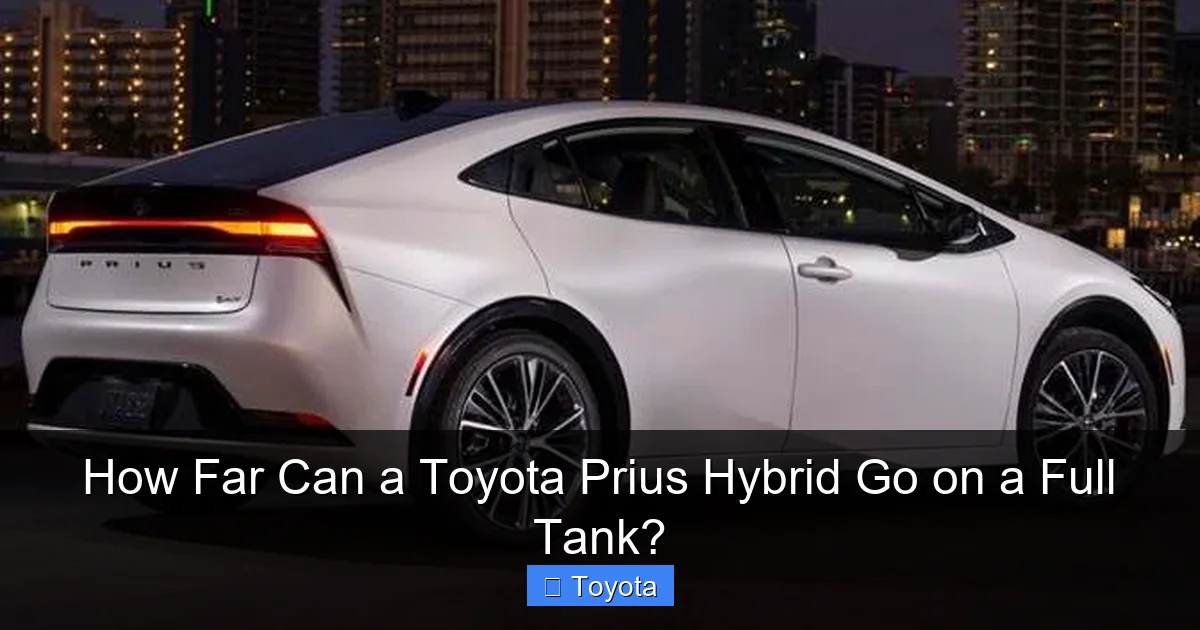
Visual guide about How Far Can a Toyota Prius Hybrid Go on a Full Tank?
Image source: ev-riders.com
Smoothness is Everything
This is the golden rule. Accelerate gently and anticipate traffic flow to brake slowly and early. Hard acceleration tells the computer to fire up the gas engine immediately. Smooth driving allows the car to use the electric motor more often and recapture more energy during braking. Think of the accelerator pedal as a “power request” button. Press it softly.
Use the “Eco” Mode
Your Prius has an Eco mode button. This remaps the throttle response to be less sensitive, softens the A/C operation, and may tweak the climate control to be more efficient. It encourages the smooth driving style mentioned above. For maximum range, keep it on. The “Power” mode does the opposite, for when you need quicker response.
Master the EV Mode (If Equipped)
Most Prius models have an EV mode button. When the battery has sufficient charge (usually a few bars), pressing this button allows you to drive on electric power alone at low speeds (typically up to 25 mph) for short distances, like in a parking lot or quiet neighborhood. It’s a zero-fuel zone. Use it whenever you can safely do so.
Climate Control Strategy
In moderate weather, use the vent mode and fan instead of max A/C. In winter, use the seat heaters (if equipped) instead of the cabin heater, as seat heaters draw far less power. Pre-condition the cabin while the car is still plugged in (if you have a plug-in hybrid Prime model) to use grid power instead of gasoline.
Comparing Prius Generations and Models
Not all Priuses are created equal when it comes to range. The formula (Tank Size x Real-World MPG) means both variables have changed over time.
The Fourth Generation (2016-2022)
This generation featured a 10.8-gallon tank and EPA ratings around 54 MPG combined. Real-world range was excellent, often in the 500-mile ballpark. It was a significant leap in refinement and efficiency from the third generation.
The Fifth Generation (2023-Present)
The all-new 2023 Prius made headlines with its radically redesigned, sportier looks and even higher efficiency. It uses a slightly larger 11.4-gallon tank. EPA ratings jumped dramatically, with the FWD model achieving up to 57 MPG combined. This means the theoretical maximum range is higher, and early reports from owners suggest real-world combined MPG in the low-to-mid 50s is very achievable. This pushes the realistic, reliable range for a 2023 Prius on a full tank to the upper end of the spectrum, often 550-600+ miles for conservative drivers.
Prius Prime (Plug-in Hybrid)
The Prius Prime is a different beast. It has a larger 11.4-gallon gas tank *and* a larger battery that allows for about 44 miles of electric-only driving. Once that electric range is depleted, it operates as a standard hybrid. So its total “full tank” range (gas + electric) can be enormous, well over 600 miles if you start with a full charge and then fill the gas tank. But if you’re asking about gasoline-only range after the battery is empty, it’s similar to the standard Prius.
Practical Tips for Long-Distance Driving and Range Anxiety
So you’ve got a trip that’s 450 miles from home, and your Prius is showing 550 miles of range on the dash. Should you push it? Maybe, but with a plan.
Trust, But Verify with Navigation
The Prius’s range display is a smart estimate based on recent MPG. It’s a good guide, but don’t treat it as gospel. Use your car’s navigation system or a phone app to plot your route. Identify gas stations along the way, especially in rural areas. Your plan should be to refuel when you have a comfortable 50-70 miles of range left, not when you’re on the “ fumes” indicator. This eliminates stress.
Drive Consciously on the Highway
On long hauls, set your cruise control to a reasonable speed (65-70 mph is the efficiency sweet spot for most cars). Use the radar cruise control if you have it to maintain consistent following distances, which smooths out the need for constant braking and accelerating. Turn off unnecessary electrical loads.
The “Empty” Indicator Isn’t Truly Empty
Like most cars, the Prius’s gas light comes on with a significant reserve still in the tank (usually 1.5-2.0 gallons). You shouldn’t make a habit of running it down to zero, as it can stress the fuel pump. But in a pinch, that reserve adds another 60-100 miles to your “on fumes” range. For context on how far other vehicles can go when the light comes on, you can explore articles like how many miles a Toyota Sienna can go on empty or the more general how far can any car go on empty. However, with a Prius’s superior efficiency, that reserve takes you much farther than in a gas-guzzling SUV.
Conclusion: Embracing Efficient Freedom
The Toyota Prius hybrid isn’t just a car; it’s a masterclass in efficient engineering that translates directly into real-world freedom. A full tank gives you a legitimate 500 to 600 miles of range, often meaning you can go a week or more between fill-ups for average commuters. That number isn’t magic—it’s the result of a smart hybrid system working in harmony with a driver who understands its rhythms. By keeping your tires inflated, driving smoothly, using Eco mode, and planning your trips, you become an active participant in achieving that maximum range. So the next time you fill up, reset your trip odometer. See how close you can get to the upper end of the scale. You might just discover that the question isn’t “How far can a Prius go?” but rather, “How will I use all this extra time and money I’m saving by not stopping for gas?”
Frequently Asked Questions
What is the average real-world range of a Toyota Prius on a full tank?
For most model years (2016-present), the realistic range is between 500 and 600 miles. This assumes a combined real-world MPG of 45-52 MPG and the standard 11.4-gallon fuel tank. Conservative drivers in good weather can often achieve the higher end of this spectrum.
How does my driving style affect the Prius’s range the most?
Aggressive driving is the single biggest killer of range. Rapid acceleration and hard braking force the gasoline engine to work harder and reduce regenerative braking. Maintaining smooth, gentle inputs and moderate highway speeds (65-70 mph) can improve your MPG by 15-20% or more compared to aggressive driving.
Can I exceed the EPA’s estimated MPG and range?
Yes, it’s possible, especially in specific conditions. Dedicated “hypermilers” can exceed EPA numbers through extreme techniques like drafting behind trucks and using pulse-and-glide driving. For the average driver, consistently beating the EPA combined rating by a few MPG is achievable with very gentle, eco-conscious driving in favorable conditions.
How does the Prius’s range compare to other Toyota hybrids like the RAV4 Hybrid?
The Prius generally has a slight edge in pure MPG efficiency over the larger RAV4 Hybrid. However, the RAV4 Hybrid often has a larger fuel tank (around 14.5 gallons). This means their real-world ranges can be similar (both in the 500-550 mile ballpark), but the Prius achieves it with less fuel, making it more efficient per gallon.
What should I do if my Prius’s range drops suddenly?
A sudden, significant drop in calculated range or MPG usually points to a maintenance issue. First, check your tire pressures. Next, ensure you’re using the correct oil (0W-16 for newer models). A clogged air filter or a failing 12-volt battery can also cause the hybrid system to work inefficiently, forcing the gas engine to run more. A diagnostic scan at a dealership or trusted mechanic is recommended.
Is it bad to let my Prius run very low on gas?
While the Prius has a fuel pump cooled by gasoline, consistently running the tank very low (<1 gallon) can overheat the pump and suck up sediment from the bottom of the tank. It’s best to refuel when you have 1-2 gallons left, or when the low fuel light comes on. The reserve after the light comes on is for emergencies, not regular use.
