How Expensive Is It to Maintain a 2009 Maserati Quattroporte?

Contents
- 1 Key Takeaways
- 2 📑 Table of Contents
- 3 The Allure and The Reality: Owning a 17-Year-Old Italian Luxury
- 4 The Unavoidable Annual Bill: Breaking Down Routine & Expected Costs
- 5 The Parts Problem: Scarcity, Obsolescence, and the Price of Exclusivity
- 6 DIY vs. Professional: What Can You Actually Do Yourself?
- 7 Long-Term Ownership: Strategies for Survival (and Maybe Thriving)
- 8 The Bottom Line: Passion vs. Practicality
- 9 Frequently Asked Questions


Maintaining a 2009 Maserati Quattroporte in 2026 is a costly endeavor, often exceeding $3,000-$5,000 annually for a well-kept example. The primary drivers are the age-related failure of complex components, extreme scarcity of parts, and the need for highly specialized mechanics. While some DIY routine tasks are possible, major repairs like the F1-style clutch or hydraulic systems can easily surpass $10,000. Prospective owners must budget aggressively and find a trusted specialist to avoid financial ruin.
Key Takeaways
- Extremely High Annual Cost: Budget a minimum of $3,000-$5,000 per year for routine maintenance and inevitable repairs, with major services potentially doubling that.
- Parts Are the Biggest Hurdle: Many unique components for the 2009 Quattroporte are discontinued, NOS (New Old Stock) is rare and expensive, and aftermarket support is extremely limited.
- DIY is Severely Limited: While basic items like filters and brakes are possible, the car’s complex Ferrari-derived F1 transmission, hydraulic systems, and electronics require factory-trained expertise.
- Insurance is a Major Factor: As a high-performance, 17-year-old luxury sedan, insurance premiums will be significantly higher than for a standard sedan of the same year.
- Reliability is Age-Dependent: The 2009 model is past its prime; its famed 4.2L V8 and automated manual transmission are prone to age-specific failures not common in earlier years.
- Resale Value is Tied to Maintenance: A comprehensive, documented service history is non-negotiable for preserving any value; a neglected example is nearly worthless.
- Specialist Mechanic is Non-Negotiable: Attempting to use a general mechanic will likely lead to misdiagnosis, wasted money, and improper repairs. You must find a Maserati or Ferrari expert.
📑 Table of Contents
- The Allure and The Reality: Owning a 17-Year-Old Italian Luxury
- The Unavoidable Annual Bill: Breaking Down Routine & Expected Costs
- The Parts Problem: Scarcity, Obsolescence, and the Price of Exclusivity
- DIY vs. Professional: What Can You Actually Do Yourself?
- Long-Term Ownership: Strategies for Survival (and Maybe Thriving)
- The Bottom Line: Passion vs. Practicality
The Allure and The Reality: Owning a 17-Year-Old Italian Luxury
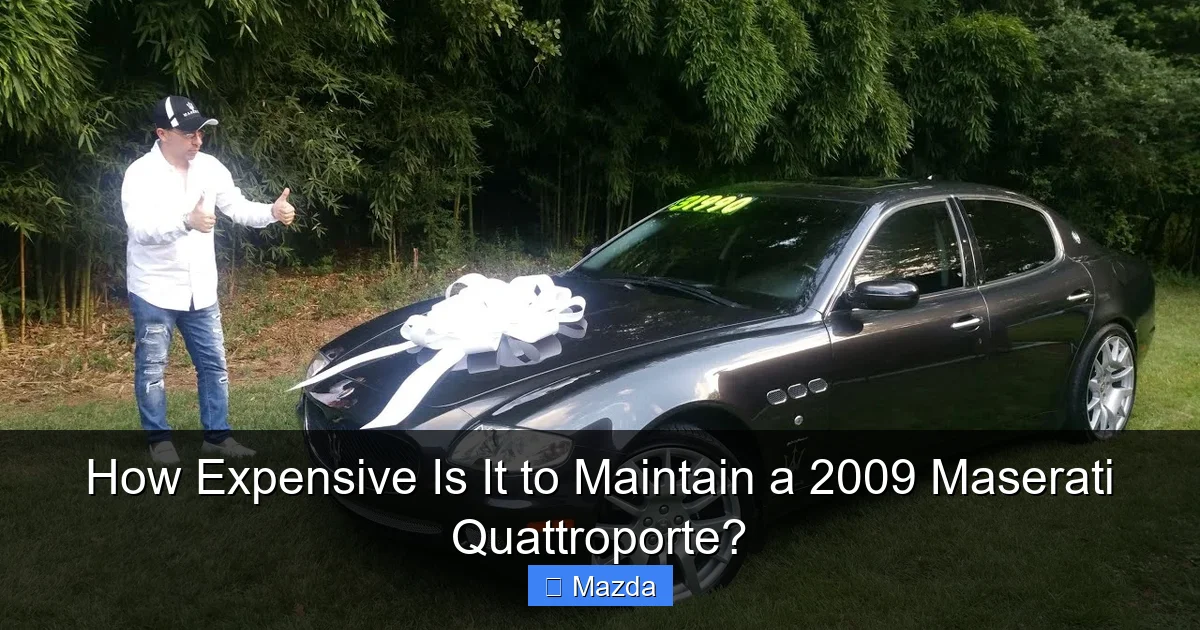
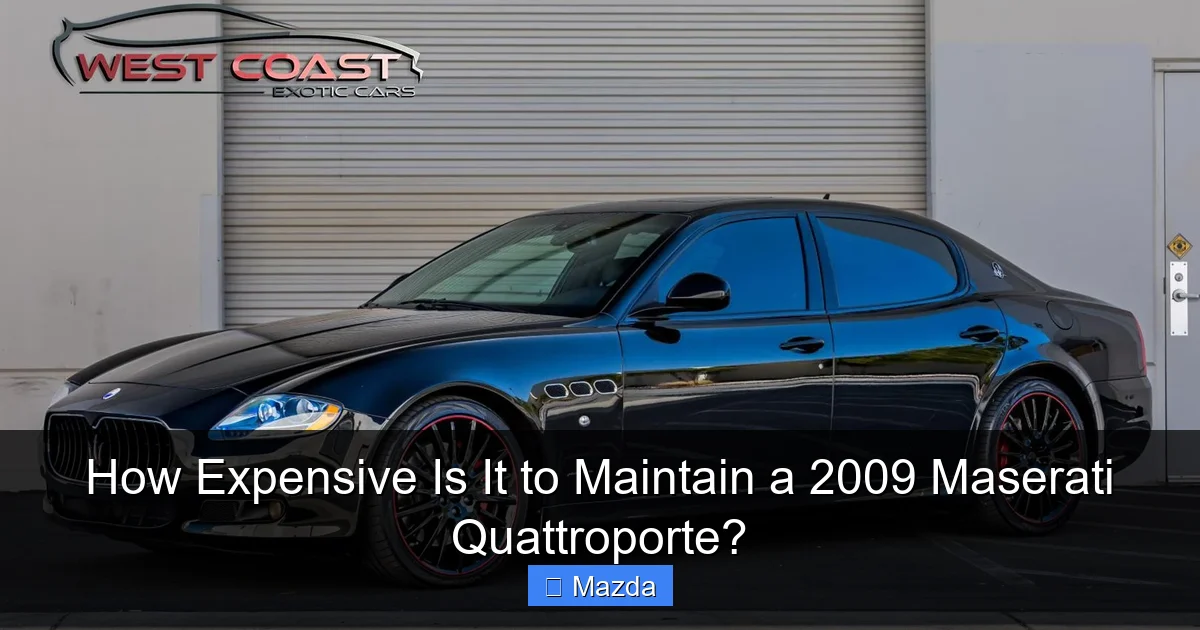
Let’s be honest. The 2009 Maserati Quattroporte is a stunning piece of machinery. In its day, it was a bold, four-door supercar that combined a screaming Ferrari V8 with a dramatic, coach-built Italian design. Today, it remains a head-turner, a symbol of a bygone era of automotive passion. But here we are in 2026, and that “bygone era” is now a full 17 years in the rearview mirror. The question isn’t just “How much is a 2009 Maserati Quattroporte worth?” but a far more critical one for any potential owner: “How expensive is it to maintain a 2009 Maserati Quattroporte?” The answer is a masterclass in the economics of aging exotic performance cars.
This isn’t about routine oil changes for a Toyota Camry. This is about preserving a complex, hand-built Italian masterpiece whose engineering prioritized breathtaking performance and emotion over long-term, low-cost ownership. The financial commitment is profound and ongoing. Think of it less like buying a used car and more like acquiring a small, temperamental, and exquisitely beautiful piece of machinery that requires a dedicated fund and a specialist’s touch to keep alive. The initial purchase price is often just the down payment on a lifelong relationship with your mechanic and your wallet.
So, what does “expensive” actually mean in dollars and cents? For a 2009 Quattroporte in 2026, we’re talking about a baseline annual maintenance budget that would shock most drivers. This isn’t including the big, unexpected failures—we’ll get to those. This is the “keeping it running and legal” cost.
Visual guide about How Expensive Is It to Maintain a 2009 Maserati Quattroporte?
Image source: westcoastexoticcars.com
Essential Fluids, Filters, and Belts
The Quattroporte’s 4.2-liter V8, derived from the Ferrari F430, is a high-strung unit. It demands specific, high-quality synthetic oil and a filter that isn’t found at your local AutoZone. A professional oil change using the correct Maserati-spec oil and filter, performed by a specialist, will run you $400 to $700. That’s not a typo. This should be done every 5,000-7,500 miles, or at least once a year given typical driving patterns for these cars.
Other critical fluid services are equally steep. The transmission (more on its complexity later) requires a specific fluid and a meticulous fill procedure. A transmission fluid service can cost $800 to $1,500. The same goes for the differential fluid and the hydraulic system fluid if applicable. Cabin and engine air filters are also proprietary and expensive, often costing $100-$200 for the parts alone, plus labor.
Tires, Brakes, and Suspension: The Wear Items
This is where the bills start to feel personal. The Quattroporte wears large, staggered-width run-flat tires (or high-performance summers if the previous owner was wise). A set of four quality replacements, including mounting and balancing, will easily cost $1,800 to $2,800. Given the car’s weight and power, these tires don’t last long if driven enthusiastically.
The brake system is another major expense. It features large, powerful Brembo calipers and substantial rotors. A full pad and rotor replacement on all four corners, using quality aftermarket or OEM parts, starts at $1,200 and can go much higher. The rear pads, in particular, are known to wear quickly, especially if the car is used for frequent stop-and-go driving. The suspension components—control arms, bushings, shocks—are all high-stress items. A single failing bushing can lead to a $600-$1,200 repair bill because the entire component often needs replacement.
Inspection, Registration, and the “Unknown”
In many states, a 17-year-old luxury car will require a more rigorous, and sometimes costly, safety and emissions inspection to maintain registration. Beyond that, you must budget for the inevitable. Electrical gremlins, sensor failures, and cosmetic wear (like the delicate leather and Alcantara interiors) will arise. Setting aside an additional $1,000-$2,000 annually for these “unknowns” is not pessimistic; it’s prudent planning.
Realistic Annual Baseline: For a 2009 Quattroporte that is already in decent shape, you should mentally prepare for a minimum recurring annual cost of $3,000 to $5,000 just for oil, tires, brakes, fluids, and inspections. This is the price of admission to the Maserati owner’s club in 2026.
The Parts Problem: Scarcity, Obsolescence, and the Price of Exclusivity
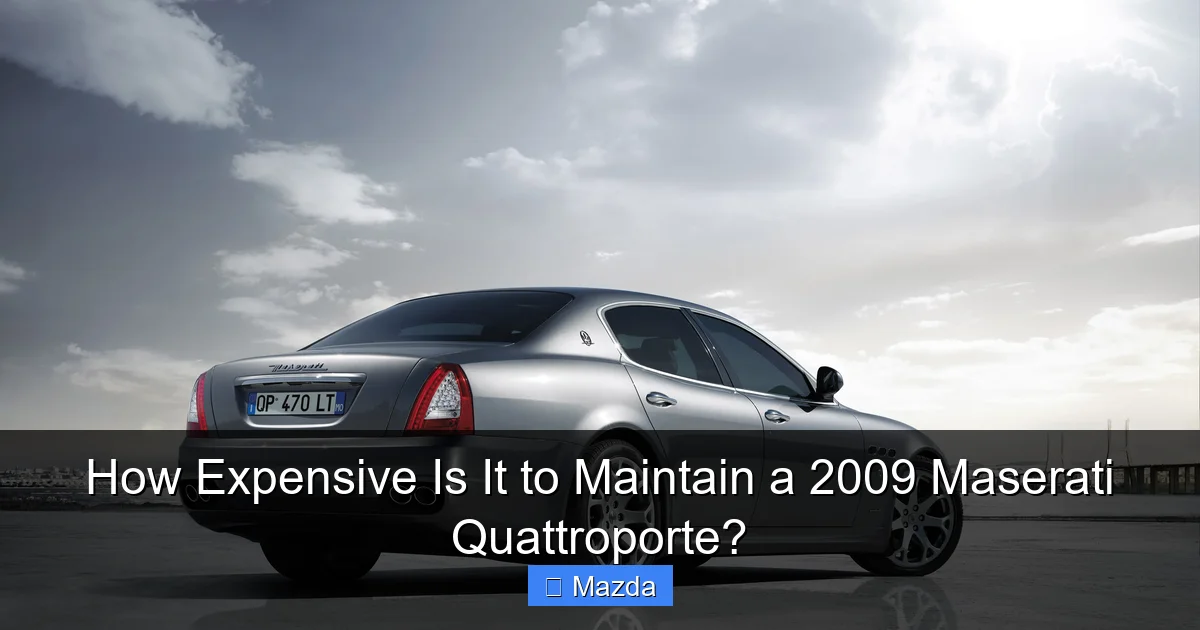
This is the single greatest threat to your financial sanity when maintaining a 2009 Maserati Quattroporte. The car’s low production volume (only about 2,000 were sold in its first year) and the passage of time have created a perfect storm for parts availability and cost.
Visual guide about How Expensive Is It to Maintain a 2009 Maserati Quattroporte?
Image source: carsinvasion.com
Discontinued and NOS Nightmares
Maserati, like all manufacturers, discontinues parts for models after a certain period. For the 2009 Quattroporte, many unique body panels, interior trim pieces, specific electronic modules, and even some mechanical components are no longer produced by Maserati. The only hope is New Old Stock (NOS)—parts that have sat on a dealer’s shelf or in a warehouse for 15 years. These are rare, and when they surface, they command a premium. A NOS headlight assembly or a specific interior plastic trim piece can cost $1,000+ before shipping.
The Aftermarket is a Ghost Town
Contrast this with a popular classic like a BMW 5-Series or a Mercedes E-Class from the same era. Those cars have a thriving aftermarket with companies making replacement parts, performance parts, and even restoration components. The Maserati Quattroporte aftermarket is virtually non-existent. There are no companies mass-producing replacement suspension bushings, body panels, or interior kits. You are almost entirely dependent on the dwindling supply of original parts or the skill of a fabricator for custom solutions.
Shared Parts? Not So Fast.
It’s true that the Quattroporte shares its engine and some transmission components with the Ferrari F430. This is a double-edged sword. On one hand, a knowledgeable Ferrari specialist can sometimes source parts. On the other, Ferrari parts are not cheap. A Ferrari-branded part will cost more than a Maserati-branded equivalent, and the interchangeability is not 100%. The engine management software is unique to Maserati, as are many ancillary systems. You cannot simply raid a Ferrari F430 parts bin and expect a perfect fit. The “shared” parts myth often leads owners into a false sense of security about availability and cost.
Strategy: The only viable strategy is to establish a relationship with a top-tier Maserati/Ferrari specialist before you buy the car. They often have networks for sourcing used or NOS parts and can advise on what is actually obtainable. Joining dedicated Maserati owner forums is also critical for finding parts leads and learning which components are known to be scarce.
DIY vs. Professional: What Can You Actually Do Yourself?
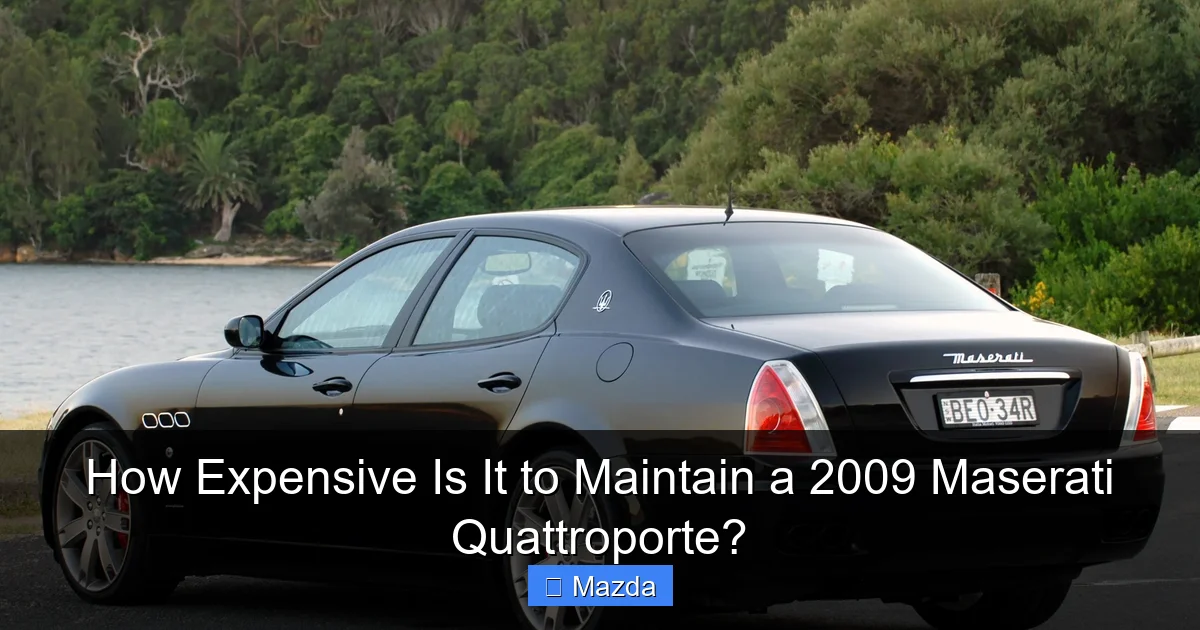
Given the astronomical labor rates at a specialist ($150-$250+ per hour), the temptation to DIY is strong. But you must be brutally honest about your skills and the car’s complexity.
Visual guide about How Expensive Is It to Maintain a 2009 Maserati Quattroporte?
Image source: s1.cdn.autoevolution.com
The “Possible” DIY Projects (With Caution)
- Oil & Filter Change: The process is straightforward if you have the correct tools, oil, and filter. However, you must dispose of the oil properly and ensure the correct torque on the drain plug. A mistake can be catastrophic.
- Brake Pad Replacement: If you have experience with performance brake systems and the correct tools (like a torque wrench for the caliper bolts), this is doable. But you must also inspect the rotors for wear or cracking and be prepared for stuck caliper guide pins—a common issue.
- Air Filter Replacement: Simple, but accessing the engine bay on a Quattroporte requires care to avoid damaging the delicate plastic covers and sensors.
- Spark Plug Replacement: On the 4.2L V8, this is a moderately involved job requiring specific sockets and knowledge of the coil-on-plug system. It’s a good project for an advanced DIYer.
The “Absolutely Do Not Touch” Zone
- The F1-Style Automated Manual Transmission (Cambiocorsa): This is the heart of the car’s complexity and its most expensive potential repair. It uses hydraulic actuators, two clutches, and a robotized shift mechanism. Diagnosing issues requires proprietary Maserati diagnostic computers (Maserati Check Engine, or later, Maserati Technician). Any internal work is a complete transmission removal and rebuild, costing $8,000 to $15,000+. Even a simple sensor replacement often needs the diagnostic computer to clear fault codes. This is 100% specialist territory.
- Hydraulic Systems: The Quattroporte uses hydraulics for things like the power steering (in some models) and, critically, the clutch actuation. Leaks, failed pumps, or air in the lines require precise bleeding procedures and component knowledge.
- Electronics & Modules: The car is littered with control modules for everything from the windows to the adaptive dampers. Replacing them often requires dealer-level coding and programming. A simple “check engine” light could be a $300 sensor or a $2,000 module.
- Engine & Drivetrain Mounts: These are critical on a high-torque V8. Failure causes violent vibrations. Replacement is labor-intensive and requires engine support.
The Verdict: Your DIY scope should be strictly limited to consumables and simple wear items, and only if you have significant mechanical experience. For anything else, budgeting for professional labor is not an option; it’s a necessity. A botched DIY repair on a major system can turn a $1,500 problem into a $10,000 one.
Long-Term Ownership: Strategies for Survival (and Maybe Thriving)
If you’re still reading and not running for the hills, you’re either a committed enthusiast or a glutton for punishment. Here’s how to approach long-term ownership of a 2009 Maserati Quattroporte in 2026 without bankrupting yourself.
Find Your “Guru” First
Before you buy a car, find and vet a specialist. This is the single most important step. Look for shops that specifically advertise Maserati and Ferrari work. Talk to them. Ask about their experience with 2007-2012 Quattroportes. A good specialist will be honest about the car’s weaknesses and parts challenges. They are your lifeline. Building a relationship with one shop for all major work can sometimes lead to better rates or at least consistent, trustworthy service.
Pre-Purchase Inspection (PPI) is Non-Negotiable
Spend $500-$1,000 on a comprehensive PPI by your chosen specialist. This is not the place to save money. The inspection must include a full diagnostic scan, a test drive listening for transmission shifts, clutch engagement, and any noises, and a thorough undercarriage inspection for leaks, corrosion, and worn components. The PPI report will tell you what needs fixing now and what will likely need fixing soon. Use this report to negotiate the purchase price or to walk away. A car with a clean PPI is a rare unicorn.
Budget Like a Business
Do not think of maintenance costs as surprises. Set up a dedicated “Maserati Fund.” Calculate your expected annual baseline ($4,000 is a good round number) and add a 20% contingency for the inevitable surprise repair. Divide that by 12 and have it automatically draft into a separate savings account. When the bill comes, you pay it from the fund without panic. This mental and financial separation is crucial.
Preventive Over Reactive
With a car this age, preventive maintenance is your best tool. Stick to a strict schedule for fluid changes, even if you drive it only 1,000 miles a year. Fluids degrade over time, not just mileage. Address minor leaks, unusual noises, or warning lights immediately. A $500 sensor replacement today prevents a $5,000 catalytic converter replacement next month because the engine ran rich. Keep a meticulous, physical and digital service log. A buyer in 2030 will pay a significant premium for a car with a complete, specialist-stamped history.
Consider the Endgame
Be realistic about how long you plan to keep it. The financial curve gets dramatically steeper after year 15. Major components (transmission, engine internals, hydraulic pumps) have a finite lifespan. At some point, the cost to keep it running may exceed its sentimental or market value. Have an exit strategy. Know what your “walk-away” number is—the maximum you’re willing to spend on a single repair before you sell the car for parts or to an enthusiast with deeper pockets.
The Bottom Line: Passion vs. Practicality
Owning a 2009 Maserati Quattroporte in 2026 is not a transportation decision. It is a hobby, a passion project, and a significant financial commitment. It is the automotive equivalent of owning a classic racehorse—spectacular, emotional, and expensive to feed and stable. The costs are real, they are high, and they are relentless. You are not buying a depreciating asset; you are buying a membership to an exclusive, and expensive, club.
If your primary goal is reliable, cost-effective daily transportation, run. Run far away. However, if you have the financial means to absorb a multi-thousand-dollar annual hit, the emotional connection to drive a V8-powered, sonorous, Italian four-door super sedan outweighs the cost, and you have the patience to work with specialists, then the Quattroporte can still offer unparalleled rewards. Just go in with your eyes wide open, your wallet prepared, and a trusted mechanic on speed dial. The experience of driving one with all its systems working perfectly is, many owners will say, worth every penny. But you must be the judge of whether those pennies add up to a fortune you’re willing to spend.
Frequently Asked Questions
How often does a 2009 Maserati Quattroporte need a major service?
Beyond the annual oil change, it needs a major “belt and fluid” service every 4-5 years or 40,000 miles. This includes transmission, differential, and hydraulic fluid changes, plus inspection of all belts and major components. Given its age, this service now often reveals needed repairs, making it a potentially very expensive appointment.
Is the F1-style transmission on the 2009 Quattroporte really that unreliable?
It’s not “unreliable” in the sense of being a lemon, but it is a complex, high-stress system that is now 17 years old. Common failures include hydraulic actuator seals, pump wear, and clutch pack wear. These failures lead to harsh shifts, slippage, or complete loss of drive. Repair or rebuild costs are the single highest potential expense, often $10,000+.
How does Maserati Quattroporte insurance compare to a normal sedan?
It is significantly more expensive. As a high-performance luxury vehicle with repair costs far exceeding a standard sedan, insurers classify it in a high-risk bracket. A 2009 model won’t be as pricey as a new one to insure, but expect premiums 2-3 times higher than for a 2009 Honda Accord or Toyota Camry, especially for comprehensive and collision coverage.
Can I use aftermarket parts to save money on repairs?
For simple wear items like brake pads (from reputable brands like Brembo or Pagid) and filters, yes. However, for critical drivetrain, suspension, and electronic components, aftermarket support is almost non-existent. Using unknown or low-quality parts on this car can lead to rapid failure and damage to other systems, costing more in the long run.
What is the single most common and costly repair to budget for?
While the transmission is the most expensive if it fails, the most common costly repairs involve the hydraulic clutch system and the front/rear suspension components (control arms, bushings). These are wear items on a heavy, powerful car and will need replacement multiple times over its remaining lifespan, each time costing $1,000-$3,000 per instance.
Should I buy a 2009 Maserati Quattroporte as a primary car in 2026?
Almost certainly not. It should be a second, third, or “fun” car. Its maintenance schedule and unpredictable repair needs make it unsuitable as a sole, daily-dependent vehicle. You need a reliable backup for when it inevitably goes into the shop for a week or more for a major repair.