How Do You Reset the Check Engine Light on a Toyota Rav4

Contents
- 1 Key Takeaways
- 2 📑 Table of Contents
- 3 Understanding Your RAV4’s Check Engine Light
- 4 The Golden Rule: Diagnose Before You Reset
- 5 Method 1: The Professional Way – Using an OBD2 Scanner
- 6 Method 2: The Classic Trick – Disconnecting the Battery
- 7 Method 3: The Natural Reset – Completing a Drive Cycle
- 8 When You Should NEVER Reset the Light
- 9 Troubleshooting Common RAV4 Codes That Trigger the Light
- 10 Conclusion: A Tool, Not a Cure
- 11 Frequently Asked Questions

Car Shampoo Concentrate

Diesel Fuel Additive

Car Body Cover

Anti Rust Spray
Resetting the check engine light on your Toyota RAV4 is a simple process, but it’s critical to understand it’s not a fix for the underlying problem. You can clear the light using an OBD2 scanner, disconnecting the battery, or by completing a successful drive cycle after repairs. Never ignore the light or reset it without diagnosing the issue first, as this can lead to more serious damage and failed emissions tests.
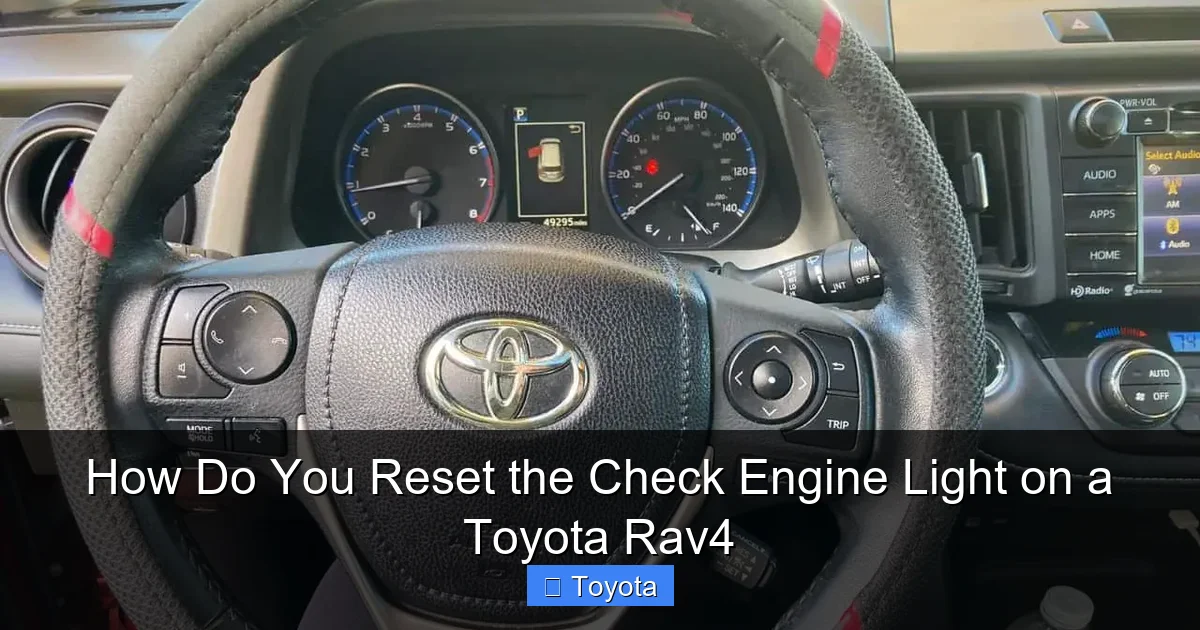
That little yellow engine-shaped light on your Toyota RAV4’s dashboard can send a jolt of anxiety through any driver. It’s the check engine light, a crucial warning from your car’s computer, the Engine Control Module (ECM). Many people’s first instinct is to find a way to turn it off, to make that nagging symbol disappear. But before we dive into the “how,” we need to talk about the “why” and the “what.” Resetting the light is a tool, not a solution. Using it incorrectly is like turning off a fire alarm without checking for a fire. This guide will walk you through everything you need to know about how to reset the check engine light on a Toyota RAV4, from the simplest trick to the professional method, and more importantly, when you absolutely should not do it.
Key Takeaways
- Diagnosis Before Reset: Always use an OBD2 scanner to read the trouble code(s) before clearing the light. The code tells you what system needs attention.
- Reset is Temporary: Clearing the light only turns off the warning. If the problem isn’t repaired, the light will return, often after a few drive cycles.
- Methods Vary in Effectiveness: Using an OBD2 scanner is the most reliable method. Disconnecting the battery may not work on newer models and can cause other system resets.
- Not a Maintenance Light: The check engine light (yellow engine icon) is different from the maintenance required light (wrench icon). Confusing them leads to unnecessary work.
- Failed Emissions Test: A vehicle with a recently cleared check engine light will fail an official emissions test, as the monitors will not be set to “Ready.”
- Safety First: If the light is flashing, stop driving immediately. This indicates a severe misfire that can damage the catalytic converter.
[FEATURED_IMAGE_PLACEHOLDER]
📑 Table of Contents
- Understanding Your RAV4’s Check Engine Light
- The Golden Rule: Diagnose Before You Reset
- Method 1: The Professional Way – Using an OBD2 Scanner
- Method 2: The Classic Trick – Disconnecting the Battery
- Method 3: The Natural Reset – Completing a Drive Cycle
- When You Should NEVER Reset the Light
- Troubleshooting Common RAV4 Codes That Trigger the Light
- Conclusion: A Tool, Not a Cure
Understanding Your RAV4’s Check Engine Light
Your Toyota RAV4 is a rolling network of computers and sensors. The ECM constantly monitors dozens of parameters—oxygen levels, engine timing, fuel mixture, and more. When a sensor reads a value outside the normal range, the ECM stores a Diagnostic Trouble Code (DTC) and illuminates the check engine light to get your attention. This light is part of your vehicle’s On-Board Diagnostics (OBD2) system, a standardized system mandated in all cars sold in the US since 1996.
Solid vs. Flashing: A Critical Difference
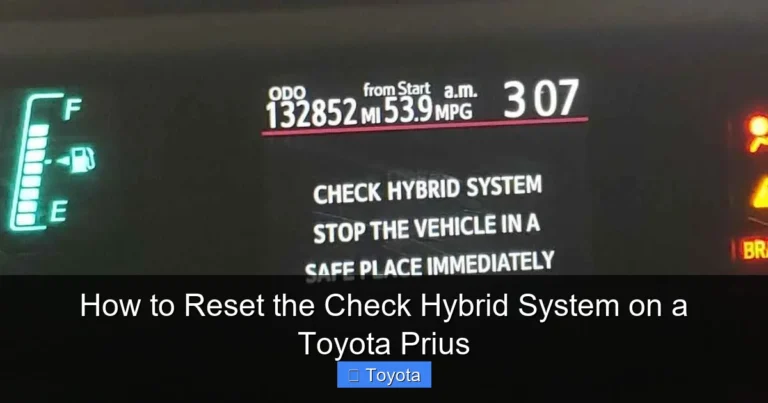
Not all check engine lights are created equal. A solid, steady yellow light indicates a non-emergency issue. It might be a loose gas cap (more common than you think!) or a failing oxygen sensor. You can usually drive the car for a short distance to get it diagnosed. A flashing or blinking yellow light, however, is a severe emergency. It means the engine is misfiring badly enough to potentially overheat and destroy the catalytic converter, an expensive component. If your light is flashing, pull over safely, shut off the engine, and call for assistance. Do not attempt to reset a flashing light.
It’s Not the “Maintenance Required” Light
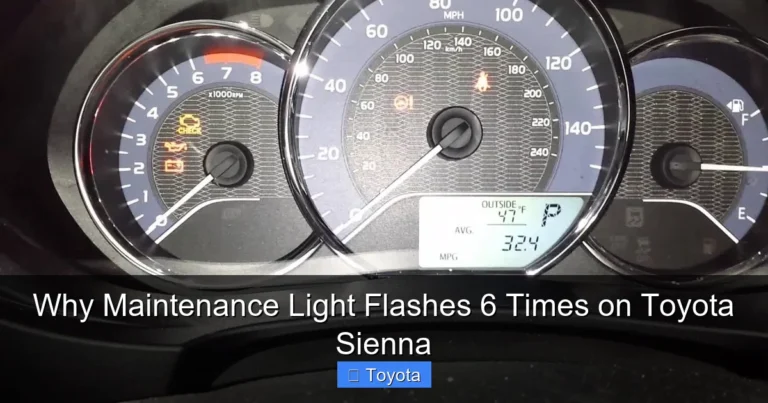
Many RAV4 owners confuse the check engine light with the maintenance required light. The latter is a simple mileage-based reminder for oil changes and other routine service, usually represented by a wrench icon. The process to reset that light is different and much simpler. If your issue is a wrench icon, you can follow a specific button-press sequence on your odometer. This article is solely for the yellow engine icon. For the maintenance reminder on a 2021 RAV4, you’d need a different procedure, which you can find in our guide on how to reset the maintenance light on a 2021 Toyota RAV4.
The Golden Rule: Diagnose Before You Reset
Here is the most important section of this entire guide. Resetting the check engine light without addressing the root cause is pointless and potentially harmful. It’s like taking a painkiller for a broken bone—the pain goes away, but the bone is still broken. The light will come back on, often within 50-100 miles of driving, once the ECM detects the problem still exists. Furthermore, you lose the stored trouble code, making future diagnosis harder and more expensive for you or your mechanic. You also prevent the emissions system monitors from completing their self-tests, which will cause your vehicle to fail any official state emissions inspection.

Visual guide about How Do You Reset the Check Engine Light on a Toyota Rav4
Image source: autocarresource.com
The correct process is always: 1. Scan, 2. Diagnose, 3. Repair, 4. Reset. You need to know the code. The most common code is P0171 (System Too Lean), which could mean anything from a vacuum leak to a bad fuel pump. Without the code, you’re guessing. You have several options for scanning:
- Auto Parts Store Scan (Free): Stores like AutoZone, Advance Auto Parts, and O’Reilly offer free code scanning. A technician will plug in a scanner and read the code(s) for you. This is a great first step.
- Buy a Basic OBD2 Scanner: For $20-$50, you can purchase a simple code reader that works on your RAV4. This is a worthwhile investment for any car owner. More advanced scanners provide live data, which is even more helpful.
- Dealership or Mechanic: They have the most sophisticated tools and can provide a full diagnosis, not just the code.
Once you have the code, research it. A quick web search for “P0XXX Toyota RAV4” will yield forums, videos, and articles explaining common causes and fixes for that specific code. Only after the repair is made should you proceed to reset the light.
Method 1: The Professional Way – Using an OBD2 Scanner
This is the cleanest, fastest, and most reliable method to reset your RAV4’s check engine light. It works on all model years and doesn’t cause any unwanted side effects like resetting radio presets or clock settings. If you’ve already diagnosed and fixed the issue, this is your go-to method.

Visual guide about How Do You Reset the Check Engine Light on a Toyota Rav4
Image source: autocarresource.com
Step-by-Step Guide
1. Locate the OBD2 Port: This is a standardized 16-pin connector, usually found under the dashboard, just below the steering column. In your RAV4, it may have a small plastic cover. It’s often the only port of its shape in that area.
2. Connect the Scanner: Turn your ignition to the “ON” position (the position right before starting the engine, where the dash lights come on). Do not start the engine. Plug your OBD2 scanner’s cable into the port. The connection should be snug.
3. Follow Scanner Prompts: Turn the scanner on. Most basic readers will automatically communicate with the car. You may need to select “Toyota” or “Passenger Car” from a menu. Navigate to the “Erase Codes” or “Clear DTCs” function. The scanner will ask for confirmation—say “Yes.”
4. Wait for Completion: The scanner will send the command to the ECM to clear all stored codes and turn off the light. This takes a few seconds. Once done, the scanner may display a “Command Successful” message.
5. Verify and Start the Car: Unplug the scanner. The check engine light should now be off. Start your RAV4’s engine. The light should remain off. If it comes back on immediately, the problem was not fixed correctly, or a new problem has occurred.
Pro Tip: After clearing the code, you should perform a “drive cycle” to allow the ECM’s monitors to run and set to “Ready” status for an emissions test. This typically involves a specific sequence of speeds and engine loads. Your scanner may have a “Monitor Status” screen to check this.
Method 2: The Classic Trick – Disconnecting the Battery
This old-school method was the standard way to clear computer memory for decades. It can work on the RAV4, but it’s less reliable on newer models (generally 2010+) and comes with significant downsides. The theory is that disconnecting the battery removes power from the ECM, forcing it to forget its stored data, including the trouble code.

Visual guide about How Do You Reset the Check Engine Light on a Toyota Rav4
Image source: i.ytimg.com
How to Do It (And Why It’s Risky)
1. Safety First: Ensure the car is off, parked on level ground, and the parking brake is set. Open the hood.
2. Locate the Battery: In the RAV4, the battery is typically in the engine bay on the driver’s side. Identify the negative (-) terminal, marked with a black cover and a minus sign.
3. Disconnect the Negative Cable: Using a 10mm socket or wrench, loosen the nut on the negative terminal. Carefully lift the cable off the post and tuck it away so it can’t accidentally touch the terminal. Do not disconnect the positive (+) cable.
4. Wait: This is the crucial step. You need to wait long enough for the residual power in the ECM to drain. This can take anywhere from 10 to 30 minutes. Some sources recommend 15 minutes. For a more thorough reset, you can even wait an hour.
5. Reconnect and Start: Reattach the negative cable and tighten the nut securely. Close the hood. Start the RAV4. The check engine light may be off.
Major Downsides:
- It may not work. Modern ECMs have non-volatile memory that retains codes even without battery power.
- It resets everything. You will lose radio presets, clock time, and power window/mirror memory. Your engine’s adaptive learning (fuel trim, idle speed) will be reset, which can cause rough running for the first few drive cycles until it re-learns.
- It can cause issues with other systems like the power steering or climate control that need to be re-calibrated.
Because of these issues, the battery disconnect method is generally not recommended unless you have no other option and understand the consequences. For other Toyota models, the process can be similar, but always check the specific procedure. For example, resetting the maintenance light on a Toyota Highlander uses the odometer button, not the battery.
Method 3: The Natural Reset – Completing a Drive Cycle
This isn’t a manual “reset” you perform; it’s the process the ECM uses to verify that a repair is successful. After you fix the problem (e.g., replace a faulty oxygen sensor or tighten the gas cap), the ECM needs to see that the fault is gone under various driving conditions. It runs internal tests called “monitors.” Once all applicable monitors have run and passed, the check engine light will turn itself off automatically. This is the ideal outcome after a proper repair.
What a Drive Cycle Looks Like
A drive cycle is a specific sequence of driving actions (speed, acceleration, engine temperature) that triggers all the system monitors. It varies slightly by manufacturer and model year, but a general RAV4 drive cycle includes:
- A cold start (engine coolant temp below 122°F).
- Idle in Drive for 2-3 minutes with AC on.
- Accelerate to 45-50 mph at moderate throttle.
- Hold that speed for 2-3 minutes.
- Slow down to 20 mph without braking (coasting).
- Accelerate to 45-50 mph again.
- Let it idle for another minute or two.
This sequence should cause the EVAP, O2 sensor, and catalyst monitors to run. You can use an OBD2 scanner to monitor the “Monitor Status” page to see which tests have completed and which are still “Incomplete.” The light will often go off once the monitor that set the code passes. If the problem is truly fixed, this natural reset is the best-case scenario.
When You Should NEVER Reset the Light
Understanding when not to intervene is as important as knowing how. Here are clear red flags:
The Light is Flashing
As stated earlier, this is a dire warning of a severe misfire. Continuing to drive can convert a $200 spark plug fix into a $2,500 catalytic converter replacement. Stop driving immediately.
You Have No Idea What the Code Is
Blindly resetting the light is a gamble. You could be ignoring a serious issue like a failing mass airflow sensor (causing poor fuel economy) or an evap leak (which can trigger a failed emissions test). Always get the code first.
Performance is Noticeably Affected
If your RAV4 is running rough, hesitating, losing power, getting terrible gas mileage, or emitting strange smells (like rotten eggs from a failing catalyst), the problem needs to be fixed now, not hidden.
Before an Emissions Test
If your state requires emissions testing, you cannot clear the light right before the test. The testing equipment checks the status of the ECM monitors. If they show “Not Ready” because you recently cleared the code, you will fail. You must drive the vehicle enough after a repair for all monitors to set to “Ready.” This can take 50-100 miles of driving, including the drive cycle.
Multiple Codes Are Present
A single code is an isolated issue. Multiple codes, especially across different systems (e.g., a misfire code and an oxygen sensor code), can indicate a more complex problem like a major vacuum leak or wiring harness issue. This needs professional diagnosis.
Troubleshooting Common RAV4 Codes That Trigger the Light
While this article is about resetting, knowing common culprits helps you understand what you might be dealing with. Here are a few frequent codes on RAV4s:
- P0171 / P0174 (System Too Lean): The most common. Means there’s too much air or not enough fuel. Causes include: a loose or damaged gas cap, cracked/loose vacuum hoses, a dirty or faulty mass airflow sensor (MAF), or leaking intake manifold gaskets. Check the gas cap first! It’s the easiest fix.
- P0420 (Catalyst System Efficiency Below Threshold): The ECM thinks the catalytic converter isn’t cleaning exhaust properly. This can be caused by a failing cat, bad oxygen sensors, or an exhaust leak before the cat. Before replacing the cat, you must rule out the less expensive O2 sensors and exhaust leaks.
- P0300 – P0304 (Random/Misfire Detected on Cylinder X): A misfire. Causes range from worn spark plugs and bad ignition coils to clogged fuel injectors or low compression. A flashing light with these codes is critical.
- P0455 / P0456 (Evaporative Emission System Leak Detected): A large or very small leak in the fuel vapor system. Often, it’s simply a gas cap that wasn’t tightened enough after refueling. If tightening the cap doesn’t help, it could be a cracked vapor line or a faulty purge valve.
Remember, a code points to a system, not always a specific part. P0171 says “the air-fuel ratio is wrong,” not “replace the MAF sensor.” That’s why diagnosis is key.
Conclusion: A Tool, Not a Cure
So, how do you reset the check engine light on a Toyota RAV4? The best answer is: you don’t, not until you’ve fixed the problem it’s warning you about. The process itself is straightforward—use an OBD2 scanner to erase the codes after a repair. The battery disconnect method is a last resort with drawbacks. The true “reset” happens naturally when your RAV4 completes its drive cycle with the fault repaired.
Your check engine light is your car’s voice. It’s telling you something is wrong. The wise approach is to listen. Get the code, do your research, and address the issue. This protects your vehicle’s health, saves you money by preventing secondary damage, ensures your RAV4 passes emissions, and gives you peace of mind. A silent dashboard is a healthy dashboard. Don’t just make the light go out; make the problem go away. And remember, if you’re ever in doubt, a qualified mechanic with the right tools is always the safest bet. For other common Toyota service reminders, our site has detailed guides, such as how to reset the check engine light on a Toyota Highlander, which follows the same fundamental principles outlined here.
Frequently Asked Questions
What’s the difference between a check engine light and a maintenance required light?
The check engine light (yellow engine icon) warns of an emissions-related or engine performance problem diagnosed by the computer. The maintenance required light (wrench icon) is a simple mileage-timer reminder for scheduled service like oil changes. They are separate systems with different reset procedures.
Can I drive my RAV4 with the check engine light on?
If the light is solid and the car is running normally, you can drive it a short distance to get it diagnosed. However, if the light is flashing, or if you notice poor performance, strange noises, or smells, stop driving immediately and seek help.
How much does it cost to diagnose a check engine light?
Many auto parts stores offer free code scanning. A professional diagnostic fee at a repair shop typically ranges from $80 to $150, which is often waived if you have them perform the repair. This fee covers the technician’s time and advanced diagnostic tools.
Do I need a special scanner to reset the light on my RAV4?
Yes, you need a basic OBD2 scanner (also called a code reader) that is compatible with your RAV4’s OBD2 port. These are inexpensive and widely available. Simple methods like disconnecting the battery are unreliable on newer models and cause other resets.
How long will the check engine light stay off after I reset it?
If you reset the light without fixing the underlying problem, it will almost always return, typically within 50-100 miles of driving once the ECM re-detects the fault. If you properly repaired the issue, the light should stay off permanently.
Will resetting the check engine light affect my emissions test?
Yes, significantly. After a reset, all the emissions system monitors show as “Not Complete.” Your vehicle will fail an official emissions inspection until you drive enough to complete all the monitors (often 50-100 miles with a proper drive cycle).