How Do I Know When My Toyota Corolla Needs an Oil Change?

Contents
- 1 Key Takeaways
- 2 📑 Table of Contents
- 3 Why Oil Changes Matter: The Lifeblood of Your Engine
- 4 Toyota’s Official Recommendations: Your Starting Point
- 5 Decoding the Oil Life Monitoring System: Your Car’s Brain
- 6 The Manual Check: Your Hands-On Verification
- 7 How Your Driving Conditions Change the Rules
- 8 What Happens If You Wait Too Long? The Cost of Neglect
- 9 Putting It All Together: Your Simple Action Plan
- 10 Conclusion: Partnership for Longevity
- 11 Frequently Asked Questions

Car Battery Charger

Car Bumper Protector
Car Phone Holder

Digital Tire Pressure Gauge
Knowing when your Toyota Corolla needs an oil change is crucial for engine health. While the factory provides a baseline schedule (often every 5,000-10,000 miles), your car’s oil life monitoring system and real-world driving conditions are the true guides. Don’t rely on mileage alone—check oil condition, listen for noises, and watch for warning lights. Regular changes prevent sludge, wear, and costly repairs, ensuring your Corolla stays reliable for years.
Let’s be honest: the oil change is one of the most routine, yet most confusing, pieces of car maintenance. You see the sticker on your windshield, you hear the ads, but what does it really mean for your trusty Toyota Corolla? Is it just a scam to get you into the shop? The short answer is no. It’s one of the most vital, cost-effective things you can do for your engine’s longevity. But knowing exactly when that change is due has evolved from a simple “every 3,000 miles” rule to a more nuanced conversation involving technology, oil chemistry, and your personal driving habits. This guide will cut through the noise and give you the clear, actionable knowledge to keep your Corolla’s heart beating strong.
We’ll start with the basics of what oil actually does, then dive into Toyota’s official recommendations. From there, we’ll decode the modern oil life monitoring system—your car’s built-in brain for this task. We’ll cover how to perform a manual check yourself, how your driving style changes the rules, and the serious consequences of waiting too long. By the end, you won’t just know when to change the oil; you’ll understand why.
Key Takeaways
- Your Oil Life Monitor is Your Primary Tool: Modern Corollas have a sophisticated system that calculates oil degradation based on engine revolutions, temperature, and driving habits. Trust this system over a generic mileage interval.
- The “5,000-Mile Rule” is Outdated: While a common suggestion, your actual interval depends on oil type (synthetic vs. conventional) and driving conditions. Many newer Corollas with synthetic oil can go 7,500-10,000 miles.
- Manual Oil Checks are Non-Negotiable: Monthly checks let you assess oil level and condition. Look for darkness, grit, or a milky appearance, which are signs it’s time for a change.
- Your Driving Style Dictates the Schedule: “Severe” driving—short trips, extreme temps, stop-and-go traffic, or dusty roads—means you should change oil more frequently than the standard interval.
- Never Ignore the Maintenance Required Light: This light means your oil life has reached 0%. Driving past this point causes accelerated engine wear as the oil can no longer protect components effectively.
- Synthetic Oil Extends Intervals but Isn’t Indestructible: While synthetic oil withstands heat and shear better, it still degrades. It must be changed at the recommended interval, even if it still looks clean.
- Resetting the Light is a Separate Step: After a professional or DIY oil change, you must manually reset the oil life monitor using your steering wheel controls. The car won’t reset itself.
📑 Table of Contents
- Why Oil Changes Matter: The Lifeblood of Your Engine
- Toyota’s Official Recommendations: Your Starting Point
- Decoding the Oil Life Monitoring System: Your Car’s Brain
- The Manual Check: Your Hands-On Verification
- How Your Driving Conditions Change the Rules
- What Happens If You Wait Too Long? The Cost of Neglect
- Putting It All Together: Your Simple Action Plan
- Conclusion: Partnership for Longevity
Why Oil Changes Matter: The Lifeblood of Your Engine
Before we talk about “when,” we must understand “why.” Engine oil is far more than just a lubricant. It’s a multi-functional fluid that performs several critical jobs under the hood of your Corolla.
What Engine Oil Actually Does
First and foremost, oil creates a protective film between all the metal parts that move at incredible speeds—pistons, crankshaft, camshaft, valves. This film prevents metal-on-metal contact, which would cause rapid, catastrophic wear. Second, it acts as a coolant, absorbing heat from the combustion process and carrying it away. Third, it cleans the engine by suspending microscopic particles of dirt and metal shavings, carrying them to the oil filter where they are trapped. Fourth, it protects against rust and corrosion. Finally, modern oils contain additives that help seal piston rings and improve fuel efficiency. Over time, this superhero fluid breaks down. Its viscosity (thickness) changes, its additives are depleted, and it becomes contaminated with byproducts of combustion and engine wear. Degraded oil is essentially dirty, thin, ineffective liquid that cannot perform its protective duties.
Toyota’s Official Recommendations: Your Starting Point
Your first and best resource is the official Toyota maintenance schedule found in your owner’s manual. This isn’t a vague suggestion; it’s an engineering guideline based on extensive testing of your specific engine and oil formulation. For recent model year Corollas (2014+), Toyota typically recommends two primary schedules:

Visual guide about How Do I Know When My Toyota Corolla Needs an Oil Change?
Image source: i.ytimg.com
- Normal Driving Conditions: An oil change every 7,500 to 10,000 miles or 12 months, whichever comes first, when using synthetic oil.
- Severe Driving Conditions: An oil change every 5,000 miles or 6 months, whichever comes first.
It’s critical to understand what Toyota defines as “severe.” It’s not just aggressive driving. It includes common scenarios like: frequent short trips (under 5 miles) where the oil never fully warms up, driving in extremely cold or hot climates, consistent stop-and-go traffic, towing a trailer, or driving on dusty, sandy roads. If your daily commute fits several of these, you are likely in the “severe” service category and should follow the shorter interval. The manual will have a detailed chart—take the time to find it. This factory guidance is your baseline, but it’s not the final word. That job belongs to your car’s computer.
Decoding the Oil Life Monitoring System: Your Car’s Brain
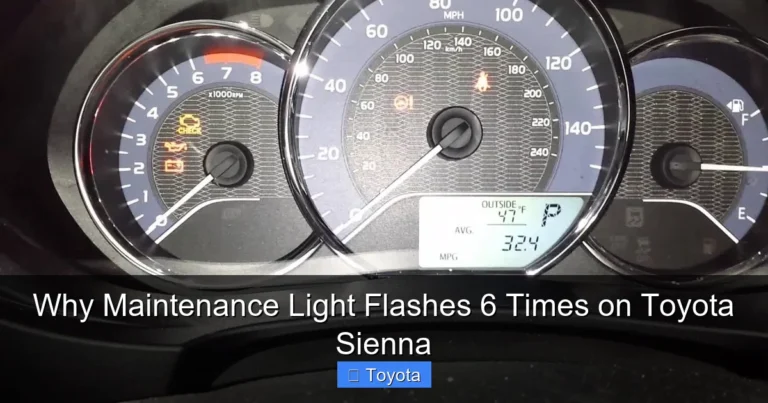
Since the early 2000s, Toyota has equipped vehicles with an Oil Life Monitoring System (OLMS), often indicated by a “Maintenance Required” light on your dashboard. This is not a simple mileage counter. It’s an algorithm that continuously monitors engine conditions to calculate the actual degradation of your oil.

Visual guide about How Do I Know When My Toyota Corolla Needs an Oil Change?
Image source: i.ytimg.com
How the System Works
The system tracks factors like engine speed, coolant temperature, and vehicle speed. It understands that driving at a steady highway speed is less stressful on oil than repeated city stop-and-go cycles. It knows that cold starts are hard on oil because the fluid is thicker. It even accounts for the number of hours the engine has been running. Based on this data, it counts down the oil life from 100% to 0%. When it reaches 15-20%, you’ll typically see a “Oil Maintenance Required Soon” message. When it hits 0%, the steady “Maintenance Required” light illuminates. This system is highly accurate and is the single best indicator of when your specific Corolla, with your specific driving habits, needs an oil change.
What It Is NOT
A common misconception is that the OLMS measures oil level or quality directly. It does not. It predicts degradation based on operating conditions. It has no sensor in the oil pan checking for darkness or viscosity loss. Therefore, it’s still possible for an oil leak or internal engine problem to cause low oil pressure or contamination before the light comes on. This is why the monthly manual check is your essential backup.
Resetting the System
After the oil is changed, the light must be manually reset. This is a simple procedure using the steering wheel controls (typically holding the “Trip” or “ODO/TRIP” button while turning the key to “ON”). The steps vary slightly by model year, so consult your manual. If you don’t reset it, the light will come on again in about 500 miles, even with fresh oil. A professional shop will always do this, but if you DIY, don’t forget this step. For a deeper dive into how these systems function across different makes, you can read more about how your car knows when to change oil.
The Manual Check: Your Hands-On Verification
Technology is great, but you are your car’s first line of defense. A quick manual oil check once a month or before a long trip takes two minutes and can save your engine. Here’s how to do it correctly.

Visual guide about How Do I Know When My Toyota Corolla Needs an Oil Change?
Image source: i.ytimg.com
Step-by-Step Oil Inspection
- Park on Level Ground: This ensures an accurate reading. Turn off the engine and wait at least 5-10 minutes for the oil to drain back into the pan.
- Locate the Dipstick: It’s usually a yellow or orange looped handle near the engine’s front. Pull it out, wipe it clean with a rag.
- Reinsert and Pull: Fully insert the dipstick, then pull it out again. Look at the oil on the end.
- Check the Level: The dipstick has two marks: “L” (Low) and “F” (Full). The oil film should be between these marks, ideally near the top. If it’s at or below “L,” add a quart of the correct oil (check manual for specification).
- Assess the Condition: This is key. Fresh oil is clear and amber-colored. Your used oil should be darker, but it should still be translucent. If it’s jet black, opaque, or has a gritty, coffee-ground texture, it’s full of contaminants and is overdue. If it looks milky or frothy, this is a sign of coolant mixing with oil (a serious internal leak) and requires immediate professional diagnosis.
Also, while you’re under the hood, check for any active oil leaks around the valve cover gasket, oil filter housing, or oil pan. Small drips can become big problems.
How Your Driving Conditions Change the Rules
We briefly touched on “severe” service, but let’s expand on why it matters for your Corolla. The factory “normal” interval assumes ideal conditions: consistent highway speeds, moderate temperatures, clean air. Real life is rarely ideal.
Examples That Demand More Frequent Changes
- The “Winter Short Tripper”: If your daily drive is a 2-mile run to the grocery store and back, your oil rarely gets above 212°F (100°C). Water vapor from combustion condenses in the oil, creating sludge and acid. This is the #1 killer of engines in mild climates. Change at the severe interval.
- The City Commuter: Constant acceleration and braking in traffic means the engine works harder at lower RPMs, generating more fuel dilution (gasoline seeping into oil) and heat. This accelerates oil breakdown.
- The Dusty Road Warrior: Driving on unpaved roads or in construction zones allows fine dust to bypass the air filter and enter the crankcase, contaminating the oil with abrasive particles.
- The Extreme Temperature Resident: Living in a place with very hot summers (over 95°F) or very cold winters (below 0°F) stresses oil. Heat thins it; cold thickens it. Both conditions reduce its protective qualities faster.
If your life includes any of these, shorten your interval by 25-30%. It’s cheap insurance. If you’re ever unsure about what type of oil your specific Corolla model uses—conventional or synthetic—which directly impacts interval length, checking your manual or speaking with a dealer is key. You can also find guidance on how to know if your car uses synthetic oil to make an informed decision.
What Happens If You Wait Too Long? The Cost of Neglect
It’s easy to think, “I’ll just go 1,000 miles over, what’s the harm?” The harm is silent, cumulative, and devastatingly expensive. Here’s the progression of what happens inside your engine when oil is neglected.
The Stages of Oil Failure
Stage 1: Additive Depletion (First 1,000 miles past due). The detergents and dispersants that clean and suspend contaminants are used up. Oil begins to darken noticeably.
Stage 2: Viscosity Loss (2,000-3,000 miles past due). The oil’s base molecules shear and break down under heat and pressure. It becomes too thin to maintain a protective film. You may start to hear a faint ticking or lifter noise.
Stage 3: Acid & Sludge Buildup (3,000+ miles past due). With no detergents left, contaminants clump together. Combustion byproducts form acids that eat at metal surfaces. A thick, abrasive sludge forms in oil passages, galleries, and on the valve train. This restricts oil flow, causing hot spots and starvation.
The Visible & Audible Warning Signs
- Exhaust Smoke: Blueish-gray smoke from the tailpipe indicates oil is burning in the combustion chamber (worn seals or rings, often caused by poor lubrication).
- Engine Noise: A persistent ticking, tapping, or louder valve train noise means parts are making contact. A deep knocking sound is catastrophic.
- Oil Pressure Light: This is an emergency. Low oil pressure means immediate engine damage is occurring. Shut off the engine immediately.
- Performance Loss: Sludge can clog passages, reducing power and fuel economy. You might feel a general “sluggishness.”
- Oil Smell: A burning oil smell inside the car or from under the hood can indicate a leak onto hot engine parts.
The final stage is engine failure. The cost of a new or rebuilt engine starts at $4,000 and goes up. A $50 oil change is the ultimate bargain compared to that. For more on symptoms that might indicate low oil or other issues, resources on whether your car will shake if it needs an oil change can provide additional context, though shaking is less common in modern engines than other signs.
Putting It All Together: Your Simple Action Plan
Okay, so we’ve covered a lot. Let’s simplify it into a weekly and monthly routine you can actually follow.
Your Monthly 2-Minute Checklist
- Check the oil level on a cold, level engine. Top off if low.
- Look at the oil color on the dipstick. Is it very dark and opaque?
- Glance at the dash. Is the Maintenance Required light on? If yes, schedule service immediately.
- Listen. Start the car. Any new ticking, ticking, or loud valvetrain noise? Note it for your mechanic.
Your Decision Flowchart
Is the Maintenance Required Light ON?
YES → Change oil immediately. Do not drive more than 100 miles. Reset the light after.
NO → Proceed to next question.
Has it been 12 months since the last change, regardless of miles?
YES → Change oil. Oil degrades with time, not just miles.
NO → Proceed.
Do you drive in “severe” conditions (short trips, extreme temps, heavy traffic, dusty areas)?
YES → Change oil every 5,000-6,000 miles or 6 months, whichever comes first.
NO → Follow your OLMS. It will likely call for a change around 7,500-10,000 miles.
Does the oil on the dipstick look jet black, gritty, or milky?
YES → Change oil and filter immediately. Milky oil requires a mechanic.
NO → Continue monitoring.
This systematic approach removes the guesswork. Your Corolla is designed to be reliable, and this simple maintenance is the foundation of that reliability. Understanding the “why” behind the schedule empowers you to make smart decisions and avoid being upsold or misled.
Conclusion: Partnership for Longevity
Your Toyota Corolla is more than a car; it’s a partner in your daily life. The oil change is the fundamental act of care that keeps that partnership strong. By respecting the factory schedule, trusting the intelligent oil life monitor, performing your own monthly checks, and adjusting for your real-world driving, you take complete control of your engine’s destiny. You move from being a passive consumer of maintenance to an informed owner. This isn’t just about avoiding a breakdown; it’s about preserving one of your most valuable assets, ensuring it delivers years of safe, efficient, and trouble-free transportation. The next time that Maintenance Required light illuminates, you’ll know it’s not just a reminder—it’s your car thanking you for the care it deserves.
Frequently Asked Questions
How often does a Toyota Corolla really need an oil change?
For modern Corollas using synthetic oil, the interval is typically 7,500-10,000 miles or 12 months under normal driving. If you frequently drive in severe conditions (short trips, extreme temps, stop-and-go traffic), reduce this to every 5,000-6,000 miles or 6 months. Always prioritize your car’s Oil Life Monitoring System light over a fixed mileage.
What happens if I ignore the oil change light?
Driving with the Maintenance Required light on means your oil is severely degraded. It can no longer lubricate, cool, or clean properly, leading to accelerated engine wear, sludge buildup, and potentially catastrophic engine failure. The cost of a new engine far exceeds a single oil change.
Can I just add oil instead of changing it?
Adding oil between changes is fine to maintain the correct level, but it does not replace the oil filter or remove contaminants. An oil change is necessary to replace the degraded, dirty oil and the clogged filter. Simply adding oil is like adding clean water to a dirty bathtub without draining it.
How do I check my oil correctly?
Park on level ground, turn off the engine, and wait 5-10 minutes. Pull the dipstick, wipe it clean, reinsert it fully, then pull it out again. Check that the oil level is between the “L” and “F” marks. Then look at the color: it should be translucent and amber to dark brown. If it’s jet black, opaque, or milky, it needs changing.
How do I reset the oil change light on my Corolla?
After an oil change, turn the ignition to “ON” (do not start). Use the trip/odometer button on the dash to display the “ODO” screen. Turn the key to “OFF.” Then, while holding the trip button, turn the key back to “ON.” Continue holding until the odometer shows “000000” or the light blinks and goes out, usually about 5-10 seconds. The exact steps can vary slightly by model year, so consult your manual.
Is synthetic oil worth it for my Corolla?
Yes, for most drivers. Synthetic oil provides better protection in extreme temperatures, resists breakdown longer, and can extend oil change intervals. It’s especially beneficial for newer engines and for those in severe driving conditions. Your Corolla’s manual will specify if synthetic is required or recommended. You can learn more about identifying the right oil for your vehicle to be certain.