
Harley 6-speed Transmission Oil Capacity

Knowing the exact Harley 6-speed transmission oil capacity is non-negotiable for proper function and longevity. This capacity isn’t one-size-fits-all; it varies slightly by specific model year and family (Sportster, Dyna, Softail, Touring). Using the correct type and amount of Harley-Davidson-approved transmission fluid prevents wear, ensures crisp shifting, and avoids catastrophic failure. This guide provides precise capacities, a step-by-step fill procedure, and critical best practices every owner must follow.
Let’s talk about the lifeblood of your Harley’s gearbox. You know that satisfying clunk-click when you nail a perfect shift? That’s your transmission talking to you. And what it’s saying is, "I need the right oil, in the right amount, to keep doing this." Ignoring your Harley 6-speed transmission oil capacity isn’t just a minor oversight—it’s a direct ticket to expensive repairs, missed shifts, and a bike that feels nothing like a Harley should. This isn’t a "fill it up and forget it" component. The 6-speed gearbox, introduced widely in the mid-2000s, is a marvel of engineering, but it’s also a precision instrument that demands respect. Getting this one service detail right is one of the most impactful things you can do for your bike’s durability and your riding enjoyment. So, let’s pop the lid and get into the nitty-gritty.
Key Takeaways
- Capacity Varies by Model: The standard range is approximately 22-24 fluid ounces (0.69-0.75 quarts), but you must verify for your specific VIN and model year using an official capacity chart.
- Correct Fluid is Critical: Only use Harley-Davidson Genuine Transmission & Primary Case Oil or a specified equivalent (like Mobil 1 SHC 75W-90). Using automotive fluid will destroy synchronizers and bearings.
- The “Drain & Fill” is a Two-Part Process: You must first drain the old fluid, then perform a precise “fill-to-check” procedure via the fill plug, as the transmission has no traditional dipstick.
- Level Check is Done at the Plug: The transmission is full when fluid is *just visible* or *barely drips* from the horizontal fill plug hole with the bike upright on level ground.
- Overfilling is Dangerous: Excess fluid causes aeration, foaming, pressure buildup, and seal leaks, leading to premature failure and shifting problems.
- Primary and Transmission are Separate: Do not confuse transmission oil capacity with primary drive oil capacity. The primary system uses a different fluid and has its own fill plug and capacity. Refer to a guide on checking primary oil for that system.
- Consult the Official Chart: For absolute accuracy, always cross-reference your bike against the latest Harley-Davidson Fluid Capacity Chart, as specs can change mid-model-year.
📑 Table of Contents
- Why Oil Capacity Matters More Than You Think
- Model-Specific Capacities: You Can’t Assume
- The Right Fluid: It’s Not Just "Gear Oil"
- The Step-by-Step: How to Check and Fill Your 6-Speed Transmission
- Maintenance Schedule and Best Practices
- Troubleshooting: Symptoms of Wrong Capacity or Fluid
- Conclusion: A Simple Task with Profound Impact
Why Oil Capacity Matters More Than You Think
It’s easy to think of transmission oil as just a lubricant. But in a high-torque, air-cooled V-twin environment, it does so much more. It’s a hydraulic fluid, a coolant, a wear protectant, and a corrosion inhibitor all in one. The precise Harley 6-speed transmission oil capacity is engineered to create the perfect balance.
The Physics of the Perfect Fill
Inside your transmission, gears, bearings, and synchronizers are spinning at incredible speeds, often under massive load. The oil does two jobs: it creates a film to keep metal from touching metal, and it carries away the immense heat generated by friction. If there’s too little oil, components starve, metal-to-metal contact occurs, and heat soars. You’ll get whining, grinding, and ultimately, a grenaded gearbox. If there’s too much oil, the gears and shafts churn through the fluid like a kitchen mixer, whipping air into it. This creates foam and aeration. Aerated oil can’t lubricate properly, it can’t cool, and it creates excessive pressure that will blow seals and force oil out where it doesn’t belong. Both scenarios lead to the same endpoint: failure. The specified capacity ensures the fluid level is optimal for both lubrication and heat dissipation without causing aeration.
It’s Not Just About Quantity, But Quality Too
The "capacity" figure assumes you’re using the correct fluid. Harley 6-speed transmissions are designed for a specific viscosity and additive package. The synchronizer rings, which make shifting smooth, are made of a brass-like material that is highly sensitive to the friction characteristics of the oil. Using a standard automotive GL-5 gear oil or a generic "universal" fluid will almost certainly cause synchronizer failure. You’ll experience stiff, grating shifts, especially when cold. The right fluid provides the precise coefficient of friction needed for those brass rings to work seamlessly with the steel shift hubs. Always, always use a fluid that meets Harley-Davidson specification JASO MA2 or the explicit recommendation in your owner’s manual. This is a point so critical it’s worth repeating: the correct oil is part of the correct capacity equation.
Model-Specific Capacities: You Can’t Assume
This is the heart of the matter and where most people get tripped up. While the 6-speed transmission is a common platform, its oil capacity is not universal across the Harley family. The variation comes from differences in case design, breather locations, and even the position of the fill plug relative to the internal components. Assuming your 2015 Street Glide takes the same amount as a 2018 Softail Slim is a gamble you don’t want to take.
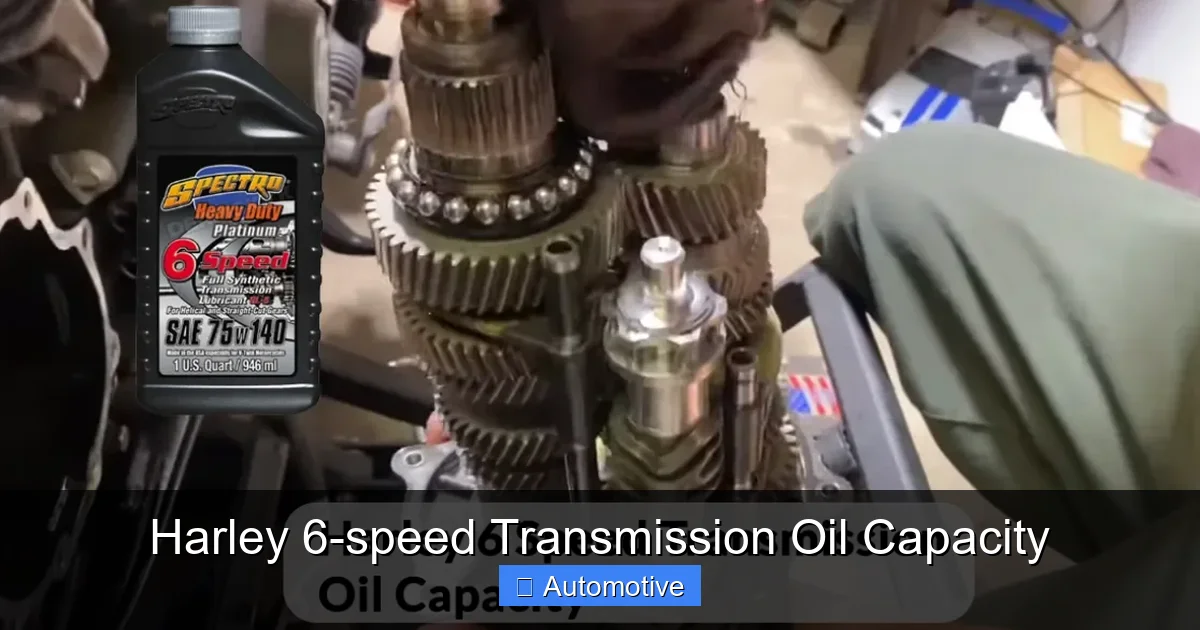
Visual guide about Harley 6-speed Transmission Oil Capacity
Image source: roarontheshore.com
The General Ranges (But Don’t Rely on Them Alone)
For the vast majority of Harley-Davidson models equipped with the 6-speed transmission (often the " Cruise Drive " or "Six-Speed"), the dry fill capacity typically falls within a narrow window. Here is a general guide:
- Dyna, Softail, and Sportster (XL) models with 6-speed: Usually between 22 and 24 fluid ounces (0.69 to 0.75 quarts).
- Touring models (Road King, Road Glide, Ultra Classic, etc.): Often at the higher end or slightly above, frequently 24 fluid ounces (0.75 quarts). Some later models may list 25 oz.
See? A range. That’s why guessing is bad. A difference of even one ounce can throw off the level.
The Only Way to Be Certain: The Official Capacity Chart
The gold standard is the Harley-Davidson Fluid Capacity Chart. This is a living document that Harley updates. It lists every model, model year, engine family (like Twin Cam 96, 103, 110, or Milwaukee-Eight), and the exact capacities for engine oil, primary oil, transmission oil, and front fork oil. You can get this chart from your authorized Harley dealer or often find a PDF online through enthusiast forums (though you must verify its date). For example, a 2014 FXDC Dyna Super Glide Custom might call for 22 oz, while a 2017 FLHTK Electra Glide Ultra Limited might call for 24 oz. The difference matters. Bookmark this resource. When in doubt, this chart is your final authority. For a consolidated view, resources like the Harley Davidson Fluid Capacity Chart are invaluable for quick reference across all systems.
The Right Fluid: It’s Not Just "Gear Oil"
We touched on this, but it bears its own deep dive. Using the wrong fluid is the most common cause of premature 6-speed transmission failure, second only to neglecting capacity altogether. Let’s break down what’s acceptable and what’s not.
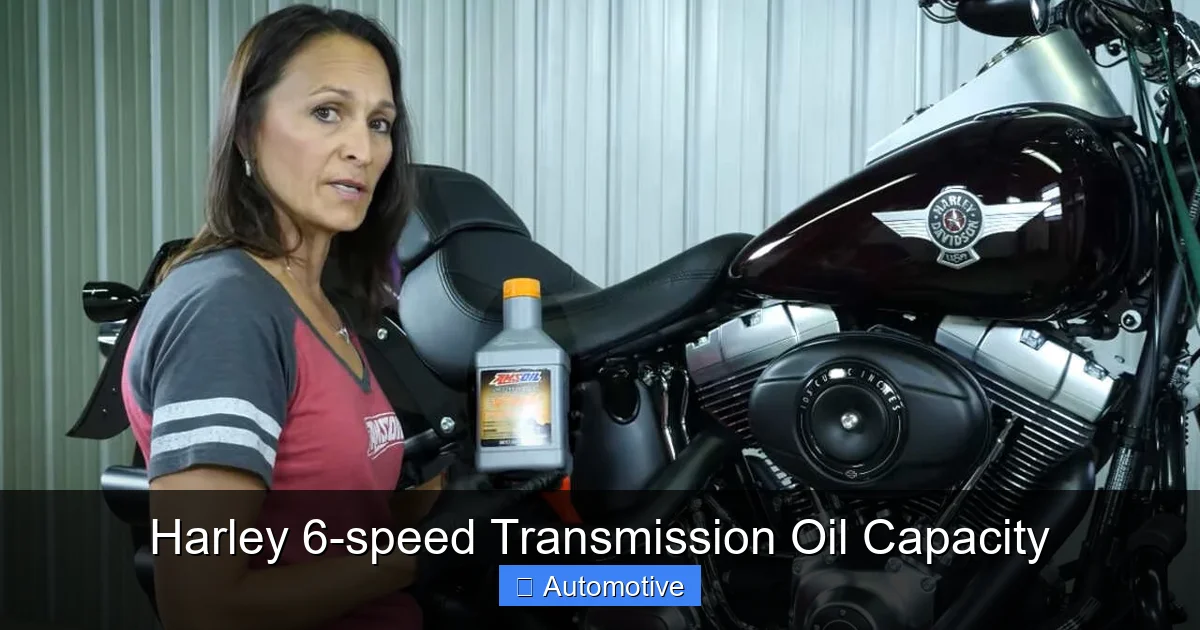
Visual guide about Harley 6-speed Transmission Oil Capacity
Image source: motorbikeinsider.com
Harley-Davidson Genuine Transmission & Primary Case Oil
This is the factory-fill, the benchmark. It’s a high-quality, heavy-duty manual transmission fluid formulated specifically for the demands of a Harley drivetrain. It meets JASO MA2, which is the Japanese Automotive Standards Organization specification for motorcycle lubricants that ensures proper clutch friction (for the wet clutch in the primary) and gear protection. It’s what your bike was designed to run on from day one.
Approved Equivalents and Alternatives
Many riders successfully use other high-performance fluids that meet or exceed the same specifications. The most popular and widely recommended alternative is Mobil 1 SHC 75W-90. It’s a full synthetic, meets API GL-4/GL-5 and JASO MA2, and is renowned for its excellent film strength and temperature stability. Other brands like Red Line, Amsoil, and Spectro also offer Harley-spec or JASO MA2-compliant 75W-90 gear oils that are perfectly suitable. The key is the JASO MA2 rating. Avoid anything labeled "GL-5 only" without MA2, as many GL-5 oils contain extreme pressure additives that can be corrosive to brass synchronizers.
What to Absolutely Avoid
- Standard Automotive GL-5 Gear Oil: The EP additives in most GL-5 oils are too harsh for Harley synchronizers. This is the #1 mistake.
- Automatic Transmission Fluid (ATF): Way too thin. It will not provide adequate gear protection and will lead to rapid wear.
- Motor Oil (10W-40, etc.): While some older Harleys used motor oil in the primary, the transmission requires a dedicated gear oil with different additive chemistry.
- "Universal" Tractor or Marine Fluids: These are not designed for high-speed synchronizer mesh and will cause shifting issues.
When you see discussions about Harley 6-speed transmission problems, a huge percentage of them trace back to the use of an incorrect fluid type, not just an incorrect quantity.
The Step-by-Step: How to Check and Fill Your 6-Speed Transmission
Now, let’s get our hands dirty. The process is straightforward but requires patience and the right technique. Forget the dipstick; this is a "fill-and-check" procedure.
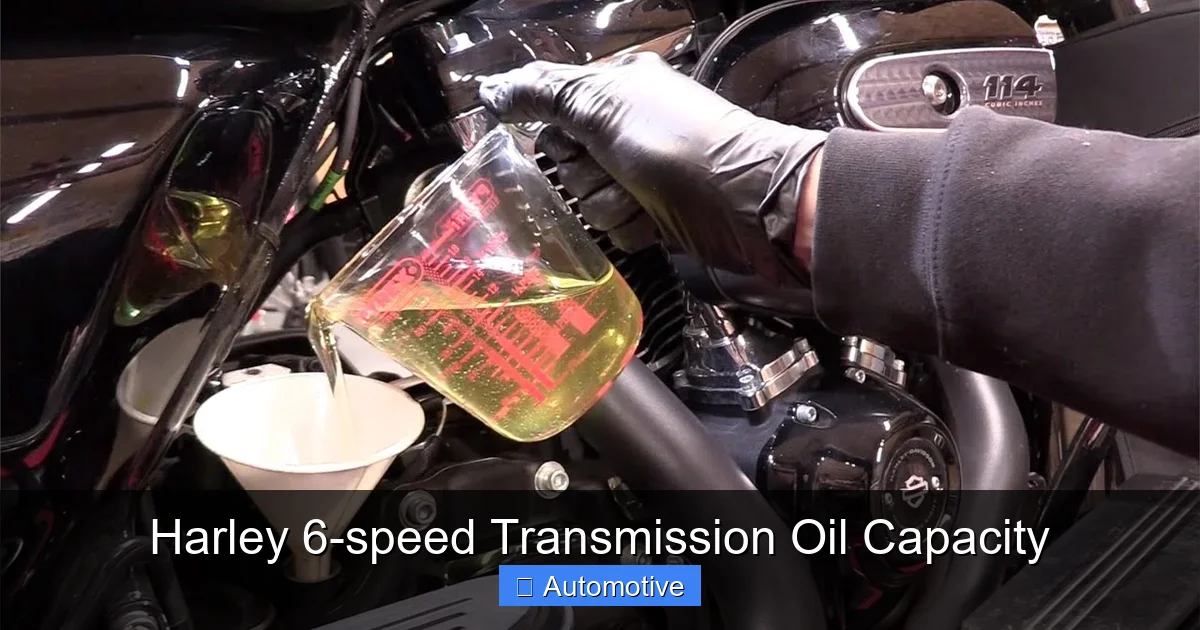
Visual guide about Harley 6-speed Transmission Oil Capacity
Image source: motorbikeinsider.com
Tools and Preparation
You’ll need: The correct amount of fresh transmission fluid (buy a little extra), a 5/8" or metric Allen socket/wrench (check your specific plug), a clean drain pan, a funnel with a flexible spout or a fluid pump, paper towels, and gloves. Safety first: ensure the bike is on level, solid ground, ideally on its center stand or a maintenance lift. Let the bike cool if it’s been ridden; hot oil is dangerous, but a warm bike helps the oil drain more completely.
Step 1: The Drain
Locate the large drain plug on the bottom of the transmission case. It’s usually a large bolt with a square or hex head. Place your drain pan underneath. Loosen and remove the plug. Be prepared for a strong, hot initial gush. Let it drain completely. This is a great time to inspect the magnetic drain plug (if equipped) for metal shavings. A few tiny flecks are normal; large chunks are a red flag. Clean the plug and its sealing washer (replace the washer if it’s damaged or you’re being meticulous). Thread it back in by hand first, then torque it to the specification in your service manual (typically around 15-20 ft-lbs). Do not overtighten.
Step 2: The Critical Fill-and-Check
This is where the precise Harley 6-speed transmission oil capacity comes into play. Locate the fill plug. It’s on the right side of the transmission case, usually near the top/rear, and is often a smaller bolt with an Allen socket. Do not remove this plug yet.
Using your funnel or pump, slowly add the approximate amount of fresh fluid (start with the lower end of your capacity range, e.g., 22 oz). Go slowly to avoid air pockets. Once you’ve added what you think is close, now comes the verification.
Carefully remove the fill plug. The transmission is designed so that the fluid level should be exactly at the bottom of this threaded hole. With the bike perfectly upright on level ground, look into the hole. You should see fluid just starting to appear or a very slow, steady drip. If you see nothing, the level is low. Add a little more fluid (an ounce at a time) and re-check. If fluid is freely flowing out, you’re overfilled. You’ll need to carefully drain a small amount out (you can re-install the drain plug for a moment and crack it slightly to let a bit out, or use a suction pump). The goal is that elusive "just visible" or "barely dripping" state. This method accounts for any minor variations in case machining and ensures a perfect level every time.
Maintenance Schedule and Best Practices
So you’ve nailed the capacity and the fluid. How often should you do this? And what else should you know?
Service Intervals: A Baseline
Harley’s official recommendation for severe service (which includes most riding: short trips, stop-and-go, high temps) is to change the transmission oil every 20,000 miles. For normal service, it’s every 30,000 miles. However, many experienced mechanics and riders, especially those who ride hard, tow, or live in extreme climates, recommend a more conservative 15,000 to 20,000-mile interval. It’s cheap insurance. If you’re unsure about the history of a used bike, change it immediately. The cost of fluid and an hour of your time is trivial compared to a transmission rebuild.
Best Practices for Longevity
- Always use a new crush washer on the drain plug. It’s a tiny cost for a guaranteed seal.
- Torque all plugs to specification. A stripped or over-tightened plug hole is a major headache.
- Keep the area clean. Wipe around the fill and drain plugs before removing them to prevent dirt from falling into the gearbox.
- Inspect the old oil. Smell it (burned smell = trouble). Look for metal particles (excessive = trouble). Note its color (should be clear amber/red; very dark black may indicate neglect or overheating).
- Check the breather. The transmission has a breather hose/vents. Ensure it’s not clogged, as pressure issues can affect oil level and seal life.
- Consider a magnet on the drain plug. If your bike doesn’t have one, installing a magnetic drain plug is a smart upgrade to catch microscopic metal particles before they circulate.
Troubleshooting: Symptoms of Wrong Capacity or Fluid
How do you know if you (or a previous owner) got it wrong? Your transmission will complain, often loudly.
Signs of Low Fluid or Wrong Viscosity
- Whining or howling noise that changes with road speed, especially in neutral or under light load.
- Difficulty shifting, particularly into first gear from a stop or between certain gears.
- Harsh, clunky shifts that feel mechanical and unpleasant.
- Transmission overheating. The case may be excessively hot to the touch after a ride.
- Visible leaks from the main seal, rear drive, or gaskets due to low lubrication and increased heat/pressure.
Signs of Overfilling
- Aeration/foaming visible on the dipstick (if you have one on a different model) or when checking the fill plug. The oil will look bubbly and light-colored.
- Increased pressure causing oil to be forced out of seals, breathers, or the fill plug itself. You might see oil spray patterns.
- Erratic shifting that feels "squishy" or vague due to hydraulic pressure issues.
- Churning noise from the gearbox, like a blender.
If you experience any of these after a fluid change, double-check your level immediately using the proper fill-plug method. If the level is correct but symptoms persist, the wrong fluid type is the likely culprit, and a drain-and-refill with the correct oil is necessary before internal damage occurs.
Conclusion: A Simple Task with Profound Impact
Mastering your Harley 6-speed transmission oil capacity and service procedure is one of the most empowering things you can do as an owner. It’s a tangible connection to the machine, a straightforward task that yields massive returns in reliability and performance. There’s no mystery here—it’s about respecting the engineering. Get a reliable capacity chart for your specific VIN. Buy the right fluid. Follow the drain-and-fill-to-check method religiously. Do this every 15,000-20,000 miles. That’s it. By doing so, you protect a critical component, ensure your Harley shifts with that characteristic solidity, and avoid one of the most costly repairs in the book. It’s not just maintenance; it’s an investment in every mile of pure riding pleasure ahead. Your transmission will thank you with years of smooth, confident shifts.
Frequently Asked Questions
What happens if I overfill my Harley 6-speed transmission?
Overfilling causes the oil to foam and aerate due to gears churning through it. Aerated oil cannot properly lubricate or cool, leading to increased wear, excessive pressure that blows seals, and erratic shifting. Always fill to the "just visible/drip" level at the fill plug.
Can I use regular automotive 75W-90 gear oil in my Harley 6-speed?
No, you should not use standard GL-5 automotive gear oil. Most contain extreme pressure additives that are corrosive to the brass synchronizer rings in Harley transmissions, causing them to wear prematurely and leading to hard shifting. Always use a fluid meeting Harley specification or JASO MA2, like Harley Genuine oil or Mobil 1 SHC 75W-90.
How do I know the exact capacity for my specific Harley model?
The only sure way is to consult the official Harley-Davidson Fluid Capacity Chart for your model year and specific model designation (e.g., 2017 FLHXS). Capacities vary slightly between Dyna, Softail, and Touring families. Never rely on a general range or a capacity from a different model year.
Is the transmission oil the same as the primary oil on my Harley?
No. They are separate systems with separate sums, plugs, and usually different fluid specifications. The primary drive (containing the clutch and engine starter) uses primary oil or a specific 20W-50 motorcycle oil, while the transmission uses a dedicated 75W-90 gear oil. Confusing the two will cause damage.
How often should I change the transmission oil on my 6-speed Harley?
For normal riding, Harley recommends every 30,000 miles. For severe service (short trips, high temps, heavy loads, stop-and-go), every 20,000 miles is recommended. Many proactive owners change it every 15,000-20,000 miles as a low-cost insurance policy against wear.
Why does my Harley shift hard after I changed the transmission oil?
The most common cause is using the wrong type of fluid—specifically, an automotive GL-5 oil instead of a JASO MA2-approved motorcycle/transmission fluid. The wrong friction properties will make the brass synchronizers bind. Drain and refill immediately with the correct fluid. An incorrect fill level (too low or too high) can also cause hard shifting.
