Will a Graco Car Seat Fit in a Chicco Stroller? Compatibility Guide

If you already own a Graco infant car seat and are considering a Chicco stroller, it is reasonable to wonder whether you can use the two together. Buying an entirely new travel system can be expensive, so many parents want to reuse the baby gear they already have.
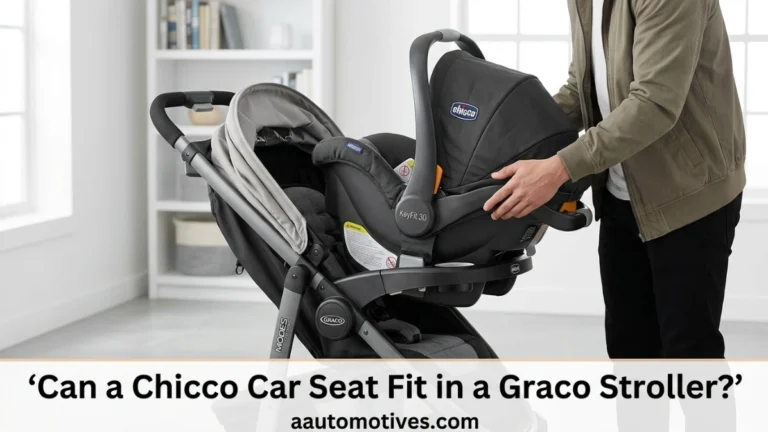
The answer to “will a Graco car seat fit in a Chicco stroller?” is usually no—not safely or directly. Car seat and stroller attachment systems are brand- and model-specific. Even if a Graco seat appears to sit inside a Chicco stroller, that does not mean the two products are approved to work together.
This guide explains how compatibility works, what to check before buying an adapter, why forcing an incompatible combination is unsafe, and the practical options available if you already own products from both brands.
Quick Answer
In most cases, a Graco infant car seat will not fit or safely lock into a Chicco stroller. Chicco strollers are generally designed for compatible Chicco infant car seats, while Graco infant seats are primarily designed for compatible Graco strollers. Only use a cross-brand combination if the stroller or adapter manufacturer specifically approves both exact models.
Why Graco and Chicco Products Usually Do Not Connect
An infant car seat does not simply rest on a stroller. A compatible travel system uses specific attachment points that lock the carrier securely to the stroller frame.
Those attachment points can differ in:
- Width and spacing
- Locking-tab position
- Release mechanism
- Carrier shape
- Adapter-bar design
- Required stroller configuration
- Approved weight limits
A Graco carrier may therefore look like it is close to fitting a Chicco stroller but still fail to engage the actual locking mechanism.
That distinction matters. Physical fit is not the same as approved compatibility.
For example, Chicco’s Bravo instructions state that a Chicco infant car seat should be used with the stroller and warn against attempting to attach infant seats from other manufacturers.
Chicco also explains on its travel system guidance that compatibility should be verified when a stroller and infant seat are purchased separately, and that some combinations require a specific adapter. (Chicco)
Understanding Graco Car Seat Compatibility
Graco sells several infant car seat families, including models in the SnugRide range. Compatibility varies by the specific seat and stroller rather than simply by the Graco name.
Graco maintains its own infant car seat compatibility charts, which are a better source than assuming any Graco carrier will fit any stroller. The company specifically lists compatible Graco stroller and infant-seat combinations. (Graco Baby)
Older terminology can also create confusion. You may see references to systems such as Click Connect or SnugLock when shopping for used equipment.
Do not assume two products are compatible simply because both are Graco products, especially when dealing with older models. Check model numbers and manuals.
What About a Graco SnugRide in a Chicco Stroller?
A Graco SnugRide should not be placed into a Chicco stroller unless the instructions for that particular stroller and an approved adapter specifically identify your exact SnugRide model as compatible.
Current Chicco adapter information commonly lists Chicco seats such as the KeyFit, KeyFit 30, KeyFit 35, or Fit2 rather than Graco carriers. For example, Chicco’s Bravo adapter documentation lists Chicco infant seats as its intended compatible products. (Chicco)
If Graco is not listed, treat the combination as incompatible.
Graco Car Seat and Chicco Stroller Compatibility at a Glance
| Situation | Recommended? | What to Do |
|---|---|---|
| Graco infant seat directly on Chicco stroller | Usually no | Do not force or improvise the connection |
| Chicco infant seat on compatible Chicco stroller | Usually yes | Confirm exact models in the manual |
| Graco infant seat on compatible Graco stroller | Often yes | Verify using Graco’s compatibility chart |
| Graco seat with third-party Chicco adapter | Only if specifically approved | Confirm exact car seat and stroller model numbers |
| Seat appears to rest securely but does not click | No | Remove it immediately |
| Used stroller with unknown adapter | Not until verified | Identify the adapter and check its instructions |
| Homemade straps or universal attachment method | No | Never use an improvised restraint |
How to Check Your Exact Car Seat and Stroller
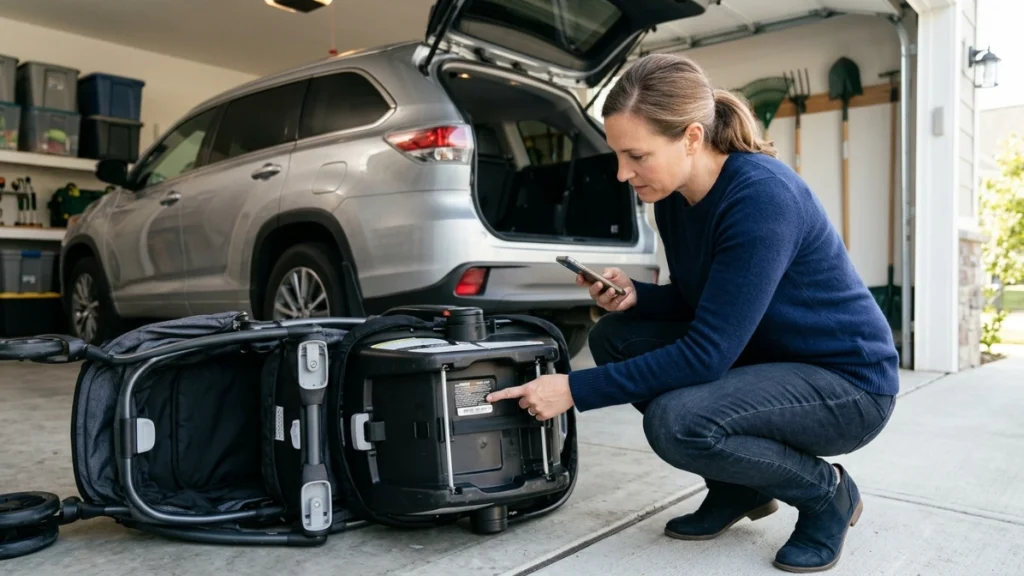
Compatibility questions are easiest to answer when you know the exact model numbers. Product names alone are often not specific enough.
1. Find the Car Seat Model Number
Check the underside, rear shell, or manufacturer’s information label on your Graco infant carrier.
Look for:
- Model name
- Model number
- Date of manufacture
- Serial information if provided
Take a photo of the label so you do not have to keep removing the seat while researching.
2. Find the Chicco Stroller Model
Look around:
- The stroller frame
- Rear axle area
- Storage basket
- Under the stroller seat
- Fold mechanism
Again, you want the complete model rather than simply “Bravo” or “Corso.”
3. Read the Stroller Manual
Search the manual for terms such as:
- Infant car seat
- Travel system
- Adapter
- Compatible
- Warning
Manufacturer instructions take priority over forum comments, resale listings, or demonstrations from other owners.
4. Check the Adapter Separately
If your stroller has an adapter, identify it as its own product.
An adapter that works with one stroller generation may not work with another. Likewise, an adapter designed for one car seat family does not automatically support another carrier with a similar shape.
5. Confirm Both Products Are Explicitly Listed
The safest standard is simple:
The stroller or approved adapter documentation should specifically identify your car seat as compatible.
Do not rely on phrases such as “universal,” “seems to fit,” or “worked for us” unless the manufacturer itself approves that setup.
Why an Incorrect Fit Can Be Dangerous
The biggest problem with an incompatible car seat is that it may look secure when it is not.
A properly compatible infant carrier normally engages designated locking points. Depending on the system, you may hear or feel a click, but you should still perform the security check specified in the stroller manual.
An incompatible carrier might:
- Tip when the stroller turns
- Lift out when the handle is pulled
- Shift when crossing a curb
- Disconnect on rough pavement
- Alter the stroller’s balance
- Put excessive force on trays or plastic components
The Chicco Bravo manual specifically directs caregivers to verify that an attached infant seat is secured and warns about fall hazards when the connection is not correct.
Never rely on the baby’s weight to hold a car seat inside a stroller.
Never Force the Car Seat Into the Stroller
One common mistake is pushing down harder because the seat looks as though it almost fits.
Stop if the carrier requires unusual pressure.
Forcing it may damage:
- Locking hooks
- Plastic housings
- Release mechanisms
- Stroller attachment points
- Adapter brackets
More importantly, forcing incompatible parts together can create the impression that the carrier is locked when it is only wedged into place.
Do not modify the stroller or seat by drilling holes, removing locking components, filing plastic, or adding homemade hardware.
Can You Use a Third-Party Adapter?
Possibly—but only when the adapter manufacturer specifically lists both products.
A legitimate adapter should identify:
- The exact stroller or stroller family it supports.
- The exact infant car seat models it supports.
- The required installation orientation.
- Any additional straps or locking procedures.
- Weight or usage restrictions.
Be careful with secondhand adapters. Missing brackets, straps, instructions, or hardware can make an otherwise compatible adapter unusable.
Never assume an adapter is safe simply because it can physically hold the carrier.
What About “Universal” Car Seat Adapters?
The word universal deserves extra caution.
A product advertised as universal may still have important exclusions. Some systems secure a carrier with straps rather than using the original click-in mechanism.
Before using one, confirm that the manufacturer specifically permits your Graco car seat and your exact Chicco stroller model.
If either product’s manual prohibits the combination, do not use it.
Signs the Car Seat Is Not Properly Compatible
Stop using the stroller combination if you notice:
- The seat does not positively lock.
- Only one side engages.
- There is significant side-to-side movement.
- The seat can be lifted without using the normal release mechanism.
- The adapter flexes or twists excessively.
- The carrier sits at an unusual angle.
- You need extra straps not specified by the instructions.
- Part of the carrier rests on a cup holder or child tray instead of approved attachment points.
- You must force the seat into position.
A nearly secure fit is still an unsafe fit.
Your Best Options If You Already Own Both Brands
Finding out that two expensive baby products are incompatible is frustrating, but you usually have several practical choices.
Option 1: Keep the Graco Seat and Buy a Compatible Stroller
This often makes sense if your Graco infant seat is relatively new and will be used for several more months.
Check Graco’s compatibility information before buying the stroller.
Option 2: Keep the Chicco Stroller and Use an Approved Chicco Seat
If you prefer the Chicco stroller, pairing it with one of the specifically approved Chicco infant carriers may provide the simplest travel-system setup.
Many current Chicco stroller systems are designed around the company’s infant car seat attachment platform. (Chicco)
Option 3: Use the Stroller Without the Infant Carrier
Depending on the child’s age, size, and stroller instructions, you may eventually be able to use the normal stroller seat rather than attaching an infant carrier.
Follow the stroller’s minimum age and positioning requirements. A young baby may need support or a configuration that an older infant no longer needs.
Option 4: Buy an Explicitly Approved Adapter
This is appropriate only when you can confirm the exact combination.
Do not select an adapter based solely on price.
When comparing products, prioritize:
- Documented compatibility
- Secure construction
- Complete hardware
- Clear installation instructions
- Manufacturer support
Cost and Convenience: Is Mixing Brands Worth It?
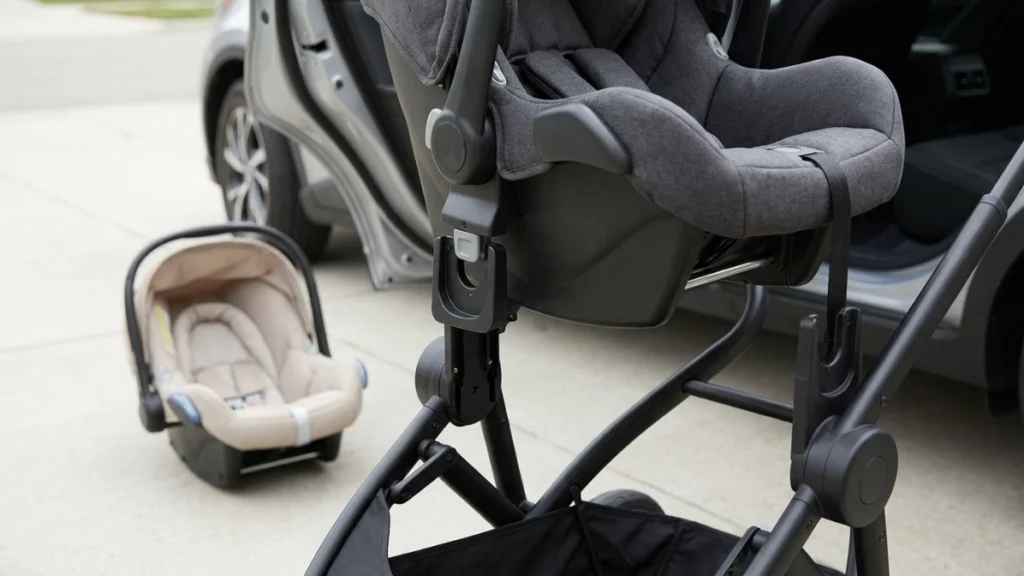
Using your existing car seat can save money if a properly approved adapter exists.
However, cross-brand setups can also create extra complications. You may spend money on an adapter only to discover that it supports a different stroller generation or a different version of your infant seat.
A matched travel system has a convenience advantage because the products were designed to work together. The limitation is that replacing a stroller or car seat can cost more than buying an adapter.
For most families, safety and confirmed compatibility should be the deciding factors—not saving the cost of one piece of equipment.
Expert Tip
Expert Tip:
Before buying a stroller or adapter, photograph the manufacturer labels on both products. Compare the exact model numbers against the manufacturer’s compatibility information rather than searching only by brand name.
Car Seat Safety Still Matters After You Leave the Stroller
Remember that stroller compatibility and vehicle installation are two different issues.
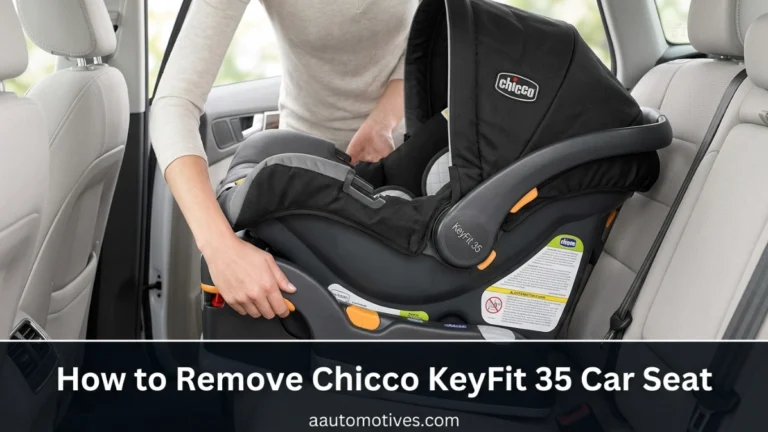
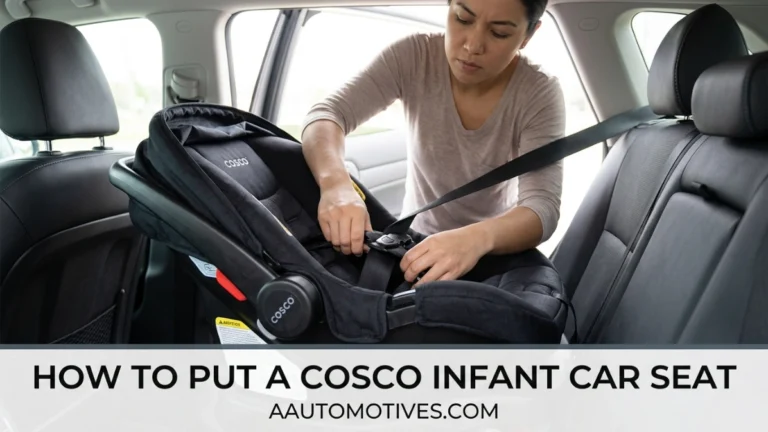
Even if your infant carrier connects perfectly to a stroller, it must still be correctly installed when used as a vehicle restraint. NHTSA recommends following the car seat and vehicle instructions and offers car seat safety and inspection resources for families who want help checking their setup. (NHTSA)
Never allow a stroller adapter, aftermarket accessory, or convenience feature to interfere with the way the car seat is installed in the vehicle.
When to Call a Professional Mechanic
A professional auto mechanic is generally not the right person to determine stroller-to-car-seat compatibility. This issue involves child-restraint products rather than the mechanical systems of the vehicle.
Instead, contact:
- The stroller manufacturer
- The car seat manufacturer
- The adapter manufacturer
- A certified Child Passenger Safety Technician (CPST)
NHTSA’s car seat inspection resources can help families find trained technicians who can check child-restraint use and vehicle installation. (NHTSA)
A mechanic may be appropriate only if there is a separate problem involving the vehicle itself—for example, damaged vehicle seat hardware or another automotive component that needs repair.
Common Mistakes Car Owners Should Avoid
- Assuming all infant carriers use the same connection. Attachment systems differ significantly.
- Testing compatibility with the baby inside. Always verify an empty carrier first according to the instructions.
- Using force to make the carrier click. A compatible product should attach according to its normal installation procedure.
- Trusting an online seller’s description without checking the manufacturer. Resale listings can be incomplete or wrong.
- Buying an adapter based only on appearance. Similar-looking brackets may have completely different specifications.
- Using straps, bungee cords, zip ties, or homemade brackets. Never improvise a child-restraint connection.
- Ignoring model year or generation differences. A stroller family may change its attachment system over time.
- Skipping the pull-check. When the instructions call for it, verify that the carrier has securely engaged before moving the stroller.
FAQs
Will a Graco SnugRide fit a Chicco Bravo stroller?
Generally, no. Chicco’s Bravo instructions specify use with Chicco infant car seats rather than infant carriers from other manufacturers. Confirm your exact stroller model in its owner’s manual before attaching any carrier.
Can I put a Graco car seat on a Chicco stroller without an adapter?
You should not. Even if the carrier rests on the stroller, it needs an approved locking system. A seat that merely sits in place can move or fall when the stroller hits a curb or uneven surface.
Is there a Graco-to-Chicco stroller adapter?
Adapter availability varies by stroller, car seat, and product generation. Only use one if its manufacturer specifically lists your exact Graco carrier and exact Chicco stroller as an approved combination.
How do I know whether my infant car seat is securely attached?
Follow the stroller or adapter instructions. The carrier should engage all required locking points, and any prescribed pull-check should confirm that it cannot lift away without operating the release mechanism.
Can I use straps to secure a Graco seat to a Chicco stroller?
Not unless those straps are part of an approved adapter system and are specifically required by its instructions. Never add homemade straps, cords, or other restraints.
Should I replace the stroller or the car seat?
Usually, keep whichever product provides the most value for your situation. If your infant seat still has substantial useful life, buying a compatible stroller may make sense. If you strongly prefer your Chicco stroller, an approved Chicco infant carrier may be the simpler option.
Can an incompatible car seat damage the stroller?
Yes. Forcing the wrong carrier into the frame can place stress on plastic trays, locking mechanisms, adapters, or mounting points. Damage may not always be obvious immediately.
Conclusion
So, will a Graco car seat fit in a Chicco stroller? In most situations, you should assume it will not unless the manufacturer specifically confirms compatibility for your exact models.
Do not judge compatibility by appearance or by whether the carrier happens to rest securely in the stroller. Travel systems depend on engineered locking points, approved adapters, and specific installation procedures.
Check the model labels, read both owner’s manuals, and verify any adapter before spending money. If compatibility remains unclear, contact the manufacturer or a certified child passenger safety professional.
Before your next trip, confirm the exact car seat and stroller models and use only a combination that is explicitly approved.