Ford Fusion Won’t Start: Common Causes

Contents
- 1 Key Takeaways
- 2 📑 Table of Contents
- 3 The Usual Suspects: Battery & Electrical System
- 4 Starter Motor & Solenoid Failures
- 5 Fuel Delivery Problems: No Gas, No Go
- 6 Security System & Key Issues
- 7 Ignition Switch & Other Electrical Gremlins
- 8 Less Common, But Serious: Internal Engine Issues
- 9 Practical Diagnostic Flowchart
- 10 When to Call a Professional
- 11 Frequently Asked Questions


Is your Ford Fusion refusing to start? This frustrating issue can stem from several common culprits. The most frequent causes are a weak or dead battery, a failing starter motor, or fuel delivery problems. Security system glitches with the key fob or ignition switch can also prevent startup. We break down each potential cause with simple diagnostic steps you can try at home to identify the problem before calling a mechanic.
You’re running late, you get in your Ford Fusion, turn the key (or press the start button), and… nothing. Or maybe it clicks, or cranks slowly, but the engine just won’t fire up. That sinking feeling is all too familiar. Before you panic and call for a costly tow, take a breath. A Ford Fusion won’t start for a handful of very common, often diagnosable reasons. Think of your car’s starting system like a simple chain: the battery provides power, the key/ignition sends a signal, the starter motor cranks the engine, and the fuel system provides gas. If any single link is weak or broken, the chain fails. This guide will walk you through each link, helping you listen, look, and test your way to the culprit. We’ll keep it simple, no mechanic degree required.
Key Takeaways
- Dead Battery is #1 Suspect: A weak or corroded battery terminal is the most common reason a Fusion won’t start, often indicated by slow cranking or clicking sounds.
- Starter Motor Failure: If the engine doesn’t turn over at all but lights/radio work, a bad starter or solenoid is likely the issue.
- Fuel System Issues: A clogged fuel filter, failed fuel pump, or empty tank (check the gauge!) will prevent combustion.
- Security/Key Problems: A faulty key fob battery or a malfunctioning Passive Anti-Theft System (PATS) can immobilize the car.
- Ignition Switch Wear: Worn contacts in the ignition switch can cut power to the starter, especially in high-mileage Fusions.
- Electrical Gremlins: Blown fuses, bad ground connections, or wiring issues can interrupt the starting circuit.
- Engine Mechanical Failure: Rare, but severe issues like a seized engine or broken timing belt will cause a complete no-start.
📑 Table of Contents
- The Usual Suspects: Battery & Electrical System
- Starter Motor & Solenoid Failures
- Fuel Delivery Problems: No Gas, No Go
- Security System & Key Issues
- Ignition Switch & Other Electrical Gremlins
- Less Common, But Serious: Internal Engine Issues
- Practical Diagnostic Flowchart
- When to Call a Professional
The Usual Suspects: Battery & Electrical System
Let’s start with the most common and often simplest fix. Over 50% of all no-start situations trace back to the battery or its connections. Your Fusion’s battery does one job: provide a huge burst of power to the starter motor. If it can’t deliver that power, nothing happens.
Signs of a Weak or Dead Battery
Turn the key. What happens? If you hear a rapid, low-pitched clicking sound, that’s the starter solenoid trying to engage but not getting enough voltage. If the engine cranks very slowly, like it’s struggling, that’s another classic sign. If absolutely nothing happens—no lights dim, no noise—the battery may be completely dead or a main fuse is blown. First, check your battery age. Most car batteries last 3-5 years. If yours is older, it’s on borrowed time.
Corroded or Loose Battery Terminals
Pop the hood. Look at the battery’s metal posts and the clamps attached to them. Do you see a white, crusty, powdery substance? That’s corrosion, and it’s a fantastic insulator. It prevents the battery’s power from flowing to the starter cable. This is a very common and easy fix. Disconnect the negative (-) cable first, then the positive (+). Clean the posts and clamps with a battery terminal brush and a baking soda/water solution. Reconnect tightly, positive first. For Fusion models with keyless entry, a weak battery can also cause the key fob to unlock the car but fail to start the engine.
Testing the Battery
You need a multimeter or a auto parts store will test it for free. Set your multimeter to DC volts. Touch the red probe to the positive post and black to the negative. A healthy, charged battery reads 12.6 volts or higher. Below 12.4 volts is weak. Have someone try to start the car while you watch the meter. If the voltage plummets below 10 volts during cranking, the battery is bad. If it stays above 10 volts but the car still won’t start, the starter or another component is the problem. A Ford Fusion won’t start but has power (lights/radio work) often points to a battery that has enough juice for accessories but not the high draw of the starter.
Starter Motor & Solenoid Failures
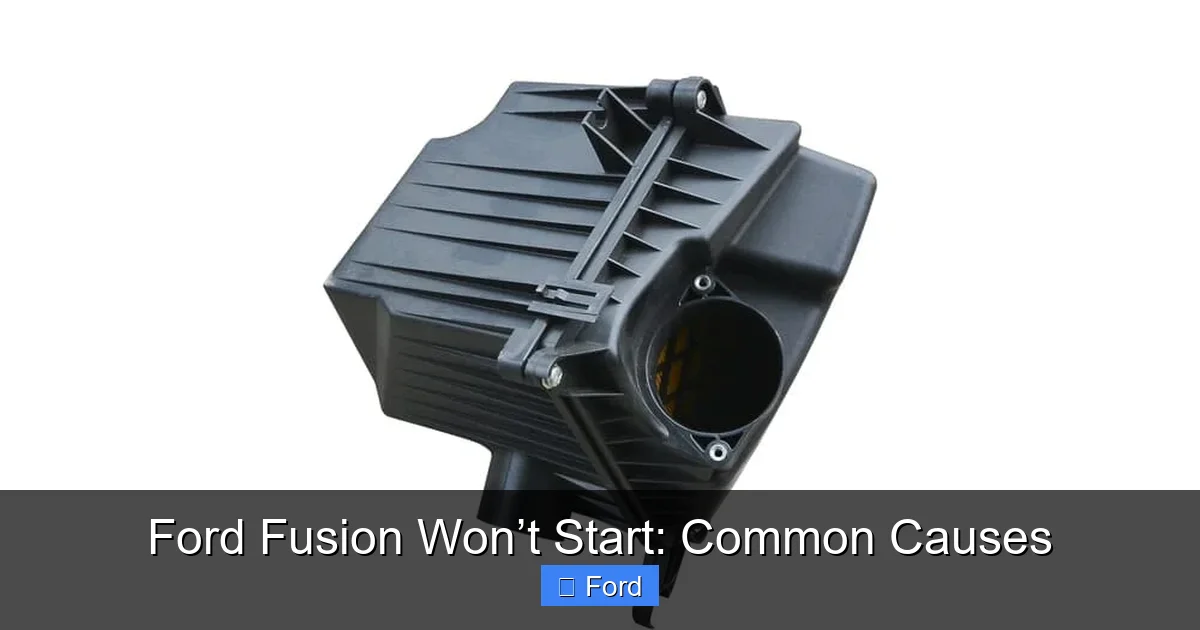
If the battery is strong and terminals are clean, we move to the component that actually turns the engine: the starter. It’s a powerful electric motor mounted on the transmission. When you turn the key, a smaller part called the solenoid engages a gear (the Bendix) into the engine’s flywheel and triggers the motor.
Visual guide about Ford Fusion Won’t Start: Common Causes
Image source: vehiclefreak.com
Symptoms of a Bad Starter
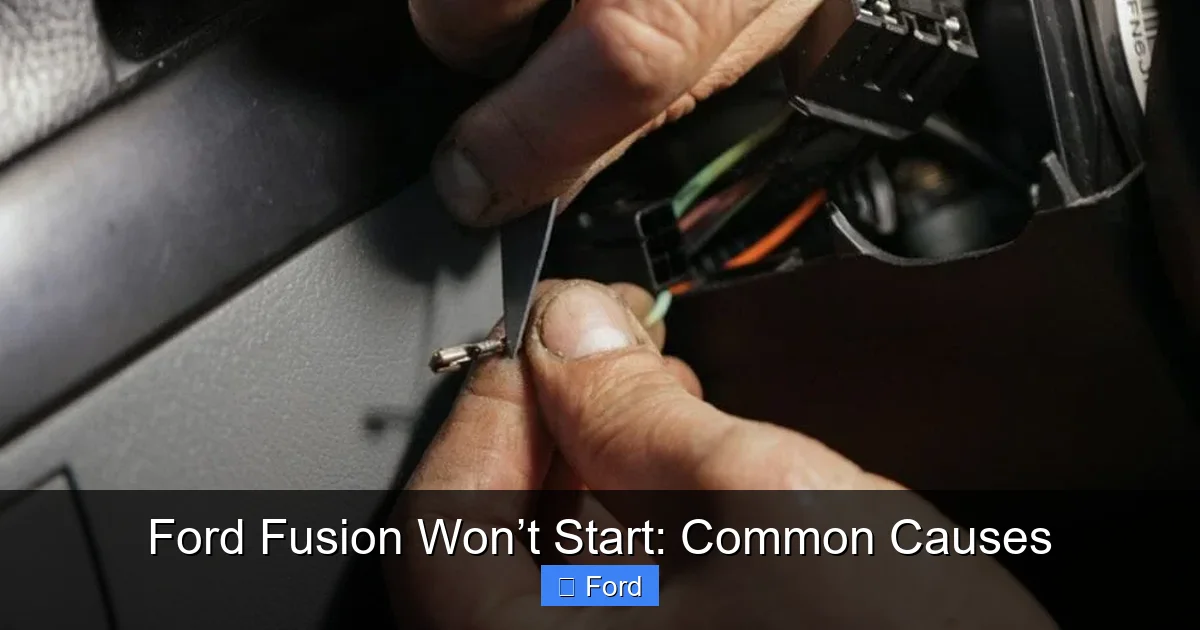
You turn the key and hear a single, loud CLICK from under the hood (usually near the passenger-side firewall), but the engine doesn’t crank. This click is the solenoid activating, but either it’s faulty or the starter motor itself has failed internally. Sometimes, you might hear a grinding noise, which means the starter gear is worn and not properly engaging the flywheel teeth. If you hear nothing at all, the solenoid might not be getting the signal from the ignition switch.
Tapping the Starter: A Classic Trick
Here’s a mechanic’s trick that works surprisingly often on Fusions and many other cars. Locate the starter (consult a repair manual for your specific year). While a helper holds the key in the “start” position, firmly tap the starter housing with a hammer or the handle of a wrench. Sometimes, worn brushes or a stuck armature can be jarred back into working temporarily. If the car starts after this, it’s a 100% confirmation the starter is failing and needs replacement soon. It won’t last forever.
Checking the Starter Circuit
Safety first: ensure the car is in Park (or Neutral for manual) and parking brake is on. You can perform a “bypass” test to see if power is reaching the starter. On the starter solenoid, there are two large terminals: one from the battery and one to the starter motor. There is also a small terminal with a wire from the ignition switch. Using a screwdriver or a piece of wire, carefully touch the small terminal to the battery-positive terminal on the solenoid. This sends 12V directly to the solenoid. If the starter cranks the engine, the problem is in the ignition switch wiring or the clutch/neutral safety switch. If nothing happens, the starter or solenoid is bad.
Fuel Delivery Problems: No Gas, No Go
An engine needs three things to run: air, spark, and fuel. We’ve covered spark (from the starter cranking). Air is usually not the issue unless the air filter is completely clogged. Fuel is a frequent suspect, especially if the engine cranks normally but won’t fire up.
Visual guide about Ford Fusion Won’t Start: Common Causes
Image source: towingcap.com
Is There Actually Fuel?
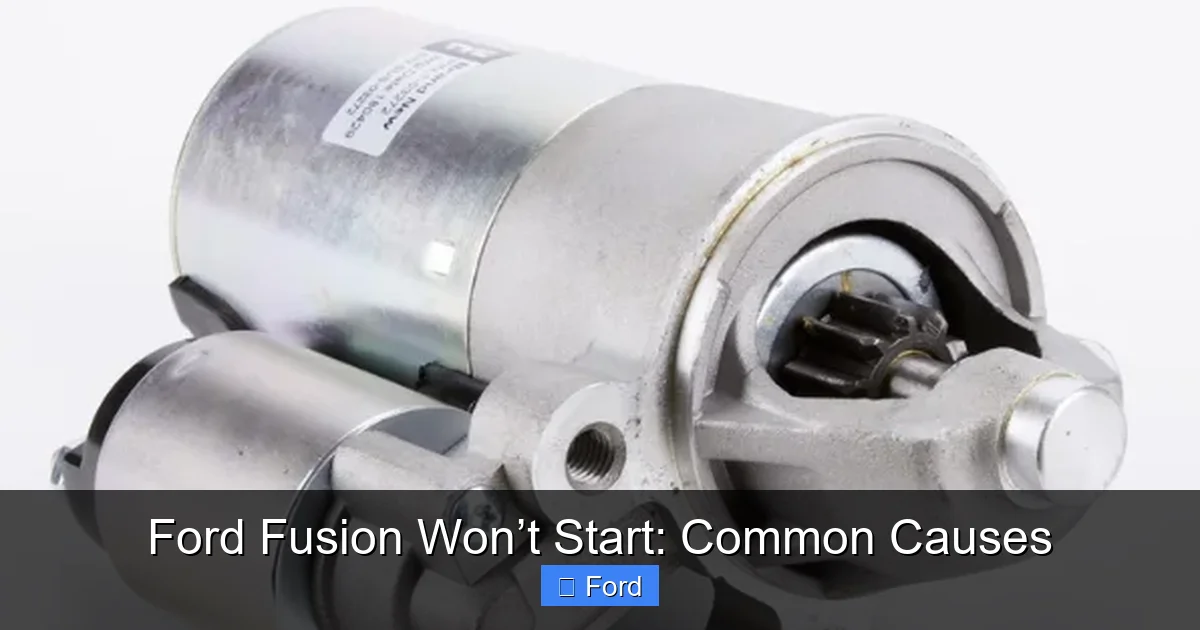
It sounds silly, but check your fuel gauge. Fusions have had their share of faulty fuel level sensors that show a quarter tank when you’re actually empty. Try turning the key to “ON” (without starting) and listen near the rear of the car. You should hear a faint hum or whirring from the fuel tank for 2-3 seconds. That’s the fuel pump priming the system. No sound? The pump might be dead, or its relay/fuse is blown. The fuel pump relay is often located in the under-hood fuse box.
Clogged Fuel Filter
Most modern Fusions have an in-tank fuel pump with a screen, but some model years also have an in-line fuel filter. A severely clogged filter will restrict fuel flow, causing the engine to crank but not start, or start and die immediately. Replacing a fuel filter is a routine maintenance item, typically due every 30,000-60,000 miles.
Faulty Fuel Injectors or Pressure
If fuel isn’t being sprayed into the cylinders, combustion can’t happen. A complete failure of all injectors is rare, but a major electrical issue or a dead fuel pump can cause a total loss of fuel pressure. You can sometimes smell raw fuel at the exhaust if an injector is stuck open, but a no-start with a strong fuel smell usually points to a spark issue instead.
Security System & Key Issues
Modern Fusions are equipped with the Passive Anti-Theft System (PATS). This system uses a transponder chip in your key to communicate with a receiver ring around the ignition. If the car doesn’t recognize a valid key, it will disable the fuel injectors and the starter, causing a Ford Fusion won’t start with no crank at all, or it will crank but not fire.
Visual guide about Ford Fusion Won’t Start: Common Causes
Image source: towingcap.com
Key Fob Battery Dead
If you have a push-button start, a dead fob battery is a prime suspect. The system may still detect the fob for unlocking doors via a backup antenna, but it needs sufficient power to communicate with the car’s immobilizer for starting. Try holding the fob directly against the start button (or near the key slot on keyed models). Often, this proximity allows a weak signal to work. Replacing the fob battery is a cheap and easy fix.
PATS System Malfunction
If the security light on the dash is flashing rapidly when you try to start, the system is active and blocking the start. This could mean a faulty key (the transponder chip failed), a broken antenna ring around the ignition, or a problem with the car’s computer (PCM). You may need a dealer or locksmith with a specialized scan tool to program a new key or diagnose the system. For a quick check, try your spare key if you have one. If the spare works, your primary key is the problem.
Ignition Switch & Other Electrical Gremlins
The ignition switch is the physical component your key turns (or the push-button assembly activates). It’s a mechanical switch that closes circuits to power up the car’s systems and, most importantly, sends power to the starter solenoid. These switches wear out over time, especially if you carry a heavy keychain that jiggles the switch.
Worn Ignition Switch Symptoms
You might experience intermittent no-starts—the car starts fine one moment, then won’t crank the next time you turn the key. You might also notice other electrical oddities: the radio or dash lights flicker when you try to start, or the car starts but dies immediately because the switch cuts power to the fuel pump. Testing requires checking for power at the starter solenoid’s small terminal while cranking. No power there points to the switch, clutch safety switch (manual), or wiring.
Fuses, Relays, and Grounds
Always check the basics. Your owner’s manual has a fuse box diagram. Look for any blown fuses related to “STARTER,” “IGNITION,” or “PCM.” The starter relay (often in the under-hood box) can also fail. It’s a cheap part. A poor engine ground strap—a thick black braided cable connecting the engine block to the chassis or battery negative—can also prevent the starter from getting a complete circuit. Inspect these straps for corrosion or breaks. For a related issue where the engine cranks but won’t fire, you’d look at different circuits, as explained in articles about car cranks but won’t start.
Less Common, But Serious: Internal Engine Issues
If you’ve ruled out battery, starter, fuel, and security, the problem is likely internal and serious. These are rare but possible.
Seized Engine
This is the worst-case scenario. If the engine has no oil, suffered catastrophic internal damage, or has a severely overheated and locked-up component, the pistons can’t move. When you try to start it, the starter will make a high-pitched whine or a terrible grinding noise as its gear tries and fails to turn the engine. It will feel like the engine is solidly locked. This requires a complete engine rebuild or replacement.
Timing Belt/Chain Failure
If the timing component breaks, the engine’s valves and pistons lose synchronization. On an interference engine (many Fusion 4-cylinders are), a broken timing belt can cause the pistons to collide with open valves, causing massive internal damage. The engine will crank over very freely and quickly (because there’s no compression), but it will never start. You might hear a rattling noise before complete failure. This is why strict timing belt service intervals are critical.
Practical Diagnostic Flowchart
When your Ford Fusion won’t start, follow this mental checklist:
- Step 1: Listen & Feel. Do you hear a click? Slow crank? No sound? Fast, normal crank? This first clue points you to battery/starter vs. fuel/spark.
- Step 2: Check Basics. Is the parking brake on? Is it in Park/Neutral? Is there fuel? (Add a gallon if unsure). Check fuses.
- Step 3: Test Battery. Use a multimeter or get it tested. Clean terminals.
- Step 4: Test Starter Circuit. Tap the starter. Perform the bypass test if you’re comfortable.
- Step 5: Check Security. Try spare key. Look for security light. Replace fob battery.
- Step 6: Fuel Pump. Listen for hum at tank. Check fuel pump fuse/relay.
If the engine cranks normally but won’t fire, your focus shifts to fuel, spark (ignition coils, spark plugs), and air. That’s a different diagnostic tree, covered well in articles about car turns over but won’t start.
When to Call a Professional
You’ve checked the battery, cleaned terminals, tried the spare key, and maybe even tapped the starter. The car still won’t start. It’s time to call a mechanic or a mobile service. Diagnosing no-crank issues can require special tools (scan tools for PATS, fuel pressure gauges, oscilloscopes for ignition switches). If you suspect a failed starter, fuel pump, or ignition switch, these are parts that need proper installation and sometimes programming. Don’t risk damaging a new part with improper installation. Also, if you hear grinding or suspect internal engine damage, stop cranking immediately to prevent further destruction. Towing might be the safest, albeit most expensive, option.
Frequently Asked Questions
My Ford Fusion cranks slowly but eventually starts. What is it?
This is the classic sign of a weak battery. The slow cranking means the battery can’t provide enough cold cranking amps (CCA). It might be old, discharged (from leaving lights on), or has a failing cell. Have the battery and alternator tested.
My Fusion makes a single loud click when I turn the key, but the engine doesn’t turn over.
This usually indicates a failed starter solenoid or a severely weak battery. First, ensure battery connections are clean and tight. If the battery is strong, the solenoid or starter motor itself needs to be replaced.
The engine cranks normally but won’t start. What should I check?
When it cranks fine, the battery and starter are likely okay. You now need to check for fuel (listen for pump hum, check fuel level/fuse) and spark (ignition coils, spark plugs). A faulty sensor like the crankshaft position sensor can also prevent fuel/spark while allowing cranking.
My key fob unlocks the doors, but the car won’t start when I press the button.
The fob battery may be low, preventing the strong signal needed for the immobilizer system. Replace the fob battery first. If that doesn’t work, the car’s receiver for the key signal or the PATS system itself may have a fault.
Could a blown fuse cause a no-start?
Absolutely. The starter circuit is protected by a main fuse or fusible link, often in the under-hood fuse box. A fuse for the ignition switch, starter relay, or Powertrain Control Module (PCM) can also kill the starting circuit. Check your owner’s manual for fuse locations and ratings.
What does it mean if my Fusion starts after a jump but dies again?
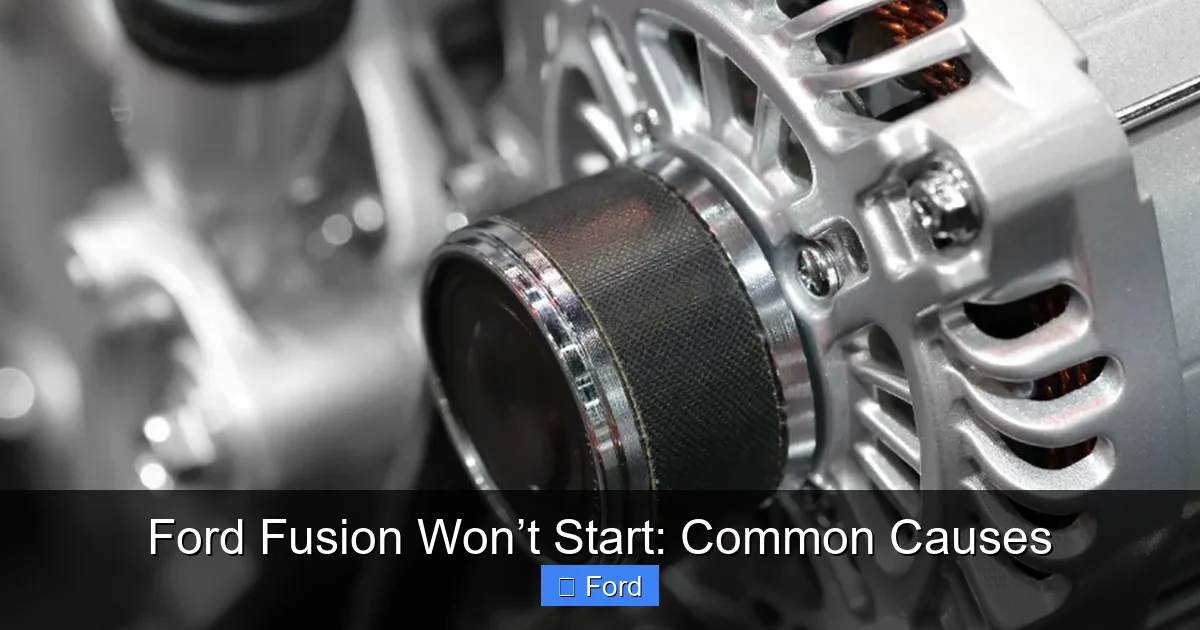
If it runs after a jump but won’t restart on its own, the alternator is likely not charging the battery. The jump provides temporary power, but once you turn the car off, the dead battery can’t start it again. Have the alternator and battery tested.