Does Toyota Safety Connect Work Without a Subscription?

Contents
- 1 Key Takeaways
- 2 📑 Table of Contents
- 3 What Exactly is Toyota Safety Connect?
- 4 The Inevitable Question: Does It Work Without a Subscription?
- 5 What About the “Basic” or “Safety” Features That Are Free?
- 6 The Subscription Details: Cost, Plans, and Renewal
- 7 Practical Examples and Tips for Owners
- 8 The Bottom Line: Is It Worth Renewing?
- 9 Conclusion: A Clear Choice with No Gray Area
- 10 Frequently Asked Questions

Emergency First Aid Kit

Phone Mount for Bike

Engine Flush Cleaner

Tire Pressure Monitoring System (TPMS)
No, Toyota Safety Connect’s core emergency and connectivity services do not work without an active paid subscription after the initial complimentary trial period expires. While the hardware remains installed, the link to Toyota’s 24/7 response center is severed without payment. Understanding the trial length, renewal costs, and which features are subscription-dependent is crucial for every Toyota owner.
If you’ve just driven off the dealership lot in a new Toyota, you’ve likely been briefed on a suite of high-tech safety features. Among them is Toyota Safety Connect, a promise of help just a button press away. But a common and critical question lingers for owners once the initial excitement fades: does Toyota Safety Connect work without a subscription? The short, direct answer is no—not in the way you’re counting on for emergency services. Let’s pull back the curtain on how this system operates, what your trial actually means, and what happens when the free period ends.
Key Takeaways
- Hardware vs. Service: The Safety Connect module is physically installed in your Toyota, but it requires a paid subscription to activate the communication link to Toyota’s emergency network.
- Complimentary Trial: All new Toyotas equipped with Safety Connect come with a multi-year trial (typically 1-3 years) of full service at no extra cost.
- Trial Expiration: Once the trial ends, all connected services—including automatic collision notification, emergency assistance, and stolen vehicle tracking—cease to function until a subscription is purchased.
- Feature Lockout: The SOS button, the “i” button, and the automatic crash response will not send any signal or connect you to an operator after subscription lapse.
- No Permanent Free Tier: Unlike some competitors, Toyota does not offer a permanent, limited free tier for Safety Connect. It is a paid subscription service after the trial.
- Renewal is Key: To maintain the safety net, you must proactively renew your subscription through Toyota or your dealer before the trial expires.
- Resale Value: An active Safety Connect subscription can be a selling point, but a lapsed subscription means the buyer must pay to reactivate it, potentially affecting the vehicle’s value.
[FEATURED_IMAGE_PLACEHOLDER]
📑 Table of Contents
- What Exactly is Toyota Safety Connect?
- The Inevitable Question: Does It Work Without a Subscription?
- What About the “Basic” or “Safety” Features That Are Free?
- The Subscription Details: Cost, Plans, and Renewal
- Practical Examples and Tips for Owners
- The Bottom Line: Is It Worth Renewing?
- Conclusion: A Clear Choice with No Gray Area
What Exactly is Toyota Safety Connect?
Before we dive into subscriptions, we need to understand the system itself. Toyota Safety Connect is not a single feature but a bundle of connected services powered by embedded hardware in your vehicle. Think of it as a dedicated, built-in communication device, similar to what you’d find in a commercial truck or a luxury car’s concierge system. Its primary mission is safety and security, leveraging cellular network technology to create a lifeline between your car and a 24/7 response center.
The Core Components: Hardware, Software, and Network
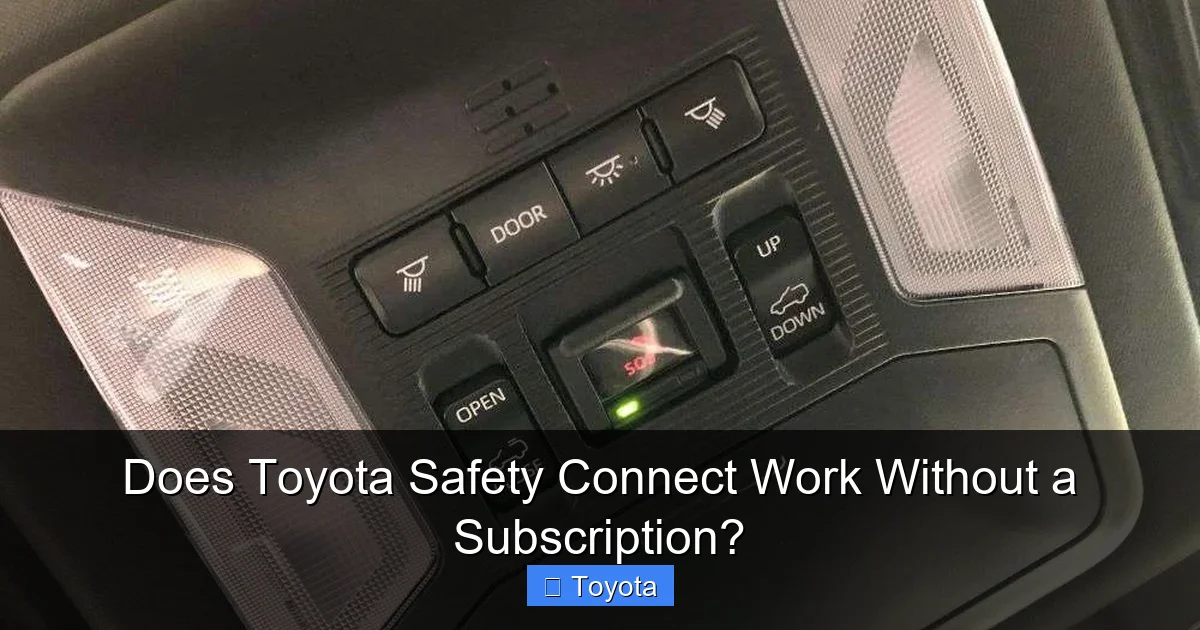
The system has three essential parts. First, there’s the hardware module—a small computer with a cellular SIM card (usually from AT&T in the U.S.) permanently installed in your vehicle during manufacturing. Second, there’s the software and buttons you interact with: the SOS button on the ceiling, the “i” button on the rearview mirror, and the automatic crash sensors that trigger the system. Third, there’s the back-end service—Toyota’s dedicated response center staffed by trained agents who can dispatch police, fire, EMS, or roadside assistance.
This hardware is always “on” in a sense; it has power from your car’s battery. But it’s like a phone with no service plan. It can sit there, perfectly functional, but it cannot make a call. The subscription fee is, fundamentally, the “service plan” that activates the SIM card and grants your vehicle access to the Toyota response network.
The Services Included in the Bundle
When your subscription is active, Safety Connect typically provides these key services:
- Automatic Collision Notification: If your airbags deploy, the system automatically calls the response center, transmits your GPS location, and connects you with an agent who can send help even if you’re incapacitated.
- Manual SOS/Emergency Assistance: Pressing the SOS button connects you directly to an agent for any emergency—medical, police, or fire—wherever you are.
- Stolen Vehicle Locator: If your car is reported stolen, Toyota can work with law enforcement to provide its real-time location using the embedded GPS.
- Roadside Assistance: For flat tires, lockouts, or a dead battery, you can press the “i” button for towing, fuel delivery, or other basic aid.
- Enhanced Roadside Assistance (in some models): This can include remote engine start/stop for certain hybrids (like the Prius Prime) to help with climate control in an emergency.
It’s a powerful package. But every single one of these functions relies on that active subscription link. Without it, the buttons are inert, and the automatic crash sensors are silent.
The Inevitable Question: Does It Work Without a Subscription?
Now, to the heart of the matter. We must separate the system’s potential from its functionality. The physical hardware is always present. You can see the buttons, you know the module is under the dash. But “working” in the context of a safety system means “performing its intended, life-saving functions.” And for that, an active, paid subscription is absolutely mandatory after the trial.

Visual guide about Does Toyota Safety Connect Work Without a Subscription?
Image source: mlc90rgrwcsy.i.optimole.com
The Trial Period: Your Free Introduction
Every new Toyota equipped with Safety Connect (which is standard on most models above the base trim) comes with a complimentary trial subscription. The length varies by model year and sometimes by region, but it’s commonly one year, though some recent models offer a three-year trial. During this time, all features are fully active at no additional cost to you. It’s Toyota’s way of letting you experience the value of the service, with the hope you’ll see its worth and continue paying for it.
This trial is not a permanent free pass. It has a clear, recorded expiration date. You will receive notifications from Toyota—via mail, email, and sometimes even alerts on your vehicle’s infotainment screen—reminding you to renew. Ignoring these notices has a definitive consequence: service termination.
The Moment of Truth: Post-Trial Reality
On the day your trial expires, the system’s connected capabilities are deactivated remotely by Toyota’s network. The SIM card is turned off. What does this mean for you, sitting in your car?
- Press the SOS button? Nothing happens. No light, no sound, no connection. It might as well be a blank piece of plastic.
- Get into a severe collision? The airbags will deploy, but the system will not automatically call for help. It will be silent.
- Get a flat tire on a dark road? The “i” button will not summon roadside assistance. You are on your own.
- Have your car stolen? You lose the powerful stolen vehicle locator feature. You’ll have to rely solely on police procedures and standard GPS trackers from aftermarket devices.
The hardware is still there, a silent monument to a service you no longer have. It is, in essence, a non-functional Safety Connect system.
Why Toyota (and Other Brands) Do This
This subscription model isn’t unique to Toyota. Almost every automaker with a connected services suite (like GM’s OnStar, Ford’s SYNC Connect, Hyundai’s Blue Link) operates on the same principle: a trial followed by a paid plan. The reason is twofold. First, the ongoing cost of maintaining a 24/7 national response center, cellular network contracts for millions of vehicles, and software development is enormous. The subscription fee covers that operational expense. Second, it’s a business model. It creates a recurring revenue stream for the automaker long after the initial vehicle sale. For the consumer, it’s a clear choice: pay for the peace of mind, or go without the service.
What About the “Basic” or “Safety” Features That Are Free?
This is a crucial point of confusion for many owners. You might have heard that some safety features are “standard” or “free.” This is true, but it’s vital to distinguish between Toyota Safety Connect and Toyota Safety Sense™ (TSS).
Visual guide about Does Toyota Safety Connect Work Without a Subscription?
Image source: mlc90rgrwcsy.i.optimole.com
Toyota Safety Sense™ (TSS) is Always On
Toyota Safety Sense is a suite of active driver-assistance technologies that use cameras and radar. This includes:
- Pre-Collision System with Pedestrian Detection
- Lane Departure Alert with Steering Assist
- Automatic High Beams
- Dynamic Radar Cruise Control
- Road Sign Assist (on newer models)
These features are part of the vehicle’s core hardware and software. They work entirely independently of any subscription, cellular network, or Safety Connect. They are always on, as long as your car is on. They are the “eyes” of the car, helping you avoid a crash in the first place. You can learn exactly how the Pre-Collision System functions in our detailed guide here.
Safety Connect is the “After the Crash” System
Safety Connect is the “what happens if a crash still occurs” system. It’s the difference between your car helping you avoid an accident (TSS) and your car calling for an ambulance if you can’t (Safety Connect). One is a proactive safety aid; the other is a reactive emergency response. They complement each other but are entirely separate systems with separate funding models. Your TSS will work forever without a subscription. Your Safety Connect will not.
The Subscription Details: Cost, Plans, and Renewal
So, if you want to keep Safety Connect alive after your trial, what does that entail? The specifics can vary slightly by region and dealer, but the general framework is consistent.

Visual guide about Does Toyota Safety Connect Work Without a Subscription?
Image source: mlc90rgrwcsy.i.optimole.com
How Much Does It Cost?
Renewal pricing is typically offered in annual increments. As of recent years, the standard Safety Connect subscription in the United States has been priced around $120 to $150 per year. Some dealers or Toyota’s official portals may offer a slight discount for multi-year renewals (e.g., 3 years for $300-$400). This is a flat fee for the connected services bundle. It is usually not available for a monthly subscription; it’s an annual commitment. There is no “basic” cheaper plan that only includes SOS; it’s all or nothing.
How Do You Renew?
You have a few options:
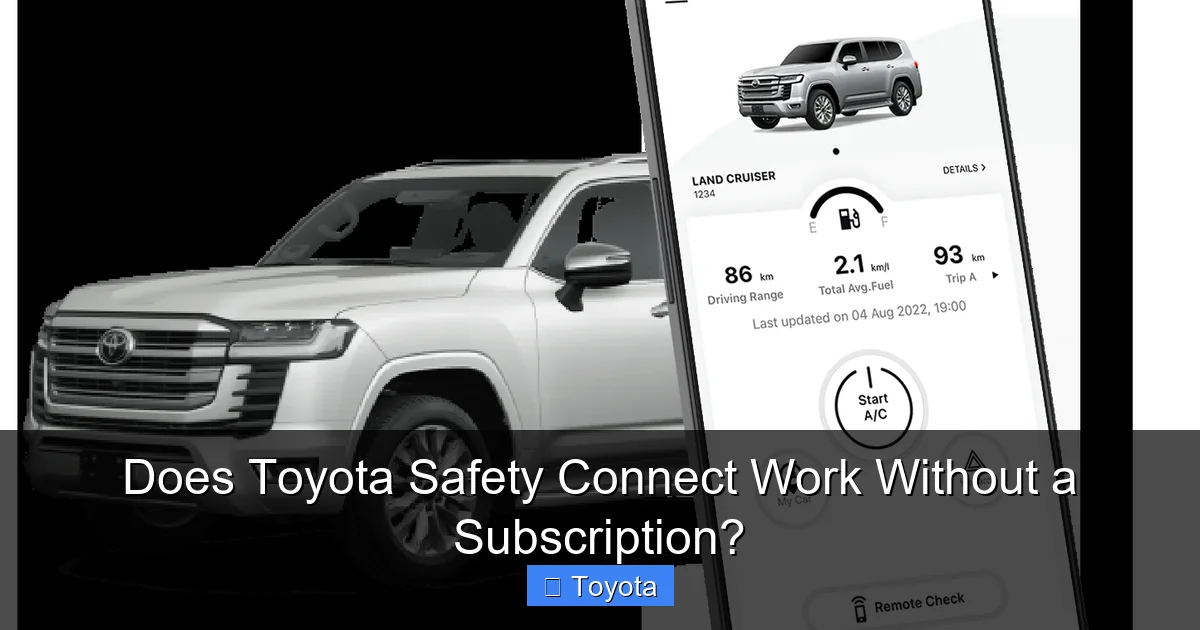
- Through the Toyota App: The easiest method. Log into your Toyota account via the official app (Toyota, Entune, or newer Toyota app), navigate to your vehicle, and follow the prompts to renew.
- Online via Toyota’s Website: You can log into your account on the owner’s portal (owners.toyota.com) to manage subscriptions.
- Through Your Dealer: Call or visit your selling dealer’s service or business office. They can process the renewal for you, sometimes bundling it with service appointments.
- Direct Mail Offer: You will receive a renewal notice in the mail with a form and a prepaid envelope.
Important: Do not wait until the last day. Renew a few weeks before your expiration to ensure there is no gap in service. If you let it lapse, you can still renew later, but you will have been without coverage during that gap.
What If I Sell My Car?
This is a common scenario. If you sell your Toyota before the subscription expires, you have two choices:
- Transfer the Subscription: You can request to transfer the remaining active subscription period to the new owner. This is a great selling point and is usually done through Toyota customer service. The new owner inherits the service for the remainder of the paid term.
- Request a Prorated Refund: If the new owner does not want it, you can cancel the subscription and request a refund for the unused months. This is typically a prorated amount. You must handle this before the sale is finalized and the vehicle is transferred in the buyer’s name.
Always disclose the status of the Safety Connect subscription during a private sale. A car with an active subscription is more valuable than one without.
Practical Examples and Tips for Owners
Let’s make this concrete with real-world situations and advice.
Scenario 1: The Forgetful Owner
Situation: Your trial expired six months ago. You never renewed because you forgot, or you thought it was part of the car forever. You’re now driving a car with a deactivated Safety Connect system.
Action: Log into the Toyota app or website immediately. Check your subscription status. If it’s lapsed, renew it right away. Going forward, set a calendar reminder for your renewal date a month in advance. Consider adding it as a recurring bill in your budgeting app.
Scenario 2: The Used Car Buyer
Situation: You bought a used 2019 Toyota RAV4. The previous owner didn’t mention Safety Connect. You press the SOS button and nothing happens. Is it broken?
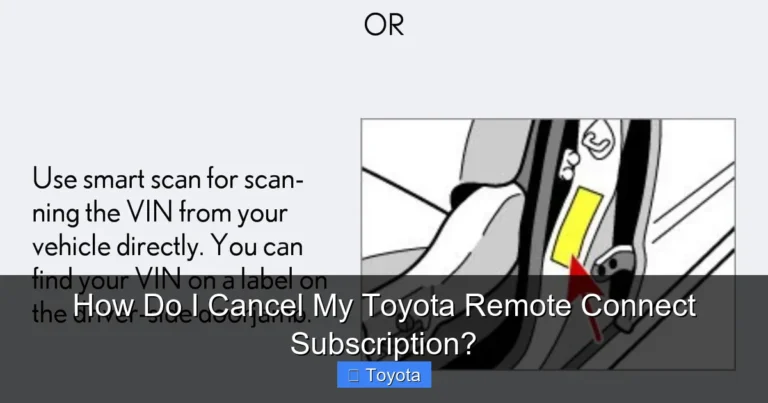
Action: It’s almost certainly not broken; it’s just unsubscribed. First, determine if your vehicle even has the hardware (most RAV4s from that era do). Call Toyota Customer Service with your VIN. They can tell you the hardware status and the last subscription date. If the trial was on the original owner and has long since expired, you’ll need to purchase a new subscription to activate it. Always ask about the status of connected services when buying a used car.
Scenario 3: The Tech-Savvy & Budget-Conscious
Situation: You like the idea of emergency assistance but balk at the $120/year fee. You already have a smartphone with roadside assistance through your carrier or a credit card benefit.
Action: This is a valid personal choice. If you always have your phone with you and a charged battery, and you trust your phone-based roadside service, you may decide the redundant cost isn’t worth it. However, consider the automatic crash notification feature. Your phone won’t call for help if you’re unconscious after a severe accident. That is Safety Connect’s unique, potentially life-saving value proposition. Weigh that specific benefit against the annual cost.
Tip: Check Your Status Regularly
Don’t wait for a notification. Once a year, maybe when you do your seasonal tire change or annual inspection, take 30 seconds to check your status. Start your car, press the SOS button. If you get a message like “Calling Toyota Safety Connect” or it rings and connects, you’re good. If you get a fast busy signal, a recorded message about service termination, or nothing at all, your subscription has lapsed.
The Bottom Line: Is It Worth Renewing?
This is a personal decision, but we can frame it objectively. For the cost of a few nice restaurant meals per year (~$10-$13 per month), you are purchasing:
- A dedicated, always-available emergency lifeline that works even if your phone is dead, out of range, or you can’t reach it.
- Automatic crash response that provides your exact location and vehicle data to first responders faster than a 911 call from a panicked bystander might.
- Stolen vehicle recovery assistance that is more integrated and reliable than most aftermarket GPS trackers.
- Convenient roadside assistance with one-button ease.
If you frequently drive in remote areas with poor cell service for your personal phone, the value increases dramatically. If your daily commute is a 5-minute drive in a dense city with ample services, you might perceive less value. But the automatic crash notification is the hard-to-quantify, “what if” benefit that for many, makes the subscription a worthwhile peace-of-mind purchase. It’s not about how often you’ll use it; it’s about the catastrophic impact of the one time you might need it and it’s not there.
Conclusion: A Clear Choice with No Gray Area
To answer the original question with absolute finality: No, Toyota Safety Connect does not work without an active subscription after the trial period ends. The hardware is a dormant shell without the paid service link. The SOS button will not call. The automatic crash response will not trigger. The stolen vehicle tracker is blind. This is not a hidden fee or a trick; it’s the clearly defined business model for this type of connected car service, disclosed in your owner’s manual and purchase paperwork.
Your path forward is simple:
- Know Your Trial End Date. Find it in your owner’s manual, on a window sticker, in the Toyota app, or by calling customer service with your VIN.
- Decide Before It Expires. Evaluate the service’s value for your lifestyle and driving habits.
- Renew or Cancel Proactively. Don’t let it lapse unintentionally. If you don’t want it, cancel before expiration to avoid automatic billing. If you do want it, renew to maintain continuous coverage.
Toyota Safety Connect is a powerful tool for modern motoring safety. But like any tool, it only works when it’s turned on. That switch is your annual subscription. Make sure you know whether yours is flipped on or off.
Frequently Asked Questions
What happens if I let my Toyota Safety Connect trial expire?
All connected services—including SOS, automatic crash notification, and stolen vehicle locator—will be deactivated. The buttons in your car will no longer function, and the system will not call for help in an emergency. You must purchase a subscription to reactivate it.
Can I use the SOS button in my Toyota without a subscription?
No. After the trial period, pressing the SOS button will not connect you to the Toyota Safety Connect response center. It will not dial 911 or any assistance number. For emergency calls, you must use your personal mobile phone.
Is there any part of Safety Connect that works for free forever?
No. The entire connected services bundle—the SOS button, automatic collision notification, roadside assistance, and stolen vehicle recovery—requires an active subscription after the initial trial. The physical hardware remains installed but is non-functional without payment.
How can I check if my Toyota Safety Connect is still active?
The easiest way is to press the SOS button in your vehicle. If you hear a ringing tone and are connected to an agent, it’s active. If you get a fast busy signal, a recorded message about service termination, or no sound, your subscription has lapsed. You can also check your status in the Toyota app or by calling customer service with your VIN.
Does Toyota Safety Connect work if my car’s battery is dead?
No. The Safety Connect module, like all your car’s electronics, requires battery power. If your 12-volt battery is completely dead, the system cannot function. However, the module is designed to conserve power and may have a small backup reserve for a very short time, but it is not a primary power source.
Will a dead or disconnected 12V battery affect my Safety Connect subscription?
A dead battery will prevent the system from functioning temporarily, but it will not cancel your subscription. Once the battery is jump-started or replaced and the car is running, the system should reconnect to the network and resume service, assuming your subscription is still active. However, a prolonged battery disconnect might require the system to re-register with the network, which could take a few minutes.