
Does the Toyota Camry Have a Tire Pressure Monitoring System

Yes, every Toyota Camry from the 2007 model year onward is equipped with a Tire Pressure Monitoring System (TPMS) as a mandatory safety feature. This system constantly monitors the air pressure in your tires and alerts you via a dashboard warning light if pressure drops significantly. Understanding your Camry’s TPMS is crucial for maintaining safety, fuel efficiency, and tire longevity, as underinflated tires are a leading cause of accidents and premature wear. It’s a small but vital component of your vehicle’s overall health that requires basic awareness and occasional maintenance.
You’re cruising down the highway in your trusty Toyota Camry, the ride is smooth, and everything seems perfect. Suddenly, a new little icon catches your eye on the dashboard—a strange yellow light that looks like a cross-section of a tire with an exclamation point inside. Your first thought might be, “What in the world is that?” The answer is one of the most important, yet often overlooked, safety features in your car: the Tire Pressure Monitoring System, or TPMS. If you’ve ever wondered, “Does the Toyota Camry have a tire pressure monitoring system?” the answer is a definitive yes. But understanding what it is, how it works, and what to do when it alerts you is key to keeping your Camry safe, efficient, and happy on the road. Let’s dive deep into everything you need to know about the TPMS in your Toyota Camry.
Key Takeaways
- TPMS is Standard and Mandatory: All Toyota Camry models from 2007 onwards come with a factory-installed TPMS, required by U.S. federal law for all passenger vehicles.
- Direct vs. Indirect Systems: The Camry primarily uses a direct TPMS with physical sensors in each wheel, though some older or specific trims might use an indirect system that reads wheel speed data from the ABS.
- The Warning Light is Your Signal: A yellow, horseshoe-shaped icon with an exclamation point illuminates on your dash when one or more tires are 25% or more below the recommended pressure.
- Resetting is Often Simple: After adjusting tire pressure or rotating tires, you typically reset the system via a dedicated TPMS reset button or through the vehicle’s settings menu, which you can learn more about here.
- Spare Tires Usually Don’t Have Sensors: The compact spare tire that comes with most Camrys does not have a TPMS sensor, so the system will not monitor its pressure, a point detailed in our article on Toyota spare tire TPMS.
- Sensor Batteries Wear Out: TPMS sensors are battery-powered and sealed, with a typical lifespan of 7-10 years. A dead sensor will trigger a constant TPMS light and require sensor replacement.
- Regular Manual Checks are Still Essential: The TPMS is a warning system, not a maintenance substitute. You should manually check all tire pressures, including the spare, at least once a month with a reliable gauge.
📑 Table of Contents
- What Exactly is a Tire Pressure Monitoring System (TPMS)?
- A Brief History: Why TPMS Became Mandatory
- How Toyota Implements TPMS in the Camry: The Direct Approach
- The Benefits and Critical Importance of Your Camry’s TPMS
- Troubleshooting: What to Do When the TPMS Light Comes On
- Maintenance, Repairs, and Costs Associated with Camry TPMS
- Conclusion: Your Camry’s TPMS is a Vital Partner on the Road
What Exactly is a Tire Pressure Monitoring System (TPMS)?
At its core, a TPMS is an electronic system designed to monitor the air pressure inside your vehicle’s pneumatic tires. Its primary job is to warn you, the driver, when the pressure in one or more tires falls below a safe threshold—typically 25% below the manufacturer’s recommended pressure. This warning is crucial because significantly underinflated tires are a major safety hazard. They can lead to poor handling, increased stopping distances, excessive heat buildup (which can cause a blowout), and uneven, premature tire wear. They also hurt your fuel economy, as low rolling resistance increases drag. The TPMS acts as your car’s way of saying, “Hey, check my tires!” without you having to manually inspect them every few miles.
The Two Main Types of TPMS
There are two primary technologies used in TPMS, and it’s helpful to know which one your Camry uses.
- Direct TPMS: This is the most common and accurate system used in modern vehicles like the Camry. It involves a small, battery-powered sensor physically mounted inside each wheel (usually attached to the valve stem). This sensor directly measures the air pressure (and sometimes temperature) inside the tire and wirelessly transmits that data to the vehicle’s computer. If pressure drops, the system triggers the warning light. Direct systems are highly reliable and can pinpoint which specific tire is low.
- Indirect TPMS: This system doesn’t use physical pressure sensors. Instead, it works with your car’s existing Anti-lock Braking System (ABS) wheel speed sensors. The computer monitors the rotational speed of each wheel. An underinflated tire has a slightly smaller diameter and will rotate faster than a properly inflated one at a given speed. The system detects this difference in speed and interprets it as a loss of pressure. While less expensive, indirect systems can be fooled by changes like tire rotation or different tread depths and often require a manual “relearn” or reset after tire service.
Which one does the Camry have? For the vast majority of model years, the Toyota Camry utilizes a direct TPMS with individual wheel sensors. This provides the most accurate, tire-specific readings. However, it’s always best to confirm for your specific model year and trim by checking your owner’s manual.
A Brief History: Why TPMS Became Mandatory
The presence of TPMS in your Camry isn’t just a nice-to-have feature from Toyota; it’s the law. The story begins with the TREAD Act (Transportation Recall Enhancement, Accountability and Documentation Act) passed by the U.S. Congress in 2000, following a series of fatal accidents linked to tire failures, most notably the Firestone tire recall on Ford Explorers. This act mandated that the National Highway Traffic Safety Administration (NHTSA) require all new passenger vehicles to be equipped with a TPMS capable of warning the driver when a tire is 25% or more underinflated.
Visual guide about Does the Toyota Camry Have a Tire Pressure Monitoring System
Image source: i.redd.it
The deadline for full implementation was September 1, 2007. This means that every Toyota Camry produced for the 2007 model year and onward sold in the United States must have a compliant TPMS. So, if you own a Camry from 2007 to the present, you have this life-saving technology built-in. Earlier models (pre-2007) may or may not have had it as an optional feature, but it was not standard or required. This federal mandate is the ultimate reason you can confidently answer “yes” to the question about your modern Camry.
How Toyota Implements TPMS in the Camry: The Direct Approach
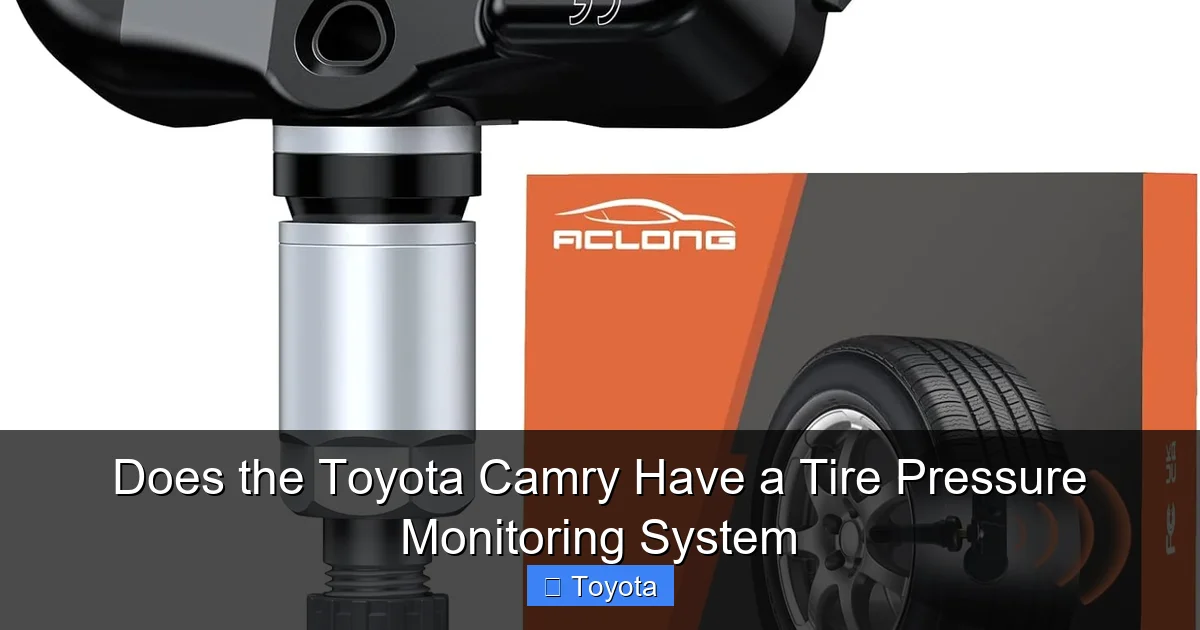
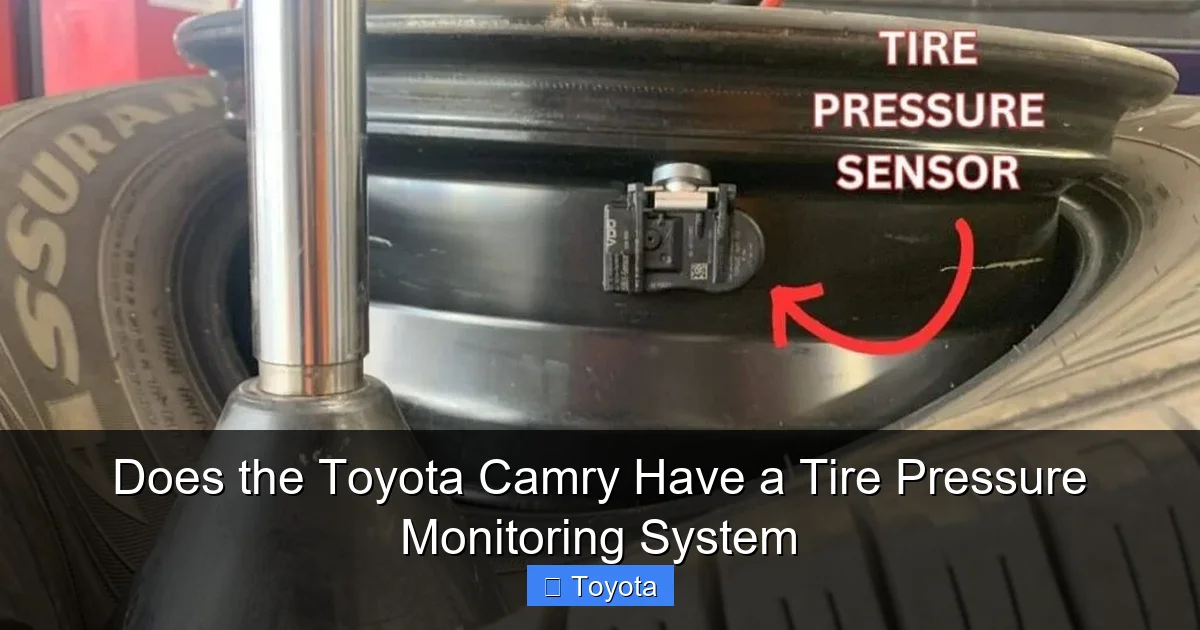
As mentioned, Toyota equips the Camry with a direct TPMS. This means each of your four road wheels (and often the full-size spare if it’s a different size) has a small sensor module attached to its valve stem, mounted inside the wheel. These sensors are delicate electronic devices. They contain a battery, a pressure transducer, and a radio transmitter. They are powered by their internal batteries, which are designed to last for many years (often 7-10), but they are not serviceable or replaceable as a separate part—when the battery dies, the entire sensor must be replaced.
Visual guide about Does the Toyota Camry Have a Tire Pressure Monitoring System
Image source: m.media-amazon.com
The Role of the Spare Tire
This is a very common point of confusion. The compact “donut” spare tire that comes with most Camrys does not have a TPMS sensor. It’s a temporary-use-only tire meant to get you to a repair shop. Because it lacks a sensor, if you install it on your vehicle, the TPMS will not monitor its pressure. You will see the TPMS warning light come on and stay on because the system is “missing” a signal from that wheel. This is normal behavior. The light will go off once you reinstall a regular, sensor-equipped wheel. For more on this specific topic, you can read our dedicated article about whether a Toyota spare tire has TPMS.
Sensor Location and Vulnerabilities
The sensor is mounted on the inside of the wheel, protected by the tire. However, it’s not invincible. Common causes of sensor damage or failure include:
- Corrosion: Exposure to road salt and moisture can corrode the sensor’s metal components or the valve stem, leading to air leaks or sensor failure.
- Impact Damage: Hitting a deep pothole, curb, or road debris can physically damage the sensor or its battery.
- Improper Tire Service: Having tires mounted or dismounted by a technician who is not careful with the sensor can break it. Always inform your tire shop your car has TPMS sensors.
- Battery Depletion: As mentioned, the battery will eventually die after years of use, requiring a sensor replacement.
The Benefits and Critical Importance of Your Camry’s TPMS
So why should you care about this little light? The benefits of a functioning TPMS are substantial and directly impact your safety, wallet, and driving experience.
Visual guide about Does the Toyota Camry Have a Tire Pressure Monitoring System
Image source: tpmsreset.com
Safety First
This is the number one reason. Underinflated tires are unstable. They flex more, generating excessive heat that can lead to a structural failure and a dangerous blowout, especially at high speeds. They also reduce traction, making your Camry harder to steer and brake, particularly in wet conditions. The TPMS gives you an early, clear warning before a tire becomes critically dangerous. It’s an automated, constant check you don’t have to remember to do yourself.
Fuel Economy and Cost Savings
Properly inflated tires have less rolling resistance. The U.S. Department of Energy estimates that for every 1 psi (pound per square inch) drop in pressure below the recommended level, you lose about 0.2% in fuel efficiency. That might not sound like much, but across a tank of gas and thousands of miles, it adds up to significant extra costs at the pump. Keeping your tires at the optimal pressure saves money on fuel.
Tire Longevity and Performance
Underinflation causes the tire’s shoulders (the outer edges of the tread) to bear more weight and wear prematurely. You’ll see the tread wear down unevenly and much faster than normal, meaning you have to replace your tires sooner, which is a major expense. Proper inflation ensures even tread wear, maximizing the life of your investment. It also provides the intended ride comfort, handling, and grip your Camry was engineered for.
Troubleshooting: What to Do When the TPMS Light Comes On
Seeing that light can be annoying, but it’s a message you must heed. Here’s a systematic approach to diagnosing and addressing the problem.
Step 1: Check All Tire Pressures Immediately
The first and most common cause is simply a loss of air pressure in one or more tires. Use a reliable, handheld tire pressure gauge (not the one at the gas station, which is often inaccurate). Check all four tires, including the spare if it’s a full-size match. Compare the readings to the manufacturer’s recommended pressure, which is found on a sticker on the driver’s side door jamb or in your owner’s manual. Do not use the number on the tire sidewall; that is the maximum pressure the tire can hold, not the recommended pressure for your Camry.
Step 2: Inflate to the Correct Pressure
If any tire is low, inflate it to the exact psi listed on your door jamb sticker. Use an air pump at a gas station or your own compressor. After inflating, drive the car for a few minutes at moderate speed. In many cases, the TPMS light will turn off automatically once the system detects the correct pressure. If it does not, proceed to Step 3.
Step 3: Perform a TPMS Reset
Sometimes, after adjusting pressure or rotating tires, the system needs to be manually reset to recognize the new conditions. The procedure varies slightly by model year. For many Camrys (roughly 2012-2017), there is a dedicated TPMS reset button located under the dashboard, often near the steering column, or inside the glove box. For newer models (2018+), the reset is usually done through the vehicle’s multi-information display or infotainment screen under a “Tire Pressure” or “TPMS” settings menu. You must have the ignition in the “ON” position (engine off) and sometimes the parking brake engaged. The process typically involves turning the ignition on, pressing and holding the reset button (or selecting “Set” on the screen) until the TPMS light blinks three times, then driving the car for about 20-30 minutes at speeds above 30 mph to allow the sensors to re-learn. Here is a detailed guide on finding and using the TPMS reset button in your Camry.
Step 4: Consider Other Potential Issues
If the light remains on after a proper inflation and reset, the problem may be more complex:
- A Faulty or Dead Sensor: One of the wheel sensors may have failed. This requires diagnosis with a TPMS scan tool and replacement of the faulty sensor.
- Sensor Damage During Service: If you recently had tires rotated, balanced, or repaired, a sensor may have been inadvertently damaged.
- Extreme Temperature Changes: Cold weather can cause tire pressure to drop, triggering the light. The light may turn off on its own as the tires warm up during driving. If it stays on, you still need to check and adjust pressure to the *cold* inflation pressure.
- System Malfunction: Rarely, there could be an issue with the vehicle’s TPMS control module or its communication with the sensors.
Maintenance, Repairs, and Costs Associated with Camry TPMS
Dealing with TPMS adds a layer of consideration to routine tire maintenance.
TPMS Service During Tire Rotations and Changes
When you get your tires rotated (which you should do every 5,000-8,000 miles), the technician will need to access the sensors. On a direct system, this is routine, but they must be careful not to damage the sensor. After a rotation, the TPMS will likely need to be reset to learn the new wheel positions. When you purchase and install new tires, the old sensors should be carefully removed from the old wheels and installed on the new ones (or new sensors purchased). This is a standard part of the tire mounting service, but it’s good to confirm with your shop. If you buy aftermarket wheels and tires, you will need new, compatible TPMS sensors installed for each wheel, or your TPMS light will remain on permanently.
Sensor Replacement Costs
This is the main cost implication of TPMS. A single direct TPMS sensor for a Camry can cost anywhere from $50 to $150 for the part alone, depending on the model year and whether it’s an original Toyota part or an aftermarket equivalent. Labor to remove the old tire, replace the sensor, remount the tire, and balance it adds another $50-$100 per wheel. So, if one sensor fails, you’re looking at a total cost of roughly $150 to $250 per wheel. If multiple sensors fail, the cost multiplies. Some tire shops offer “TPMS service kits” that include a new sensor, valve stem, seal, and nut, which is the recommended repair. The good news is that a failed sensor will not disable your brakes or engine; it simply means you must rely on manual pressure checks. However, for safety and convenience, replacing a dead sensor is the proper fix. You can also learn more about what your Toyota tire warranty might cover regarding TPMS-related repairs.
Conclusion: Your Camry’s TPMS is a Vital Partner on the Road
To circle back to our original question: yes, your Toyota Camry absolutely has a Tire Pressure Monitoring System. It’s not a gimmick; it’s a federally mandated, life-saving technology that has been standard for nearly two decades. It’s a silent guardian, working 24/7 to ensure your tires are at their safest and most efficient. While it can sometimes be a nuisance—especially when triggered by seasonal temperature swings or a dead sensor—its benefits far outweigh the minor inconveniences. The key takeaway is this: never ignore the TPMS warning light. Treat it as an urgent, non-negotiable checklist item. Pull over safely when possible, check your pressures with a gauge, and address the issue. By understanding how your Camry’s TPMS works, how to reset it, and what its limitations are, you become a more informed, proactive, and safer driver. You’re not just maintaining a car; you’re taking control of a critical safety system. So the next time that little light flickers on, you’ll know exactly what it’s telling you and what steps to take, ensuring your Camry continues to deliver the reliable, comfortable, and secure ride it’s famous for.
Frequently Asked Questions
Does the Toyota Camry have a TPMS sensor in the spare tire?
No. The compact spare tire (donut) that comes with most Camrys does not have a TPMS sensor. If you install it, the TPMS warning light will illuminate because the system loses the signal from that wheel. The light will turn off when you reinstall a regular wheel with a sensor.
How do I reset the TPMS light on my Toyota Camry?
First, ensure all tires are inflated to the correct pressure on the door jamb sticker. Then, with the ignition on (engine off), locate the TPMS reset button (usually under the dash or in the glove box) and press/hold it until the light blinks three times. For newer models, use the “Tire Pressure” menu in the vehicle settings display to select “Set.” Drive for 20-30 minutes at speeds above 30 mph to complete the reset.
Why does my TPMS light keep coming back on after I’ve reset it and filled the tires?
This usually indicates a persistent problem like a slow leak in a tire (from a nail or puncture), a damaged or failing TPMS sensor, or a sensor with a dead battery. The system is detecting a pressure loss again. You need a professional to inspect the tires and sensors to find and fix the root cause.
Will the TPMS light come on for all tires if one is low?
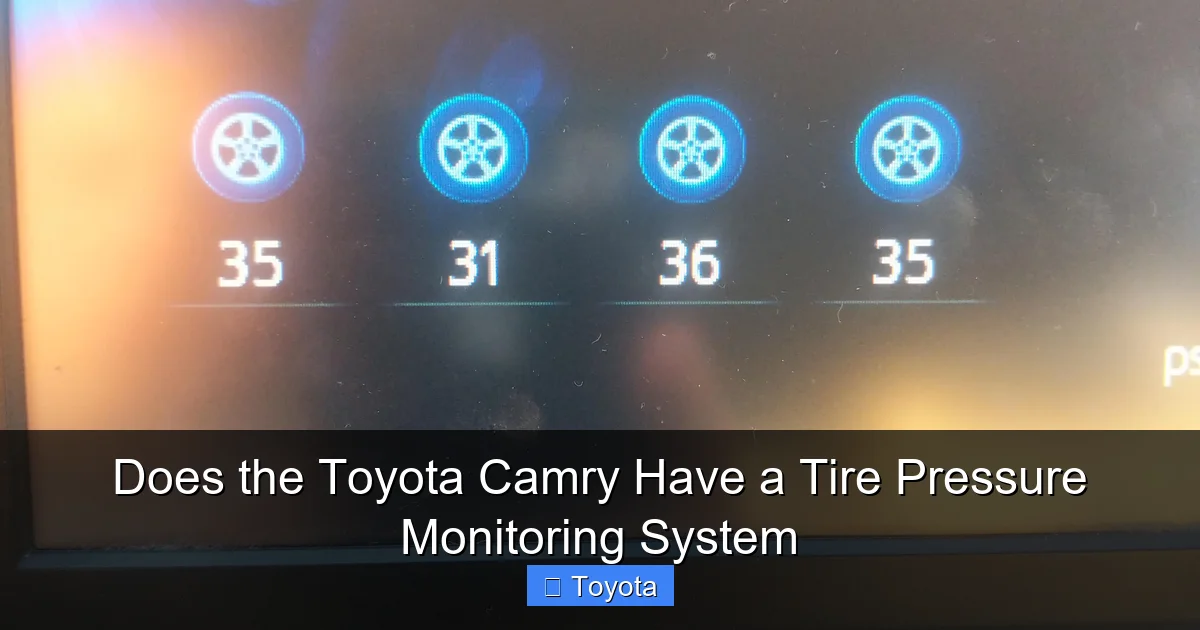
No. A properly functioning direct TPMS will typically illuminate the single warning light for any tire that is significantly underinflated, but it will not tell you which one is low on the dash. You must check all four tires manually. Some newer Camry models with multi-information displays can show individual tire pressures on the screen.
How long do TPMS sensors last in a Toyota Camry?
The batteries inside TPMS sensors are designed to last approximately 7 to 10 years, or 80,000 to 100,000 miles. When the battery dies, the sensor stops transmitting and must be replaced as a unit. They are not serviceable.
If I put aftermarket wheels on my Camry, do I need new TPMS sensors?
Yes. If you change from the original steel or alloy wheels to aftermarket wheels, you must install new, compatible TPMS sensors in each wheel. Without them, your vehicle’s TPMS will not function and the warning light will remain on constantly. Tire shops will provide and program these sensors for your specific vehicle.
