Does the 2017 Toyota Camry Have Transmission Problems

Contents
- 1 Key Takeaways
- 2 📑 Table of Contents
- 3 The 2017 Toyota Camry Transmission Explained
- 4 Reported Transmission Issues: Fact or Fiction?
- 5 How the Camry Stacks Up Against Competitors
- 6 Essential Maintenance for Longevity
- 7 Owner Feedback and Reliability Data
- 8 Final Verdict: Should You Be Worried?
- 9 Frequently Asked Questions

Liquid Car Polish

Trunk Organizer

Octane Booster

Car Storage Net
The 2017 Toyota Camry generally has a reliable transmission, but some owners report issues like rough shifting or delayed engagement. These problems are not widespread but can occur, often linked to maintenance neglect or software glitches. Regular transmission service and prompt attention to symptoms can prevent major repairs.
When you think of a Toyota Camry, reliability likely tops your list. It’s the sedan that built a reputation on lasting forever with minimal fuss. But no car is perfect, and for the 2017 model year, a quiet question lingers in forums and repair shops: Does the 2017 Toyota Camry have transmission problems? It’s a fair query. The Camry is a family hauler, a commuter, a road trip warrior. If its transmission falters, daily life gets complicated. Let’s cut through the noise, look at the facts, owner experiences, and expert data to give you a clear, honest answer.
We’ll break down exactly what transmission the 2017 Camry uses, what real-world problems (if any) are reported, how it compares to competitors, and what you can do to protect your investment. Whether you’re a current owner noticing a odd shift or a buyer shopping the used market, this guide will arm you with the knowledge you need.
Key Takeaways
- Overall Reliability: The 2017 Camry’s transmission is mostly reliable but not immune to issues, especially compared to Toyota’s stellar historical reputation.
- Common Complaints: Reported problems typically involve harsh shifting (especially 1-2 gear), hesitation, or occasional slippage, not total failures.
- Maintenance is Critical: Neglecting transmission fluid changes is the leading cause of preventable problems; regular service is non-negotiable for longevity.
- Better Than Some Competitors: While not perfect, the Camry’s transmission track record is stronger than rivals like the Mitsubishi Outlander, which has documented widespread issues.
- Year-Specific Context: The 2017 model sits in the “middle” of the current generation; it avoids the early adopter quirks of the 2012-2014 models but isn’t as refined as later updates.
- Owner Experience Varies: Many owners report trouble-free ownership, but a minority experience nuisances that often stem from driving style or skipped maintenance.
- Expert Ratings Are Positive: Major reliability surveys give the 2017 Camry above-average scores, though they note minor transmission-related complaints.
📑 Table of Contents
The 2017 Toyota Camry Transmission Explained
Before diving into problems, we must understand what we’re talking about. The 2017 Toyota Camry does not use a Continuously Variable Transmission (CVT). Instead, it relies on a traditional, proven 6-speed automatic transmission. This is a hydraulic planetary gear automatic, the same basic technology used in most non-hybrid Camrys for decades. For the 2017 model, this transmission is manufactured by Aisin, a Toyota affiliate and one of the most respected transmission builders in the world. This is a key point: the hardware itself is robust and well-regarded.
The specific model code for the transmission varies by engine. The 2.5L 4-cylinder (the most common) uses the Aisin U660E, while the 3.5L V6 pairs with a heavier-duty version, often the Aisin AW6F25. Both are designed for smooth, efficient shifts and are built to handle the torque of their respective engines. In normal operation, you should experience smooth, almost imperceptible gear changes. The transmission is controlled by a sophisticated Transmission Control Module (TCM) that uses sensors and software to determine shift points.
Why This Matters
Understanding this is crucial because most reported “transmission problems” in the 2017 Camry are not catastrophic mechanical failures of gears or clutches. They are more often related to:
- Software calibration: The TCM’s programming dictates shift timing and feel.
- Fluid condition: Dirty or degraded fluid affects hydraulic pressure and lubrication.
- Solenoid or sensor issues: Electronic components that control fluid flow can malfunction.
- Wear on clutch packs or bands: This usually occurs very high mileage or with severe abuse.
So, when an owner describes a “hard shift,” it’s rarely a broken transmission in the traditional sense. It’s a performance issue often solvable with a software update, fluid change, or minor part replacement. This distinction separates the 2017 Camry’s issues from the catastrophic, design-flaw failures seen in some other vehicles. For context on how different transmissions are engineered, you can explore what transmission a 3.9 Dodge Dakota has — a truck application built for different stresses.
Reported Transmission Issues: Fact or Fiction?
Now, to the heart of the matter. Are there documented, widespread transmission problems for the 2017 Camry? The short answer is: no widespread catastrophic failure epidemic exists, but there are consistent, specific complaints that form a pattern of “issues” rather than “problems” in the colloquial sense.
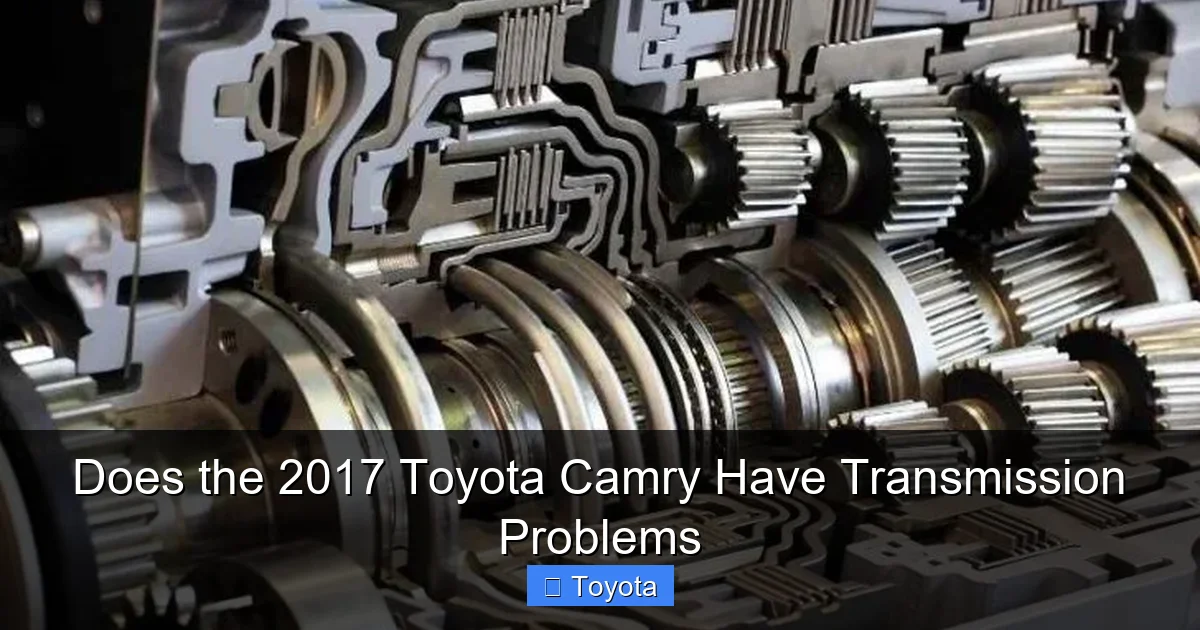
Visual guide about Does the 2017 Toyota Camry Have Transmission Problems
Image source: trucksauthority.com
Let’s look at the most frequently reported symptoms from owner forums (like Camry7.com), Consumer Reports, and repair databases:
1. Harsh or Jerky 1-2 Shift
This is the #1 complaint. Owners describe a noticeable clunk, jerk, or bang when accelerating from a stop into first or second gear. It’s most common when the engine and transmission are cold. Many note it improves once warmed up. This is typically a software shift logic issue. The transmission is physically fine, but the TCM is commanding a shift too aggressively or at the wrong time. A simple transmission control module (TCM) reflash or software update from the dealer often resolves it. Toyota has issued technical service bulletins (TSBs) for similar symptoms on adjacent model years, suggesting a known calibration tweak.
2. Hesitation or Lag
Some drivers report a momentary delay or “vacuum” feeling when pressing the accelerator, as if the transmission is unsure which gear to select. This can feel like a lack of power. This is again tied to TCM programming, especially in “Normal” driving mode. It can sometimes be mitigated by using “Sport” mode, which holds gears longer. This is an annoyance, not a safety defect or a sign of imminent failure.
3. Occasional Slippage or Flare
A smaller subset of reports mention the engine RPMs rising suddenly without a corresponding increase in speed, like the transmission briefly disengaged. This is more serious but still rare. Potential causes include a faulty solenoid, low fluid pressure from a worn pump, or early clutch pack wear. This symptom warrants immediate professional diagnosis.
4. Check Engine Light with Transmission Codes
Diagnostic trouble codes (P07xx series) related to shift solenoid performance or transmission ratio errors can trigger a check engine light. This is the computer’s way of saying it detected something abnormal. Often, a simple electrical issue or a dirty solenoid is the culprit, not a destroyed transmission.
What ‘Is Not’ Commonly Reported: You do not see a flood of reports about complete transmission failure, vehicles that won’t move, or catastrophic internal damage requiring a full rebuild or replacement at normal mileage (under 150,000 miles). The failure rate for the core mechanical components appears very low.
How the Camry Stacks Up Against Competitors
Context is everything. To judge if the 2017 Camry has “transmission problems,” we must compare it to its direct rivals: the Honda Accord, Nissan Altima, and Ford Fusion. Here, the news is mostly good for Toyota.

Visual guide about Does the 2017 Toyota Camry Have Transmission Problems
Image source: motorsadvice.com
The Honda Accord of the same era used a CVT, which has its own set of potential issues (belt wear, valve body problems, shuddering). While Honda’s CVT is generally reliable, it represents a different failure mode. The Nissan Altima also used a CVT notorious for failures in earlier years (2013-2014), though the 2017 was improved. The Ford Fusion’s 6F35 transmission had known issues with harsh shifts and solenoid failures.
When you look at owner complaint databases and mechanic forums, the 2017 Camry’s transmission ranks as one of the least problematic in the midsize sedan segment for that year. Its issues are primarily software/nuisance-based and easily addressed. Compare this to the Mitsubishi Outlander, which has well-documented, widespread transmission failure issues across multiple model years due to design flaws in its Jatco CVT. The Camry’s conventional automatic is simply in a different reliability class. You can read more about the Mitsubishi Outlander’s transmission problems to see the stark contrast between a problematic design and a mostly solid one with minor quirks.
This isn’t to say the Camry is flawless—its minor shift complaints are real. But in the automotive world, “not as bad as the worst” is still a win for reliability. The Camry’s transmission is a known quantity, and its weaknesses are well-understood and usually inexpensive to fix.
Essential Maintenance for Longevity
Here is the universal truth: any transmission will fail prematurely if neglected. The 2017 Camry’s transmission is no exception. Its greatest vulnerability is old, dirty, or low transmission fluid. Unlike engine oil, transmission fluid degrades more slowly, leading owners to ignore its service intervals. This is a mistake.
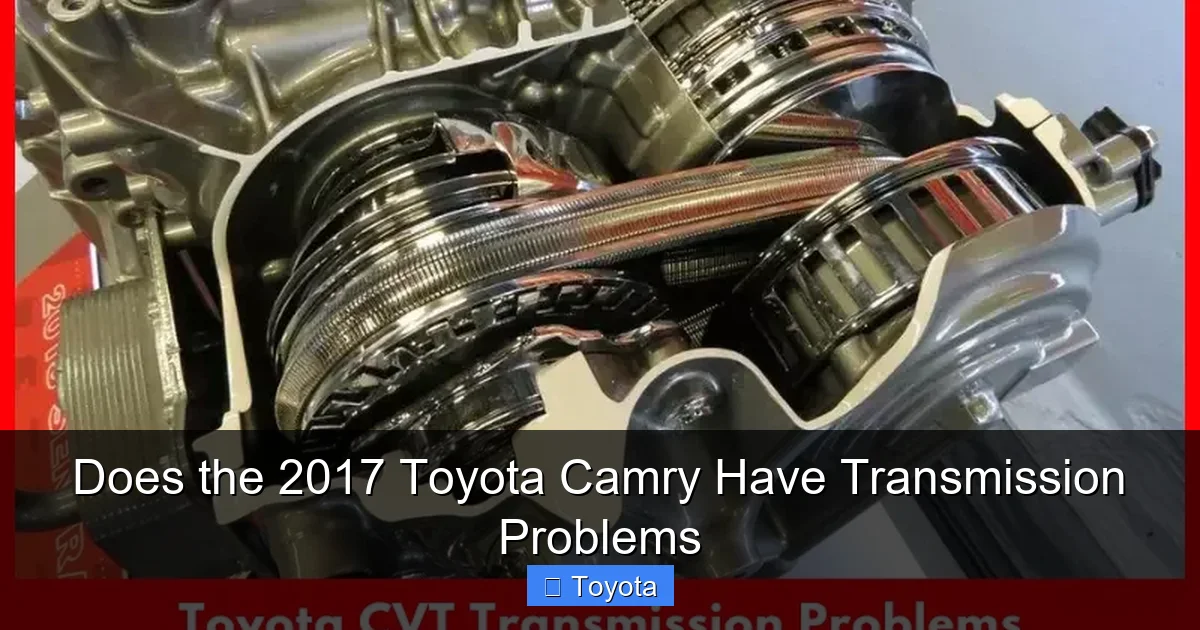
Visual guide about Does the 2017 Toyota Camry Have Transmission Problems
Image source: papasroadtrip.com
The Non-Negotiable Fluid Change
Toyota recommends inspecting the transmission fluid every 30,000 miles and changing it every 60,000-100,000 miles under normal conditions. If you do a lot of severe driving (towing, extreme heat, stop-and-go traffic), shorten that interval. Do not “lifetime” the fluid. “Lifetime” means lifetime of the warranty, not the car. Fresh fluid maintains proper hydraulic pressure, cools the transmission, and keeps seals soft. Burnt-smelling, dark red or brown fluid is a red flag.
Note: The 2017 Camry does not have a traditional transmission dipstick for owner checking (a cost-saving move). It requires a mechanic to check via a service port. This makes owner vigilance harder, so adhering to a strict service schedule is even more critical. For older Camry models, you might be familiar with a dipstick; the process changed, but the principle of fluid maintenance remains. You can learn about the transmission dipstick on a 2010 Toyota Camry to see how access has evolved, but the maintenance need is identical.
Other Proactive Steps
- Avoid Excessive Heat: Don’t use the vehicle for prolonged idling or severe duty it wasn’t designed for. Overheating is the silent killer of transmissions.
- Warm Up Gently: In very cold weather, drive gently for the first few minutes to let fluid circulate and warm up.
- Address Issues Immediately: That strange clunk or hesitation? Get it diagnosed at the first sign. A $200 software update or solenoid replacement is better than a $3,000 rebuild.
- Use Genuine Toyota Fluid: When changing, use Toyota WS (World Standard) fluid or an exact equivalent specified by Toyota. Generic fluids can cause shift quality issues.
Think of your transmission like the heart of your drivetrain. You wouldn’t ignore your cholesterol for years and expect no consequences. Treat the transmission fluid as the lifeblood it is.
Owner Feedback and Reliability Data
Numbers don’t lie. Let’s look at what large-scale data says about the 2017 Camry’s transmission reliability.
Consumer Reports gives the 2017 Camry an overall reliability score of 4 out of 5. In their “Trouble Areas” section for the 2017 model, “transmission major” and “transmission minor” are both listed with a “better than average” rating. This means the rate of reported serious and minor transmission issues is statistically lower than the average for all vehicles.
J.D. Power awarded the 2017 Camry 4.5 out of 5 for overall dependability. Their vehicle dependability study (VDS) looks at problems experienced by owners of 3-year-old vehicles. The Camry consistently ranks near the top.
The Voice of the People
Diving into owner forums tells a more nuanced story. You will find threads titled “Harsh 1-2 shift on cold start” with hundreds of replies. You will also find threads titled “180,000 miles and transmission is perfect.” The ratio is important. The vast majority of owners experience no abnormal transmission behavior. The vocal minority experiencing the common shift quirk is real, but they are not the norm.
Many of the complaints come from drivers who are particularly sensitive to shift feel, often comparing it to the buttery-smoothness of a CVT or a more expensive dual-clutch. The Camry’s traditional automatic has a slight, noticeable shift point that some interpret as a “problem” when it’s just its inherent character. The harsh-cold-start shift, however, is a genuine software/hardware interaction issue that Toyota has addressed in updates.
Used Car Pre-Purchase Inspections (PPIs): This is your best tool. A quality mechanic can road-test the car, check fluid condition, scan for any stored transmission codes, and assess overall health. A PPI will catch a problematic unit before you buy.
Final Verdict: Should You Be Worried?
So, does the 2017 Toyota Camry have transmission problems? The final, balanced answer is: It has known, minor, and mostly software-related issues that affect a minority of owners, but it does not suffer from widespread, catastrophic transmission failures.
For a current owner: If your transmission shifts harshly when cold, schedule a visit to the dealer. Mention the symptom and ask if a TCM update is available. It may be covered under a goodwill policy even out of warranty. Keep up with fluid changes religiously. If you experience slippage, flares, or a check engine light, get it diagnosed immediately.
For a used car buyer: The 2017 Camry is still an excellent, reliable choice. Its transmission is a strong point relative to many competitors. However, you must do your due diligence:
- Always get a pre-purchase inspection by a trusted, independent mechanic (not a chain quick-lube shop).
- Review the vehicle history report (Carfax/AutoCheck) for any transmission-related repairs.
- Test drive extensively, especially from a cold start. Listen and feel for harsh 1-2 shifts, hesitation, or any abnormal sounds (whining, clunking).
- Ask the seller directly if any transmission software updates or repairs have been performed.
If the car has a clean history, a good PPI, and shifts reasonably (even if slightly firm when cold), you are likely looking at a very dependable vehicle. The risk of a major transmission failure is very low. The “problem” is usually a tolerable annoyance that can often be mitigated.
The 2017 Camry remains a benchmark for sensible, reliable transportation. Its transmission, while not utterly flawless, is a far cry from being a “problem” in the sense of a deal-breaking defect. With informed ownership and proper maintenance, it will likely serve you faithfully for hundreds of thousands of miles. For more on the Camry’s features, you might also check if it has remote start or Apple CarPlay to enhance your driving experience.
Frequently Asked Questions
What are the most common transmission problems in a 2017 Camry?
The most common issue is a harsh or jerky shift from 1st to 2nd gear, especially when cold. This is usually a software calibration issue fixed by a dealer update. Hesitation on acceleration and occasional transmission-related check engine lights are also reported but are less frequent.
How much does it cost to fix the transmission on a 2017 Camry?
Costs vary wildly by the issue. A simple software update or solenoid replacement might cost $200-$500. A fluid change is $150-$250. For a major internal failure requiring a rebuild or replacement, costs can range from $3,000 to $4,500+. However, such catastrophic failures are very rare for this model.
Is the 2017 Camry transmission reliable long-term?
Yes, with proper maintenance. The core 6-speed automatic hardware is robust. Long-term reliability data from Consumer Reports and J.D. Power shows above-average performance. The main threats are neglected fluid services and unaddressed software quirks, not inherent design flaws.
What are the signs of transmission trouble in my 2017 Camry?
Watch for: harsh or jerky shifting (especially cold), delayed acceleration/hesitation, unusual noises (whining, clunking), a burning smell, transmission fluid leaks, or a flashing check engine light. If you notice any, have it inspected immediately.
Does the 2017 Camry have a CVT or a traditional automatic transmission?
The non-hybrid 2017 Camry uses a traditional 6-speed automatic transmission. The Camry Hybrid uses a different, electronically-controlled CVT (e-CVT). The questions about transmission problems primarily concern the conventional 6-speed automatic in gas-only models.
Should I avoid buying a used 2017 Camry because of transmission?
No, you should not avoid it. Its transmission is among the more reliable in its class. However, always get a pre-purchase inspection. Focus on finding a well-maintained example with a complete service history. The known minor shift quirks are manageable and should not deter a purchase if the price is fair and the car passes inspection.