
Does Liability Insurance Cover My Car If I Hit Someone?

Liability insurance covers damage you cause to others—not your own vehicle. If you hit someone, it pays for their injuries and property damage, but you’ll need additional coverage like collision or comprehensive to repair your car.
Key Takeaways
- Liability insurance only covers the other party’s damages: It pays for the other driver’s medical bills and vehicle repairs—not your own.
- Your car is not covered under liability: To fix your vehicle after an accident, you’ll need collision or comprehensive coverage.
- State laws require minimum liability coverage: Every state mandates liability insurance, but limits vary—check your policy.
- Uninsured/underinsured motorist coverage helps if the other driver lacks insurance: This protects you when the at-fault driver can’t pay.
- Medical payments or PIP coverage can help with your injuries: These pay for your medical costs regardless of fault.
- Always report accidents to your insurer: Delaying a claim can lead to denial or reduced payouts.
- Consider umbrella policies for extra protection: If damages exceed your liability limits, an umbrella policy can cover the gap.
📑 Table of Contents
- Does Liability Insurance Cover My Car If I Hit Someone?
- What Is Liability Insurance and How Does It Work?
- What Happens to Your Car After an Accident?
- Real-Life Scenarios: What Coverage Pays For What?
- How to Make Sure You’re Fully Protected
- Common Misconceptions About Auto Insurance
- What to Do After an Accident
- Conclusion: Protect Yourself Beyond Liability
Does Liability Insurance Cover My Car If I Hit Someone?
Picture this: You’re driving home from work, stopped at a red light. The car behind you slams into your bumper. Or worse—you accidentally rear-end another vehicle at a stop sign. Your heart races. You check for injuries, call the police, and exchange insurance info. Then the question hits: “Will my insurance cover my car if I hit someone?”
It’s a common and completely valid concern. After all, accidents happen—even to the most careful drivers. But understanding what your insurance actually covers can mean the difference between a manageable setback and a financial disaster. The short answer? Liability insurance does not cover your car if you hit someone. It’s designed to protect the other party, not you.
Let’s break this down in simple terms. Liability insurance is the foundation of most auto policies. It’s required by law in nearly every state and exists to cover the costs you cause to others when you’re at fault in an accident. That includes their medical bills, lost wages, pain and suffering, and damage to their vehicle or property. But when it comes to your own car? That’s where liability falls short.
If you want coverage for your vehicle after an accident—whether you hit someone or something—you’ll need additional types of insurance, like collision or comprehensive coverage. These are optional in most states but highly recommended, especially if your car is newer or has significant value.
In this guide, we’ll walk you through exactly what liability insurance covers, what it doesn’t, and how to make sure you’re fully protected on the road. We’ll also answer common questions, share real-life examples, and give you practical tips to avoid surprises after an accident.
What Is Liability Insurance and How Does It Work?
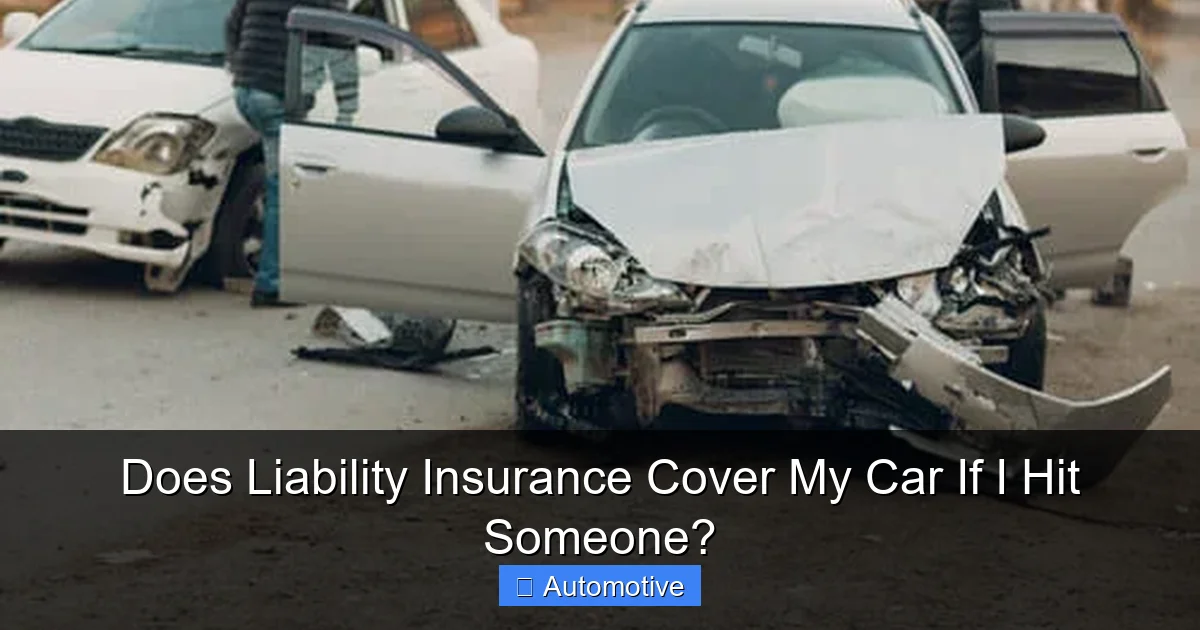
Visual guide about Does Liability Insurance Cover My Car If I Hit Someone?
Image source: singhahluwalia.com
Liability insurance is the most basic and essential part of your auto policy. Think of it as your legal and financial safety net when you’re responsible for an accident. It’s split into two main parts: bodily injury liability and property damage liability.
Bodily Injury Liability
This covers the medical expenses of the other driver, their passengers, pedestrians, or anyone else injured in an accident you cause. It can pay for hospital bills, surgeries, rehabilitation, lost wages, and even funeral costs in tragic cases. For example, if you run a red light and hit a cyclist, your bodily injury liability would cover the cyclist’s treatment and recovery.
Most policies list this coverage in a format like “25/50/25,” which means:
– $25,000 per person for bodily injury
– $50,000 per accident for total bodily injury
– $25,000 for property damage
These numbers represent the maximum your insurer will pay. If the cyclist’s medical bills total $40,000, your policy would cover $25,000 (the per-person limit), and you’d be responsible for the remaining $15,000 unless you have additional coverage.
Property Damage Liability
This part covers damage you cause to someone else’s property—usually their vehicle, but it can also include fences, mailboxes, buildings, or other structures. If you back into your neighbor’s garage door, for instance, your property damage liability would pay for the repairs.
Again, this is capped at the limit you choose. If your limit is $25,000 and the damage totals $30,000, you’ll pay the extra $5,000 out of pocket.
Why Liability Doesn’t Cover Your Car
Here’s the key point: liability insurance is one-way protection. It’s meant to shield others from your mistakes, not to protect you or your vehicle. So if you hit someone and your car is damaged in the process, liability won’t help you fix it.
Imagine you’re driving and accidentally sideswipe another car at an intersection. Both vehicles are damaged. Your liability insurance will pay to repair the other driver’s car and cover their medical bills if they’re injured. But your own repairs? That’s on you—unless you have collision coverage.
This is why many drivers are shocked after an accident. They assume “full coverage” means everything is taken care of. But in reality, “full coverage” usually just means you have liability plus collision and comprehensive—not that every possible expense is covered.
What Happens to Your Car After an Accident?
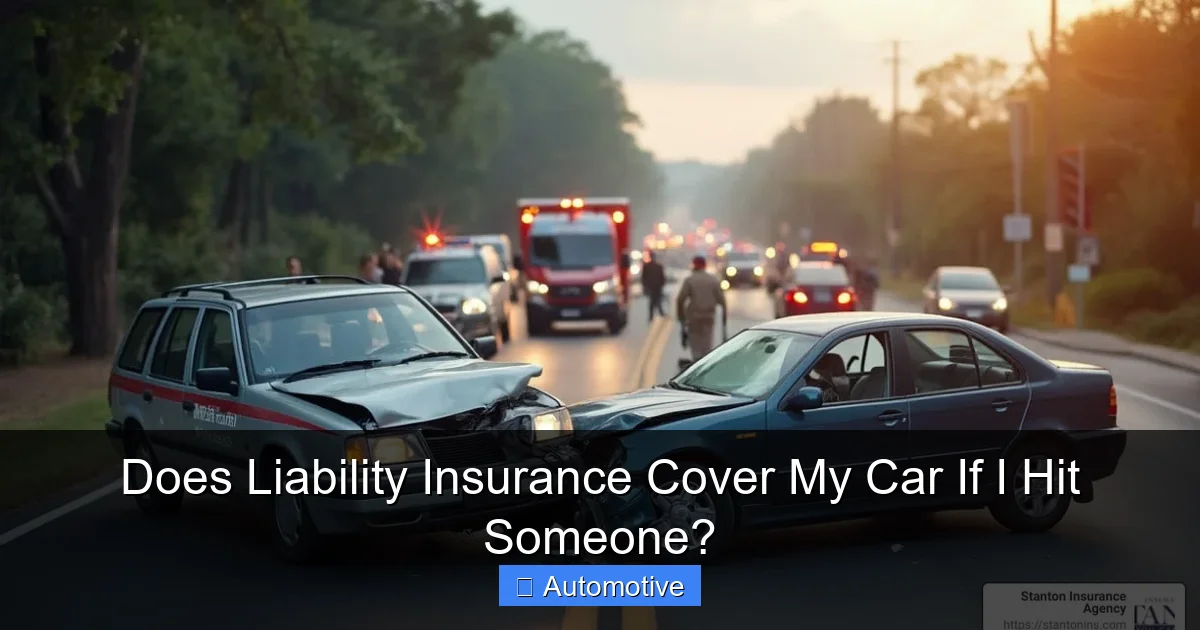
Visual guide about Does Liability Insurance Cover My Car If I Hit Someone?
Image source: stantonins.com
So, if liability insurance doesn’t cover your car, what does? The answer depends on the type of coverage you’ve added to your policy.
Collision Coverage: Your Best Friend After a Crash
Collision coverage is specifically designed to pay for damage to your vehicle after an accident, regardless of who’s at fault. Whether you hit another car, a tree, or a guardrail, collision insurance will cover the cost of repairs—up to your car’s actual cash value, minus your deductible.
For example, let’s say you’re at fault in a fender bender and your repair bill comes to $3,500. If you have collision coverage with a $500 deductible, your insurer will pay $3,000, and you’ll pay the remaining $500.
This coverage is especially valuable if you drive a newer or more expensive car. Without it, even a minor accident could leave you with a hefty repair bill.
Comprehensive Coverage: For Non-Collision Damage
While collision covers accidents involving another vehicle or object, comprehensive coverage handles everything else. This includes damage from theft, vandalism, fire, hail, falling objects, or hitting an animal.
Say a deer jumps in front of your car on a rural road. Your car is damaged, but no other vehicle is involved. Comprehensive coverage would pay for the repairs (minus your deductible), even though it wasn’t a collision with another car.
When You Don’t Have Collision or Comprehensive
If you only have liability insurance and no collision or comprehensive, you’re on your own when it comes to repairing your car—even if you’re not at fault.
Wait—what if the other driver is at fault? Can’t they pay for your repairs?
Yes, in theory. If the other driver is clearly at fault and has insurance, their liability coverage should pay for your car repairs. But this process can take time. You’ll need to file a claim with their insurer, provide evidence, and wait for approval. In the meantime, you might be without a car.
And if the other driver is uninsured or underinsured, you could be stuck with the full cost. That’s where uninsured/underinsured motorist coverage (UM/UIM) comes in.
Uninsured/Underinsured Motorist Coverage: A Safety Net
UM/UIM coverage protects you when the at-fault driver doesn’t have insurance or doesn’t have enough to cover your damages. It can pay for your medical bills, lost wages, and even vehicle repairs—depending on your policy.
For example, if you’re hit by a driver with no insurance and your car needs $4,000 in repairs, UM coverage could reimburse you (up to your policy limits). This is why many experts recommend adding UM/UIM to your policy, even if it’s not required in your state.
Real-Life Scenarios: What Coverage Pays For What?
Visual guide about Does Liability Insurance Cover My Car If I Hit Someone?
Image source: get.goautoinsurance.com
Let’s look at a few common accident scenarios to see how different types of insurance come into play.
Scenario 1: You Rear-End Another Car at a Stoplight
– You’re at fault.
– The other driver has whiplash and their car has a damaged bumper.
– Your car has a cracked grille and bent frame.
What’s covered?
– Liability insurance: Pays for the other driver’s medical bills and car repairs.
– Collision coverage: Pays for your car’s repairs (minus deductible).
– Medical payments (MedPay) or PIP: Covers your own medical expenses if you’re injured.
If you only have liability, you’ll pay out of pocket for your car repairs.
Scenario 2: You Hit a Parked Car and Drive Away (Then Turn Yourself In)
– You accidentally bump a parked car while backing out of a driveway.
– You leave a note but later file a claim.
What’s covered?
– Liability insurance: Pays for the parked car’s damages.
– Collision coverage: Pays for your car’s damage.
– Without collision, you pay for your repairs.
Scenario 3: You’re Hit by an Uninsured Driver
– Another driver runs a red light and hits you.
– They have no insurance.
What’s covered?
– Uninsured motorist coverage: Pays for your medical bills and car repairs.
– Collision coverage: Also covers your car repairs (you choose which to use).
– Without UM or collision, you pay everything.
These examples show why having more than just liability insurance is crucial. Accidents are unpredictable, and the costs can add up fast.
How to Make Sure You’re Fully Protected
Now that you know what liability insurance doesn’t cover, here’s how to build a policy that truly protects you and your car.
1. Review Your Current Policy
Start by checking your declarations page—the summary of your coverage. Look for:
– Liability limits (bodily injury and property damage)
– Collision and comprehensive deductibles
– UM/UIM coverage
– MedPay or PIP
If any of these are missing or low, it’s time to upgrade.
2. Increase Your Liability Limits
Many drivers stick to the state minimum, but that’s often not enough. Medical bills and car repairs can easily exceed $25,000. Consider raising your limits to 100/300/100 or higher. For just a small increase in premium, you can significantly boost your protection.
3. Add Collision and Comprehensive Coverage
If your car is worth more than a few thousand dollars, these coverages are worth the cost. Even older cars can have expensive repairs. A $500 deductible might cost $15–$30 more per month, but it could save you thousands after an accident.
4. Consider an Umbrella Policy
If you have significant assets—like a home, savings, or investments—an umbrella policy adds extra liability protection beyond your auto and home insurance. It kicks in when your regular liability limits are exhausted.
For example, if you cause an accident with $500,000 in damages but only have $100,000 in liability, an umbrella policy could cover the remaining $400,000.
5. Don’t Skip UM/UIM Coverage
About 13% of drivers are uninsured, according to the Insurance Information Institute. That’s 1 in 8. UM/UIM coverage is relatively inexpensive and can be a lifesaver.
6. Keep Your Policy Updated
Life changes—new car, new job, moving to a new state—can affect your insurance needs. Review your policy annually or after major life events.
Common Misconceptions About Auto Insurance
Even experienced drivers get confused about what their insurance covers. Let’s clear up some myths.
Myth 1: “Full Coverage Means Everything Is Covered”
False. “Full coverage” is a term used by lenders, not insurers. It usually means liability, collision, and comprehensive—but it doesn’t include extras like rental reimbursement, roadside assistance, or gap insurance.
Myth 2: “If I’m Not at Fault, I Don’t Need to File a Claim”
Not true. Even if the other driver is at fault, you should report the accident to your insurer. They can help you navigate the process and ensure you’re compensated fairly.
Myth 3: “My Insurance Will Cover My Rental Car”
Only if you have rental reimbursement coverage. This optional add-on pays for a rental while your car is being repaired. Without it, you’ll pay out of pocket.
Myth 4: “Liability Covers My Car in a Hit-and-Run”
No. Liability only covers damage you cause to others. For hit-and-run accidents, you’d need collision or UM coverage.
Myth 5: “I Can Skip Insurance If I’m a Safe Driver”
Illegal and risky. Every state requires at least liability insurance. Driving without it can result in fines, license suspension, or even jail time.
What to Do After an Accident
Knowing what to do after a crash can reduce stress and protect your rights.
1. Stay Calm and Check for Injuries
First, make sure everyone is safe. Call 911 if there are injuries or significant damage.
2. Move to a Safe Location
If possible, move your car to the shoulder or a parking lot to avoid blocking traffic.
3. Call the Police
Even for minor accidents, a police report can help with insurance claims.
4. Exchange Information
Get the other driver’s name, contact info, insurance company, and policy number. Also note the make, model, and license plate of their vehicle.
5. Take Photos
Snap pictures of the damage, the scene, skid marks, and traffic signs. This evidence can support your claim.
6. Notify Your Insurance Company
Report the accident as soon as possible. Delaying can lead to claim denial.
7. Keep Records
Save all receipts, medical bills, and repair estimates. These will be needed for reimbursement.
Conclusion: Protect Yourself Beyond Liability
So, does liability insurance cover your car if you hit someone? The answer is clear: no. Liability insurance protects others from your actions—not you or your vehicle. It pays for the other party’s injuries and property damage, but leaves you responsible for your own repairs.
To truly protect yourself on the road, you need more than just the minimum required by law. Adding collision, comprehensive, UM/UIM, and medical payments coverage creates a safety net that can save you from financial hardship after an accident.
Think of insurance not as an expense, but as an investment in peace of mind. A few extra dollars a month could prevent a financial crisis down the road. Review your policy today, talk to your agent, and make sure you’re covered for whatever comes your way.
Because when it comes to driving, the unexpected happens. And the best defense is being prepared.
Frequently Asked Questions
Does liability insurance cover my car if I hit someone?
No, liability insurance does not cover your car if you hit someone. It only pays for the other party’s injuries and property damage. To cover your own vehicle, you need collision or comprehensive coverage.
What happens if I only have liability insurance and cause an accident?
If you only have liability insurance, you’ll be responsible for repairing your own car out of pocket. Liability covers the other driver’s damages, not yours.
Can the other driver’s insurance pay for my car repairs?
Yes, if the other driver is at fault and has insurance, their liability coverage should pay for your repairs. However, this process can take time, and you may need to file a claim with their insurer.
Is collision coverage worth it?
Collision coverage is worth it if your car is valuable or you can’t afford unexpected repair bills. It pays for damage to your vehicle after an accident, regardless of fault.
What is uninsured motorist coverage?
Uninsured motorist coverage protects you if you’re hit by a driver with no insurance. It can pay for your medical bills and car repairs, up to your policy limits.
Should I increase my liability limits?
Yes, especially if you have assets to protect. State minimums are often too low to cover serious accidents. Higher limits provide better financial protection.