Does Jumping a Car Drain Your Battery
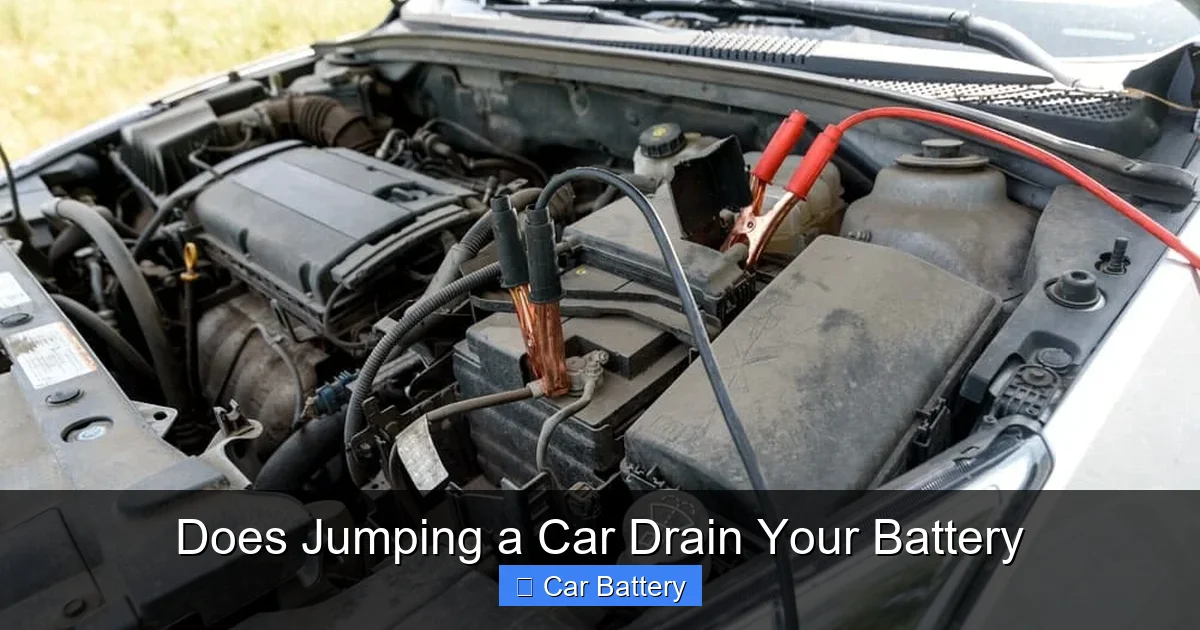
Jumping a car does not drain your battery—in fact, it’s designed to recharge it. However, improper techniques or underlying battery issues can cause problems. Understanding how jump-starting works helps keep your vehicle running smoothly.
In This Article
- 1 Key Takeaways
- 2 📑 Table of Contents
- 3 Does Jumping a Car Drain Your Battery? The Truth Explained
- 4 How Jump-Starting Works: A Simple Breakdown
- 5 Common Myths About Jump-Starting and Battery Drain
- 6 When Jump-Starting Can Cause Problems
- 7 How to Jump-Start a Car Safely: Step-by-Step Guide
- 8 How Long Should You Drive After Jumping?
- 9 When to Replace Your Battery Instead of Jumping
- 10 Tips to Prevent a Dead Battery in the Future
- 11 Conclusion: Jump-Starting Is Safe—When Done Right
- 12 Frequently Asked Questions
- 12.1 Does jump-starting hurt your battery?
- 12.2 Can you jump-start a car in the rain?
- 12.3 How long should you wait between jump attempts?
- 12.4 Can you jump-start a car with a completely dead battery?
- 12.5 Is it safe to jump-start a hybrid or electric car?
- 12.6 What should you do if your car dies right after jumping?
Key Takeaways
- Jump-starting doesn’t drain your battery: It transfers power from a working battery to a dead one, helping restart the engine.
- Your alternator recharges the battery after jumping: Once the engine runs, the alternator replenishes the charge used during startup.
- Improper connections can damage electronics: Reversing cables or sparking near the battery may harm your car’s electrical system.
- A weak or old battery may not hold a charge: Even after jumping, a failing battery might die again quickly.
- Let the engine run after jumping: Drive or idle for at least 20–30 minutes to allow proper recharging.
- Use quality jumper cables: Thick, well-insulated cables ensure efficient power transfer and reduce risks.
- Know when to replace, not just jump: Frequent jump-starts signal it’s time for a new battery.
📑 Table of Contents
- Does Jumping a Car Drain Your Battery? The Truth Explained
- How Jump-Starting Works: A Simple Breakdown
- Common Myths About Jump-Starting and Battery Drain
- When Jump-Starting Can Cause Problems
- How to Jump-Start a Car Safely: Step-by-Step Guide
- How Long Should You Drive After Jumping?
- When to Replace Your Battery Instead of Jumping
- Tips to Prevent a Dead Battery in the Future
- Conclusion: Jump-Starting Is Safe—When Done Right
Does Jumping a Car Drain Your Battery? The Truth Explained
Picture this: It’s a cold Monday morning, you’re running late for work, and you turn the key—only to hear a slow, clicking sound. Your car won’t start. Panic sets in. You call a friend, grab some jumper cables, and within minutes, your engine roars back to life. But then a question pops into your head: *Did jumping my car just drain my battery even more?*
It’s a common concern, and honestly, it makes sense to wonder. After all, you’re connecting two cars, sending electricity through cables—couldn’t that hurt your battery? The short answer is: **No, jumping a car does not drain your battery.** In fact, it’s one of the safest and most effective ways to get your vehicle running again when the battery is dead.
But like any automotive procedure, there’s more to the story. While jump-starting is designed to help, not harm, there are important steps to follow—and mistakes to avoid—to protect both your battery and your car’s electrical system. In this guide, we’ll break down exactly how jump-starting works, why it doesn’t drain your battery, and what you need to know to do it safely and effectively.
How Jump-Starting Works: A Simple Breakdown

Visual guide about Does Jumping a Car Drain Your Battery
Image source: autotoride.com
To understand whether jumping a car drains your battery, you first need to know what happens when you connect those jumper cables.
When your car battery is dead, it doesn’t have enough stored energy to power the starter motor, which is what turns the engine over. Jump-starting uses the electrical power from another vehicle’s healthy battery to give your dead battery a temporary boost. This extra power allows your starter motor to engage and your engine to start.
Here’s how it works step by step:
1. **Connection:** You connect the positive (red) jumper cable to the positive terminal of the dead battery, then to the positive terminal of the working battery.
2. **Grounding:** The negative (black) cable connects to the negative terminal of the working battery, and the other end attaches to an unpainted metal surface on the dead car—like a bolt or bracket—away from the battery.
3. **Power Transfer:** Once connected, electricity flows from the working battery to the dead one, providing the voltage needed to start the engine.
4. **Engine Start:** You turn the key, the engine cranks, and—hopefully—starts.
5. **Recharging Begins:** Once the engine is running, your car’s alternator takes over, generating electricity to recharge the battery.
So, does this process drain your battery? Not at all. In fact, it’s the opposite. The jump-start gives your battery the initial push it needs, and then your alternator does the heavy lifting to restore the charge.
Why Your Battery Doesn’t Get Drained
Think of your car battery like a rechargeable flashlight. When it’s dead, you plug it in to recharge. Jump-starting is like giving that flashlight a quick boost of power so it can turn on, and then letting it charge normally afterward.
The key player here is the **alternator**. Once your engine is running, the alternator generates electricity and sends it back to the battery, replenishing the energy used during startup. This is why it’s so important to let your car run for at least 20–30 minutes after jumping it—this gives the alternator enough time to recharge the battery properly.
So, no, jumping doesn’t drain your battery. It’s a temporary power transfer, not a drain. The real risk isn’t losing charge—it’s damaging your battery or car if you do it wrong.
Common Myths About Jump-Starting and Battery Drain
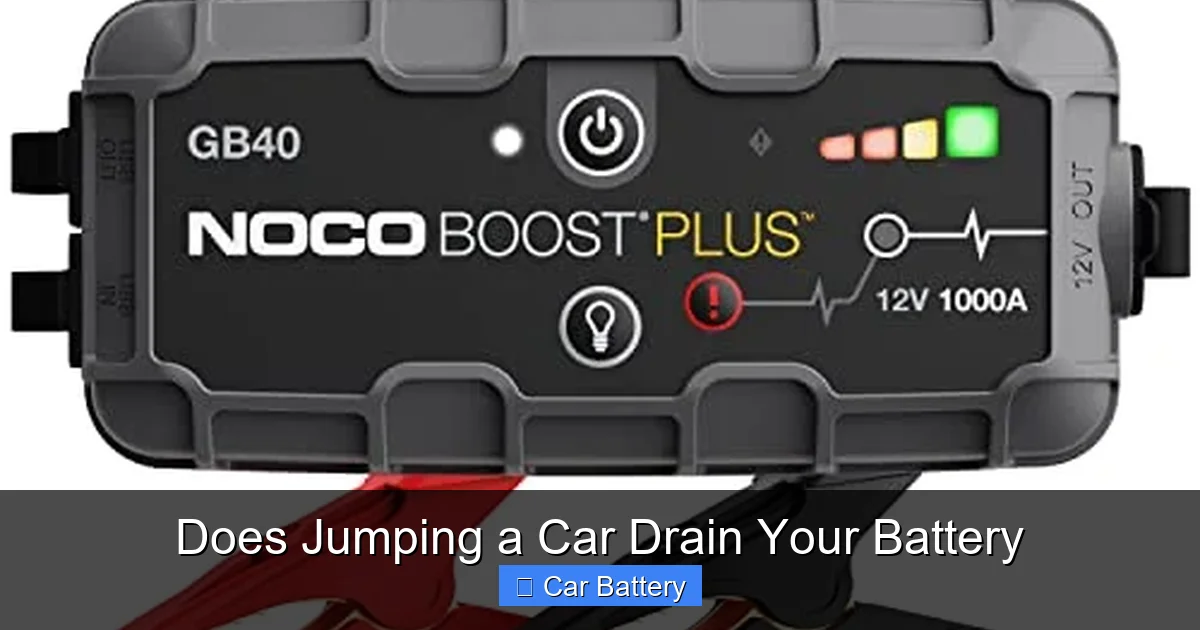
Visual guide about Does Jumping a Car Drain Your Battery
Image source: m.media-amazon.com
There are a lot of misconceptions floating around about jump-starting. Let’s clear up the most common ones so you can feel confident the next time your car won’t start.
Myth 1: Jump-Starting Permanently Damages Your Battery
Some people believe that using jumper cables harms the battery over time. This isn’t true—if done correctly. Jump-starting is a standard, safe procedure recommended by mechanics and car manufacturers.
However, if your battery is already old or damaged, jump-starting won’t fix it. A battery that’s nearing the end of its life (usually 3–5 years) may not hold a charge well, even after being jumped. In that case, the issue isn’t the jump—it’s the battery itself.
Myth 2: You Need to Rev the Engine While Jumping
You might have heard that you should “rev” the donor car’s engine to send more power to the dead battery. While it sounds logical, it’s usually unnecessary and can be risky.
Modern cars have sophisticated electrical systems. Revving the engine can cause voltage spikes that might damage sensitive electronics in either vehicle. Most experts recommend keeping both engines at idle during the jump process.
Myth 3: Jump-Starting Drains the Donor Car’s Battery
Another common worry is that helping someone else start their car will leave you stranded. While it’s true that the donor battery supplies power, it’s designed to handle this.
A healthy car battery has plenty of reserve capacity. Jump-starting another car uses only a small fraction of its charge—especially if the process takes just a few minutes. As long as the donor car is in good condition, it won’t be drained by helping out a friend.
Myth 4: You Can Jump-Start Any Car with Any Battery
Not all batteries are created equal. Most passenger cars use 12-volt systems, so jumping between similar vehicles is usually safe. But problems can arise with hybrid or electric vehicles, or cars with advanced start-stop systems.
Some modern cars have special procedures for jump-starting—like using specific terminals or turning off certain systems. Always check your owner’s manual before attempting a jump, especially if you’re dealing with a newer or high-tech vehicle.
When Jump-Starting Can Cause Problems
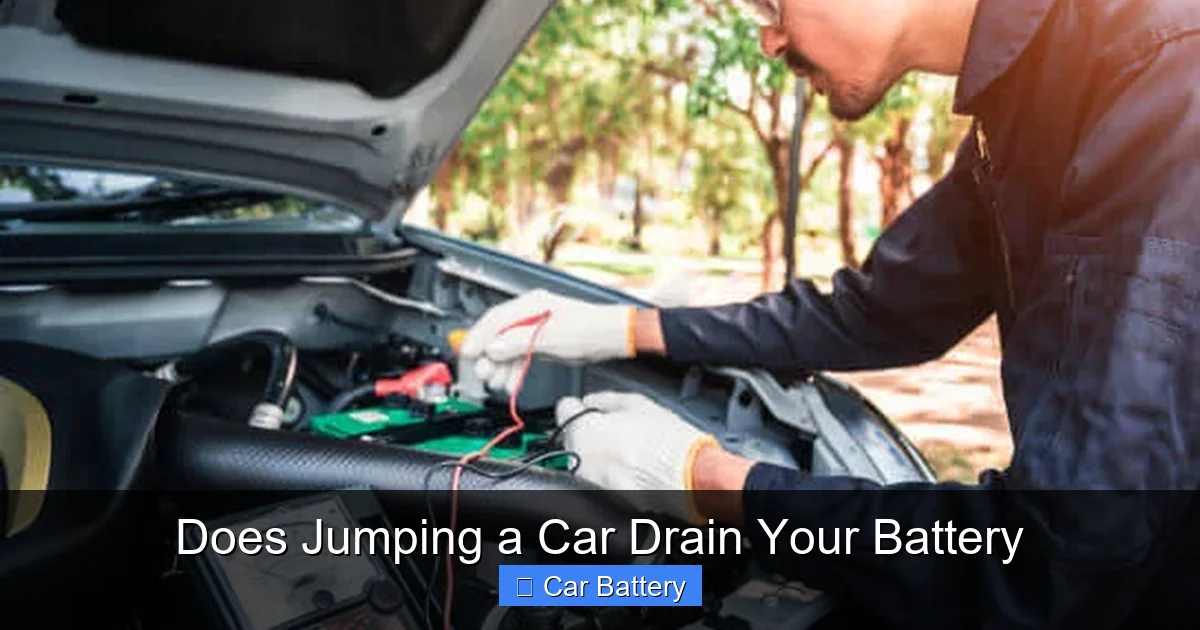
Visual guide about Does Jumping a Car Drain Your Battery
Image source: amproad.ca
While jump-starting is generally safe, it’s not risk-free. If done incorrectly, it can lead to damage—not because it drains the battery, but because of electrical mishaps.
Reversed Cables: The Biggest Danger
One of the most dangerous mistakes is connecting the cables backward—positive to negative and negative to positive. This can cause a short circuit, leading to sparks, blown fuses, or even a battery explosion.
Always double-check your connections:
– Red cable: Positive (+) to positive (+)
– Black cable: Negative (–) to negative (–), then to a ground on the dead car
Sparking Near the Battery
Car batteries emit hydrogen gas, which is highly flammable. If you create a spark near the battery—especially when connecting or disconnecting cables—you risk igniting the gas.
To avoid this, always connect the final negative cable to a grounded metal part on the engine block, not directly to the battery terminal. This reduces the chance of sparking near the battery itself.
Using Damaged or Low-Quality Jumper Cables
Thin, frayed, or poorly insulated cables can overheat, reduce power transfer, or even cause electrical shocks. Invest in a set of heavy-duty jumper cables with thick copper wires and strong clamps. They’re a small price to pay for safety and reliability.
Jump-Starting a Severely Damaged Battery
If your battery is leaking, swollen, or has a cracked case, do not attempt to jump it. These are signs of serious damage, and applying external power could cause a fire or explosion. In these cases, call a professional or replace the battery.
How to Jump-Start a Car Safely: Step-by-Step Guide
Now that you know jump-starting doesn’t drain your battery, let’s walk through the correct way to do it. Follow these steps to stay safe and get your car running again.
Step 1: Park Safely and Turn Off Engines
Pull both cars into a safe, flat area—like a parking lot or driveway. Make sure they’re close enough for the cables to reach, but not touching. Turn off both engines and remove the keys.
Step 2: Identify the Battery Terminals
Open the hoods and locate the batteries. The positive terminal is usually marked with a “+” sign and may have a red cover. The negative terminal has a “–” sign and is often black.
Step 3: Connect the Jumper Cables
Follow this order:
1. Connect the red (positive) cable to the positive terminal of the dead battery.
2. Connect the other red clamp to the positive terminal of the working battery.
3. Connect the black (negative) cable to the negative terminal of the working battery.
4. Attach the final black clamp to an unpainted metal surface on the dead car—like a bolt or bracket—away from the battery.
Step 4: Start the Donor Car
Start the engine of the car with the good battery and let it run for 2–3 minutes. This helps build up charge.
Step 5: Start the Dead Car
Try starting the dead car. If it doesn’t start right away, wait a minute and try again. Don’t crank for more than 10 seconds at a time.
Step 6: Let Both Cars Run
Once the dead car starts, leave both engines running for 5–10 minutes. This allows the alternator to begin recharging the battery.
Step 7: Disconnect the Cables
Remove the cables in reverse order:
1. Black clamp from the grounded metal on the dead car
2. Black clamp from the working battery
3. Red clamp from the working battery
4. Red clamp from the dead battery
Step 8: Drive or Idle to Recharge
Drive the jumped car for at least 20–30 minutes, or let it idle if you can’t drive. This gives the alternator time to fully recharge the battery.
How Long Should You Drive After Jumping?
This is one of the most frequently asked questions: *How long do I need to drive after jump-starting my car?*
The answer depends on how dead the battery was and how much charge it had left. But as a general rule, you should drive or idle for **at least 20–30 minutes** after jumping.
Why? Because the alternator needs time to restore the energy used during startup. A quick 5-minute drive might not be enough—especially if the battery was completely dead.
If you only drive for a few minutes and then turn off the car, the battery may not have enough charge to start again. This can lead to a cycle of jumping and dying, which is frustrating and can strain the alternator.
Signs Your Battery Is Still Weak
Even after driving, your battery might not be fully recovered. Watch for these signs:
– Dim headlights or interior lights
– Slow engine cranking
– Electrical issues (radio, power windows, etc.)
– The car dies again after turning it off
If you notice these symptoms, your battery may be failing and needs replacement.
When to Replace Your Battery Instead of Jumping
Jump-starting is a great temporary fix, but it’s not a long-term solution. If you’re jumping your car frequently, it’s a red flag that your battery is on its last legs.
Most car batteries last between 3 and 5 years. If yours is older than that—or if it’s struggling to hold a charge—it’s time to replace it.
Other signs it’s time for a new battery:
– The car takes longer to start, even in warm weather
– You’ve had to jump it more than once in a few months
– The battery warning light is on
– Corrosion around the terminals (white, green, or blue powder)
Replacing a battery is relatively inexpensive (usually $100–$200) and can save you from being stranded again.
Choosing the Right Replacement Battery
Not all batteries are the same. When replacing yours, check your owner’s manual for the correct size, type, and cold cranking amps (CCA) rating. A higher CCA rating means better performance in cold weather.
You can also visit an auto parts store—they’ll often test your old battery for free and help you pick the right replacement.
Tips to Prevent a Dead Battery in the Future
The best way to avoid jump-starting altogether is to maintain your battery and electrical system. Here are some simple tips:
1. Turn Off Lights and Accessories
It’s easy to leave headlights, interior lights, or the radio on when the engine is off. These drain the battery over time. Make it a habit to check before walking away.
2. Limit Short Trips
Short drives don’t give the alternator enough time to fully recharge the battery. If you only take quick trips, consider taking longer drives occasionally or using a battery maintainer.
3. Keep Terminals Clean
Corrosion on battery terminals can interfere with charging. Clean them with a baking soda and water solution and a wire brush every few months.
4. Use a Battery Maintainer
If you don’t drive often (like with a seasonal car), use a trickle charger or battery maintainer to keep the charge up.
5. Get Regular Maintenance
Have your battery and charging system checked during routine service. Many shops offer free battery tests.
Conclusion: Jump-Starting Is Safe—When Done Right
So, does jumping a car drain your battery? The answer is a clear **no**. Jump-starting is a safe, effective way to get your car running when the battery is dead. It doesn’t drain your battery—it gives it the boost it needs to start, and then your alternator takes over to recharge it.
The real risks come from improper technique: reversed cables, sparking near the battery, or using damaged equipment. But if you follow the correct steps, you can jump-start your car with confidence.
Remember, though, that frequent jump-starts are a sign of a deeper issue. If your battery keeps dying, it’s probably time for a replacement—not just another jump.
By understanding how your car’s electrical system works and taking simple preventive steps, you can avoid being stranded and keep your vehicle running smoothly for years to come.
Frequently Asked Questions
Does jump-starting hurt your battery?
No, jump-starting does not hurt your battery when done correctly. It provides a temporary power boost to start the engine, and the alternator recharges the battery afterward.
Can you jump-start a car in the rain?
Yes, you can jump-start a car in the rain, but take extra care. Water increases the risk of electrical shock, so keep cables dry and avoid standing in puddles.
How long should you wait between jump attempts?
Wait at least 1–2 minutes between attempts. If the engine doesn’t start after 2–3 tries, there may be a deeper issue like a faulty starter or fuel problem.
Can you jump-start a car with a completely dead battery?
Yes, as long as the battery isn’t damaged or frozen. A completely dead battery can still be jump-started if it’s in good physical condition.
Is it safe to jump-start a hybrid or electric car?
It depends on the model. Many hybrids and EVs have specific procedures—check the owner’s manual. Some require special equipment or terminals.
What should you do if your car dies right after jumping?
This usually means the battery isn’t holding a charge. Drive for at least 30 minutes to recharge it. If it dies again, have the battery and charging system tested.