
Does Full Coverage Car Insurance Cover Towing?

Full coverage car insurance typically includes comprehensive and collision protection, but it does not automatically include towing services. To get coverage for towing, you usually need to add a roadside assistance endorsement or purchase a separate plan.
Key Takeaways
- Full coverage doesn’t mean “everything”: Despite the name, full coverage refers to comprehensive and collision insurance, not all possible services like towing.
- Towing is usually an add-on: Most insurers offer towing as part of a roadside assistance package you must purchase separately.
- Roadside assistance covers more than towing: This add-on often includes jump-starts, flat tire changes, fuel delivery, and lockout services.
- Coverage limits apply: Towing reimbursement is often capped per incident and annually—check your policy for details.
- Some credit cards and memberships offer towing: AAA, certain credit cards, and auto clubs may provide free or discounted towing, reducing the need for insurance add-ons.
- Emergency vs. non-emergency matters: Towing after an accident may be covered differently than breakdowns due to mechanical failure.
- Always read your policy: Coverage varies by insurer and state—never assume towing is included without verifying.
📑 Table of Contents
- Does Full Coverage Car Insurance Cover Towing?
- What Is Full Coverage Car Insurance?
- Does Full Coverage Include Towing?
- What Is Roadside Assistance and How Does It Help?
- Other Ways to Get Towing Coverage
- How to Add Towing Coverage to Your Policy
- Common Misconceptions About Towing and Insurance
- Tips for Choosing the Right Towing Coverage
- Conclusion
Does Full Coverage Car Insurance Cover Towing?
Picture this: You’re driving home on a rainy Tuesday evening when suddenly, your car sputters and dies on the side of the highway. No warning lights, no strange noises—just silence. You call for help, hoping your “full coverage” car insurance will save the day. But when the tow truck arrives, you’re told your policy doesn’t include towing. Sound familiar?
Many drivers assume that “full coverage” means every possible expense related to their vehicle is covered—from accidents to breakdowns to towing. But the truth is more nuanced. While full coverage does offer broader protection than liability-only policies, it doesn’t automatically include services like towing, jump-starts, or fuel delivery. Understanding what your policy actually covers—and what it doesn’t—can save you hundreds of dollars and a lot of stress when you’re stranded.
In this guide, we’ll break down exactly what full coverage car insurance includes, whether towing is part of the package, and how you can ensure you’re protected when your car breaks down. Whether you’re a new driver or have been on the road for decades, knowing the ins and outs of your insurance policy is essential for peace of mind.
What Is Full Coverage Car Insurance?
Visual guide about Does Full Coverage Car Insurance Cover Towing?
Image source: carxplorer.com
Before we dive into towing, let’s clarify what “full coverage” really means. Despite the name, it’s not a formal insurance term—it’s more of a casual way to describe a policy that goes beyond the minimum legal requirements.
In most states, drivers are only required to carry liability insurance, which covers damage or injuries you cause to others in an accident. Full coverage, on the other hand, typically includes three main components:
- Liability insurance: Covers bodily injury and property damage you cause to others.
- Comprehensive coverage: Pays for damage to your car from non-collision events like theft, vandalism, fire, or weather.
- Collision coverage: Covers damage to your vehicle from collisions with other cars or objects, regardless of fault.
Some policies may also include uninsured/underinsured motorist coverage, medical payments, and personal injury protection (PIP), depending on your state and insurer.
But here’s the catch: none of these standard coverages include towing. Comprehensive and collision protect your car from physical damage, but they don’t help when your engine overheats, your battery dies, or you run out of gas. That’s where roadside assistance comes in—and it’s usually an optional add-on.
Why the Confusion Around “Full Coverage”?
The term “full coverage” is misleading because it suggests complete protection. But in reality, it only refers to a combination of liability, comprehensive, and collision insurance. It doesn’t include extras like rental car reimbursement, gap insurance, or roadside assistance—including towing.
This confusion often leads drivers to believe they’re fully protected when they’re not. For example, if your car breaks down due to a mechanical issue, your comprehensive or collision coverage won’t pay for the tow. Those coverages only kick in when there’s physical damage to the vehicle from an insured event.
So, while full coverage offers strong protection against accidents and damage, it’s not a catch-all solution. To get help when your car won’t start or you’re stuck on the side of the road, you’ll likely need to add roadside assistance to your policy.
Does Full Coverage Include Towing?
Visual guide about Does Full Coverage Car Insurance Cover Towing?
Image source: carxplorer.com
The short answer? No—full coverage car insurance does not automatically include towing.
While comprehensive and collision coverage protect your vehicle from damage, they don’t cover mechanical failures, dead batteries, flat tires, or running out of fuel. These are considered maintenance or operational issues, not accidents or covered perils.
For example:
- If your car is damaged in a hailstorm (covered under comprehensive), your insurer will pay for repairs—but not the tow to get it to the shop.
- If you crash into a tree (covered under collision), your insurer will cover the repair costs, but again, not the towing unless you have roadside assistance.
In both cases, the physical damage is covered, but the logistical support—like getting your car moved—is not.
When Might Towing Be Covered?
There are a few exceptions where towing might be included or reimbursed under your full coverage policy:
- After an accident: Some insurers may cover towing as part of the claims process if the vehicle is undriveable due to collision or comprehensive damage. However, this is not guaranteed and often depends on the circumstances.
- If you have roadside assistance: This is the most common way to get towing covered. Roadside assistance is an optional add-on that typically includes towing, jump-starts, tire changes, and more.
- If your policy includes emergency roadside service: Some full coverage policies bundle roadside assistance at no extra cost, but this is rare. Always check your declarations page.
In most cases, though, you’ll need to pay out of pocket for towing unless you’ve specifically added roadside assistance to your policy.
How Much Does Towing Cost Without Coverage?
Towing fees can add up quickly. On average, a standard tow within 10 miles costs between $75 and $125. Longer distances, heavy-duty vehicles, or after-hours service can push that to $200 or more. If you’re in a remote area or need a flatbed truck, costs can exceed $300.
Without insurance coverage, these expenses come straight out of your pocket. Over time, even occasional tows can become a financial burden—especially if you drive an older vehicle or live in an area with harsh weather.
That’s why many drivers choose to add roadside assistance, even if they already have full coverage. The peace of mind and potential savings often outweigh the small monthly or annual fee.
What Is Roadside Assistance and How Does It Help?
Visual guide about Does Full Coverage Car Insurance Cover Towing?
Image source: m.media-amazon.com
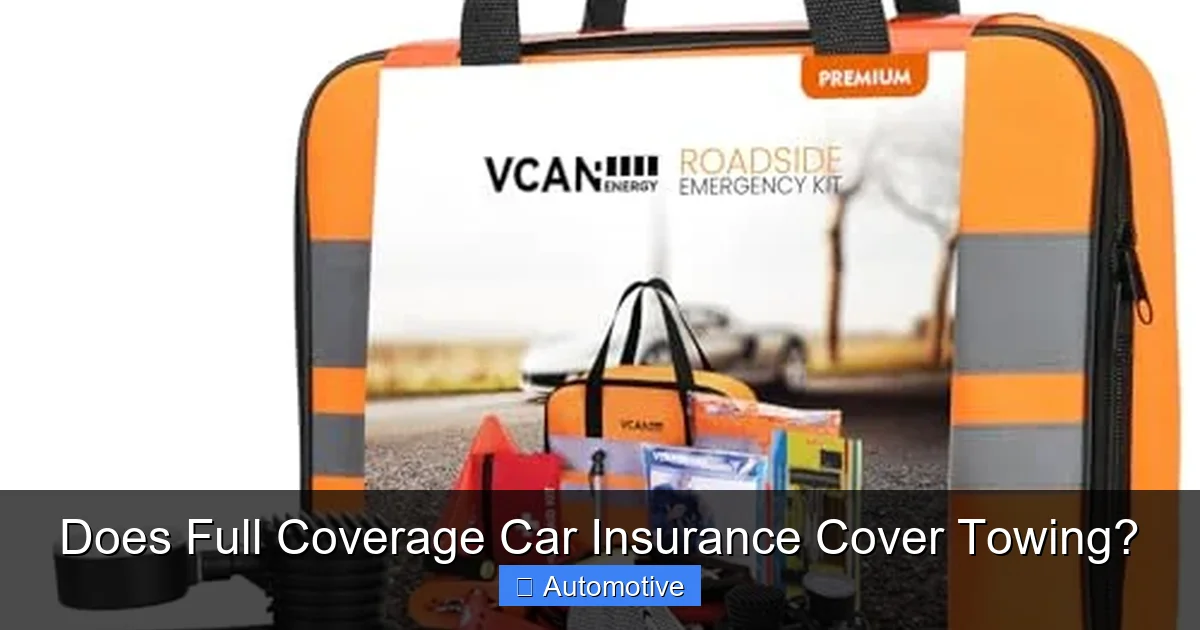
Roadside assistance is an optional add-on to your car insurance policy that provides help when your vehicle breaks down. It’s designed to get you back on the road quickly and safely, whether you’re dealing with a dead battery, flat tire, or engine trouble.
Most roadside assistance plans include:
- Towing: Typically up to a certain distance (e.g., 5–10 miles) to the nearest repair shop or approved facility.
- Battery jump-start: If your battery dies, a technician will come to jump-start your car.
- Flat tire change: Help replacing a flat with your spare tire.
- Fuel delivery: A small amount of gas delivered if you run out (you pay for the fuel).
- Lockout service: If you lock your keys in the car, a locksmith or technician can help you get back in.
- Winching: If your car gets stuck in snow, mud, or a ditch, roadside assistance may help pull it out.
These services are usually available 24/7 and can be accessed via a toll-free phone number or mobile app.
How Much Does Roadside Assistance Cost?
The cost of adding roadside assistance to your car insurance policy varies by insurer and location, but it’s generally affordable. Most drivers pay between $5 and $15 per month, or $60 to $180 per year.
Some insurers offer it as a standalone service, while others bundle it with other perks like rental car reimbursement or trip interruption coverage.
Compared to the cost of a single tow, roadside assistance is a smart investment. For example, if you pay $10/month ($120/year) for roadside assistance and use it just once for a $150 tow, you’ve already saved money.
Is Roadside Assistance Worth It?
For most drivers, yes—especially if you:
- Drive an older vehicle with higher breakdown risk
- Live in a rural or remote area with limited services
- Frequently travel long distances
- Don’t have access to other towing benefits (like AAA)
Even if you’re a careful driver with a reliable car, unexpected breakdowns happen. A dead battery on a cold morning or a flat tire on a deserted road can leave you stranded for hours. Roadside assistance ensures help is just a phone call away.
Other Ways to Get Towing Coverage
If you don’t want to add roadside assistance to your insurance policy, there are other ways to get towing coverage—often at little or no cost.
AAA and Other Auto Clubs
AAA (American Automobile Association) is one of the most well-known providers of roadside assistance. Membership starts at around $60 per year and includes towing, battery service, fuel delivery, and more.
AAA offers different tiers of membership:
- Classic: Basic towing (up to 5 miles), battery service, and lockout help.
- Plus: Longer towing (up to 100 miles), trip interruption benefits, and concierge services.
- Premier: Unlimited towing, free rental car after a covered breakdown, and enhanced travel benefits.
Other auto clubs, like Allstate Motor Club or Good Sam, offer similar services. If you’re already a member of one, check what towing benefits you have before adding roadside assistance to your insurance.
Credit Card Benefits
Some premium credit cards offer roadside assistance as a cardholder benefit. For example:
- Chase Sapphire Reserve® includes up to $50 per incident for towing or emergency services.
- American Express Platinum Card® offers roadside assistance through a partnership with Agero.
- Capital One Venture X provides up to $50 per tow, up to four times per year.
These benefits usually require you to pay for the service upfront and then submit a claim for reimbursement. Be sure to read the terms—coverage limits and eligible services vary.
Manufacturer Roadside Assistance
If you drive a new or certified pre-owned vehicle, your car may come with complimentary roadside assistance from the manufacturer. For example:
- Toyota offers 2 years/25,000 miles of roadside assistance with new vehicles.
- Ford provides 5 years/60,000 miles of roadside assistance on new cars.
- BMW includes 4 years/unlimited miles of roadside assistance.
These programs typically include towing, jump-starts, and lockout service. Check your owner’s manual or contact the dealership to see if your vehicle is eligible.
Employer or Union Benefits
Some employers or labor unions offer roadside assistance as part of their benefits package. This is often free or heavily discounted for members. Check with your HR department or union representative to see if this is available to you.
How to Add Towing Coverage to Your Policy
If you decide to add roadside assistance to your car insurance, the process is usually simple.
Step 1: Contact Your Insurance Agent
Call your insurance provider or log in to your online account. Ask about adding roadside assistance or emergency roadside service to your policy. Most insurers offer this as an optional endorsement.
Step 2: Review the Coverage Details
Make sure you understand:
- How many tows are allowed per year
- The maximum distance covered per tow
- Whether there’s a per-incident or annual limit
- If the service includes winching, fuel delivery, or lockout help
For example, your policy might cover up to 10 miles of towing per incident, with a maximum of $100 per tow. If the actual cost is $150, you’d pay the $50 difference.
Step 3: Compare Costs and Benefits
Compare the cost of adding roadside assistance to your insurance versus other options like AAA or credit card benefits. Consider how often you drive, the age of your vehicle, and your risk of breakdowns.
Step 4: Add the Coverage
Once you’ve decided, your insurer will add the endorsement to your policy. The cost will appear on your next bill. Make sure to keep the roadside assistance phone number handy—many insurers provide a card or app for easy access.
Step 5: Use the Service When Needed
If your car breaks down, call the number provided by your insurer. They’ll dispatch a service provider to assist you. Keep receipts if reimbursement is required.
Common Misconceptions About Towing and Insurance
Even experienced drivers often misunderstand what their insurance covers. Here are a few common myths—and the truth behind them.
Myth 1: “Full coverage means I’m covered for everything.”
Truth: Full coverage only includes liability, comprehensive, and collision insurance. It does not include towing, rental cars, or mechanical repairs unless specified.
Myth 2: “My insurance will tow my car after any breakdown.”
Truth: Towing is only covered if you have roadside assistance or if the breakdown is directly related to a covered event (like an accident). Mechanical failures are not covered under standard policies.
Myth 3: “Towing is always free with roadside assistance.”
Truth: Most plans have limits. You might get 5 miles of free towing, but anything beyond that could cost extra. Always check the fine print.
Myth 4: “I don’t need roadside assistance because I have AAA.”
Truth: While AAA is great, it’s not always the fastest option. Having roadside assistance through your insurer can provide faster response times, especially in remote areas.
Myth 5: “Towing is only for accidents.”
Truth: Towing can be needed for many reasons—dead batteries, flat tires, overheating, running out of gas, or getting stuck. Roadside assistance covers all these scenarios.
Tips for Choosing the Right Towing Coverage
With so many options, how do you decide what’s best for you? Here are some practical tips to help you choose the right towing coverage.
Assess Your Driving Habits
If you drive frequently, commute long distances, or travel on rural roads, you’re at higher risk for breakdowns. In these cases, roadside assistance is a smart investment.
Consider Your Vehicle’s Age and Condition
Older cars are more likely to break down. If your vehicle is over 10 years old or has high mileage, roadside assistance can save you from costly tows and repairs.
Check for Existing Benefits
Before adding coverage, review your credit cards, auto club memberships, and manufacturer warranties. You might already have towing benefits you’re not using.
Compare Costs and Limits
Look at the cost of roadside assistance versus the potential cost of a tow. Also, compare coverage limits—some plans offer more miles or higher reimbursement than others.
Read the Fine Print
Pay attention to exclusions, waiting periods, and service areas. Some plans only cover tows within the U.S., while others include Canada and Mexico.
Keep Emergency Info Handy
Once you have coverage, save the roadside assistance phone number in your phone and keep a physical copy in your glove compartment. In an emergency, you don’t want to waste time searching for it.
Conclusion
So, does full coverage car insurance cover towing? The answer is clear: not by default. While full coverage offers strong protection against accidents, theft, and damage, it doesn’t include services like towing, jump-starts, or fuel delivery. To get help when your car breaks down, you’ll need to add roadside assistance to your policy or rely on other benefits like AAA or credit card perks.
The good news? Adding roadside assistance is affordable and can save you hundreds of dollars in towing fees. Whether you’re a daily commuter, weekend road-tripper, or just want peace of mind, having a plan in place is always wise.
Don’t wait until you’re stranded on the side of the road to think about towing coverage. Review your policy today, explore your options, and make sure you’re prepared for whatever the road throws your way. After all, the best kind of coverage isn’t just about protecting your car—it’s about protecting your time, your wallet, and your peace of mind.
Frequently Asked Questions
Does full coverage car insurance automatically include towing?
No, full coverage does not automatically include towing. It typically covers liability, comprehensive, and collision damage, but towing requires a separate roadside assistance add-on.
How much does it cost to add roadside assistance to my policy?
Most insurers charge between $5 and $15 per month for roadside assistance, depending on your location and coverage limits.
Can I get reimbursed for a tow if I don’t have roadside assistance?
Generally, no. Unless the tow is directly related to a covered accident or damage, your insurer won’t reimburse you without a roadside assistance endorsement.
Does AAA cover towing for all vehicles?
Yes, AAA covers towing for most vehicles, but the distance and number of tows depend on your membership level. Classic members get up to 5 miles, while Premier members get unlimited towing.
What should I do if my car breaks down and I don’t have towing coverage?
Call a local tow truck, but be prepared to pay out of pocket. You can also check if your credit card, employer, or auto club offers emergency towing benefits.
Is roadside assistance worth it if I have a new car?
It depends. Many new cars come with manufacturer roadside assistance for the first few years. If yours does, you may not need to add it to your insurance—but it’s still a good backup option.