
Does Credit Score Affect Car Insurance?

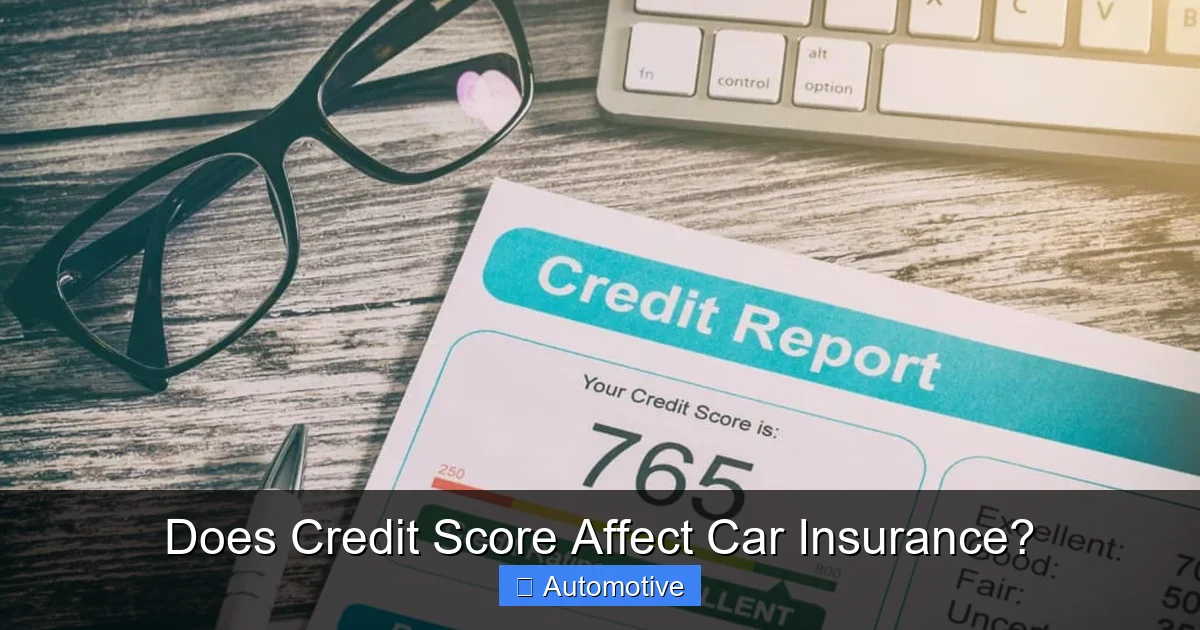
Yes, your credit score can affect your car insurance rates in most U.S. states. Insurers use credit-based insurance scores to predict risk and set premiums, meaning better credit often leads to lower costs.
Key Takeaways
- Credit scores influence insurance premiums: Most insurers use credit-based insurance scores to assess risk, and lower scores often result in higher premiums.
- It’s legal in most states: Only a few states (like California, Hawaii, and Massachusetts) prohibit the use of credit in setting car insurance rates.
- Good credit can save you money: Drivers with excellent credit may pay hundreds less per year than those with poor credit.
- Insurance scores differ from credit scores: While related, insurance scores focus more on payment history and debt patterns relevant to risk prediction.
- Improving your credit helps: Paying bills on time, reducing debt, and checking for errors can boost both your credit and insurance rates over time.
- Shop around for better deals: Not all insurers weigh credit equally—comparing quotes can help you find the most credit-friendly provider.
- Transparency is increasing: Some states now require insurers to notify you if your credit affected your rate, helping you take action.
📑 Table of Contents
- Does Credit Score Affect Car Insurance?
- How Do Insurance Companies Use Credit Scores?
- Where Is Credit Used in Car Insurance?
- How Much Can Your Credit Score Impact Your Premium?
- Can You Get Car Insurance with Bad Credit?
- How to Improve Your Credit and Lower Your Insurance Rates
- What to Do If Your Rate Increased Due to Credit
- The Future of Credit in Car Insurance
- Conclusion
Does Credit Score Affect Car Insurance?
When you’re shopping for car insurance, you probably focus on factors like your driving record, vehicle type, age, and location. But there’s another, less obvious factor that could be quietly influencing your premium: your credit score. Yes, that three-digit number lenders use to assess your financial responsibility might also be determining how much you pay for auto coverage.
You might be wondering—how does my credit history have anything to do with how safely I drive? It seems unrelated, right? Yet, in most states across the U.S., insurance companies are legally allowed to consider your credit when setting your rates. This practice is based on statistical data showing a correlation between credit behavior and the likelihood of filing claims. In other words, people with lower credit scores tend to file more insurance claims, according to industry studies. As a result, insurers use a modified version of your credit score—called a credit-based insurance score—to predict risk and adjust premiums accordingly.
But before you panic, know this: not all insurers treat credit the same way, and not all states allow it. Understanding how your credit impacts your car insurance can help you make smarter financial decisions and potentially save hundreds of dollars each year. In this article, we’ll break down exactly how credit affects car insurance, where it’s used, why it matters, and what you can do to improve your situation—no matter your current credit standing.
How Do Insurance Companies Use Credit Scores?

Visual guide about Does Credit Score Affect Car Insurance?
Image source: activitycovered.com
Insurance companies don’t use your standard FICO or VantageScore directly. Instead, they rely on a specialized metric known as a credit-based insurance score. This score is calculated using similar factors as your regular credit score—like payment history, credit utilization, length of credit history, types of credit, and recent credit inquiries—but it’s weighted differently to predict insurance risk.
For example, payment history might matter more in an insurance score because consistent on-time payments suggest reliability and lower risk of filing claims. High credit card balances relative to your limits (high credit utilization) might also raise a red flag, as it could indicate financial stress, which insurers associate with higher claim frequency.
Let’s say two drivers have identical driving records, drive the same car, and live in the same ZIP code. One has a credit score of 750, and the other has a score of 580. The driver with the lower score could pay significantly more for the same coverage—sometimes 20% to 40% more. That difference can add up to hundreds of extra dollars per year.
Why do insurers believe this works? Decades of actuarial research have shown a strong statistical link between credit behavior and insurance losses. A study by the Federal Trade Commission (FTC) found that credit-based insurance scores are effective predictors of risk for both auto and homeowners insurance. While the exact reasons aren’t fully understood, experts suggest that people who manage their finances responsibly may also be more cautious in other areas of life—including driving.
What Factors Are Included in an Insurance Score?
While each insurer may use a slightly different model, most credit-based insurance scores consider the following elements:
- Payment history (35–40%): This is the biggest factor. Late payments, defaults, and accounts in collections can significantly lower your score.
- Credit utilization (20–30%): How much of your available credit you’re using. Keeping balances below 30% of your limit is ideal.
- Length of credit history (10–15%): Longer credit histories tend to be viewed more favorably.
- Credit mix (10%): Having a variety of credit types (credit cards, auto loans, mortgages) can help.
- New credit inquiries (10%): Applying for multiple new lines of credit in a short time can lower your score.
It’s important to note that your income, employment status, and race are not used in these calculations. Insurers are prohibited from using discriminatory factors, and credit-based scoring models are designed to be neutral in that regard.
Where Is Credit Used in Car Insurance?
Visual guide about Does Credit Score Affect Car Insurance?
Image source: einsurance.com
The use of credit in setting car insurance rates is widespread—but not universal. As of 2024, 47 states allow insurers to consider credit when determining premiums. Only three states—California, Hawaii, and Massachusetts—have laws that prohibit the use of credit information in auto insurance pricing.
In California, for instance, Proposition 103 strictly limits what factors insurers can use. They can consider driving record, miles driven, and vehicle type, but not credit. This means Californians with poor credit aren’t penalized with higher rates, but they also don’t get discounts for excellent credit.
Hawaii and Massachusetts have similar restrictions, though Massachusetts allows limited use of credit in some commercial insurance policies. In all other states, insurers are free to use credit-based scoring as part of their underwriting process.
Even in states where it’s allowed, the impact varies. Some insurers weigh credit heavily, while others use it as just one of many factors. For example, a company like Geico or Progressive might place significant emphasis on credit, whereas a smaller regional insurer might focus more on driving history and location.
Why Do Some States Ban Credit-Based Insurance Scoring?
Opponents of credit-based insurance scoring argue that it can disproportionately affect low-income individuals and minority communities, who may have lower credit scores due to systemic economic inequalities—not personal irresponsibility. They also point out that there’s no direct causal link between credit and driving behavior; it’s purely a statistical correlation.
Supporters, on the other hand, argue that the data is clear: credit behavior is a reliable predictor of risk. They say banning it removes a useful tool for pricing policies fairly and could lead to higher overall premiums for everyone.
The debate continues, but for now, the majority of Americans are subject to credit-based pricing when buying car insurance.
How Much Can Your Credit Score Impact Your Premium?

Visual guide about Does Credit Score Affect Car Insurance?
Image source: media.ffycdn.net
The financial impact of your credit score on car insurance can be substantial. According to a 2023 study by Consumer Reports, drivers with poor credit could pay more than double what drivers with excellent credit pay for the same coverage.
Let’s look at a real-world example. Imagine two 35-year-old drivers in Texas, both with clean driving records, driving a 2020 Honda Civic, and seeking full coverage. One has a credit score of 780 (excellent), and the other has a score of 580 (poor). The driver with excellent credit might pay around $1,200 per year, while the one with poor credit could pay over $2,500—a difference of $1,300 annually.
That’s not a typo. In some cases, the gap is even wider. In states like Louisiana or Michigan, where insurance rates are already high, the credit-based premium difference can exceed $2,000 per year.
Even moving from “fair” to “good” credit can make a noticeable difference. A driver with a 650 score might pay $1,800, while someone with a 720 score pays $1,400—saving $400 just by improving their credit.
Does This Apply to All Types of Coverage?
Yes, credit typically affects all types of auto insurance coverage, including:
- Liability coverage
- Collision coverage
- Comprehensive coverage
- Uninsured/underinsured motorist coverage
It doesn’t matter if you’re buying minimum coverage or a full policy—your credit can influence the price across the board. However, some insurers may weigh credit more heavily for certain coverage types. For example, comprehensive and collision coverage (which protect your own vehicle) might be more sensitive to credit than liability coverage (which protects others).
Can You Get Car Insurance with Bad Credit?
Absolutely. Having poor credit doesn’t mean you’re uninsurable. Every major insurer offers policies to drivers with low credit scores—it just might cost more.
However, you do have options. Some insurance companies are known for being more lenient with credit or placing less emphasis on it. For example:
- State Farm: Uses credit but offers discounts for good drivers and students, which can offset higher base rates.
- USAA: Available only to military members and their families, USAA considers credit but is generally praised for fair pricing.
- Farmers Insurance: Offers a “Start Rating” program that allows you to build a discount over time, even with lower credit.
- The General: Specializes in high-risk drivers and often works with those who have poor credit or driving records.
Shopping around is crucial. Getting quotes from at least three to five different insurers can help you find the best rate for your situation. Online comparison tools like NerdWallet, The Zebra, or Insurify can make this process easier.
What If You Have No Credit History?
If you’re young, new to the country, or have simply avoided credit cards and loans, you might have a “thin file” or no credit history at all. Insurers may treat this similarly to poor credit, since there’s no data to assess your financial behavior.
In these cases, some insurers may rely more heavily on other factors, like driving record or education level. Others might assign a default risk category that results in higher premiums.
The good news? Building credit takes time, but it’s one of the most effective ways to lower your insurance costs in the long run.
How to Improve Your Credit and Lower Your Insurance Rates
If your credit score is dragging down your car insurance premium, the good news is that you can take action. Improving your credit won’t just help with insurance—it can also save you money on loans, credit cards, and even apartment rentals.
Here are practical steps you can take today:
1. Check Your Credit Report for Errors
Mistakes happen. According to the FTC, about 20% of consumers have errors on their credit reports that could negatively impact their scores. You’re entitled to a free credit report from each of the three major bureaus (Equifax, Experian, and TransUnion) once per year at AnnualCreditReport.com.
Review your reports carefully. Look for:
- Accounts you don’t recognize
- Late payments that were actually on time
- Incorrect balances or credit limits
- Accounts that have been closed but still show as open
If you find an error, dispute it with the credit bureau and the creditor. Most disputes are resolved within 30 days, and correcting errors can boost your score quickly.
2. Pay Your Bills on Time
Payment history is the single most important factor in your credit score. Even one late payment can cause a significant drop. Set up automatic payments or calendar reminders to ensure you never miss a due date.
If you’ve missed payments in the past, don’t panic. The impact fades over time, especially if you establish a pattern of on-time payments moving forward.
3. Reduce Your Credit Utilization
Try to keep your credit card balances below 30% of your credit limit—ideally under 10%. For example, if you have a $5,000 limit, aim to keep your balance under $500.
You can lower your utilization by:
- Paying down existing balances
- Requesting a credit limit increase (without spending more)
- Avoiding maxing out cards
Just be cautious with credit limit increases—some issuers perform hard inquiries, which can temporarily lower your score.
4. Avoid Opening Too Many New Accounts
Each time you apply for credit, a hard inquiry appears on your report and can ding your score by a few points. Applying for multiple credit cards or loans in a short period can signal financial distress to insurers.
Only apply for new credit when necessary, and space out applications by at least six months.
5. Build a Longer Credit History
The longer your credit history, the better. Avoid closing old credit cards, even if you don’t use them. A 10-year-old account in good standing is more valuable than a new one.
If you’re new to credit, consider becoming an authorized user on a family member’s account (with their permission) or opening a secured credit card to start building history.
6. Monitor Your Progress
Use free tools like Credit Karma, Experian, or your bank’s credit monitoring service to track your score over time. Many insurers update your credit information annually, so improvements can lead to lower rates at renewal.
What to Do If Your Rate Increased Due to Credit
If you’ve noticed a sudden spike in your car insurance premium and suspect it’s due to your credit, you have rights. In many states, insurers are required to notify you if your credit affected your rate. This is known as an “adverse action notice.”
If you receive such a notice, it should include:
- The name of the credit bureau used
- Your credit-based insurance score
- The key factors that lowered your score (e.g., “high credit utilization” or “recent late payment”)
Use this information to take targeted action. For example, if high utilization was the issue, focus on paying down balances. If a late payment was reported in error, dispute it immediately.
You can also contact your insurer directly and ask:
- How much your credit impacted your rate
- Whether they offer any discounts for improving credit
- If they can re-evaluate your policy after a credit improvement
Some insurers may adjust your rate mid-term if you provide proof of credit improvement, though this isn’t guaranteed.
The Future of Credit in Car Insurance
As consumer advocacy grows and technology evolves, the role of credit in insurance is under increasing scrutiny. Some experts predict that alternative data—like telematics (driving behavior tracked via apps or devices) or rental payment history—could eventually replace or supplement credit-based scoring.
Companies like Progressive’s Snapshot and Allstate’s Drivewise already offer discounts based on actual driving habits, not credit. These programs reward safe driving with lower rates, regardless of credit score.
Additionally, a few states are considering legislation to limit or ban credit-based insurance scoring. Oregon and Washington have introduced bills in recent years, though none have passed yet.
For now, credit remains a powerful factor in car insurance pricing—but it’s not permanent. By improving your financial habits, you can regain control over your premiums and enjoy the peace of mind that comes with both good credit and affordable coverage.
Conclusion
So, does credit score affect car insurance? The short answer is yes—in most states, your credit can significantly influence how much you pay for auto coverage. While it may seem unfair, insurers rely on credit-based insurance scores because they’ve proven to be effective predictors of risk.
But here’s the empowering part: unlike your driving record, which you can’t change overnight, your credit is something you can improve with time and effort. By paying bills on time, reducing debt, and monitoring your credit report, you can boost your score and potentially save hundreds on your car insurance each year.
Don’t let a low credit score keep you from getting the coverage you need. Shop around, ask questions, and take control of your financial health. Because when it comes to car insurance, knowledge—and good credit—really does pay off.
Frequently Asked Questions
Can I be denied car insurance because of my credit score?
No, you cannot be denied coverage solely based on your credit score. However, insurers may charge you higher premiums or require a larger down payment if your credit is poor.
Do all car insurance companies check credit?
Most major insurers in states where it’s legal do check credit as part of the underwriting process. However, some companies place less emphasis on it, so it’s worth comparing quotes.
How often do insurers check my credit?
Insurers typically check your credit when you first apply for a policy and then annually at renewal. Some may also check if you request a major change, like adding a driver or vehicle.
Will checking my own credit hurt my insurance score?
No. Checking your own credit report or score is considered a “soft inquiry” and does not affect your credit or insurance score.
Can I get a discount for having good credit?
Yes, many insurers offer lower rates or discounts for drivers with excellent credit. These savings can add up to hundreds of dollars per year.
What if I’m rebuilding my credit?
Focus on consistent on-time payments and reducing debt. Even small improvements can lead to better insurance rates over time. Consider insurers that reward progress or offer flexible underwriting.