
Does Car Insurance Cover Animal Damage?

Yes, car insurance typically covers animal damage—but only if you have comprehensive coverage. This protection applies to collisions with deer, hitting a raccoon, or even damage from hitting a stray dog. However, liability or collision-only policies usually won’t pay for these incidents.
[FEATURED_IMAGE_PLACEOLDER]
Key Takeaways
- Comprehensive coverage is key: Animal damage is covered under comprehensive insurance, not collision or liability.
- Common animals included: Deer, raccoons, squirrels, birds, and even pets like dogs or cats that cause damage.
- Deductibles apply: You’ll pay your deductible before insurance covers the rest of the repair costs.
- Report promptly: Notify your insurer quickly and document the scene with photos for a smoother claim.
- Geographic factors matter: Rural and wooded areas see more animal-related claims, especially during mating seasons.
- Prevention helps: Use deterrents like reflective tape or ultrasonic devices to reduce risk.
- Check your policy: Always review your coverage details to confirm animal damage is included.
📑 Table of Contents
- Does Car Insurance Cover Animal Damage?
- What Is Comprehensive Coverage and How Does It Work?
- Types of Animal Damage Covered by Insurance
- What Animal Damage Is NOT Covered?
- How to File a Claim for Animal Damage
- Tips to Prevent Animal-Related Car Damage
- Frequently Asked Questions About Animal Damage and Insurance
- Final Thoughts: Protect Your Vehicle and Your Wallet
Does Car Insurance Cover Animal Damage?
Picture this: You’re driving home on a quiet country road at dusk. Suddenly, a deer leaps into the path of your car. You swerve, but it’s too late—there’s a loud thud, and your front bumper is smashed. Your heart races. Your first thought? “Will my car insurance cover this?”
If you’ve ever found yourself in a similar situation—or worried about hitting a raccoon, a squirrel, or even a stray dog—you’re not alone. Animal-related car damage is more common than most people realize. In fact, the Insurance Information Institute reports that over 1.5 million animal-vehicle collisions occur in the U.S. each year, with deer alone responsible for the majority. The average cost of repairs? Around $4,000 per incident.
So, does car insurance cover animal damage? The short answer is: yes—but only if you have the right type of coverage. Most standard auto insurance policies don’t automatically include protection for animal collisions. Instead, you’ll need comprehensive coverage, which is an optional add-on that protects your vehicle from non-collision events like theft, vandalism, weather damage, and yes—animal strikes.
In this guide, we’ll break down exactly how car insurance handles animal damage, what types of incidents are covered, how to file a claim, and how you can reduce your risk on the road. Whether you live in a bustling city or a rural area surrounded by woods, understanding your coverage can save you thousands in unexpected repair bills.
What Is Comprehensive Coverage and How Does It Work?
To understand whether your car insurance covers animal damage, you first need to know what comprehensive coverage is—and how it differs from other types of auto insurance.
Comprehensive coverage is one of the main components of a full-coverage auto insurance policy. Unlike liability insurance, which only covers damage you cause to others, or collision coverage, which pays for damage from hitting another vehicle or object, comprehensive insurance protects your own vehicle from a wide range of “acts of God” and unexpected events.
Think of comprehensive coverage as your car’s safety net for things that aren’t your fault—and aren’t another driver’s fault either. It kicks in when your car is damaged by events outside of traffic accidents, such as:
– Falling trees or branches
– Hail, floods, or other weather-related damage
– Theft or vandalism
– Fire
– And yes—collisions with animals
When it comes to animal damage, comprehensive coverage is your best friend. If you hit a deer, a raccoon, or even a bird that flies into your windshield and cracks it, comprehensive insurance will typically cover the cost of repairs—minus your deductible.
For example, let’s say you hit a deer and your repair bill comes to $3,500. If your comprehensive deductible is $500, your insurance will pay $3,000, and you’ll pay the remaining $500 out of pocket.
It’s important to note that comprehensive coverage is not mandatory in most states—but if you have a car loan or lease, your lender will almost always require it. Even if you own your car outright, adding comprehensive coverage is a smart move if you live in an area with high wildlife activity.
How Comprehensive Coverage Differs from Collision Coverage
Many people confuse comprehensive and collision coverage, but they serve very different purposes.
Collision coverage pays for damage to your car when you hit another vehicle or object—like a guardrail, a parked car, or even a pothole. It’s designed for accidents that happen during normal driving.
Comprehensive coverage, on the other hand, handles everything else. It’s for events that aren’t related to traffic collisions. That includes animal strikes, which are considered “non-collision” incidents because the damage isn’t caused by another vehicle or a fixed object in the traditional sense.
So, if you swerve to avoid a deer and crash into a tree, you might have two types of damage: the impact with the tree (covered by collision) and the initial deer strike (covered by comprehensive). In such cases, both parts of your policy could come into play.
What If You Don’t Have Comprehensive Coverage?
If you only have liability or collision coverage, animal damage will not be covered. That means you’ll be responsible for paying 100% of the repair costs out of pocket.
For example, if you hit a deer and your front end is destroyed, but you only have liability insurance, your insurer won’t pay a dime. You’ll have to cover the entire $4,000–$6,000 repair bill yourself.
This is why it’s so important to review your policy regularly. If you’ve been driving with minimal coverage to save money, consider whether the risk is worth it. A single animal collision could cost more than years of comprehensive premiums.
Types of Animal Damage Covered by Insurance
Now that you know comprehensive coverage is the key to protection, let’s look at the specific types of animal-related damage that are typically covered.
Insurance companies generally consider animal damage to include any physical harm to your vehicle caused by contact with an animal—whether it’s a direct collision or indirect damage (like swerving to avoid one).
Here are the most common scenarios covered under comprehensive insurance:
Deer Collisions
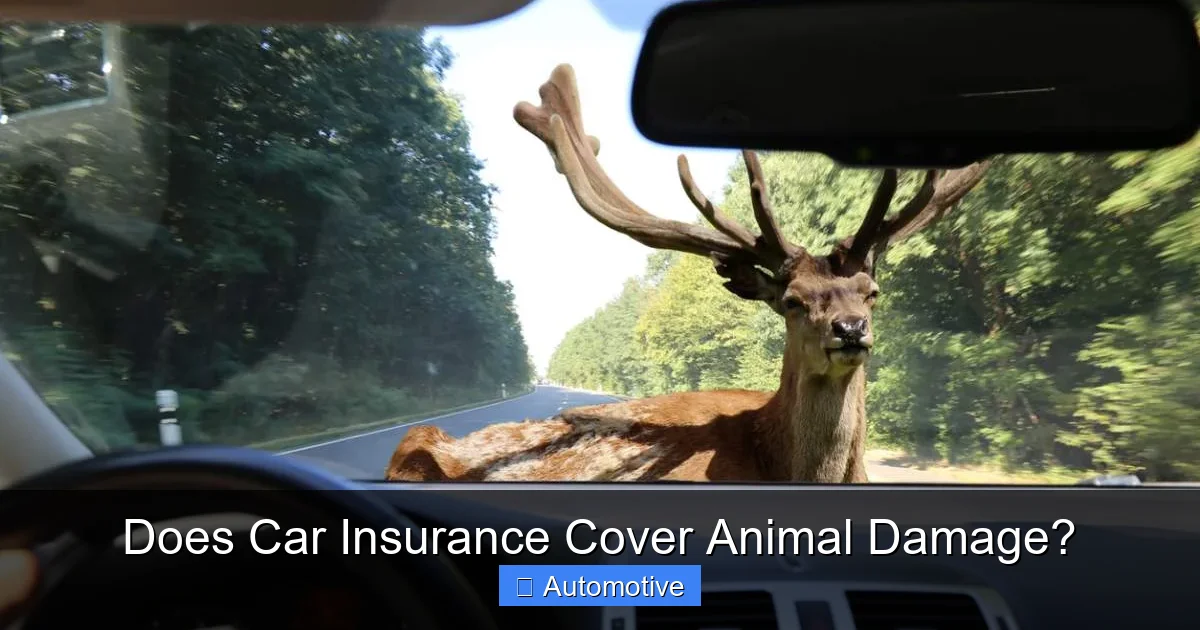
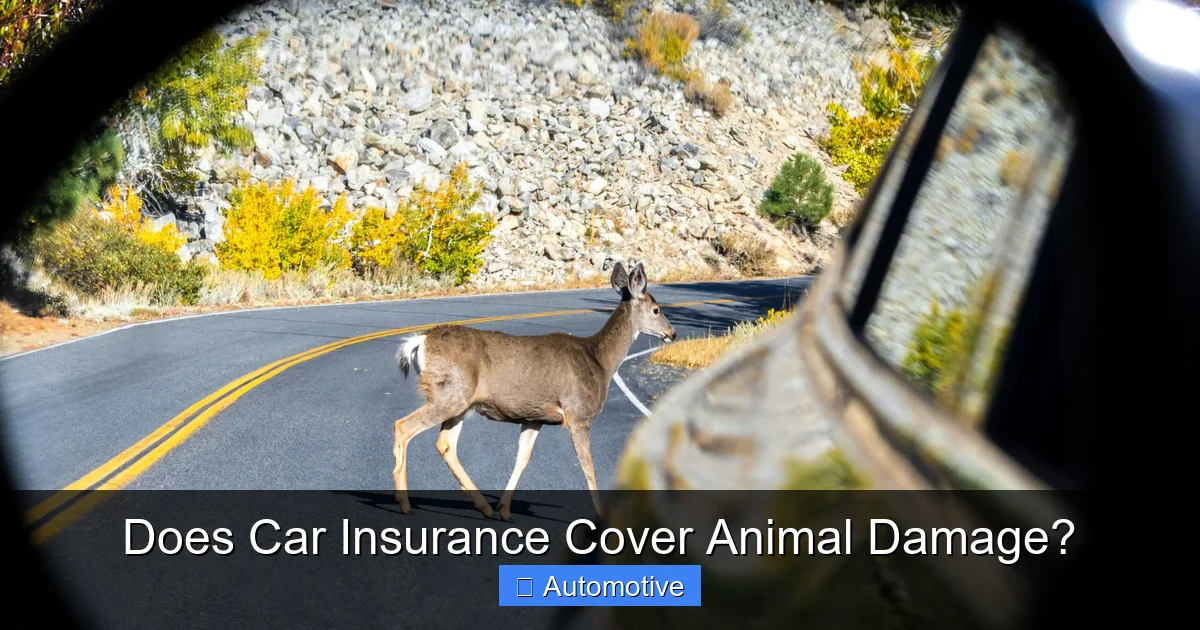
Deer are by far the most common cause of animal-related car damage. According to State Farm, deer-vehicle collisions peak in October and November during mating season, with over 200,000 reported incidents annually in the U.S. alone.
If you hit a deer, comprehensive coverage will pay for repairs to your bumper, hood, headlights, windshield, and any other damaged parts. In some cases, the impact can total the vehicle, especially if it causes severe structural damage.
Small Animals and Wildlife
It’s not just big animals that cause problems. Smaller creatures like raccoons, squirrels, opossums, and even birds can lead to costly damage.
For instance, a raccoon might chew through your car’s wiring under the hood, causing electrical issues. Or a squirrel could nest in your engine bay and damage hoses and belts. These types of damage are also covered under comprehensive insurance, as they’re considered “animal-related” and not due to normal wear and tear.
Even birds can cause problems. A bird flying into your windshield might crack or shatter it, and comprehensive coverage will pay for the replacement—again, minus your deductible.
Domestic Animals and Pets
What if your neighbor’s dog jumps into the road and you hit it? Or a cat darts out from between parked cars?
In most cases, comprehensive coverage will still apply. The key factor is whether the damage was caused by an animal and not by another driver’s negligence. If the animal was loose and you had no control over the situation, your comprehensive policy should cover the repairs.
However, if the animal’s owner was negligent (e.g., they let their dog run loose in a busy area), you might also have a claim against their homeowner’s or renter’s insurance. But for vehicle repairs, your comprehensive coverage is still the primary source of payment.
Indirect Damage from Avoiding Animals
Sometimes, the damage isn’t from hitting the animal—but from trying to avoid it.
For example, you might swerve to miss a deer and end up hitting a fence, rolling your car, or damaging your suspension. In these cases, the damage is still considered related to the animal encounter, and comprehensive coverage typically applies.
However, if you lose control and hit another vehicle, collision coverage may also come into play. Your insurer will assess the situation and determine which part of your policy covers which damages.
What Animal Damage Is NOT Covered?
While comprehensive coverage is broad, it’s not unlimited. There are some situations where animal damage may not be covered—or where coverage is limited.
Animals on Your Property
If an animal causes damage to your car while it’s parked on your driveway or in your garage, comprehensive coverage usually still applies. For example, if a raccoon breaks into your parked car and tears up the interior, your insurance should cover the repairs.
However, if the damage occurs on private property and involves a domestic animal (like your own dog chewing the seats), some insurers may deny the claim, arguing that it’s preventable or due to owner negligence.
Gradual or Wear-and-Tear Damage
Comprehensive coverage doesn’t pay for gradual damage caused by animals over time. For instance, if mice chew through your wiring little by little over several months, and you don’t notice until your car won’t start, the insurer may deny the claim.
Why? Because comprehensive insurance is designed for sudden, accidental events—not slow, ongoing damage that could have been prevented with regular maintenance.
Animals You Intentionally Interact With
If you deliberately hit an animal—say, you swerve to hit a raccoon out of anger—your claim could be denied. Insurance companies expect drivers to act responsibly, and intentional damage is not covered under any policy.
Similarly, if you’re involved in illegal activity (like poaching) and get into an accident, your insurer may refuse to pay.
Exclusions in Your Policy
Always read your policy carefully. Some insurers may have specific exclusions for certain types of animals or situations. For example, a policy might exclude damage from insects or rodents unless it’s part of a larger event (like a flood that drives animals into your car).
If you’re unsure, ask your agent for clarification. It’s better to know upfront than to be surprised when you file a claim.
How to File a Claim for Animal Damage
If you’ve been in an animal-related accident, knowing how to file a claim quickly and correctly can make the process much smoother.
Here’s a step-by-step guide:
1. Ensure Safety First
Before doing anything else, make sure you and your passengers are safe. Pull over to a secure location if possible. If the animal is still alive and in the road, do not approach it—especially if it’s a large animal like a deer, which can be dangerous even when injured.
Call 911 if there are injuries or if the animal is blocking traffic.
2. Document the Scene
Take photos of the damage to your vehicle, the location, and any visible animals (if safe to do so). Include wide shots of the area and close-ups of the damage. This evidence will help support your claim.
If there are witnesses, get their contact information.
3. Report the Incident
Contact your insurance company as soon as possible. Most insurers allow you to file a claim online, through a mobile app, or by phone.
Be ready to provide:
– Your policy number
– Date, time, and location of the incident
– Description of what happened
– Photos and any witness information
4. Get a Repair Estimate
Your insurer will likely ask you to take your car to a certified repair shop for an estimate. Some companies have preferred shops, while others let you choose.
Once the estimate is approved, repairs can begin.
5. Pay Your Deductible
Remember, you’ll need to pay your comprehensive deductible before insurance covers the rest. If your deductible is $500 and repairs cost $3,000, you pay $500, and the insurer pays $2,500.
6. Follow Up
Stay in touch with your insurer and repair shop to track progress. Once repairs are complete, inspect the work to ensure everything is done correctly.
Tips to Prevent Animal-Related Car Damage
While insurance can help after the fact, prevention is always better than repair. Here are some practical tips to reduce your risk of animal collisions:
Drive Cautiously in High-Risk Areas
Be extra vigilant in rural areas, near forests, or in regions known for wildlife. Deer are most active at dawn and dusk, so slow down during these times.
Look for animal crossing signs—they’re there for a reason.
Use High Beams When Safe
High beams can help you spot animals earlier, especially on dark, unlit roads. Just be sure to dim them for oncoming traffic.
Install Animal Deterrents
Consider adding reflective tape, deer whistles, or ultrasonic repellents to your vehicle. While their effectiveness is debated, some drivers swear by them.
You can also install a bull bar or grille guard to protect your front end from impact damage.
Keep Your Distance
If you see an animal near the road, slow down and give it space. Animals often travel in groups—so if you see one deer, others may be close behind.
Stay Alert and Avoid Distractions
Put down your phone, avoid eating while driving, and keep your eyes on the road. Even a few seconds of distraction can mean the difference between avoiding an animal and hitting it.
Consider Comprehensive Coverage
If you don’t already have it, adding comprehensive coverage is one of the best ways to protect yourself financially. The average cost is around $150–$300 per year—far less than a single animal collision repair.
Frequently Asked Questions About Animal Damage and Insurance
Does liability insurance cover animal damage?
No, liability insurance only covers damage you cause to other people’s property or injuries to others. It does not cover damage to your own vehicle, including animal collisions.
Visual guide about Does Car Insurance Cover Animal Damage?
Image source: consumercoverage.com
Visual guide about Does Car Insurance Cover Animal Damage?
Image source: wawanesa.com
Visual guide about Does Car Insurance Cover Animal Damage?
Image source: lemonade.com
Will my premium go up if I file an animal damage claim?
It depends on your insurer and policy. Some companies treat animal damage as a “no-fault” claim and won’t raise your rates, while others may increase premiums, especially if you have multiple claims.
Can I claim damage from animals chewing my car’s wiring?
Yes, if the damage is sudden and unexpected, comprehensive coverage typically applies. However, gradual damage from pests may not be covered.
What if I hit a protected or endangered animal?
You should still report the incident to your insurer and local wildlife authorities. Your comprehensive coverage will likely pay for vehicle repairs, but you may also face legal consequences depending on local laws.
Do I need to report a small animal collision?
If there’s no damage, you don’t need to report it. But if your car is damaged—even slightly—it’s best to file a claim to avoid paying out of pocket.
Can I sue the animal’s owner for damages?
In rare cases, yes—especially if the animal was a pet that escaped due to owner negligence. But for wild animals, you generally cannot sue, so insurance is your best option.
Final Thoughts: Protect Your Vehicle and Your Wallet
Animal damage is a real and costly risk for drivers across the country. Whether it’s a deer on a backroad or a raccoon in your engine, these incidents can leave you with expensive repairs and a lot of stress.
The good news? Car insurance can cover animal damage—if you have comprehensive coverage. This optional but highly recommended protection gives you peace of mind and financial security when the unexpected happens.
By understanding your policy, knowing what’s covered, and taking steps to prevent collisions, you can drive with confidence—no matter what the road throws your way.
So, the next time you see a deer crossing sign, remember: it’s not just a warning. It’s a reminder to stay alert, drive safely, and make sure your insurance has your back.
Frequently Asked Questions
Does car insurance cover damage from hitting a deer?
Yes, if you have comprehensive coverage. This type of policy covers collisions with animals like deer, even if the damage is extensive. You’ll pay your deductible, and the insurer covers the rest.
Will my insurance pay if a squirrel damages my car’s wiring?
Possibly. If the damage is sudden and unexpected—like a squirrel chewing through wires in one night—comprehensive coverage may apply. However, gradual damage over time might not be covered.
What should I do immediately after hitting an animal?
First, ensure everyone is safe. Then document the scene with photos, report the incident to your insurer, and get a repair estimate. Do not leave the scene without reporting it if there’s significant damage.
Can I file a claim if I swerve to avoid an animal and crash?
Yes. Even if you don’t hit the animal, damage from swerving—like hitting a fence or rolling your car—is typically covered under comprehensive insurance as an animal-related incident.
Do I need comprehensive coverage if I live in the city?
It’s still a good idea. While rural areas have more wildlife, city drivers can still encounter raccoons, birds, or even stray dogs. Comprehensive coverage protects against a wide range of non-collision risks.
How much does comprehensive coverage cost?
On average, comprehensive coverage costs between $150 and $300 per year, depending on your location, vehicle, and deductible. It’s a small price to pay for protection against costly animal damage.