
Does Car Insurance Affect Credit Score

Car insurance doesn’t directly affect your credit score, but the two are closely linked. Insurers often check your credit-based insurance score when setting rates, and unpaid premiums can hurt your credit if sent to collections. Understanding this relationship helps you make smarter financial decisions.
Key Takeaways
- Car insurance doesn’t report payments to credit bureaus: Unlike loans or credit cards, insurers don’t typically report on-time or late payments to Equifax, Experian, or TransUnion.
- Insurers use credit-based insurance scores: Most states allow insurers to consider your credit history (not your actual credit score) when determining premiums and eligibility.
- Poor credit can increase your rates: Drivers with lower credit-based insurance scores often pay significantly more for coverage—sometimes hundreds of dollars extra per year.
- Unpaid premiums may hurt your credit: If you fail to pay your bill and the account goes to collections, that negative mark can appear on your credit report and lower your score.
- Shopping for insurance can trigger soft inquiries: Comparing quotes usually results in soft credit checks, which don’t impact your credit score.
- Improving your credit saves money: Boosting your credit health over time can lead to lower car insurance premiums and better policy options.
- State laws vary: Some states (like California, Hawaii, and Massachusetts) restrict or ban the use of credit in insurance pricing.
📑 Table of Contents
- Does Car Insurance Affect Credit Score? The Real Connection Explained
- How Insurers Use Credit-Based Insurance Scores
- States That Limit or Ban Credit-Based Insurance Scoring
- How to Protect Your Credit and Lower Your Insurance Costs
- Myths vs. Facts: Clearing Up Common Misconceptions
- Conclusion: Stay Informed, Stay Protected
Does Car Insurance Affect Credit Score? The Real Connection Explained
You’ve probably heard that paying your bills on time helps your credit score—but what about your car insurance? It’s a common question, especially when you’re trying to budget for monthly expenses or improve your financial standing. The short answer? Car insurance itself doesn’t directly affect your credit score. But the relationship between the two is more intertwined than you might think.
Unlike credit cards, student loans, or mortgages, car insurance companies generally don’t report your payment history—good or bad—to the three major credit bureaus (Equifax, Experian, and TransUnion). That means paying your premium on time won’t boost your credit score, and missing a payment won’t automatically ding it… unless things go seriously wrong. If you ignore your bill and the insurer sends your account to a collections agency, that delinquency *can* end up on your credit report and hurt your score.
But here’s where it gets interesting: while car insurance doesn’t report to credit bureaus, your credit history *does* influence your car insurance. Most insurers use something called a “credit-based insurance score” to help determine how much you’ll pay for coverage. This score is derived from your credit report but isn’t the same as your FICO or VantageScore. It’s a specialized metric designed to predict how likely you are to file a claim.
So while your car insurance premium won’t show up on your credit report, your credit habits can absolutely impact how much you pay for coverage. Understanding this dynamic is key to managing both your finances and your auto insurance costs effectively.
How Insurers Use Credit-Based Insurance Scores

Visual guide about Does Car Insurance Affect Credit Score
Image source: images.ctfassets.net
When you apply for car insurance—or when your policy renews—most insurers will pull a credit-based insurance score. This isn’t your standard credit score, though it’s built using similar data from your credit report. Think of it as a tailored version designed specifically for predicting insurance risk.
What Goes Into a Credit-Based Insurance Score?
Insurance scores typically consider factors like:
– Payment history (do you pay bills on time?)
– Credit utilization (how much of your available credit are you using?)
– Length of credit history
– Types of credit accounts (credit cards, loans, etc.)
– Recent credit inquiries
Interestingly, these scores focus less on your income or employment status and more on your financial responsibility patterns. The logic? People who manage their finances well are statistically less likely to file frequent or costly insurance claims.
For example, a driver with a long history of on-time payments, low credit card balances, and a mix of credit types might receive a high insurance score—and qualify for lower premiums. On the flip side, someone with late payments, maxed-out cards, or a short credit history may be seen as higher risk and charged more.
Why Do Insurers Care About Credit?
You might wonder: why should your credit history matter when it comes to car accidents or theft? The answer lies in decades of actuarial data. Studies consistently show a correlation between credit behavior and insurance claims. Drivers with poor credit-based insurance scores file more claims and cost insurers more money over time.
This doesn’t mean people with bad credit are worse drivers—it’s about statistical risk, not personal judgment. Insurers use this data to price policies more accurately across large groups. In most states (except those with restrictions), this practice is legal and widely accepted.
Real-World Impact: How Much Can Credit Affect Your Rate?
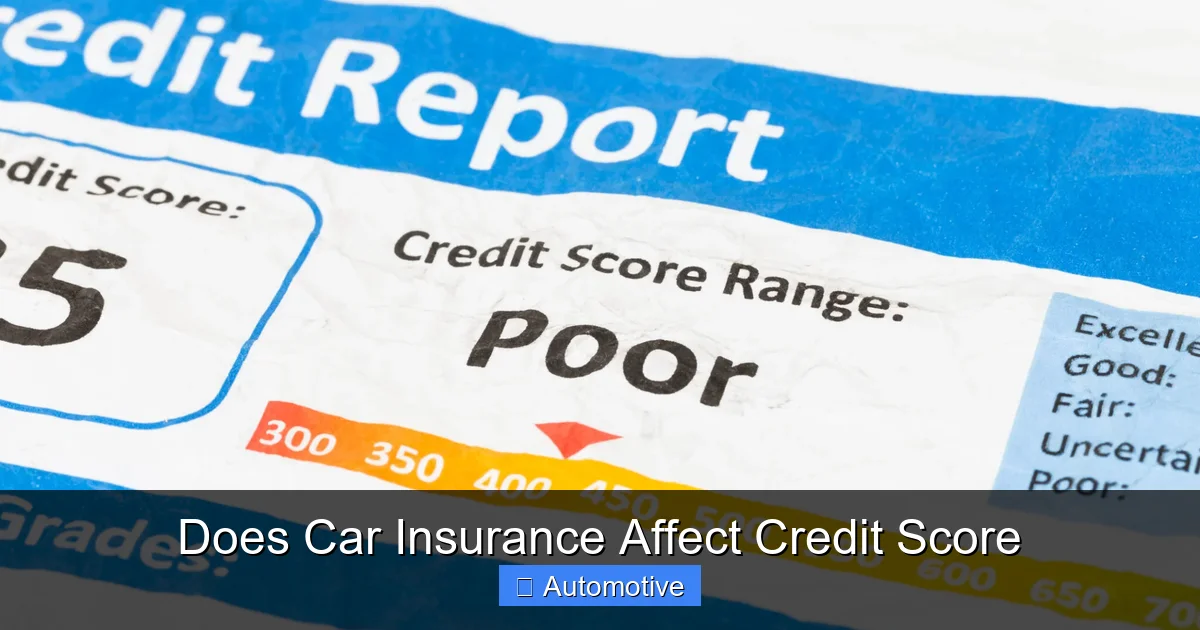
The difference in premiums between drivers with excellent and poor credit can be staggering. According to a 2023 study by Consumer Reports, drivers with poor credit could pay up to **$1,300 more per year** for the same coverage as someone with excellent credit—even if they have a clean driving record.
Let’s say two drivers in Ohio both drive a 2020 Honda Civic, live in the same ZIP code, and have no accidents or tickets. One has a credit-based insurance score in the “excellent” range; the other is in the “poor” category. The driver with poor credit might pay $2,800 annually, while the one with excellent credit pays just $1,500. That’s a $1,300 difference—just because of credit history.
This gap exists across nearly all major insurers, including State Farm, GEICO, Progressive, and Allstate. While some companies weigh credit more heavily than others, it’s a universal factor in most states.
Visual guide about Does Car Insurance Affect Credit Score
Image source: maifinsuranceonline.com
Not all states allow insurers to use credit information when setting rates. Consumer advocates have long argued that credit-based insurance scoring disproportionately affects low-income and minority communities, leading several states to impose restrictions.
States with Full or Partial Bans
As of 2024, the following states **prohibit or severely limit** the use of credit in car insurance pricing:
– **California**: Banned in 1989. Insurers cannot use credit history to determine rates, eligibility, or renewals.
– **Hawaii**: Prohibits the use of credit in setting premiums.
– **Massachusetts**: Bans credit-based insurance scoring for auto policies.
In these states, insurers must rely solely on driving record, vehicle type, location, and other non-credit factors. This levels the playing field for drivers regardless of their financial history.
States with Partial Restrictions
Other states have implemented rules to reduce the impact of credit:
– **Washington**: Limits how much weight insurers can give to credit history.
– **Oregon**: Requires insurers to justify rate differences based on credit and allows consumers to request an explanation.
– **New York**: Bans the use of credit for initial policy approval but allows it for renewals.
Even in states without bans, some insurers choose not to use credit scoring. For example, USAA (which serves military members and their families) does not use credit-based insurance scores, focusing instead on driving behavior and loyalty.
What This Means for Consumers
If you live in a state with restrictions, you may already be benefiting from fairer pricing. But if you’re in a state that allows credit-based scoring, it’s even more important to monitor and improve your credit health. A better credit profile can translate directly into lower insurance costs.
How to Protect Your Credit and Lower Your Insurance Costs

Visual guide about Does Car Insurance Affect Credit Score
Image source: media.consumeraffairs.com
The good news? You have control over both your credit and your insurance premiums. By taking proactive steps, you can improve your financial standing and save money on car insurance.
Monitor Your Credit Report Regularly
Start by checking your credit report at least once a year—free at AnnualCreditReport.com. Look for errors, such as accounts you don’t recognize or incorrect late payments. Dispute any inaccuracies with the credit bureau. Even small errors can drag down your insurance score.
Pay Bills on Time, Every Time
Payment history is the biggest factor in both your credit score and your insurance score. Set up automatic payments or calendar reminders to avoid missing due dates—not just for credit cards, but for utilities, rent, and subscriptions too.
Keep Credit Utilization Low
Aim to use less than 30% of your available credit, and ideally under 10%. High credit card balances signal financial stress and can lower your insurance score. Pay down balances aggressively, especially before shopping for insurance.
Shop Around for Insurance Annually
Insurance companies change their pricing models frequently. What was a great deal last year might not be this year. Get quotes from at least three insurers every 12 months. Most quote processes involve only a “soft” credit check, which doesn’t affect your score.
Ask About Discounts
Many insurers offer discounts for things like:
– Bundling home and auto policies
– Maintaining a good driving record
– Completing defensive driving courses
– Installing anti-theft devices
These can offset higher base rates due to credit.
Consider Usage-Based Insurance
Programs like Progressive’s Snapshot or Allstate’s Drivewise track your driving habits (mileage, braking, time of day) via a mobile app or device. Safe drivers can earn significant discounts—sometimes up to 30%—regardless of credit.
Work on Long-Term Credit Health
If your credit is poor, focus on rebuilding it over time. Pay down debt, avoid new credit applications unless necessary, and consider a secured credit card if you’re starting from scratch. As your credit improves, so will your insurance options.
Myths vs. Facts: Clearing Up Common Misconceptions
There’s a lot of confusion around car insurance and credit. Let’s bust some myths with the facts.
Myth: Paying your car insurance on time builds your credit.
Fact: Most insurers don’t report payments to credit bureaus, so timely payments won’t help your score. Only if the account goes to collections will it appear—and that’s negative.
Myth: All insurers check your credit score.
Fact: While most do, some (like USAA) don’t use credit at all. Also, in states like California, it’s illegal.
Myth: Your actual FICO score is used to set insurance rates.
Fact: Insurers use a credit-based insurance score, which is different. It’s based on your credit report but weighted differently to predict claim risk.
Myth: You can’t get car insurance with bad credit.
Fact: You can still get coverage, but it will likely cost more. Some insurers specialize in high-risk drivers, though premiums may be steep.
Myth: Shopping for insurance hurts your credit.
Fact: Quote checks are usually soft inquiries, which don’t affect your score. Only a “hard” inquiry (like applying for a loan) does.
Conclusion: Stay Informed, Stay Protected
So, does car insurance affect your credit score? Not directly—but the two are deeply connected through credit-based insurance scoring and the risk of unpaid bills going to collections. While your premium payments won’t show up on your credit report, your credit history plays a major role in how much you pay for coverage.
The best strategy? Treat your credit like a financial asset. Pay bills on time, keep debt low, and monitor your reports. At the same time, shop around for insurance regularly and take advantage of discounts. By managing both your credit and your coverage wisely, you can save hundreds—or even thousands—of dollars over time.
Remember, knowledge is power. Now that you understand the link between car insurance and credit, you’re better equipped to make smart decisions that protect both your wallet and your financial future.
Frequently Asked Questions
Does paying car insurance on time improve my credit score?
No, car insurance companies typically don’t report payment history to credit bureaus, so on-time payments won’t boost your score. Only if the account goes to collections will it appear—and that’s negative.
Can I get car insurance if I have bad credit?
Yes, you can still get coverage, but you may pay higher premiums. Some insurers specialize in high-risk drivers, though rates can be significantly more expensive.
Do all states allow insurers to use credit in pricing?
No. California, Hawaii, and Massachusetts ban the practice entirely. Other states have partial restrictions or require transparency in how credit is used.
Will shopping for car insurance quotes hurt my credit?
No, most quote checks are soft inquiries, which don’t affect your credit score. Only hard inquiries (like applying for a loan) can lower your score.
How much can bad credit increase my car insurance rates?
Depending on the state and insurer, drivers with poor credit can pay $500 to $1,300 more per year than those with excellent credit—even with a clean driving record.
What should I do if my insurance bill goes to collections?
Contact the collections agency immediately to pay the debt or set up a payment plan. Once resolved, request a “paid in full” notation, though the account may remain on your report for up to seven years.