
Can You Drive a Right-hand-drive Car in the Us?

Yes, you can legally drive a right-hand-drive (RHD) car in the United States. While uncommon, RHD vehicles are allowed if they meet federal and state safety standards. Many enthusiasts import classic Japanese imports or unique models like the Nissan Skyline or Toyota Hilux.
Key Takeaways
- Legal to drive: Right-hand-drive cars are legal in the US if they comply with DOT and EPA regulations, especially if 25 years or older.
- Import rules apply: Vehicles under 25 years old must meet strict federal safety and emissions standards to be imported legally.
- State registration varies: Some states require additional inspections or documentation, so check local DMV rules before registering an RHD vehicle.
- Insurance is possible: Most major insurers cover RHD cars, though premiums may be higher due to rarity and repair costs.
- Driving challenges exist: Visibility at intersections, highway merging, and parking can be trickier due to the reversed driver position.
- Popular RHD models: Classics like the Nissan Skyline GT-R, Toyota Supra MKIV, and Subaru Impreza WRX STI are favorites among US enthusiasts.
- Community support: Online forums and clubs offer advice, parts sourcing, and event opportunities for RHD owners.
📑 Table of Contents
- Can You Drive a Right-Hand-Drive Car in the US?
- Are Right-Hand-Drive Cars Legal in the US?
- How to Import a Right-Hand-Drive Car to the US
- Driving a Right-Hand-Drive Car: What to Expect
- Insurance and Maintenance for RHD Cars
- Popular Right-Hand-Drive Cars in the US
- The RHD Community in the US
- Conclusion: Is an RHD Car Right for You?
Can You Drive a Right-Hand-Drive Car in the US?
So, you’ve seen those sleek Japanese imports tearing up the streets in movies or spotted a quirky British Mini driving down the highway—and now you’re wondering: Can you actually drive a right-hand-drive (RHD) car in the United States?
The short answer? Yes. But like most things in life, it’s not quite that simple.
Right-hand-drive vehicles—where the steering wheel is on the right side of the car—are common in countries like Japan, the UK, Australia, and India. In the US, where we drive on the right side of the road and sit on the left, RHD cars are rare but not illegal. In fact, thousands of RHD vehicles are legally registered and driven across the country every day.
From classic Nissan Skylines to rugged Toyota Land Cruisers, RHD cars have a passionate following in the US. Whether you’re a car enthusiast, an import fan, or just love something different, owning and driving an RHD car is absolutely possible—if you do it the right way.
But before you start dreaming of cruising in a left-hand-drive-free zone, there are rules, regulations, and practical considerations to understand. This guide will walk you through everything you need to know about driving a right-hand-drive car in the US, from legality and import laws to safety, insurance, and real-world driving tips.
Are Right-Hand-Drive Cars Legal in the US?

Visual guide about Can You Drive a Right-hand-drive Car in the Us?
Image source: westernfinancialgroup.ca
Yes, right-hand-drive cars are legal to drive in the United States—but only if they meet certain federal and state requirements.
The key factor is compliance with U.S. Department of Transportation (DOT) and Environmental Protection Agency (EPA) standards. These agencies regulate vehicle safety, emissions, and importation. If a vehicle meets these standards, it can be legally imported, registered, and driven on public roads.
However, the big exception—and the one that makes RHD cars more accessible to enthusiasts—is the “25-year rule.”
The 25-Year Rule: Your Golden Ticket
Under the DOT’s Imported Vehicle Safety Compliance Act, vehicles that are 25 years or older are exempt from federal safety and emissions standards. This means you can import and register a 1998 Nissan Skyline GT-R today without having to modify it to meet modern U.S. standards.
This rule was created to allow classic and historic vehicles into the country without costly retrofitting. It’s the reason why so many Japanese domestic market (JDM) cars—like the Toyota Supra MKIV, Mazda RX-7, and Honda NSX—have found homes in the U.S. over the past two decades.
So, if you’re eyeing a 1999 Mitsubishi Lancer Evolution VI or a 1995 Subaru Impreza WRX STI, you’re in luck. These cars are now legal to import and drive without major modifications.
Newer RHD Cars: The Challenges
If the car you want is less than 25 years old, the process gets more complicated. Newer RHD vehicles must meet current U.S. safety and emissions standards to be legally imported. This includes things like:
– Dual airbags
– Anti-lock braking systems (ABS)
– Electronic stability control (ESC)
– Specific bumper and crash-test ratings
– EPA-compliant emissions systems
Very few modern RHD cars meet these standards out of the box. For example, a brand-new Nissan GT-R (R35) is actually left-hand-drive in the U.S., but the RHD version sold in Japan does not comply with U.S. regulations. Importing it would require expensive modifications—if it’s even possible.
Some companies offer “federalization” services, where they modify RHD cars to meet U.S. standards. But these services can cost tens of thousands of dollars, often making the car more expensive than a domestic equivalent.
How to Import a Right-Hand-Drive Car to the US

Visual guide about Can You Drive a Right-hand-drive Car in the Us?
Image source: carawareness.com
Importing an RHD car isn’t as simple as hopping on a plane and driving it home. It involves paperwork, fees, and coordination with multiple agencies.
Here’s a step-by-step breakdown of the process:
Step 1: Choose a Compliant Vehicle
First, decide whether you’re going for a classic (25+ years old) or a newer model. If it’s under 25, research whether it can be legally imported. The DOT and EPA maintain lists of eligible vehicles, and you can also consult import specialists.
Popular RHD imports include:
– Nissan Skyline GT-R (R32, R33, R34)
– Toyota Supra MKIV (A80)
– Mazda RX-7 (FD3S)
– Subaru Impreza WRX STI (GC8, GD)
– Honda NSX (NA1, NA2)
– Toyota Land Cruiser (J80, J100)
These models are not only iconic but also widely supported by the U.S. import community.
Step 2: Work with a Registered Importer (RI)
For vehicles under 25 years old, you’ll likely need a Registered Importer (RI). These are companies certified by the DOT to modify and certify foreign vehicles for U.S. compliance.
RIs handle the technical work—like installing U.S.-spec lighting, emissions controls, and safety features—and provide the necessary documentation for registration.
Be prepared for costs: federalization can range from $10,000 to $30,000 or more, depending on the vehicle.
Step 3: Handle Shipping and Customs
Once you’ve purchased the car (often through an auction or dealer in Japan or the UK), you’ll need to ship it to the U.S. This typically involves:
– Hiring a freight forwarder
– Paying shipping fees (usually $1,500–$3,000)
– Clearing customs at the port of entry
You’ll need to provide:
– Bill of sale
– Original title or export certificate
– EPA Form 3520-1 (for emissions)
– DOT Form HS-7 (for safety)
Customs will inspect the vehicle and verify compliance. If everything checks out, you’ll receive a customs release.
Step 4: Register and Title the Vehicle
After the car arrives, you’ll need to register it with your state’s Department of Motor Vehicles (DMV). Requirements vary by state, but generally include:
– Proof of ownership
– Customs release documents
– EPA and DOT compliance paperwork (if applicable)
– Vehicle identification number (VIN) verification
– Emissions and safety inspections (in some states)
Some states, like California, have stricter rules. California requires all vehicles to meet its own emissions standards, even if they’re 25 years old. This can make registering certain RHD cars difficult.
Driving a Right-Hand-Drive Car: What to Expect
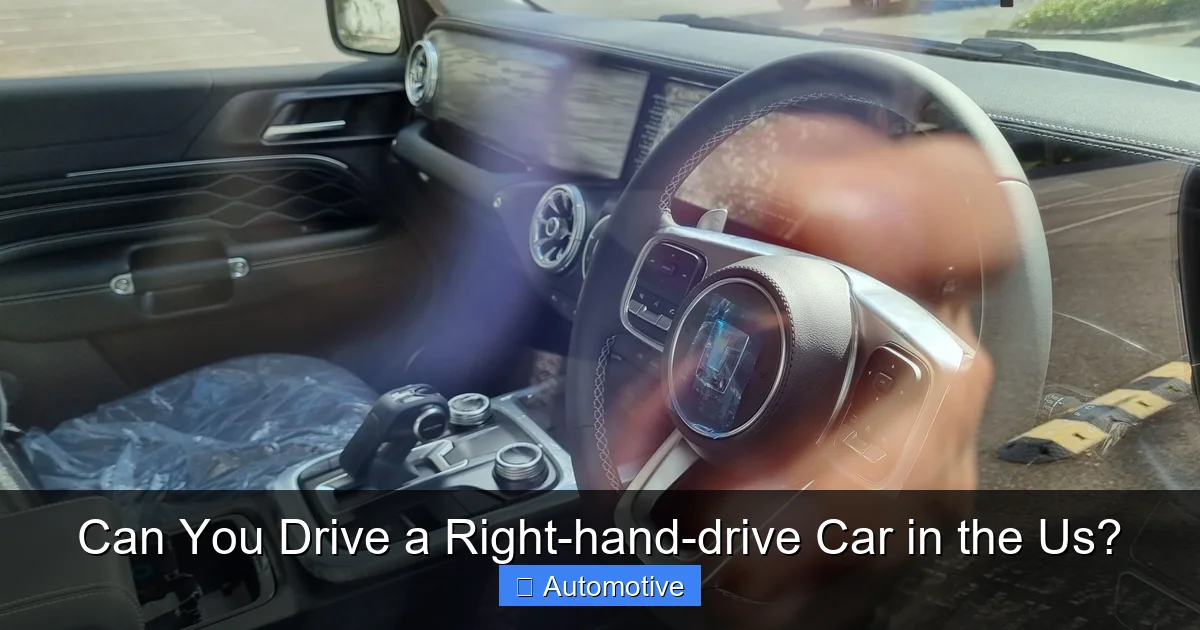
Visual guide about Can You Drive a Right-hand-drive Car in the Us?
Image source: images.carexpert.com.au
So, you’ve got your RHD car registered and insured. Now comes the fun part—driving it.
But be warned: driving an RHD car in a left-hand-drive world takes some adjustment. Here’s what you need to know.
Visibility and Blind Spots
One of the biggest challenges is visibility. In a left-hand-drive car, you sit closer to the center of the road, giving you a better view of oncoming traffic, especially when turning left or merging.
In an RHD car, you’re on the right side, which can make it harder to see around corners, over hills, or when pulling out of driveways.
For example, when making a left turn at an intersection, you’ll need to lean forward to see past the A-pillar and get a clear view of cross-traffic. This takes practice.
Highway Driving and Merging
On highways, merging can be tricky. In the U.S., you typically merge from the right, and being on the right side of the car means you’re farther from the center line.
This can make it harder to judge gaps in traffic, especially when accelerating from an on-ramp. You’ll need to rely more on mirrors and shoulder checks.
Some drivers install additional mirrors or use blind-spot monitoring systems to help.
Parking and Toll Booths
Parking can also be a challenge. When parallel parking, you’re farther from the curb, which makes it harder to judge distance. You might find yourself scraping curbs or overcorrecting.
Toll booths are another headache. Most toll lanes are designed for left-hand-drive vehicles, so you’ll need to reach across the passenger seat to pay—or use electronic toll systems like E-ZPass.
Fuel and Drive-Thrus
Gas stations and drive-thrus are built for left-hand drivers. You’ll need to pull up on the opposite side of the pump or window, which can be awkward.
Some RHD owners get creative—like using a long fuel nozzle extension or practicing “reverse drive-thru” maneuvers.
Tips for New RHD Drivers
– Practice in empty parking lots first.
– Use convex mirrors to improve side visibility.
– Install a dashboard camera for extra awareness.
– Take a defensive driving course to build confidence.
– Join an RHD car club for tips and support.
Insurance and Maintenance for RHD Cars
Owning an RHD car isn’t just about driving—it’s also about keeping it insured and maintained.
Insurance Options
Yes, you can insure an RHD car in the U.S. Most major insurers—like Geico, State Farm, and Progressive—offer coverage for imported vehicles.
However, premiums may be higher due to:
– Rarity of the vehicle
– Higher repair costs
– Limited availability of parts
– Perceived higher risk
Be prepared to provide detailed documentation, including import papers, photos, and vehicle history. Some insurers may require an appraisal for classic or high-value cars.
Maintenance and Repairs
Maintenance can be more challenging for RHD cars, especially JDM models. Parts may be harder to find, and not all mechanics are familiar with these vehicles.
Here are some tips:
– Find a specialist mechanic who works on Japanese or European imports.
– Join online forums (like NICOclub, SilviaForum, or Reddit’s r/JDM) for advice and parts sourcing.
– Order parts directly from Japan or the UK using services like BeForward or Japanese Nostalgic Car.
– Keep a stock of common wear items (spark plugs, filters, belts).
Some RHD owners even learn to do their own repairs to save money and stay connected to their cars.
Resale Value
RHD cars can hold their value well, especially rare or iconic models. The Nissan Skyline GT-R, for example, has seen significant appreciation in recent years.
However, resale can be slower due to the niche market. Be prepared to wait for the right buyer—or consider keeping the car as a long-term investment.
Popular Right-Hand-Drive Cars in the US
Not all RHD cars are created equal. Some are more practical, popular, or easier to own than others.
Here are some of the most sought-after RHD models in the U.S.:
Nissan Skyline GT-R (R32, R33, R34)
Known as “Godzilla,” the Skyline GT-R is a legend. With its twin-turbo inline-6 engine and advanced all-wheel-drive system, it’s a performance icon.
The R34, in particular, is highly collectible. Prices have skyrocketed, with clean examples selling for $80,000–$150,000 or more.
Toyota Supra MKIV (A80)
The 1993–2002 Toyota Supra, especially the twin-turbo model, is a favorite among tuners and collectors. Its 2JZ engine is legendary for its durability and tuning potential.
RHD versions are legal under the 25-year rule and are increasingly popular.
Mazda RX-7 (FD3S)
The RX-7 is a lightweight, rotary-powered sports car with incredible handling. The FD3S (1992–2002) is the most desirable model.
Rotary engines require special care, but the driving experience is unmatched.
Subaru Impreza WRX STI (GC8, GD)
The STI is a rally-bred performance car with a turbocharged boxer engine and all-wheel drive. The GC8 (1992–2000) and GD (2001–2007) models are popular imports.
They’re more practical than the Skyline or Supra, with four doors and usable rear seats.
Toyota Land Cruiser (J80, J100)
For off-road enthusiasts, the RHD Land Cruiser is a beast. These trucks are known for their durability and capability.
The J80 (1990–1997) and J100 (1998–2007) are common imports, often used as overland rigs.
The RHD Community in the US
You’re not alone. There’s a thriving community of RHD car owners and enthusiasts across the country.
Clubs and Events
Joining a club can make ownership easier and more fun. Groups like:
– Japanese Nostalgic Car (JNC)
– Grassroots Motorsports
– Local JDM car meets
These communities offer:
– Technical advice
– Parts swaps
– Group buys
– Track days and car shows
Online Resources
Websites and forums are invaluable for RHD owners. Some top resources include:
– JDM Expo (events and news)
– Import Image (photography and culture)
– NICOclub (Nissan/Infiniti forums)
– SilviaForum (Nissan S-chassis)
These platforms help you stay informed, find parts, and connect with other owners.
Social Media and YouTube
Follow RHD-focused channels on YouTube, like:
– TheSmokingTire
– Mighty Car Mods
– Hoonigan
They often feature RHD builds, drives, and reviews.
Instagram and TikTok are also great for discovering RHD content and local car scenes.
Conclusion: Is an RHD Car Right for You?
So, can you drive a right-hand-drive car in the US? Absolutely.
With the 25-year rule, passionate communities, and growing appreciation for Japanese and European imports, RHD ownership is more accessible than ever.
But it’s not for everyone. You’ll face challenges with visibility, parking, and maintenance. Insurance and registration can be complex, and parts may be hard to find.
However, if you’re a car enthusiast who values uniqueness, performance, and driving purity, an RHD car can be a rewarding investment.
Whether you’re chasing the dream of a Nissan Skyline GT-R or just want a quirky Toyota MR2, the journey is part of the fun.
Just remember: do your research, follow the rules, and enjoy the ride—on the right side.
Frequently Asked Questions
Can I legally drive a right-hand-drive car in the US?
Yes, you can legally drive a right-hand-drive car in the US if it meets federal safety and emissions standards or is 25 years or older. Vehicles over 25 years old are exempt from modern compliance rules under the DOT’s 25-year rule.
Do I need special insurance for an RHD car?
No, you don’t need special insurance, but coverage may cost more due to the car’s rarity and repair complexity. Most major insurers will cover RHD vehicles with proper documentation.
Can I import a brand-new right-hand-drive car?
It’s very difficult. New RHD cars must meet strict U.S. safety and emissions standards, which few foreign models satisfy. You’d likely need a Registered Importer to modify the car, which can be expensive.
Are RHD cars harder to drive in the US?
Yes, they can be. Visibility at intersections, merging on highways, and parking require extra attention due to the reversed driver position. Practice and awareness help ease the adjustment.
What’s the best RHD car to import?
Popular choices include the Nissan Skyline GT-R, Toyota Supra MKIV, Mazda RX-7, and Subaru WRX STI. These models are iconic, perform well, and have strong community support in the US.
Can I register an RHD car in any state?
Most states allow RHD registration, but requirements vary. Some, like California, have stricter emissions rules. Always check with your local DMV before importing.