
Does Car Color Affect Insurance

Contrary to popular belief, your car’s color doesn’t directly affect your insurance premium. Insurers base rates on safety, theft risk, repair costs, and driver history—not paint shade. However, certain colors may indirectly influence risk perception or resale value.
Key Takeaways
- Car color does not directly impact insurance rates: Insurance companies don’t use paint color as a rating factor in premium calculations.
- Perceived risk matters more than pigment: Bright colors like red or yellow are often associated with speeding or aggressive driving, but this is a myth—not a pricing rule.
- Theft and visibility play indirect roles: High-theft vehicles or low-visibility colors (like black at night) may influence risk assessments, but not due to color alone.
- Vehicle type and model outweigh color: A red sports car costs more to insure than a white sedan—not because of color, but because of performance, repair costs, and driver demographics.
- Resale value can be color-dependent: Neutral colors like white, black, and silver hold value better, which may affect total loss payouts in claims.
- Focus on real cost drivers: To lower premiums, prioritize safe driving, good credit, low annual mileage, and choosing a vehicle with strong safety ratings.
- Always shop around: Get quotes from multiple insurers—your rate depends on company-specific algorithms, not paint choice.
📑 Table of Contents
- Does Car Color Affect Insurance? The Truth Behind the Myth
- What Actually Determines Your Car Insurance Premium?
- The Color Myth: Why People Believe Red Cars Cost More
- Indirect Ways Color Might Influence Insurance
- Real-World Examples: Color vs. Car Type
- How to Actually Lower Your Car Insurance Costs
- Conclusion: Choose the Color You Love—Not the One You Think Will Save Money
Does Car Color Affect Insurance? The Truth Behind the Myth
If you’ve ever shopped for a new car, you’ve probably heard the old saying: “Don’t get a red car—it’ll cost more to insure!” Or maybe you’ve been warned that black cars are riskier because they’re harder to see at night. These beliefs are widespread, repeated in conversations, movies, and even casual advice from friends. But here’s the real question: **Does car color actually affect your insurance premium?**
The short answer is no—your car’s paint color does not directly influence how much you pay for auto insurance. Insurance companies base their rates on data-driven factors like your driving record, age, location, vehicle type, and claims history—not the shade of your bumper. Yet, the myth persists. Why? Because people confuse correlation with causation. A red sports car might cost more to insure, but it’s not the color driving the price—it’s the fact that sports cars are more expensive to repair, more likely to be driven aggressively, and often targeted by thieves.
In this article, we’ll break down the facts, debunk the myths, and help you understand what really impacts your insurance costs. Whether you’re eyeing a sleek midnight black sedan or a cheerful cherry red hatchback, you’ll learn how to make smart choices that protect your wallet—and your peace of mind.
What Actually Determines Your Car Insurance Premium?
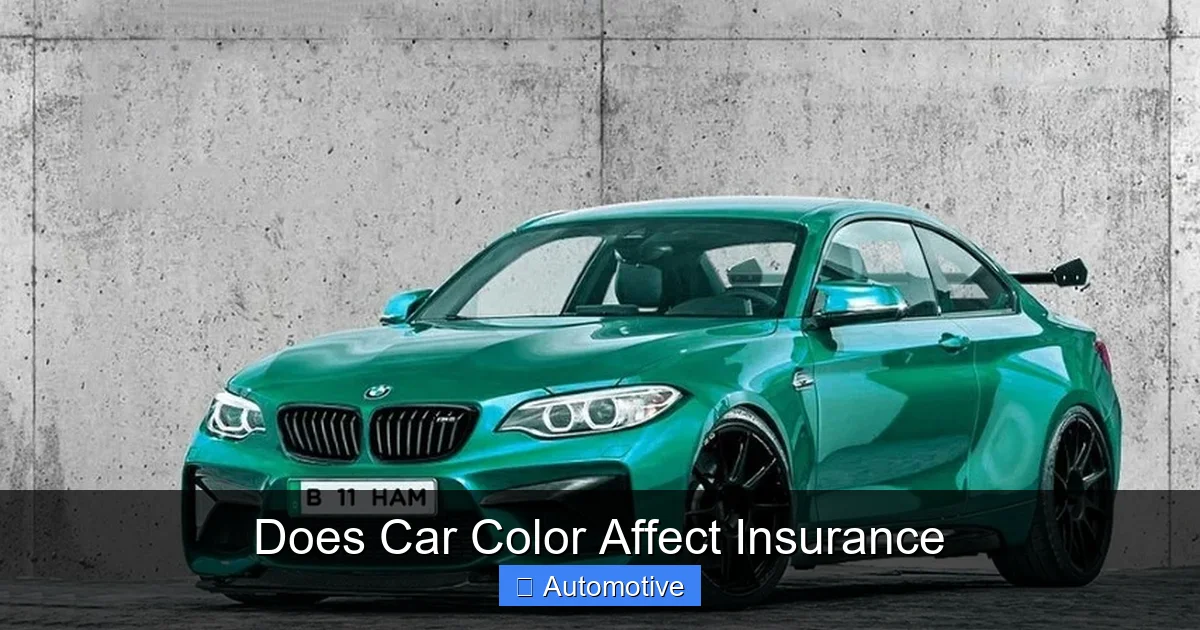
Visual guide about Does Car Color Affect Insurance
Image source: gaugemagazine.com
Before we dive into color, let’s clarify what *does* affect your insurance rates. Auto insurers use complex algorithms to assess risk—the likelihood that you’ll file a claim and how much it might cost. These factors fall into several key categories:
Driver Profile and History
Your personal information is one of the biggest predictors of risk. Insurers look at:
– **Age and experience:** Young drivers, especially teens, pay more due to higher accident rates.
– **Driving record:** Tickets, accidents, and DUIs increase premiums.
– **Credit score (in most states):** Better credit often correlates with lower risk.
– **Annual mileage:** More time on the road means more exposure to accidents.
For example, a 25-year-old with a clean record and low mileage will pay less than a 17-year-old with two speeding tickets—regardless of car color.
Vehicle Type and Specifications
The make, model, year, and trim level of your car play a major role. High-performance vehicles, luxury cars, and models with expensive parts cost more to insure. Why? Because:
– **Repair costs are higher:** A BMW or Tesla needs specialized parts and labor.
– **Theft rates vary:** Some models are targeted more often.
– **Safety ratings matter:** Cars with top crash-test scores may qualify for discounts.
A red Ferrari will always cost more to insure than a white Toyota Corolla—not because of the color, but because of the vehicle’s value, performance, and repair costs.
Location and Usage
Where you live and how you use your car also affect rates. Urban areas with heavy traffic and higher crime rates typically have higher premiums. Parking in a garage vs. on the street, commuting long distances, or using your car for rideshare can all influence pricing.
Coverage Level and Deductible
The type of coverage you choose (liability only vs. full coverage) and your deductible amount directly impact your premium. Higher deductibles lower your monthly payment but increase out-of-pocket costs if you file a claim.
Insurance Company Policies
Each insurer uses its own formula. One company might weigh credit score heavily, while another focuses more on driving history. That’s why shopping around is essential—your rate can vary significantly between providers.
The Color Myth: Why People Believe Red Cars Cost More
Visual guide about Does Car Color Affect Insurance
Image source: strategic-insurance.com
Now, let’s tackle the heart of the myth: why do so many people think red cars are more expensive to insure?
Cultural Stereotypes and Media Influence
Red has long been associated with speed, passion, and danger. Think of classic sports cars like the Ford Mustang or Chevrolet Corvette—many are painted red. Hollywood reinforces this image: action movies often feature red cars in high-speed chases. Over time, these associations seep into public perception. People start to believe that red cars are inherently riskier, even if there’s no data to support it.
Correlation vs. Causation
Here’s the key insight: just because two things happen together doesn’t mean one causes the other. Red cars *are* more common among sports cars and younger drivers—both of which are higher-risk groups. But the color itself isn’t the cause. It’s like saying “people who wear glasses are smarter”—it’s a stereotype, not a fact.
Insurance companies analyze millions of claims and policies. If red cars truly caused more accidents or higher costs, we’d see it in the data. But studies—including those by the Insurance Information Institute and major insurers—show no consistent link between color and claim frequency.
Visibility and Accident Risk: What the Data Says
One argument is that bright colors like yellow or orange are more visible, reducing accidents. Conversely, dark colors like black or gray are harder to see, especially at night. Could this affect insurance?
Research from the Monash University Accident Research Centre in Australia found that **white cars are involved in fewer accidents than darker-colored vehicles**, particularly in low-light conditions. Black cars, for example, were 12% more likely to be in a crash than white ones. Silver and gray also showed slightly higher risk.
However, this doesn’t mean insurers charge more for black cars. Why? Because the difference is small and inconsistent across regions. Plus, visibility is just one factor among many. A well-lit road, good headlights, and defensive driving matter far more than paint color.
Indirect Ways Color Might Influence Insurance
Visual guide about Does Car Color Affect Insurance
Image source: insurancepanda.com
While color doesn’t directly affect your premium, it can play a subtle, indirect role in a few scenarios.
Theft and Resale Value
Certain colors are more popular, which affects resale value and theft risk. Neutral colors like white, black, silver, and gray dominate the market because they appeal to a broader audience. As a result:
– **Higher resale value:** Neutral-colored cars sell faster and for more money.
– **Lower theft risk:** Thieves prefer cars that are easy to resell. A bright pink or neon green car might stand out too much on the black market.
In the event of a total loss, your insurer pays the actual cash value (ACV) of your car. If your car has strong resale value due to its color, you’ll get a higher payout. But this is a minor factor—most insurers don’t adjust premiums based on expected resale.
Perception and Driver Behavior
Some studies suggest that drivers of brightly colored cars may behave differently. A 2010 study published in the journal *Accident Analysis & Prevention* found that drivers of red cars were more likely to speed or drive aggressively—but again, this is about driver personality, not paint.
Insurers don’t track this behavior, so it doesn’t affect pricing. However, if you’re a safe driver, your habits matter more than your car’s hue.
Custom Paint and Modifications
Here’s where color *can* matter: if you’ve customized your car with expensive paint jobs, vinyl wraps, or aftermarket modifications. These additions increase the vehicle’s value and repair costs. If you file a claim, the insurer may need to cover the cost of restoring the custom paint—something that could raise your premium if you opt for agreed-value coverage.
But this applies to any modification, not just color. Upgraded wheels, sound systems, or performance parts all carry similar risks.
Real-World Examples: Color vs. Car Type
Let’s look at a few examples to illustrate how vehicle type outweighs color.
Example 1: Red Sports Car vs. White Sedan
– **Red 2023 Ford Mustang GT:** High horsepower, expensive parts, popular with younger drivers. Insurance cost: ~$2,800/year.
– **White 2023 Honda Accord:** Reliable, safe, lower repair costs. Insurance cost: ~$1,400/year.
The Mustang costs nearly twice as much to insure—not because it’s red, but because it’s a high-performance vehicle with a higher risk profile.
Example 2: Black Luxury SUV vs. Silver Compact
– **Black 2023 BMW X5:** Luxury brand, high repair costs, targeted by thieves. Insurance cost: ~$2,500/year.
– **Silver 2023 Toyota RAV4:** Affordable, safe, low theft rate. Insurance cost: ~$1,300/year.
Again, the difference comes down to the vehicle—not the color.
Example 3: Bright Yellow Hatchback
– **Yellow 2023 Mini Cooper:** Fun, compact, moderate performance. Insurance cost: ~$1,600/year.
– **Gray 2023 Mini Cooper:** Same model, different color. Insurance cost: ~$1,600/year.
No difference. The color doesn’t change the premium.
These examples show that when you compare identical models in different colors, the insurance cost remains nearly the same. The real cost drivers are performance, value, and safety—not pigment.
How to Actually Lower Your Car Insurance Costs
Since color doesn’t affect your premium, focus on the factors that do. Here are practical tips to save money:
Choose a Smart Vehicle
Opt for cars with:
– High safety ratings (check IIHS or NHTSA)
– Low theft rates
– Affordable repair costs
– Good fuel efficiency
Avoid high-performance or luxury models unless you’re prepared for higher premiums.
Maintain a Clean Driving Record
Safe driving is the #1 way to keep rates low. Avoid speeding, distracted driving, and DUIs. Many insurers offer discounts for accident-free years.
Increase Your Deductible
Raising your deductible from $500 to $1,000 can reduce your premium by 15–30%. Just make sure you can afford the out-of-pocket cost if you file a claim.
Bundling and Discounts
Bundle auto insurance with home or renters insurance for a multi-policy discount. Ask about:
– Good student discounts
– Low-mileage discounts
– Defensive driving course discounts
– Telematics programs (usage-based insurance)
Improve Your Credit Score
In most states, insurers use credit-based insurance scores. Pay bills on time, reduce debt, and check your credit report for errors.
Shop Around Annually
Rates change. Get quotes from at least three insurers each year. Use comparison sites or work with an independent agent.
Consider Usage-Based Insurance
Programs like Progressive’s Snapshot or Allstate’s Drivewise track your driving habits via a mobile app or device. Safe drivers can earn significant discounts.
Conclusion: Choose the Color You Love—Not the One You Think Will Save Money
So, does car color affect insurance? The answer is clear: **no, it doesn’t**. Your premium is based on real risk factors—not stereotypes or superstitions. While visibility and resale value might play tiny indirect roles, they’re far outweighed by vehicle type, driving history, and coverage choices.
That means you’re free to pick the color that makes you happiest. Want a bold red? Go for it. Dreaming of a sleek black ride? Do it. Love the cheerfulness of yellow or the elegance of white? Choose what fits your personality and lifestyle.
Instead of worrying about paint, focus on what truly impacts your insurance costs: driving safely, choosing a smart vehicle, and shopping around for the best rate. When you understand the real factors, you can make informed decisions that protect both your car and your budget.
Remember, insurance is about peace of mind. And there’s nothing more reassuring than knowing you’re covered—no matter what color your car is.
Frequently Asked Questions
Does a red car really cost more to insure?
No, a red car does not cost more to insure solely because of its color. Insurance companies do not use paint color as a factor in premium calculations. The myth likely stems from red cars being common on sports vehicles, which are more expensive to insure due to performance and repair costs.
Are black cars more expensive to insure because they’re harder to see?
No, black cars are not charged higher premiums due to visibility. While some studies suggest darker colors may be slightly less visible at night, insurers do not adjust rates based on this. Other factors like vehicle type and driving history have a much greater impact on cost.
Will a custom paint job increase my insurance premium?
Possibly. If your custom paint job increases the vehicle’s value or repair costs, it could affect your premium—especially if you have agreed-value or stated-value coverage. However, standard paint colors do not impact rates.
Do insurance companies track car color in their databases?
Yes, insurers record your car’s color for identification purposes, but they do not use it to determine your premium. Color is part of the vehicle description, not a risk factor.
Can choosing a white car lower my insurance?
Not directly. While white cars may have slightly better visibility and lower accident rates in some studies, insurers do not offer discounts for color. Any potential savings would be minimal and not reflected in pricing.
Should I avoid bright colors to save on insurance?
No. There’s no evidence that bright colors like yellow or orange increase insurance costs. Choose the color you love—your premium depends on driving behavior, vehicle type, and coverage, not paint shade.