Does Bmw Ventilation Heat the Car?

Contents
- 1 Key Takeaways
- 2 📑 Table of Contents
- 3 The Heart of the Matter: How Traditional BMW Heating Works
- 4 Auxiliary Heaters: The Quick-Warm-Up Solution
- 5 The Electric Future: Heat Pumps and Resistive Heating in BMW iModels
- 6 Common Misconceptions and System Interactions
- 7 Troubleshooting: Why Isn’t My BMW Heating Properly?
- 8 Maintenance Tips for Reliable Heat
- 9 Frequently Asked Questions

Jack Stands

Fuel Injector Cleaner

Carburetor Cleaner

Radiator Coolant
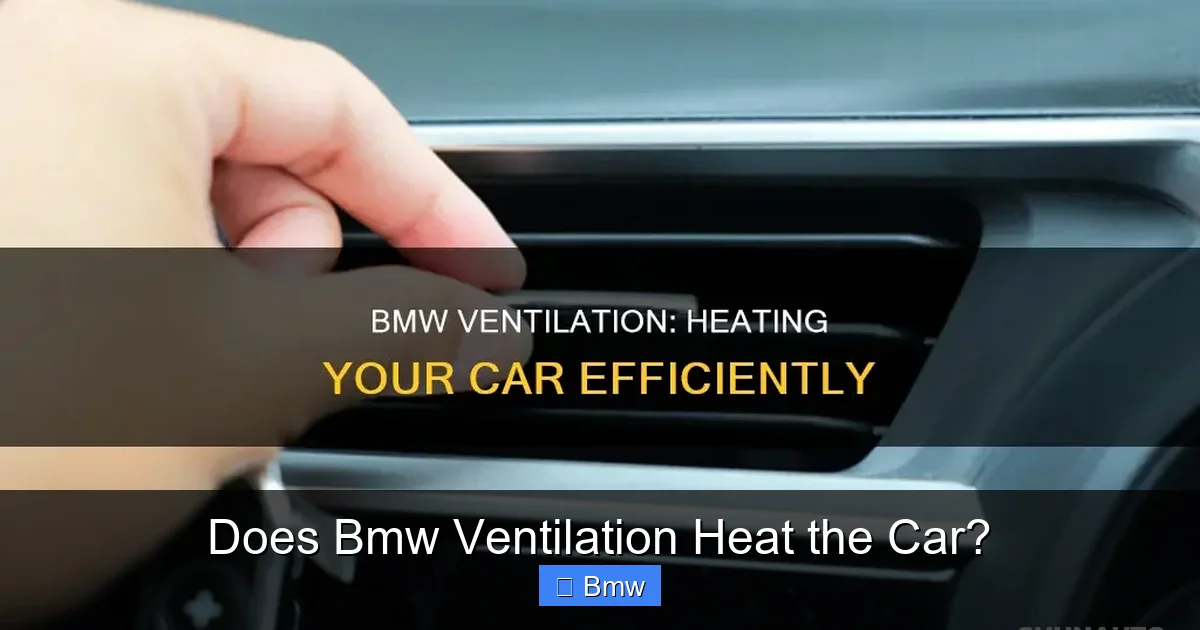
Yes, BMW ventilation systems can heat the cabin, but the method varies by model. Most use engine coolant via a heater core, while some employ auxiliary heaters or heat pumps. Understanding your specific system helps troubleshoot issues and optimize comfort.
So, you’re sitting in your BMW on a frosty morning, fingers glued to the steering wheel, and you turn the climate control dial to the red zone. Warm air starts to blow—but where is that heat actually coming from? It’s a simple question with a fascinatingly detailed answer. The short answer is yes, BMW ventilation systems are designed to heat the car’s cabin. However, the “how” and “how well” depend entirely on which BMW you own, what engine is under the hood, and even what climate you drive in. Let’s pop the hood on BMW’s heating technology and clear up the mystery once and for all.
Many drivers assume that pressing the “heat” button simply magics warm air from nowhere. In reality, your BMW’s heater is a clever piece of engineering that hijacks waste heat from the engine’s cooling system. But not all BMWs are created equal. From classic inline-sixes to modern plug-in hybrids and fully electric iModels, the journey of that warm air changes dramatically. We’ll break down the core principles, explore the different systems across the BMW lineup, troubleshoot common problems, and give you practical tips to stay cozy all winter long.
Key Takeaways
- Most BMWs heat the cabin using engine coolant and a heater core. The ventilation system blows air over this hot core to warm the interior, which is why you must wait for the engine to warm up first.
- Some BMW models, especially in colder climates, have auxiliary electric heaters. These provide faster heat before the engine is fully warm, but they draw significant power from the battery.
- All-electric BMWs (iSeries) use different systems like heat pumps or resistive heaters. These are more efficient but work differently than traditional combustion engine setups.
- Using the ventilation heater places an extra load on the engine. This can slightly increase fuel consumption and, in older or problematic engines, contribute to overheating concerns.
- Common heating failures are often due to low coolant, a faulty thermostat, or a broken blend door. Regular maintenance of your cooling system is key to reliable cabin heat.
📑 Table of Contents
- The Heart of the Matter: How Traditional BMW Heating Works
- Auxiliary Heaters: The Quick-Warm-Up Solution
- The Electric Future: Heat Pumps and Resistive Heating in BMW iModels
- Common Misconceptions and System Interactions
- Troubleshooting: Why Isn’t My BMW Heating Properly?
- Maintenance Tips for Reliable Heat
The Heart of the Matter: How Traditional BMW Heating Works
For over a century, the internal combustion engine has been a furnace on wheels. It burns fuel, creates explosive power, and in the process, generates an enormous amount of waste heat. Your BMW’s heating system is essentially a brilliant recycling program for that waste energy.
The Heater Core: Your Mini Radiator
Tucked behind the dashboard is the star of the show: the heater core. Think of it as a tiny, secondary radiator. Hot engine coolant, which is typically around 195°F (90°C) when the engine is at operating temperature, is circulated through the engine block to absorb heat. That same hot coolant then travels through the heater core.
Here’s the magic: the ventilation system’s blower motor forces cabin air through the fins of the hot heater core. As the air passes over these warm surfaces, it heats up dramatically. This warmed air is then directed through the various ducts and vents into your passenger compartment. The temperature of the air is controlled by a blend door—a small, movable flap inside the ventilation housing. When you turn the temperature dial, you’re physically instructing this blend door to mix more or less of this hot air with cooler, outside air (or air from the A/C evaporator).
Why You Have to Wait for Heat
This explains the universal winter ritual: the cold start warm-up. Until the engine reaches its optimal operating temperature, the coolant isn’t hot enough to effectively warm the heater core. The thermostat, a temperature-sensitive valve, remains closed to keep coolant circulating only within the engine block to help it warm up quickly. Once open, hot coolant flows to the heater core, and warmth arrives. In very cold climates, this wait can be painfully long, which is where auxiliary heaters come in.
Auxiliary Heaters: The Quick-Warm-Up Solution
Recognizing that drivers in places like Minnesota or Berlin didn’t want to shiver for ten minutes, BMW (and many other manufacturers) began fitting auxiliary cabin heaters, also called fuel-burning heaters or parking heaters, on many models sold in colder regions.
Visual guide about Does Bmw Ventilation Heat the Car?
Image source: buzzlyo.com
How They Work
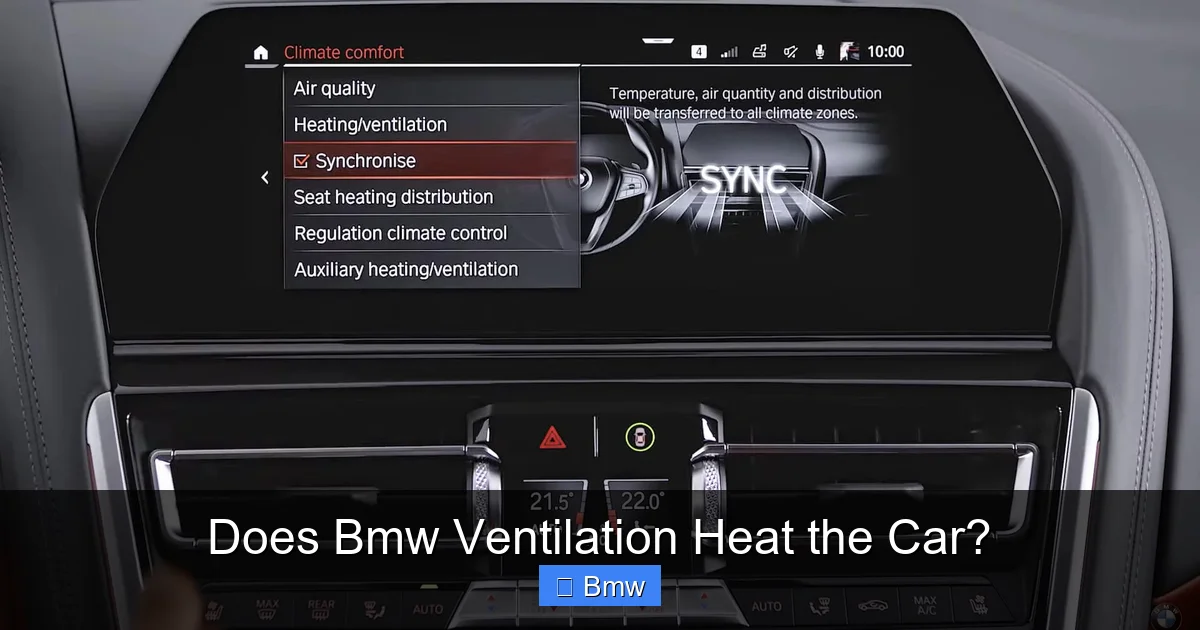
An auxiliary heater is a small, independent combustion unit. It has its own fuel line (drawing from the main tank), its own exhaust system, and its own control module. You can often activate it via a remote control or a timed setting in the car’s menu, even before you start the engine. It burns a tiny amount of fuel to heat a separate coolant loop that feeds the heater core. The result? Toasty cabin air within minutes of getting in the car, without needing to run the main engine.
These are common on older BMWs (like many 3 Series and 5 Series from the 2000s and early 2010s) and some newer models in specific markets. They are fantastic for comfort but add complexity. They can fail, and their exhaust system must be intact to prevent dangerous fumes from entering the cabin. If your BMW has a mysterious auxiliary heater button or menu option that does nothing, that’s a likely culprit.
The Electrical Load Problem
Here’s a critical connection: auxiliary heaters are massive power drains. They can pull 20-40 amps from the battery and the alternator. This is where our internal linking becomes relevant. If your BMW’s battery is old, weak, or the alternator is struggling, turning on the auxiliary heater (or even the main heater blower on high) can cause a voltage drop. This might trigger the battery warning light on your dashboard. So, if your heat is weak *and* you see that battery icon, the root cause could be a failing charging system, not just the heater itself. Always check the simplest things first, like a worn-out battery.
The Electric Future: Heat Pumps and Resistive Heating in BMW iModels
When BMW launched its iSeries—the i3 city car and the i8 supercar—it faced a new problem. Electric motors don’t produce waste heat like combustion engines do. You can’t hook a heater core up to a battery. So, how do you heat the cabin without draining the driving range?

Visual guide about Does Bmw Ventilation Heat the Car?
Image source: elitecooling.org
Heat Pumps: The Efficient Choice
Many modern electric vehicles, including newer BMW iX and i4 models, use a heat pump. This is essentially an air conditioner working in reverse. It extracts heat from the outside air (even in cold weather) and pumps it inside the cabin. It’s incredibly efficient, using far less battery power than a simple electric resistor heater. For comparison, you can read about how the Nissan Leaf utilizes its heat pump for efficient winter driving. BMW’s implementation is similar in principle, offering much better range preservation in cold climates than older resistive systems.
Resistive Heating: The Simple, Power-Hungry Backup
Some early EVs and many plug-in hybrids (like the BMW 330e) rely on resistive heating. This is exactly like the heating element in a toaster—electric current flows through a coil, which gets red-hot, and a fan blows air over it. It’s simple, reliable, and provides instant heat. The downside? It’s a colossal battery drain. Using resistive cabin heat can reduce an EV’s range by 20-30% in deep winter. This is why the shift to heat pumps is such a big deal for electric mobility.
Common Misconceptions and System Interactions
Now, let’s clear up some frequent points of confusion that BMW owners often have.
Visual guide about Does Bmw Ventilation Heat the Car?
Image source: ills.bmwfans.info
“My Heater Makes the Engine Overheat”
This is a logical fear, but it’s usually backwards. A properly functioning heater core is part of the cooling system’s *relief* path. It actually helps the engine shed heat by providing an additional circuit for coolant to flow through. However, if the heater core is clogged or if the system is low on coolant, it can reduce overall cooling efficiency. More commonly, if your engine is overheating when the heater is on, the problem is likely a failing thermostat, a broken water pump, or a severely clogged radiator—not the heater itself. If you notice your BMW running hot specifically when the A/C is on, that points to a different, often condenser-related issue. Our detailed guide on why cars overheat with the AC running explains those dynamics.
“Ventilation Heats the Car Even When the Engine is Off”
Not in a traditional combustion BMW. Once the engine is off, the coolant stops circulating and begins to cool immediately. The heater core will blow warm air for a minute or two from residual heat, but then it’s just a fan blowing ambient air. The exception is if you have an active auxiliary heater (which runs on its own fuel) or a plug-in hybrid/EV that can run the heat pump or resistive heater on battery power alone while parked.
“The Heater Smells or Looks Weird”
If you smell sweet, syrupy odor through the vents, that’s likely coolant leaking into the heater core or a hose. This is a serious issue that needs immediate attention. A musty, mildew smell usually means mold is growing in the cabin air filter or ventilation ducts, which is a health and comfort issue but not directly related to the heating function. A burning smell could indicate an overheating auxiliary heater or an electrical fault in the blower motor circuit.
Troubleshooting: Why Isn’t My BMW Heating Properly?
When your promised warmth fails you, don’t panic. Diagnose step-by-step.
Step 1: Check the Basics
- Engine Temperature: Is the engine actually up to temperature? If the temperature gauge stays cold, you have a cooling system issue (thermostat, coolant sensor, water pump) that affects both heating and engine protection.
- Coolant Level: Open the coolant reservoir (when the engine is cold). Is it at the proper level? Low coolant is the #1 cause of no heat.
- Blend Door Actuator: If the air is always cold or always hot, regardless of the dial setting, the small electric motor that moves the blend door may be broken or stuck. This is a very common failure point in many BMWs and often requires dash disassembly to replace.
Step 2: Listen and Feel
- Blower Motor: Can you hear the fan? If it’s silent on all speeds, the blower motor or its resistor pack may be dead. If it works on high speed but not low, the resistor is likely bad.
- Heater Core Flow: Carefully feel the two heater core hoses (in the engine bay, usually near the firewall) after the engine is warm. They should both be hot. If one is hot and the other is cold or lukewarm, the core is clogged.
Step 3: Scan for Codes
Modern BMWs are packed with sensors and actuators controlled by the IHKA (Integrated Heating and Air Conditioning) module. A generic OBD2 scanner might not see these codes. You often need a specialized BMW scan tool (like ISTA) to read faults from the climate control system, which can pinpoint a failed blend door actuator, temperature sensor, or pump.
Maintenance Tips for Reliable Heat
Prevention is always better than a cold-weather breakdown.
- Flush Your Coolant: Engine coolant (antifreeze) degrades over time, losing its anti-corrosion properties and becoming acidic. This leads to scale and rust that can clog the tiny passages in the heater core. Follow BMW’s recommended service interval, typically every 2-3 years or 30,000 miles. Use only BMW-approved coolant (G48 or similar) mixed with distilled water.
- Replace the Cabin Air Filter: A clogged cabin filter restricts airflow through the entire HVAC system, making your heater and A/C feel weak. It’s an easy, inexpensive DIY job on most models. Check your owner’s manual for location and replacement interval.
- Listen for Auxiliary Heater Noises: If your car has one, occasionally run it in the fall to ensure it fires up and runs smoothly. A clicking sound or failure to ignite should be checked before winter.
- Address Cooling System Leaks Immediately: Any sign of coolant loss (low reservoir, sweet smell, puddles) must be fixed. Running low on coolant starves the heater core and risks catastrophic engine overheating. For a deep dive on engine oil’s role in overall engine health, which indirectly affects the cooling system, see our Ultimate Guide to BMW Engine Oil.
Frequently Asked Questions
Does BMW ventilation use gasoline?
Yes, but indirectly. In a combustion-engine BMW, the heat comes from waste engine heat, so there’s no direct fuel cost for the heat itself. However, the blower motor uses a tiny amount of electricity from the alternator, which places a negligible load on the engine. If you have an auxiliary fuel-burning heater, it uses a small amount of fuel directly.
Why does my BMW blow cold air on the heat setting?
This is almost always due to one of three issues: low engine coolant, a faulty thermostat preventing the engine from reaching temperature, or a failed blend door actuator that’s stuck on the cold-air position. Start by checking your coolant level when the engine is cold.
Do all BMWs have auxiliary heaters?
No. Auxiliary heaters are most common on BMWs sold in colder European, North American, and Canadian markets from the early 2000s through the mid-2010s. They are less common on newer models, especially in warmer climates, and are not found on most electric BMWs (iSeries).
How is heating different in a BMW i3 or iX?
All-electric BMWs have no engine waste heat. They rely on either a highly efficient heat pump (common on newer iX, i4, i7) or a resistive electric heater (found on earlier i3s and some PHEVs). Heat pumps use far less battery power, preserving driving range in winter.
Can a clogged heater core cause engine overheating?
Yes, but it’s rare. A completely blocked heater core can restrict coolant flow through the entire system, reducing the engine’s ability to cool itself. More commonly, a clogged heater core just causes no cabin heat while the engine may still run at normal temperature.
Is it normal for the heater to smell musty?
A musty or mildew smell when you first turn on the fan usually indicates mold or bacteria growing on the cabin air filter or in the ventilation ducts, especially if the A/C has been used. Replacing the cabin air filter and running the fan with the windows down on a dry day often helps. For persistent smells, the ducts may need professional cleaning.