
Does a Toyota Spare Tire Have Tpms?

Most Toyota spare tires do not come equipped with a Tire Pressure Monitoring System (TPMS) sensor. While your primary tires rely on TPMS to alert you of low pressure, the compact or temporary spare usually lacks this feature—meaning you’ll need to manually check its pressure regularly to stay safe on the road.
If you’ve ever seen that little tire icon flash on your Toyota’s dashboard, you know how unsettling it can be. That’s your Tire Pressure Monitoring System (TPMS) letting you know one or more of your tires might be underinflated. But what happens when you need to use your spare tire? Does a Toyota spare tire have TPMS? The short answer is: usually not. But there’s more to the story—and understanding the details could save you from a roadside headache or even a safety risk.
Toyota, like most automakers, designs its vehicles with convenience and cost-efficiency in mind. That means the spare tire—especially the compact “donut” type found in many sedans and smaller SUVs—is built for short-term, emergency use only. Because it’s not meant for daily driving, it often omits features like TPMS sensors. This doesn’t mean your spare is unsafe, but it does mean you need to take extra care to keep it properly inflated. After all, a flat spare is no spare at all.
In this guide, we’ll break down everything you need to know about Toyota spare tires and TPMS. From how the system works to why spares are often left out, plus practical tips for maintenance and troubleshooting, you’ll walk away knowing exactly how to keep your Toyota ready for anything the road throws your way.
Key Takeaways
- Spare tires in most Toyota models do not have TPMS sensors: Unlike your regular wheels, the spare is typically a temporary or “donut” tire without electronic monitoring.
- TPMS alerts only apply to the four main tires: If your dashboard shows a TPMS warning light, it’s referring to your primary tires—not the spare.
- Manual pressure checks are essential for spares: Since there’s no automatic alert, you should inspect your spare tire’s pressure at least once a month and before long trips.
- Full-size spares may include TPMS in newer models: Some recent Toyota SUVs and trucks with full-size matching spares might have a TPMS sensor—check your owner’s manual to confirm.
- Underinflated spares can be dangerous: Driving on a low-pressure spare reduces control, increases wear, and may cause tire failure—even if it looks fine visually.
- Replacing a spare doesn’t trigger a TPMS reset: Since most spares lack sensors, swapping them in won’t confuse your vehicle’s system or require recalibration.
- Always follow Toyota’s recommended spare tire pressure: This is usually printed on the tire sidewall or in the owner’s manual—often higher than standard tire pressure (e.g., 60 psi).
📑 Table of Contents
- Understanding TPMS in Toyota Vehicles
- Why Most Toyota Spare Tires Lack TPMS Sensors
- How to Check If Your Toyota Spare Has TPMS
- The Risks of an Unmonitored Spare Tire
- Best Practices for Maintaining Your Toyota Spare Tire
- What to Do If Your Spare Tire Is Flat
- Future Trends: Will Toyota Add TPMS to Spare Tires?
- Conclusion
Understanding TPMS in Toyota Vehicles
Before we dive into whether your spare tire has TPMS, it helps to understand how the system works in the first place. TPMS—short for Tire Pressure Monitoring System—is a safety feature required on all passenger vehicles sold in the U.S. since 2007. Its job is simple: monitor the air pressure in your tires and alert you if it drops below a safe threshold, usually around 25% below the recommended level.
Toyota uses one of two types of TPMS: direct or indirect. Most modern Toyotas use a direct TPMS, which means each of the four main tires has its own sensor mounted inside the wheel. These sensors measure pressure in real time and send data wirelessly to your vehicle’s computer. If pressure drops too low, the TPMS warning light—a yellow icon shaped like a horseshoe with an exclamation point—lights up on your dashboard.
Indirect TPMS, on the other hand, doesn’t use physical sensors. Instead, it relies on the vehicle’s anti-lock braking system (ABS) to detect differences in wheel rotation speed. A underinflated tire has a smaller diameter and spins faster than a properly inflated one, so the system can infer low pressure based on these changes. While less precise, indirect systems are simpler and cheaper to maintain.
Regardless of the type, TPMS is designed to monitor your primary tires—the ones you drive on every day. The system isn’t built to track the spare because, under normal conditions, you’re not using it. That’s why, in most cases, your Toyota’s spare tire does not have a TPMS sensor.
Why Most Toyota Spare Tires Lack TPMS Sensors
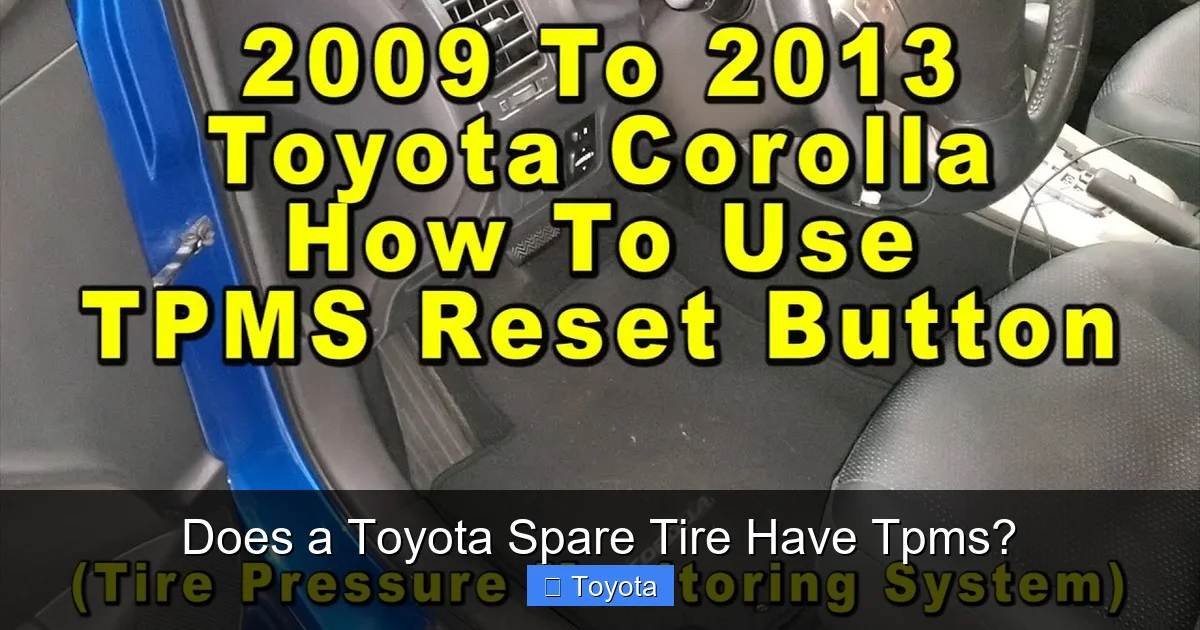
Visual guide about Does a Toyota Spare Tire Have Tpms?
Image source: i.ytimg.com
So why don’t Toyota spare tires come with TPMS? It comes down to a mix of design philosophy, cost, and practicality. Let’s break it down.
First, spare tires—especially the compact temporary spares—are meant for emergencies only. Toyota designs them to get you to a repair shop or dealership, not for long-distance or high-speed driving. Because they’re not part of your regular driving routine, there’s less need for constant electronic monitoring. Adding a TPMS sensor would increase manufacturing cost, add complexity, and require additional wiring or programming—all for a component used infrequently.
Second, compact spares are often stored in the trunk or under the vehicle, where access is limited. Installing a sensor would mean running a wire or ensuring a reliable wireless signal through metal and insulation—something that’s technically possible but adds unnecessary expense for a feature most drivers won’t use.
Third, Toyota assumes that drivers will manually check their spare tire pressure during routine maintenance. It’s a reasonable expectation, especially since many owners already check their primary tires monthly. By relying on manual checks, Toyota keeps the system simple and cost-effective.
That said, there are exceptions. Some newer Toyota models—particularly larger SUVs and trucks like the Toyota 4Runner, Tacoma, or Sequoia—come with full-size spare tires that match the other four wheels. In these cases, especially if the spare is mounted on a rear door or under the chassis, Toyota may include a TPMS sensor to maintain consistency across all five tires. But this is the exception, not the rule.
How to Check If Your Toyota Spare Has TPMS
Visual guide about Does a Toyota Spare Tire Have Tpms?
Image source: i.ytimg.com
If you’re unsure whether your Toyota spare tire has TPMS, there are a few ways to find out. The easiest method is to consult your owner’s manual. Toyota provides detailed information about your vehicle’s tire setup, including whether the spare includes a sensor. Look for sections on “Tire Pressure Monitoring System” or “Spare Tire Information.”
Another way is to visually inspect the spare tire. If it’s a compact donut, it almost certainly doesn’t have a sensor. These tires are usually smaller, lighter, and lack the valve stem design needed for a TPMS sensor. Full-size spares, especially those that look identical to your regular tires, are more likely to have sensors—but not guaranteed.
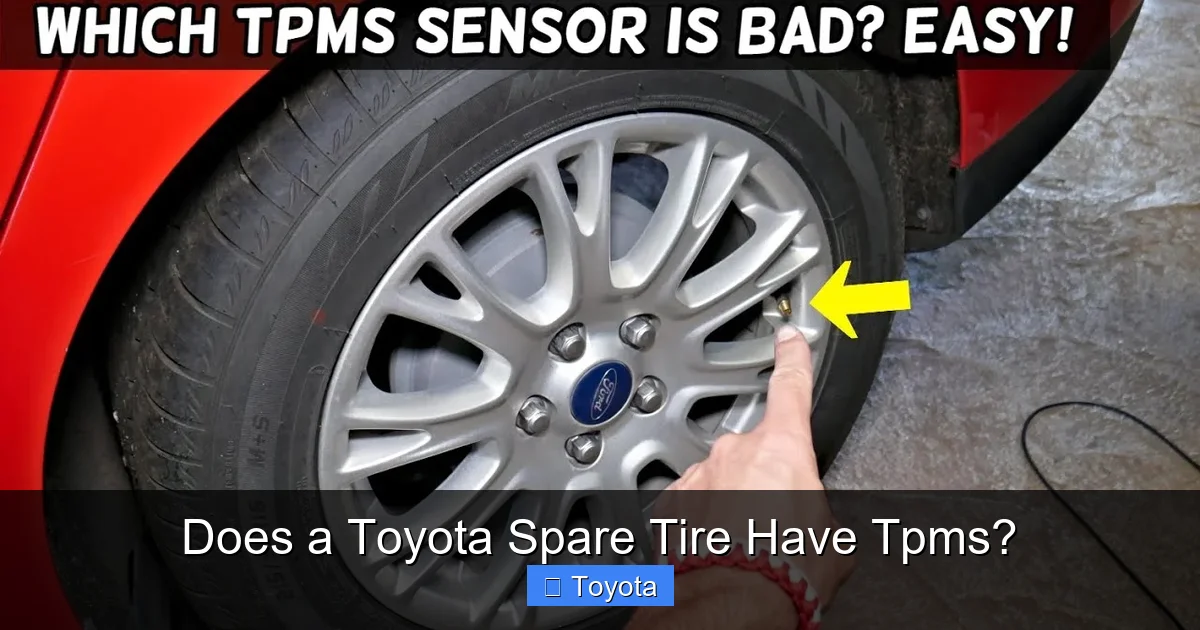
You can also check the valve stem. TPMS sensors are typically integrated into the valve stem or mounted near it. If your spare has a standard rubber valve stem (like the ones on bicycle tires), it likely doesn’t have a sensor. If it has a metal valve stem or a more complex assembly, it might.
Finally, if you’ve recently had your spare replaced or rotated, ask your technician. They can confirm whether a sensor was installed and whether your vehicle’s system recognizes it.
The Risks of an Unmonitored Spare Tire
Visual guide about Does a Toyota Spare Tire Have Tpms?
Image source: i.ytimg.com
Just because your spare tire doesn’t have TPMS doesn’t mean it’s not important. In fact, neglecting your spare can lead to serious problems when you need it most.
Imagine you get a flat on a highway at night. You pull over, grab your spare, and start changing the tire—only to discover the spare is also flat. Now you’re stranded, possibly in a dangerous location, with no backup. This scenario is more common than you might think. According to AAA, underinflated spare tires are one of the top reasons drivers call for roadside assistance.
Even if your spare isn’t completely flat, low pressure can cause issues. Compact spares are designed to be inflated to a higher pressure than regular tires—often 60 psi or more. If the pressure drops, the tire can overheat, wear unevenly, or even fail while driving. And because you can’t rely on TPMS to warn you, the only way to know is through regular manual checks.
Another risk is reduced handling. Spare tires, especially donuts, have different tread patterns and construction than your regular tires. Driving on an underinflated spare can make your vehicle feel unstable, especially during braking or cornering. This is dangerous not just for you, but for other drivers on the road.
Best Practices for Maintaining Your Toyota Spare Tire
Keeping your spare tire in good condition doesn’t require much effort—but it does require consistency. Here are some practical tips to ensure your spare is ready when you need it.
First, check the pressure monthly. Use a reliable tire pressure gauge and compare the reading to the recommended PSI, which is usually printed on the tire sidewall or in your owner’s manual. For most compact spares, this is between 60 and 65 psi—much higher than your regular tires.
Second, inspect the tire for damage. Look for cracks, bulges, or dry rot, especially if your vehicle is several years old. Spare tires can degrade over time, even if they’ve never been used. If you notice any signs of wear, consider replacing the tire—even if it still holds air.
Third, make sure the spare is accessible. If it’s stored under your vehicle, check that the winch mechanism works and that the tire isn’t rusted in place. If it’s in the trunk, ensure it’s secured properly and that the jack and lug wrench are present and functional.
Fourth, rotate your spare into regular use if possible. Some Toyota owners choose to rotate their full-size spare into the regular tire rotation schedule. This helps ensure even wear and gives you a chance to monitor the spare’s condition more closely. Just remember that if your spare has a TPMS sensor, rotating it may require reprogramming the system.
Finally, don’t forget about the age of the tire. Even unused tires have a lifespan—typically 6 to 10 years. Check the DOT code on the sidewall (a series of numbers ending with the last four digits representing the week and year of manufacture). If your spare is over 6 years old, consider replacing it, regardless of appearance.
What to Do If Your Spare Tire Is Flat
If you discover your spare tire is flat, don’t panic—but do act quickly. First, determine whether it’s repairable. Small punctures in the tread area can often be fixed by a professional, but damage to the sidewall or bead usually means replacement.
If the tire is repairable, take it to a trusted tire shop. Many shops offer free inspections and can patch the tire if it’s safe to do so. Just remember: compact spares are not designed for high-speed or long-distance driving, so even a repaired spare should only be used temporarily.
If the tire needs replacing, you have a few options. You can buy an identical compact spare from a Toyota dealer or aftermarket supplier. Alternatively, you might consider upgrading to a full-size spare if your vehicle supports it. This gives you more flexibility and peace of mind, though it may require additional modifications like a larger spare tire carrier.
In the meantime, consider using a tire inflator or portable air compressor. These devices can temporarily reinflate a flat tire enough to get you to a service station. Some Toyota models even come with a sealant kit instead of a spare—check your owner’s manual to see what your vehicle includes.
Future Trends: Will Toyota Add TPMS to Spare Tires?
As vehicle technology evolves, so do safety standards. While most Toyota spare tires still lack TPMS, there’s growing interest in making spares safer and more reliable. Some automakers are already experimenting with smart spares that include sensors, especially in luxury or high-end models.
Toyota may follow suit in the coming years, particularly as electric and hybrid vehicles become more common. These vehicles often have unique tire requirements and may benefit from more comprehensive monitoring systems. Additionally, as drivers become more aware of tire safety, demand for TPMS-equipped spares could increase.
For now, though, the best approach is proactive maintenance. By checking your spare tire regularly and understanding its limitations, you can stay safe and avoid unexpected breakdowns.
Conclusion
So, does a Toyota spare tire have TPMS? In most cases, the answer is no. Your spare tire—especially if it’s a compact donut—likely doesn’t include a TPMS sensor. That means you can’t rely on your dashboard warning light to tell you if it’s low on air. Instead, you need to take responsibility for checking it manually.
This doesn’t mean your spare is unsafe. It just means you need to be more diligent. Regular pressure checks, visual inspections, and proper storage can go a long way in ensuring your spare is ready when you need it most. And if you drive a newer Toyota with a full-size spare, there’s a chance it does have TPMS—so always check your owner’s manual to be sure.
At the end of the day, your spare tire is your lifeline in an emergency. Don’t let neglect turn a simple flat into a major problem. Take a few minutes each month to check your spare, and you’ll drive with confidence knowing you’re prepared for whatever the road brings.
Frequently Asked Questions
Does every Toyota model have a spare tire?
No, not all Toyota models come with a spare tire. Some newer vehicles, especially hybrids and compact cars, use tire sealant kits or run-flat tires instead. Check your owner’s manual or trunk to confirm what your vehicle includes.
Can I drive long distances on a Toyota spare tire?
It’s not recommended. Compact spare tires are designed for temporary use only—usually up to 50 miles at speeds below 50 mph. Driving long distances or at high speeds can damage the tire and compromise safety.
Will my Toyota’s TPMS light turn on if the spare is flat?
No, the TPMS light only monitors your four primary tires. Since most spares don’t have sensors, a flat spare won’t trigger the warning light. You’ll need to check the spare manually.
How often should I check my Toyota spare tire pressure?
Check your spare tire pressure at least once a month and before long trips. Spare tires can lose air over time, even when not in use, so regular checks are essential.
Can I replace my Toyota spare tire with a regular tire?
Yes, but only if it’s the same size, load rating, and speed rating as your other tires. Using an incompatible tire can affect handling and safety. Consult your owner’s manual or a Toyota technician before making changes.
What should I do if my Toyota doesn’t have a spare tire?
If your vehicle uses a sealant kit or run-flat tires, familiarize yourself with how they work. Keep a portable air compressor or roadside assistance number handy in case of a flat.
