Do Jeep Wranglers Come with Leather Seats?

Contents
- 1 Key Takeaways
- 2 📑 Table of Contents
- 3 The Trim Level Treasure Map: Where to Find Factory Leather
- 4 Model Year & Generation Deep Dive: JK, JL, and JT
- 5 Decoding the Window Sticker (Monroney Label): Your Proof of Leather
- 6 The Aftermarket Reality: Leather Seat Covers and Full Re-Upholstery
- 7 Caring for Leather Seats in a Wrangler: A Non-Negotiable
- 8 Making Your Decision: Is Leather Right for Your Wrangler?
- 9 Frequently Asked Questions

Car Door Edge Guard
Car Emergency Roadside Kit
Power Steering Fluid

Car Wax Polish
Yes, Jeep Wranglers can come with leather seats, but it’s not standard on all models. Leather is primarily available as an upgrade on higher trims like the Sahara, High Altitude, and Rubicon, and often requires specific packages. Availability also varies by model year and Wrangler generation (JK, JL, and JT Gladiator). For most buyers, leather is a premium add-on, not a base feature.
So, you’re in the market for a Jeep Wrangler. You love the idea of that open-air freedom, the legendary off-road capability, and the iconic style. But when you start shopping, one question inevitably pops up: Do Jeep Wranglers come with leather seats? It’s a great question, because the answer isn’t a simple yes or no. It’s a “sometimes,” and that “sometimes” depends on a handful of very important factors. Let’s pop the hood on this topic and give you the full, unfiltered picture.
The short answer is yes, Jeep Wranglers can and do come with leather seats from the factory. However, leather is absolutely not a standard feature across the entire Wrangler lineup. Think of it as a premium upgrade, a reward for choosing a higher trim level or adding specific packages. For many Jeep purists, the classic cloth seats are part of the authentic, utilitarian experience. But for others, the added comfort, durability, and upscale feel of leather is a must-have. Understanding the “how” and “why” behind leather availability will save you from confusion and help you find (or build) the perfect Wrangler for your needs and budget.
Key Takeaways
- Leather is a premium option, not standard: Unlike some luxury SUVs, Jeep does not make leather seats a universal feature. They are typically bundled in option packages on mid-to-high trim levels.
- Trim level is the biggest factor: The Sahara trim has historically been the most common entry point for factory leather. The Rubicon and limited-edition High Altitude models also frequently include it. Base Sport and Sport S models almost never do.
- Model year and generation matter: Availability changed significantly from the JK (2007-2018) to the current JL (2018+) and Gladiator (2020+). Always check the specific window sticker (Monroney label) for the exact vehicle.
- Package names vary: Look for terms like “Premium Leather Group,” “Leather-Top Group,” “Premium Interior Group,” or simply “Leather Seats” on the window sticker.
- Aftermarket is always an option: If your Wrangler didn’t come with leather from the factory, high-quality aftermarket leather seat covers or full seat reupholstery are popular modifications.
- Leather requires maintenance: Factory leather in a Wrangler needs regular conditioning to combat sun exposure and wear, especially with frequent top-down driving. Consider protective covers if you use your Wrangler for heavy off-roading or with pets.
- Used market complexity: When buying used, a “leather-equipped” Wrangler might have aftermarket covers. Verification via the VIN or original window sticker is crucial.
📑 Table of Contents
- The Trim Level Treasure Map: Where to Find Factory Leather
- Model Year & Generation Deep Dive: JK, JL, and JT
- Decoding the Window Sticker (Monroney Label): Your Proof of Leather
- The Aftermarket Reality: Leather Seat Covers and Full Re-Upholstery
- Caring for Leather Seats in a Wrangler: A Non-Negotiable
- Making Your Decision: Is Leather Right for Your Wrangler?
The Trim Level Treasure Map: Where to Find Factory Leather
If you want leather seats straight from Jeep’s factory, your treasure map is the trim level. Jeep structures its Wrangler lineup to offer increasing levels of comfort, technology, and luxury as you move up from the base model. Leather seating is a key differentiator in that hierarchy.
The Sahara: The Classic Leather Gateway
For decades, the Sahara trim has been the most consistent and common entry point for factory leather in the Wrangler lineup. Positioned as the “luxury-oriented” model, the Sahara adds creature comforts like air conditioning, premium audio, and body-colored fender flares. On most model years, a key part of the Sahara’s appeal is its available leather-trimmed seats. It’s important to note that even on a Sahara, leather often came as part of a package (like the “Premium Leather Group” on older JK models) rather than a standalone, no-extra-cost option. You had to select that specific package to get the leather.
The Rubicon: Capability Meets Comfort
The legendary Rubicon is the hardcore off-roader’s choice, built with Dana 44 axles, electronic locking differentials, and a heavy-duty transfer case. But believe it or not, the Rubicon has also frequently offered leather seats as an option, especially in recent JL model years. This reflects Jeep’s effort to make the ultimate off-road machine also a comfortable daily driver. Sometimes, leather in the Rubicon was bundled with other premium features like heated seats and steering wheel. So, you can have your cake and eat it too: a rock-crawling beast with a plush interior.
The High Altitude and Special Editions
Jeep loves its special edition models, and these are prime candidates for unique interior treatments. The High Altitude edition, in particular, is almost synonymous with black leather seats. This trim, which focuses on a sleek, monochromatic black appearance (including blacked-out badges and wheels), almost always features black leather upholstery as a standard or near-standard item. Other limited-run special editions might also feature exclusive leather colors or stitching, making them highly sought-after by collectors.
The Sport and Sport S: Typically Cloth Territory
Starting at the very bottom, the Sport and Sport S trims are the value-focused, no-frills workhorses. Their interiors are designed for durability and easy cleanup, which means you’ll almost exclusively find durable, stain-resistant cloth seats here. While it’s not impossible for a dealer to have a one-off Sport model with a rare package including leather, it’s extraordinarily uncommon. If your budget is firmly in the Sport range, your standard upholstery will be cloth, and aftermarket leather seat covers are your most likely path to a leather feel.
Model Year & Generation Deep Dive: JK, JL, and JT
Jeep Wranglers evolve, and so does their interior option list. The availability of leather has shifted slightly between the three most recent generations. Knowing what to expect for each can guide your search.
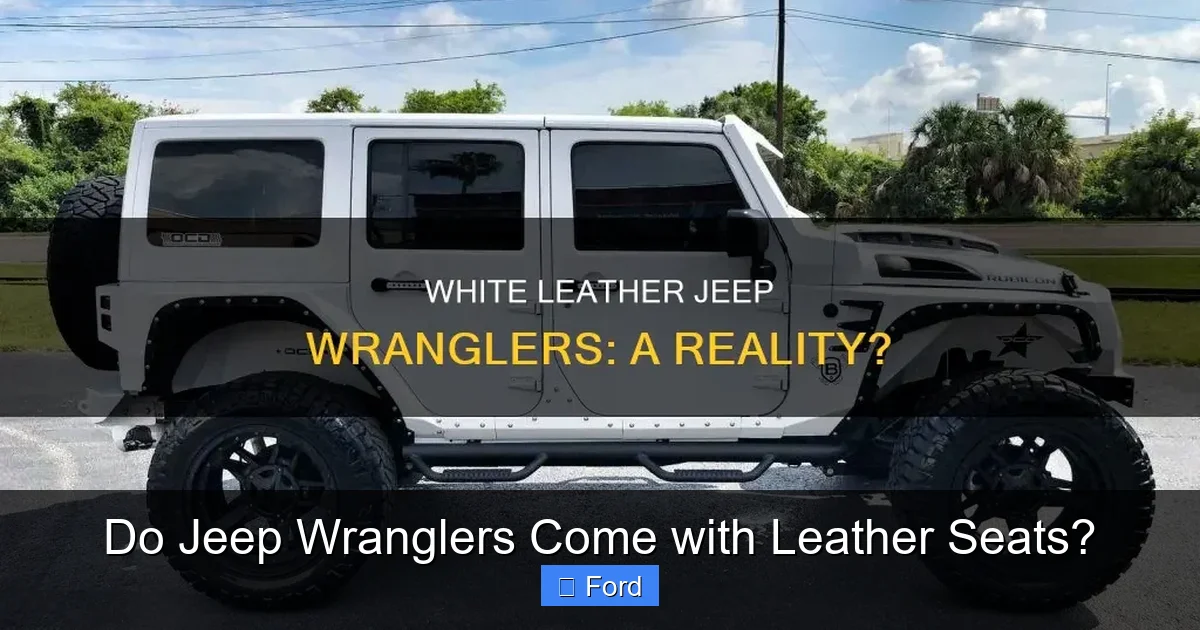
Visual guide about Do Jeep Wranglers Come with Leather Seats?
Image source: shunauto.com
The JK Generation (2007-2018)
The JK was a massive evolution from the TJ, offering more space and comfort. Leather was available, but it was often tied to the Premium Leather Group on Sahara and Rubicon models. This group typically included leather-trimmed seats, a leather-wrapped steering wheel, and sometimes heated front seats. A key note for JK owners and buyers: the leather quality and style changed over the long 12-year run. Early JKs (2007-2010) had a different seat design than the refreshed “JKU” Unlimited models from 2011 onward. Always verify the specific options on the window sticker.
The Current JL Generation (2018-Present)
The JL brought Wranglers into the modern age with more aluminum, improved fuel economy (for a Wrangler!), and a significantly more refined interior. Jeep expanded luxury options. Leather became more accessible and was often packaged with other desirable features. On the JL:
- Sahara: Leather is frequently part of the “Premium Interior Group” or similar.
- Rubicon: Leather is a common option, often paired with the “Premium Interior Group” or “Convenience Group.”
- High Altitude: Black leather seats are a signature, often standard.
- Unlimited (4-door) vs. 2-door: There’s no difference in leather availability based on the number of doors; it’s purely a trim/package issue.
The JL also introduced more advanced features that pair well with leather, like power-adjustable driver’s seats with memory on higher trims.
The Gladiator JT (2020-Present)
The Gladiator, being a Wrangler-based pickup truck, shares its platform and most interior components with the JL Wrangler. Therefore, its leather availability mirrors the JL almost exactly. You’ll find leather most commonly on Overland (Gladiator’s equivalent to Sahara), Rubicon, and High Altitude trims. The same package rules apply. So, if you’re looking at a Gladiator with a leather interior, you’re essentially looking at a Wrangler JL’s option strategy.
Decoding the Window Sticker (Monroney Label): Your Proof of Leather
This is the most critical skill for any Wrangler buyer. Never, ever trust a seller’s word alone when it comes to factory options. You need to see the Monroney label, the official window sticker that came with the car when it was new. It lists every single option the vehicle was built with, along with its cost.

Visual guide about Do Jeep Wranglers Come with Leather Seats?
Image source: shunauto.com
When you have the window sticker (or a digital reproduction), look for these key items:
- Explicit Mention: It will say something like “Leather-Trimmed Seats,” “Premium Leather Group,” or “Leather Seats.”
- Package Names: Identify the package that includes the leather (e.g., “Premium Interior Group”). The sticker will list all contents of that package.
- Interior Code: Sometimes, the interior description code (a series of letters/numbers) can be decoded to reveal the material. A “K” or “L” code often denotes leather, but this varies by year. Your best bet is the plain English description.
If a seller cannot produce the original window sticker, you can often get a copy from a Jeep dealership by providing the VIN. For used vehicles, services like CarFax or AutoCheck may also include a partial option list. Seeing is believing—the sticker is your ultimate proof.
The Aftermarket Reality: Leather Seat Covers and Full Re-Upholstery
What if the Wrangler you love doesn’t have factory leather? Don’t despair. The aftermarket world for Jeeps is gigantic, and leather seat modifications are a cornerstone of it. There are two main paths:
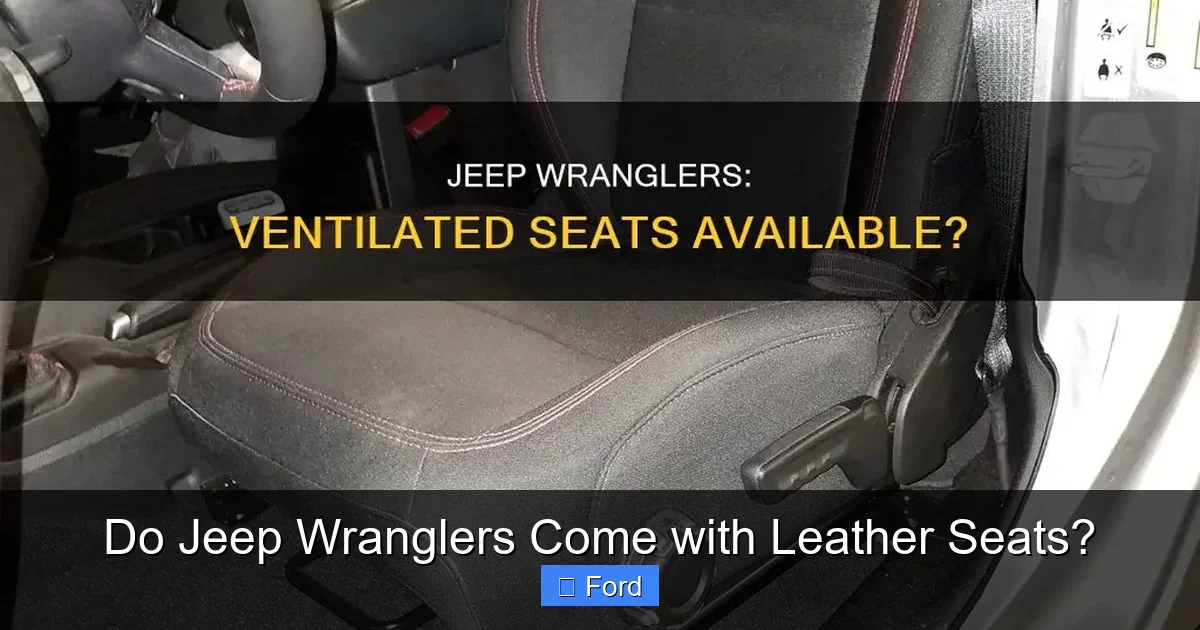
Visual guide about Do Jeep Wranglers Come with Leather Seats?
Image source: shunauto.com
1. Premium Seat Covers
This is the most popular, affordable, and reversible method. Companies like Wrangler-specific brands offer custom-fit seat covers made from genuine leather, faux leather (vinyl), or advanced synthetic materials. They slip over your existing seats and are secured with straps, zippers, or Velcro. High-quality covers can look and feel remarkably like factory leather. They’re perfect if you want the leather aesthetic and feel but have a cloth-equipped Wrangler. They also protect your original seats from wear, sun damage, and spills—a huge plus for an adventure vehicle. For parents, this is a common solution; you can find excellent covers that are compatible with child car seats, as discussed in guides for the best infant car seats for a Jeep Wrangler.
2. Complete Seat Re-Upholstery
This is the permanent, professional, and more expensive route. A skilled upholsterer will remove your existing seat fabric and replace it entirely with new leather. This can be done with OEM (factory) leather skins if you can source them, or with aftermarket leather of your choice. This option gives you a truly integrated, factory-like result and allows for customization (like two-tone colors). However, it’s irreversible and costly. It’s typically pursued by owners of high-mileage Jeeps with torn seats or those restoring a classic Wrangler to a custom luxury spec.
Caring for Leather Seats in a Wrangler: A Non-Negotiable
Let’s be real: a Jeep Wrangler is not a garage queen. It’s a tool for adventure, subject to sun, sand, mud, water, and dust. Leather in a Wrangler needs diligent care to survive and thrive. Neglect leads to cracking, fading, and stiffness.
Your Leather Care Toolkit:
- Gentle Cleaner: Use a pH-balanced leather cleaner. Avoid harsh soaps, saddle soap (too alkaline), or household cleaners. Specialized cleaners for synthetic leather are also available if your seats are that material.
- Conditioner: This is the most important step. A quality leather conditioner replenishes oils lost to sun and heat, keeping the leather supple and preventing cracks. Apply every 1-3 months, more often if the Jeep sees constant sun. For specific brands, reviews of the best leather conditioners for Lexus seats often highlight products that work universally well on automotive leather.
- Protectant: A UV-blocking protectant spray adds a sacrificial layer against sun damage. This is crucial for the Wrangler’s large windows and frequent top-down driving.
Practical Routine: Vacuum seats regularly to remove abrasive grit. Clean with a damp cloth and leather cleaner as needed, then condition. For heavy off-road days where seats get soaked, dry them thoroughly as soon as possible. Consider using seat covers during particularly messy adventures to save your leather the hassle. If you’re looking for covers to safeguard your investment, check out articles on the top car seat covers to safeguard your leather seats.
Making Your Decision: Is Leather Right for Your Wrangler?
Now for the personal part. Should you seek out a Wrangler with leather, or is cloth the better choice? Here’s the breakdown.
Choose Factory Leather If: You prioritize daily comfort and a premium feel, your Wrangler is primarily a road/light trail vehicle or a family hauler, you plan to keep the vehicle long-term and want a durable (with care) interior, and your budget allows for a higher trim level. Leather can also be easier to wipe clean than cloth for spills and pet hair.
Stick with Cloth (or Use Covers) If: You are a hardcore off-roader who regularly subjects the interior to mud, water, and heavy gear abrasion, you want the most authentic, utilitarian “Jeep” experience, your budget is fixed on a base Sport model, or you prefer a temperature-neutral seat surface (leather gets scorching hot in summer and freezing cold in winter without heated/cooled seats). Many dedicated off-roaders prefer rugged cloth because it’s less concerned about scuffs and doesn’t get as hot.
The Hybrid Approach: This is where the aftermarket shines. Buy the cloth Wrangler you want on your budget, and immediately install high-quality, custom-fit leather seat covers. You get the best of both worlds: the lower initial cost and ruggedness of cloth underneath, with the luxurious look and feel of leather on top, plus added protection. It’s a very popular and sensible modification.
Frequently Asked Questions
Can I get a Jeep Wrangler with leather seats in a manual transmission?
Yes, absolutely. The availability of leather seats is tied to the trim level and packages, not the transmission type. You can find both manual and automatic Wranglers with factory leather, most commonly on Sahara and Rubicon trims. The transmission choice is a separate option on the window sticker.
Do all 4-door Wrangler Unlimited models have leather?
No. The number of doors (2-door vs. 4-door Unlimited) does not determine leather availability. A base Sport Unlimited will have cloth seats, while a Sahara Unlimited may have leather if equipped with the right package. You must check the specific vehicle’s trim and options.
Is the leather in a Wrangler real or fake (vinyl)?
>Most factory leather in modern Wranglers (JL/JT generation) is genuine leather. However, some lower-cost “leather-trimmed” options might use a high-quality vinyl or synthetic leather (often called “Leatherette” or “Eco-Leather”) on the seating surfaces with leather on the bolsters and steering wheel. The window sticker will specify “Genuine Leather” if it is the real thing. Aftermarket covers come in both genuine and synthetic options.
How much does it cost to add leather to a Wrangler from the factory?
It varies wildly by model year and trim. On a new JL Wrangler, the premium interior group that includes leather can add $1,500 to $3,000+ to the sticker price, depending on other bundled features (like heated seats). On the used market, a Wrangler with factory leather will typically command a $1,000 to $3,000 premium over an identical cloth model, depending on condition and mileage.
Are leather seats harder to keep clean in a Wrangler than cloth?
They require a different approach. Spills sit on top of leather and can be wiped up quickly, which is an advantage over cloth that soaks stains in. However, leather is susceptible to cracking from sun exposure and can be slippery. The main challenge is maintenance: leather *must* be conditioned regularly to prevent drying and cracking, especially in a vehicle with a removable top. Cloth just needs vacuuming and occasional shampooing.
What about leather on the steering wheel and shift boots?
Leather-wrapped steering wheels are very common and often come standard on trims above the base Sport. A leather shift boot/trim is also frequently included with interior upgrade packages. These smaller leather pieces are a good indicator that a higher trim or package was selected, which may also include leather seats. If you see a leather wheel, it’s worth investigating if the seats are leather too.