Do I Have to Use Subaru Coolant

Contents
- 1 Key Takeaways
- 2 📑 Table of Contents
- 3 Do I Have to Use Subaru Coolant? The Real Answer
- 4 What Makes Subaru Coolant Different?
- 5 Can You Use Third-Party Coolant in Your Subaru?
- 6 Understanding Coolant Types and Compatibility
- 7 Subaru Coolant and Warranty Coverage
- 8 How to Properly Maintain Your Subaru’s Cooling System
- 9 Cost Comparison: Subaru Coolant vs. Third-Party Options
- 10 Conclusion: Make the Smart Choice for Your Subaru
- 11 Frequently Asked Questions

Tire Pressure Monitoring System (TPMS)

Windshield Washer Fluid

Steering Wheel Cover

Solar Car Battery Maintainer
You don’t have to use Subaru-branded coolant, but using the right type is crucial. Subaru recommends specific coolant formulations to protect your engine, prevent corrosion, and maintain warranty coverage. Choosing the correct coolant ensures long-term reliability and performance.
Key Takeaways
- Subaru coolant is not mandatory, but highly recommended: While you can use compatible third-party coolants, Subaru’s formulation is designed specifically for your vehicle’s engine and cooling system.
- Using the wrong coolant can cause damage: Incompatible coolants may lead to corrosion, overheating, or seal degradation, especially in turbocharged models.
- Warranty considerations matter: Using non-approved coolant may void your powertrain warranty if damage is linked to improper fluid use.
- Subaru uses a hybrid organic acid technology (HOAT) coolant: This long-life formula offers superior protection and lasts up to 105,000 miles or 10 years.
- Always check your owner’s manual: Your specific model and year will dictate the exact coolant specification required.
- Mixing coolants can be risky: Combining different types (e.g., IAT with OAT) can reduce effectiveness and cause sludge formation.
- Professional service ensures accuracy: Dealerships and certified mechanics have the tools and knowledge to properly flush and refill your cooling system.
📑 Table of Contents
- Do I Have to Use Subaru Coolant? The Real Answer
- What Makes Subaru Coolant Different?
- Can You Use Third-Party Coolant in Your Subaru?
- Understanding Coolant Types and Compatibility
- Subaru Coolant and Warranty Coverage
- How to Properly Maintain Your Subaru’s Cooling System
- Cost Comparison: Subaru Coolant vs. Third-Party Options
- Conclusion: Make the Smart Choice for Your Subaru
Do I Have to Use Subaru Coolant? The Real Answer
So, you’re standing in the auto parts store, staring at a wall of coolant bottles, wondering: *Do I really need to buy Subaru coolant, or can I just grab the cheapest green stuff on the shelf?* It’s a common question among Subaru owners, and the answer isn’t as simple as “yes” or “no.” The truth lies somewhere in the middle—between brand loyalty, technical specifications, and long-term engine health.
Your Subaru’s engine is a finely tuned machine. Whether you drive a rugged Outback, a sporty WRX, or a family-friendly Forester, the cooling system plays a vital role in keeping everything running smoothly. Coolant—also known as antifreeze—does more than just prevent freezing in winter. It regulates engine temperature, prevents overheating, and protects internal components from rust and corrosion. That’s why using the right kind isn’t just a suggestion; it’s a necessity.
But here’s the good news: you don’t *have* to buy coolant with the Subaru logo on it. However, you *do* have to use coolant that meets Subaru’s strict specifications. And that’s where things get tricky. Not all coolants are created equal, and using the wrong one—even if it’s from a reputable brand—can lead to costly repairs down the road. In this guide, we’ll break down everything you need to know about Subaru coolant, from what makes it special to how to choose the right alternative if you decide to go off-brand.
What Makes Subaru Coolant Different?
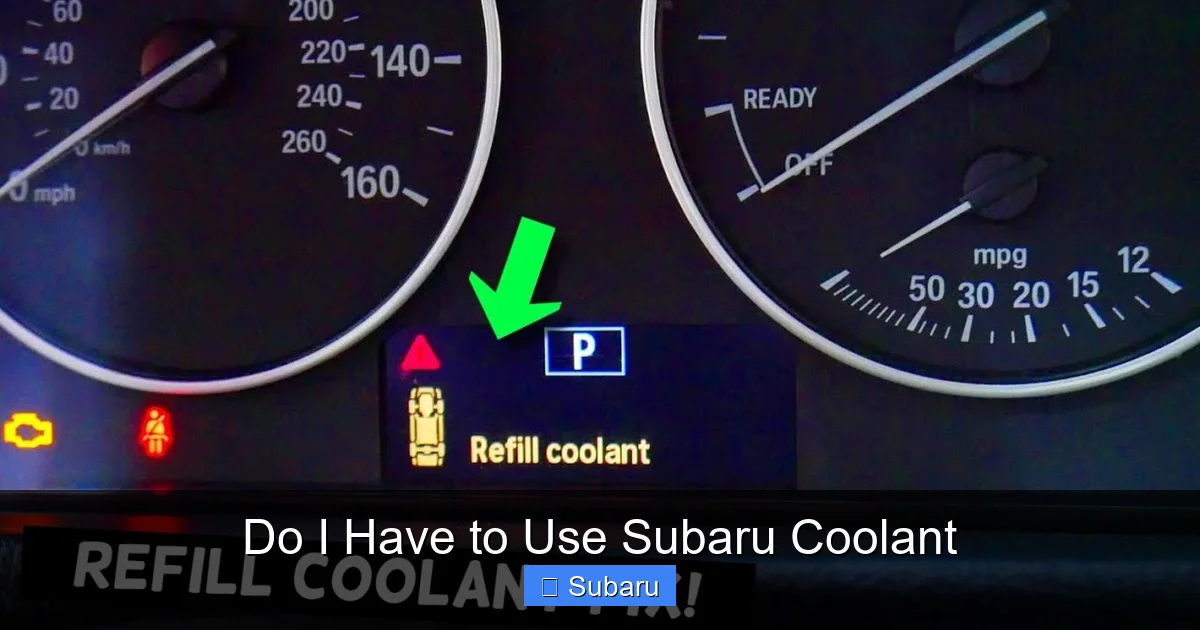
Visual guide about Do I Have to Use Subaru Coolant
Image source: as2.ftcdn.net
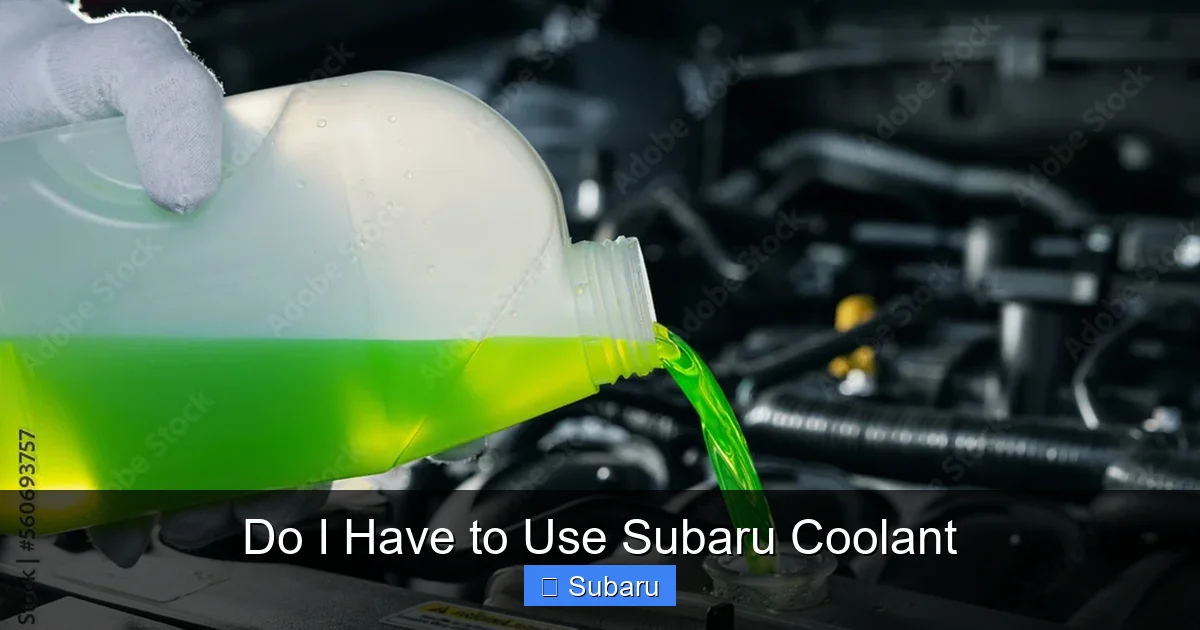
Subaru doesn’t just slap its name on any old coolant. The company has developed a specific formulation tailored to the unique needs of its engines. Most modern Subarus use a hybrid organic acid technology (HOAT) coolant, which combines the benefits of traditional inorganic additives with modern organic acids. This blend offers long-lasting protection without the rapid degradation seen in older coolant types.
HOAT Coolant: The Science Behind Subaru’s Formula
HOAT coolants are known for their extended service life and superior corrosion protection. Unlike traditional inorganic additive technology (IAT) coolants—which require frequent changes every 2–3 years—HOAT coolants can last up to 10 years or 105,000 miles. That’s a huge advantage for Subaru owners who want low maintenance and reliable performance.
The “hybrid” part of HOAT means it includes both organic acids (which protect aluminum components) and a small amount of inorganic additives (which guard against cavitation and erosion in water pumps). This dual-action approach is especially important in Subaru’s horizontally opposed (boxer) engines, which have tight tolerances and are sensitive to thermal stress.
Why Subaru Recommends Its Own Coolant
Subaru engineers design their cooling systems with specific materials in mind—aluminum radiators, plastic reservoirs, rubber hoses, and composite water pumps. The company’s coolant is formulated to be compatible with all these components. It resists the formation of scale and sludge, prevents electrolysis (a form of corrosion caused by electrical current in the coolant), and maintains proper pH levels over time.
Using Subaru-approved coolant ensures that all these parts work together harmoniously. For example, some third-party coolants may contain silicates or phosphates that can react with Subaru’s aluminum parts, leading to pitting or leaks. Even if a coolant claims to be “universal,” it might not meet Subaru’s exact standards.
Can You Use Third-Party Coolant in Your Subaru?
Visual guide about Do I Have to Use Subaru Coolant
Image source: i.ytimg.com
Now for the million-dollar question: *Can you use non-Subaru coolant?* The short answer is yes—but with major caveats. You can use third-party coolant as long as it meets Subaru’s technical specifications. But how do you know if it does?
Checking for Subaru Approval
The easiest way to ensure compatibility is to look for coolants that are explicitly labeled as meeting Subaru’s standards. Subaru’s official specification for most models is **Subaru Super Coolant (Part Number: K0370AL000)**. This is a pink or red HOAT coolant designed for use in all Subaru vehicles from 1999 onward.
If you’re considering a third-party brand, check the label for phrases like:
– “Meets Subaru Super Coolant specifications”
– “Compatible with Subaru HOAT coolant”
– “For use in Subaru vehicles”
Brands like Zerex G-05, Peak Extended Life, and Prestone Max often offer HOAT formulations that are compatible with Subaru. However, always double-check the product details or consult the manufacturer’s website to confirm compatibility.
Risks of Using the Wrong Coolant
Using an incompatible coolant can lead to a host of problems. Here are a few real-world examples:
– **Corrosion in the radiator:** A 2015 Outback owner used a generic green IAT coolant instead of HOAT. Within two years, the aluminum radiator developed pinhole leaks due to corrosion.
– **Water pump failure:** A 2018 WRX STI owner mixed HOAT with a phosphate-heavy coolant. The resulting chemical reaction caused sludge buildup, leading to premature water pump failure.
– **Overheating and engine damage:** A 2012 Forester owner used a coolant with the wrong boiling point. During a summer road trip, the engine overheated, warping the cylinder heads.
These stories aren’t rare. Even small mistakes—like topping off with the wrong type—can compromise the entire cooling system.
Understanding Coolant Types and Compatibility
To make an informed decision, it helps to understand the different types of coolant and how they interact with your Subaru.
The Four Main Coolant Types
There are four primary coolant formulations used in modern vehicles:
1. **Inorganic Additive Technology (IAT):** The oldest type, typically green in color. Requires frequent changes (every 2 years). Not recommended for Subarus.
2. **Organic Acid Technology (OAT):** Usually orange or red. Longer life (5+ years), but may not protect all Subaru components.
3. **Hybrid Organic Acid Technology (HOAT):** A blend of IAT and OAT. Pink, red, or purple. Used in most modern Subarus.
4. **Diesel Engine Coolant (DEG):** Designed for heavy-duty engines. Not suitable for passenger vehicles.
Subaru’s Super Coolant falls under the HOAT category. It’s formulated to provide the corrosion resistance of OAT with the anti-cavitation properties of IAT.
Can You Mix Coolant Types?
Mixing coolants is one of the biggest mistakes Subaru owners make. Even if two coolants look similar, their chemical compositions can be incompatible. For example:
– Mixing HOAT with IAT can cause gel formation and reduce heat transfer.
– Combining OAT with HOAT may neutralize protective additives.
– Adding water (even distilled) without the proper coolant ratio can dilute protection.
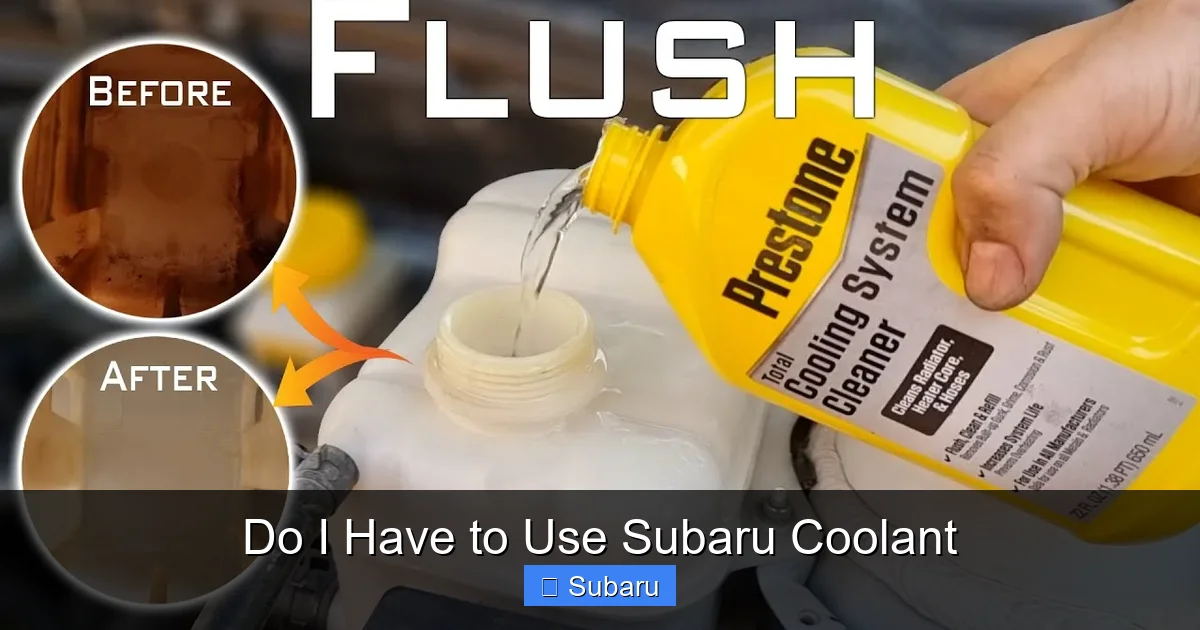
If you accidentally mix coolants, the best course of action is a full system flush. This involves draining the old coolant, flushing the radiator and engine block with distilled water, and refilling with the correct type.
Subaru Coolant and Warranty Coverage
One of the most overlooked aspects of coolant choice is its impact on your vehicle’s warranty. Subaru’s powertrain warranty covers major components like the engine and transmission, but only if they’re properly maintained.
How Coolant Affects Warranty Claims
If your engine fails due to overheating or corrosion, Subaru may investigate the cause. If they find that you used an unapproved coolant or failed to perform regular maintenance, they could deny your warranty claim.
For example, a 2020 Crosstrek owner experienced a cracked engine block due to overheating. Subaru’s service center discovered that the coolant was a generic green IAT type, not HOAT. The warranty claim was denied because the damage was attributed to improper maintenance.
To protect your warranty:
– Use coolant that meets Subaru’s specifications.
– Keep records of coolant changes and flushes.
– Have service performed at a Subaru dealership or certified mechanic.
Extended Warranty and Maintenance Plans
If you’ve purchased an extended warranty or maintenance plan, the rules are even stricter. These plans often require that all fluids—including coolant—meet OEM (original equipment manufacturer) standards. Using third-party coolant without approval could void your coverage.
How to Properly Maintain Your Subaru’s Cooling System
Using the right coolant is only part of the equation. Proper maintenance ensures your cooling system lasts as long as your Subaru.
When to Change Your Coolant
Subaru recommends changing the coolant every 105,000 miles or 10 years—whichever comes first. However, this interval can vary based on driving conditions. If you frequently tow, drive in extreme temperatures, or live in a dusty environment, consider changing it sooner.
Signs that your coolant needs attention include:
– Overheating or high engine temperature
– Coolant leaks under the car
– Discolored or sludgy coolant
– Sweet smell inside the cabin (a sign of a heater core leak)
DIY vs. Professional Coolant Flush
You can perform a coolant flush at home, but it requires care and the right tools. Here’s a basic overview:
1. **Let the engine cool completely.**
2. **Drain the old coolant** from the radiator and engine block.
3. **Flush the system** with distilled water until it runs clear.
4. **Refill with the correct coolant** (50/50 mix with distilled water, unless using pre-mixed).
5. **Bleed air from the system** by running the engine with the radiator cap off.
However, professional service is often the safer choice. Dealerships use vacuum fill systems that remove air pockets more effectively, reducing the risk of overheating.
Tips for Topping Off Coolant
If your coolant level is low, don’t just pour in any fluid. Always use the same type of coolant that’s already in the system. If you’re unsure, it’s better to have the system checked than to risk contamination.
Never top off with plain water—even in an emergency. Water alone lacks corrosion inhibitors and can cause electrolysis. If you must add fluid temporarily, use distilled water, but plan for a proper flush as soon as possible.
Cost Comparison: Subaru Coolant vs. Third-Party Options
One reason many owners consider third-party coolant is cost. Subaru Super Coolant typically costs $15–$20 per quart, while some generic brands are under $10. But is the savings worth the risk?
Price vs. Performance
While third-party coolants may be cheaper upfront, they could cost you more in the long run. A failed water pump or radiator can run $500–$1,500 to repair. In contrast, a full coolant system service at a Subaru dealership costs around $150–$250.
Consider this: spending an extra $10 on the right coolant could save you $1,000 in repairs. That’s a smart investment.
Where to Buy Subaru Coolant
You can purchase Subaru Super Coolant at:
– Subaru dealerships
– Authorized parts retailers (like SubaruParts.com)
– Major auto parts stores (Advance Auto, O’Reilly, AutoZone)
Buying from a Subaru dealer ensures authenticity, but online retailers often offer better prices with fast shipping.
Conclusion: Make the Smart Choice for Your Subaru
So, do you *have* to use Subaru coolant? Technically, no. But should you? Absolutely. Your Subaru’s engine is a precision instrument, and the cooling system is its lifeline. Using the right coolant—whether it’s Subaru-branded or a compatible third-party alternative—protects that investment and keeps your vehicle running smoothly for years to come.
The key is to prioritize compatibility over cost. Always check your owner’s manual, follow Subaru’s recommendations, and avoid mixing coolant types. When in doubt, consult a professional. A small investment in the right coolant today can prevent major headaches tomorrow.
Your Subaru deserves the best. Give it the care it needs, and it will reward you with reliability, performance, and peace of mind on every mile of your journey.
Frequently Asked Questions
Can I use regular green coolant in my Subaru?
No, regular green coolant (IAT) is not recommended for modern Subarus. It lacks the long-life protection and corrosion inhibitors found in HOAT coolants and can cause damage over time.
What happens if I mix Subaru coolant with another type?
Mixing coolants can lead to sludge formation, reduced heat transfer, and corrosion. If you accidentally mix types, perform a full system flush as soon as possible.
How often should I change my Subaru’s coolant?
Subaru recommends changing the coolant every 105,000 miles or 10 years. However, check your owner’s manual and consider driving conditions when planning maintenance.
Is Subaru coolant the same as other HOAT coolants?
Not exactly. While many HOAT coolants are compatible, Subaru’s formula is specifically designed for its engines. Always verify compatibility before use.
Can I top off my coolant with water?
Only in an emergency, and only with distilled water. Water lacks corrosion protection and can cause damage. Replace with proper coolant as soon as possible.
Will using third-party coolant void my warranty?
It might, if damage is linked to improper coolant use. To protect your warranty, use coolant that meets Subaru’s specifications and keep service records.