
Cooper Discoverer ST Maxx vs Goodyear DuraTrac: Which Is Better?

In my fifteen years as a shop mechanic, I have mounted both tires on hundreds of heavy trucks. If you want maximum sidewall strength on sharp rocks, pick the Cooper Discoverer S/T MAXX. If you need top-tier snow grip and lighter mud traction, the Goodyear Wrangler DuraTrac is the clear winner.
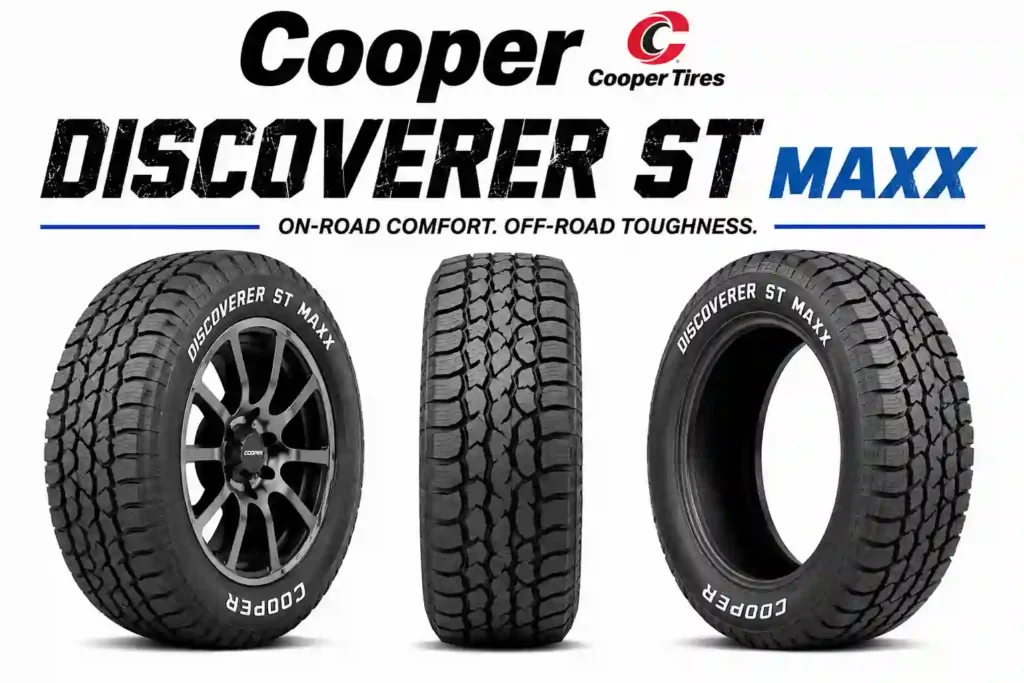
Heavy-Duty Showdown: Cooper ST Maxx vs DuraTrac
Both of these tires sit in the rugged hybrid tire class. They mix all-terrain comfort with mud-terrain bite. Choosing between them comes down to where you drive most.
The Cooper focuses on extreme trail toughness. The Goodyear focuses on versatile grip across winter weather and loose dirt.
Why Choose a Commercial Traction Tire?
Standard all-terrain tires often fail on harsh trails. Pure mud tires wear down too fast on the highway. Commercial hybrid tires give you the sweet spot between both styles.
They use thicker tread blocks and deeper voids. This design clears out debris while maintaining good road manners.
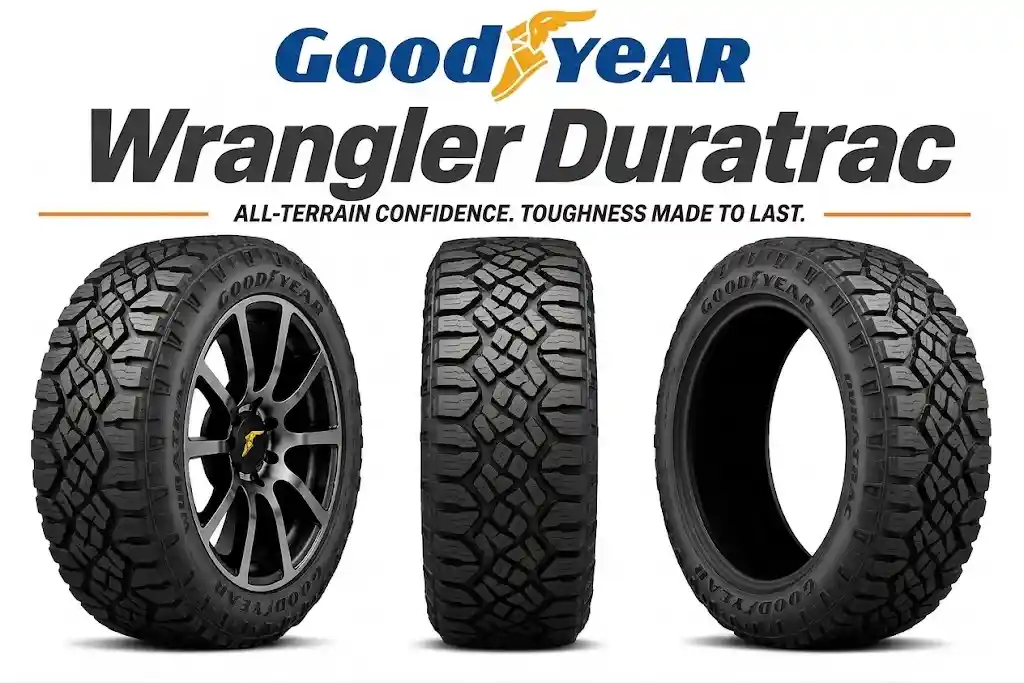
Quick Side-by-Side Spec Comparison
Looking at the raw specs helps show the engineering focus of each tire.
| Feature / Metric | Cooper Discoverer S/T MAXX | Goodyear Wrangler DuraTrac |
| Tire Class | Commercial Traction / Rugged A/T | Commercial Traction / Rugged A/T |
| Sidewall Construction | Armor-Tek3 (3-Ply Polyester) | Standard 2-Ply Polyester |
| Severe Snow Rating | M+S Rated (Studdable) | 3PMSF Certified (Severe Snow) |
| Tread Depth | 18.5/32″ to 19/32″ | 16/32″ to 18/32″ |
| Stone Ejector Ribs | Yes (Integrated tread ribs) | Yes (Shoulder ejector blocks) |
| Mileage Warranty | None (Standard workmanship) | 50,000 Miles (Select sizes) |
The numbers show Cooper builds for sheer physical strength. Goodyear builds for lighter weight and certified winter performance.
Complete Overview of Both Truck Tires
Both models serve full-size trucks, work vans, and overland rigs. Yet their rubber compounds behave very differently under load.
Cooper Discoverer S/T MAXX Overview
The Cooper S/T MAXX uses a heavy cut-and-chip resistant compound. It features a unique 3-ply carcass called Armor-Tek3. This adds a third angled ply to stop trail punctures.
Mechanic’s Rule of Thumb: If your truck visits sharp shale roads, timber paths, or mine sites, buy a 3-ply sidewall tire like the Cooper. It prevents costly trail blowouts.
Goodyear Wrangler DuraTrac Overview
The Goodyear DuraTrac uses stepping tread blocks and TractiveGroove technology. It features deep siping—thin slits cut into the rubber blocks—which creates thousands of biting edges.
This soft, pliable compound stays flexible in freezing cold. That flexibility gives it a clear advantage on packed snow.
Highway Performance and Daily Commuting
Highway driving reveals a big difference in steering response. The tire casing structure changes how your truck feels in turns.
| Highway Category (1-10) | Cooper S/T MAXX | Goodyear DuraTrac |
| Tracking & Centering | 8.8 / 10 | 8.2 / 10 |
| Steering Crispness | 8.5 / 10 | 7.9 / 10 |
| Dry Pavement Braking | 8.0 / 10 | 8.4 / 10 |
| Ride Softness | 7.5 / 10 | 8.3 / 10 |
The Cooper tracks straighter on the open highway because its casing is stiffer. The DuraTrac absorbs small potholes better due to its more pliable sidewall.
Who Should Avoid Highway-Only Driving on These?
Skip both if you drive 90 miles daily on smooth pavement. A standard highway-terrain tire will deliver better fuel economy and a much quieter ride.
Off-Road Performance on Technical Trails
When airing down for technical trails, carcass flex and grip matter most. The contact patch—the actual rubber touching the ground—reacts differently on rocky ledges.
Rock Crawling and Ledge Climbing
The Cooper molds over jagged rocks without tearing. Its thick shoulder lugs wrap down the sidewall to give extra traction in deep ruts.
When I ran these on an overland truck over sharp granite, the Cooper sidewalls took direct hits without a single gouge.
Gravel, Dirt, and Loose Rock Capabilities
Gravel roads can chew soft tire tread to pieces in a few thousand miles.
The Cooper S/T MAXX uses non-directional stone ejector ribs. They push small rocks out before they drill into the carcass. The DuraTrac handles loose dirt well, but sharp gravel can cause minor chunking on its outer lugs over time.
Deep Mud Performance and Self-Cleaning
Mud traction requires wide shoulder voids so the tire cleans itself as it spins.
| Off-Road Condition (1-10) | Cooper S/T MAXX | Goodyear DuraTrac |
| Deep Sticky Mud | 8.0 / 10 | 8.7 / 10 |
| Loose Dry Sand | 8.2 / 10 | 8.5 / 10 |
| Sharp Rocky Shale | 9.5 / 10 | 7.8 / 10 |
| Wet Clay Soil | 8.1 / 10 | 8.6 / 10 |
The Goodyear DuraTrac cleans out sticky mud faster than the Cooper. Its wider shoulder voids throw muck clear of the wheel well with a quick tap of the throttle.
Wet Pavement Grip and Hydroplaning Safety
Wet roads test how fast tread grooves channel standing water away from the contact patch.
| Wet & Snow Metrics (1-10) | Cooper S/T MAXX | Goodyear DuraTrac |
| Standing Water Hydroplaning | 8.0 / 10 | 8.9 / 10 |
| Wet Road Braking | 7.8 / 10 | 8.6 / 10 |
| Packed Snow & Ice | 6.8 / 10 | 9.1 / 10 |
| Deep Slush Evacuation | 7.9 / 10 | 9.0 / 10 |
The DuraTrac stops shorter on wet asphalt thanks to its dense siping. It cuts through oily road film and standing puddles with total composure.
Real-World Winter Performance
The DuraTrac carries the Three-Peak Mountain Snowflake (3PMSF) symbol. That means it passed severe snow testing. The Cooper handles packed snow decently, but it slides earlier on black ice.
Sidewall Durability and Puncture Resistance
Sidewall failure is the main reason drivers get stranded off the grid.
| Durability Factor | Cooper S/T MAXX | Goodyear DuraTrac |
| Sidewall Ply Count | 3-Ply (Armor-Tek3) | 2-Ply Standard |
| Puncture Resistance | Exceptional | Moderate |
| Cut & Chip Resistance | High | Medium |
| Rim Flange Protection | Heavy Rubber Guard | Built-In Lip Protector |
The Cooper S/T MAXX is significantly stronger here. Its 3-ply angled cords deflect sharp roots, steel scrap, and jagged shale that could slit a standard 2-ply tire.
Towing Capacity and Heavy Load Performance
Carrying a heavy camper or pulling a gooseneck trailer changes tire demands. You need a stiff carcass that prevents rear-end sway at 65 mph.
Shop Insight: A squirmy tire makes heavy trailers wander in crosswinds. Stiff E-load tires keep your truck planted under tongue weight.
The S/T MAXX holds heavy loads with zero lateral wiggle. The DuraTrac handles rated payload safely, but its taller tread blocks can feel slightly softer during sudden lane changes.
Road Noise Levels at Highway Speeds
Noise, Vibration, and Harshness (NVH) is a major buying factor for truck owners.
New vs Worn Noise Levels
Brand new, the DuraTrac runs surprisingly quiet. However, as it wears past 25,000 miles, the open shoulder blocks create a noticeable highway drone.
The Cooper starts with a steady, low-frequency hum. Because its tread blocks are interlocked, the pitch stays consistent throughout the life of the tire.
Tread Life and Mileage Warranty Comparison
Tread life depends on proper tire rotations every 5,000 miles.
| Ownership Factor | Cooper S/T MAXX | Goodyear DuraTrac |
| Expected Tread Life | 45,000 – 55,000 Miles | 40,000 – 50,000 Miles |
| Treadwear Uniformity | Excellent | Prone to heel-toe cupping |
| Factory Mileage Plan | Workmanship Only | Up to 50,000 Miles |
The Cooper compound resists uneven wear very well. The DuraTrac requires strict rotation patterns to prevent heel-toe block wear.
Price vs Long-Term Value Breakdown
Upfront cost is only one part of tire value. You must factor in longevity and repair costs.
| Financial Factor | Cooper S/T MAXX | Goodyear DuraTrac |
| Average Price per Tire | $$- Moderate \vert{}$$$ – Premium | |
| Cost per 10,000 Miles | Very Low | Low |
| Off-Road Hazard Risk | Low (Armor-Tek3) | Moderate |
The Cooper often costs slightly less per tire while lasting just as long. That makes it a fantastic value for heavy-duty work trucks.
Comprehensive Pros and Cons List
Here is the straightforward breakdown of how both tires stack up.
Cooper Discoverer S/T MAXX
- Pros:
- Bulletproof 3-ply Armor-Tek3 sidewalls.
- Outstanding stability while towing heavy loads.
- High resistance to gravel chunking.
- Cons:
- Heavy weight hurts city fuel mileage.
- Lacks a Three-Peak severe snow rating.
Goodyear Wrangler DuraTrac
- Pros:
- Certified 3PMSF severe winter weather grip.
- Excellent self-cleaning traction in sticky mud.
- Lighter unsprung weight preserves throttle feel.
- Cons:
- Thinner 2-ply sidewalls on technical rocks.
- Tread drone gets louder with higher mileage.
Which All-Terrain Tire Is Actually Better?
Choose the Cooper S/T MAXX if:
- You drive on sharp rocky trails or gravel lease roads.
- You frequently tow heavy trailers and want zero sway.
- You need maximum sidewall puncture protection.
Choose the Goodyear DuraTrac if:
- You drive through severe winter snow and icy mountain passes.
- You encounter deep mud and wet clay frequently.
- You want a softer ride on daily city commutes.
Final Verdict: The Best Choice for Trucks
The Goodyear Wrangler DuraTrac wins the daily driving and winter category due to its snow certification and wet grip.
However, the Cooper Discoverer S/T MAXX is the superior work and overland truck tire. Its 3-ply Armor-Tek3 carcass delivers unmatched durability where it matters most.
Before ordering, check your truck’s driver-side door jamb placard to confirm your exact tire size, load index, and cold inflation pressure ratings.
FAQ for Cooper Discoverer ST Maxx vs Goodyear DuraTrac
Is Cooper ST Maxx 3PMSF snow rated?
No, the ST Maxx is M+S rated with stud pins, but lacks the official Three-Peak Mountain Snowflake winter stamp.
Which tire is better for deep snow?
The Goodyear DuraTrac is much better in deep snow thanks to its 3PMSF rating and dense siping pattern.
Are Cooper ST Maxx sidewalls 3-ply?
Yes, the Cooper ST Maxx features a heavy-duty Armor-Tek3 triple-ply casing to prevent rock punctures.