Car Not Starting but Battery Working
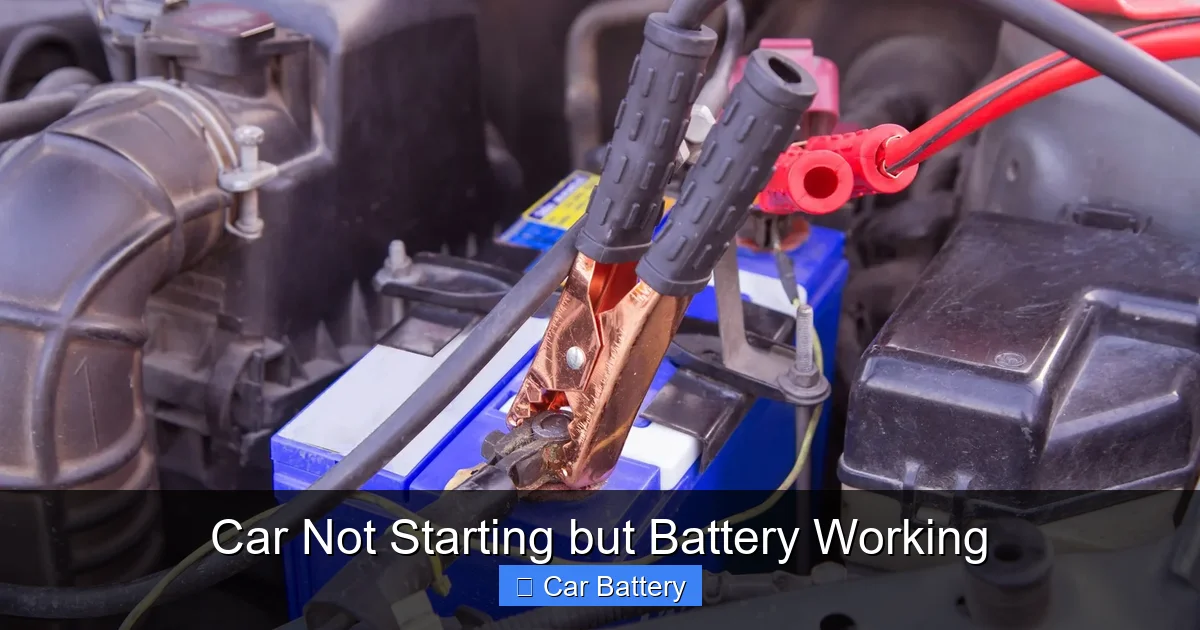
If your car won’t start but the battery is working—lights, radio, and dashboard are on—it’s likely not a dead battery. This frustrating issue often stems from problems with the starter, ignition switch, fuel system, or engine sensors. Understanding these hidden culprits can save you time, money, and a tow truck call.
You’re running late for work, you hop in the car, turn the key—and nothing happens. But wait… the dashboard lights up, the radio plays, and the interior lights are bright. So why won’t the engine start? It’s one of the most confusing and frustrating experiences for any driver: your car not starting but battery working just fine.
At first glance, it seems like a contradiction. After all, if the battery has power, shouldn’t the car start? Not necessarily. Modern vehicles rely on a complex web of electrical systems, sensors, and mechanical parts that must all work in harmony. The battery might be supplying enough juice to power accessories, but that doesn’t guarantee it can deliver the high burst of current needed to crank the engine. Or worse—the battery is fine, but something else in the starting system has failed.
This guide will walk you through the most common reasons your car won’t start despite having a working battery. We’ll cover everything from simple fixes you can try at home to more serious issues that require professional help. Whether you’re dealing with a clicking noise, a silent ignition, or an engine that cranks but won’t fire, we’ve got you covered. By the end, you’ll know exactly what to check—and when it’s time to call in the experts.
In This Article
- 1 Key Takeaways
- 2 📑 Table of Contents
- 3 Understanding Why a Working Battery Doesn’t Guarantee a Start
- 4 Common Causes When Your Car Won’t Start but Battery Is Working
- 5 How to Diagnose the Problem Step by Step
- 6 When to Call a Mechanic
- 7 Preventative Maintenance to Avoid Future No-Starts
- 8 Conclusion
- 9 Frequently Asked Questions
- 9.1 Why does my car click but not start if the battery is working?
- 9.2 Can a bad alternator cause a no-start even with a working battery?
- 9.3 How do I know if my fuel pump is bad?
- 9.4 Is it safe to jump-start a car that won’t start?
- 9.5 Can cold weather cause a car not to start even with a good battery?
- 9.6 What should I do if my car cranks but won’t start?
Key Takeaways
- Battery power ≠ engine start: Just because lights and electronics work doesn’t mean the battery can deliver enough cranking amps to start the engine.
- Starter motor failure is common: A clicking sound when turning the key often points to a faulty starter or solenoid.
- Ignition switch issues mimic battery problems: Worn switches may send power to accessories but not the starter circuit.
- Fuel delivery matters: No fuel pressure or a bad fuel pump can prevent startup even with a strong battery.
- Sensors and relays play a role: Faulty crankshaft position sensors or blown fuses can stop the engine from firing.
- Safety first: Always disconnect the battery before inspecting electrical components to avoid shocks or shorts.
- When to call a pro: If basic checks don’t help, a mechanic with diagnostic tools can pinpoint complex issues quickly.
📑 Table of Contents
Understanding Why a Working Battery Doesn’t Guarantee a Start
It’s easy to assume that if your car’s lights, radio, and dashboard are functioning, the battery is in good shape—and therefore the problem must lie elsewhere. But that assumption can be misleading. A battery can show voltage and power low-draw devices like interior lights or the infotainment system while still being unable to deliver the high amperage required to turn over the engine.
Car batteries are designed to provide two types of power: steady low-current power for accessories and a short, high-current burst for starting. This burst—often 100 to 300 amps—is what spins the starter motor fast enough to ignite the engine. If the battery is weak, corroded, or nearing the end of its life, it may pass the “lights-on” test but fail under load. That’s why a battery that seems fine can still leave you stranded.
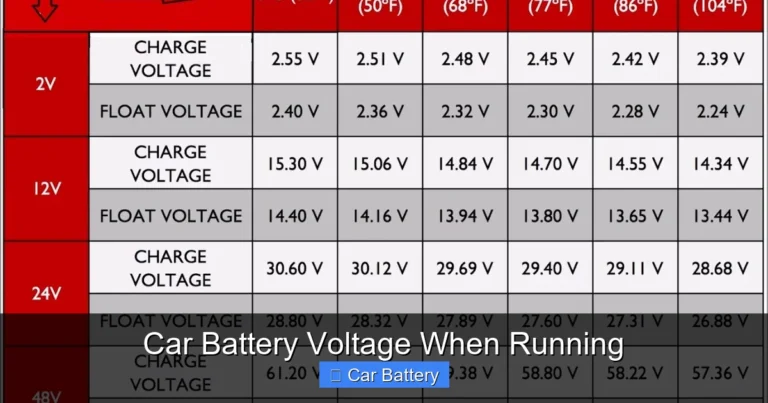
Another factor is voltage drop. Even a small resistance in the battery cables or connections can reduce the effective voltage reaching the starter. For example, a battery showing 12.6 volts at rest might drop to 9 volts or lower when cranking—below the threshold needed to engage the starter. This is especially common in cold weather, when battery performance naturally declines.
So before you assume the battery is the hero of the story, consider this: it might be playing a supporting role while another component takes the blame. The key is to test the battery under load, not just at idle. A simple load test at an auto parts store can reveal if your battery is truly up to the task. If it passes, you can rule out the battery and focus on the real culprit.
Common Causes When Your Car Won’t Start but Battery Is Working
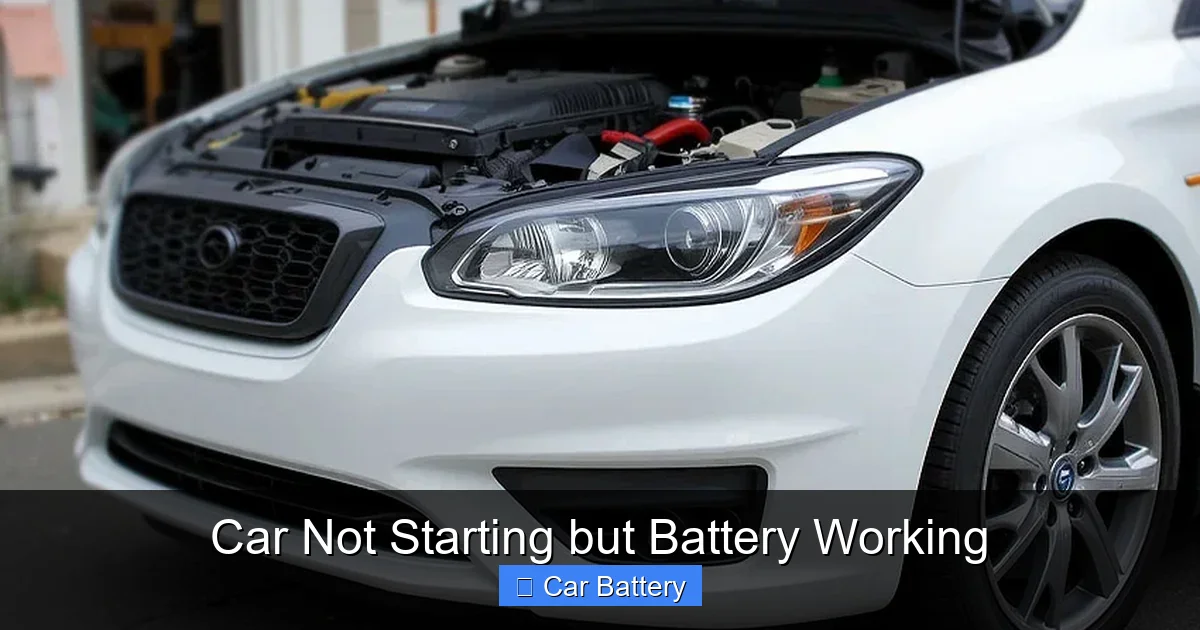
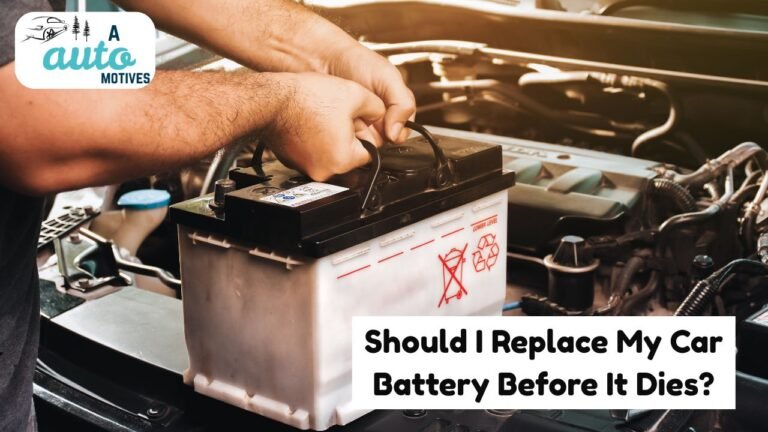
Visual guide about Car Not Starting but Battery Working
Image source: autoowa.com
When your car refuses to start despite a seemingly healthy battery, several components could be at fault. Let’s break down the most common causes, starting with the ones you can often diagnose yourself.
1. Faulty Starter Motor or Solenoid
The starter motor is the muscle behind engine ignition. When you turn the key, the starter solenoid engages, sending a surge of electricity to the motor, which then spins the engine’s flywheel. If either the motor or solenoid fails, the engine won’t crank—even if the battery is fully charged.
A classic sign of starter trouble is a rapid clicking sound when you turn the key. This usually means the solenoid is receiving power but can’t complete the circuit to engage the motor. Other symptoms include a single loud click followed by silence, or a grinding noise during attempted starts.
Starters can fail due to worn brushes, internal shorts, or mechanical wear. They’re often located near the transmission, making them hard to access, but if you’re handy with tools, you can sometimes tap the starter gently with a hammer while someone turns the key—this can temporarily free a stuck solenoid. However, this is a temporary fix at best. Most starters last 100,000 to 150,000 miles, so age and mileage are big factors.
2. Bad Ignition Switch
The ignition switch is the gateway between your key and the car’s electrical systems. When you turn the key, it sends signals to the starter, fuel pump, and ignition system. If the switch is worn or damaged, it might power the dashboard and accessories but fail to activate the starter circuit.
Symptoms include intermittent starting issues, the car stalling while driving, or the key feeling loose in the ignition. In some cases, jiggling the key slightly can get the car to start—a telltale sign of a failing switch.
Ignition switches are relatively inexpensive to replace, but the job can be tricky depending on your vehicle. Some are integrated into the steering column, requiring partial disassembly. If you suspect the ignition switch, have it tested with a multimeter or scanned for error codes.
3. Fuel System Problems
Even with a strong battery and working starter, your engine needs fuel to run. If the fuel pump, fuel filter, or injectors are faulty, the engine may crank but not start.
Listen for a humming sound from the fuel tank when you turn the key to the “on” position (before cranking). This is the fuel pump priming the system. If you don’t hear it, the pump may be dead. A clogged fuel filter can also restrict flow, especially under load.
Modern cars often have fuel pump relays and fuses that can blow or fail. Check your owner’s manual for the location of these components and inspect them for damage. Replacing a fuel pump is more involved and usually requires dropping the fuel tank, so this is often a job for a professional.
4. Faulty Crankshaft Position Sensor
The crankshaft position sensor (CKP) tells the engine control unit (ECU) when to fire the spark plugs and inject fuel. If it fails, the ECU doesn’t know when to ignite the mixture, and the engine won’t start—even if it cranks normally.
Symptoms include a no-start condition, stalling, or poor engine performance. Some vehicles will still crank but show no signs of combustion. The CKP sensor is usually located near the crankshaft pulley or flywheel and can be damaged by heat, oil leaks, or vibration.
Because this sensor is critical for engine operation, a failed one often triggers a check engine light. Use an OBD2 scanner to check for codes like P0335 (Crankshaft Position Sensor “A” Circuit). Replacing the sensor is usually straightforward, but proper alignment during installation is crucial.
5. Blown Fuses or Bad Relays
Fuses protect electrical circuits from overloads, and relays act as switches for high-current devices like the starter and fuel pump. A blown fuse or failed relay can interrupt power to critical systems, preventing the car from starting.
Common culprits include the starter relay, fuel pump relay, and main ignition fuse. These are usually located in the engine bay fuse box or under the dashboard. Check your owner’s manual for the fuse diagram and inspect each relevant fuse for a broken filament.
Relays can be tested by swapping them with identical ones (like the horn relay) to see if the problem follows. If the car starts after the swap, you’ve found the faulty relay. Fuses and relays are inexpensive and easy to replace, making this a quick fix in many cases.
How to Diagnose the Problem Step by Step
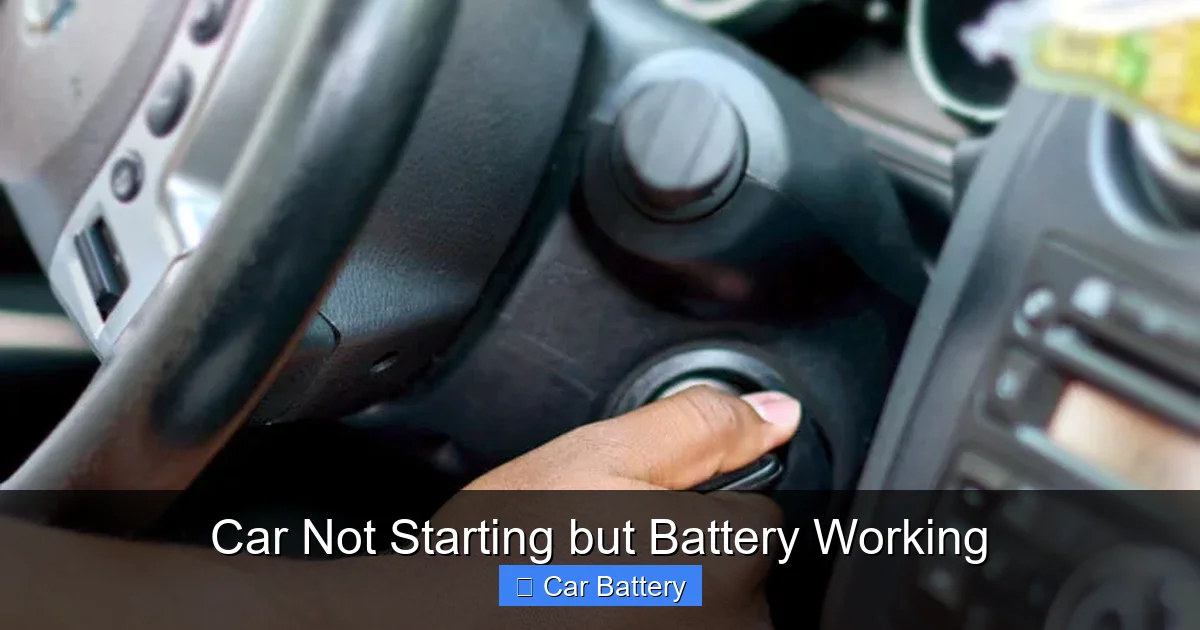
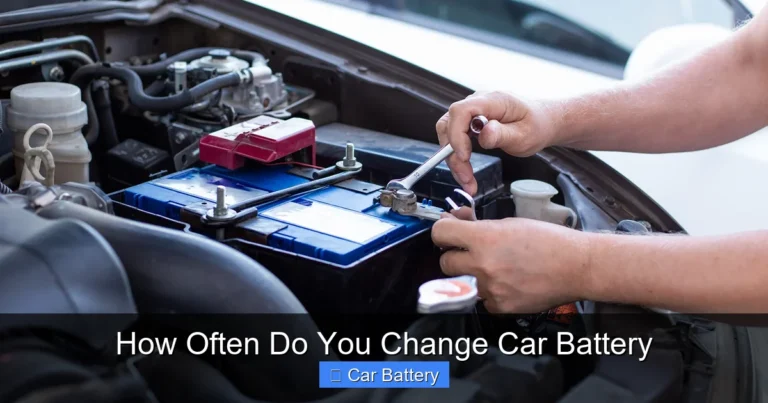
Visual guide about Car Not Starting but Battery Working
Image source: autotoride.com
When your car won’t start but the battery seems fine, a systematic approach can help you pinpoint the issue without unnecessary guesswork. Here’s a step-by-step diagnostic process you can follow at home.
Step 1: Listen and Observe
Start by paying attention to what happens when you turn the key. Does the engine crank but not start? Is there a clicking sound? Or is there complete silence?
– **Cranking but no start:** Likely fuel, spark, or sensor issue.
– **Rapid clicking:** Often a weak battery or bad starter.
– **Single loud click:** Usually a starter solenoid problem.
– **No sound at all:** Could be ignition switch, relay, or wiring issue.
Also check if the dashboard lights dim when you turn the key. If they do, the battery may not have enough power to crank the engine, even if it powers accessories.
Step 2: Test the Battery Under Load
Use a multimeter to check the battery voltage. A healthy battery should read around 12.6 volts when the car is off. When you attempt to start the engine, the voltage should not drop below 10 volts. If it drops to 9 volts or lower, the battery may be weak or failing.
Alternatively, visit an auto parts store for a free load test. They’ll simulate the cranking process and tell you if the battery can handle the demand.
Step 3: Check the Starter and Solenoid
Locate the starter motor (usually near the engine block or transmission). Have someone turn the key while you listen for a click from the solenoid. If you hear a click but the engine doesn’t crank, the solenoid may be engaging but the motor isn’t spinning.
You can also use a test light or multimeter to check for power at the starter terminal when the key is turned. If power is present but the starter doesn’t respond, it’s likely faulty.
Step 4: Inspect Fuses and Relays
Open the fuse box and locate the fuses and relays related to the ignition, starter, and fuel pump. Pull each one out and inspect for damage. Use the fuse diagram in your owner’s manual to identify the correct ones.
Swap relays with identical ones (like the horn or AC relay) to test functionality. If the car starts after the swap, replace the faulty relay.
Step 5: Listen for the Fuel Pump
Turn the key to the “on” position (without cranking) and listen near the fuel tank (usually under the rear seat or trunk). You should hear a brief hum as the fuel pump primes. If you don’t hear anything, the pump, relay, or fuse may be faulty.
Step 6: Scan for Error Codes
Use an OBD2 scanner to check for diagnostic trouble codes (DTCs). Even if the check engine light isn’t on, some codes may be stored. Look for codes related to the crankshaft sensor, camshaft sensor, fuel system, or ignition.
Many auto parts stores offer free code reading, or you can buy an inexpensive scanner for under $50.
When to Call a Mechanic
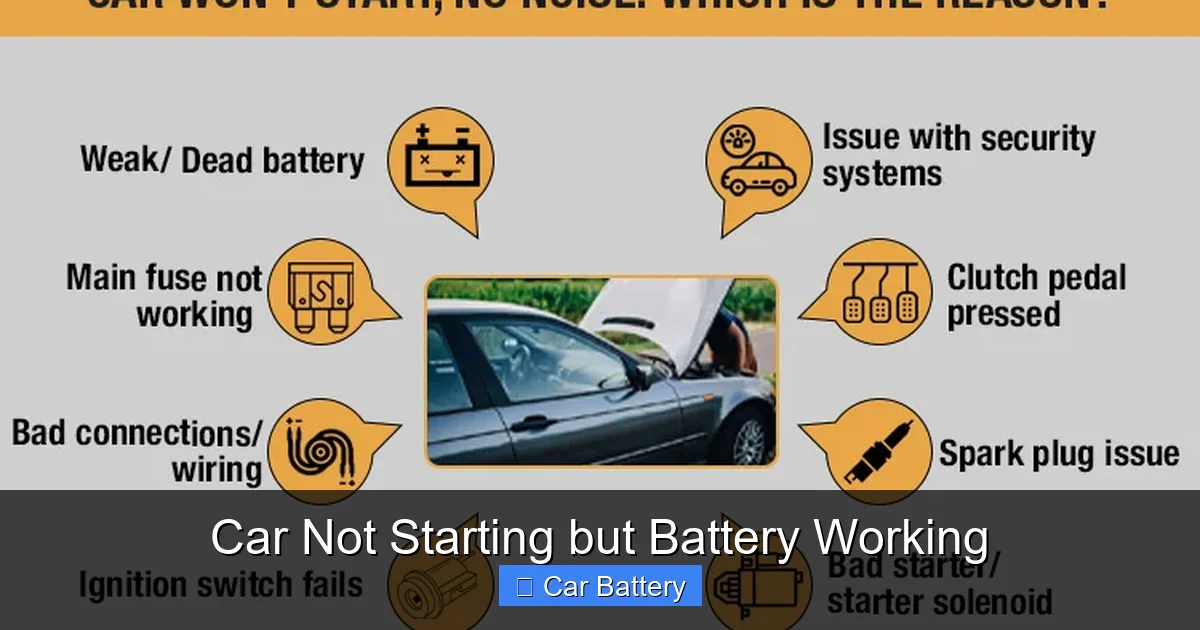
Visual guide about Car Not Starting but Battery Working
Image source: batteryglobe.com
While many starting issues can be diagnosed at home, some problems require professional tools and expertise. Here’s when it’s time to call a mechanic.
If you’ve checked the battery, fuses, relays, and starter and still can’t find the issue, the problem may lie in the engine control unit (ECU), wiring harness, or internal engine components. These require advanced diagnostics and specialized equipment.
Also, if your car cranks but won’t start and you suspect a fuel or ignition issue, a mechanic can perform a fuel pressure test or check for spark at the plugs. These tests are difficult to do without the right tools.
Finally, if you’re not comfortable working with electrical systems or don’t have the time to troubleshoot, it’s always safer to let a professional handle it. Electrical issues can be dangerous if mishandled, and incorrect repairs can cause further damage.
Preventative Maintenance to Avoid Future No-Starts
The best way to deal with a car that won’t start is to prevent it from happening in the first place. Regular maintenance can go a long way in keeping your starting system in top shape.
– **Check battery terminals:** Clean corrosion regularly and ensure connections are tight.
– **Replace the battery every 3–5 years:** Even if it seems fine, batteries degrade over time.
– **Inspect belts and hoses:** A broken serpentine belt can disable the alternator, leading to a drained battery.
– **Use a battery tender:** If you don’t drive often, a trickle charger can keep the battery charged.
– **Listen for unusual sounds:** Grinding, whining, or clicking during startup can signal early failure.
By staying proactive, you can avoid the frustration of a no-start situation and keep your car reliable for years to come.
Conclusion
A car not starting but battery working is a common yet confusing problem that can stem from a variety of issues—from a simple blown fuse to a failing starter motor. The key is to methodically rule out each possibility, starting with the battery and moving through the ignition, fuel, and sensor systems.
Remember, just because your lights and radio work doesn’t mean the battery is strong enough to start the engine. Always test under load, and don’t ignore warning signs like clicking, dimming lights, or unusual sounds.
With the right approach, many of these issues can be resolved at home. But when in doubt, don’t hesitate to call a professional. Your safety and peace of mind are worth the investment.
Frequently Asked Questions
Why does my car click but not start if the battery is working?
A clicking sound usually means the starter solenoid is receiving power but can’t engage the motor. This could be due to a weak battery, corroded connections, or a faulty starter. Check the battery voltage under load and inspect the starter.
Can a bad alternator cause a no-start even with a working battery?
Not immediately. A bad alternator won’t prevent starting if the battery is charged. However, if the alternator fails while driving, the battery will drain, leading to a no-start later. Always test both components if you suspect electrical issues.
How do I know if my fuel pump is bad?
Listen for a humming sound from the fuel tank when you turn the key to “on.” If you don’t hear it, the pump may be dead. Also, check the fuel pump fuse and relay. A mechanic can perform a fuel pressure test for confirmation.
Is it safe to jump-start a car that won’t start?
Yes, but only if you suspect a weak battery. If the battery is fine and the issue is mechanical (like a bad starter), jump-starting won’t help and could damage electronics. Always diagnose first before jumping.
Can cold weather cause a car not to start even with a good battery?
Yes. Cold temperatures reduce battery efficiency and thicken engine oil, making it harder to crank. A battery that works in summer may fail in winter. Consider a battery with higher cold cranking amps (CCA) for cold climates.
What should I do if my car cranks but won’t start?
This usually points to fuel, spark, or sensor issues. Check for fuel pump operation, inspect spark plugs, and scan for error codes. A failed crankshaft position sensor is a common cause of crank-no-start conditions.