
Common Car Cover Mistakes That Damage Your Paint (And How to Avoid Them)

Quick Answer
The biggest mistake people make with car covers is putting them on a dirty vehicle, which turns trapped dust and grit into sandpaper under wind friction. To protect your investment, always wash your car thoroughly before covering it, choose a breathable multi-layer fabric, and secure the hem tightly against high winds. For more tips on vehicle care, check out our maintenance guides.
Top Car Cover Mistakes to Avoid
- Covering dirty paint: Trapped dirt scratches clear coats instantly when the wind blows.
- Using cheap tarps: Non-breathable plastic sheets trap condensation and bake paint in the sun.
- Skipping secure ties: Loose covers flap violently and scour edges down to bare metal.
- Storing it wet: Folding up a damp cover breeds mold, mildew, and foul odors.
- Ignoring fabric quality: Single-layer materials offer zero protection against hail or door dings.
Quick Prevention Checklist
- Clean both the car and the inner lining of the cover regularly.
A car cover looks like an easy way to keep your daily driver looking showroom-fresh while parked outside. After spending years wrenching on everyday vehicles and dealing with harsh weather, I have seen firsthand how the wrong cover can destroy a clear coat faster than leaving the car exposed to the elements. Let us look at the critical mistakes drivers make and how to keep your paint intact.
In This Guide
Why does putting a cover on a dirty car ruin the paint?
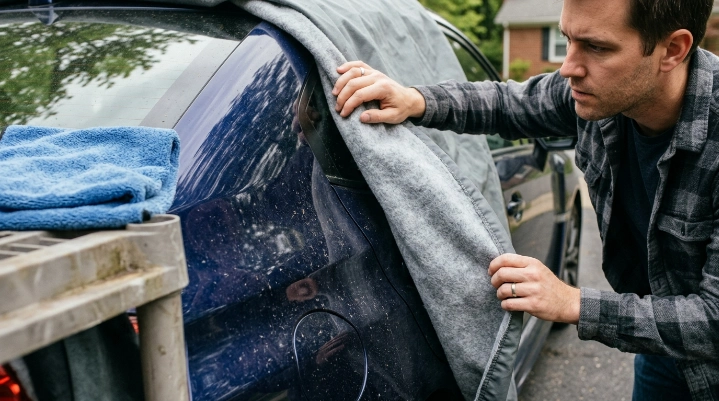
A car cover is designed to shield your vehicle, but it acts like sandpaper if you install it over a dirty surface. When dust, pollen, and road grime settle on your paint, pulling a tight fabric over them creates intense friction.
Every time a breeze blows, the cover shifts slightly against the body panels. That microscopic movement grinds dirt particles directly into your clear coat, leaving thousands of fine swirl marks.
You should always wash your car or use a quick detailer with a microfiber towel before putting on a protective layer. Taking this extra five-minute step saves you hours of paint correction later.
Section Takeaway: Never install a cover over dusty or muddy panels, as wind-induced friction will grind surface debris directly into your clear coat.
What happens if you use a cheap, non-breathable car cover?
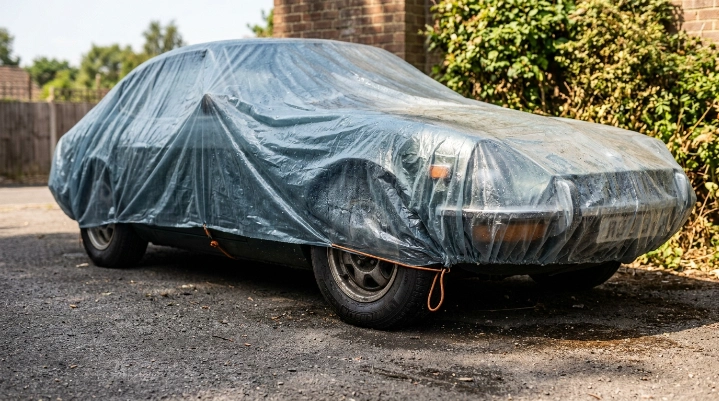
Many drivers grab a cheap plastic tarp or a single-layer polyester sheet from a discount bin to save money. These bargain covers often lack breathability, turning your vehicle into a greenhouse.
When daily temperatures fluctuate, moisture trapped underneath the fabric cannot escape. This vapor condenses on your cold sheet metal, creating an ideal breeding ground for paint oxidation, rust, and water etching.
According to guidance from automotive preservation experts at Consumer Reports, investing in a multi-layer woven fabric allows trapped heat and moisture to evaporate safely.
Section Takeaway: Avoid cheap plastic tarps that trap humidity against your sheet metal, and opt for multi-layer breathable fabrics instead.
How does moisture damage your vehicle under a cover?
Moisture is one of the quietest killers of automotive paint and exterior trim. When rain or morning dew gets trapped under a non-porous cover, it sits against the clear coat for hours.
Mineral deposits in the water bake into the paint when the sun comes out, leaving stubborn water spots that require heavy polishing to remove. In severe cases, prolonged moisture exposure accelerates rust on unpainted undercarriage parts and exposed fasteners.
You can check out vehicle preservation recommendations from the NHTSA to understand how environmental factors impact exterior body panels over time.
Section Takeaway: Always ensure your cover features microporous ventilation to let trapped water vapor escape before it etches your clear coat.
Why is a loose-fitting cover dangerous in high winds?
A loose car cover acts like a parachute in heavy weather, catching strong gusts and snapping back and forth against your vehicle. This violent flapping scours the paint on high points like roof edges, mirrors, and fenders.
Over just a few windy weeks, a loose hem can wear completely through your clear coat down to the primer. Using an ill-fitting universal cover is far riskier than leaving your car naked in the driveway.
Always purchase a custom-fit cover or use built-in grommets and a secure cable lock to keep the hem snug against the rocker panels.
Section Takeaway: Secure your cover tightly with elastic hems and under-body straps to prevent destructive wind flapping and paint abrasion.
How can improper folding and storage ruin your car cover?
Taking your cover off is only half the battle, as storing it incorrectly ruins the fabric for future use. Tossing a dirty, wet cover into a dark trunk or corner encourages mold growth and mildew.
When you put a moldy cover back on your car, those spores transfer to your paint and leave stubborn stains. Always lay the cover out to dry completely in the sun before packing it away in its storage bag.
Shake out trapped leaves, twigs, and dead insects from the inside lining every single time you take it off the car.
Section Takeaway: Clean, dry, and properly store your cover in a breathable bag to prevent mold growth and fabric degradation.
Frequently Asked Questions
Should I put a car cover on a dirty car if it is about to snow?
No, putting a cover over a dirty car before a snowstorm makes the situation worse. The weight of the snow presses the cover and trapped grit hard against the paint, causing severe scratching when the wind shifts the ice.
How often should you wash a car cover?
You should wash your car cover every one to two months depending on your local climate. Most fabric covers can be washed inside out in a large commercial washing machine using mild liquid detergent without bleach.
Are outdoor car covers waterproof or water-resistant?
Quality outdoor covers are water-resistant rather than 100% waterproof. True waterproof materials trap condensation underneath, which damages paint, whereas water-resistant breathable fabrics shed rain while letting moisture vapor escape.
Can a car cover damage a brand-new paint job?
Yes, fresh paint takes 30 to 90 days to fully outgas and cure completely. Putting any cover on a freshly painted vehicle traps solvents, softens the clear coat, and ruins the finish permanently.
How do I stop my car cover from scratching the mirrors?
Buy a cover with dedicated, custom-tailored side mirror pockets that fit your specific model. If your universal cover lacks them, wrap soft microfiber cloths around the mirrors before pulling the cover into place.
Protect Your Paint for the Long Haul
Using a car cover is one of the smartest ways to defend your daily driver against sun damage, bird droppings, and tree sap. By avoiding common pitfalls like trapping dirt, choosing non-breathable materials, or letting the hem flap in the wind, your vehicle’s paint will stay pristine for years. Take your time during installation and maintenance, and your investment will truly pay off.