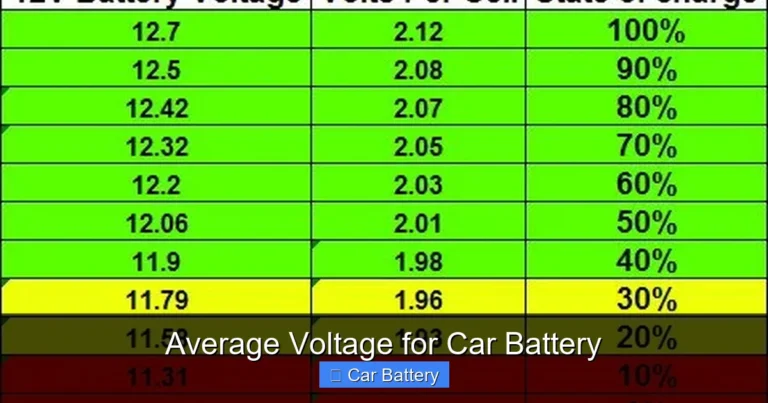
Car Battery Voltage When Running
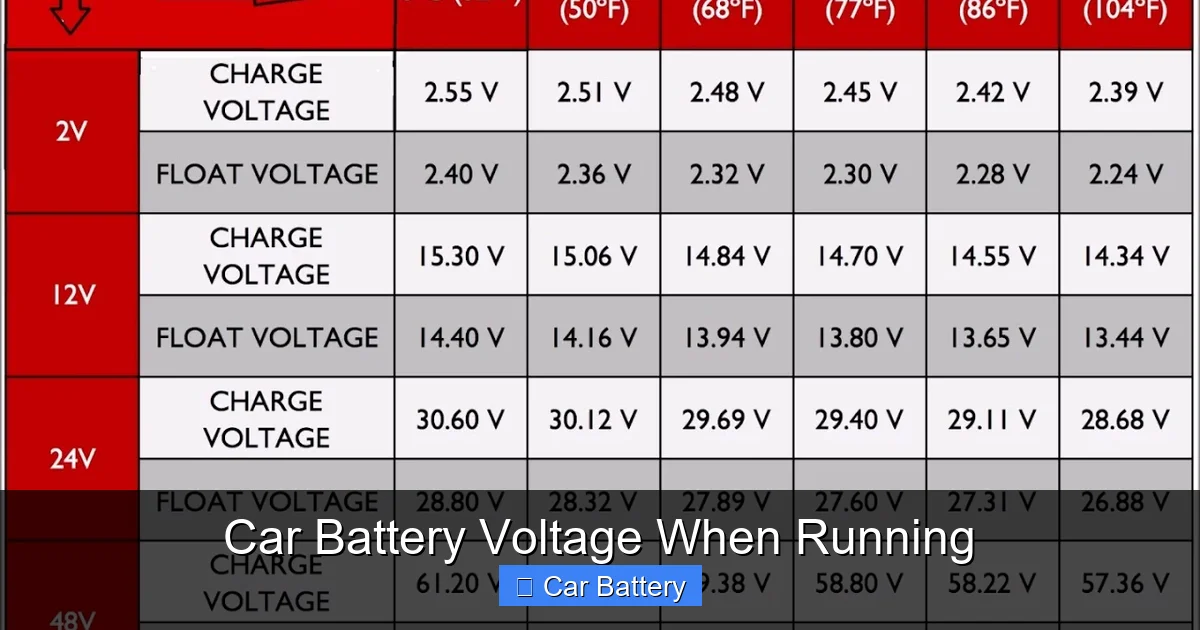
Car battery voltage when running should typically read between 13.7 and 14.7 volts, indicating the alternator is charging properly. If the voltage is too low or too high, it could signal electrical system issues that may affect performance and battery life.
In This Article
- 1 Key Takeaways
- 2 📑 Table of Contents
- 3 Understanding Car Battery Voltage When Running
- 4 What Is Normal Car Battery Voltage When Running?
- 5 How to Test Car Battery Voltage When Running
- 6 Common Causes of Abnormal Voltage Readings
- 7 How the Alternator Affects Battery Voltage
- 8 Battery Age and Its Impact on Voltage
- 9 Practical Tips for Maintaining Proper Voltage
- 10 Conclusion
- 11 Frequently Asked Questions
- 11.1 What should car battery voltage be when the engine is running?
- 11.2 Is 12.8 volts OK when the engine is running?
- 11.3 Can a bad battery cause low voltage when running?
- 11.4 What causes high voltage in a car battery while driving?
- 11.5 How often should I check my car battery voltage?
- 11.6 Can I drive with low charging voltage?
Key Takeaways
- Normal running voltage: A healthy car battery should show 13.7–14.7 volts when the engine is running, confirming the alternator is charging the battery.
- Low voltage warning: Readings below 13.5 volts while running may indicate a failing alternator, loose belt, or poor connections.
- High voltage risk: Voltage above 15 volts can overcharge the battery, leading to corrosion, overheating, and reduced lifespan.
- Testing is simple: Use a multimeter to check voltage at the battery terminals with the engine on and off for accurate diagnostics.
- Idle vs. revving: Voltage may dip slightly at idle but should stabilize or increase when the engine revs—consistent low readings are a red flag.
- Battery health matters: Even with proper charging voltage, an old or damaged battery may not hold a charge effectively.
- Preventive checks: Regular voltage testing helps catch electrical issues early, avoiding unexpected breakdowns.
📑 Table of Contents
- Understanding Car Battery Voltage When Running
- What Is Normal Car Battery Voltage When Running?
- How to Test Car Battery Voltage When Running
- Common Causes of Abnormal Voltage Readings
- How the Alternator Affects Battery Voltage
- Battery Age and Its Impact on Voltage
- Practical Tips for Maintaining Proper Voltage
- Conclusion
Understanding Car Battery Voltage When Running
When your car is running, the battery isn’t just sitting there—it’s actively being recharged by the alternator. This process keeps the electrical system powered and ensures your vehicle starts reliably the next time you turn the key. But how do you know if everything is working as it should? The answer lies in checking the car battery voltage when running.
Most drivers think of the battery only when the car won’t start. But the truth is, the battery is part of a larger system that includes the alternator, voltage regulator, and various electrical components. When the engine is off, the battery supplies power. When it’s running, the alternator takes over, generating electricity to power the car’s systems and recharge the battery. Monitoring the voltage during this phase gives you a real-time snapshot of your vehicle’s electrical health.
If the voltage is too low, your battery isn’t getting enough charge. If it’s too high, you risk damaging the battery and other electronics. Getting familiar with what’s normal—and what’s not—can save you from being stranded or facing expensive repairs down the road.
What Is Normal Car Battery Voltage When Running?

Visual guide about Car Battery Voltage When Running
Image source: cdn.shopify.com
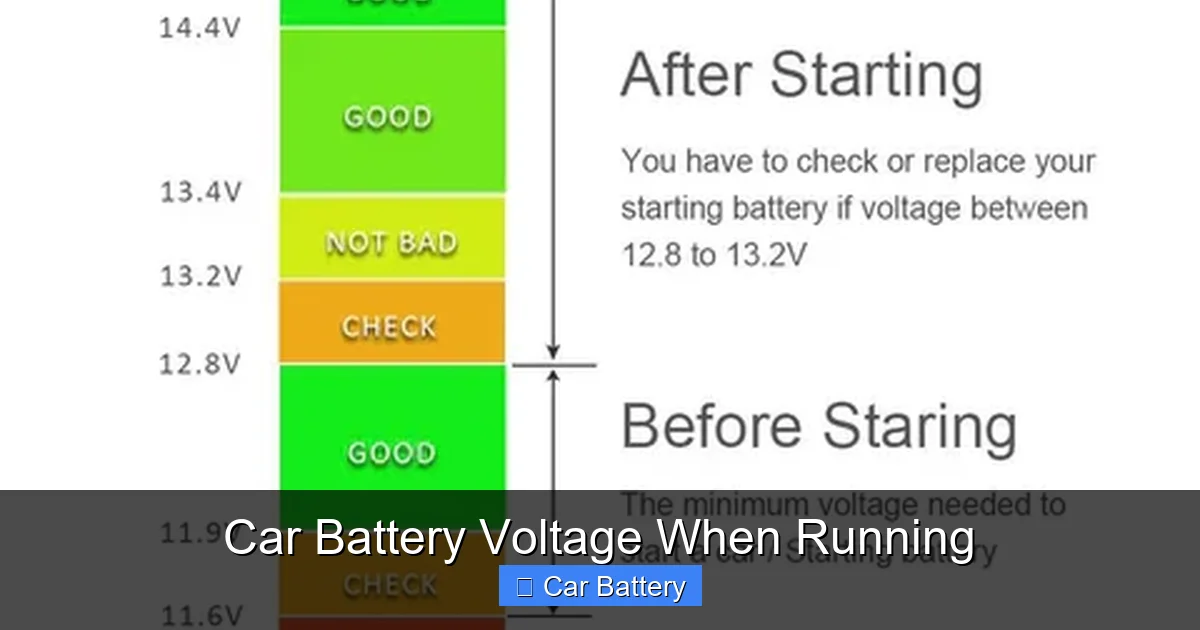
The ideal car battery voltage when running falls between 13.7 and 14.7 volts. This range indicates that the alternator is functioning properly and delivering the right amount of charge to the battery. It’s a sweet spot that balances efficient charging with battery longevity.
To put this in perspective, a fully charged battery at rest (engine off) typically reads around 12.6 volts. Once the engine starts, the alternator kicks in and boosts the voltage. If you measure the voltage at the battery terminals with the engine running and see a reading in the 13.7–14.7 range, your system is likely in good shape.
For example, if your multimeter shows 14.2 volts while the engine is idling, that’s a great sign. It means the alternator is producing enough power to run the car’s electronics and top off the battery. On the other hand, if the reading is stuck at 12.4 volts while running, the alternator isn’t doing its job—your battery is slowly draining even as you drive.
Why This Range Matters
Staying within this voltage range is crucial for several reasons. First, it ensures the battery receives a full charge without being overcharged. Overcharging can cause the battery to overheat, lose electrolyte, and fail prematurely. Undercharging, meanwhile, leads to sulfation—a buildup of lead sulfate crystals that reduces capacity and lifespan.
Second, modern vehicles rely heavily on electronics. From fuel injection systems to infotainment screens, everything depends on stable voltage. If the alternator isn’t producing enough power, these systems may behave erratically or shut down entirely.
Finally, consistent voltage within the normal range helps extend the life of both the battery and the alternator. It reduces stress on components and prevents premature wear.
How to Test Car Battery Voltage When Running
Visual guide about Car Battery Voltage When Running
Image source: cdn.shopify.com
Testing your car battery voltage when running is easier than you might think—and you don’t need to be a mechanic to do it. All you need is a basic digital multimeter, which you can find at most auto parts stores or online for under $20.
Step-by-Step Testing Guide
Start by turning off the engine and opening the hood. Locate the battery—it’s usually a rectangular box with two terminals (positive and negative). Make sure the terminals are clean and free of corrosion. If there’s white or green buildup, clean it off with a wire brush and a mixture of baking soda and water.
Next, set your multimeter to DC voltage (usually marked as “V~” or “V with a straight line”). Turn the dial to a range higher than 20 volts—most multimeters have a 20V DC setting, which is perfect for this test.
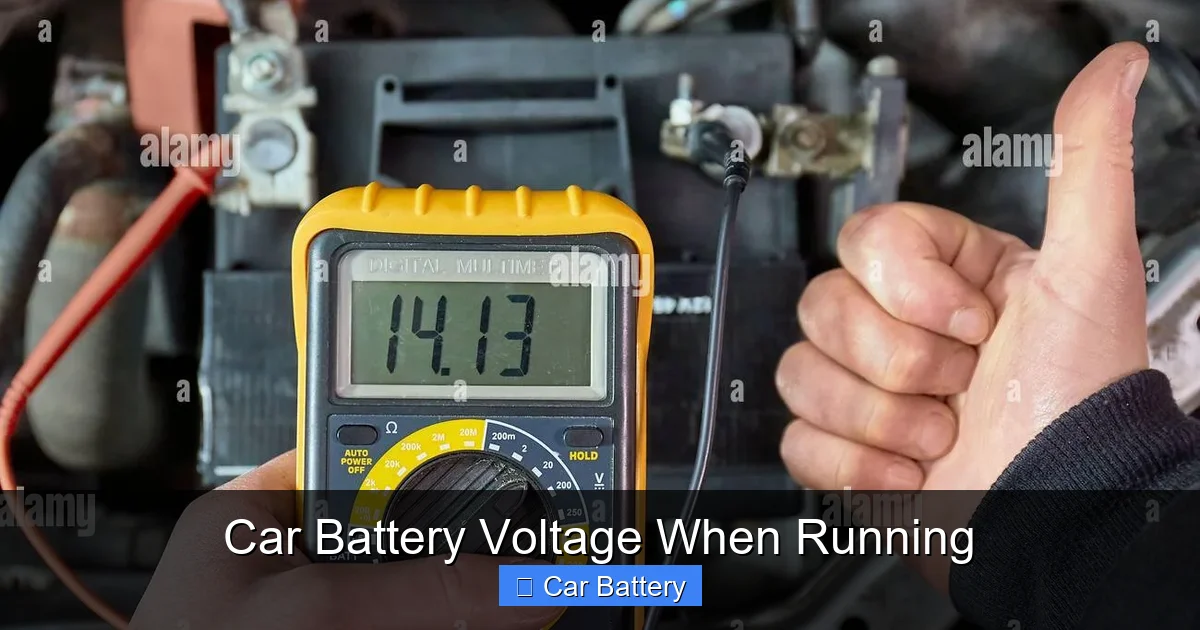
Now, start the engine and let it idle for a few minutes to stabilize. With the engine running, touch the red probe to the positive terminal (+) and the black probe to the negative terminal (–). Read the display on the multimeter.
A healthy reading should be between 13.7 and 14.7 volts. If it’s lower, rev the engine slightly (to about 1,500–2,000 RPM) and check again. The voltage should increase slightly. If it doesn’t, or if it drops, there may be an issue with the alternator or belt.
When to Test
It’s a good idea to test your battery voltage when running during routine maintenance—say, every 6 months or before long trips. You should also test it if you notice symptoms like dim headlights, slow engine cranking, or warning lights on the dashboard.
Keep in mind that temperature can affect readings. In cold weather, the alternator may work harder to charge the battery, so voltage might be on the higher end of the range. In hot weather, it could be slightly lower. But as long as it stays within 13.7–14.7 volts, you’re in the clear.
Common Causes of Abnormal Voltage Readings
Visual guide about Car Battery Voltage When Running
Image source: c8.alamy.com
If your car battery voltage when running is outside the normal range, it’s a sign that something in the charging system isn’t working right. Let’s look at the most common culprits.
Low Voltage (Below 13.5 Volts)
When the voltage is too low while the engine is running, the alternator isn’t producing enough power. This could be due to:
– A worn-out alternator: Over time, the alternator’s internal components degrade, reducing output.
– A loose or slipping serpentine belt: The belt drives the alternator. If it’s loose, the alternator spins slower and produces less power.
– Corroded or loose battery terminals: Poor connections prevent proper current flow.
– A failing voltage regulator: This component controls how much voltage the alternator sends to the battery. If it’s faulty, the alternator may undercharge.
For example, if your multimeter reads 12.8 volts while the engine is running, your battery is actually discharging—not charging. Over time, this will lead to a dead battery, especially if you frequently take short trips that don’t allow enough time to recharge.
High Voltage (Above 15 Volts)
Voltage readings above 15 volts are dangerous and can cause serious damage. This usually points to a faulty voltage regulator or a short in the alternator. Symptoms include:
– Overheated battery
– Swollen battery case
– Burnt smell from the battery area
– Flickering lights or blown fuses
Overcharging can boil the electrolyte inside the battery, leading to gas buildup and potential explosion. It can also fry sensitive electronics like the ECU (engine control unit) or dashboard displays.
If you see a reading above 15 volts, turn off the engine immediately and have the system inspected by a professional. Continuing to drive could result in costly repairs.
Fluctuating Voltage
Sometimes, the voltage jumps around—say, from 13.0 to 14.5 volts—while the engine is running. This inconsistency often indicates a bad connection, a failing alternator diode, or a loose ground wire. It can cause erratic behavior in electrical components and should be addressed promptly.
How the Alternator Affects Battery Voltage
The alternator is the heart of your car’s charging system. It converts mechanical energy from the engine into electrical energy, which powers the vehicle and recharges the battery. Without a functioning alternator, your battery would drain within minutes of starting the engine.
How the Alternator Works
When the engine runs, the serpentine belt turns the alternator’s rotor. Inside the alternator, the spinning rotor creates a magnetic field that induces an electrical current in the stator windings. This alternating current (AC) is then converted to direct current (DC) by diodes, making it usable for the car’s 12-volt electrical system.
The voltage regulator monitors the system and adjusts the alternator’s output to maintain the correct voltage. If the battery is low, the regulator increases output. If it’s fully charged, output decreases to prevent overcharging.
Signs of Alternator Trouble
Even if your battery voltage when running seems okay, the alternator could still be on its way out. Watch for these warning signs:
– Dim or flickering headlights, especially at idle
– Electrical accessories (radio, power windows) working slowly
– A battery warning light on the dashboard
– Strange noises (whining or grinding) from the engine bay
– Frequent battery replacements
If you notice any of these, test the voltage again. A failing alternator might still produce enough power at high RPMs but struggle at idle—so test both conditions.
Battery Age and Its Impact on Voltage
Even with perfect charging voltage, an old or damaged battery may not hold a charge effectively. Car batteries typically last 3–5 years, depending on climate, driving habits, and maintenance.
How Age Affects Performance
As batteries age, their internal plates corrode and lose surface area. This reduces their ability to store and deliver energy. You might see normal voltage when running, but the battery still struggles to start the car—especially in cold weather.
Sulfation is another common issue. When a battery sits in a partially discharged state for too long, lead sulfate crystals form on the plates. These crystals harden over time and can’t be converted back into active material, permanently reducing capacity.
Testing Battery Health
Voltage testing alone doesn’t tell the whole story. To assess battery health, consider a load test. This applies a simulated load to the battery and measures how well it holds voltage under stress. Many auto parts stores offer free load testing.
You can also check the battery’s state of charge using a hydrometer (for flooded batteries) or a conductance tester. These tools give a more complete picture than voltage alone.
If your battery is more than 4 years old and you’re seeing borderline voltage readings, it might be time for a replacement—even if it’s still working.
Practical Tips for Maintaining Proper Voltage
Keeping your car battery voltage when running in the ideal range doesn’t require fancy tools or expertise. A few simple habits can go a long way.
Regular Inspections
Check your battery terminals every few months for corrosion. Clean them with a wire brush and baking soda solution if needed. Tighten loose connections to ensure good contact.
Inspect the serpentine belt for cracks, fraying, or looseness. A slipping belt reduces alternator output and can cause low voltage.
Drive Long Enough
Short trips don’t give the alternator enough time to fully recharge the battery. If you mostly drive around town, take a longer drive once a week to help maintain charge.
Avoid Excessive Electrical Load
Using high-draw accessories (like heated seats, powerful stereos, or phone chargers) while the engine is off can drain the battery quickly. Try to limit their use when parked.
Use a Battery Maintainer
If you don’t drive often, consider using a smart battery maintainer or trickle charger. These devices keep the battery topped off without overcharging.
Watch the Dashboard
The battery or charging system warning light is your first clue that something’s wrong. Don’t ignore it—address it promptly to avoid bigger issues.
Conclusion
Understanding car battery voltage when running is one of the simplest yet most effective ways to monitor your vehicle’s health. A reading between 13.7 and 14.7 volts means your alternator is doing its job, your battery is charging properly, and your electrical system is stable.
Testing is quick, easy, and can prevent breakdowns, extend battery life, and save you money in the long run. Whether you’re a seasoned driver or just learning the basics, keeping an eye on voltage gives you peace of mind every time you start your car.
Remember: voltage is just one piece of the puzzle. Combine regular testing with visual inspections, proper driving habits, and timely maintenance to keep your car running smoothly for years to come.
Frequently Asked Questions
What should car battery voltage be when the engine is running?
Car battery voltage when running should be between 13.7 and 14.7 volts. This indicates the alternator is charging the battery properly and supplying power to the vehicle’s electrical system.
Is 12.8 volts OK when the engine is running?
No, 12.8 volts while the engine is running is too low. It suggests the alternator isn’t charging the battery, which can lead to a dead battery over time. A healthy system should read above 13.5 volts.
Can a bad battery cause low voltage when running?
A bad battery usually doesn’t cause low voltage when running—that’s more likely an alternator issue. However, a failing battery may not hold a charge even if the alternator is working correctly.
What causes high voltage in a car battery while driving?
High voltage (above 15 volts) is typically caused by a faulty voltage regulator or alternator. This can overcharge the battery, leading to overheating, corrosion, and potential damage to electronics.
How often should I check my car battery voltage?
Check your car battery voltage when running every 6 months or if you notice electrical issues like dim lights or slow cranking. Regular checks help catch problems early.
Can I drive with low charging voltage?
You can drive short distances with low voltage, but it’s not safe long-term. The battery will drain, and you risk being stranded. Have the charging system inspected as soon as possible.