
Can You Park a Car Without Plates in Your Driveway?

You can legally park a car without plates in your driveway in most U.S. states, as long as the vehicle isn’t driven on public roads. However, local laws, HOA rules, and safety concerns may still apply. Always check your state and municipality regulations to avoid fines or towing.
Key Takeaways
- Private property exemption: Most states allow unregistered vehicles on private property like driveways, but not on public streets.
- State laws vary widely: Some states require even parked cars to display plates, while others only mandate them when the vehicle is operational.
- HOA and local ordinances matter: Homeowners associations or city codes may prohibit unsightly or non-operational vehicles in driveways.
- Safety and liability risks: An unregistered car without plates could pose insurance or liability issues if involved in an incident.
- Temporary vs. long-term parking: Short-term storage (e.g., during repairs) is usually fine; long-term abandonment may trigger enforcement.
- Best practice: Cover the car, notify insurers, and keep documentation to avoid misunderstandings.
- When in doubt, check locally: Contact your DMV or city clerk for specific rules in your area.
📑 Table of Contents
- Can You Park a Car Without Plates in Your Driveway?
- Understanding License Plates and Vehicle Registration
- State Laws: The Patchwork of Regulations
- Local Ordinances and HOA Rules
- Practical Scenarios: When It’s Okay (and When It’s Not)
- Safety, Liability, and Insurance Considerations
- Best Practices for Parking an Unplated Car in Your Driveway
- Conclusion
Can You Park a Car Without Plates in Your Driveway?
So, you’ve got a car sitting in your driveway—maybe it’s getting repaired, waiting to be sold, or just not in use right now. It doesn’t have license plates, and you’re wondering: Is that even allowed? Can you park a car without plates in your driveway without breaking the law?
The short answer? In most cases, yes—especially if the vehicle isn’t being driven. But it’s not quite that simple. While your driveway is private property, and you generally have more freedom there than on public roads, a web of state laws, local ordinances, and even homeowners association (HOA) rules can come into play. Ignoring them could lead to fines, towing, or even legal trouble.
This guide will walk you through everything you need to know about parking an unregistered, unplated car in your driveway. We’ll cover the legal landscape across the U.S., explain why plates matter, explore common misconceptions, and give you practical tips to stay compliant—and stress-free.
Understanding License Plates and Vehicle Registration
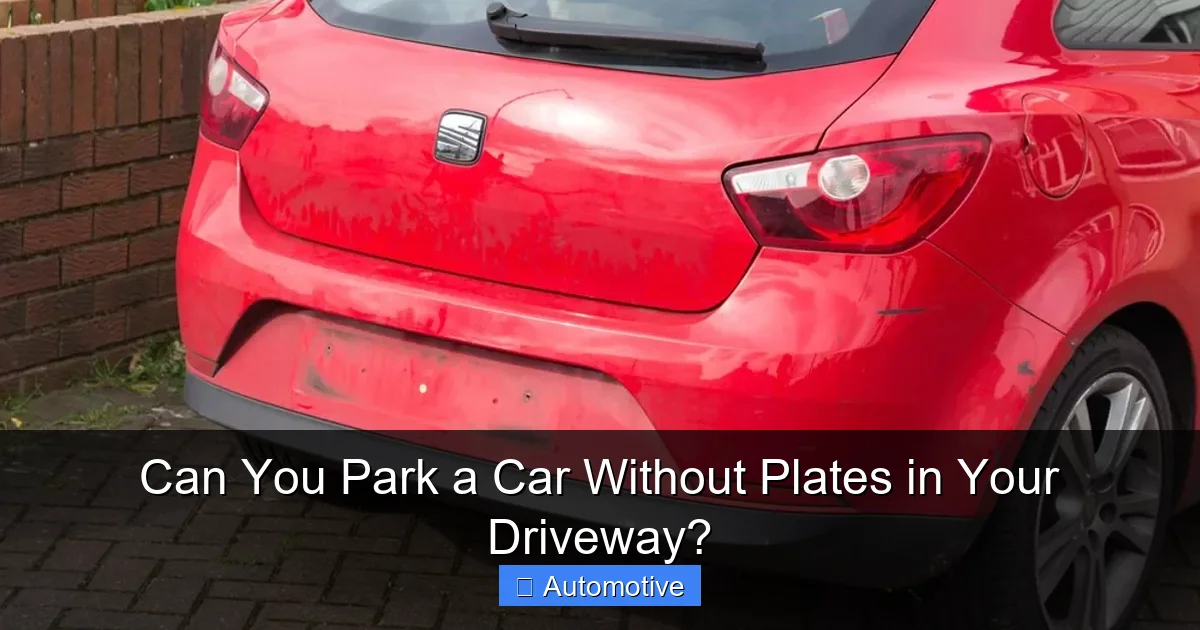
Visual guide about Can You Park a Car Without Plates in Your Driveway?
Image source: cdn-fastly.upgradedhome.com
Before diving into driveway parking rules, it helps to understand why license plates exist in the first place. License plates aren’t just random numbers and letters—they’re a critical part of vehicle identification, law enforcement, and public safety.
What Are License Plates For?
License plates serve several key purposes:
– Identification: They allow police, toll systems, and other agencies to identify a vehicle and its owner.
– Registration tracking: Plates are tied to a vehicle’s registration, which confirms it’s legally allowed on public roads.
– Insurance verification: Many states use plate data to confirm a vehicle is insured.
– Theft prevention: Stolen vehicles are often tracked via their plates.
– Revenue collection: Registration fees fund road maintenance and transportation programs.
When a car is registered, it receives plates that must be displayed whenever the vehicle is operated on public roads. But what happens when the car isn’t being driven?
The Difference Between Registration and Operation
Here’s a crucial distinction: Registration is required for operation, not necessarily for ownership or storage. That means you can legally own a car without registering it—especially if it’s not being driven.
For example, if you buy a used car to restore, you might not register it right away. As long as it stays off public roads, you’re usually in the clear. The same goes for a car you’re storing for a friend or keeping as a project vehicle.
However, once you drive it—even just around the block—you’re entering public road space, and that’s when registration and plates become mandatory.
State Laws: The Patchwork of Regulations
Visual guide about Can You Park a Car Without Plates in Your Driveway?
Image source: cdn-fastly.upgradedhome.com
One of the biggest challenges in answering “Can you park a car without plates in your driveway?” is that laws vary significantly from state to state. There’s no single national rule—each state sets its own standards.
States That Allow Unplated Cars on Private Property
In many states, including Texas, Florida, and Arizona, it’s perfectly legal to park an unregistered vehicle without plates on your private property—like your driveway—as long as it’s not being driven.
For instance, in Texas, the Department of Motor Vehicles (TxDMV) states that vehicles not in operation don’t need to be registered or plated. You can store a car in your garage or driveway indefinitely, provided it’s not used on public roads.
Similarly, in Florida, the Department of Highway Safety and Motor Vehicles (FLHSMV) allows unregistered vehicles on private property. However, if the car is visible from the street and appears abandoned, local code enforcement might get involved.
States with Stricter Rules
Other states take a harder line. In California, for example, even parked vehicles on private property may need to display plates if they’re visible from the street. The California Vehicle Code requires that all vehicles capable of being driven must have valid registration and plates—even if they’re not currently in use.
New York is another example. While you can store a car on private property without plates, if it’s parked in a driveway and visible from the road, local authorities might consider it “abandoned” if it lacks plates and registration. This could lead to fines or towing under municipal codes.
Gray Areas and Enforcement Discretion
Even in states that technically allow unplated cars on private property, enforcement can be inconsistent. A neighbor might report a “junk car” in your driveway, prompting a visit from code enforcement. If the vehicle looks neglected—flat tires, broken windows, overgrown grass around it—authorities may treat it as abandoned, regardless of your intent.
This is why context matters. A clean, covered car in a well-maintained driveway is far less likely to draw scrutiny than a rusted, uncovered vehicle with weeds growing through the floorboards.
Local Ordinances and HOA Rules
Visual guide about Can You Park a Car Without Plates in Your Driveway?
Image source: cdn-fastly.upgradedhome.com
Even if your state allows unplated cars in driveways, your city, town, or homeowners association might have stricter rules.
Municipal Codes and Nuisance Laws
Many cities have ordinances that prohibit “inoperable” or “abandoned” vehicles in residential areas—even on private property. These laws are often designed to maintain neighborhood aesthetics and prevent blight.
For example, in Chicago, it’s illegal to park an unregistered or inoperable vehicle on private property if it’s visible from the street. The city defines “inoperable” as a vehicle that hasn’t been driven in 30 days or lacks essential parts like wheels or an engine.
Similarly, in Denver, Colorado, residents can’t park unregistered vehicles on their property if they’re visible from public ways. The city encourages residents to store such vehicles in garages or behind fences.
These rules are often enforced through complaints. If a neighbor reports your unplated car, an inspector may come to assess whether it violates local codes.
Homeowners Association (HOA) Restrictions
If you live in a community with an HOA, the rules can be even stricter. Many HOAs prohibit unregistered, unplated, or non-operational vehicles in driveways, front yards, or even side yards.
HOA covenants often include clauses like:
– “No vehicle shall be parked on any lot unless it is currently registered and in operating condition.”
– “Inoperable or dismantled vehicles must be stored in a fully enclosed garage.”
– “Vehicles must not be visible from the street unless they are in use.”
Violating these rules can result in fines, liens, or even legal action from the HOA. Some associations conduct regular drive-bys to check for compliance.
How to Check Your Local Rules
To avoid surprises, take these steps:
1. Review your HOA covenants: These are usually available through your HOA management company or online portal.
2. Check your city or county website: Look for “nuisance ordinances,” “vehicle storage laws,” or “abandoned vehicle codes.”
3. Call your local code enforcement office: A quick phone call can clarify what’s allowed in your area.
4. Ask neighbors: Sometimes, informal norms matter more than written rules.
Practical Scenarios: When It’s Okay (and When It’s Not)
Let’s look at real-life situations to see how these rules play out.
Scenario 1: Car in the Shop for Repairs
You drop your car off at the mechanic, but it’s going to take two weeks to fix. You don’t want to pay for a rental, so you leave it in your driveway with the plates removed.
Verdict: Generally okay—if it’s temporary. Most states allow short-term storage of unregistered vehicles. Just make sure it’s not blocking sidewalks or creating a hazard. Covering it with a car cover can help avoid complaints.
Scenario 2: Project Car or Restoration
You’re restoring a classic Mustang. It’s missing an engine, has no plates, and sits in your driveway for six months.
Verdict: Risky. While you own the car legally, long-term storage of an inoperable vehicle may violate local ordinances or HOA rules. Consider moving it to a garage, behind a fence, or using a car cover to reduce visibility.
Scenario 3: Selling a Car “As-Is”
You’re selling a used car that needs work. The buyer hasn’t registered it yet, so it’s sitting in your driveway without plates.
Verdict: Acceptable for a short period—say, a few days. But don’t let it sit for weeks. Once the sale is complete, the buyer should handle registration. If you’re holding it longer, consider temporary registration or a trip permit.
Scenario 4: Storing a Car for a Friend
A friend is moving and asks you to store their unregistered car in your driveway for a month.
Verdict: Proceed with caution. Even though it’s not your car, you’re responsible for what’s on your property. Make sure your insurance covers stored vehicles, and get written permission from your HOA if required.
Safety, Liability, and Insurance Considerations
Beyond legality, there are practical concerns when parking an unplated car in your driveway.
Insurance Implications
Most auto insurance policies require a vehicle to be registered to be covered. If your unplated car is damaged—say, by a falling tree or vandalism—your insurer may deny the claim if the car wasn’t properly registered.
Some insurers offer “storage” or “lay-up” policies for vehicles not in use. These are cheaper than full coverage and protect against theft, fire, or weather damage. Check with your provider to see if this option is available.
Liability Risks
What if someone gets hurt near your unplated car? For example, a child climbs on it and falls, or a pedestrian trips over a loose bumper.
Even if the car isn’t being driven, you could be held liable as the property owner. Keeping the vehicle secure, fenced off, or covered can reduce these risks.
Theft and Vandalism
Unregistered, unplated cars are more vulnerable to theft. Thieves know they’re less likely to be traced. To protect your vehicle:
– Use a steering wheel lock or wheel clamp.
– Park it in a locked garage if possible.
– Install motion-sensor lights or security cameras.
– Remove the battery or disable the ignition.
Best Practices for Parking an Unplated Car in Your Driveway
If you need to park a car without plates in your driveway, follow these tips to stay compliant and avoid trouble:
1. Keep It Temporary
Limit how long the car stays unplated. If it’s going to be there more than a few weeks, consider getting temporary registration or a trip permit.
2. Make It Less Visible
Use a car cover, park it behind a fence, or move it to a side yard. The less visible it is, the less likely it is to attract attention.
3. Maintain the Vehicle
Keep the car clean, with inflated tires and no debris around it. A well-kept vehicle looks like it’s in use—not abandoned.
4. Document Everything
Keep records of repairs, sales agreements, or storage arrangements. If questioned, you can prove the car isn’t abandoned.
5. Notify Your Insurer
Inform your insurance company that the car is being stored. They may adjust your coverage or offer a storage policy.
6. Check Local Rules Regularly
Laws can change. Revisit your city’s ordinances and HOA rules every few months to stay up to date.
Conclusion
So, can you park a car without plates in your driveway? In most cases, yes—especially if it’s on private property and not being driven. But the answer depends on where you live, who your neighbors are, and how long the car will stay.
State laws generally allow unregistered vehicles on private property, but local ordinances and HOA rules can override that freedom. A car that’s clean, covered, and temporary is far less likely to cause issues than one that’s rusting in plain sight for months.
The key is to be proactive. Know your local laws, communicate with your HOA, and take steps to minimize risks. Whether you’re storing a project car, waiting for repairs, or helping a friend, a little planning goes a long way.
When in doubt, call your local DMV or city clerk. A five-minute phone call could save you hundreds in fines or towing fees. And remember: just because you *can* park a car without plates in your driveway doesn’t always mean you *should*. Use common sense, respect your community, and keep your vehicle—and your peace of mind—intact.
Frequently Asked Questions
Can I park an unregistered car in my driveway?
Yes, in most states you can park an unregistered car in your driveway as long as it’s not driven on public roads. However, local laws and HOA rules may still apply.
Will my HOA fine me for an unplated car?
It depends on your HOA’s covenants. Many prohibit unregistered or inoperable vehicles in driveways. Check your HOA rules to avoid fines.
Can my neighbor report my unplated car?
Yes, neighbors can report vehicles they believe are abandoned or violating local codes. If the car looks neglected, it may trigger an inspection.
Do I need insurance for a car parked without plates?
Not for liability, but you may want storage insurance to cover theft or damage. Most standard policies require registration for full coverage.
How long can I leave a car without plates in my driveway?
There’s no universal limit, but long-term storage (over 30–60 days) increases the risk of enforcement. Temporary stays are usually fine.
What should I do if my unplated car gets towed?
Contact your local code enforcement or towing company immediately. Provide proof of ownership and explain the situation. You may need to pay fees to retrieve the vehicle.